
Partner, Gibson Dunn & Crutcher LLP
Daniel M. Kolkey is a partner in the San Francisco office of Gibson, Dunn & Crutcher. A member of the Litigation Department, he is co-chair of the Appellate and Constitutional Law Practice Group. Mr. Kolkey returned to the firm in November 2003 after five years as an Associate Justice on the California Court of Appeal, Third Appellate District, in Sacramento.
Recognized in 2005 and 2007 by California Lawyermagazine as an Attorney of the Year in the fields of Government/Public Policy and Appellate law, respectively, and ranked in the first tier for California Appellate Litigation by Chambers USA in 2010, 2011, 2012, and 2013, Mr. Kolkey's practice focuses on appellate litigation. He has also advised four different governors on legal issues, and served as Governor Pete Wilson’s and Governor Arnold Schwarzenegger's lead negotiator for tribal-state compacts under the Indian Gaming Regulatory Act. He was named in 2004, 2005, and 2006 by the Daily Journal as one of the top 100 attorneys in California. And in May 2010, he was appointed by the California Chief Justice to the California Judicial Council’s Appellate Advisory Committee for a three-year term.
Prior to being appointed as an Associate Justice on the California Court of Appeal, Mr. Kolkey served as Legal Affairs Secretary and counsel to Governor Pete Wilson for four years. As such, he was responsible for all of the legal advice within the Governor's Office; approving all state agency appeals; supervising and directing litigation strategy with respect to lawsuits brought against the Governor in his official capacity; drafting the Governor's civil justice reform legislation; and negotiating tribal-state compacts under the Indian Gaming Regulatory Act.
Before serving Governor Wilson, Mr. Kolkey was a partner at Gibson Dunn, where he handled litigation at both the trial and appellate levels, including commercial disputes, political law litigation, and international arbitration.
As a litigator (before and after his government service from 1995 to 2003), Mr. Kolkey has handled class and shareholder actions; construction, real estate, employment, and contract disputes; unfair competition litigation; and political law litigation, including ballot litigation, Voting Rights Act claims, and redistricting matters.

Former President & CEO, The Federalist Society for Law and Public Policy Studies
Eugene B. Meyer, former President and CEO of the Federalist Society, has served as Executive Director, CEO, and/or President of the organization for more than 40 years. He is responsible for shepherding the organization from a small group of law students to a community of 90,000 lawyers, law students, academics, judges, and others interested in the rule of law. The Society now includes a Student Chapter at nearly every ABA-accredited law school in the country and Lawyers Chapters in 220 major cities across the nation. Gene earned his B.A. in history at Yale in 1975 and his M.A. in political science from the London School of Economics in 1976. Gene currently serves on the boards of the U.S. Chess Center, the Holman Foundation, the Sarah Scaife Foundation, and the advisory board of the Adam Smith Society. He holds the title of International Chess Master.

Judge, United States Court of Appeals, Ninth Circuit
Judge O’Scannlain was appointed United States Circuit Judge for the Ninth Circuit by President Reagan on September 26, 1986. He received a J.D. degree in 1963 from Harvard Law School and a B.A. in 1957 from St. John’s University. He also earned the LL.M. (Judicial Process) degree at University of Virginia Law School in 1992. He was awarded the LL.D. (honoris causa) degree by the University of Notre Dame in 2002, the LL.D. (honoris causa) degree by Lewis & Clark College in 2003 and the LL.D. (honoris causa) degree by the University of Portland in 2011.
As a judge on the U.S. Court of Appeals for the Ninth Circuit, Judge O’Scannlain has participated in over 6,000 federal cases and has written hundreds of published opinions on a broad range of subjects including constitutional law, international law, securities law, administrative law, and criminal law. He hears appeals in San Francisco (court headquarters), as well as in Los Angeles (Pasadena), Portland, Seattle, Anchorage and Honolulu. The late Chief Justice Rehnquist appointed Judge O'Scannlain to the Federal Judicial Center's Advisory Committee on Appellate Judge Education. In 2009, Chief Justice Roberts appointed Judge O’Scannlain to the International Judicial Relations Committee of the U.S. Judicial Conference and subsequently appointed him Chairman in 2010.
President George W. Bush appointed Judge O’Scannlain to the Board of Trustees of the James Madison Memorial Fellowship Foundation in 2004. Pope Benedict XVI conferred the Order of Saint Gregory the Great on Judge and Mrs. O’Scannlain in 2007.
Judge O’Scannlain’s professional interests also include judicial administration and reform, and continuing legal education. Judge O’Scannlain is former Chair of the Judicial Division of the American Bar Association and has previously chaired the ABA’s Appellate Judges Conference, its Committee on Appellate Practice, and its 9th Appellate Practice Institute. He has testified before the Senate Judiciary Committee on several occasions, the House Judiciary Subcommittee on Courts and Intellectual Property, and the Commission on Structural Alternatives for the Federal Courts of Appeals on the subject of court reorganization. In addition to serving as a faculty member at numerous federal appellate practice seminars for judges and attorneys, including New York University Law School’s Institute for Judicial Administration, Judge O’Scannlain is an Adjunct Professor at Lewis & Clark Law School where he teaches a seminar on the Supreme Court. He has served as a Moot Court Judge at distinguished law schools across the United States including Harvard, Yale Stanford, Boalt Hall (Berkeley Law), Virginia, Cornell, Notre Dame, Fordham, Alabama, University of Southern California, King Hall (U.C. Davis) and Loyola Marymount University and in China at Xiamen and Renmin Universities.
Between graduation from Harvard and investiture as a federal judge, Judge O’Scannlain was primarily engaged in private law practice. Between 1969 and 1974, he was consecutively the Deputy Attorney General of Oregon, the Public Utility Commissioner of Oregon, and Director of the Oregon Department of Environmental Quality. He retired from the U.S. Army Reserve in 1978 as a Major after 23 years Reserve and National Guard service, including four years as an enlisted man.
A first generation Irish-American son of immigrant parents from Sligo and Derry, Judge O’Scannlain is married to the former Maura Nolan and has eight children: Sean, Jane, Brendan, Kevin, Megan, Christopher, Anne, and Kate, and nineteen grandchildren. His chambers are in the Pioneer Courthouse in Portland, Oregon.

Partner, Holland & Hart LLP
A longtime litigator and project team leader, Tom Sansonetti helps clients permit and develop projects with potential obstacles in mind.
Long before a lawsuit can threaten a project, he counsels clients on how to develop effective plans of action that will meet government environmental permitting requirements and stand up to judicial scrutiny when those clients' projects are challenged in court.
Tom joined Holland & Hart in 1993 and has built a nationally recognized practice in natural resources and environmental law. Considered an expert in natural resources and environmental matters, Tom has served as one of the top leaders in the Department of Justice and also has held the third-ranking position in the Department of the Interior. He has argued before the U.S. Supreme Court and in several Federal Circuit Courts of Appeal, and has served as a federal prosecutor in environmental crimes cases. Tom’s appellate experience highlights his ability to argue cases at all levels of the federal court system.

Tazewell Taylor Professor of Law and William H. Cabell Research Professor, William & Mary Law School
Jonathan H. Adler joined the William & Mary law faculty as the Tazwell Taylor Professor of Law and William H. Cabell Research Professor in 2025. Prior to joining the faculty, he was the inaugural Johan Verheij Memorial Professor of Law and the founding Director of the Coleman P. Burke Center for Environmental Law at the Case Western Reserve University School of Law.
Professor Adler is the author or editor of seven books, including Climate Liberalism: Perspectives on Liberty, Property and Pollution (Palgrave, 2023), Marijuana Federalism: Uncle Sam and Mary Jane (Brookings Institution Press, 2020), Business and the Roberts Court (Oxford University Press, 2016) and Rebuilding the Ark: New Perspectives on Endangered Species Act Reform (AEI Press, 2011).
His articles have appeared in publications ranging from the Harvard Environmental Law Review and Yale Journal on Regulation to the Wall Street Journal, New York Times, and Washington Post. He has testified before Congress a dozen times, and his work has been cited in the U.S. Supreme Court. A 2024 study identified Professor Adler as the seventh most cited legal academic in administrative and environmental law from 2019 to 2023.
Professor Adler is a contributing editor to Civitas Outlook and a regular contributor to the popular legal blog, The Volokh Conspiracy. A regular commentator on constitutional and regulatory issues, he has appeared on numerous radio and television programs, ranging from the PBS Newshour and National Public Radio to the Fox News Channel and Entertainment Tonight.
Professor Adler is a senior fellow at the Property & Environment Research Center in Bozeman, Montana. In 2018, Professor Adler was elected to membership in the American Law Institute and helped co-found the organization Checks and Balances. In 2024, Professor Adler was appointed a public member of the Administrative Conference of the United States.
Professor Adler clerked for the Honorable David B. Sentelle on the U.S. Court of Appeals for the District of Columbia Circuit.
Blaine T. Phillips Distinguished Professor in Environmental Law, University of Virginia School of Law
Law and economics expert Jason Scott Johnston joined the Virginia Law faculty in 2010 and is the Blaine T. Phillips Distinguished Professor in Environmental Law. He formerly served as the the Nicholas E. Chimicles Research Professor in Business Law and Regulation at Virginia Law, and the Robert G. Fuller, Jr. Professor of Law and director of the Program on Law, Environment and Economy at the University of Pennsylvania Law School.
Johnston’s scholarship has examined subjects ranging from natural resources law to torts and contracts. He has published dozens of articles in law journals, such as the Yale Law Journal, and in peer-reviewed economics journals, such as the Journal of Law, Economics and Organization. He is currently working on a book that critically analyzes the foundations of global warming law and policy, a series of articles on the economics of regulatory science and another series of articles on various aspects of the law and economics of consumer protection. He has served on the Board of Directors of the American Law and Economics Association, on the National Science Foundation’s Law and Social Science grant review panel, and on the Board of the Searle Civil Justice Institute. He won Penn Law’s Robert A. Gorman Award for Teaching Excellence in 2003.
After earning his A.B. from Dartmouth College and both his J.D. and Ph.D. (economics) from the University of Michigan, Johnston clerked for Judge Gilbert S. Merritt on the U.S. Court of Appeals for the Sixth Circuit. He then taught at Vermont Law School and Vanderbilt Law School before joining Penn’s faculty. He has been a visiting professor or held fellowship appointments at Yale Law School, the University of Southern California Gould School of Law, the American Academy in Berlin and the Property and Environment Research Center.
Tazewell Taylor Professor of Law and William H. Cabell Research Professor, William & Mary Law School
Jonathan H. Adler joined the William & Mary law faculty as the Tazwell Taylor Professor of Law and William H. Cabell Research Professor in 2025. Prior to joining the faculty, he was the inaugural Johan Verheij Memorial Professor of Law and the founding Director of the Coleman P. Burke Center for Environmental Law at the Case Western Reserve University School of Law.
Professor Adler is the author or editor of seven books, including Climate Liberalism: Perspectives on Liberty, Property and Pollution (Palgrave, 2023), Marijuana Federalism: Uncle Sam and Mary Jane (Brookings Institution Press, 2020), Business and the Roberts Court (Oxford University Press, 2016) and Rebuilding the Ark: New Perspectives on Endangered Species Act Reform (AEI Press, 2011).
His articles have appeared in publications ranging from the Harvard Environmental Law Review and Yale Journal on Regulation to the Wall Street Journal, New York Times, and Washington Post. He has testified before Congress a dozen times, and his work has been cited in the U.S. Supreme Court. A 2024 study identified Professor Adler as the seventh most cited legal academic in administrative and environmental law from 2019 to 2023.
Professor Adler is a contributing editor to Civitas Outlook and a regular contributor to the popular legal blog, The Volokh Conspiracy. A regular commentator on constitutional and regulatory issues, he has appeared on numerous radio and television programs, ranging from the PBS Newshour and National Public Radio to the Fox News Channel and Entertainment Tonight.
Professor Adler is a senior fellow at the Property & Environment Research Center in Bozeman, Montana. In 2018, Professor Adler was elected to membership in the American Law Institute and helped co-found the organization Checks and Balances. In 2024, Professor Adler was appointed a public member of the Administrative Conference of the United States.
Professor Adler clerked for the Honorable David B. Sentelle on the U.S. Court of Appeals for the District of Columbia Circuit.
Senior Resident Scholar, Institute of Government Studies, UC Berkeley
Steven Hayward is currently senior resident scholar at the Institute of Governmental Studies at UC Berkeley, and a visiting lecturer at Berkeley Law School. He was previously the Ronald Reagan Distinguished Visiting Professor at Pepperdine University’s Graduate School of Public Policy, and was the inaugural visiting scholar in conservative thought and policy at the University of Colorado at Boulder in 2013-14. From 2002 to 2012 he was the F.K Weyerhaeuser Fellow in Law and Economics at the American Enterprise Institute in Washington DC, and has been senior fellow at the Pacific Research Institute in San Francisco since 1991.
He writes frequently for the New York Times, Washington Post, Wall Street Journal, National Review, the Weekly Standard, the Claremont Review of Books, and other publications. The author of six books including a two-volume chronicle of Reagan and his times entitled The Age of Reagan: The Fall of the Old Liberal Order, 1964-1980, and The Age of Reagan: The Conservative Counter-Revolution, 1980-1989, and the Almanac of Environmental Trends. His most recent book is Patriotism is Not Enough: Harry Jaffa, Walter Berns, and the Arguments That Redefined American Conservatism.

Professor Emeritus of Law, Antonin Scalia Law School, George Mason University
Jeremy A. Rabkin is a Professor Emeritus of Law at the Antonin Scalia Law School, George Mason University. Before joining the faculty in June 2007, he was for over two decades a professor in the Department of Government at Cornell University. Professor Rabkin serves on the board of directors of the Center for Individual Rights, a public interest law firm based in Washington, D.C. Previously he was a board member of the U.S. Institute of Peace and the board of academic advisors of the American Enterprise Institute.
Professor Rabkin’s books include Law Without Nations? (Princeton University Press, 2005). He authored “If You Need a Friend, Don’t Call a Cosmopolitan,” a chapter in Varieties of Sovereignty and Citizenship (Sigal R. Ben-Porath & Rogers M. Smith eds., University of Pennsylvania Press, 2012). His articles have appeared in major law reviews and political science journals and his journalistic contributions in a range of magazines and newspapers, including the Washington Post and the Wall Street Journal.

Chief Judge, United States Court of Appeals, Sixth Circuit
JEFFREY S. SUTTON is the Chief Judge of the United States Court of Appeals for the Sixth Circuit. He has served as Chair of the Federal Judicial Conference Committee on Rules of Practice and Procedure, Chair of the Advisory Committee on Appellate Rules, and Chair of the Supreme Court Fellows Commission. He currently serves as Chair of the Executive Committee of the Judicial Conference of the United States. Since 1993, Chief Judge Sutton has been an adjunct professor at The Ohio State University College of Law, where he teaches seminars on State Constitutional Law, the United States Supreme Court, and Appellate Advocacy. He also teaches a class on State Constitutional Law at Harvard Law School. Among other publications, he is the author of Who Decides? States as Laboratories of Constitutional Experimentation and 51 Imperfect Solutions: States and the Making of American Constitutional Law. He is the co-author of a casebook, State Constitutional Law: The Modern Experience, as well as The Law of Judicial Precedent. He is also the co-editor of The Essential Scalia: On the Constitution, the Courts, and the Rule of Law. In 2006, Chief Judge Sutton was elected to the American Law Institute, and in 2017 he was elected to its Council.
Ronald Reagan Distinguished Fellow, The Heritage Foundation
Becky Norton Dunlop, a prominent leader, strategist, and counselor in the conservative movement, is The Heritage Foundation’s Ronald Reagan Distinguished Fellow.
Dunlop, who joined the leading think tank in 1998, holds the only policy chair in the country to be officially named for the 40th president. She succeeds Ed Meese, the U.S. attorney general under Reagan, who assumed emeritus status.
Dunlop oversees special projects, travels as an ambassador for Heritage, and works tirelessly to assure that the legacy of principles, policies, and practices represented by the life and service of Ronald Reagan remain in the hearts and minds of Americans.
Previously, Dunlop was Heritage’s vice president for external relations from 1998 until May 2016. She served on the Trump Transition team.
Dunlop was a senior official in the Reagan administration from 1981-1989 inside the White House, at the Justice Department, and at the Interior Department.
She served from 1994-1998 as Secretary of Natural Resources for the Commonwealth of Virginia in the Cabinet of then-Virginia Gov. George Allen.
As political director for the American Conservative Union from 1973- 1977, she was instrumental in organizing grass-roots activists for Reagan’s unsuccessful 1976 race for the Republican nomination and advised his successful 1980 nomination and general election campaigns.
From Reagan’s first inauguration in 1981 to 1985, her White House posts included Deputy Assistant to the President for Presidential Personnel and Special Assistant to the President and Director of his Cabinet office. During Reagan’s second term, Dunlop served as senior special assistant to Meese, then attorney general, in charge of managing Cabinet-level domestic policy issues. She oversaw major policy reports on the environment, the family, federalism, tort reform, privatization, and welfare reform.
She completed her service in the Reagan administration as deputy undersecretary of the Interior Department and as assistant interior secretary for fish, wildlife, and parks.
Dunlop is one of the few of the insiders from the beginnings of the Reagan era who remain active in public policy leadership.
As Virginia’s natural resources chief, Dunlop worked to streamline, decentralize, and down-size agencies while protecting and improving the environment. She is one of the few “free-market environmentalists” to have headed a state agency and put ideas into action. Her book, “Clearing the Air” (Alexis de Tocqueville Institute, 2000), chronicles some of her experiences in advancing those principles.
In 2002, President George W. Bush appointed her to a part-time post as chairwoman of the Federal Service Impasses Panel. The seven-member panel resolves disputes between federal agencies management and labor unions. Under her leadership, it took on several hundred cases and eliminated backlogs.
Other current leadership roles include the boards of the Virginia Institute for Public Policy, the Reagan Ranch Board of Governors, the Reagan Alumni Association, the Association for American Educators and the AAE Foundation, the Council for National Policy and the American Conservative Union.
In addition to topics addressing conservative principles and their roots in the nation’s founding, Dunlop is a sought-after public speaker on the idea that personnel is policy; on energy, natural resources and the environment (including free market environmentalism); on federalism as a former member of a governor’s Cabinet; Capitalism and the Rule of Law, and on the Reagan administration (including the 40th president’s effective leadership style).
A graduate of Miami University in Ohio, she currently resides in Arlington, Virginia, with her husband, George S. Dunlop. The Dunlops are members of Oakland Baptist Church in Alexandria, Virginia.
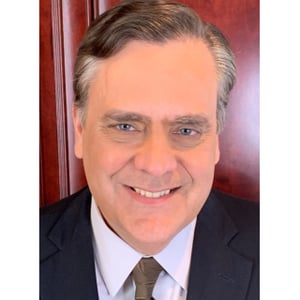
J.B. and Maurice C. Shapiro Professor of Public Interest Law, The George Washington University Law School
Jonathan Turley is a nationally recognized legal scholar who has written extensively in areas ranging from constitutional law to legal theory to tort law. After a stint at Tulane Law School, Professor Turley joined the GW Law faculty in 1990, and in 1998, became the youngest chaired professor in the university's history.
He is the founder and executive director of the Project for Older Prisoners (POPS). He has written more than three dozen academic articles that have appeared in a variety of leading law journals including those of Cornell, Duke, Georgetown, Harvard, and Northwestern Universities, among others. He most recently completed a three-part study of the historical and constitutional evolution of the military system.
Professor Turley has served as counsel in some of the most notable cases in the last two decades, including his representation of the Area 51 workers at a secret air base in Nevada; the nuclear couriers at Oak Ridge, Tennessee; the Rocky Flats grand jury in Colorado; Dr. Eric Foretich, the husband in the Elizabeth Morgan custody controversy; and four former U.S. Attorney Generals during the Clinton impeachment litigation. Professor Turley also has served as counsel in a variety of national security and terrorism cases, and has been ranked as one of the top 10 lawyers handling military cases.
He has served as a consultant on statutory and constitutional issues, and he has been a witness in over 100 hearings before the House and Senate, including the impeachments of Presidents Bill Clinton and Donald Trump. He also is a nationally recognized legal commentator; he ranked 38th in the top 100 most cited ‘public intellectuals’ in a recent study by Judge Richard Posner and was found to be the second most cited law professor in the country.
He is a member of the USA Today board of contributors and the recipient of the “2005 Single Issue Advocate of the Year” – the annual opinion award for the Aspen Institute and The Week magazine. Hundreds of his articles on legal and policy issues regularly appear in national newspapers. He also has worked as the legal analyst for four networks, CBS, NBC, BBC, and Fox. After 30 years as a columnist and commentator, the Washington Post called him the "Dean of Legal Analysts."
He is a best-selling author, including his latest New York Times bestseller "Rage and the Republic: The Unfinished Story of the American Revolution." (Simon & Schuster 2026). Turley's blog, Res Ipsa (www.jonathanturley.org), is one of the most read legal sites in the country.
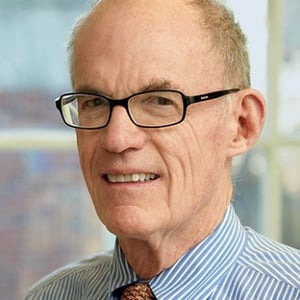
University Professor; John Edward Sexton Professor of Law; Director, Frank J. Guarini Center on Environmental, Energy, and Land Use Law, New York University School of Law
Recognized as one of the world's leading scholars in environmental and administrative law, Richard Stewart is University Professor and John Edward Sexton Professor of Law at New York University School of Law. Prior to joining the NYU School of Law faculty, Stewart had served as a Byrne Professor of Administrative Law at Harvard Law School and a member of the faculty of the Kennedy School of Government at Harvard; Assistant Attorney General in charge of the Environment and Natural Resource Division of the U.S. Department of Justice, and Chairman of the Environmental Defense Fund.
Professor Stewart directs the school's Frank J. Guarini Center on Environmental and Land Use Law, which sponsors research, conferences, and publications on cutting-edge issues of environmental and land use law. Students are closely involved in the Center's activities, many of which focus on international and comparative environmental law issues, with a focus on climate law, policy and finance. His climate research and policy work includes how climate mitigation and adaptation can be promoted through sustainable cities policies and measures, and how private and public climate finance for developing countries can promote climate-sustainable urban development.
Stewart is also closely involved in the efforts of the U.S. government to solve the nation’s nuclear waste management and disposal problems. Stewart, along with NYU Professor Benedict Kingsbury, co-directs a major project on Global Administrative Law, examining how procedural opportunities for public participation in administrative decision making and review mechanisms can help meet accountability gaps in current global regulatory institutions, ranging from the WTO and the UN to informal networks of environmental and economic regulatory officials. This project, headquartered at NYU, is proceeding in collaboration with academics and officials around the globe, has produced an extensive body of research and publications aimed at developing strategies for strengthening the accountability and responsiveness of global regulatory bodies. The project includes substantial work on climate and other global environmental issues.
Stewart has worked with the Environmental Protection Committee of China’s National People’s Congress to strengthen China’s environmental laws. He has also been involved, with UN agencies and NGOs, in the development of domestic and international emissions trading systems to control greenhouse gases. He and colleagues have published a major book on Climate Finance, and held an international conference and series of workshops on climate finance in Abu Dhabi under the auspices of the NYU Abu Dhabi Institute. The Center has also conducted environmental legal assistance projects for developing countries and countries with economies in transition including issues of urbanization. Students are extensively involved in these projects.
A prolific author, Stewart has published ten books and more than 100 articles on environmental and administrative law, including the intersection between theory and practice in environmental law and the need to develop innovative methods for environmental protection. His writing favors a reliance on a market-oriented approach to environmental protection, rather than the central-planning systems of command and control regulation that have been used for the past 30 years. He has been a visiting professor at the Universities of Bologna, Chicago, and Rome, the University of California at Berkeley, the European University Institute, Yale University and Georgetown University. He is a member of the American Academy of Arts and Sciences and the American Law Institute, a Director of the Health Effects Institute, and a member of the editorial boards of several European scholarly journals. He holds honorary degrees from The University of Rome "La Sapienza” and the Erasmus University in the Netherlands.

Roundtable Discussion: How Comfortably Does Tribal Sovereignty Fit With American Democratic Ideals?
Carole Goldberg, Daniel M. Kolkey, Joe Matel, Eugene B. Meyer, Diarmuid F. O'Scannlain, Thomas Sansonetti, Alexander Skibine
Prof. Carole Goldberg, UCLA School of Law Dan Kolkey, Gibson, Dunn, & Crutcher LLP Joe...
Panel: The Road Ahead for Climate Change Regulation
Jonathan H. Adler, David Dana, Sean Hecht, Jason Johnston
Prof. Jonathan Adler, Case Western Reserve University School of Law Prof. Jason Johnston, University of...
Environmental Law: The Policy Implications of the Reaction to Climate Change
Jonathan H. Adler, John C. Dernbach, Steven F. Hayward, Jeremy A. Rabkin, Jeffrey S. Sutton
The next presidential administration will undoubtedly usher in new policies concerning climate change and global...
Smithfield Sidetracks Environmental Regulation Debate
Peter Coppelman, Becky Norton Dunlop, Jonathan R. Turley
On Thursday, October 16, 1997, at the Federalist Society’s annual National Lawyers Convention in Washington,...
Natural Resource Damages: The New Wave of Environmental Liability
Richard B. Stewart
Natural resource damages (NRD) are an awakening "sleeping giant" of environmental liability that poses serious...