



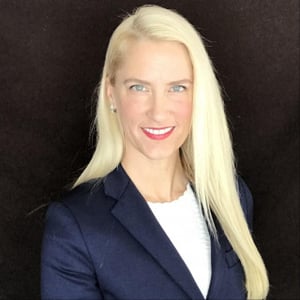



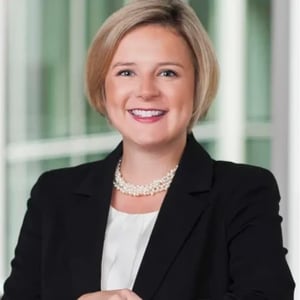
Her client experience in competition and antitrust is wide-scale and includes class action litigation, trade secret disputes, and defending clients in government investigations, grand jury subpoenas, and other proceedings. Lindsey enjoys working with her clients and with a variety of industry groups to help train their professionals regarding antitrust developments such as enforcement in critical areas, including procurement and labor. She is a thought leader regarding the evolution of criminal antitrust prosecution of no-poach agreements, and regularly trains and advises companies that do business with the government regarding increased risks from DOJ’s nascent Procurement Collusion Strike Force. Lindsey also works with clients as they assess competition concerns regarding potential business collaborations, such as teaming agreements and joint ventures.
In addition to representing defendants in cartel investigations and civil litigation, Lindsey also works with clients to prosecute and remedy antitrust harms they may incur. She currently represents 12 large shipping companies asserting claims against four Class I railroad companies in the In re Rail Freight Fuel Surcharge Antitrust Litigation. The V&E team has a leading role in spearheading the multi-district litigation and organizing strategy and discovery efforts across more than 300 plaintiffs.
A national thought leader, Lindsey co-chairs the ABA Antitrust Section’s Cartel & Criminal Practice Committee She often speaks on competition and has authored numerous articles deciphering the newest developments in antitrust enforcement to report on the potential implications.
She has been repeatedly recognized by Global Competition Review’s Who’s Who Legal as a rising star and future leader in Competition.
Lindsey maintains an active pro bono docket, which has included leading roles in several litigation matters, including advocating on behalf of the mother of a minor child in contested custody dispute in D.C. Superior Court, co-chairing a jury trial in a disability discrimination case brought in federal court in the District of Columbia, and leading an evidentiary hearing related to a Section 2255 petition in the Eastern District of Virginia. She regularly supervises V&E teams in cases involving housing conditions, landlord/tenant issues, and asylum.






When Should We Recognize Something as a Property Right?
FTC’s Sweeping Non-Compete Ban: Summary, States’ Views, and Litigation Challenges
Julian W. Kleinbrodt, Gwendolyn J. Lindsay Cooley, Christopher Mufarrige, Alexander P. Okuliar, Tyler S. Badgley
On April 23, 2024, the FTC voted 3-2 to adopt a final rule banning the use...
Criminal Market Allocation or Pro-Competitive Agreement: The Debate over DOJ’s “No Poach” Prosecutions
R. Pepper Crutcher, Bernard A. Nigro, G. Zachary Terwilliger, Lindsey Vaala
No poaching allowed! No, you have not wandered into a Hunter’s Safety Forum, but rather...
Deep Dive Episode 177 – Patents and Pandemics: Innovation Policy and the Patent Waiver Petition at the WTO
Richard Blaylock, Paul Redmond Michel, Brian O'Shaughnessy, Hans Sauer
India and South Africa have submitted a petition to the World Trade Organization seeking a...
Deep Dive Episode 142 – The United States-China Relationship and Intellectual Property
Mark Cohen, Paul Redmond Michel, Brian O'Shaughnessy, Randall R. Rader
Recent disputes between the United States and China have focused on trade, but perhaps the...
Trade Secrets Litigation: Do Damages Awarded in Texas Case Have Broader Ramifications?
Ashley Baker, Curt Levey
Intellectual property (IP) theft has taken an increasingly prominent place in the news as various...
A Texas Trade Secrets Case May Have Broader Implications for U.S. Companies
Randy M. Mastro
Last year, a jury in Texas awarded California-based startup HouseCanary a $706 million verdict, one...
Foxes, Drugs, WMDs, and YouTube: What Kind of Property is Intellectual Property?
Shubha Ghosh
On February 15, 2011, the Wisconsin Student Chapter hosted an event on intellectual property. The featured speaker was Prof. Shubha...
Does IP Harm or Help Developing Countries?
Alex M. Azar, Graeme B. Dinwoodie, Bruce A. Lehman, Jerome H. Reichman, Robert Sherwood
The Federalist Society's Intellectual Property Practice Group presented this panel discussion at the 2006 Annual...
What Will the Government Do With Your Confidential Pricing Information Once You Enter Into A Federal Contract?
Patricia H. Becker
It comes as no surprise that doing business with the federal government raises many unique...