
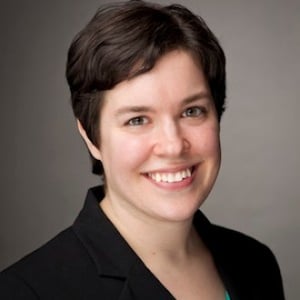
Foundation for Individual Rights in Education
Susan Kruth earned her B.A. from New York University’s Gallatin School of Individualized Study in 2007, with a concentration in music and film. While attending the University of Virginia School of Law, she served as musical director of the law school’s a cappella group, the A Cappellate Opinions, and performed in UVA Law’s spring musical comedy program, the Libel Show. She also completed internships with the Transgender Legal Defense & Education Fund and the American Civil Liberties Union LGBT & AIDS Project. Ms. Kruth earned her J.D. in 2011 and is licensed to practice law in Virginia and Pennsylvania. After law school, she worked for the Thomas Jefferson Center for the Protection of Free Expression in Charlottesville, Virginia, before moving to Philadelphia to work at FIRE. She previously served as editor-in-chief of FIRE’s blog and as a member of FIRE’s litigation team, and she now works in FIRE’s legal and public advocacy department.
Foundation for Individual Rights in Education
Susan Kruth earned her B.A. from New York University’s Gallatin School of Individualized Study in 2007, with a concentration in music and film. While attending the University of Virginia School of Law, she served as musical director of the law school’s a cappella group, the A Cappellate Opinions, and performed in UVA Law’s spring musical comedy program, the Libel Show. She also completed internships with the Transgender Legal Defense & Education Fund and the American Civil Liberties Union LGBT & AIDS Project. Ms. Kruth earned her J.D. in 2011 and is licensed to practice law in Virginia and Pennsylvania. After law school, she worked for the Thomas Jefferson Center for the Protection of Free Expression in Charlottesville, Virginia, before moving to Philadelphia to work at FIRE. She previously served as editor-in-chief of FIRE’s blog and as a member of FIRE’s litigation team, and she now works in FIRE’s legal and public advocacy department.
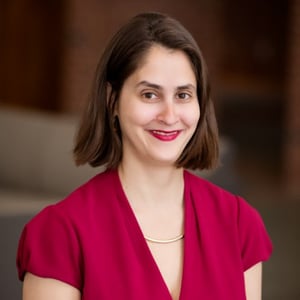
Professor of Law, University of Illinois College of Law
Professor Lesley Wexler joined the Illinois Law School faculty in fall 2010, teaching torts, laws of war and international environmental law. Before coming to Illinois, Professor Wexler taught at the Florida State University College of Law. Prior to teaching at Florida State, she spent two years at the University of Chicago Law School as a Bigelow Fellow and Lecturer on Law.
Professor Wexler has broad research interests in international humanitarian law, human rights law, and sex discrimination. Professor Wexler specializes in those legal areas that reflect the movement of anti-discrimination and humanitarian norms through domestic law, international law, social movements, and corporations. She has written on the legitimacy of targeting decisions, the blood diamond trade, and the regulation of depleted uranium and landmines, along with a series of articles on human rights impact statements. Her work has drawn on case studies using DeBeers, Wal-Mart, and Chik-fil-A.
Professor Wexler earned her BA with honors from the University of Michigan and her JD with honors from the University of Chicago Law School. While in law school, she served on the board of both the Chicago International Law Journal and the Chicago Legal Forum.
Professor Wexler has clerked for Judge Thomas Reaveley of the U.S. Court of Appeals for the Fifth Circuit. She has also clerked for Judge William Wayne Justice on the U.S. District Court for the Eastern District of Texas. She worked for two law firms: Sidley, Austin, Brown & Wood (Chicago, Washington D.C.) as well as Wilmer Cutler & Pickering (Washington D.C.).
Foundation for Individual Rights in Education
Susan Kruth earned her B.A. from New York University’s Gallatin School of Individualized Study in 2007, with a concentration in music and film. While attending the University of Virginia School of Law, she served as musical director of the law school’s a cappella group, the A Cappellate Opinions, and performed in UVA Law’s spring musical comedy program, the Libel Show. She also completed internships with the Transgender Legal Defense & Education Fund and the American Civil Liberties Union LGBT & AIDS Project. Ms. Kruth earned her J.D. in 2011 and is licensed to practice law in Virginia and Pennsylvania. After law school, she worked for the Thomas Jefferson Center for the Protection of Free Expression in Charlottesville, Virginia, before moving to Philadelphia to work at FIRE. She previously served as editor-in-chief of FIRE’s blog and as a member of FIRE’s litigation team, and she now works in FIRE’s legal and public advocacy department.
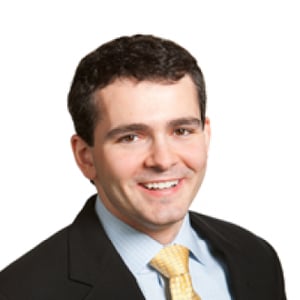
President, The Ethics and Public Policy Center
Ryan T. Anderson, Ph.D., is the President of the Ethics and Public Policy Center. In May 2025, Anderson was appointed by President Trump to the Religious Liberty Commission.
He is the author or co-author of five books, including the just-released Tearing Us Apart: How Abortion Harms Everything and Solves Nothing. Previous books include When Harry Became Sally: Responding to the Transgender Moment, Truth Overruled: The Future of Marriage and Religious Freedom, What Is Marriage? Man and Woman: A Defense, and Debating Religious Liberty and Discrimination. He is the co-editor of A Liberalism Safe for Catholicism? Perspectives from “The Review of Politics.”
Anderson’s research has been cited by two U.S. Supreme Court justices, Justice Samuel Alito and Justice Clarence Thomas, in two Supreme Court cases.
He received his bachelor of arts degree from Princeton University, graduating Phi Beta Kappa and magna cum laude, and he received his doctoral degree in political philosophy from the University of Notre Dame. His dissertation was titled: “Neither Liberal Nor Libertarian: A Natural Law Approach to Social Justice and Economic Rights.”
Anderson has made appearances on ABC, CNN, CNBC, MSNBC, and Fox News. His work has been published by the New York Times, the Washington Post, the Wall Street Journal, Oxford University Press, Cambridge University Press, the Harvard Journal of Law and Public Policy, the Harvard Health Policy Review, the Georgetown Journal of Law and Public Policy, First Things, the Claremont Review of Books, and National Review.
He is the John Paul II Teaching Fellow in Social Thought at the University of Dallas, a member of the James Madison Society at Princeton University, and a Fellow of the Institute for Human Ecology at the Catholic University of America, as well as the Founding Editor of Public Discourse, the online journal of the Witherspoon Institute of Princeton, New Jersey.
For 9 years he was the William E. Simon senior research fellow at The Heritage Foundation, and has served as an adjunct professor of philosophy and political science at Christendom College, and a Visiting Fellow at the Veritas Center at Franciscan University. He has also served as an assistant editor of First Things.
President, The Ethics and Public Policy Center
Ryan T. Anderson, Ph.D., is the President of the Ethics and Public Policy Center. In May 2025, Anderson was appointed by President Trump to the Religious Liberty Commission.
He is the author or co-author of five books, including the just-released Tearing Us Apart: How Abortion Harms Everything and Solves Nothing. Previous books include When Harry Became Sally: Responding to the Transgender Moment, Truth Overruled: The Future of Marriage and Religious Freedom, What Is Marriage? Man and Woman: A Defense, and Debating Religious Liberty and Discrimination. He is the co-editor of A Liberalism Safe for Catholicism? Perspectives from “The Review of Politics.”
Anderson’s research has been cited by two U.S. Supreme Court justices, Justice Samuel Alito and Justice Clarence Thomas, in two Supreme Court cases.
He received his bachelor of arts degree from Princeton University, graduating Phi Beta Kappa and magna cum laude, and he received his doctoral degree in political philosophy from the University of Notre Dame. His dissertation was titled: “Neither Liberal Nor Libertarian: A Natural Law Approach to Social Justice and Economic Rights.”
Anderson has made appearances on ABC, CNN, CNBC, MSNBC, and Fox News. His work has been published by the New York Times, the Washington Post, the Wall Street Journal, Oxford University Press, Cambridge University Press, the Harvard Journal of Law and Public Policy, the Harvard Health Policy Review, the Georgetown Journal of Law and Public Policy, First Things, the Claremont Review of Books, and National Review.
He is the John Paul II Teaching Fellow in Social Thought at the University of Dallas, a member of the James Madison Society at Princeton University, and a Fellow of the Institute for Human Ecology at the Catholic University of America, as well as the Founding Editor of Public Discourse, the online journal of the Witherspoon Institute of Princeton, New Jersey.
For 9 years he was the William E. Simon senior research fellow at The Heritage Foundation, and has served as an adjunct professor of philosophy and political science at Christendom College, and a Visiting Fellow at the Veritas Center at Franciscan University. He has also served as an assistant editor of First Things.

President, Cass & Associates, PC
Ronald A. Cass is Dean Emeritus of Boston University School of Law (where he was Dean from 1990-2004), President of Cass & Associates, PC, former Vice-Chairman and Commissioner of the U.S. International Trade Commission, former faculty member at Boston University School of Law and the University of Virginia Law School, and Distinguished Senior Fellow at the C. Boyden Gray Center for the Study of the Administrative State. Dean Cass also sits as an arbitrator for commercial, international, and intellectual property rights disputes, and is a former United States member of the Panel of Conciliators of the International Centre for Settlement of Investment Disputes. He is a member of the Council of the Administrative Conference of the United States and has received seven presidential appointments, spanning Presidents Ronald Reagan to Donald J. Trump.
As a law professor, lecturer, and scholar, Dean Cass has been teaching and writing about a wide array of legal issues on topics such as administrative law and regulation, antitrust, constitutional law, communications, intellectual property, international trade, separation of powers, and legal process. He has published more than 160 scholarly books, chapters, articles, and papers, including a leading casebook on administrative law. Dean Cass has taught judges as well as students in schools of law, economics, business, and public policy and has held academic appointments in the United States, Europe, and Latin America.
In addition to his academic work, Dean Cass has participated in numerous important legal cases as an amicus, consultant, or expert, and has advised businesses, law firms, investment funds, and government agencies on a range of trade, antitrust, intellectual property, and regulatory issues. He has a broad range of affiliations with professional groups, and has received numerous honors, fellowships and awards.
Dean Cass is a graduate of the University of Virginia and the University of Chicago Law School.
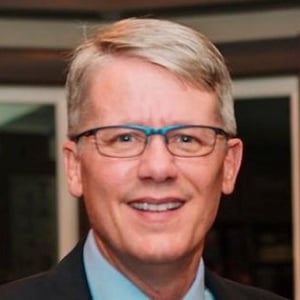
Professor, University of North Carolina at Wilmington
Mike Adams is a professor at the University of North Carolina at Wilmington (UNCW). He writes a weekly column for The Daily Wire and speaks frequently on First Amendment and pro-life issues. After graduating from Mississippi State University in 1993 with a PhD in Criminology, his research emphasized social psychological causes of crime and delinquency. He won the Faculty Member of the Year Award from the Office of the Dean of Students in 1998 and again in 2000. Later, after his involvement in a free speech controversy in the wake of the 9/11 attack his research emphasis shifted to threats to free speech, due process, and academic integrity in higher education. In 2006, he was denied a promotion full professor and filed suit in federal court alleging that UNCW retaliated against him for his criticism the diversity movement in general as well as his criticism of specific policies within his own university. The retaliation lawsuit set up a legal challenge concerning whether Garcetti v. Ceballos (2006), which denied First Amendment protection to public employees who were commenting about their “official duties,” applied to college professors. In Adams v. UNCW (2011), the 4th Circuit Court of Appeals unanimously ruled in his favor. The ruling set up a federal trial on the issue of retaliation, which he also won before a jury in federal district court in Greenville, North Carolina.
Professor of History, Brooklyn College and the CUNY Graduate Center
KC Johnson is professor of history at Brooklyn College and the CUNY Graduate Center, where he has taught since 1999. He has written 13 books on topics in U.S. political history, U.S. foreign policy, and legal and policy debates surrounding campus due process and civil liberties. His Duke lacrosse case blog, Durham-in-Wonderland, was named ABA Journal’s Best Ethics Blog in 2007; and he continues to blog on higher-ed matters at the blog Minding the Campus.
FIRE

Senior Fellow and Director of Constitutional Studies, Manhattan Institute
Ilya Shapiro is a senior fellow and director of constitutional studies at the Manhattan Institute and a contributing editor of City Journal. Previously he was executive director and senior lecturer at the Georgetown Center for the Constitution, and before that a vice president of the Cato Institute.
Shapiro is the author of Lawless: The Miseducation of America’s Elites (2025) and Supreme Disorder: Judicial Nominations and the Politics of America’s Highest Court (2020), coauthor of Religious Liberties for Corporations? (2014), and editor of 11 volumes of the Cato Supreme Court Review (2008-18). He has contributed to a variety of academic, popular, and professional publications, including the Wall Street Journal, Harvard Journal of Law & Public Policy, Washington Post, Los Angeles Times, USA Today, National Review, and Newsweek. He also regularly provides commentary for various media outlets, writes the Shapiro’s Gavel newsletter on Substack, and once appeared on the Colbert Report.
Shapiro has testified many times before Congress and state legislatures and has filed more than 500 amicus curiae “friend of the court” briefs in the Supreme Court. He lectures regularly on behalf of the Federalist Society, is a member of the board of fellows of the Jewish Policy Center, was an inaugural Washington Fellow at the National Review Institute, and has been an adjunct law professor at the George Washington University and University of Mississippi. He is also the chairman of the board of advisers of the Mississippi Justice Institute, a barrister in the Edward Coke Appellate Inn of Court, and a former member of the Virginia Advisory Committee to the U.S. Commission on Civil Rights.
Earlier in his career, Shapiro was a special assistant/adviser to the Multi-National Force in Iraq on rule-of-law issues and practiced at Patton Boggs and Cleary Gottlieb. Before entering private practice, he clerked for Judge E. Grady Jolly of the U.S. Court of Appeals for the Fifth Circuit. He holds an AB from Princeton University, an MSc from the London School of Economics, and a JD from the University of Chicago Law School.
Attorney, Pacific Legal Foundation
A lifelong lover of liberty, David McDonald joined Pacific Legal Foundation’s property rights team in 2023.
As the son of two former gold miners who spent his childhood visiting ghost towns and old mines in the Mojave Desert, he has always been fascinated by the frontier spirit that built this nation and sees the defense of private property rights as absolutely vital to keeping that spirit alive. After reading about eminent domain abuse for the first time in college (and Justice Clarence Thomas’ amazing dissent in Kelo), he realized he needed to become a lawyer so he could put a stop to the government’s flagrant violation of private property rights.
Prior to joining PLF, David was an attorney with Mountain States Legal Foundation in Colorado, where his practice primarily focused on the bureaucratic overreach and intransigence of federal land use agencies like the Bureau of Land Management. While at Mountain States, David represented individuals and small businesses whose rights had been violated by the government before both state and federal courts and administrative tribunals. Before that, he worked as a legal associate with the Cato Institute’s Center for Constitutional Studies, where he authored Supreme Court amicus briefs and scholarly articles on a number of constitutional topics.
David grew up in Southern California and received his undergraduate degree from the University of California, Los Angeles before attending Columbia University for law school.
When not trying to ruin government employees’ days, David can usually be found doing something nerdy like playing board games, arguing about the finer points of Tolkien lore, and taking pub trivia way too seriously.
David is a member of the bar only in the states of New York and Colorado.
Senior Legal Fellow, the Meese Institute for the Rule of Law, Advancing American Freedom
Paul J. Larkin is a Senior Legal Fellow in the Meese Institute for the Rule of Law at Advancing American Freedom. Paul has held various positions in the federal and state governments throughout his career, such as being an attorney in the Organized Crime and Racketeering Section of the Criminal Division at the U.S. Department of Justice, an Assistant to the Solicitor General in the Office of the Solicitor General at the U.S. Department of Justice, Special Agent-in-Charge and Acting Director of the Criminal Investigation Division at the Environmental Protection Agency, and a member of the Parole Abolition and Sentencing Reform Commission and of the Juvenile Justice Reform Commission in the Office of Virginia Governor George Allen.
He has also worked at Verizon Communications and two law firms in Washington, D.C. His current research is principally in the fields of drug policy, criminal justice policy, and administrative law and policy. He has published numerous articles in law and public policy journals, both in print and online.

Due Process/Title IX and Campus Sexual Assault
New Hampshire Student Chapter
Concord, NHDeference to Agency Rule Interpretations: Problems of Expanding Constitutionally Questionable Authority in the Administrative State
Ronald A. Cass
Note from the Editor: This article argues that, while judicial deference to agency decisions is...
Due Process, Title IX, and Campus Sexual Assault
Illinois Student Chapter
Champaign, ILThe Student Right to Counsel
Mike S. Adams, KC Johnson, Adam Kissell
Note from the Editor: This article argues that a student right to counsel in quasi-criminal...
Due Process, Title IX, and Campus Sexual Assault
Harvard Student Chapter
Cambridge, MATopics
Review of Unwanted Advances by Laura Kipnis
Author’s note: This book review concerns guidance issued by the Department of Education’s Office for...
Title IX and Gender Identity
Notre Dame Student Chapter
Notre Dame, INGloucester County School Board v. G.G.: Judicial Overdeference Is Still a Massive Problem
Ilya Shapiro, David C. McDonald
Note from the Editor: This article discusses Auer deference, a central issue in Gloucester County...
Professionals, Amateurs, and Rape: How Colleges Are Failing Their Students
Paul James Larkin
A Review of: The Campus Rape Frenzy: The Attack on Due Process at America’s Universities,...
Title IX and Gender Identity