
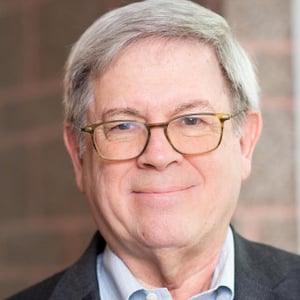
Senior Fellow, Cato Institute
Walter Olson is a senior fellow at the Cato Institute’s Robert A. Levy Center for Constitutional Studies and is known for his writing on the American legal system. His books include The Rule of Lawyers, on mass litigation, The Excuse Factory, on lawsuits in the workplace, and most recently Schools for Misrule, on the state of the law schools. His first book, The Litigation Explosion, was one of the most widely discussed general-audience books on law of its time. It led the Washington Post to dub him “intellectual guru of tort reform.” Active on social media, he is known as the founder and principal writer of what is generally considered the oldest blog on law as well as one of the most popular, Overlawyered.com. He has advised many public officials from the White House to town councils and in 2015 was named by Gov. Larry Hogan to be co-chair of the Maryland Redistricting Reform Commission, which issued its report recommendations later that year to acclaim across the state.
Before joining Cato, Olson was a senior fellow at the Manhattan Institute and an editor at the magazine Regulation, then edited by future Supreme Court Justice Antonin Scalia. Olson’s more than 400 broadcast appearances include all the major networks, NPR, the BBC, The Diane Rehm Show, and Oprah.
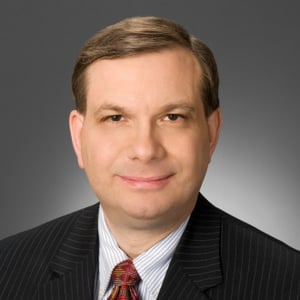
National Affairs Columnist, National Review
John Fund is National Affairs Columnist for National Review magazine and a on-air analyst on the Fox News Channel. He is considered a notable expert on American politics and the nexus between politics and economics.
He previously served as a columnist and editorial board member for The Wall Street Journal. He is the author of several books, including Who's Counting: Bow Fraudsters and Bureaucrats Put Your Vote At Risk (Encounter Books, 2012); Stealing Elections: How Voter Fraud Threatens Our Democracy (Encounter Books, 2008) and The Dangers of Regulation Through Litigation (ATRA Press, 2008). He worked as a research analyst for the California Legislature in Sacramento before beginning his journalism career as a reporter for the syndicated columnists Rowland Evans and Robert Novak.
Roll Call, the newspaper of Capitol Hill, called him "the Tom Paine of the modern Congressional reform movement." He has won awards from the Institute for Justice, The School Choice Aliance and the Warren Brooks award for journalistic excellence from the American Legislative Exchange Council.
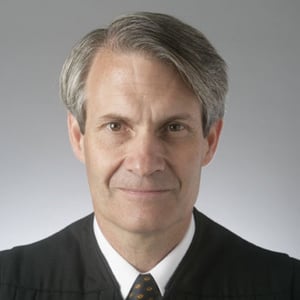
Special Counsel, Hunton Andrews Kurth
After serving on the United State Court of Appeals for the D. C. Circuit from 2005, Judge Griffith stepped down from the bench in 2020. Currently he is a Lecturer on Law at Harvard Law School, a Fellow at the Wheatley Institute at Brigham Young University, and Special Counsel in the Washington, DC office of the law firm of Hunton Andrews Kurth. Most recently, he was a member of President Biden's Commission on the Supreme Court. He is the author of Civic Charity and the Constitution , and the co-author, along with former judges Michael Luttig and Michael McConnell, of Lost, Not Stolen: The Conservative Case that Trump Lost and Biden Won the 2020 Presidential Election. https://lostnotstolen.org/ . Before being appointed to the D. C. Circuit, Judge Griffith was the General Counsel at BYU; Senate Legal Counsel, the non-partisan chief legal officer of the U. S. Senate; and a partner at Wiley, Rein & Fielding. Long active in rule-of-law programs in former communist nations, Judge Griffith is a member of the international advisory board of the CEELI Institute in Prague. He is a graduate of BYU and the University of Virginia School of Law and is a member of the American Law Institute.
Professor of Law, The George Washington University Law School
Professor Overton specializes in voting rights and campaign finance. His academic articles on election law have appeared in several leading law journals, including the Texas Law Review, the University of Pennsylvania Law Review, and the Michigan Law Review. Professor Overton's book “Stealing Democracy: The New Politics of Voter Suppression“ was published and released by W.W. Norton.
During Professor Overton’s time in the Obama campaign, transition, and Administration (2007–2010), he was a key leader on the Administration’s landmark efforts to curb special interests, enhance transparency, and increase citizen participation. From 2007–2008, he was Chair of Government Reform Policy for the Obama presidential campaign. On the Obama Transition Team, he served in the Office of the General Counsel and helped write the Administration’s ethics guidelines. He also chaired the Election Assistance Commission Agency Review Team and served as a member of the Federal Election Commission Agency Review Team.
At the beginning of the Obama Administration, Professor Overton took a leave from GW Law School and was appointed the Principal Deputy Assistant Attorney General at the Department of Justice in the Office of Legal Policy. In that position, he partnered with White House officials to lead the Administration’s policy efforts on democracy issues. He played a key leadership role in conceptualizing and/or implementing policies related to the Military and Overseas Voter Empowerment Act, the National Voter Registration Act, the Voting Rights Act, and the Administration’s response to the U.S. Supreme Court’s decision to allow unlimited corporate spending in federal elections.
Prior to joining the Law School faculty, he was a member of the law faculty of the University of California, Davis, and served as the Charles Hamilton Houston Fellow at Harvard. Before entering academia, he practiced law at Debevoise & Plimpton in Washington, DC, where he worked on several widely noted cases, including investigations by Congress and the Justice Department into fundraising techniques employed by the Democratic National Committee. Professor Overton also served as a law clerk to Judge Damon J. Keith of the U.S. Court of Appeals for the Sixth Circuit.
Professor Overton has served as a commissioner on the Jimmy Carter-James Baker Commission on Federal Election Reform, and as well as the Commission on Presidential Nomination Timing and Scheduling. He has also served as a board member of several organizations, including Common Cause, Demos, The Center for Responsive Politics, and the American Constitution Society. His commentaries have appeared in the Washington Post, Roll Call, Boston Globe, and Los Angeles Times, among others, and he has made numerous appearances on national and local radio and television outlets to discuss election law issues.
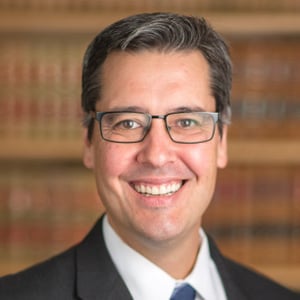
Associate Dean for Faculty; Charles W. Ebersold and Florence Whitcomb Ebersold Professor of Constitutional Law, The Ohio State University Mortiz College of Law
Professor Daniel Tokaji is an authority on the law of elections and democracy. He teaches courses on Election Law, Civil Rights, Civil Procedure, Comparative Law, Constitutional Law, Federal Courts, Legislation and Regulation, and the U.S. Legal System. His scholarship addresses questions of voting rights, racial justice, free speech, and the role of the courts in American democracy.
Professor Tokaji is the author of Election Law in a Nutshell (2d ed. 2016), and co-author of Election Law: Cases and Materials (6th ed. 2017) and The New Soft Money (2014). He has written numerous articles and book chapters on a wide variety of election and voting issues, including voting rights, voter ID, voter registration, redistricting, campaign finance regulation. Recent articles include “Gerrymandering and Association,” 59 William & Mary Law Review 2159 (2018), and “Denying Systemic Equality: The Last Words of the Kennedy Court,” 13 Harvard Law & Policy Review 539 (2019). His current research focuses on the challenges facing democracies around the globe, including the free speech issues surrounding digital disinformation and the need for trustworthy electoral institutions.
Media outlets frequently seek Professor Tokaji’s expertise on election and voting issues. He has been quoted in The New York Times, Los Angeles Times, The Columbus Dispatch, USA TODAY, and appeared on TODAY, FOX News, NBC News, and National Public Radio and many other media outlets.
A graduate of Harvard College and the Yale Law School, Professor Tokaji clerked for the Honorable Stephen Reinhardt of the U.S. Court of Appeals for the Ninth Circuit. Before arriving at Ohio State, he was a staff attorney with the ACLU Foundation of Southern California and Chair of California Common Cause.
Professor Tokaji has litigated many civil rights, civil liberties, and election law cases. He was lead counsel in a case that struck down an Ohio law requiring naturalized citizens to produce a certificate of naturalization when challenged at the polls. He also served as counsel in litigation challenging the state’s voting purges. He was also an attorney for plaintiffs in cases that kept open the window for simultaneous registration and early voting in Ohio’s 2008 general election, and that challenged punch-card voting systems in Ohio and California after the 2000 election.
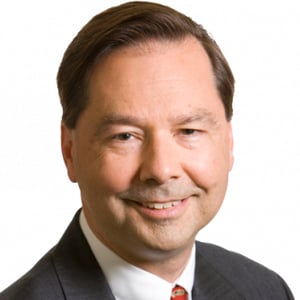
Senior Legal Fellow, Edwin Meese III Institute for the Rule of Law, Advancing American Freedom
Senior Fellow, Cato Institute
Doug Bandow is a senior fellow at the Cato Institute, specializing in foreign policy and civil liberties. He worked as special assistant to President Reagan and editor of the political magazine Inquiry. He writes regularly for leading publications such as Fortune magazine, National Interest, Wall Street Journal, and Washington Times. Bandow speaks frequently at academic conferences, on college campuses, and to business groups. Bandow has been a regular commentator on ABC, CBS, NBC, CNN, Fox News Channel, and MSNBC. He holds a J.D. from Stanford University.
Senior Fellow, Cato Institute
Doug Bandow is a senior fellow at the Cato Institute, specializing in foreign policy and civil liberties. He worked as special assistant to President Reagan and editor of the political magazine Inquiry. He writes regularly for leading publications such as Fortune magazine, National Interest, Wall Street Journal, and Washington Times. Bandow speaks frequently at academic conferences, on college campuses, and to business groups. Bandow has been a regular commentator on ABC, CBS, NBC, CNN, Fox News Channel, and MSNBC. He holds a J.D. from Stanford University.
Senior Fellow, Cato Institute
Doug Bandow is a senior fellow at the Cato Institute, specializing in foreign policy and civil liberties. He worked as special assistant to President Reagan and editor of the political magazine Inquiry. He writes regularly for leading publications such as Fortune magazine, National Interest, Wall Street Journal, and Washington Times. Bandow speaks frequently at academic conferences, on college campuses, and to business groups. Bandow has been a regular commentator on ABC, CBS, NBC, CNN, Fox News Channel, and MSNBC. He holds a J.D. from Stanford University.

Laurence H. Silberman Chair in Constitutional Governance, American Enterprise Institute; Executive Director, Antonin Scalia Law School’s C. Boyden Gray Center for the Study of the Administrative State
Adam J. White is the Laurence H. Silberman Chair in Constitutional Governance and senior fellow at the American Enterprise Institute, where he focuses on the Supreme Court and the administrative state. He also directs the Antonin Scalia Law School’s C. Boyden Gray Center for the Study of the Administrative State.
He writes on regulation and constitutional government for a variety of publications. He practiced law in Washington, D.C., after clerking for the D.C. Circuit's Judge David Sentelle. He also has been chairman of the ABA's Administrative Law Section.
In 2021, he served on the Presidential Commission on the Supreme Court of the United States, where he criticized “Court packing” and other efforts to restructure the Supreme Court.
National Affairs Columnist, National Review
John Fund is National Affairs Columnist for National Review magazine and a on-air analyst on the Fox News Channel. He is considered a notable expert on American politics and the nexus between politics and economics.
He previously served as a columnist and editorial board member for The Wall Street Journal. He is the author of several books, including Who's Counting: Bow Fraudsters and Bureaucrats Put Your Vote At Risk (Encounter Books, 2012); Stealing Elections: How Voter Fraud Threatens Our Democracy (Encounter Books, 2008) and The Dangers of Regulation Through Litigation (ATRA Press, 2008). He worked as a research analyst for the California Legislature in Sacramento before beginning his journalism career as a reporter for the syndicated columnists Rowland Evans and Robert Novak.
Roll Call, the newspaper of Capitol Hill, called him "the Tom Paine of the modern Congressional reform movement." He has won awards from the Institute for Justice, The School Choice Aliance and the Warren Brooks award for journalistic excellence from the American Legislative Exchange Council.
Special Counsel, Hunton Andrews Kurth
After serving on the United State Court of Appeals for the D. C. Circuit from 2005, Judge Griffith stepped down from the bench in 2020. Currently he is a Lecturer on Law at Harvard Law School, a Fellow at the Wheatley Institute at Brigham Young University, and Special Counsel in the Washington, DC office of the law firm of Hunton Andrews Kurth. Most recently, he was a member of President Biden's Commission on the Supreme Court. He is the author of Civic Charity and the Constitution , and the co-author, along with former judges Michael Luttig and Michael McConnell, of Lost, Not Stolen: The Conservative Case that Trump Lost and Biden Won the 2020 Presidential Election. https://lostnotstolen.org/ . Before being appointed to the D. C. Circuit, Judge Griffith was the General Counsel at BYU; Senate Legal Counsel, the non-partisan chief legal officer of the U. S. Senate; and a partner at Wiley, Rein & Fielding. Long active in rule-of-law programs in former communist nations, Judge Griffith is a member of the international advisory board of the CEELI Institute in Prague. He is a graduate of BYU and the University of Virginia School of Law and is a member of the American Law Institute.
Professor of Law, The George Washington University Law School
Professor Overton specializes in voting rights and campaign finance. His academic articles on election law have appeared in several leading law journals, including the Texas Law Review, the University of Pennsylvania Law Review, and the Michigan Law Review. Professor Overton's book “Stealing Democracy: The New Politics of Voter Suppression“ was published and released by W.W. Norton.
During Professor Overton’s time in the Obama campaign, transition, and Administration (2007–2010), he was a key leader on the Administration’s landmark efforts to curb special interests, enhance transparency, and increase citizen participation. From 2007–2008, he was Chair of Government Reform Policy for the Obama presidential campaign. On the Obama Transition Team, he served in the Office of the General Counsel and helped write the Administration’s ethics guidelines. He also chaired the Election Assistance Commission Agency Review Team and served as a member of the Federal Election Commission Agency Review Team.
At the beginning of the Obama Administration, Professor Overton took a leave from GW Law School and was appointed the Principal Deputy Assistant Attorney General at the Department of Justice in the Office of Legal Policy. In that position, he partnered with White House officials to lead the Administration’s policy efforts on democracy issues. He played a key leadership role in conceptualizing and/or implementing policies related to the Military and Overseas Voter Empowerment Act, the National Voter Registration Act, the Voting Rights Act, and the Administration’s response to the U.S. Supreme Court’s decision to allow unlimited corporate spending in federal elections.
Prior to joining the Law School faculty, he was a member of the law faculty of the University of California, Davis, and served as the Charles Hamilton Houston Fellow at Harvard. Before entering academia, he practiced law at Debevoise & Plimpton in Washington, DC, where he worked on several widely noted cases, including investigations by Congress and the Justice Department into fundraising techniques employed by the Democratic National Committee. Professor Overton also served as a law clerk to Judge Damon J. Keith of the U.S. Court of Appeals for the Sixth Circuit.
Professor Overton has served as a commissioner on the Jimmy Carter-James Baker Commission on Federal Election Reform, and as well as the Commission on Presidential Nomination Timing and Scheduling. He has also served as a board member of several organizations, including Common Cause, Demos, The Center for Responsive Politics, and the American Constitution Society. His commentaries have appeared in the Washington Post, Roll Call, Boston Globe, and Los Angeles Times, among others, and he has made numerous appearances on national and local radio and television outlets to discuss election law issues.
Associate Dean for Faculty; Charles W. Ebersold and Florence Whitcomb Ebersold Professor of Constitutional Law, The Ohio State University Mortiz College of Law
Professor Daniel Tokaji is an authority on the law of elections and democracy. He teaches courses on Election Law, Civil Rights, Civil Procedure, Comparative Law, Constitutional Law, Federal Courts, Legislation and Regulation, and the U.S. Legal System. His scholarship addresses questions of voting rights, racial justice, free speech, and the role of the courts in American democracy.
Professor Tokaji is the author of Election Law in a Nutshell (2d ed. 2016), and co-author of Election Law: Cases and Materials (6th ed. 2017) and The New Soft Money (2014). He has written numerous articles and book chapters on a wide variety of election and voting issues, including voting rights, voter ID, voter registration, redistricting, campaign finance regulation. Recent articles include “Gerrymandering and Association,” 59 William & Mary Law Review 2159 (2018), and “Denying Systemic Equality: The Last Words of the Kennedy Court,” 13 Harvard Law & Policy Review 539 (2019). His current research focuses on the challenges facing democracies around the globe, including the free speech issues surrounding digital disinformation and the need for trustworthy electoral institutions.
Media outlets frequently seek Professor Tokaji’s expertise on election and voting issues. He has been quoted in The New York Times, Los Angeles Times, The Columbus Dispatch, USA TODAY, and appeared on TODAY, FOX News, NBC News, and National Public Radio and many other media outlets.
A graduate of Harvard College and the Yale Law School, Professor Tokaji clerked for the Honorable Stephen Reinhardt of the U.S. Court of Appeals for the Ninth Circuit. Before arriving at Ohio State, he was a staff attorney with the ACLU Foundation of Southern California and Chair of California Common Cause.
Professor Tokaji has litigated many civil rights, civil liberties, and election law cases. He was lead counsel in a case that struck down an Ohio law requiring naturalized citizens to produce a certificate of naturalization when challenged at the polls. He also served as counsel in litigation challenging the state’s voting purges. He was also an attorney for plaintiffs in cases that kept open the window for simultaneous registration and early voting in Ohio’s 2008 general election, and that challenged punch-card voting systems in Ohio and California after the 2000 election.
Senior Legal Fellow, Edwin Meese III Institute for the Rule of Law, Advancing American Freedom
National Affairs Columnist, National Review
John Fund is National Affairs Columnist for National Review magazine and a on-air analyst on the Fox News Channel. He is considered a notable expert on American politics and the nexus between politics and economics.
He previously served as a columnist and editorial board member for The Wall Street Journal. He is the author of several books, including Who's Counting: Bow Fraudsters and Bureaucrats Put Your Vote At Risk (Encounter Books, 2012); Stealing Elections: How Voter Fraud Threatens Our Democracy (Encounter Books, 2008) and The Dangers of Regulation Through Litigation (ATRA Press, 2008). He worked as a research analyst for the California Legislature in Sacramento before beginning his journalism career as a reporter for the syndicated columnists Rowland Evans and Robert Novak.
Roll Call, the newspaper of Capitol Hill, called him "the Tom Paine of the modern Congressional reform movement." He has won awards from the Institute for Justice, The School Choice Aliance and the Warren Brooks award for journalistic excellence from the American Legislative Exchange Council.
Special Counsel, Hunton Andrews Kurth
After serving on the United State Court of Appeals for the D. C. Circuit from 2005, Judge Griffith stepped down from the bench in 2020. Currently he is a Lecturer on Law at Harvard Law School, a Fellow at the Wheatley Institute at Brigham Young University, and Special Counsel in the Washington, DC office of the law firm of Hunton Andrews Kurth. Most recently, he was a member of President Biden's Commission on the Supreme Court. He is the author of Civic Charity and the Constitution , and the co-author, along with former judges Michael Luttig and Michael McConnell, of Lost, Not Stolen: The Conservative Case that Trump Lost and Biden Won the 2020 Presidential Election. https://lostnotstolen.org/ . Before being appointed to the D. C. Circuit, Judge Griffith was the General Counsel at BYU; Senate Legal Counsel, the non-partisan chief legal officer of the U. S. Senate; and a partner at Wiley, Rein & Fielding. Long active in rule-of-law programs in former communist nations, Judge Griffith is a member of the international advisory board of the CEELI Institute in Prague. He is a graduate of BYU and the University of Virginia School of Law and is a member of the American Law Institute.
Professor of Law, The George Washington University Law School
Professor Overton specializes in voting rights and campaign finance. His academic articles on election law have appeared in several leading law journals, including the Texas Law Review, the University of Pennsylvania Law Review, and the Michigan Law Review. Professor Overton's book “Stealing Democracy: The New Politics of Voter Suppression“ was published and released by W.W. Norton.
During Professor Overton’s time in the Obama campaign, transition, and Administration (2007–2010), he was a key leader on the Administration’s landmark efforts to curb special interests, enhance transparency, and increase citizen participation. From 2007–2008, he was Chair of Government Reform Policy for the Obama presidential campaign. On the Obama Transition Team, he served in the Office of the General Counsel and helped write the Administration’s ethics guidelines. He also chaired the Election Assistance Commission Agency Review Team and served as a member of the Federal Election Commission Agency Review Team.
At the beginning of the Obama Administration, Professor Overton took a leave from GW Law School and was appointed the Principal Deputy Assistant Attorney General at the Department of Justice in the Office of Legal Policy. In that position, he partnered with White House officials to lead the Administration’s policy efforts on democracy issues. He played a key leadership role in conceptualizing and/or implementing policies related to the Military and Overseas Voter Empowerment Act, the National Voter Registration Act, the Voting Rights Act, and the Administration’s response to the U.S. Supreme Court’s decision to allow unlimited corporate spending in federal elections.
Prior to joining the Law School faculty, he was a member of the law faculty of the University of California, Davis, and served as the Charles Hamilton Houston Fellow at Harvard. Before entering academia, he practiced law at Debevoise & Plimpton in Washington, DC, where he worked on several widely noted cases, including investigations by Congress and the Justice Department into fundraising techniques employed by the Democratic National Committee. Professor Overton also served as a law clerk to Judge Damon J. Keith of the U.S. Court of Appeals for the Sixth Circuit.
Professor Overton has served as a commissioner on the Jimmy Carter-James Baker Commission on Federal Election Reform, and as well as the Commission on Presidential Nomination Timing and Scheduling. He has also served as a board member of several organizations, including Common Cause, Demos, The Center for Responsive Politics, and the American Constitution Society. His commentaries have appeared in the Washington Post, Roll Call, Boston Globe, and Los Angeles Times, among others, and he has made numerous appearances on national and local radio and television outlets to discuss election law issues.
Associate Dean for Faculty; Charles W. Ebersold and Florence Whitcomb Ebersold Professor of Constitutional Law, The Ohio State University Mortiz College of Law
Professor Daniel Tokaji is an authority on the law of elections and democracy. He teaches courses on Election Law, Civil Rights, Civil Procedure, Comparative Law, Constitutional Law, Federal Courts, Legislation and Regulation, and the U.S. Legal System. His scholarship addresses questions of voting rights, racial justice, free speech, and the role of the courts in American democracy.
Professor Tokaji is the author of Election Law in a Nutshell (2d ed. 2016), and co-author of Election Law: Cases and Materials (6th ed. 2017) and The New Soft Money (2014). He has written numerous articles and book chapters on a wide variety of election and voting issues, including voting rights, voter ID, voter registration, redistricting, campaign finance regulation. Recent articles include “Gerrymandering and Association,” 59 William & Mary Law Review 2159 (2018), and “Denying Systemic Equality: The Last Words of the Kennedy Court,” 13 Harvard Law & Policy Review 539 (2019). His current research focuses on the challenges facing democracies around the globe, including the free speech issues surrounding digital disinformation and the need for trustworthy electoral institutions.
Media outlets frequently seek Professor Tokaji’s expertise on election and voting issues. He has been quoted in The New York Times, Los Angeles Times, The Columbus Dispatch, USA TODAY, and appeared on TODAY, FOX News, NBC News, and National Public Radio and many other media outlets.
A graduate of Harvard College and the Yale Law School, Professor Tokaji clerked for the Honorable Stephen Reinhardt of the U.S. Court of Appeals for the Ninth Circuit. Before arriving at Ohio State, he was a staff attorney with the ACLU Foundation of Southern California and Chair of California Common Cause.
Professor Tokaji has litigated many civil rights, civil liberties, and election law cases. He was lead counsel in a case that struck down an Ohio law requiring naturalized citizens to produce a certificate of naturalization when challenged at the polls. He also served as counsel in litigation challenging the state’s voting purges. He was also an attorney for plaintiffs in cases that kept open the window for simultaneous registration and early voting in Ohio’s 2008 general election, and that challenged punch-card voting systems in Ohio and California after the 2000 election.
Senior Legal Fellow, Edwin Meese III Institute for the Rule of Law, Advancing American Freedom
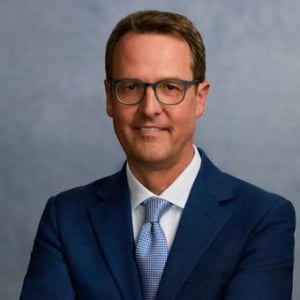
Partner, Orrick, Herrington & Sutcliffe LLP
Andy excels at solving complex problems for his clients using a variety of effective strategies. As former Chief Deputy Attorney General for the State of Wisconsin, Andy Cook has extensive experience representing businesses before state Attorneys General involving investigations and lawsuits. His strong relationships with Attorneys General and their senior staff frequently facilitate the successful resolution of client issues through diplomacy and negotiations. When litigation becomes necessary, Andy effectively advocates for clients throughout the litigation process.
Andy combines his legal expertise in numerous areas of law covered by state Attorneys General, an understanding of how state AG offices operate, and vast knowledge of legal and regulatory issues facing his clients. This substantive and comprehensive legal approach is crucial to effectively representing clients before state Attorneys General. Andy also has substantial experience drafting and enacting complex civil liability reforms before state legislatures to successfully address client goals.
Andy’s main practice focuses on advising Fortune 500 companies before state Attorneys General in the areas of antitrust, consumer protection, False Claims Act, environmental law, and cybersecurity and data privacy. Andy, in collaboration with a team of attorneys, successfully navigated a client through antitrust regulatory review by state Attorneys General in one of the nation’s largest mergers of two major telecommunication companies. Andy also worked with a team of lawyers representing a large corporation involving the multistate opioids litigation brought by state Attorneys General.
Andy gained valuable experience serving as Deputy Attorney General for the State of Wisconsin where he was the second in command of the 700-plus state agency. In his role as Chief Deputy Attorney General, Andy oversaw the day-to-day operations at the Wisconsin Department of Justice (DOJ); directed the State’s litigation strategy; negotiated, reviewed, and approved all settlements; drafted and reviewed attorney general opinions; managed the agency’s budget; oversaw civil and criminal investigations handled by DOJ; and managed DOJ’s legislative agenda.
Andy played college hockey and remains active by running, cross country skiing, and playing golf. On the weekends, Andy and his wife enjoy watching their kids’ sporting events, including soccer, baseball, gymnastics, and track. In his rare spare time, Andy reads history books.
Attorney, Lobbyist & Communications Professional, Kelchen Consulting
Partner, Orrick, Herrington & Sutcliffe LLP
Andy excels at solving complex problems for his clients using a variety of effective strategies. As former Chief Deputy Attorney General for the State of Wisconsin, Andy Cook has extensive experience representing businesses before state Attorneys General involving investigations and lawsuits. His strong relationships with Attorneys General and their senior staff frequently facilitate the successful resolution of client issues through diplomacy and negotiations. When litigation becomes necessary, Andy effectively advocates for clients throughout the litigation process.
Andy combines his legal expertise in numerous areas of law covered by state Attorneys General, an understanding of how state AG offices operate, and vast knowledge of legal and regulatory issues facing his clients. This substantive and comprehensive legal approach is crucial to effectively representing clients before state Attorneys General. Andy also has substantial experience drafting and enacting complex civil liability reforms before state legislatures to successfully address client goals.
Andy’s main practice focuses on advising Fortune 500 companies before state Attorneys General in the areas of antitrust, consumer protection, False Claims Act, environmental law, and cybersecurity and data privacy. Andy, in collaboration with a team of attorneys, successfully navigated a client through antitrust regulatory review by state Attorneys General in one of the nation’s largest mergers of two major telecommunication companies. Andy also worked with a team of lawyers representing a large corporation involving the multistate opioids litigation brought by state Attorneys General.
Andy gained valuable experience serving as Deputy Attorney General for the State of Wisconsin where he was the second in command of the 700-plus state agency. In his role as Chief Deputy Attorney General, Andy oversaw the day-to-day operations at the Wisconsin Department of Justice (DOJ); directed the State’s litigation strategy; negotiated, reviewed, and approved all settlements; drafted and reviewed attorney general opinions; managed the agency’s budget; oversaw civil and criminal investigations handled by DOJ; and managed DOJ’s legislative agenda.
Andy played college hockey and remains active by running, cross country skiing, and playing golf. On the weekends, Andy and his wife enjoy watching their kids’ sporting events, including soccer, baseball, gymnastics, and track. In his rare spare time, Andy reads history books.
Attorney, Lobbyist & Communications Professional, Kelchen Consulting

Law Schools and an Overlawyered America
Greenville Lawyers Chapter
Greenville, SCThinking About the "Practically Unthinkable": Energy Infrastructure and the Threat of Low-Probability, High-Impact Events
Adam White
The National Environmental Policy Act1 requires federal agencies to ascertain and evaluate the possible environmental...
Free Speech: Voter Fraud and Voter ID — The Constitution and the Right to Vote
John Fund, Thomas B. Griffith, Spencer A. Overton, Daniel P. Tokaji, Hans A. Von Spakovsky
The Free Speech & Election Law Practice Group hosted this panel on "Voter Fraud and...
Free Speech: Voter Fraud and Voter ID — The Constitution and the Right to Vote
John Fund, Thomas B. Griffith, Spencer A. Overton, Daniel P. Tokaji, Hans A. Von Spakovsky
The Free Speech & Election Law Practice Group hosted this panel on "Voter Fraud and...
Free Speech: Voter Fraud and Voter ID — The Constitution and the Right to Vote
2011 National Lawyers Convention
Washington, DCWhen Worlds Collide: The Sovereign Debt Crisis Facing the U.S. and the World
Dallas, TexasThe Morality of Capitalism: Property Rights, Legal Regimes, and Markets
Austin, TexasState Court Challenges to Legislatively Enacted Tort Reforms
Andrew Cook, Emily Kelchen
Introduction Over the past three decades, proponents of civil liability reform have made significant gains.1 Propelled...
State Court Challenges to Legislatively Enacted Tort Reforms
Andrew Cook, Emily Kelchen
Introduction Over the past three decades, proponents of civil liability reform have made significant gains.1...
Stopping the U.S. Spending Spree
Irvine, California