
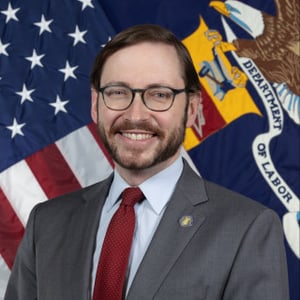
Solicitor, U.S. Department of Labor
Jonathan Berry is Solicitor at the U.S. Department of Labor, in service to President Trump’s agenda to put American workers first. He leads the Department’s lawyers in advising the Secretary and agency leadership on all aspects of law and in representing the Department in court. He was previously managing partner at Boyden Gray PLLC, where he provided strategic counsel and litigated on issues at the intersection of law, politics, and public policy. Earlier, he headed the regulatory office at Labor, and also served at the Department of Justice, in the first Trump Administration. Mr. Berry served as a law clerk to Judge Jerry E. Smith of the United States Court of Appeals for the Fifth Circuit, and to Associate Justice Samuel A. Alito, Jr., of the Supreme Court of the United States.
Assistant Professor of Environmental Studies, Bates College
Tyler Austin Harper is a literary scholar working at the intersection of the history of science, philosophy, and environmental studies. His book, “The Paranoid Animal: Human Extinction Before the Bomb,” is under contract with Princeton University Press. It examines how British literary figures, scientists, and social theorists engaged with the concept of human extinction prior to the nuclear age. Specifically, his work argues that the period between 1800 and 1945 witnessed a shift from fatalistic visions of the end of humanity—dominant during the Romantic Era and influenced by theories of geological catastrophism—toward a new, post-Darwinian conception of human extinction in which threats to the species were reimagined as risks that could be mitigated by technological intervention, prefiguring current debates about AI, nuclear war, and climate change. His scholarly work has been published in Modern Language Quarterly, Science Fiction Studies, Syndicate, and Paradoxa.
Harper is a contributing writer at The Atlantic. His public writing on politics, culture, race, and technology has appeared in The Atlantic, The New York Times, The Washington Post, The Boston Globe, Jacobin, and other outlets.

Senior Scholar, Manhattan Institute; Professor of Law Emerita, University of San Diego
Gail Heriot is a Senior Scholar at the Manhattan Institute, a Professor of Law Emerita at the University of San Diego and the Chairman of the Board of the American Civil Rights Project. She served on the U.S. Commission on Civil Rights for 18 years. Her new book is entitled “Why We Walk on Eggshells: How Our Civil Rights Laws Stifle Our Public Discourse.”

John Paul Stevens Professor of Law, Northwestern University School of Law
Andrew Koppelman is John Paul Stevens Professor of Law, Professor (by courtesy) of Political Science, and Philosophy Department Affiliated Faculty at Northwestern University. He received the Walder Award for Research Excellence from Northwestern, the Hart-Dworkin award in legal philosophy from the Association of American Law Schools, and the Edward S. Corwin Prize from the American Political Science Association. His scholarship focuses on issues at the intersection of law and political philosophy. He has written more than 100 scholarly articles and eight books, most recently Burning Down the House: How Libertarian Philosophy Was Corrupted by Delusion and Greed, (St. Martin’s Press). His column appears regularly at The Hill. You can find his recent work at andrewkoppelman.com.
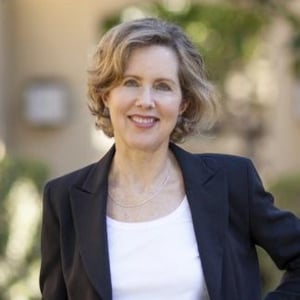
Thomas W. Smith Fellow; Contributing Editor, City Journal, Manhattan Institute
Heather Mac Donald is the Thomas W. Smith Fellow at the Manhattan Institute, a contributing editor of City Journal, and a New York Times bestselling author. She is a recipient of the 2005 Bradley Prize. Mac Donald’s work at City Journal has covered a range of topics, including higher education, immigration, policing, homelessness and homeless advocacy, criminal-justice reform, and race relations. Her writing has appeared in the Wall Street Journal, Washington Post, New York Times, Los Angeles Times, The New Republic, and The New Criterion. Mac Donald's newest book, The Diversity Delusion: How Race and Gender Pandering Corrupt the University and Undermine Our Culture (2018), argues that toxic ideas first spread by higher education have undermined humanistic values, fueled intolerance, and widened divisions in our larger culture.
Mac Donald’s The War on Cops (2016), a New York Times bestseller, warns that raced-based attacks on the criminal-justice system, from the White House on down, are eroding the authority of law and putting lives at risk. Other previous works include The Burden of Bad Ideas (2001), a collection of Mac Donald’s City Journal essays, details the effects of the 1960s counterculture’s destructive march through America’s institutions. In The Immigration Solution: A Better Plan than Today’s (2007), coauthored with Victor Davis Hanson and Steven Malanga, she chronicles the effects of broken immigration laws and proposes a practical solution to securing the country’s porous borders. In Are Cops Racist? (2010), another City Journal anthology, Mac Donald investigates the workings of the police, the controversy over so-called racial profiling, and the anti-profiling lobby’s harmful effects on black Americans.
A nonpracticing lawyer, Mac Donald clerked for the Honorable Stephen Reinhardt, U.S. Court of Appeals for the Ninth Circuit, and was an attorney-advisor in the Office of the General Counsel of the U.S. Environmental Protection Agency and a volunteer with the Natural Resources Defense Council. She has frequently testified before U.S. House and Senate Committees. In 1998, Mac Donald was appointed to Mayor Rudolph Giuliani’s task force on the City University of New York. She has received numerous awards for her writing:
A frequent guest on Fox News and other TV and radio programs, Mac Donald holds a B.A. in English from Yale University, graduating with a Mellon Fellowship to Cambridge University, where she earned an M.A. in English and studied in Italy through a Clare College study grant. She holds a J.D. from Stanford University Law School.
At the Criminal Justice Legal Foundation's 2018 annual meeting in downtown Los Angeles, U.S. Attorney General Jeff Sessions called Mac Donald, “the greatest thinker on criminal justice in America today.”

Judge, United States Court of Appeals, Third Circuit
Judge Paul Matey was appointed to the United States Court of Appeals for the Third Circuit in 2019 by President Trump.
Before his judicial service, Judge Matey was a partner at Lowenstein Sandler in New Jersey where he practiced complex commercial litigation and criminal defense. Earlier, Judge Matey was the Senior Vice President, General Counsel and Secretary for University Hospital Newark, an academic medical center and teaching hospital.
He also served as the Deputy Chief Counsel to Governor Chris Christie, and as an Assistant United States Attorney in the District of New Jersey, where he was awarded the Justice Department’s Director’s Award for Superior Performance. He also practiced at the Washington D.C. firm of Kellogg, Hansen, Todd, Figel & Frederick, and served as a law clerk to judges on the United States Court of Appeals for the Third Circuit and the United States District Court for the District of New Jersey.
He earned his bachelor’s degree from the University of Scranton, a Jesuit University, in 1993, and his juris doctorate, summa cum laude, from Seton Hall University School of Law in 2001, where he served as Editor-in-Chief of the Seton Hall Law Review.
In 2019, Judge Matey was elected to membership in the American Law Institute and, since 2020, has lectured on administrative law and the American legal history at Seton Hall.
Special Assistant/Counsel, United States Commission on Civil Rights
Alexander Heideman is Special Assistant/Counsel at the United States Commission on Civil Rights.
Partner, Copilevitz Lam & Raney
Karen Donnelly is a partner at Copilevitz Law & Raney and president of the Kansas City Lawyers Chapter with the Federalist Society. Karen’s practice focuses on First Amendment litigation and regulatory law in the areas of charitable, political and commercial speech. She represents nonprofit and commercial entities within the fundraising, advertising and marketing communities, including state attorney general investigations, Federal Trade Commission investigations, IRS audits, multi-state investigations, civil rights litigation and appellate practice in federal and state courts.
In 2023, Karen argued before the U.S. Court of Appeals for the Tenth Circuit in a First Amendment case involving a statutory ban on charitable fundraising.
In 2021, Karen coordinated and filed an amicus brief before the U.S. Supreme Court in Americans for Prosperity v. Bonta on behalf of The Nonprofit Alliance (TNPA), People for the Ethical Treatment of Animals (PETA), Association of Fundraising Professionals (AFP) and 123 nonprofit organizations across the ideological spectrum in support of the petitioners. Our brief contributed to a victory for the entire philanthropic sector–SCOTUS facially invalidated California’s mandatory disclosure of major donors as a condition of soliciting charitable contributions in the State.
In 2018, Karen argued before the U.S. Court of Appeals for the DC Circuit in a case involving administrative law and First Amendment claims in the charitable speech context.
In 2019 and 2020, Karen successfully represented nonprofit and commercial organizations in federal trademark matters in federal district court and before the USPTO’s Trademark Trial and Appeal Board.
Karen also counsels on the formation, structuring and qualification of tax-exempt organizations. She advises clients on nonprofit governance issues, corporate law, regulatory compliance, tax-exempt organizations law, and constitutional law.
She has also worked in the areas of direct marketing and nonprofit fundraising in Washington, D.C.
Karen is the President of the Kansas City Lawyers Chapter of the Federalist Society. She also serves on the Board of Kansas City-based Non-Profit Connect and participates in the Government Affairs Committee of The Nonprofit Alliance based in Washington, D.C. Karen is Chair of the St. Anthony’s Pastoral Council, Lector and Pre-Cana Minister. In her spare time, she enjoys travel, running, and spending time with family.
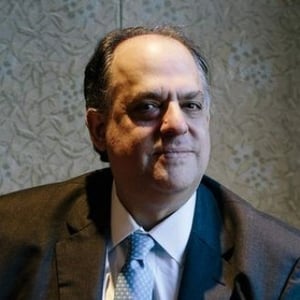
Director of Litigation and Senior Attorney, Hamilton Lincoln Law Institute
Theodore H. Frank is director at the Hamilton Lincoln Law Institute and the Center for Class Action Fairness. Frank founded and ran CCAF as a non-profit, public interest law firm in 2009.
Frank has won several landmark appeals and tens of millions of dollars for consumers and other plaintiffs through his class action work. Adam Liptak of The New York Times calls Frank “the leading critic of abusive class action settlements” and the American Lawyer Litigation Daily referred to him as “the indefatigable scourge of underwhelming class action settlements.”
Previously, Frank clerked for the Honorable Frank H. Easterbrook on the Seventh Circuit Court of Appeals, and was a litigator at firms in Washington and Los Angeles and a resident fellow at the American Enterprise Institute. Frank is a frequent public speaker and has testified before Congress multiple times on legal issues. He has been profiled by The Wall Street Journal, Forbes, GQ, and the ABA Journal, among other publications.
In 2008, Frank was elected to membership in the American Law Institute. He also serves on the Executive Committee of the Federalist Society Litigation Practice Group. Frank graduated from The University of Chicago Law School in 1994 with high honors and as a member of the Order of the Coif and the Law Review. He is a member of the District of Columbia Bar and the state bars of California and Illinois.
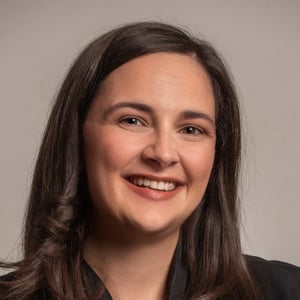
Associate, Bartimus Frickleton Robertson Rader P.C.
Kelly Frickleton is an associate attorney at Bartimus Frickleton Robertson Rader P.C. Since joining the firm in 2017, Kelly has focused her practice on complex personal injury cases, including medical malpractice and insurance bad faith litigation, and appeals. A natural problem-solver, Kelly uses her strong research and writing skills to craft legal strategies that help ensure the best possible outcome for each case. Prior to working in the legal field, Kelly was trained as an actor, which prepared her for many elements of being a trial lawyer – both in the performance aspect and her approach to cases. Her focus is always on understanding the client as an individual and telling their story in a way that will get the case to its best resolution. Kelly has also spent a considerable amount of time studying the intersection of law and race – which culminated in 2019 with her presentation of “An Exploration of Segregation in Kanas City” at KCMBA’s Bench Bar & Boardroom Conference. Kelly currently serves KCMBA/KCMBF as Chair of the YLS Board’s CLE Committee, Vice Chair of the Student Law Academy Committee, and as a member of the Bar Leadership Academy Taskforce and Communications Advisory Committee. She is also a member of the Association for Women Lawyers of Greater Kansas City, American Association for Justice, MATA, and The Women’s Foundation.
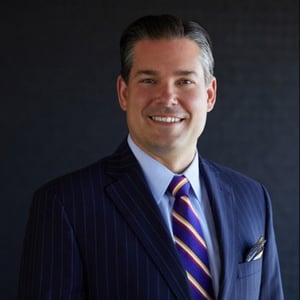
Partner, Graves Garrett Greim LLC
Edward “Eddie” Greim focuses his practice on complex commercial litigation, free speech and election law, and internal investigations and whistleblower claims. He has been recognized for his successful representation of businesses and individuals in commercial litigation while also being named a “go-to” lawyer on policy and constitutional issues.
Eddie was named a Constitutional and Election Law Trailblazer by the National Law Journal in 2020. His free speech and election law practice has included numerous constitutional challenges to election and campaign finance laws; representation of clients in state and federal ethics and campaign finance enforcement actions and investigations; initiative petition drafting and litigation; litigation and advice regarding First Amendment protections for petition circulation; representation of not-for-profit clients before state regulators; litigation of state and federal redistricting issues; and advice on campaign and election law compliance.
Eddie complements his trial work in complex, high-profile commercial and constitutional cases with oral advocacy and briefing in important appeals. Recognized as a Missouri Lawyers Media POWER 30 Appellate Attorney in 2021, he has argued before the Missouri and Kansas supreme courts multiple times, other state appellate courts across the country, and before the Sixth, Seventh, Eighth, and Tenth U.S. Courts of Appeals.
Eddie’s notable work for clients includes:
Recovering substantial compensation and injunctive relief for plaintiffs, in complex multiyear litigation, as lead counsel in the first and only nationwide class action certified against the Internal Revenue Service for violating taxpayer protection statutes when it targeted hundreds of groups based on their political viewpoints.
Successful First Amendment challenge to Missouri’s 2016 campaign finance restrictions.
Successful challenge to a vast, multiyear, secret criminal investigation into Wisconsin political groups and nonprofits, and follow-up challenge to expose role of state ethics board which secretly aided the investigation and was later dissolved by the legislature.
U.S. Supreme Court amicus brief for the National Republican Redistricting Trust in the 2019 Rucho litigation, and federal and state redistricting litigation and advice since 2011.
Challenges under the First Amendment in federal court, and in briefing to the Michigan Supreme Court on state constitutional grounds, to unprecedented emergency powers claimed by Michigan Governor in 2020.
Representation of numerous public officials and private citizens who are subject to “lawfare” attacks based on their political viewpoints or policy objectives.
Oversight of multiple internal investigations.
Eddie received his law degree from Harvard Law School in 2002, where he taught on the Board of Student Advisers, received the Dean’s Award for Leadership, and served as President of the Harvard Catholic Law Students Association. He received two bachelor’s degrees, summa cum laude, in economics and political science from the University of Missouri.
A native of Excelsior Springs, Missouri, Eddie lives in Kansas City with his family. He enjoys Missouri and military history. On many weekends, he can be found with his wife and daughters exploring sites of local interest. He enjoys reading and debating and has given presentations or organized discussions at numerous gatherings, formal and informal, of professional and personal interest.
Director of Litigation and Senior Attorney, Hamilton Lincoln Law Institute
Theodore H. Frank is director at the Hamilton Lincoln Law Institute and the Center for Class Action Fairness. Frank founded and ran CCAF as a non-profit, public interest law firm in 2009.
Frank has won several landmark appeals and tens of millions of dollars for consumers and other plaintiffs through his class action work. Adam Liptak of The New York Times calls Frank “the leading critic of abusive class action settlements” and the American Lawyer Litigation Daily referred to him as “the indefatigable scourge of underwhelming class action settlements.”
Previously, Frank clerked for the Honorable Frank H. Easterbrook on the Seventh Circuit Court of Appeals, and was a litigator at firms in Washington and Los Angeles and a resident fellow at the American Enterprise Institute. Frank is a frequent public speaker and has testified before Congress multiple times on legal issues. He has been profiled by The Wall Street Journal, Forbes, GQ, and the ABA Journal, among other publications.
In 2008, Frank was elected to membership in the American Law Institute. He also serves on the Executive Committee of the Federalist Society Litigation Practice Group. Frank graduated from The University of Chicago Law School in 1994 with high honors and as a member of the Order of the Coif and the Law Review. He is a member of the District of Columbia Bar and the state bars of California and Illinois.
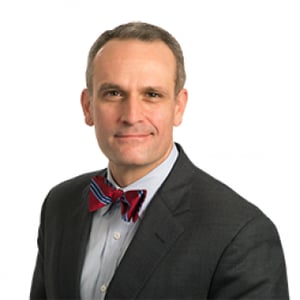
Shareholder, Littler Mendelson PC
Matthew J. Hank practices employment law, including issues arising under the common law and various statutes:
He particularly focuses on disputes concerning (1) wage and hour class actions (including cases involving independent contractor relationships, overtime claims, and payroll debit cards) and (2) noncompetition agreements and trade secrets.
Matthew served as a law clerk to the Hon. Daniel Manion of the U.S. Court of Appeals for the Seventh Circuit and the Hon. Paul V. Gadola of the U.S. District Court for the Eastern District of Michigan. Before attending law school, he served for four years on active duty in the United States Army as an Armor officer.
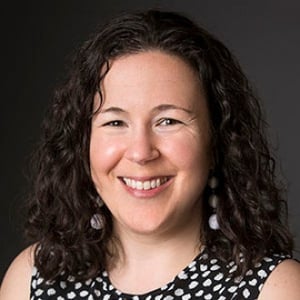
Attorney, Allen Harris Law
Samantha Harris is a nationally recognized attorney advising students and faculty on issues of campus due process, Title IX, free speech, and academic freedom. Drawing on more than 15 years at the Foundation for Individual Rights in Education (FIRE), where she served as Vice President for Policy Research, she guides students, faculty, administrators, and attorneys through complex disciplinary and constitutional issues involving free speech, fair hearings, and faculty-student rights.
A graduate of Princeton University and the University of Pennsylvania Law School (Articles Editor, Journal of Constitutional Law), Samantha clerked for the Hon. Jay C. Waldman in the U.S. District Court for the Eastern District of Pennsylvania and began her legal career at Pepper Hamilton LLP. At FIRE, she led efforts to reform campus policies and defended individuals in high-profile Title IX and free speech disputes.
Now at Allen Harris PLLC, a firm focused on Title IX and campus defense, Samantha represents students and professors in investigations, hearings, appeals, and related litigation. Samantha’s practice emphasizes strategic advocacy in campus disciplinary systems and litigation-ready defense in federal court. Her blend of policy experience, legal skill, and media visibility positions her as a leading resource for issues at the intersection of education law and constitutional rights.
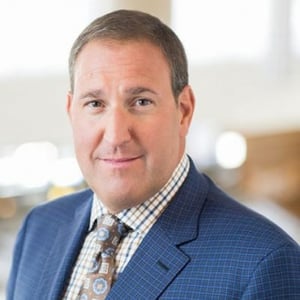
Mr. Sokolow is the Chair of TNG (TNG, LLC), a national multidisciplinary risk management consulting and law firm with more than 3,000 education-sector clients, 35 executive and support employees, and a roster of 25 attorneys and consultants who are at the forefront of the field in their areas of expertise. He also serves as President of ATIXA, the Association of Title IX Administrators, the leading industry association for Title IX compliance, with over 3,600 active school and college members. Mr. Sokolow has been interviewed on CNN, and has been featured in Newsweek, TIME Magazine, The Wall Street Journal, ABC News, The Chronicle of Higher Education, USA Today, The Boston Globe, and many other media outlets. Mr. Sokolow is a graduate of the College of William and Mary and the Villanova School of Law.
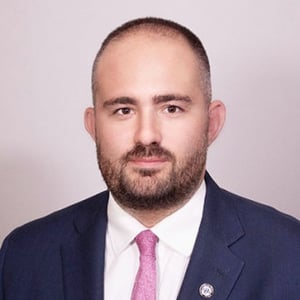
Litigator, Schnader Harrison Segal & Lewis
Mr. Struwe is currently a litigator at Schnader Harrison Segal & Lewis. Previously, Mr. Struwe served as a Captain in the U.S. Army JAG Corps as a Special Victim Prosecutor, where he was responsible for prosecuting rape and sexual assault allegations. Mr. Struwe frequently writes on due process considerations in both military justice and Title IX proceedings.
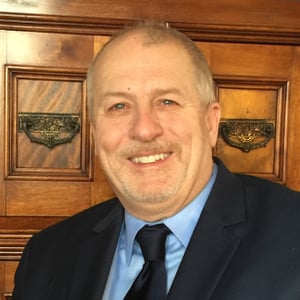
Founder, President, and General Counsel, Wisconsin Institute for Law & Liberty
Rick Esenberg is the founder and current President and General Counsel of the Wisconsin Institute for Law & Liberty, a rapidly expanding law and policy organization headquartered in Milwaukee. Under Rick’s leadership, WILL has grown into one of the more active state-based think tanks and litigation centers in the country. Rick is a frequent litigator in state and federal courts and nationally recognized scholar and commentator on constitutional law, particularly the First Amendment’s guarantees of freedom of speech and religion. He is one of the leading experts on the Wisconsin Constitution and a frequent advocate before the Wisconsin Supreme Court. Rick’s work seeks to advance the rule of law and individual liberty, formed by a robust civil society that forms individual and community character, preserving the wisdom of the past and an openness to the future.
Rick’s commentary has been featured in such outlets as the Wall Street Journal, National Review, Weekly Standard, Real Clear Politics, Milwaukee Journal Sentinel and Washington Examiner. Formerly on the faculty of Marquette University Law School, his scholarship has appeared in such publications as the Harvard Law Review, Harvard Journal of Law & Public Policy, Wake Forest Law Review and William & Mary Bill of Rights Journal. Back when they were a thing, he operated a blog called Shark and Shepherd where he tried to suggest something about the duality of man – “the Jungian thing.”
Rick holds a J.D., magna cum laude, from Harvard Law School, where he was an editor of the Harvard Law Review, and a B.A., summa cum laude, in political science from the University of Wisconsin-Milwaukee. In addition to service on the Marquette Faculty, he was formerly a litigation partner at Foley & Lardner and General Counsel of an international manufacturing firm headquartered in Wisconsin. He lives in Mequon Wisconsin with his wife Karen, golden retrievers Cooper and Riley and more books than he can find places for.
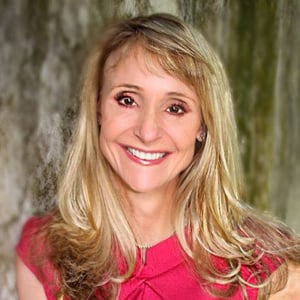
CEO, Champion Women
Hogshead-Makar is a life-long advocate for access and equality in all areas of athletics and throughout society. She is one of the nation’s foremost experts on gender equity in sports participation, sexual harassment and abuse, pregnancy discrimination, legal enforcement of Title IX of the Education Amendments of 1972 and contemporary legal issues within the Olympic Movement. She has successfully represented athletes in precedent-setting litigation, written amicus briefs in the highest courts, integrated research into frequent Congressional testimony, pushed for new state legislation, published numerous legal and professional articles, made hundreds of presentations and keynote speeches, overseen the creation of new policies and position statements and appeared frequently as a guest on national news programs. She practiced law at Holland & Knight LLP, taught torts and sports law courses as a tenured professor of law and has enjoyed a 30 year relationship with the Women’s Sports Foundation, most recently as the organization’s Senior Director of Advocacy. “Looking around the country at the leaders in women’s sports, particularly athletes, many have a relationship with the Women’s Sports Foundation. Some of my dearest friends are from working with the WSF, and I’m grateful to have received 30 years of numerous powerful opportunities to serve,” stated Hogshead-Makar.
She is a graduate of Duke University and Georgetown University Law Center. At the 1984 Olympics she capped eight years as a world-class athlete, where she was the most decorated swimmer at the 1984 Olympics; three gold medals and one silver medal.

Sheila M. McDevitt Professor of Law and Faculty Director of the Election Law Center, Florida State University College of Law
Professor Morley joined FSU Law in 2018, and teaches and writes in the areas of election law, constitutional law, remedies, and the federal courts. He is best known for his work on election emergencies and post-election litigation, nationwide and other defendant-oriented injunctions, the jurisdiction of the federal courts and their equitable powers more generally. He has testified before congressional committees, made presentations to election officials for the U.S. Election Assistance Commission and participated in bipartisan blue-ribbon groups to develop election reforms. The governor of Florida also appointed Professor Morley to the Criminal Punishment Code Task Force, to propose potential revisions to the legislature.
The U.S. Supreme Court has cited several of his articles, and he was counsel of record for the successful Petitioner in a landmark campaign finance case. Professor Morley has appeared on C-SPAN, Court TV, Fox News and numerous local news programs, and has been quoted in the Washington Post, Los Angeles Times, Roll Call, Politico, U.S. News and World Report, and a wide range of other national publications. His work has been published in many of the nation’s top law reviews, including the Georgetown Law Journal, Northwestern University Law Review, Boston University Law Review and Emory Law Journal.
Before joining FSU Law, Professor Morley was a Climenko Fellow and Lecturer in Law at Harvard Law School. Prior to his experience in academia, he served in government as special assistant to the General Counsel of the Army at the Pentagon, as well as a law clerk for Judge Gerald B. Tjoflat of the U.S. Court of Appeals for the Eleventh Circuit. During his tenure with the Army General Counsel’s office, he was awarded the Meritorious Civilian Service Award and the Army Staff Lapel Pin. He also worked as an associate at Williams & Connolly LLP and the Supreme Court & Appellate group of Winston & Strawn, LLP, both in Washington, D.C.
Professor Morley earned his J.D. from Yale Law School in 2003, where he was a senior editor on the Yale Law Journal; served on the moot court board; and received the Thurman Arnold Prize for Best Oralist in the Morris Tyler Moot Court of Appeals.
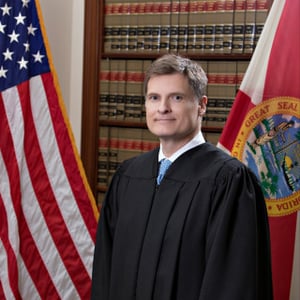
Chief Justice, Florida Supreme Court
Justice Carlos G. Muñiz was appointed to the Florida Supreme Court by Governor Ron DeSantis on January 22, 2019, becoming the 89th Justice since statehood was granted in 1845. Previously, he served as general counsel for the United States Department of Education, where he led the Office of the General Counsel and provided legal and policy advice to the United States Secretary of Education and to other senior department officials.
Justice Muñiz has wide-ranging legal and policy experience from his years as an attorney and consultant in private practice. He served for three years as the deputy attorney general and chief of staff to Florida Attorney General Pam Bondi. In that capacity he was responsible for managing a 400-lawyer staff and overseeing duties that included enforcement and litigation, legislative affairs, and communications.
During this time, Justice Muñiz worked with state attorneys general throughout the country and developed substantial experience in multistate enforcement actions, consumer protection issues, government investigations, and disputes between the states and the federal government.
In addition to his service in the Attorney General’s Office, Justice Muñiz held positions of responsibility throughout Florida state government. He served as deputy general counsel in the Office of Governor Jeb Bush, as a deputy chief of staff and counsel in the Office of the Speaker of the Florida House of Representatives, and as general counsel of the Florida Department of Financial Services.
Justice Muñiz is a graduate of the University of Virginia and of Yale Law School. Upon receipt of his law degree, he clerked for Judge José A. Cabranes of the U.S. Court of Appeals for the Second Circuit and for Judge Thomas A. Flannery of the U.S. District Court for the District of Columbia.
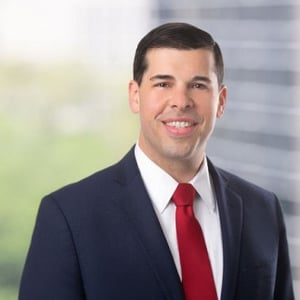
Partner, Boies Schiller Flexner LLP
Jesse, the former third-ranking official at the U.S. Department of Justice, helps clients with their most difficult litigation and regulatory issues─whether that means defending against an enforcement action, pursuing high-stakes litigation and appeals, navigating regulatory thickets at federal and state agencies, or crafting a comprehensive strategy to manage a crisis. He approaches these problems with the knowledge gained both from his broad private-practice experience and from having served at the highest levels of federal and state government.
Jesse has experience across a range of substantive and regulatory areas. He has sued the federal government and has also been one of its top law-enforcement officials; he has represented states and has also navigated their regulatory agencies on behalf of clients; and he has represented companies in business disputes, both as defendants and plaintiffs.
Before joining the firm, Jesse was the Acting Associate Attorney General at the United States Department of Justice. In that role, he oversaw the civil and criminal work of the Antitrust, Civil, Civil Rights, Environment and Natural Resources, and Tax Divisions. During Jesse’s tenure, the Associate’s office closely managed the Department’s most significant litigation, including matters involving large financial institutions, healthcare companies, automakers, energy companies, and state and local governments. In addition, Jesse served as Chair of DOJ’s Regulatory Reform Task Force and Vice Chair of DOJ’s Task Force on Market Integrity and Consumer Fraud. Jesse regularly provided legal and strategic advice to the highest-level decision makers in the federal government, including the Attorney General and Deputy Attorney General, general counsels across the spectrum of federal agencies, and White House officials.
Jesse served for three years as the secretary of Florida’s labor, economic-development, and land-use agency, the Florida Department of Economic Opportunity. Before that, he served as Governor (now Senator) Rick Scott’s general counsel.
Jesse maintains offices in both Washington D.C. and Florida. From Washington, he focuses on federal litigation and crisis management. In Florida, in addition to federal litigation, Jesse employs his knowledge of state government and regulation to help clients in courts across the state, from trial through the Florida Supreme Court.
Jesse currently serves on the Florida Supreme Court Judicial Nominating Commission, the body that provides the governor with nominees for appointment to the Florida Supreme Court. Jesse is also a fellow at the Center for the Study of the Administrative State at the Scalia Law School at George Mason University, where he writes and speaks about administrative law.
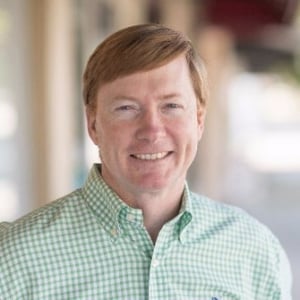
Agriculture Commissioner of Florida
Adam Putnam was elected to serve a second term as Florida’s Commissioner of Agriculture on November 4, 2014, and was sworn into office on January 6, 2015. In this capacity, he oversees the Florida Department of Agriculture and Consumer Services and serves as a member of Florida’s Cabinet.
Commissioner Putnam’s priorities include fostering the growth and diversification of Florida agriculture; expanding access to Florida’s abundance of fresh produce, seafood and other products; securing a stable, reliable and diverse supply of energy; protecting the quantity and quality of the state’s water supply; and safeguarding consumers from deceptive business practices.
Commissioner Putnam is also focused on creating opportunities for our nation’s wounded veterans to hunt, fish and participate in other outdoor activities on Florida’s public lands. More than 3,000 veterans have enjoyed recreational opportunities on Florida state forests through Operation Outdoor Freedom, a program of the Florida Forest Service he established in 2011.
Previously, Commissioner Putnam served five terms as Congressman for Florida’s 12th Congressional District in the U.S. House of Representatives. He was recognized as a leader on a variety of issues, including water, energy and government transparency and efficiency. Commissioner Putnam was acknowledged for his efforts to bring comprehensive restoration to the Everglades, reform food safety laws, modernize programs to ensure Florida agriculture remains a leader throughout the nation, and increase access to fresh fruits and vegetables to counter childhood obesity.
While in Congress, Commissioner Putnam was elected by his peers to serve as the Republican Policy Chairman during the 109th Congress and Chairman of the House Republican Conference for the 110th Congress, the highest elected leadership position any Floridian of either party has held in Washington. Commissioner Putnam also served as a member of the House Committees on Government Reform, Agriculture, Rules and Financial Services.
Before he was elected to Congress, Commissioner Putnam served in the Florida House of Representatives from 1996 to 2000. He graduated from the University of Florida with a Bachelor of Science in food and resource economics.
Commissioner Putnam is a fifth-generation Floridian who grew up in the citrus and cattle industry. He and his wife, Melissa, have four children.
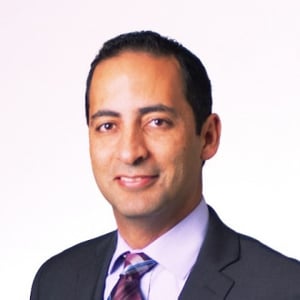
Partner, Akerman LLP
Ayman Rizkalla focuses his practice on white collar defense and government investigations related to healthcare fraud and financial crimes. Clients turn to him for strategic counsel on regulatory and compliance matters involving anti-corruption, False Claims Act, Foreign Corrupt Practices Act (FCPA), Racketeer Influenced and Corrupt Organizations Act (RICO), export control, and privacy. His clients include hospitals and corporate entities under investigation for Medicare fraud stemming from qui tam cases, and complex commercial disputes involving securities fraud and government investigations.
Prior to joining Akerman, Ayman worked for the Department of Homeland Security as well as an international law firm, where he focused on international financial investigations throughout the Middle East, North Africa, and Europe. He also brings substantial in-house experience, having previously worked for the University of Miami, where he advised on domestic and international asset sales and acquisitions, healthcare investigations, and regulatory compliance. He is fluent in Arabic and French.

Chief Judge, United States Court of Appeals, Fifth Circuit
Jennifer Walker Elrod is the Chief Judge of the United States Court of Appeals for the Fifth Circuit. She was nominated to the Fifth Circuit in 2007, and she served as a Circuit Judge on the court until assuming the role of Chief Judge in October 2024. Prior to serving as a Circuit Judge, Chief Judge Elrod was appointed and then twice elected Judge of the 190th District Court of Harris County, Texas, where she spent over five years presiding over more than 200 jury and non-jury trials.
Chief Judge Elrod graduated cum laude from Harvard Law School, where she was an active member of the Harvard Federalist Society, an Ames Moot Court finalist, and a Senior Editor of the Harvard Journal of Law & Public Policy. She clerked for the Honorable Sim Lake in the Southern District of Texas. Before serving as a judge, Chief Judge Elrod worked in private practice, focusing on civil litigation, antitrust, and employment matters.
She has been repeatedly recognized for her work as a jurist, as well as for her pro bono work and contributions to the community. She has been named the 2022 Texas Review of Law & Politics’ Jurist of the Year, the 2018 Harvard Federalist Society’s Alumni of the Year, the 2016–17 Texas Association of Civil Trial and Appellate Specialists’ Appellate Judge of the Year, and the 2008 Mexican-American Bar Association of Texas’s Judge of the Year.
Chief Judge Elrod is actively engaged in the academic and legal communities. Chief Judge Elrod currently serves on the Board of Directors and as the Jurist-in-Residence at the South Texas College of Law, where she teaches civil procedure and First Amendment law. She is also a member of the American Law Institute and of the Board of Advisors for the Harvard Journal of Law & Public Policy, and she is a former member of the Board of Regents of her alma mater, Baylor University, and the Board of Visitors at Brigham Young University Law School. She previously served as the Chair of the Codes of Conduct Committee for the Judicial Conference of the United States. She has also served as the M.D. Anderson Visiting Public Service Professor at the Texas Tech University School of Law and as Jurist-in-Residence at Brigham Young University Law School, and she has taught legal writing at the University of Houston Law Center. She presented the Lewis F. Powell, Jr. Distinguished Lecture at the Washington and Lee University School of Law and is a frequent speaker on the topics of trial and appellate procedure, ethics, employment law, and constitutional law. Chief Judge Elrod also serves on the board of the Garland R. Walker Inn of Court, and co-produces an annual musical CLE, for which her pupilage group has won multiple national awards.
Chief Judge Elrod’s publications include: Trial by Siri: AI Comes to the Courtroom; Don’t Mess with Texas Judges: In Praise of the State Judiciary; For Good: Enriching Your Practice and Your Life Through Pro Bono and Community Service; Is the Jury Still Out?: A Case for the Continued Viability of the American Jury; and W(h)ither the Jury? The Diminishing Role of the Jury Trial in our Legal System.

Former President & CEO, The Federalist Society for Law and Public Policy Studies
Eugene B. Meyer, former President and CEO of the Federalist Society, has served as Executive Director, CEO, and/or President of the organization for more than 40 years. He is responsible for shepherding the organization from a small group of law students to a community of 90,000 lawyers, law students, academics, judges, and others interested in the rule of law. The Society now includes a Student Chapter at nearly every ABA-accredited law school in the country and Lawyers Chapters in 220 major cities across the nation. Gene earned his B.A. in history at Yale in 1975 and his M.A. in political science from the London School of Economics in 1976. Gene currently serves on the boards of the U.S. Chess Center, the Holman Foundation, the Sarah Scaife Foundation, and the advisory board of the Adam Smith Society. He holds the title of International Chess Master.
Ernest W. McFarland Professor of Law; Director, Center on the Legal Profession, Stanford Law School
Deborah L. Rhode is the Ernest W. McFarland Professor of Law, the director of the Center on the Legal Profession, and the director of the Program in Law and Social Entrepreneurship at Stanford University. She is the most frequently cited scholar on legal ethics. She has received the American Bar Association’s Michael Franck Award for contributions to the field of professional responsibility; the American Bar Foundation’s W. M. Keck Foundation Award for distinguished scholarship on legal ethics, the American Bar Foundation’s Outstanding Scholar Award, the American Bar Association’s Pro Bono Publico Award for her work on expanding public service opportunities in law schools, and the White House’s Champion of Change Award for a lifetime’s work in increasing access to justice. She is a member of the American Academy of Arts and Sciences and vice chair of the board of Legal Momentum (formerly the NOW Legal Defense and Education Fund). She is the former founding president of the International Association of Legal Ethics, the former president of the Association of American Law Schools, the former chair of the American Bar Association’s Commission on Women in the Profession, the former founding director of Stanford’s Center on Ethics, a former trustee of Yale University, and the former director of Stanford’s Institute for Research on Women and Gender. She also served as senior counsel to the minority members of the Judiciary Committee, the United States House of Representatives, on presidential impeachment issues during the Clinton administration.
Professor Rhode graduated Phi Beta Kappa and summa cum laude from Yale College and received her legal training from Yale Law School. After clerking for Supreme Court Justice Thurgood Marshall, she joined the Stanford faculty. She is the author or coauthor of over twenty-seven books in the area of professional responsibility, leadership, and gender. She has served as a columnist for the National Law Journal and published editorials in the New York Times, Washington Post, Boston Globe, and Slate. Recent publications include Women and Leadership, Adultery, The Trouble With Lawyers, What Women Want, Lawyers as Leaders, The Beauty Bias, Legal Ethics, Gender and Law, Moral Leadership, and Access to Justice.

Thomas M. Siebel Senior Fellow, The Hoover Institution, Stanford University; Gary T. Schwartz Distinguished Professor of Law Emeritus, UCLA School of Law
Eugene Volokh is the Thomas M. Siebel Senior Fellow at the Hoover Institution (Stanford), as well as the Gary T. Schwartz Distinguished Professor of Law Emeritus and Distinguished Research Professor at UCLA School of Law. He recently retired from teaching at UCLA, after 30 years there, and is now focusing on research.
Volokh is the author of the textbooks The First Amendment and Related Statutes (8th ed. 2023), and Academic Legal Writing (5th ed. 2016), as well as over 100 academic law journal articles, mostly on First Amendment law. He is a member of The American Law Institute; the editor-in-chief of the Journal of Free Speech Law; and the creator and coauthor of The Volokh Conspiracy, a leading legal blog founded in 2002 (hosted at the Washington Post from 2014 to 2017 and now at Reason Magazine).

Board Member, Center for Equal Opportunity
Roger Clegg is a Board Member at and former President and General Counsel of the Center for Equal Opportunity. He focuses on legal issues arising from civil rights laws--including the regulatory impact on business and the problems in higher education created by affirmative action. A former Deputy Assistant Attorney General in the Reagan and Bush administrations, Clegg held the second highest positions in both the Civil Rights Division (1987-91) and in the Environment and Natural Resources Division (1991-93). He has held several other positions at the U.S. Justice Department, including Assistant to the Solicitor General (1985-87), Associate Deputy Attorney General (1984-85), and Acting Assistant Attorney General in the Office of Legal Policy (1984). Clegg is a graduate of Yale University Law School (1981).

Showcase Panel I: The Age of Group Identity: What is it? How Did We Get Here? How Do We Move Beyond It?
Jonathan Berry, Tyler Austin Harper, Gail L. Heriot, Andrew Koppelman, Heather Mac Donald, Paul B. Matey
The generation of political leaders that produced the landmark legislation of the Civil Rights Era...
Topics
The Origins of the 2011 Dear Colleague Letter on Campus Sexual Assault
Six years ago, I filed a FOIA request for various documents relating to the origin...
Hispanic-Serving Institutions and Emerging Constitutional Issues
Alexander M. Heideman
In 2019, Florida Gulf Coast University’s (FGCU) “Florida Educational Equity Report” noted that FGCU “continues...
Panel 1: "Do Words Matter?"
Karen M. Donnelly, Theodore "Ted" Frank, Kelly Frickleton, Edward D. Greim
This panel explored the concept of whether what has come to be called “inclusive language,"...
ABA Model Rule 8.4(g) in Pennsylvania
Theodore "Ted" Frank
ABA Model Rule of Professional Conduct 8.4(g) holds it misconduct for an attorney to “engage...
DEBATE: Were the New Title IX Regulations Needed? Will They Result in Fairer Disciplinary Proceedings?
Matthew J. Hank, Samantha Harris, Brett Sokolow, David Struwe
The Philadelphia Lawyers Chapter of the Federalist Society held a virtual debate between Samantha K....
Wisconsin Supreme Court Upholds Academic Freedom
Rick M. Esenberg
Like most private universities, Marquette University guarantees academic freedom to its faculty. John McAdams, a...
The First Amendment/Title IX and Due Process at the Universities
Nancy Hogshead-Makar, Michael T. Morley, Carlos G. Muñiz, Jesse Panuccio, Adam Putnam, Ayman Rizkalla
2018 Annual Florida Chapters Conference Opening Remarks Hon. Adam Putnam - Agriculture Commissioner, Florida Session...
Ninth Annual Rosenkranz Debate & Luncheon
Jennifer Walker Elrod, Eugene B. Meyer, Deborah L. Rhode, Eugene Volokh
RESOLVED: Hostile Environment Law, On and Off Campus, Often Violates the First Amendment. The Ninth...
A Conflict of Principles: The Battle Over Affirmative Action at the University of Michigan
Roger B. Clegg
Note from the Editor: This book review discusses the contentious issue of affirmative action. The Federalist...