
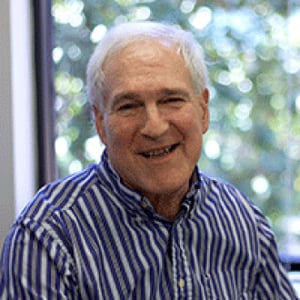
Professorial Lecturer in Law, George Washington University Law School
Gene is a graduate of Brown University and holds a J.D. from the University of Virginia where he received the Fortsman Fellowship. He was also a Fulbright Fellow.
He presently serves as Adjunct Law Professor at George Washington University School of Law; Fellow at the Shorenstein Center on Media, Politics and Public Policy of the Harvard Kennedy School; Non-Resident Senior Fellow at The Digital Innovation & Democracy Initiative of The German Marshall Fund; Senior Fellow at the Silicon Flatirons Center for Law, Technology, and Entrepreneurship at the University of Colorado; and on the boards of International Media Support and Global Partners Digital.
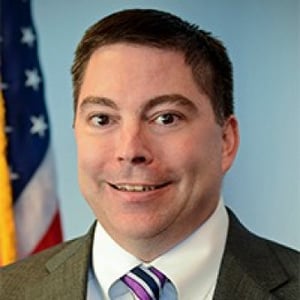
Visiting Fellow, Hudson Institute
Michael O’Rielly is a visiting fellow with Hudson Institute’s Center for the Economics of the Internet.
Comm. O'Rielly was nominated for a seat on the Federal Communications Commission by President Barack Obama on August 1, 2013 and was confirmed unanimously by the United States Senate on October 29, 2013. He was sworn into office on November 4, 2013. On January 29, 2015, he was sworn into office for a new term, following his re-nomination by the President and confirmation by the United States Senate and served through December 11, 2020.
Prior to joining the agency Commissioner O’Rielly served as a Policy Advisor in the Office of the Senate Republican Whip, led by U.S. Senator John Cornyn, since January 2013. He worked in the Republican Whip’s Office since 2010, as an Advisor from 2010 to 2012 and Deputy Chief of Staff and Policy Director from 2012 to 2013 for U.S. Senator Jon Kyl.
He previously worked for the Republican Policy Committee in the U.S. Senate as a Policy Analyst for Banking, Technology, Transportation, Trade, and Commerce issues from 2009 to 2010. Prior to this, Commissioner O’Rielly worked in the Office of U.S. Senator John Sununu, as Legislative Director from 2007 to 2009, and Senior Legislative Assistant from 2003 to 2007. Before his tenure as a Senate staffer, he served as a Professional Staff Member on the Committee on Energy and Commerce in the United States House of Representatives from 1998 to 2003, and Telecommunications Policy Analyst from 1995 to 1998.
He began his career as a Legislative Assistant to U.S. Congressman Tom Bliley from 1994 to 1995.
Commissioner O’Rielly received his B.A. from the University of Rochester.
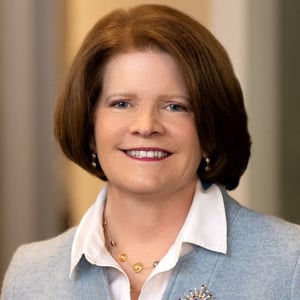
Partner, Antitrust and Competition, Wilson Sonsini Goodrich & Rosati
Maureen Ohlhausen is a partner in the Washington, D.C., office of Wilson Sonsini Goodrich & Rosati, where she advises industry-leading clients on complex antitrust and litigation matters, with a focus on high-profile cases. Sought after for her depth of experience on antitrust and Federal Trade Commission (FTC)-related issues, Maureen is known for her relationships with officials in the U.S. and abroad.
After finishing law school and clerking at the U.S. Court of Appeals for the D.C. Circuit, Maureen joined the FTC in 1997. She held a series of roles at the agency over the next 12 years, rising to the position of Director of the FTC Office of Policy Planning, where she led the agency’s work on e-commerce and headed the FTC’s Internet Access Task Force, which produced an influential report analyzing competition and consumer protection legal issues in the broadband and internet sectors. She then went into private practice at a leading telecommunications law firm, where she headed the FTC practice group.
In 2012, Maureen was confirmed by the Senate as a Commissioner of the FTC and was appointed Acting Chairman in January 2017, a role she held until May 2018. As Acting Chairman, Maureen directed all aspects of the agency’s antitrust work, including merger review, conduct enforcement, and all consumer protection enforcement, with an emphasis on privacy and technology issues. Under her leadership, the FTC won several influential merger challenges in court and reached a number of key digital privacy settlements.
To date, Maureen is the only FTC Commissioner to have received the Robert Pitofsky Lifetime Achievement Award in recognition of her contributions to the FTC.
Following the end of her term at the FTC, and immediately prior to joining Wilson Sonsini, Maureen was chair of the global antitrust and competition practice at Baker Botts, based in that firm’s Washington, D.C., office.
A recognized thought leader, Maureen is a frequent author and speaker, and is often quoted by leading print and broadcast media on antitrust, FTC, and privacy and data security matters. She has published dozens of articles on antitrust, privacy, intellectual property, regulation, FTC litigation, telecommunications, and international law issues in prestigious publications. During her tenure at the FTC and in private practice, she testified more than two dozen times before Congress, including before the Senate Commerce Committee and the House Energy and Commerce Antitrust Sub-Committee. She also testified before the Antitrust Modernization Commission.

U.S. Court of Appeals, D.C. Circuit
Judge Williams practiced law in New York City (at the firm of Debevoise Plimpton and as an Assistant U.S. Attorney) and then taught law at the University of Colorado Law School from 1969 to 1986, with visiting years at UCLA, SMU, and the University of Chicago (where he was also a fellow in law and economics). He was appointed to the U.S. Court of Appeals for the D.C. Circuit in 1986. His most recent book is a biography of Vasily Maklakov, The Reformer: How One Liberal Fought to Preempt the Russian Revolution (Encounter Books, 2017).
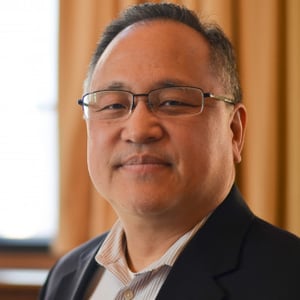
John H. Chestnut Professor of Law, Communication, and Computer & Information Science; Founding Director, Center for Technology, Innovation and Competition, University of Pennsylvania Law School
Christopher S. Yoo is the John H. Chestnut Professor of Law and a Professor at the Annenberg School for Communication and in the Computer & Information Science Department of School of Engineering and Applied Science at the University of Pennsylvania, where he is also the Founding Director of the Center for Technology, Innovation and Competition. He is the author of over one hundred scholarly works and has taught at over a dozen universities around the world. Professor Yoo received his A.B. from Harvard, his M.B.A. from UCLA, and his J.D. from Northwestern University. Before entering the academy, Professor Yoo clerked for Justice Anthony M. Kennedy of the Supreme Court of the United States and practiced law with the predecessor firm to Hogan Lovells under the supervision of now-Chief Justice John G. Roberts, Jr. Before joining the University of Pennsylvania, he taught for eight years at the Vanderbilt Law School. He is frequently called to testify before the U.S. Congress, Federal Trade Commission, Department of Justice Antitrust Division, Federal Communications Commission, foreign governments, and international organizations.
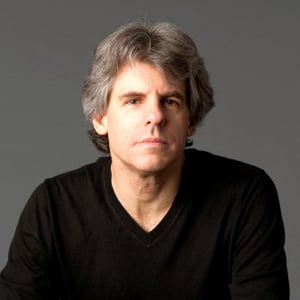
Carmack Waterhouse Professor of Health Law, Policy, and Ethics; Co-Director, Georgetown-Johns Hopkins Joint Program in Law and Public Health, Georgetown University
M. Gregg Bloche, M.D., J.D., is Professor of Law at Georgetown University and author of The Hippocratic Myth: Why Doctors Are Under Pressure to Ration Care, Practice Politics, and Compromise Their Promise to Heal. He is a nationally and internationally recognized expert on health law and policy. Bloche’s writing has appeared in a wide range of venues, including the New England Journal of Medicine, Health Affairs and the Journal of the American Medical Association; leading law reviews; and the New York Times, Washington Post, & other media outlets. He has also been a frequent commentator in national broadcast media. He was a health care advisor to President Obama’s 2008 campaign, as well as the presidential transition, and he spoke frequently for the campaign as a “surrogate.” Bloche has held teaching and research appointments at the University of Chicago, UCLA, and Columbia law schools, as well as the Brookings Institution, and the Harvard School of Public Health. He is a graduate of the law and medical schools at Yale, and he completed a residency in psychiatry at Columbia-Presbyterian Medical Center in New York. His awards and honors include a Guggenheim Fellowship and a Robert Wood Johnson Investigator Award in Health Policy Research. Bloche serves on several editorial boards and has advised governments and non-profits in the U.S. and abroad on a wide range of health policy issues. He lives in Washington, D.C.
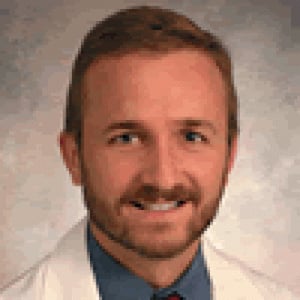
Associate Professor of Medicine, General Internal Medicine, University of Chicago
Dr. Curlin is a hospice and palliative care physician, researcher, and medical ethicist. As founding Co-Director of the Program on Medicine and Religion, Dr. Curlin is working with Dr. Dan Sulmasy and colleagues from the Pritzker School of Medicine and the University of Chicago Divinity School to foster inquiry into and public discourse regarding the intersections of religion and the practice of medicine.
After graduating from the University of North Carolina School of Medicine, Curlin moved to the University of Chicago where he completed internal medicine residency training and fellowships in the Robert Wood Johnson Foundation Clinical Scholars Program and the MacLean Center for Clinical Medical Ethics. He joined the faculty in 2003.
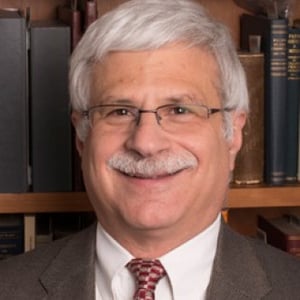
Professor of Law, Catholic University of America
Robert Destro served as Assistant Secretary for the Bureau of Democracy, Human Rights, and Labor (DRL). He has a long history as a human rights advocate and civil rights attorney with expertise in elections, employment, and constitutional law. Destro has served on the faculty at Catholic University’s Columbus School of Law since 1982 and served as its interim dean from 1999 to 2001. He was founding director of the Interdisciplinary Program in Law and Religion and served as the Director of the Institute for Policy Research and Catholic Studies from June 2017 to September 2019. He served as a commissioner on the U.S. Commission on Civil Rights from 1983-1989. His legal work includes collaboration with the Peace Research Institute Oslo in a fifteen-year dialogue among Muslim, Christian, and Jewish leaders in the legal, business, and religious fields in the United States and the Middle East as well as efforts promoting the release of political prisoners and prisoners of conscience in the Middle East. He has served as voting rights counsel for the Ohio Secretary of State and has advocated for the first amendment rights of individuals and organizations.
He earned a B.A. from Miami University, Ohio, and a J.D. from the University of California at Berkeley. He is an active member of the Bar in Ohio and California.
The rest of his bio including his publications are available on the Catholic University Faculty page linked here.
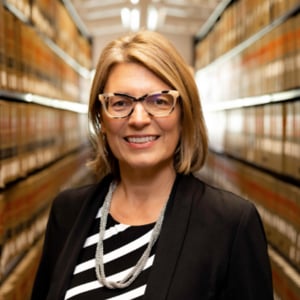
Associate Dean and Professor of Law, Case Western Reserve University School of Law
Jessie Hill’s teaching and scholarship focus on constitutional law, civil rights, reproductive rights, and law and religion. Her articles have been published in the Michigan Law Review, Duke Law Journal, Georgetown Law Journal, and Texas Law Review, among others. She has also appeared in numerous local and national press outlets, including CNN, the New York Times, Ms. Magazine, and NPR.
She is the founding director of the Reproductive Rights Law Initiative at the School of Law, which provides education and legal support relating to reproductive rights. Her work was recently profiled in the Case Law-Med magazine. She is a recipient of the university’s Distinguished Research Award. She has also been appointed a Nootbaar Fellow in Law and Religion at Pepperdine University Caruso School of Law. In 2023, she received both the Black Law Students Association Faculty Award and the Champion for Women Award from the Cuyahoga Democratic Women’s Caucus, and she has been recognized by the ACLU of Ohio for her reproductive rights advocacy.
Professor Hill joined the faculty in 2003 after practicing First Amendment and civil rights law with the firm of Berkman, Gordon, Murray & DeVan in Cleveland. Before entering private practice, Professor Hill worked at the Reproductive Freedom Project of the National ACLU office in New York. She also served as law clerk to the Honorable Karen Nelson Moore of the United States Court of Appeals for the Sixth Circuit. She received her JD, magna cum laude, from Harvard University and her AB, magna cum laude, from Brown University.
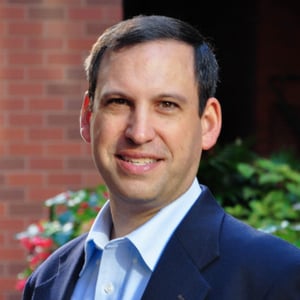
President, Becket Fund for Religious Liberty; Professor of Law and Co-Director of the Center for Religious Liberty, Catholic University; Visiting Professor, Harvard Law School
Mark joined the Becket team in 2011 and splits his time as Associate Professor at The Catholic University of America, Columbus School of Law, and as Visiting Professor at Harvard Law School. Mark teaches constitutional law, religious liberty, torts, and evidence. He has been voted Teacher of the Year three years in a row by the Law School’s Student Bar Association.
Mark has broad experience litigating First Amendment religious exercise and free speech cases. He has represented the winning parties in a variety of Supreme Court First Amendment cases including Hobby Lobby, Little Sisters, Wheaton College, and Holt. In January 2014, Mark argued before the Supreme Court in McCullen v. Coakley, a First Amendment challenge to a Massachusetts speech restriction outside of abortion clinics. The Justices ruled in favor of his clients 9-0. Mark also led a successful eight-year litigation battle against Governor Blagojevich’s effort to force religious pharmacists to distribute the morning-after and week-after pills.
Mark’s academic writing focuses on the First and Fourteenth Amendments, and has appeared in a variety of prestigious journals, including the Harvard Law Review.
Mark is a widely sought after speaker on constitutional issues, particularly concerning abortion and the First Amendment. Professor Rienzi has been invited to discuss these issues at Harvard Law School, Columbia University Law School, Georgetown University Law Center, Boston College Law School, Notre Dame Law School, the National Press Club, and the Capitol. He has been quoted on constitutional law issues on NPR, in the Washington Times, The New York Daily News, and the Chicago Sun-Times. Mark has also been featured on the Kelly File, Fox News Sunday, Your World with Neil Cavuto, Geraldo at Large, CNN Tonight, CNN Live, Andrea Mitchell Reports, and Wall Street Journal Live.
Prior to joining Becket, Mark served as counsel for the litigation department and the intellectual property litigation practice group of WilmerHale LLP. His practice focused on complex civil and appellate litigation with a particular emphasis on intellectual property and First Amendment issues. Prior to joining WilmerHale, he served as law clerk to the Hon. Stephen F. Williams, senior circuit judge for the U.S. Court of Appeals for the D.C. Circuit. Prior to that, Mark was an editor of the Harvard Law Review, and earned his J.D. from Harvard Law School and B.A. from Princeton University, both with honors.
Associate Dean for Academic Affairs and James. E. Beasley Profes, Temple University Beasley School of Law
Duncan B. Hollis is Associate Dean for Academic Affairs and James E. Beasley Professor of Law at Temple Law School. His scholarship focuses on issues of authority in international and foreign affairs law, asking who exercises authority in the formation, interpretation and application of international law, and who is it that has the authority to apply such law to, or for, national actors. Hollis has focused on treaties and cyberspace as the key subjects for his studies of authority. He is the editor of the Oxford Guide to Treaties (OUP, 2012) which was awarded the 2013 ASIL Certificate of Merit for high technical craftsmanship and utility to practicing lawyers. He also co-edited National Treaty Law & Practice (ASIL & Martinus Nijhoff, 2005), which examined how various countries incorporate treaty rules into their national laws. His cyber-related research has involved studying international law’s role in regulating cyberthreats and the future of cybernorms. Professor Hollis’s scholarship has appeared in various books and journals, including the Texas Law Review, the Southern California Law Review, the Virginia Journal of International Law, and the Berkeley Journal of International Law. Professor Hollis is a regular contributor to the premier international law blog, Opinio Juris. His expertise on treaty issues has been sought or used by all three branches of the federal government as well as several international organizations.
Professor Hollis received an A.B., summa cum laude, from Bowdoin College. In 1996, he completed a joint-degree program, receiving a Masters in International Law and Diplomacy from the Fletcher School at Tufts University and a Juris Doctor,summa cum laude, from Boston College Law School. At Boston College, he was an Executive Editor of the Law Review and received the James W. Smith Award for Highest Academic Rank.
Following graduation, Professor Hollis worked for the International Department of Steptoe & Johnson LLP. In 1998, Professor Hollis joined the Office of the Legal Adviser at the U.S. Department of State, where he worked until joining the Temple faculty in 2004. During his tenure at the State Department, Professor Hollis served for several years as the attorney-adviser for treaty affairs, working on various legal and constitutional issues associated with the negotiation, conclusion and implementation of U.S. treaties. Later, Professor Hollis acted as legal counsel for the Department's Bureau of Oceans, International Environmental and Scientific Affairs, specializing in U.S.-Canada environmental issues and U.S. participation in multilateral environmental agreements. Professor Hollis's practice has also included international litigation before the International Court of Justice. In particular, he served as Counsel to the United States in the provisional measures phase of theCase Concerning Avena and Other Mexican Nationals (Mexico v. United States)and contributed to the U.S. presentation in the Oil Platforms Case (Iran v. United States).

Maurice A. Deane Distinguished Professor of Constitutional Law and Faculty Director of International Programs, Hofstra University School of Law
Professor Ku’s primary research interest is the relationship of international law to constitutional law. He has also conducted academic research on a wide range of topics including international dispute resolution, international criminal law, and China’s relationship with international law. He teaches courses such as U.S. constitutional law, U.S. foreign affairs law, transnational law, and international trade and business law. Since 2014, he has served as the faculty director of international programs, overseeing Hofstra Law’s study abroad, exchange and LL.M. programs. Professor Ku also teaches Constitutional Law in our online degree programs: Master of Laws in American Law and Master of Arts in American Legal Studies. He has also been selected as the John DeWitt Gregory Research Scholar and as a Hofstra Law Research Fellow. He is a member of the American Law Institute.
He is the co-author, with John Yoo, of Taming Globalization: International Law, the U.S. Constitution, and the New World Order (Oxford University Press 2012). He also has published more than 40 law review articles, book chapters and symposia essays. He has given dozens of academic lectures and workshops at major universities and conferences in the United States, Europe and Asia.
He co-founded the leading international law weblog Opinio Juris, which is read daily by thousands worldwide. His essays and op-eds have been published in major news publications such as the Wall Street Journal, the Los Angeles Times, and the NYTimes.com. He has been frequently interviewed for television news programs and quoted in print and electronic media. He has also signed or submitted amicus briefs to national and international courts and served as an expert witness in both domestic and international proceedings.
Before joining the Hofstra Law faculty, Professor Ku served as a law clerk to the Honorable Jerry E. Smith of the U.S. Court of Appeals for the Fifth Circuit and as an Olin Fellow and Lecturer in Law at the University of Virginia Law School. Professor Ku also practiced as an associate at the New York City law firm of Debevoise & Plimpton, specializing in litigation and arbitration arising out of international disputes. He has been a visiting professor at the College of William & Mary Marshall- Wythe School of Law in Williamsburg, Virginia; a Fulbright Distinguished Lecturer in Law at East China University of Political Science and Law in Shanghai, China; and a Taiwan Fellow at National Taiwan University in Taipei, Taiwan. He is a member of the New York Bar and a graduate of Yale College and Yale Law School.

George C. Dix Professor in Constitutional Law, Northwestern University Pritzker School of Law
John O. McGinnis is a graduate of Harvard College and Harvard Law School where he was an editor of the Harvard Law Review. He also has an MA degree from Balliol College, Oxford, in philosophy and theology. Professor McGinnis clerked on the U.S. Court of Appeals for the District of Columbia. From 1987 to 1991, he was deputy assistant attorney general in the Office of Legal Counsel at the Department of Justice. He is the author of Accelerating Democracy: Transforming Government Through Technology (Princeton 2013) and Originalism and the Good Constitution (Harvard 2013) (with M. Rappaport). He is a past winner of the Paul Bator award given by the Federalist Society to an outstanding academic under 40. He has been listed by the United States on the roster of panelists who may be called upon to decide World Trade Organization Disputes.
Professor of Law and Director of the Center for Global Law and P, Santa Clara Law

Judge, United States Court of Appeals, District of Columbia Circuit
Judge Katsas was appointed to the D.C. Circuit in December 2017. He graduated from Princeton University and Harvard Law School, where he was an executive editor on the Harvard Law Review. Between 1989 and 1992, he served as a law clerk to Judge Edward Becker on the Third Circuit, to then-Judge Clarence Thomas on the D.C. Circuit, and to Justice Thomas on the Supreme Court. Between 1992 and 2001, he was an associate and then partner in the Washington office of Jones Day, where he specialized in appellate and complex civil litigation. Between 2001 and 2009, he served in many senior positions in the Department of Justice, including as Assistant Attorney General for the Civil Division and as Acting Associate Attorney General. In 2009, he returned to Jones Day. From January to December 2017, he served as Deputy Assistant to the President and Deputy Counsel to the President.
Before joining the bench, Judge Katsas argued more than 75 appeals, including three cases in the Supreme Court, 13 cases in the D.C. Circuit, and cases in every other federal court of appeals. By appointment of the Chief Justice, he served on the Advisory Committee on Appellate Rules from 2013 to 2017. In 2016, he was elected to membership in the American Academy of Appellate Lawyers.
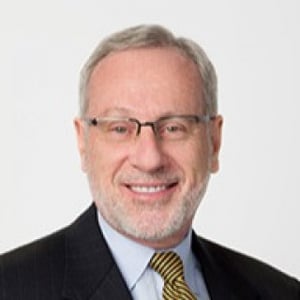
President, Center for Constitutional Litigation
Robert S. Peck, founder and president of CCL, is a sought-after appellate litigator within the plaintiffs’ bar. He is credited with having developed groundbreaking constitutional challenges to laws impeding access to courts. He regularly appears before the U.S. Supreme Court and state supreme courts, litigating cases on the merits as well as at the petition stage. Bob’s diverse practice includes state and federal constitutional law, complex civil litigation, federal preemption, personal jurisdiction, punitive damages, products liability, mass torts, consumer protection, and Section 1983 cases.
Bob has taught advanced constitutional law and state constitutional law at The George Washington University Law School and American University Washington College of Law as a member of the adjunct faculty. He is a past chair of the Board of Advisors of the RAND Corporation’s Institute for Civil Justice; past member of the Board of Directors of the National Center for State Courts; a member of the advisory committee of the Civil Justice Research Institute at the University of California, Berkeley; and a Leaders Forum member of the American Association for Justice. Bob is a past president of the U.S. Supreme Court Fellows Alumni Association and the Freedom to Read Foundation, and a past national chair of Lawyers for Libraries. He has received the prestigious AV Preeminent rating from Martindale Hubbell for both legal ability and ethical standards.

Vice President for Legal Affairs, Cato Institute
Roger Pilon is the Cato’s Institute’s vice president for legal affairs, the founding director of Cato’s Robert A. Levy Center for Constitutional Studies, the inaugural holder of Cato’s B. Kenneth Simon Chair in Constitutional Studies, and the founding publisher of the Cato Supreme Court Review.
Prior to joining Cato, Pilon held five senior posts in the Reagan administration, including at State and Justice, and was a national fellow at Stanford’s Hoover Institution. In 1989 the Bicentennial Commission presented him with its Benjamin Franklin Award for excellence in writing on the U.S. Constitution. In 2001 Columbia University’s School of General Studies awarded him its Alumni Medal of Distinction. Pilon lectures and debates at universities and law schools across the country and testifies often before Congress.
His writing has appeared in the Wall Street Journal, the Washington Post, the New York Times, the Los Angeles Times, Legal Times, National Law Journal, Harvard Journal of Law and Public Policy, Stanford Law and Policy Review, and elsewhere. He has appeared on ABC’s Nightline, CBS’s 60 Minutes II, Fox News Channel, NPR, CNN, MSNBC, CNBC, C-SPAN, and other media.
Pilon holds a BA from Columbia University, an MA and a PhD from the University of Chicago, and a JD from the George Washington University School of Law.

Judge, United States Court of Appeals, Fifth Circuit
Judge Smith was appointed U.S. Circuit Judge for the Fifth Circuit by President Reagan and entered on duty in January 1988. He attended public schools in Lubbock, Texas, and graduated from Yale University, receiving a B.A. in 1969 and a J.D. in 1972.
Judge Smith was a Law Clerk to U.S. District Judge Halbert Woodward, Northern District of Texas, 1972-1973; with the Houston law firm of Fulbright & Jaworski as an Associate, 1973-1981, and as Partner, 1981-1984; and as City Attorney, City of Houston, 1984-1988. He was Chairman, Civil Service Commission, City of Houston, 1982-1984; and a Director, Harris County Housing Authority, 1978-1980.
Judge Smith lives in Houston and is married to Mary Jane Smith and has four children: Ruth Ann, Clark, J.J., and Brandon. He formerly was Chair of the Advisory Committee on Federal Rules of Evidence of the Judicial Conference of the United States. He assists LexisNexis/Matthew Bender & Co. in periodic revisions of several chapters of Moore’s Federal Practice.
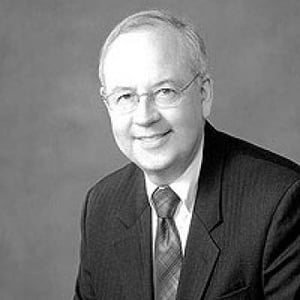
U.S. Court of Appeals, District of Columbia Circuit (1983-1989); U.S. Solicitor General (1989-1993)
Kenneth Starr is a former United States Federal Court of Appeals Judge, U.S. Solicitor General, and Independent Counsel. He is the former President and Chancellor of Baylor University where he held the Louise L. Morrison Chair of Constitutional Law at Baylor University Law School.

Maurice and Hilda Friedman Professor of Law, Columbia Law School; CEO, New Civil Liberties Alliance
Philip Hamburger is the Maurice and Hilda Friedman Professor of Law at Columbia Law School, and Chief Executive Officer at the New Civil Liberties Alliance. Before coming to Columbia, he was the John P. Wilson Professor at the University of Chicago Law School.
He writes on constitutional law and its history—with particular emphasis on religious liberty, freedom of speech and the press, judicial office, administrative power, and unconstitutional conditions.
His books are Separation of Church and State (Harvard 2002), Law and Judicial Duty (Harvard 2008), Is Administrative Law Unlawful? (Chicago 2014), The Administrative Threat (Encounter 2017), and Liberal Suppression: Section 501(c)(3) and the Taxation of Speech (Chicago 2018). A forthcoming book is Purchasing Submission: Conditions, Power, and Freedom (Harvard 2021).
He is a member of the American Academy of Arts and Sciences, and he has served on the board of directors of the American Society for Legal History. He has twice received the Sutherland Prize for the most significant contribution to English legal history, and has been awarded the Henry Paolucci - Walter Bagehot Book Award, the Hayek Book Prize, and the Bradley Prize.
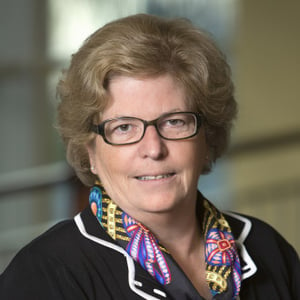
Former Managing Director, BlackRock Inc.
Joanne Medero was until July 2020 a Managing Director at BlackRock where she was member of their Global Public Policy Group and a Senior Advisor to the Vice Chairman on the intersection of public policy and corporate governance. In June 2021, Ms. Medero was appointed a director/trustee of the Nuveen Funds.
Ms. Medero's service with BlackRock dates back to 1996, including her years with Barclays Global Investors (BGI), which merged with BlackRock in 2009. She joined BGI as its Global General Counsel in 1996 and after more than ten years in that role, became the global head of Government Relations and Public Policy for Barclays’ investment banking and investment management businesses. Prior to joining BGI, Ms. Medero was a partner with Orrick, Herrington and Sutcliffe specializing in derivatives and market regulation issues. Ms. Medero also served as general counsel of the Commodity Futures Trading Commission (1989-1993) and as an associate director for legal and financial affairs at the Office of Presidential Personnel, The White House (1986-1989).
Ms. Medero is a graduate of St. Lawrence University and received her JD from George Washington University.

Senior Vice President for Legal Studies, Cato Institute
Clark Neily is senior vice president for legal studies at the Cato Institute. His areas of interest include constitutional law, overcriminalization, civil forfeiture, police accountability, and gun rights. Neily is the author of Terms of Engagement: How Our Courts Should Enforce the Constitution’s Promise of Limited Government. His writing has appeared in the Wall Street Journal, Forbes, and National Review Online, as well as various law reviews, including the Harvard Journal of Law and Public Policy, George Mason Law Review, Georgetown Journal of Law and Public Policy, NYU Journal of Law and Liberty, and Texas Review of Law and Politics. Neily is a frequent guest speaker and lecturer for the Federalist Society, Institute for Humane Studies, and American Constitution Society.
Before joining Cato in 2017, Neily was a senior attorney and constitutional litigator at the Institute for Justice and director of the Institute’s Center for Judicial Engagement. He is also an adjunct professor at the University of Texas School of Law, where he teaches constitutional litigation and public-interest law.
Neily served as co-counsel in District of Columbia v. Heller, the historic case in which the Supreme Court held for the first time that the Second Amendment protects an individual right to own a gun for self-defense.
Neily began his legal career as a law clerk to Judge Royce Lamberth on the U.S. District Court for the District of Columbia. After that he spent four years in the trial department of the Dallas-based firm Thompson & Knight. Neily received his undergraduate and law degrees from the University of Texas, where he was Chief Articles Editor of the Texas Law Review.
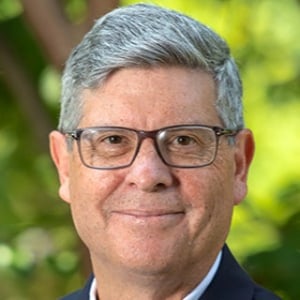
E. Claiborne Robins Distinguished Chair in Law, University of Richmond School of Law
Professor Kurt Lash teaches and writes about constitutional law. Founder and director of the Richmond Program on the American Constitution, Professor Lash has published widely on the subjects of constitutional law and constitutional history, including The Fourteenth Amendment and the Privileges or Immunities of American Citizenship (Cambridge University Press, 2014), The Lost History of the Ninth Amendment (Oxford University Press, 2009), and The American First Amendment in the Twenty-first Century: Cases and Materials(with William W. Van Alstyne) (5th ed., Foundation Press, 2014). An elected member of the American Law Institute, Professor Lash’s work has appeared in numerous legal journals including the Stanford Law Journal, Georgetown Law Journal, Virginia Law Review, andNotre Dame Law Review. He has been a visiting professor at Northwestern University School of Law and is the former director of the University of Illinois College of Law Program in Constitutional Theory, History, and Law.

Competition Policy in the Telecommunications Space
Gene Kimmelman, Michael O'Rielly, Maureen K. Ohlhausen, Stephen F. Williams, Christopher S. Yoo
In today’s rapidly evolving telecommunications landscape, the development of new technologies and distribution platforms are...
Reining in the Administrative State
Palo Alto, CaliforniaFrom Obamacare to Cat Care: Is There Anything the Feds Can't Do?
From Obamacare to Cat Care: Is There Anything the Feds Can't Do?
Jacksonville, FloridaTerms of Engagement: How Our Courts Should Enforce the Constitution’s Promise of Limited Government
Boston, MassachusettsTerms of Engagement
Houston, TexasNew Conscience Regulations from the Department of Health & Human Services: Do They Strike the Right Balance Between Conscience and the Medical Profession?
M. Gregg Bloche, Farr A. Curlin, Robert A. Destro, Jessie Hill, Mark L. Rienzi
The protection of conscience for health care providers has, in some arguments, been pitted against...
Panel 3: Constitutional and Prudential Limits on the Treaty Power: Federalism, Delegation, or Some Other Principle?
Duncan Hollis, Julian Ku, John O. McGinnis, David L. Sloss
Prof. Duncan Hollis, Temple University Beasley School of Law Prof. John McGinnis, Northwestern University Law...
The Lost History of the 9th Amendment
Orlando, FloridaLitigation: Civil Litigation under the Roberts Court
Gregory G. Katsas, Robert S. Peck, Carter G. Phillips, Roger Pilon, Jerry E. Smith, Kenneth W. Starr
The Roberts Court -- is it pro-business? Many Court watchers say so. But, whether pro-business...