
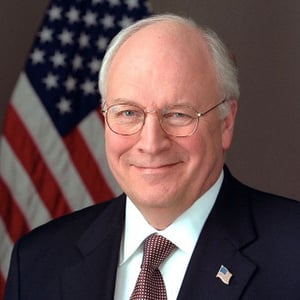
Former Vice President of the United States
Vice President Richard B. Cheney has had a distinguished career as a businessman and public servant, serving four Presidents and as an elected official. Throughout his service, Mr. Cheney served with duty, honor, and unwavering leadership, gaining him the respect of the American people during trying military times.
Mr. Cheney was born in Lincoln, Nebraska, on January 30, 1941 and grew up in Casper, Wyoming. He earned his bachelor's and master's of arts degrees from the University of Wyoming. His career in public service began in 1969 when he joined the Nixon Administration, serving in a number of positions at the Cost of Living Council, at the Office of Economic Opportunity, and within the White House.
When Gerald Ford assumed the Presidency in August 1974, Mr. Cheney served on the transition team and later as Deputy Assistant to the President. In November 1975, he was named Assistant to the President and White House Chief of Staff, a position he held throughout the remainder of the Ford Administration.
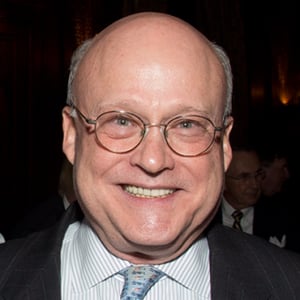
President Emeritus, Intercollegiate Studies Institute
T. Kenneth Cribb Jr. is the former president of the Intercollegiate Studies Institute. Mr. Cribb was Assistant to the President for Domestic Affairs in the Reagan administration, serving as President Reagan’s top adviser on domestic matters. Earlier in the administration he held the position of Counselor to the Attorney General. He also served as Vice Chairman of the Fulbright Foreign Scholarship Board from 1989 to 1992.
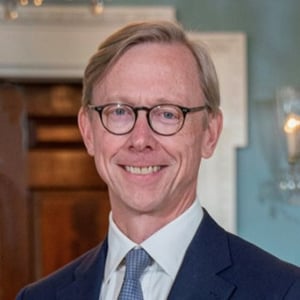
Founder, Latitude, LLC
Brian Hook is the founder of Latitude, LLC, an international strategic consulting firm based in Washington, DC.
Mr. Hook worked on the Romney campaign as senior advisor on foreign policy. He chaired the foreign policy and national security task forces of the Romney Readiness Project. From 2010-2011, he was the foreign policy director of Governor Tim Pawlenty’s presidential campaign.
Mr. Hook served in a number of positions during the Bush Administration, including Assistant Secretary of State for International Organizations; Senior Advisor to the U.S. Ambassador to the United Nations; Special Assistant to the President for Policy, Office of the Chief of Staff; and Counsel, Office of Legal Policy, at the Justice Department.
From 1999-2003, he practiced corporate law at Hogan & Hartson in Washington, D.C.
Before practicing law, he served as a policy advisor to Iowa Governor Terry Branstad and to U.S. Congressman James Leach.

Professor Emeritus of Law, Antonin Scalia Law School, George Mason University
Jeremy A. Rabkin is a Professor Emeritus of Law at the Antonin Scalia Law School, George Mason University. Before joining the faculty in June 2007, he was for over two decades a professor in the Department of Government at Cornell University. Professor Rabkin serves on the board of directors of the Center for Individual Rights, a public interest law firm based in Washington, D.C. Previously he was a board member of the U.S. Institute of Peace and the board of academic advisors of the American Enterprise Institute.
Professor Rabkin’s books include Law Without Nations? (Princeton University Press, 2005). He authored “If You Need a Friend, Don’t Call a Cosmopolitan,” a chapter in Varieties of Sovereignty and Citizenship (Sigal R. Ben-Porath & Rogers M. Smith eds., University of Pennsylvania Press, 2012). His articles have appeared in major law reviews and political science journals and his journalistic contributions in a range of magazines and newspapers, including the Washington Post and the Wall Street Journal.
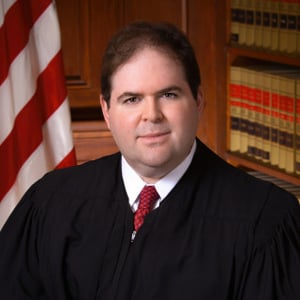
Judge, United States Court of Appeals, Eleventh Circuit
On November 19, 2019, Judge Robert J. Luck was appointed to the United States Court of Appeals for the Eleventh Circuit by President Donald Trump. Prior to serving on the federal bench, he was appointed to the Florida Supreme Court by Governor Ron DeSantis on January 14, 2019. He previously served on the Third District Court of Appeal in Miami after his appointment there by Governor Rick Scott in March 2017.
Earlier, Judge Luck served on the Eleventh Judicial Circuit Court of Florida from September 2013 to March 2017. He presided in the Criminal, Civil, and Appellate Divisions. Judge Luck, in his years as a trial court judge, tried seventy jury trials, and heard dozens of appeals from the county court and municipal agencies. Judge Luck was appointed to the circuit court in 2013 and was elected by the voters of Miami-Dade County to retain his seat in 2016.
Prior to his service on the bench, Judge Luck was an Assistant United States Attorney for the Southern District of Florida. In his years as a federal prosecutor, he was assigned to the Appeals, Major Crimes, and Economic Crimes Sections of the U.S. Attorney’s Office. Judge Luck tried nineteen jury trials before the federal district court and argued three appeals to the United States Court of Appeals for the Eleventh Circuit. In his final year in the Office, he was a Deputy Chief in the Major Crimes Section.
Earlier in his career, Judge Luck was a legislative correspondent for two United States Senators, a law clerk and staff attorney to Circuit Judge Edward E. Carnes on the United States Court of Appeals for the Eleventh Circuit, and a part of the Greenberg Traurig firm’s appellate section. Judge Luck received his Juris Doctor from the University of Florida Levin College of Law magna cum laude and was asked to join the Order of the Coif. Judge Luck also served as Editor-in-Chief of the Florida Law Review. Judge Luck received his Bachelor of Arts in Economics from the University of Florida with highest honors.

Director, Holocaust Resource Center at the Temple Judea of Manhasset, New York
IRVING ROTH is the Director of the Holocaust Resource Center at the Temple Judea of Manhasset, New York, and is the former education director of the Holocaust Memorial and Education Center of Nassau County. An internationally known educator, Mr. Roth has endeavored to teach people about the Holocaust and the lessons that can be learned from that experience. Through his participation in programs such as Adopt A Survivor, in which young people ‘adopt’ a Holocaust survivor and learn of his or her experiences, and the March of the Living, Mr. Roth has worked to ensure that an atrocity like the Holocaust never happens again. Many people throughout his community owe their knowledge of the Holocaust to Mr. Roth. Mr. Roth has been the recipient of numerous awards and accolades for his work promoting a more accepting and diverse world. It is his life’s mission to make the world a better place that has earned Mr. Roth the Spirit of Anne Frank Award.

Judge, United States Court of Appeals, District of Columbia Circuit
Judge Katsas was appointed to the D.C. Circuit in December 2017. He graduated from Princeton University and Harvard Law School, where he was an executive editor on the Harvard Law Review. Between 1989 and 1992, he served as a law clerk to Judge Edward Becker on the Third Circuit, to then-Judge Clarence Thomas on the D.C. Circuit, and to Justice Thomas on the Supreme Court. Between 1992 and 2001, he was an associate and then partner in the Washington office of Jones Day, where he specialized in appellate and complex civil litigation. Between 2001 and 2009, he served in many senior positions in the Department of Justice, including as Assistant Attorney General for the Civil Division and as Acting Associate Attorney General. In 2009, he returned to Jones Day. From January to December 2017, he served as Deputy Assistant to the President and Deputy Counsel to the President.
Before joining the bench, Judge Katsas argued more than 75 appeals, including three cases in the Supreme Court, 13 cases in the D.C. Circuit, and cases in every other federal court of appeals. By appointment of the Chief Justice, he served on the Advisory Committee on Appellate Rules from 2013 to 2017. In 2016, he was elected to membership in the American Academy of Appellate Lawyers.
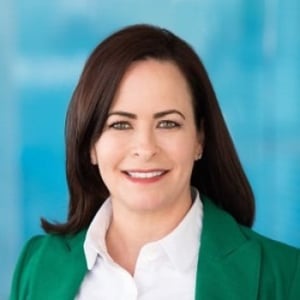
Executive Vice President, Policy, Business Roundtable
Ambassador Kristen Silverberg is Executive Vice President, Policy at Business Roundtable, where she leads the Policy team. She previously served as a Managing Director at the Institute of International Finance. She served in the George W. Bush Administration as U.S. Ambassador to the European Union from 2008 to 2009 and as Assistant Secretary of State for International Organization Affairs from 2005 to 2008. Prior to her time at the State Department, she held a number of senior positions at the White House including Deputy Domestic Policy Advisor.
Ambassador Silverberg served in 2003 in Baghdad, Iraq for which she received the Secretary of Defense Medal for Outstanding Public Service. She formerly practiced law at Williams and Connolly, LLP in Washington, DC and served as a law clerk to Supreme Court Justice Clarence Thomas and Judge David Sentelle of the U.S. Court of Appeals. She attended Harvard College and the University of Texas School of Law, where she graduated with High Honors.
Ambassador Silverberg serves on the Board of Directors of the CDC Foundation, the Board of Directors of the International Republican Institute, the Board of Directors of Vorbeck Materials, the Advisory Board of the Texas National Security Review, the National Advisory Council of the Aspen Institute Future of Work Initiative, and was recognized by the World Economic Forum as a Young Global Leader.

Emanuel S. Heller Professor of Law, University of California at Berkeley; Thomas Smith Senior Research Fellow, The Civitas Institute, University of Texas at Austin
John Yoo is the Emanuel Heller Professor of Law at the University of California at Berkeley. He is also the Thomas Smith Senior Research Fellow, Civitas Institute, at the University of Texas at Austin. He is also a Nonresident Senior Fellow at the American Enterprise Institute.
His most recent book, The Politically Incorrect Guide to the Supreme Court, co-authored with Robert Delahunty, was published in 2023. Professor Yoo’s other books include Defender-in-Chief: Trump’s Fight for Presidential Power; Striking Power: How Cyber, Robots, and Space Weapons Change the Rules for War; Point of Attack: Preventive War, International Law, and Global Welfare; and Crisis and Command: A History of Executive Power from George Washington to George Bush.
He is a co-author of volumes 1 and 2 of R. Rossum, G. Tarr, V. Munoz & J. Yoo American Constitution Law (Routledge, 2026), and a co-editor of the eight-volume series on the 250th anniversary of the American Revolution, We Hold These Truths, with Yuval Levin and Adam White of the American Enterprise Institute.
Professor Yoo has published more than 100 articles in academic journals on subjects including national security, constitutional law, international law, and the Supreme Court. He also regularly contributes to the editorial pages of the Wall Street Journal, New York Times, Washington Post, Los Angeles Times, and National Review, among others.
Professor Yoo has served in all three branches of government. He was an official in the U.S. Department of Justice, where he worked on national security and terrorism issues after the 9/11 attacks. He served as general counsel of the U.S. Senate Judiciary Committee. He has been a law clerk for Supreme Court Justice Clarence Thomas and federal appeals Judge Laurence Silberman. He has been a visiting professor at the University of Texas at Austin’s School of Civic Leadership, Seoul National University, the Interdisciplinary Center Herzliya, Keio University, Trento University, the University of Chicago, and the Free University of Amsterdam.
Professor Yoo supervises the Public Law and Policy Program and the California Constitution Center. He also serves on the boards of Founding Forward, the Washington Legal Foundation, the Pacific Legal Foundation, the Ulysses Grant Institute, the Federalist Society’s Separation of Powers and Federalism Division, the Universidad Cientifica del Sur Law School, and the Asia-Pacific Law Institute at Seoul National University. He is a winner of the Federalist Society’s Paul Bator award and the Heritage Foundation’s Edwin Meese III Originalism Lectureship.
Professor Yoo graduated from Yale Law School and summa cum laude from Harvard College.
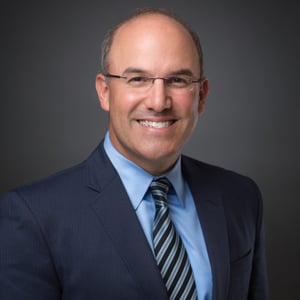
K2 Integrity, Global Co-Managing Partner and Chief Strategy Officer
The Honorable Juan Zarate is the global co-managing partner and chief strategy officer for the global consulting firm, K2 Integrity. He is also the co-founder and Chair of the Board of Consilient, an innovative new fintech.
He is the chairman and co-founder of the Center on Economic and Financial Power (CEFP) at the Foundation for Defense of Democracies, senior adviser at the Center for Strategic and International Studies(CSIS), and a senior fellow at West Point’s Combating Terrorism Center. He was a visiting lecturer in law at the Harvard Law School for eight years and is a published author, including his books “Treasury’s War” (2013) and “Forging Democracy” (1994).
Mr. Zarate sits on the boards of various organizations, including Northwestern Mutual, Cambridge Quantum Computing North America Holdings, Guardian Space Technologies Systems, and the Director’s Advisory Board for the National Counterterrorism Center (NCTC). Since 2014, Mr. Zarate has served as an independent advisor to Coinbase, the largest virtual asset service provider in the United States. With two appointments by Pope Francis,Mr. Zarate sat on the board of the Vatican’s Financial Information Authority for over five years; the Boston Dynamics board for over three years; and for seven years, he was the U.S. advisor on HSBC’s Financial System Vulnerabilities Committee (overseeing remediation of the bank’s anti-money laundering system and adherence with the U.S.DOJ deferred prosecution agreement) and remains an advisor to HSBC’s Group Risk Committee.
Mr. Zarate served as the deputy assistant to the president and deputy national security adviser for combating terrorism (“counterterrorism czar”) from 2005 to 2009, where he was responsible for developing and implementing the U.S. counterterrorism strategy and policies related to transnational security threats, including hostage-taking, piracy, anti-money laundering, kleptocracy, transnational organized crime, and international energy infrastructure protection,. He was responsible for conceiving and leading major initiatives in the post 9/11 period, including the establishment of the Global Initiative to Combat Nuclear Terrorism (GICNT).
He was the first ever assistant secretary of the treasury for terrorist financing and financial crimes. In this role, he led the post-9/11 anti-money laundering and sanctions regime expansion in the United States; helped develop the international standards for AML/CFT and proliferation finance; supervised the Financial Crimes Enforcement Network (FINCEN), the Office of Foreign Assets Control (OFAC), and the Treasury’s Executive Office for Asset Forfeiture (TEOAF); drove the innovative use of the Treasury’s national security–related powers and ultimately the establishment of the Office of Terrorism and Financial Intelligence (TFI). He has also led some of the largest asset recovery ventures in history, including the return of over $3 billion in Iraqi assets.
Mr. Zarate is a former federal terrorism prosecutor, prior to 9/11, serving on the prosecution teams in the East Africa bombings and USS Cole cases, among others. He is a magna cum laude graduate of Harvard College, a cum laude graduate of the Harvard Law School, and a Rotary Fellow at the Universidad de Salamanca. At Harvard College, he won the John P. Reardon Award, as the best male student athlete.

Founder and Executive Director, National Security Institute; Assistant Professor of Law, Antonin Scalia Law School, George Mason University
Jamil N. Jaffer is the Founder and Executive Director of the National Security Institute at the Antonin Scalia Law School at George Mason University where he also serves as an Assistant Professor of Law, Director of the National Security Law and Policy Program, and Director of the Cyber, Intelligence, and National Security LLM Program. Jamil also teaches classes on counterterrorism, intelligence, surveillance, cybersecurity, and other national security matters, as well as a summer course held abroad with U.S. Supreme Court Justice Neil M. Gorsuch. Jamil is also affiliated with Stanford University’s Center for International Security and Cooperation and previously served as a Visiting Fellow at the Hoover Institution from 2016 to 2019.
Jamil is also a Venture Partner with Paladin Capital Group, where he assists the firm with investments across the full range of its themes and theses, including a focus on dual-use national security technologies. Jamil also serves on the board of directors of RangeForce, a cybersecurity training and readiness platform startup and Tozny, a digital identity startup, and on the advisory boards of U.S. Strategic Metals, North America’s largest primary producer of cobalt, a critical mineral used in EV batteries, aerospace, and other national security applications; and Constella Intelligence, a deep and dark web intelligence startup. Jamil also serves as an advisor to Beacon Global Strategies, a strategic advisory firm and Duco, a technology platform startup that connects corporations with geopolitical and international business experts. Jamil is also the managing director of Trigraph Caveat Capital, a private investment vehicle.
Among other things, Jamil currently serves on the Board of Directors for the Greater Washington Board of Trade, the Board of Advisors for the Global Cyber Alliance, and the Advisory Board of the Foundation for the Defense of Democracies’ Center on Cyber and Tech Innovation, the Executive Committee of the Reagan Institute Strategy Group. Jamil is also a Fellow at the Academy for Judaic, Christian, and Islamic Studies, an advisor to the Concordia Summit, and is a member of the Board of Directors for the Center for Intelligence Policy, the Board of Directors of Speech First, and the Executive Committee of the International Law and National Security Practice Group of the Federalist Society.
Immediately prior to his current positions, from 2015-2021, Jamil served as a senior business leader at IronNet Cybersecurity, helping take the company from a bootstrapped first-year technology products startup through two rounds of venture capital fundraising, growing from 40 employees to over 300, and through its listing on New York Stock Exchange. In his role as IronNet's Senior Vice President for Strategy, Partnerships & Corporate Development, Jamil worked directly for the co-CEOs of the company, Gen (ret.) Keith B. Alexander, the former Director of the National Security Agency and Founding Commander of U.S. Cyber Command, and Bill Welch, the former COO of Zscaler and Duo; in that role, Jamil led all of the company’s strategic and technology partnership efforts, including developing go-to-market and technology integration plans with some of the largest cloud platforms and cybersecurity companies in the market, evaluating potential acquisition targets, and developing overall corporate strategy and thought leadership around collective security and collaborative defense in the cyber arena.
Prior to his time at IronNet, Jamil served on the leadership team of the Senate Foreign Relations Committee as Chief Counsel and Senior Advisor under Chairman Bob Corker (R-TN), where he worked on key national security and foreign policy issues, including leading the drafting of the proposed Authorization for the Use of Military Force against ISIS in 2014 and 2015, the AUMF against Syria in 2013, and revisions to the 9/11 AUMF against al Qaeda. Jamil was also the lead architect of the Iran Nuclear Agreement Review Act and two sanctions laws against Russia for its first intervention in Ukraine.
Prior to joining SFRC, Jamil served as Senior Counsel to the House Permanent Select Committee on Intelligence under Chairman Mike Rogers (R-MI) where he led the committee’s oversight of NSA surveillance, NRO intelligence issues, and NGA analytic and collection matters, as well as intelligence community-wide counterterrorism issues. Jamil was also the lead architect of the Cyber Intelligence Sharing and Protection Act, the nation’s first cyber threat intelligence sharing legislation that was signed into law in 2015.
In the Bush Administration, Jamil served in the White House as an Associate Counsel to the President, handling Defense Department, State Department, and intelligence community matters, and serving as one of the White House Counsel’s primary representatives to the National Security Council Deputies Committee.
Prior to the White House, Jamil served on the leadership team of the Justice Department’s National Security Division as Counsel to the Assistant Attorney General for National Security, where he focused on counterterrorism and intelligence matters. At NSD, Jamil helped lead the division’s work on In re: Directives, the first ever two-party litigated matter in the FISA Court and the second case before the FISA Court of Review in its 30-year history. Jamil also led NSD’s efforts on the President’s Comprehensive National Cybersecurity Initiative (CNCI), including the drafting of NSPD-54/HSPD-23, and related classified matters, and advised the National Security Agency (NSA) and U.S. Cyber Command’s predecessor organization, the Joint Function Component Command for Network Warfare (JFCC-NW), on matters related to cyber intelligence collection and offensive cyber activities. For his work on these matters, Jamil was awarded the Assistant Attorney General’s Award for Special Initiative and was among the group of lawyers awarded the Director of National Intelligence’s 2008 Legal Award (Team of the Year – Cyber Legal).
Jamil also served in other positions in the Justice Department, including in the Office of Legal Policy, where he worked on the confirmations of Chief Justice John G. Roberts, Jr. and Justice Samuel A. Alito, Jr. to the United States Supreme Court.
Jamil also served as a lawyer in private practice at Kellogg Huber, a Washington, DC-based litigation boutique, as a policy advisor to Congressman Bob Goodlatte (R-VA), and as a staff member or senior advisor on a number of political campaigns, including two presidential campaigns and a presidential transition team. While in law school, Jamil was a member of the University of Chicago Law Review, managing editor of the Chicago Journal of International Law, and National Symposium Editor of the Harvard Journal of Law & Public Policy. Following law school, Jamil served as a law clerk to Judge Edith H. Jones of the United States Court of Appeals for the Fifth Circuit and, later in his career, as a law clerk to then-Judge Neil M. Gorsuch when he first joined the United States Court of Appeals for the Tenth Circuit as well as a law clerk to Justice Neil Gorsuch when he joined the U.S. Supreme Court.
Jamil has published multiple op-eds and academic articles on national security, foreign policy, cybersecurity, counterterrorism, encryption, and intelligence matters, and is the co-author of a book chapter with former NSA Director Gen. (Ret.) Keith B. Alexander on national security and the press in National Security, Leaks, and the Freedom of the Press: The Pentagon Papers Fifty Years On (2021) and a book chapter with former CIA Director Gen. (ret.) Mike Hayden on ISIS, al Qaeda, and other international terrorist groups in Choosing to Lead: American Foreign Policy for a Disordered World (2015). Jamil has also written book chapters on cybersecurity and surveillance, as well as op-eds and policy papers with former Attorney General Michael B. Mukasey, former National Counterterrorism Center Director Matt Olsen, and Congressman Mike Waltz (R-FL), among others.
Jamil has previously taught graduate-level courses in intelligence law and policy at George Washington University’s Elliott School of International Affairs and the National Intelligence University, served an outside advisor to the Cyberspace Solarium Commission, and has recently testified before committees of the U.S. Senate and House of Representatives on China, cybersecurity, counterterrorism, and other national security matters. Jamil has also recently appeared on a range of national television and radio outlets including CNN, Fox News, Fox Business, MSNBC, Bloomberg, PBS, Voice of America, and National Public Radio, and in various print and online publications, including the Wall Street Journal, New York Times, and the Washington Post on a range of national security matters including cybersecurity, counterterrorism, surveillance, encryption, privacy, and foreign policy issues.
Jamil holds degrees from UCLA (BA, cum laude), the University of Chicago Law School (JD, with honors), and the United States Naval War College (MA, with distinction).
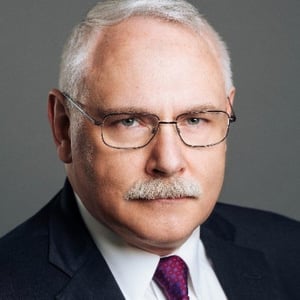
Visiting Fellow, The National Security Institute
Norman T. Roule served for 34-years in the Central Intelligence Agency, managing significant programs relating to the Middle East. Mr. Roule’s service in the CIA’s Directorate of Operations included roles as Division Chief, Deputy Division Chief and Chief of Station. He has held multiple senior assignments in Washington as well as during more than 15 years of overseas work. He served as the National Intelligence Manager for Iran (NIM-I) at the Office of the Director of National Intelligence from November 2008 until September 2017. As NIM-I, he was the principal Intelligence Community (IC) official responsible for overseeing national intelligence policy and activities related to Iran and Iran-related issues, to include IC engagement on these topics with senior policymakers in the National Security Council, the Department of State and Congress. Mr. Roule received multiple national security awards during his career.
Mr. Roule currently works as a business consultant on Middle East political, security, economic, and energy issues with an emphasis on the Gulf Cooperation Council states and Iran. He also serves as Senior Adviser to the Counter Extremism Project, United Against Nuclear Iran, the Nuclear Threat Initiative and as a member of the Advisory Board of the Arabia Foundation. Mr. Roule is currently also a non-resident Fellow at the Belfer Center for Science and International Affairs at the Harvard Kennedy School. He is frequently asked to speak on Middle East issues and has appeared on Al-Hurra Television, BBC, Bloomberg Radio and Television, CBS, CNBC, CNN, Fox, Israeli international television (I24), NPR, Saudi 24, Sky News, Sky News Arabia, and the podcast “Intelligence Matters.” He is a frequent contributor to The Cipher Brief and has written for U.S. and international print media.
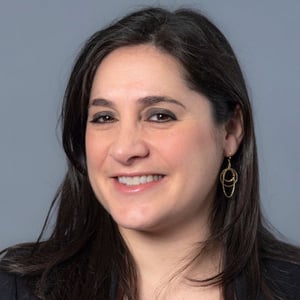
Senior Fellow, The Washington Institute
Dana Stroul is a senior fellow in The Washington Institute's Beth and David Geduld Program on Arab Politics.
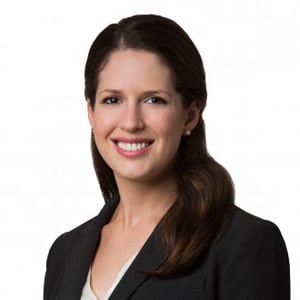
Research Fellow, American Enterprise Institute (AEI)
Katherine Zimmerman is a research fellow at the American Enterprise Institute (AEI) and the research manager for AEI’s Critical Threats Project. As AEI’s senior analyst studying terrorist groups, she focuses on the global al Qaeda network and covers the Salafi-jihadi movement and related trends in the Middle East and Africa. She also specializes in al Qaeda in the Arabian Peninsula and Yemen, al Shabaab in Somalia, and al Qaeda in the Sahel.
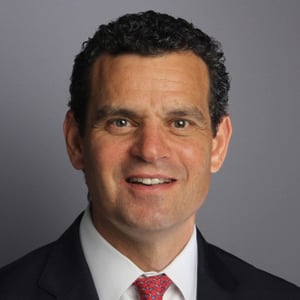
Partner, Wilmer Cutler Pickering Hale and Dorr LLP
David Cohen, who leads the firm's Financial and Business Integrity Group, provides clients with anti-money laundering, financial and trade sanctions advice; represents US and foreign-based clients in matters implicating national security, including CFIUS and cybersecurity; conducts internal investigations; and defends clients facing government investigations. His practice has a strong emphasis on disputes involving US and foreign regulators and enforcement agencies, often involving cross-border issues, as well as proceedings in US and foreign adjudicative venues.
Before rejoining the firm in 2017, Mr. Cohen served for eight years in senior presidentially appointed positions. From 2015–2017, Mr. Cohen was Deputy Director of the Central Intelligence Agency (CIA), where he helped manage the Agency's domestic and worldwide operations, oversee its strategic modernization, and lead foreign intelligence collection, all-source analysis, covert action, counter-intelligence and foreign liaison relationships. Mr. Cohen also directed special projects on the impact of new technologies on the Agency and on how best to work with US companies to advance the CIA's mission. At the conclusion of his tenure, Mr. Cohen was awarded the Distinguished Intelligence Medal, the CIA's highest honor.
Previously, Mr. Cohen served for four years in the US Department of the Treasury as Under Secretary for Terrorism and Financial Intelligence, where he managed the department's policy, regulatory, enforcement and intelligence functions aimed at combating illicit finance, including money laundering and other financial crime, and disrupting financial support to nations, organizations and individuals posing a threat to national security. He directly supervised the Office of Foreign Assets Control (OFAC), which implements financial and economic sanctions, and the Financial Crimes Enforcement Network (FinCEN), the anti-money laundering regulatory and enforcement agency. Mr. Cohen was instrumental in developing and implementing sanctions against Iran, Russia, North Korea, ISIS, al Qa'ida and other terrorist organizations, for which he was described as “President Obama's favorite combatant commander” and as the administration's “financial Batman.”
Mr. Cohen previously served for two years as Assistant Secretary of the Treasury for Terrorist Financing, overseeing policy development related to sanctions and money laundering. Earlier in his career, Mr. Cohen served in Treasury's general counsel's office, where he helped craft legislation that formed the basis of Title III of the USA PATRIOT Act, the post-9/11 legislation that provided new tools to prevent money laundering and the financing of terrorism.
Prior to his most recent government service, Mr. Cohen practiced law in Washington DC for nearly 20 years, including as a partner at WilmerHale. His practice at WilmerHale focused on complex civil litigation, white-collar criminal defense, internal investigations, and anti-money laundering and sanctions compliance advice.

Executive Vice President, Chief Legal Officer, Gates Corporation
Matthew R. A. Heiman joined the Company in May 2026 and has served as the Company’s Chief Legal Officer and Corporate Secretary since June 2026. As Chief Legal Officer, Mr. Heiman is responsible for all legal functions for Gates, including securities and corporate governance, M&A, litigation, commercial, regulatory, compliance, patents and trademarks, real estate, employment and labor, sustainability and environmental matters. Prior to joining Gates, Mr. Heiman held senior legal leadership roles at Waystar, where he served as Chief Legal & Administrative Officer from 2023 to 2025 and as General Counsel and Corporate Secretary from 2020 to 2023. Prior to that, he was with Johnson Controls, where he served as Vice President, Corporate Secretary, and Associate General Counsel. Mr. Heiman has been a Senior Fellow for the National Security Institute at George Mason University’s Antonin Scalia School of Law since 2018.
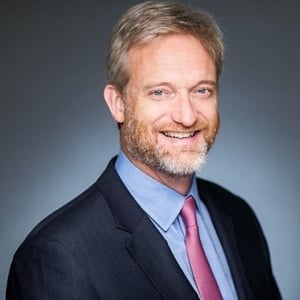
Principal in the International, BGR Group
Lester Munson is a Principal in the International at BGR Group, a leading government relations firm in Washington, D.C., where he consults with foreign governments, corporations and advocacy groups. He also serves as adjunct faculty at Johns Hopkins University and speaks regularly on the foreign policy role of Congress and on U.S. foreign assistance issues. He is a member of the Executive Committee of the Modernizing Foreign Assistance Network, a Visiting Fellow at George Mason’s National Security Institute and a commentator on Fox News Channel and the China Global Television Network.
Mr. Munson joined BGR Group in November 2015 after a 26-year career on Capitol Hill and in the Executive Branch. He was most recently Staff Director of the Senate Foreign Relations Committee, where he led policy, oversight, legislative and communications efforts for a staff of 25 and negotiated committee priorities with the White House, the State Department and Congressional leadership.
Previously, Mr. Munson was Chief of Staff for Senator Mark Kirk of Illinois. During his tenure, Senator Kirk became the leading Republican voice in the Senate on Iran and other national security issues.
During the Bush Administration, Mr. Munson served as Deputy Assistant Administrator at the U.S. Agency for International Development, where he focused on legislative affairs as well as global health issues. He led legislative efforts to develop and implement the President’s Emergency Plan for AIDS Relief (PEPFAR) and won an award for his contribution to the creation of the President’s Malaria Initiative.
Mr. Munson is a 1989 graduate of the University of Chicago and holds a Master’s degree from St. John’s College in Annapolis. He is married with two children.
Executive Director, Foundation for Defense of Democracies (FDD)
Mark Dubowitz is the executive director of the Foundation for Defense of Democracies (FDD), a Washington, D.C.-based nonpartisan policy institute, where he leads projects on Iran, sanctions, countering threat finance, and nonproliferation.
He is an expert on Iran’s global network including the regime's nuclear, terrorist, missile and cyber threats to the United States and other allies, and is widely recognized as one of the key influencers in shaping sanctions policies to counter the threats emanating from Iran and its surrogates.
Mark was featured as one of the key “financial warriors” against Iran by The Wall Street Journal's Jay Solomon in his 2016 book The Iran Wars. Politico magazine featured Mr. Dubowitz as one of Washington’s leading policy experts challenging Iran’s illicit behavior, observing that he is “...constantly thinking up—and promoting—new ways to squeeze the regime...”
Mr. Dubowitz has advised the Obama and Bush administrations and lawmakers on both sides of the aisle and testified more than twenty times before the U.S. Congress and foreign legislatures.
A former venture capitalist and technology executive, Mark heads FDD’s Center on Sanctions and Illicit Finance and is the author or co-author of over twenty studies on economic sanctions and Iran's nuclear program. He is widely published and cited in U.S. and international media. He teaches courses on sanctions and international negotiations at the University of Toronto's Munk School of Global Affairs, where he is a senior fellow.
Mark has a master’s degree in international public policy from Johns Hopkins University's School of Advanced International Studies, and law and MBA degrees from the University of Toronto.
Raised in Toronto, he is a proud American citizen, and has lived in Washington, D.C.
Adjunct Senior Fellow, Center for a New American Security
Peter Harrell is an adjunct senior fellow at the Center for a New American Security, where he focuses on the intersection of economics and national security. Research interests include economic statecraft, sanctions and energy.
From 2012-2014, Mr. Harrell served as the Deputy Assistant Secretary for Counter Threat Finance and Sanctions in the State Department’s Bureau of Economic and Business Affairs. In that role, Harrell was instrumental in developing the international sanctions against Iran, Russia, and Syria, and in the easing of sanctions on Myanmar. He also played a leading role in the U.S. government’s efforts to counter terrorist financing, including work to combat the financing of the Islamic State (ISIL).
Mr. Harrell served on the State Department’s Policy Planning Staff from March 2009 to June 2012, where he played a leading role in developing Secretary of State Hillary Clinton’s economic statecraft agenda. He also worked on a variety of other trade and economic issues, with a particular interest in Asia, and authored and edited sections of the State Department’s first-ever Quadrennial Diplomacy and Development Review (QDDR).
Before joining the State Department, Mr. Harrell served on President Barack Obama’s 2008 campaign. He previously worked as a reporter for Congressional Quarterly in Washington, D.C., and is the author of one book, Rwanda’s Gamble: Gacaca and a New Model of Transitional Justice. Mr. Harrell is a magna cum laude graduate of Princeton University and holds a J.D. from the Yale Law School. He is originally from Atlanta, Georgia.
Associate Professor, George Mason University School of Policy, G, and International Affairs
Colin Dueck is an Associate Professor in George Mason University’s School of Policy, Government, and International Affairs. He studied politics at Princeton University, and international relations at Oxford under a Rhodes scholarship. He has published three books on American foreign and national security policies, The Obama Doctrine: American Grand Strategy Today (Oxford 2015), Hard Line: The Republican Party and U.S. Foreign Policy since World War II (Princeton 2010), andReluctant Crusaders: Power, Culture, and Change in American Grand Strategy (Princeton 2006.) He has provided congressional testimony and published articles on these same subjects in journals such as International Security, Orbis, Security Studies, Review of International Studies, Political Science Quarterly, and World Policy Journal, as well as online at RealClearPolitics, National Review, Foreign Affairs, The National Interest, and the New York Times. His current research focus is on the relationship between party politics, presidential leadership, American conservatism, and U.S. foreign policy strategies. He is the faculty adviser for the Alexander Hamilton Society at George Mason University, and a member of the International Institute for Strategic Studies.
Research Fellow in Defense and Homeland Security Studies, Cato Institute
Benjamin H. Friedman is a research fellow in defense and homeland security studies. He writes about U.S. defense politics, focusing on strategy, budgeting, and war. He has co-edited two books and has published in International Security, Political Science Quarterly, Foreign Affairs, the New York Times, the LA Times, the Atlantic, the Philadelphia Inquirer, USA Today, the Hill, Politico, the Christian Science Monitor, and various other journals. Ben is a graduate of Dartmouth College, a Ph.D. candidate in Political Science at the Massachusetts Institute of Technology, and an Adjunct Lecturer at George Washington’s Elliott School of International Affairs.
Founder, Latitude, LLC
Brian Hook is the founder of Latitude, LLC, an international strategic consulting firm based in Washington, DC.
Mr. Hook worked on the Romney campaign as senior advisor on foreign policy. He chaired the foreign policy and national security task forces of the Romney Readiness Project. From 2010-2011, he was the foreign policy director of Governor Tim Pawlenty’s presidential campaign.
Mr. Hook served in a number of positions during the Bush Administration, including Assistant Secretary of State for International Organizations; Senior Advisor to the U.S. Ambassador to the United Nations; Special Assistant to the President for Policy, Office of the Chief of Staff; and Counsel, Office of Legal Policy, at the Justice Department.
From 1999-2003, he practiced corporate law at Hogan & Hartson in Washington, D.C.
Before practicing law, he served as a policy advisor to Iowa Governor Terry Branstad and to U.S. Congressman James Leach.
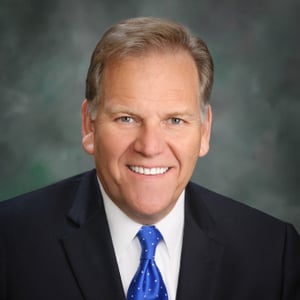
David Abshire Chair, Center for the Study of the Presidency and Congress
Mike Rogers is a former member of Congress representing Michigan's Eighth Congressional District, and previously served as an officer in the U.S. Army and FBI special agent.
While in Congress Mr. Rogers chaired the powerful House Permanent Select Committee on Intelligence (HPSCI) where he authorized and oversaw a budget of $70 billion that funded the nation's 17 intelligence agencies.
He currently serves as the Vice Chairman of the Board at the MITRE Corporation, and as a Director at leading companies including CyberSponse, IAP, and 4IQ. He is currently investing in and helping build companies that are developing solutions for healthcare, energy efficiency and communications challenges.
Mr. Rogers is a Senior Fellow at Harvard University and a member of the Board of Trustees and the David Abshire Chair at the Center for the Study of the Presidency and Congress, where he directs the Center’s national security programs. Mr. Rogers is a regular public speaker on global affairs, cybersecurity, and leadership.
He also serves as a regular national security commentator on CNN and hosted the channel’s documentary-style original series Declassified, which offered viewers insights into America’s spy stories. Mr. Rogers is a 1985 graduate of Adrian College. He is married to Kristi Rogers and has two children.
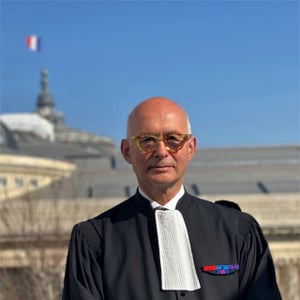
Partner, Supreme Court Attorney, Cabinet Briard LLP
François-Henri Briard is a Knight of the Legion of Honor, an Officer of the National Order of Merit and a Knight of the Palmes Académiques.
He was a member of the Governing Board of the Bar of the French Supreme Courts (2003-2005).
François-Henri Briard was a trustee of Sarah Lawrence College in New York for eight years. He is President of the Institut Vergennes, a member of the U.S. Supreme Court Historical Society and an honorary member of the Society of the Cincinnati and of the Sons of the American Revolution. He is also an expert with the Federalist Society, a U.S. think tank that focuses on constitutional and judicial issues.
He is a member of the Institute of Consulting Tax Attorneys (IACF) and an associate member of the Academy of Moral Sciences, Letters and Arts of Versailles and Ile de France.
He is a member of the French Navy civilian reserve with the rank of frigate captain and has been awarded a medal by the voluntary military services. On behalf of the Firm, he received the Military Reserve Prize (2011).

Partner, Baker Hostetler LLP
David Rivkin is a member of the firm's litigation, international and environmental teams and is co-leader of the firm's national appellate practice. He has extensive experience in constitutional, administrative and international law litigation and has been involved in numerous high-profile cases. With his prior experience in the government sector, David draws on a wealth of knowledge when providing compliance advice to companies and handling enforcement proceedings before government agencies on issues arising out of multilateral and unilateral sanctions, the Foreign Corrupt Practices Act (FCPA), anti-boycott issues, bankruptcy and financial fraud matters, and environmental and energy issues.
David has developed and implemented legislative, regulatory and litigation initiatives for two presidential administrations. Over the years, he has published hundreds of articles, op-eds, book reviews and book chapters on a variety of international, legal, constitutional, defense, arms control, foreign policy, environmental and energy issues for various newspapers and magazines, including The Wall Street Journal, The Washington Post, The New York Times, USA Today and The Los Angeles Times, and has been a frequent commentator and guest on TV and radio shows including ABC, CBS, NBC, CNN, Fox News, NPR and PBS.

Topics
Annual Threat Assessment of the U.S. Intelligence Community
On April 9, 2021, the Office of the Director of National Intelligence released the Annual...
Address by Secretary of Defense Richard Cheney [Archive Collection]
Richard B. Cheney, T. Kenneth Cribb
On January 19-20, 1990, The Federalist Society hosted a conference at the Mayflower Hotel in...
Iran Snapback
Brian H. Hook, Jeremy A. Rabkin
Iran is in significant non-performance of its commitments under the Joint Comprehensive Plan of Action...
Address by Irving Roth
Robert J. Luck, Irving Roth
On January 31-February 1, 2020, The Federalist Society's Florida lawyers chapters hosted their annual Florida...
Economic Law & Policy as a Tool of National Security
Gregory G. Katsas, Kristen Silverberg, John C. Yoo, Juan C. Zarate
On November 15, 2019, the Federalist Society's International & National Security Law Practice Group hosted...
Panel 2: US Policy in Syria: Stay In, Get Out, or Triple Down?
Jamil N. Jaffer, Norman Roule, Dana Stroul, Katherine Zimmerman
On May 23, 2019, the National Security Institute and the Federalist Society co-hosted an event...
The JCPOA Withdrawal
David S. Cohen, Matthew R. A. Heiman, Lester Munson
In 2015, the United States, along with China, France, Germany, Russia, the United Kingdom, and...
JCPOA: One Year in Review - Podcast
Mark Dubowitz, Peter Harrell
After one year of Joint Comprehensive Plan of Action assessments and critiques, have American security...
International: When Should America Act to Maintain International Order?
Colin Dueck, Benjamin H. Friedman, Brian H. Hook, Mike J. Rogers, François-Henri Briard
Most would agree that the world is unsettled, with hotspots in the Middle East, North...
The Story Behind Iran's Assets - Podcast
David B. Rivkin
Iran is a highly stressed country, and an overwhelming majority of Iranians detest the regime,...