
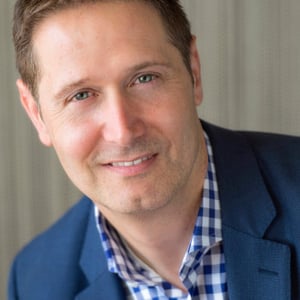
President, Recording Industry Association of America (RIAA).
Mitch Glazier is President, Recording Industry Association of America (RIAA).
Glazier guides the industry’s strategic policy initiatives and helps coordinate the activities of the association. In his more than 10-year tenure at the RIAA, Glazier has helped manage a variety of initiatives that have played a vital role in the music industry’s transition to the digital age. This includes the 2008 PRO-IP Act, which established the country’s first Intellectual Property Enforcement Coordinator in the Executive Office of the President, and the Higher Education Opportunity Act of 2008, which provided colleges and universities with meaningful tools to reduce the illegal downloading of copyrighted works on college campuses.
Glazier has also been instrumental in managing a variety of state initiatives that have helped the legal online marketplace for music to begin to prosper, including the enactment of laws in several states that ensure copyright protections extend to digital storage devices and subscription services. He has spearheaded the promotion and expansion of artist and industry programs such as RIAA’s sponsorship of a weekly “Monday Open Mic” night at Nashville’s iconic Bluebird Café to showcase emerging artists and songwriters.
Before joining RIAA, Glazier served as Chief Counsel for intellectual property to the Judiciary Committee in the U.S. House of Representatives. A native of Illinois, Glazier served as law clerk to the Honorable Judge Wayne R. Andersen, United States District Court for the Northern District of Illinois, and practiced law at the Chicago firm Neal, Gerber & Eisenberg as an associate in commercial litigation. He graduated from Northwestern University and Vanderbilt Law School. Glazier serves on the boards of Musicians on Call, the American Association of People with Disabilities, and the Internet Education Foundation.
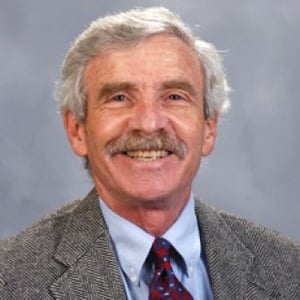
Robert Kavesh Professorship in Economics, Leonard N. Stern School of Business, New York University
Lawrence J. White has been with New York University Leonard N. Stern School of Business for more than 35 years. His primary research areas of interest include financial regulation, antitrust, network industries, international banking and applied microeconomics.
Professor White has published numerous articles in the Journal of Business, Journal of Economic Perspectives, Journal of Economic Literature, Journal of Political Economy, American Economic Review, Review of Economics and Statistics, Quarterly Journal of Economics, and other leading journals in economics, finance, and law. He is the author of The S&L Debacle: Public Policy Lessons for Bank and Thrift Regulation, among other books, and he is the co-editor (with John Kwoka) of the 6th of edition of The Antitrust Revolution. He contributed chapters to both of the NYU Stern books on the financial crisis - Restoring Financial Stability and Regulating Wall Street. He is the co-author (with Stern's Viral Acharya, Matthew Richardson, and Stijn Van Nieuwerburgh) of Guaranteed to Fail: Fannie Mae, Freddie Mac, and the Debacle of Mortgage Finance.
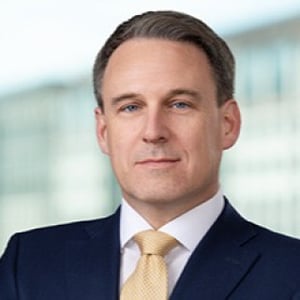
Chair, Global Antitrust Law Practice Group, Morrison Foerster
Alex Okuliar is Co-Chair of Morrison Foerster’s Global Antitrust Law Practice Group. He is the former Deputy Assistant Attorney General for Civil Antitrust Enforcement at the U.S. Department of Justice and a former advisor at the Federal Trade Commission.
Alex’s practice spans merger review, civil litigation, and criminal investigations. Over his twenty-five-year career, Alex has worked on nearly one thousand deals. He has deep experience guiding clients through the complex global merger clearance process and has litigated agency merger challenges through trial. He has also helped clients succeed in a wide range of federal and state cases, including class actions and private party disputes alleging price fixing, monopolization, group boycotts, market allocation, and tying. His understanding of the agency processes from the inside allows him to offer expert, timely, and practical advice to clients navigating merger and conduct investigations by the U.S. Department of Justice, the Federal Trade Commission, state Attorneys General, and foreign agencies. Alex’s work has been recognized by leading industry publications such as Chambers, The Legal 500 U.S., and Global Competition Review.
Outside of client work, Alex is a prolific thought leader and was recognized as a 2024 Top Author for Antitrust & Trade Regulation by JD Supra’s Readers’ Choice Awards. He currently serves as the co-chair of the ABA Antitrust Law Section’s Joint Conduct Committee and is the former chair of the Section’s Intellectual Property Committee and co-chair of the 2023 Antitrust Fall Forum on Artificial Intelligence. He is also a member of the Corporations, Securities & Antitrust Executive Committee of The Federalist Society for Law and Public Policy Studies.
Before law school, Alex co-founded and sold an online technology company. Alex received his B.S. in economics and B.A. with distinction in history from the Wharton School of the University of Pennsylvania and his J.D. from Vanderbilt University Law School.
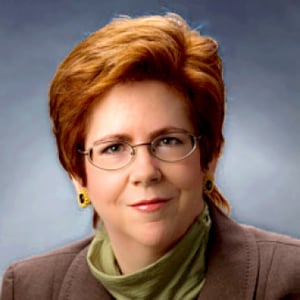
Partner, Wilkinson Barker Knauer LLP
Rosemary C. Harold joined the firm as a partner in 2011, specializing in media, broadband, and First Amendment issues. She advises a wide range of clients – including commercial and noncommercial broadcasters, cable operators, video programmers, wireless providers, and satellite operators – on legal, regulatory, and policy matters. Her work includes representation of clients in major rulemakings, transactions both large and small, and regulatory compliance counseling. Ms. Harold also regularly provides investors and others in the financial community with insights into developments at the FCC and on Capitol Hill, including the interplay between the agency and lawmakers, as well as inter-agency dealings among the FCC, the Department of Justice, and the Federal Trade Commission on competition issues.
From 2005 to 2011, Ms. Harold served at the Federal Communications Commission, most recently as Legal Advisor to FCC Commissioner Robert M. McDowell for media and broadband issues, with a particular focus on First Amendment concerns. She earlier served as Deputy Chief of the FCC’s Media Bureau, where she led the staff teams working on major rulemakings such as video franchising reform and media ownership, as well as on major transactional reviews such as the Sirius/XM merger.
Before her government service, Ms. Harold’s work in private practice included FCC regulatory proceedings in the media, satellite, and wireless areas, diversity and EEO matters at the FCC and EEOC, and First Amendment commercial speech matters before the FTC, FDA and federal appellate courts. She began her career as a journalist, including work as a reporter and bureau chief for the Miami Herald, an editor at C-SPAN and, during law school, a columnist for the ABA Student Lawyer magazine.
Ms. Harold frequently speaks at industry conferences and events on media and broadband issues. She currently serves as the co-chair of the Women in Communications Law subcommittee of the American Bar Association’s Forum Committee on Communications Law, an adjunct professor in the Communications Law Institute at Catholic University’s Columbus School of Law, and member of Board of Advisors for the Thomas Jefferson Public Policy Program at the College of William and Mary. An active member of the Federal Communications Bar Association, Ms. Harold has served on the FCBA’s Executive Committee and co-chaired the FCBA’s Mass Media Committee, Video Programming & Distribution Committee, and Professional Responsibility Committee.
J.D., Georgetown University Law Center, 1991, magna cum laude
M.A., University of Missouri, 1985
B.A., College of William and Mary, 1980
Assistant Professor of Law, University of Washington School of Law
Professor Calo researches the intersection of law and emerging technology, with an emphasis on robotics and the Internet. His work on drones, driverless cars, privacy, and other topics has appeared in law reviews and major news outlets, including the New York Times, the Wall Street Journal, and NPR. Professor Calo has also testified before the full Judiciary Committee of the United States Senate.
Professor Calo serves on numerous advisory boards, including the Electronic Privacy Information Center (EPIC), the Electronic Frontier Foundation (EFF), the Future of Privacy Forum, and National Robotics Week. Professor Calo co-chairs the Robotics and Artificial Intelligence committee of the American Bar Association and is a member of the Executive Committee of the American Association of Law Schools (AALS) Section on Internet and Computer Law.
Professor Calo previously served as a director at the Stanford Law School Center for Internet and Society (CIS) where he remains an Affiliate Scholar. He also worked as an associate in the Washington, D.C. office of Covington & Burling LLP and clerked for the Honorable R. Guy Cole on the U.S. Court of Appeals for the Sixth Circuit. Prior to law school at the University of Michigan, Professor Calo investigated allegations of police misconduct in New York City.
Global Competition Professor of Law and Policy, George Washington University Law School
Before joining the law school in 1999, William E. Kovacic was the George Mason University Foundation Professor at the George Mason University School of Law. From January 2006 to October 2011, he was a member of the Federal Trade Commission and chaired the agency from March 2008 to March 2009. He was the FTC’s General Counsel from June 2001 to December 2004. In 2011 he received the FTC’s Miles W. Kirkpatrick Award for Lifetime Achievement.
Since August 2013, Professor Kovacic has served as a Non-Executive Director with the United Kingdom’s Competition and Markets Authority. From January 2009 to September 2011, he was Vice-Chair for Outreach for the International Competition Network. He has advised many countries and international organizations on antitrust, consumer protection, government contracts, and the design of regulatory institutions.
At GW, Professor Kovacic has taught antitrust, contracts, and government contracts. He is co-editor (with Ariel Ezrachi) of the Journal of Antitrust Enforcement. His publications since returning to GW in 2011 include “Good Agency Practice and the Implementation of Competition Law” in European Yearbook of International Economic Law (Christoph Hermann ed. 2013); “Antitrust in High-Tech Industries: Improving the Federal Antitrust Joint Venture” in George Mason Law Review (2012); “Behavioral Economics: Implications for Regulatory Agency Behavior” in Journal of Regulatory Economics (2012) (with James Cooper); “Competition Agency Design: What’s on the Menu?” in European Competition Journal (2012) (with David Hyman); “Plus Factors and Agreement in Antitrust Law” in Michigan Law Review (2011) (with Robert Marshall, Leslie Marx & Halbert White); “Ensuring Integrity and Competition and Public Procurement Markets: A Dual Challenge for Good Governance” in The WTO Regime on Government Procurement: Challenge and Reform (Sue Arrowsmith & Robert Anderson, eds. 2011) (with Robert Anderson & Anna Caroline Mueller); “The International Competition Network: Its Past, Current, and Future Role” inMinnesota Journal of International Law (2011) (with Hugh Hollman); “The William Humphrey and Abram Myers Years: The FTC from 1925 to 1929” in Antitrust Law Journal (2011) (with Marc Winerman); Professor Kovacic also is co-author (with Andrew Gavil & Jonathan Baker) of Antitrust Law in Perspective: Cases, Concepts and Problems in Competition Policy (2d ed. 2008) and Antitrust Law & Economics in a Nutshell (5th ed. 2004) (with Ernest Gellhorn & Stephen Calkins).
Samuel Candler Dobbs Professor of Economics Emeritus, Emory University
Paul H. Rubin is the Samuel Candler Dobbs Professor of Economics Emeritus in the Economics Department of Emory University and a former Professor of Law and Economics at the School of Law. He served as editor-in-chief of Managerial and Decision Economics. In addition, he is associated with the Mont Peleron Society, the Independent Institute, and the American Enterprise Institute, and a Fellow of the Public Choice Society and former President of the Southern Economics Association. Professor Rubin was Senior Economist at the Council of Economic Advisers under President Reagan, Chief Economist at the U.S. Consumer Product Safety Commission, Director of Advertising Economics at the Federal Trade Commission, and Vice-President of Glassman-Oliver Economic Consultants, Inc., a litigation consulting firm in Washington. He has taught economics at the University of Georgia, City University of New York, VPI, and law and economics at George Washington University Law School. Professor Rubin has written or edited several books, and has published over one hundred articles and chapters on economics, law, and regulation.
Much of Professor Rubin's writing is in law and economics, with a focus on tort, crime and contract issues. His areas of research interest include law and economics, industrial organization, transaction cost economics, government and business, public choice, regulation and price theory, and evolution and economics. His work has been cited in the professional literature over 11,100 times. He has consulted widely on litigation related matters, and has addressed numerous business, professional, policy and academic audiences. He has testified three times before Congress, and has served as an advisor on tort issues to the Congressional Budget Office.
Professor Rubin is the author of the well known paper "Why Is the Common Law efficient?" Journal of Legal Studies, 1977, which has been reprinted eight times, in English, Spanish and French.
Associate Professor of Law, Loyola University New Orleans College of Law
John Blevins joined the Loyola law faculty in 2010. Professor Blevins earned a joint degree in law and history (M.A.) from the University of Virginia, where he was inducted into the Order of Coif, and served as the Articles Development Editor of the Virginia Law Review. He earned his bachelor's degree from Yale University, and attained distinction in the History major.
After law school, Professor Blevins served as a law clerk to the Honorable Danny J. Boggs of the United States Court of Appeals for the Sixth Circuit. Following his clerkship, he was an associate with Covington & Burling, LLP in Washington, D.C., where he focused on communications law, emerging technologies, and commercial litigation. Prior to joining the faculty, he was an Assistant Professor of Law at South Texas College of Law in Houston, Texas.
His research and teaching interests include media and communications law, intellectual property, administrative law, and criminal law.
Director of Government and Regulatory Affairs, Skype
Mr. Libertelli is Director of Government and Regulatory Affairs for Skype, a global Internet communications company. Before joining Skype in July of 2005, he was Senior Legal Advisor to U.S. FCC Chairman Michael Powell. During the period from July 2001 until March 2005 he managed the Chairman's broadband and competition policy agendas and was central to the development of the FCC's Internet Telephony framework. In his capacity as Senior Legal Advisor, he was responsible for working closely with federal and state regulators and the Congress in the context of telecommunications reform efforts.
He also held a number of senior positions at the FCC, including special counsel for competition policy, and has published widely in the areas of telecommunications policy and regulation. Before joining the FCC, Mr. Libertelli represented competitive local exchange carriers and wireless providers in private practice in Washington, D.C. When he is not traveling for Skype, he lives and works in Washington DC with his dog, Wagner.

Executive Vice President, The Federalist Society
Dean Reuter is Executive Vice President at the Federalist Society for Law and Public Policy Studies. He has served in two federal government agency Offices of the Inspector General, as Counsel to the Inspector General and Deputy Inspector General, responsible for policing the use of federal funds granted and contracted through those agencies. As such, he helped conduct and oversee criminal investigations across the country. He is the principal author of the non-fiction book, The Hidden Nazi: The Untold Story of America's Deal with the Devil, and editor of Liberty’s Nemesis: The Unchecked Expansion of the State and Confronting Terror: 9/11 and the Future of American National Security. He was appointed by the President and served as Vice-Chairman of the Board of Directors of the Corporation for National and Community Service, and recently served as an appointee on the U.S. Commission on Presidential Scholars. He is a graduate of Hood College (BA with Honors) and the University of Maryland School of Law.

Vice President for Research and Senior Fellow, Technology Policy Institute
Scott Wallsten is vice president for research and senior fellow at the Technology Policy Institute. An economist with expertise in industrial organization and public policy, Wallsten's research focuses on telecommunications, regulation, competition, and technology policy. His papers have been published in numerous academic journals and his commentaries have appeared in newspapers and newsmagazines around the world.
Wallsten is also a senior fellow at the Georgetown Center for Business and Public Policy and a lecturer in Public Policy at Stanford University. He served as economics director of the Federal Communications Commission's Broadband Task Force. He has been director of communications policy studies and senior fellow at The Progress & Freedom Foundation, a senior fellow at the AEI - Brookings Joint Center for Regulatory Studies and a resident scholar at the American Enterprise Institute, an economist at The World Bank, a scholar at the Stanford Institute for Economic Policy Research, and a staff economist at the U.S. President's Council of Economic Advisers.
Wallsten holds a PhD in economics from Stanford University.
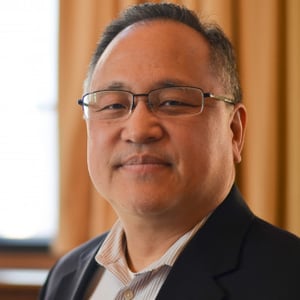
John H. Chestnut Professor of Law, Communication, and Computer & Information Science; Founding Director, Center for Technology, Innovation and Competition, University of Pennsylvania Law School
Christopher S. Yoo is the John H. Chestnut Professor of Law and a Professor at the Annenberg School for Communication and in the Computer & Information Science Department of School of Engineering and Applied Science at the University of Pennsylvania, where he is also the Founding Director of the Center for Technology, Innovation and Competition. He is the author of over one hundred scholarly works and has taught at over a dozen universities around the world. Professor Yoo received his A.B. from Harvard, his M.B.A. from UCLA, and his J.D. from Northwestern University. Before entering the academy, Professor Yoo clerked for Justice Anthony M. Kennedy of the Supreme Court of the United States and practiced law with the predecessor firm to Hogan Lovells under the supervision of now-Chief Justice John G. Roberts, Jr. Before joining the University of Pennsylvania, he taught for eight years at the Vanderbilt Law School. He is frequently called to testify before the U.S. Congress, Federal Trade Commission, Department of Justice Antitrust Division, Federal Communications Commission, foreign governments, and international organizations.

Topics
What the Biden Administration May Bring for Tech Policy
As the Biden administration begins, Americans are relying on technology more than ever during the...
Music Licensing
Mitch Glazier, Lawrence J. White
The system for licensing musical works in the U.S. and internationally is fractionalized, complex, regulated,...
The FCC: Death to the Set-Top Box! Long Live the Set-Top Box...or is it Apps?
Alexander P. Okuliar
Note from the Editor: This article discusses and critiques the FCC’s proposed set-top box rule....
The FCC Forgot Something in Piecing Together Its Complex Proposal for Broadband Privacy Regulation: Consumers
Rosemary C. Harold
Note from the Editor: This article discusses the FCC’s proposed rules for broadband privacy, and...
Lunch Debate: Is Privacy Regulation Likely to Reduce the Value of the Internet?
Ryan Calo, William Kovacic, Paul H. Rubin
The Federalist Society's Faculty Division hosted a debate that asked "Is Privacy Regulation Likely to...
Regulation of the Internet
Meredith Attwell Baker, John F. Blevins, Christopher Libertelli, Dean Reuter, Scott J. Wallsten, Christopher S. Yoo
The internet has been a revolution of undoubted importance in the business world, for government,...