

Richard and Frances Mallery Professor of Law and Faculty Director, Constitutional Law Center, Stanford Law School
Michael W. McConnell is the Richard and Frances Mallery Professor and Faculty Director of the Constitutional Law Center at Stanford Law School, and a Senior Fellow at the Hoover Institution. From 2002 to 2009, he served as a Circuit Judge on the United States Court of Appeals for the Tenth Circuit. He was nominated by President George W. Bush, a Republican, and confirmed by a Democratic Senate by unanimous consent. McConnell has previously held chaired professorships at the University of Chicago and the University of Utah, and visiting professorships at Harvard and NYU. He teaches courses on constitutional law, constitutional history, First Amendment, and interpretive theory. He has published widely in the fields of constitutional law and theory, especially church and state, equal protection, and separation of powers. His book, “The President Who Would Not Be King: Executive Power Under the Constitution,” was published by Princeton University Press in 2020, based on the Tanner Lectures in Human Values, which he delivered at Princeton in 2019. His latest book, co-authored with Nathan Chapman, “Agreeing to Disagree: How the Establishment Clause Protects Religious Diversity and Freedom of Conscience,” was published by Oxford University Press in mid-2023. McConnell has argued sixteen cases in the United States Supreme Court, most recently Carney v. Adams (2020). defending a provision of the Delaware Constitution requiring political balance on that state’s courts. More recently, he was co-counsel in Gonzalez v. Google. He earned his B.A. from Michigan State University and his J.D. from the University of Chicago, and has received honorary degrees from Notre Dame University and Michigan State. He served as law clerk to Supreme Court Justice William J. Brennan, Jr. and D.C. Circuit Chief Judge J. Skelly Wright. He has been Assistant General Counsel of the Office of Management & Budget, Assistant to the Solicitor General of the Department of Justice, and a member of the President’s Intelligence Oversight Board. He is Senior of Counsel to the law firm Wilson, Sonsini, Goodrich & Rosati, and is co-chair of Meta’s Oversight Review Board.
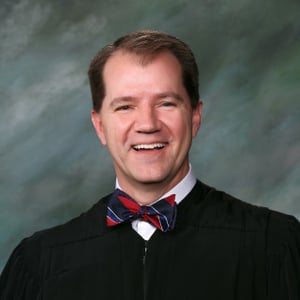
Judge, U.S. Court of Appeals, Fifth Circuit
Don Willett serves on the United States Court of Appeals for the Fifth Circuit. Before joining the federal bench, he served 13 years on the Supreme Court of Texas. His career spans decades of public service, including roles as legal counsel to a Texas Attorney General, a Texas Governor, a U.S. Attorney General, and the President of the United States. Raised by a heroic, widowed mom in a town of 32 people, Judge Willett is his family’s first college graduate. He earned a triple-major B.B.A. from Baylor University (where he serves on the Board of Regents) and three degrees from Duke University (where he served on the Board of Visitors): a J.D. with honors, an M.A. in political science, and an LL.M. in judicial studies. After law school, he clerked on the Fifth Circuit and practiced at Haynes and Boone before entering public service. Judge Willett writes and speaks widely on law, judging, and civic life. He serves on the Advisory Board of the School of Civic Leadership at the University of Texas at Austin, was the longtime editor-in-chief of Judicature: The Scholarly Journal for Judges, teaches at various law schools, and publishes in leading law journals and the popular press. He has received more than a dozen Green Bag honors for “exemplary legal writing,” was named Distinguished Jurist of the Year by the Texas Review of Law & Politics and is a member of the American Law Institute and a Life Fellow of the American, Texas, and Austin Bar Foundations. A former rodeo bull rider and professional drummer, Judge Willett was named “Tweeter Laureate of Texas” in 2015. He is the namesake of Don R. Willett Elementary School—home of mighty Willett Wranglers—located barely a mile from where the Willett family doublewide once stood. He and his radiant wife, Tiffany have three children—Jacob, Shane-David, and Geneviève—plus the family pup, Amicus.

Professor of International Relations, Stanford University
Stephen D. Krasner is the Graham H. Stuart Professor of International Relations at Stanford, and a Senior Fellow at the Freeman Spogli Institute, the Hoover Institution, and at SIEPR.
From February 2005 to April 2007 he was Director of the Policy Planning Staff at the Department of State. In 2002 he served as Director for Governance and Development at the National Security Council. He is a member of the Board of Directors of the United States Institute of Peace, and was a member of the Foreign Policy Advisory Board of the Department of State from 2012 to 2014. He received his B.A. from Cornell in 1963, M.A. from Columbia in 1967, and Ph.D. from Harvard in 1972.
Before coming to Stanford in 1981 he taught at Harvard and UCLA. He was the Chair of the Political Science Department from 1984 until 1991, Senior Associate Dean for the Social Sciences from 2010-2013, and Deputy Director of the Freeman Spogli Institute from 2007 to 2013. He edited International Organization from 1986 to 1992. His writings have dealt primarily with the political determinants of international economic relations, American foreign policy, and sovereignty. He is currently investigating the impact of external actors on domestic authority structures in weak states.
He was a fellow at the Center for Advanced Studies in the Behavioral Science in 1987-88 and at the Wissenschaftskolleg zu Berlin 2000-2001. He has been a Marcator Fellow at the Free University Berlin since 2014. Professor Krasner is a Fellow of the American Academy of Arts and Sciences and a Member of the Council on Foreign Relations.
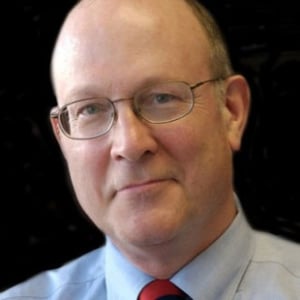
Professor Emeritus of Law, Antonin Scalia Law School, George Mason University
Jeremy A. Rabkin is a Professor Emeritus of Law at the Antonin Scalia Law School, George Mason University. Before joining the faculty in June 2007, he was for over two decades a professor in the Department of Government at Cornell University. Professor Rabkin serves on the board of directors of the Center for Individual Rights, a public interest law firm based in Washington, D.C. Previously he was a board member of the U.S. Institute of Peace and the board of academic advisors of the American Enterprise Institute.
Professor Rabkin’s books include Law Without Nations? (Princeton University Press, 2005). He authored “If You Need a Friend, Don’t Call a Cosmopolitan,” a chapter in Varieties of Sovereignty and Citizenship (Sigal R. Ben-Porath & Rogers M. Smith eds., University of Pennsylvania Press, 2012). His articles have appeared in major law reviews and political science journals and his journalistic contributions in a range of magazines and newspapers, including the Washington Post and the Wall Street Journal.
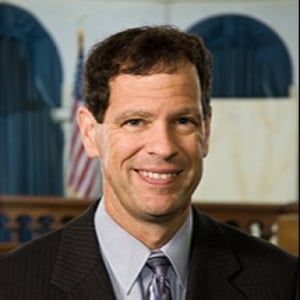
Warren Distinguished Professor of Law, University of San Diego School of Law
Michael D. Ramsey is Warren Distinguished Professor of Law at the University of San Diego School of Law, where he teaches and writes in the areas of Constitutional Law, Foreign Relations Law and International Law. He is the author of The Constitution’s Text in Foreign Affairs (Harvard University Press), co-editor of International Law in the U.S. Supreme Court: Continuity and Change (Cambridge University Press), and co-author of two casebooks, Transnational Law and Practice (2d ed., Aspen) and International Business Transactions: A Problem-Oriented Coursebook (14th ed., West). His scholarly articles have appeared in publications such as the Yale Law Journal, the University of Chicago Law Review, the Georgetown Law Journal and the American Journal of International Law. He received his B.A. magna cum laude from Dartmouth College and his J.D. summa cum laude from Stanford Law School. Prior to teaching, he served as a judicial clerk for Judge J. Clifford Wallace of the United States Court of Appeals for the Ninth Circuit and for Justice Antonin Scalia of the United States Supreme Court, and practiced law with the law firm of Latham & Watkins, where he specialized in international finance and investment. He has taught as a visiting professor at the University of California, San Diego, in the Department of Political Science and at the University of Paris – Sorbonne, in the Department of Comparative Law.
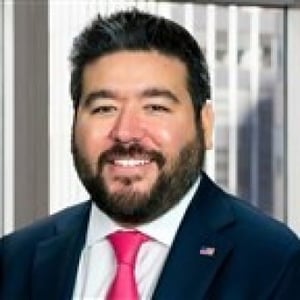
Counsel, Latham & Watkins LLP
Joshua Wu, former Deputy Assistant Attorney General (DAAG) for Appellate and Review in the Tax Division of the US Department of Justice (DOJ), counsels and advocates for companies and high net worth individuals on all aspects of tax controversies and litigation.
Mr. Wu advises on issues ranging from tax accounting disputes, to corporate and partnership transactional issues, international questions, employee benefits matters, and tax exempt controversies. He brings a unique knowledge base and skillset to his clients, drawing on his experience both in senior leadership roles in the DOJ’s Tax Division and in private practice.
Most recently, when Mr. Wu served as DAAG, he oversaw virtually all appeals in civil federal tax cases throughout the country and managed a 40-lawyer team. He also represented the United States in appellate oral arguments, evaluated and approved significant civil settlement offers, and furnished advice to the Tax Division’s trial sections in complex tax cases.
Mr. Wu previously served as DAAG for Policy and Planning, where he led the Office of Management and Administration (OMA) at DOJ. In that role, he led the operational functions of the Tax Division, and led the Office of Legislation and Policy, which works with the Department of Treasury, the IRS, and other agencies on legislative, regulatory, and policy initiatives. Prior to his government service, Mr. Wu was a partner at a large international law firm. He also worked as an associate at Latham.
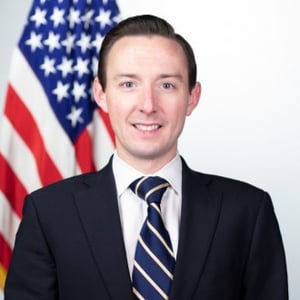
Kleinheinz Fellow, The Hoover Institution at Stanford University
Tyler Goodspeed is the Kleinheinz Fellow at the Hoover Institution at Stanford University. From 2020 to 2021 he served as Chairman of the Council of Economic Advisers, having been appointed by the President as a Member of the Council in 2019. In that role he advised the Administration’s economic response to the coronavirus pandemic, as well as subsequent economic recovery packages. He resigned from the Council on 7th January 2021, having previously served as Chief Economist for Macroeconomic Policy and Senior Economist for tax, public finance, and macroeconomics, playing an instrumental role in designing the 2017 Tax Cuts and Jobs Act.
Before joining the Council, Dr. Goodspeed was on the Faculty of Economics at the University of Oxford and was a lecturer in economics at King’s College London. He has published extensively on financial regulation, banking, and monetary economics, with particular attention to the role of access to credit in mitigating the effects of adverse aggregate shocks in historical contexts, especially exogenous environmental shocks. His research has appeared in three full-length monographs from academic presses, as well as numerous articles in peer-reviewed and edited journals. He received his B.A., M.A., and Ph.D. from Harvard University; and he received his M.Phil from the University of Cambridge, where he was a Gates Scholar. He is a current member of the American Economic Association and Economic History Association, and was previously a member of the Economic History Society and Royal Economic Society, as well as an adjunct scholar at the Cato Institute.
Partner, Davis Polk & Wardwell LLP
Mr. Guynn is head of Davis Polk’s Financial Institutions Group. He has been recognized as a thought-leader on financial regulatory reform and as one of the most widely consulted U.S. legal advisers during the financial crisis. See “In the Red Zone,”The American Lawyer, January 2009 and “For Davis Polk, Dodd-Frank Pays,” The American Lawyer, December 2010.
He has advised the Securities Industry and Financial Markets Association (SIFMA), the principal trade organization for U.S. banks, securities firms and asset managers, all of the U.S.’s six-largest banks and several foreign banks on the Dodd-Frank Act and its regulatory implementation.
His practice focuses on providing strategic bank and regulatory and enforcement advice and advising on M&A and capital markets transactions when the target or issuer is a banking organization or other financial institution. He also advises on bank failures and recapitalizations, corporate governance and internal controls, cross-border collateral transactions, credit risk management, securities settlement systems and payment systems.
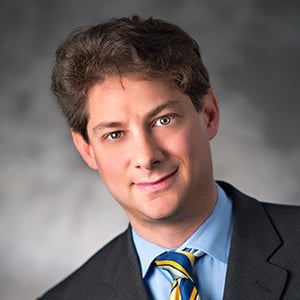
Fellow in Economic Studies and Policy Director, Center on Regulation and Markets, Brookings Institution
Aaron Klein is a fellow in Economic Studies at the Brookings Institution, where he also serves as policy director of the Center on Regulation and Markets. He focuses on financial regulation and technology, macroeconomics, and infrastructure finance and policy. Previously, Klein directed the Bipartisan Policy Center’s Financial Regulatory Reform Initiative. Klein served as Deputy Assistant Secretary for Economic Policy at the U.S. Treasury Department from 2009-2012. While at Treasury, Klein worked on multiple issues ranging from implementing aspects of the financial recovery program to developing new policy for financial regulation, housing finance, transportation and infrastructure, and Native American issues.
Prior to his appointment, he served as Chief Economist of the Senate Banking, Housing and Urban Affairs Committee for Chairmen Chris Dodd (D-CT) and Paul Sarbanes (D-MD). While working in the Senate Klein played a key role in a series of major legislation including, the Economic Emergency Stabilization Act of 2008 (better known as TARP), the Housing and Economic Recovery Act of 2008, the SAFETEA Act of 2005 that re-wrote America's surface transportation policy, the Check Truncation Act of 2003, the Terrorism Risk Insurance Act of 2002, and the Sarbanes-Oxley Act of 2002. A graduate of Dartmouth College and Princeton University, Klein lives in his hometown of Silver Spring, MD with his wife and two daughters.
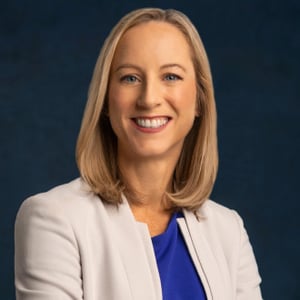
Vice President of Regulatory Affairs, Solidus Labs; Former Director, Consumer Financial Protection Bureau
The Honorable Kathleen L. Kraninger is the Vice President of Regulatory Affairs at Solidus Labs where she leads the firm’s regulatory strategy and works to advance market integrity and responsible innovation in digital asset markets. Solidus Labs is the first automated, comprehensive, and testable market surveillance and risk monitoring hub tailored for digital assets.
Previously, she served as the Senate-confirmed Director of the Consumer Financial Protection Bureau from December 2018 until January 2021, leading the 1,500-person independent, regulatory and law enforcement agency. She made her mark on all aspects of the agency’s mission and operations, particularly in facilitating innovation, promoting financial inclusion and leading through the economic uncertainty of the global pandemic. In addition, Kraninger served on the board of the Federal Deposit Insurance Corporation, the Financial Stability Oversight Board, and as chair of the Federal Financial Institutions Examinations Council.
Her distinguished public sector career spans senior roles at the Departments of Transportation and Homeland Security, the Office of Management and Budget, and in both the Senate and the House of Representatives. Kraninger graduated magna cum laude from Marquette University and earned a law degree from Georgetown University Law Center. She served as a U.S. Peace Corps Volunteer in Ukraine.
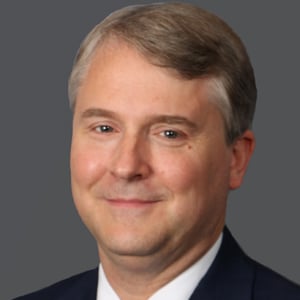
Partner, Mayer Brown
Andrew Olmem is a partner in Mayer Brown’s Washington DC office and a member of its Public Policy, Regulatory & Government Affairs, and Financial Services Regulatory & Enforcement practices. His practice focuses on complex financial services regulatory and public policy matters.
Andrew previously served as the Deputy Assistant to the President for Economic Policy and Deputy Director of the National Economic Council (NEC), where he oversaw the development and coordination of the administrations’ domestic economic policies, including for financial services, technology, telecom, energy, and infrastructure.
Earlier, he also served as the Republican Chief Counsel and Deputy Staff Director at the U.S. Senate Committee on Banking, Housing and Urban Affairs. Andrew began his legal career practicing corporate and securities law at Mayer Brown in New York City. Prior to attending law school, he served as an Assistant Economist at the Federal Reserve Bank of Richmond.
Professor of International Relations, Stanford University
Stephen D. Krasner is the Graham H. Stuart Professor of International Relations at Stanford, and a Senior Fellow at the Freeman Spogli Institute, the Hoover Institution, and at SIEPR.
From February 2005 to April 2007 he was Director of the Policy Planning Staff at the Department of State. In 2002 he served as Director for Governance and Development at the National Security Council. He is a member of the Board of Directors of the United States Institute of Peace, and was a member of the Foreign Policy Advisory Board of the Department of State from 2012 to 2014. He received his B.A. from Cornell in 1963, M.A. from Columbia in 1967, and Ph.D. from Harvard in 1972.
Before coming to Stanford in 1981 he taught at Harvard and UCLA. He was the Chair of the Political Science Department from 1984 until 1991, Senior Associate Dean for the Social Sciences from 2010-2013, and Deputy Director of the Freeman Spogli Institute from 2007 to 2013. He edited International Organization from 1986 to 1992. His writings have dealt primarily with the political determinants of international economic relations, American foreign policy, and sovereignty. He is currently investigating the impact of external actors on domestic authority structures in weak states.
He was a fellow at the Center for Advanced Studies in the Behavioral Science in 1987-88 and at the Wissenschaftskolleg zu Berlin 2000-2001. He has been a Marcator Fellow at the Free University Berlin since 2014. Professor Krasner is a Fellow of the American Academy of Arts and Sciences and a Member of the Council on Foreign Relations.
Professor Emeritus of Law, Antonin Scalia Law School, George Mason University
Jeremy A. Rabkin is a Professor Emeritus of Law at the Antonin Scalia Law School, George Mason University. Before joining the faculty in June 2007, he was for over two decades a professor in the Department of Government at Cornell University. Professor Rabkin serves on the board of directors of the Center for Individual Rights, a public interest law firm based in Washington, D.C. Previously he was a board member of the U.S. Institute of Peace and the board of academic advisors of the American Enterprise Institute.
Professor Rabkin’s books include Law Without Nations? (Princeton University Press, 2005). He authored “If You Need a Friend, Don’t Call a Cosmopolitan,” a chapter in Varieties of Sovereignty and Citizenship (Sigal R. Ben-Porath & Rogers M. Smith eds., University of Pennsylvania Press, 2012). His articles have appeared in major law reviews and political science journals and his journalistic contributions in a range of magazines and newspapers, including the Washington Post and the Wall Street Journal.
Warren Distinguished Professor of Law, University of San Diego School of Law
Michael D. Ramsey is Warren Distinguished Professor of Law at the University of San Diego School of Law, where he teaches and writes in the areas of Constitutional Law, Foreign Relations Law and International Law. He is the author of The Constitution’s Text in Foreign Affairs (Harvard University Press), co-editor of International Law in the U.S. Supreme Court: Continuity and Change (Cambridge University Press), and co-author of two casebooks, Transnational Law and Practice (2d ed., Aspen) and International Business Transactions: A Problem-Oriented Coursebook (14th ed., West). His scholarly articles have appeared in publications such as the Yale Law Journal, the University of Chicago Law Review, the Georgetown Law Journal and the American Journal of International Law. He received his B.A. magna cum laude from Dartmouth College and his J.D. summa cum laude from Stanford Law School. Prior to teaching, he served as a judicial clerk for Judge J. Clifford Wallace of the United States Court of Appeals for the Ninth Circuit and for Justice Antonin Scalia of the United States Supreme Court, and practiced law with the law firm of Latham & Watkins, where he specialized in international finance and investment. He has taught as a visiting professor at the University of California, San Diego, in the Department of Political Science and at the University of Paris – Sorbonne, in the Department of Comparative Law.
Counsel, Latham & Watkins LLP
Joshua Wu, former Deputy Assistant Attorney General (DAAG) for Appellate and Review in the Tax Division of the US Department of Justice (DOJ), counsels and advocates for companies and high net worth individuals on all aspects of tax controversies and litigation.
Mr. Wu advises on issues ranging from tax accounting disputes, to corporate and partnership transactional issues, international questions, employee benefits matters, and tax exempt controversies. He brings a unique knowledge base and skillset to his clients, drawing on his experience both in senior leadership roles in the DOJ’s Tax Division and in private practice.
Most recently, when Mr. Wu served as DAAG, he oversaw virtually all appeals in civil federal tax cases throughout the country and managed a 40-lawyer team. He also represented the United States in appellate oral arguments, evaluated and approved significant civil settlement offers, and furnished advice to the Tax Division’s trial sections in complex tax cases.
Mr. Wu previously served as DAAG for Policy and Planning, where he led the Office of Management and Administration (OMA) at DOJ. In that role, he led the operational functions of the Tax Division, and led the Office of Legislation and Policy, which works with the Department of Treasury, the IRS, and other agencies on legislative, regulatory, and policy initiatives. Prior to his government service, Mr. Wu was a partner at a large international law firm. He also worked as an associate at Latham.
Kleinheinz Fellow, The Hoover Institution at Stanford University
Tyler Goodspeed is the Kleinheinz Fellow at the Hoover Institution at Stanford University. From 2020 to 2021 he served as Chairman of the Council of Economic Advisers, having been appointed by the President as a Member of the Council in 2019. In that role he advised the Administration’s economic response to the coronavirus pandemic, as well as subsequent economic recovery packages. He resigned from the Council on 7th January 2021, having previously served as Chief Economist for Macroeconomic Policy and Senior Economist for tax, public finance, and macroeconomics, playing an instrumental role in designing the 2017 Tax Cuts and Jobs Act.
Before joining the Council, Dr. Goodspeed was on the Faculty of Economics at the University of Oxford and was a lecturer in economics at King’s College London. He has published extensively on financial regulation, banking, and monetary economics, with particular attention to the role of access to credit in mitigating the effects of adverse aggregate shocks in historical contexts, especially exogenous environmental shocks. His research has appeared in three full-length monographs from academic presses, as well as numerous articles in peer-reviewed and edited journals. He received his B.A., M.A., and Ph.D. from Harvard University; and he received his M.Phil from the University of Cambridge, where he was a Gates Scholar. He is a current member of the American Economic Association and Economic History Association, and was previously a member of the Economic History Society and Royal Economic Society, as well as an adjunct scholar at the Cato Institute.
Partner, Davis Polk & Wardwell LLP
Mr. Guynn is head of Davis Polk’s Financial Institutions Group. He has been recognized as a thought-leader on financial regulatory reform and as one of the most widely consulted U.S. legal advisers during the financial crisis. See “In the Red Zone,”The American Lawyer, January 2009 and “For Davis Polk, Dodd-Frank Pays,” The American Lawyer, December 2010.
He has advised the Securities Industry and Financial Markets Association (SIFMA), the principal trade organization for U.S. banks, securities firms and asset managers, all of the U.S.’s six-largest banks and several foreign banks on the Dodd-Frank Act and its regulatory implementation.
His practice focuses on providing strategic bank and regulatory and enforcement advice and advising on M&A and capital markets transactions when the target or issuer is a banking organization or other financial institution. He also advises on bank failures and recapitalizations, corporate governance and internal controls, cross-border collateral transactions, credit risk management, securities settlement systems and payment systems.
Fellow in Economic Studies and Policy Director, Center on Regulation and Markets, Brookings Institution
Aaron Klein is a fellow in Economic Studies at the Brookings Institution, where he also serves as policy director of the Center on Regulation and Markets. He focuses on financial regulation and technology, macroeconomics, and infrastructure finance and policy. Previously, Klein directed the Bipartisan Policy Center’s Financial Regulatory Reform Initiative. Klein served as Deputy Assistant Secretary for Economic Policy at the U.S. Treasury Department from 2009-2012. While at Treasury, Klein worked on multiple issues ranging from implementing aspects of the financial recovery program to developing new policy for financial regulation, housing finance, transportation and infrastructure, and Native American issues.
Prior to his appointment, he served as Chief Economist of the Senate Banking, Housing and Urban Affairs Committee for Chairmen Chris Dodd (D-CT) and Paul Sarbanes (D-MD). While working in the Senate Klein played a key role in a series of major legislation including, the Economic Emergency Stabilization Act of 2008 (better known as TARP), the Housing and Economic Recovery Act of 2008, the SAFETEA Act of 2005 that re-wrote America's surface transportation policy, the Check Truncation Act of 2003, the Terrorism Risk Insurance Act of 2002, and the Sarbanes-Oxley Act of 2002. A graduate of Dartmouth College and Princeton University, Klein lives in his hometown of Silver Spring, MD with his wife and two daughters.
Vice President of Regulatory Affairs, Solidus Labs; Former Director, Consumer Financial Protection Bureau
The Honorable Kathleen L. Kraninger is the Vice President of Regulatory Affairs at Solidus Labs where she leads the firm’s regulatory strategy and works to advance market integrity and responsible innovation in digital asset markets. Solidus Labs is the first automated, comprehensive, and testable market surveillance and risk monitoring hub tailored for digital assets.
Previously, she served as the Senate-confirmed Director of the Consumer Financial Protection Bureau from December 2018 until January 2021, leading the 1,500-person independent, regulatory and law enforcement agency. She made her mark on all aspects of the agency’s mission and operations, particularly in facilitating innovation, promoting financial inclusion and leading through the economic uncertainty of the global pandemic. In addition, Kraninger served on the board of the Federal Deposit Insurance Corporation, the Financial Stability Oversight Board, and as chair of the Federal Financial Institutions Examinations Council.
Her distinguished public sector career spans senior roles at the Departments of Transportation and Homeland Security, the Office of Management and Budget, and in both the Senate and the House of Representatives. Kraninger graduated magna cum laude from Marquette University and earned a law degree from Georgetown University Law Center. She served as a U.S. Peace Corps Volunteer in Ukraine.
Partner, Mayer Brown
Andrew Olmem is a partner in Mayer Brown’s Washington DC office and a member of its Public Policy, Regulatory & Government Affairs, and Financial Services Regulatory & Enforcement practices. His practice focuses on complex financial services regulatory and public policy matters.
Andrew previously served as the Deputy Assistant to the President for Economic Policy and Deputy Director of the National Economic Council (NEC), where he oversaw the development and coordination of the administrations’ domestic economic policies, including for financial services, technology, telecom, energy, and infrastructure.
Earlier, he also served as the Republican Chief Counsel and Deputy Staff Director at the U.S. Senate Committee on Banking, Housing and Urban Affairs. Andrew began his legal career practicing corporate and securities law at Mayer Brown in New York City. Prior to attending law school, he served as an Assistant Economist at the Federal Reserve Bank of Richmond.
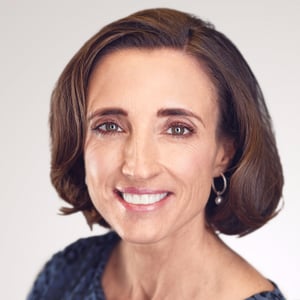
Senior Vice President, Strand Consult
Roslyn Layton, PhD is a leading international expert on technology policy. She is Senior Vice President of Strand Consult, an independent consultancy serving the global mobile telecom industry. She is also a Visiting Researcher at Aalborg University Copenhagen where she earned a doctoral thesis on network neutrality by measuring the outcome of the policy across 53 countries over 5 years. She served on the Presidential Transition Team for the Federal Communications Commission (FCC), and her work was critical to the FCC’s defense for the Restoring Internet Freedom Order. She has testified to the United States Senate and House on multiple topics including spectrum, broadband, mobile mergers, competition, and privacy. She founded the think tank China Tech Threat to study the problems of technology produced by the People’s Republic of China. She serves as the Program Chair for the Telecom Policy Research Conference, the leading interdisciplinary academic gathering. Her recent paper on rural broadband describes the empirical case for policy reform to recover network infrastructure costs from streaming video entertainment providers. She is a Senior Contributor to Forbes.

Ten Year Anniversary Gala and Thomas M. Cooley Judicial Lecture
Washington, DCTopics
The 2022 Joseph Story Award
The Federalist Society is delighted to announce that the winner of the 2022 Joseph Story...
A National Symposium on Law and Technology
Stanford Constitutional Law Center and Stanford Student Chapter
Stanford, CATaxation by International Consent?
Stephen Krasner, Jeremy A. Rabkin, Michael D. Ramsey, Joshua Wu
Finance ministers from leading industrial states have been trying, this summer, to work out an...
Taxation by International Consent?
TeleforumPanel 2: What Should be the Future of Financial Regulation?
Sponsored by the Financial Services & E-Commerce Practice Group
Panel 2: What Should be the Future of Financial Regulation?
Tyler Beck Goodspeed, Randall D. Guynn, Aaron Klein, Kathy Kraninger, Andrew Olmem
From the 1970’s to the passage of the Gramm-Leach-Bliley Act in 1998, financial regulation in...
The Dodd-Frank Act Post Covid-19 and the Future of Financial Regulation
Sponsored by the Financial Services & E-Commerce Practice Group
Topics
Austrian Court Ruling Could Censor Internet Speech Around the World
The Federalist Society is pleased to announce its Student Blog Initiative, a project of the...
How Can the FCC Improve Provision of Telecommunications Services for the Deaf and Hearing Impaired?
Roslyn Layton
Note from the Editor: The Federalist Society takes no positions on particular legal and public...