
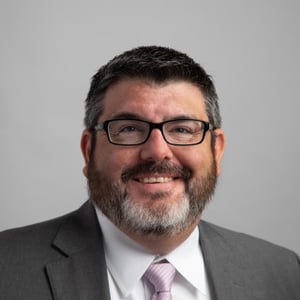
Senior Attorney, Institute for Justice
Paul Avelar is the Managing Attorney of the Institute for Justice Arizona Office. He joined the Institute in March 2010 and litigates free speech, property rights, economic liberty, school choice and other constitutional cases in federal and state courts.
As the head of IJ’s national Braiding Freedom Initiative, Paul represents natural hair braiders across the country to protect their right to earn an honest living. The Initiative uses lawsuits, activism and research to remove laws that require potential braiders to undergo hundreds of costly training hours just to braid hair. Since IJ launched the Braiding Freedom Initiative in 2014, 12 additional states have freed braiders from unnecessary licensing burdens. Paul drafted the model Natural Hair Braiding Protection Act, which has been adopted in Arkansas, Indiana, Iowa, Kentucky, Nebraska, New Hampshire, Texas and South Dakota. He is currently representing braiders in Missouri, where state laws infringe upon their right to earn an honest living.
In his free speech work, Paul has challenged numerous laws that trample First Amendment rights. In Arizona Freedom Club PAC v. Bennett, he represented candidates and independent groups in a successful U.S. Supreme Court challenge to the “matching funds” provision of Arizona’s publicly financed elections system. He represented grassroots groups and individuals in Arizona, Mississippi and Washington, where state laws burdened their political speech by requiring them to register with the government, to navigate complex regulations and to face fines and possible criminal penalties merely because they talked about political issues. In Washington, Paul protected a lawyer’s right to defend, pro-bono, the First Amendment rights of political speakers. Through litigation and legislation, Paul leads the fight against abusive civil forfeiture laws in Arizona and elsewhere.
Paul also co-authored the most comprehensive published study of economic liberty protections in the Arizona Constitution. The Chief Justice of the Arizona Supreme Court appointed Paul to the Task Force on the Review of the Role and Governance Structure of the State Bar of Arizona, where he dissented from the majority report and called on leaders to substantially reform the Bar and state regulation of the practice of law. He often speaks at law schools across the country about constitutional issues and his work at IJ.
Prior to joining IJ-AZ, Paul worked as an attorney in Philadelphia. He clerked for Judge Roger Miner on the 2nd U.S. Circuit Court of Appeals, Justice Andrew Hurwitz on the Arizona Supreme Court, and Judge Daniel Barker on the Arizona Court of Appeals.
Paul graduated manga cum laude from the Arizona State University College of Law in 2004 and was elected to the Order of the Coif. He received his undergraduate degree from Princeton University in 2000.
Co-Founder, Trustee, and Legal Advisor, Reason Foundation and Ge, Individual Rights Foundation
Manuel "Manny" Klausner was one of the founding partners in Reason Enterprises, which began publishing Reason magazine in 1971, three years after the publication's creation. He became editor in the summer of 1972 and a senior editor in June 1978. In 1978 he co-founded the Reason Foundation with Tibor Machan and Bob Poole. He remains on the board of the Reason Foundation today, is a stalwart supporter of the Federalist Society, and a libertarian lawyer extraordinaire.
Superior Court of California for the County of Los Angeles
Carolyn Barbara Kuhl is a judge on the Superior Court of California for the County of Los Angeles and a former nominee to the United States Court of Appeals for the Ninth Circuit. After receiving her law degree in 1977 from Duke Law School, she clerked for future Supreme Court Justice, Anthony M. Kennedy, from 1977–78. From 1981–86, she served in the United States Department of Justice. She worked as a partner in the Los Angeles law firm of Munger, Tolles & Olson, focusing on civil business litigation with a specialty in appellate litigation, from 1986–95. She became a judge on the Superior Court of California for the County of Los Angeles in 1995 and was nominated to a seat on the United States Court of Appeals for the Ninth Circuit on June 22, 2001 by President George W. Bush.

Former President & CEO, The Federalist Society for Law and Public Policy Studies
Eugene B. Meyer, former President and CEO of the Federalist Society, has served as Executive Director, CEO, and/or President of the organization for more than 40 years. He is responsible for shepherding the organization from a small group of law students to a community of 90,000 lawyers, law students, academics, judges, and others interested in the rule of law. The Society now includes a Student Chapter at nearly every ABA-accredited law school in the country and Lawyers Chapters in 220 major cities across the nation. Gene earned his B.A. in history at Yale in 1975 and his M.A. in political science from the London School of Economics in 1976. Gene currently serves on the boards of the U.S. Chess Center, the Holman Foundation, the Sarah Scaife Foundation, and the advisory board of the Adam Smith Society. He holds the title of International Chess Master.
Executive Director, First Amendment Coalition
A lawyer and journalist, Scheer was editor and publisher of The Recorder, a daily legal newspaper in San Francisco, publisher of Legal Times, a Washington, DC-based weekly on law and lobbying, and CEO of callaw.com and law.com. Scheer practiced appellate law in Washington, DC, both in the U.S. Justice Department and in private practice. He was a partner in the Washington, DC firm of Onek, Klein & Farr, and was general counsel to the National Security Archive. Scheer has argued appellate cases in most of the federal courts of appeal and in the U.S. Supreme Court.
Scheer has received the Eugene S. Pulliam First Amendment Award (from the national Sigma Delta Chi Foundation) and the James Madison Freedom of Information Award (from the Society of Professional Journalists). Scheer’s articles on First Amendment issues and related issues have appeared in numerous publications, both print and online, including the Sacramento Bee, Slate.com, Huffington Post, San Jose Mercury News, Salon.com, Orange County Register, San Francisco Chronicle, the San Diego Union-Tribune and the Los Angeles Daily Journal.
Scheer received his JD in 1978 from Harvard Law School, where he was a member of the Harvard Law Review. He received his BA at Amherst College, graduating magna cum laude and Phi Beta Kappa.

Senior Legal Fellow, Edwin Meese III Institute for the Rule of Law, Advancing American Freedom
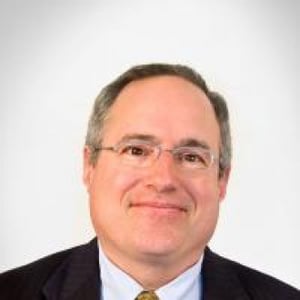
Principal, Law Offices of David Balto and Health Policy Program, New America Foundation
David Balto is one of the leading experts on healthcare competition and regulation and is an antitrust attorney with over a quarter century of experience in both the private and public sectors. He is a prolific writer and speaker on antitrust, consumer protection, and health care policy.
Mr. Balto has over 15 years of government antitrust experience as a trial attorney in the Antitrust Division of the Department of Justice and in several senior level positions at the Federal Trade Commission during the Clinton Administration, including Policy Director of the Bureau of Competition (1998-2001) and attorney advisor to Chairman Robert Pitofsky (1995-1997). In these positions, he was a senior advisor in all aspects of the FTC's merger and non-merger enforcement program, helping to litigate the challenges to the Staples/Office Depot, Drug Wholesalers, and Heinz/Beechnut mergers.
Mr. Balto also helped guide many of the FTC's seminal pharmaceutical and healthcare enforcement efforts, identifying and helping litigate major cases such as the challenges to patent settlement agreements, hospital mergers, and other exclusionary conduct. He was an advisor in many of the FTC's pharmaceutical merger enforcement cases, including Glaxo/Smithkline, Merck/Medco, Lilly/PCS and Ciba/Sandoz, and was instrumental in bringing some of the first enforcement actions against pharmacy benefit managers (PBMs). He was also an author of the 1996 DOJ/FTC healthcare antitrust enforcement guidelines, and served as a liaison on competition issues to the Food and Drug Administration and Congress, advising several Committees on pharmaceutical competition and Hatch-Waxman reform.
Since his transition to private practice, Balto has testified before Congress and state legislatures numerous times on healthcare competition issues and the competitive concerns in health insurance and pharmacy benefit management markets. He has authored studies on health care concentration (sponsored by the Robert Wood Johnson Foundation) and healthcare transparency. He frequently represents hospitals, pharmacies and other healthcare providers in antitrust matters before the DOJ and the FTC.
Mr. Balto received his B.A. from the University of Minnesota, and his J.D. from the Northeastern University School of Law.
Partner, Covington & Burling LLP
Thomas Barnett is a partner in the Washington, DC office and co-chair of the firm's Antitrust & Consumer Law Practice Group. He specializes in global antitrust and competition law practice and works closely with the firm’s white collar practice on criminal antitrust enforcement and investigative matters.
Mr. Barnett recently served as Assistant Attorney General in charge of the Justice Department’s Antitrust Division. He headed the Antitrust Division from 2005 to 2008, having previously served in the Division as Deputy Assistant Attorney General for Civil Enforcement from 2004 to 2005. During his tenure, Mr. Barnett was involved in some of the largest and most complicated criminal matters in the Division’s history, including investigations and prosecutions that involved coordination with multiple competition authorities in other jurisdictions. In the merger area, Mr. Barnett oversaw the review of all mergers investigated by the Division and supervised more than 30 cases filed in federal district court. He also oversaw an active competition advocacy program that included numerousamicusbriefs filed with the U.S. Supreme Court on antitrust issues and comments to a wide range of federal and state agencies. He argued before the U.S. Supreme Court asamicuson behalf of the United States inBell Atlantic Corp. v. Twomblyand testified several times before Congressional committees.
While at the Antitrust Division, Mr. Barnett worked with international antitrust authorities throughout the world and served in leadership positions in key international competition organizations, such as chairing the Working Party on International Cooperation and Enforcement of the OECD Competition Committee and serving on the Steering Committee of the International Competition Network.
Mr. Barnett received the Edmund Randolph Award, the U.S. Department of Justice’s highest honor, for his service in the Division.
Prior to 2004, Mr. Barnett was a leader in the firm’s Antitrust & Consumer Law Practice Group. He counseled Fortune 500 companies on all aspects of antitrust law and was involved in mergers and acquisitions, government antitrust investigations, and antitrust litigation involving a wide range of industries. He served as an adjunct professor at Georgetown University Law Center, teaching a course on antitrust and intellectual property issues in sports in 2001 and 2003, and as a co-teacher of an advanced antitrust seminar at the University of Virginia Law School multiple times between 1991 and 2004.

Stevenson Bernard Professor, George Washington University Law School
The Honorable F. Scott Kieff is the Stevenson Bernard Professor at George Washington University Law School and a Visiting Fellow at Stanford University’s Hoover Institution.
He served as Commissioner of the U.S. International Trade Commission from 2013-2017. He also served during the Bush, Obama, and Trump Administrations in the part-time leadership of the national security defense-intelligence community.
He was previously a professor of law and medicine at Washington University in Saint Louis and a Senior Fellow at Hoover. A former law clerk to U.S. Circuit Judge Giles S. Rich, he is a graduate of Penn Law School and MIT, where he studied molecular biology and microeconomics. He was elected to the European Academy of Sciences and Arts in 2012 and the Academia Europaea in 2024.
His private sector work through Kieff Strategies LLC (www.kieffstrategies.com) provides neutral services including mediation and compliance, and expert services including crisis management, advising, and testimony.
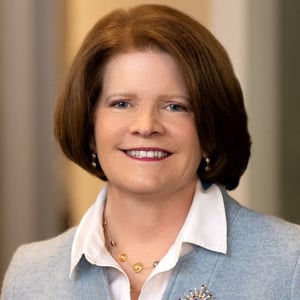
Partner, Antitrust and Competition, Wilson Sonsini Goodrich & Rosati
Maureen Ohlhausen is a partner in the Washington, D.C., office of Wilson Sonsini Goodrich & Rosati, where she advises industry-leading clients on complex antitrust and litigation matters, with a focus on high-profile cases. Sought after for her depth of experience on antitrust and Federal Trade Commission (FTC)-related issues, Maureen is known for her relationships with officials in the U.S. and abroad.
After finishing law school and clerking at the U.S. Court of Appeals for the D.C. Circuit, Maureen joined the FTC in 1997. She held a series of roles at the agency over the next 12 years, rising to the position of Director of the FTC Office of Policy Planning, where she led the agency’s work on e-commerce and headed the FTC’s Internet Access Task Force, which produced an influential report analyzing competition and consumer protection legal issues in the broadband and internet sectors. She then went into private practice at a leading telecommunications law firm, where she headed the FTC practice group.
In 2012, Maureen was confirmed by the Senate as a Commissioner of the FTC and was appointed Acting Chairman in January 2017, a role she held until May 2018. As Acting Chairman, Maureen directed all aspects of the agency’s antitrust work, including merger review, conduct enforcement, and all consumer protection enforcement, with an emphasis on privacy and technology issues. Under her leadership, the FTC won several influential merger challenges in court and reached a number of key digital privacy settlements.
To date, Maureen is the only FTC Commissioner to have received the Robert Pitofsky Lifetime Achievement Award in recognition of her contributions to the FTC.
Following the end of her term at the FTC, and immediately prior to joining Wilson Sonsini, Maureen was chair of the global antitrust and competition practice at Baker Botts, based in that firm’s Washington, D.C., office.
A recognized thought leader, Maureen is a frequent author and speaker, and is often quoted by leading print and broadcast media on antitrust, FTC, and privacy and data security matters. She has published dozens of articles on antitrust, privacy, intellectual property, regulation, FTC litigation, telecommunications, and international law issues in prestigious publications. During her tenure at the FTC and in private practice, she testified more than two dozen times before Congress, including before the Senate Commerce Committee and the House Energy and Commerce Antitrust Sub-Committee. She also testified before the Antitrust Modernization Commission.
Of Counsel, Latham & Watkins LLP
J. Thomas Rosch, former Commissioner of the US Federal Trade Commission from 2006-2013, is nationally regarded as one of the preeminent practitioners in the areas of antitrust and trade regulation law. He has been lead counsel in more than 100 federal and state court antitrust cases and brings 40 years of expertise to Latham’s Global Antitrust and Competition Practice Group.
Mr. Rosch returned to Latham after completing his term as a Commissioner of the FTC. While at the FTC, he played a key role in revitalizing the Commission’s litigation efforts, particularly in relation to merger enforcement. Prior to joining the FTC, Mr. Rosch served as the FTC’s Bureau of Consumer Protection director from 1973 to 1975, and was a member of the Special Committee to Study the Role of the FTC in 1989.
During his prior tenure at Latham, Mr. Rosch was the former managing partner of the firm’s San Francisco office and was a partner in the Global Antitrust and Competition Practice Group. He successfully tried leading antitrust cases for a wide range of clients and won summary judgments for major corporations in the automobile, freight, pharmaceutical, publishing, and consumer electronics industries, among others.
In 2003, Mr. Rosch was honored as Antitrust Lawyer of the Year by the California State Bar Antitrust Section. He has been a Fellow of the American College of Trial Lawyers for more than 20 years and has been the Chair of both the California Bar Association and American Bar Association’s Antitrust Sections.
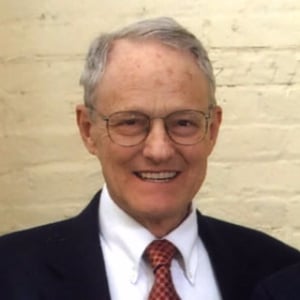
U.S. Court of Appeals, D.C. Circuit
Judge Williams practiced law in New York City (at the firm of Debevoise Plimpton and as an Assistant U.S. Attorney) and then taught law at the University of Colorado Law School from 1969 to 1986, with visiting years at UCLA, SMU, and the University of Chicago (where he was also a fellow in law and economics). He was appointed to the U.S. Court of Appeals for the D.C. Circuit in 1986. His most recent book is a biography of Vasily Maklakov, The Reformer: How One Liberal Fought to Preempt the Russian Revolution (Encounter Books, 2017).
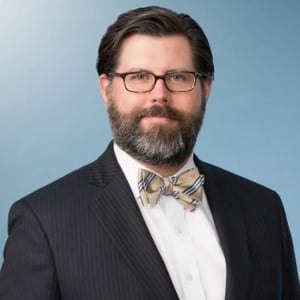
Partner, Faegre Drinker Biddle & Reath LLP
Brian J. Paul is an appellate lawyer and leads law teams in high-stakes commercial litigation. He has briefed and argued everything from weighty abstract constitutional issues to dollars-and-cents business issues and everything in-between, both on appeal and in trial courts around the country. A member of the American Law Institute, recent past-president of the Seventh Circuit Bar Association and top-tier ranked Chambers appellate lawyer, Brian had one client say about him: “Brian is one of the most respected and skilled appellate lawyers, not only in Indianapolis but across the country. He is trusted to deliver timely guidance on complex issues.” Another said: “He is excellent. I enjoyed working with him. He is able to put things into layman’s terms and explains things really well. His written and oral advocacy are short, crisp and to the point.”
Clients hire Brian to digest the complex, and make the complex simple and compelling for busy, generalist judges. In his writing, he strives to cut through jargon and legalese, and distill things down to what’s important. In his oral advocacy, by intense preparation, he strives to be the advocate whom judges trust for the right answers. In the dozens of cases he has argued, Brian has helped clients win on both sides of the “v.” His recent representations include:

Founder and Co-Director, James Wilson Institute
Hadley Arkes joined the faculty of Amherst College in 1966. He became the Edward Ney Professor of Jurisprudence in 1987, and held that chair until he retired officially in July 2015. But he has not retired from writing and speaking. He has carried that teaching into a new phase; he has become the Founder and Director of the James Wilson Institute on Natural Rights and the American Founding in Washington, D.C. He has written eight books, mostly with Princeton and Cambridge University Presss. Among the books at Princeton have been: The Philosopher in the City (1981), First Things (1986), Beyond the Constitution (1990), and The Return of George Sutherland (1994). With Cambridge Press he has done Natural Rights and the Right to Choose (2002), and Constitutional Illusions & Anchoring Truths: The Touchstone of the Natural Law (2010). His most recent book, with Regnery Press is Mere Natural Law (2023) His articles have appeared in professional journals, but apart from his writing in more scholarly formats, he has become known to a wider audience through his writings in the Wall Street Journal, National Review, Civitas and First Things, a journal that took its name from his book of that title.
He was the main advocate, and architect, of the bill that became known as the Born-Alive Infants’ Protection Act. The account of his experience, in moving the bill through Congress, is contained as an epilogue or memoir in his book, Natural Rights & the Right to Choose. Arkes first prepared his proposal as part of the debating kit assembled for the first George Bush in 1988. The purpose of that proposal was to offer the “most modest first step” of all in legislating on abortion, and opening a conversation even with people who called themselves “pro-choice.” Professor Arkes proposed to begin simply by preserving the life of a child who survived an abortion–contrary to the holding of one federal judge, that such a child was not protected by the laws. Professor Arkes led the testimony on the bill before the Judiciary Committee of the U.S. House in July 2000, then again in July 2001. The legislative calendar was upended in the aftermath of September 11th, but in March 2002, the bill was brought to the floor of the House, where it passed unanimously. To the surprise of Professor Arkes, the bill was brought to the floor of the Senate on July 18 by the Deputy Majority Leader, Harry Reid, and passed in the same way. On August 5, President Bush signed the bill into law with Professor Arkes in attendance.
Professor Arkes was the founder, at Amherst, of the Committee for the American Founding, a group of alumni and students seeking to preserve, at Amherst, the doctrines of “natural rights” taught by the American Founders and Lincoln. That interest has been carried over now to the founding of a new center for the jurisprudence of natural law, in Washington, D.C.: the James Wilson Institute on Natural Rights and the American Founding, named for one of the premier minds among the American Founders. Professor Arkes has drawn to this project a cluster of accomplished federal judges who have wanted to get a firmer hold on the natural law, and brought them together with some gifted teachers of philosophy and law. The new institute will be sponsoring lectures and seminars in Washington and other parts of the country. The purpose of this new James Wilson Institute is to teach anew, to lawyers, judges, and students those principles of law that furnished the guide to the American Founders as they set about framing a Constitution. And the hope is to restore, to a new generation, the furnishings of mind of the men who formed this regime.
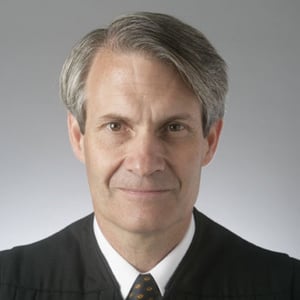
Special Counsel, Hunton Andrews Kurth
After serving on the United State Court of Appeals for the D. C. Circuit from 2005, Judge Griffith stepped down from the bench in 2020. Currently he is a Lecturer on Law at Harvard Law School, a Fellow at the Wheatley Institute at Brigham Young University, and Special Counsel in the Washington, DC office of the law firm of Hunton Andrews Kurth. Most recently, he was a member of President Biden's Commission on the Supreme Court. He is the author of Civic Charity and the Constitution , and the co-author, along with former judges Michael Luttig and Michael McConnell, of Lost, Not Stolen: The Conservative Case that Trump Lost and Biden Won the 2020 Presidential Election. https://lostnotstolen.org/ . Before being appointed to the D. C. Circuit, Judge Griffith was the General Counsel at BYU; Senate Legal Counsel, the non-partisan chief legal officer of the U. S. Senate; and a partner at Wiley, Rein & Fielding. Long active in rule-of-law programs in former communist nations, Judge Griffith is a member of the international advisory board of the CEELI Institute in Prague. He is a graduate of BYU and the University of Virginia School of Law and is a member of the American Law Institute.
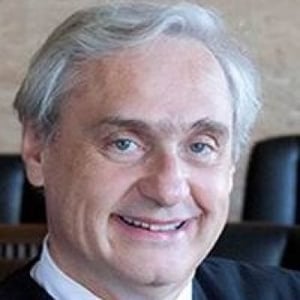
Former Judge, United States Court of Appeals, Ninth Circuit
Judge Kozinski served as a United States Circuit Judge for the Ninth Circuit from November 1985 until December 2017. He served as Chief Judge from 2007 to 2014. He graduated from UCLA, receiving an A.B. degree in 1972, and from UCLA Law School, receiving a J.D. degree in 1975.
Prior to his appointment to the appellate bench, Judge Kozinski served as Chief Judge of the United States Claims Court, 1982-85; Special Counsel, Merit Systems Protection Board, 1981-82; Assistant Counsel, Office of Counsel to the President, 1981; Deputy Legal Counsel, Office of President-Elect Reagan, 1980-81; Attorney, Covington & Burling, 1979-81; Attorney, Forry Golbert Singer & Gelles, 1977-79; Law Clerk to Chief Justice Warren E. Burger, 1976-77; and Law Clerk to Circuit Judge Anthony M. Kennedy, 1975-76.
Judge Kozinski is married to Marcy Jane Tiffany and has three children: Yale, Wyatt and Clayton, and three grandchildren: Quinn, Owen and Anna.
Former President & CEO, The Federalist Society for Law and Public Policy Studies
Eugene B. Meyer, former President and CEO of the Federalist Society, has served as Executive Director, CEO, and/or President of the organization for more than 40 years. He is responsible for shepherding the organization from a small group of law students to a community of 90,000 lawyers, law students, academics, judges, and others interested in the rule of law. The Society now includes a Student Chapter at nearly every ABA-accredited law school in the country and Lawyers Chapters in 220 major cities across the nation. Gene earned his B.A. in history at Yale in 1975 and his M.A. in political science from the London School of Economics in 1976. Gene currently serves on the boards of the U.S. Chess Center, the Holman Foundation, the Sarah Scaife Foundation, and the advisory board of the Adam Smith Society. He holds the title of International Chess Master.
Deputy District Attorney, Philadelphia District Attorney's Office
Ronald Eisenberg heads the Law Division of the Philadelphia District Attorney's Office. The 60 lawyers in the division handle appeals, habeas corpus and civil litigation, and legislative matters. Mr. Eisenberg has appeared at all levels of the state and federal court system, and has argued several cases in the United States Supreme Court.
Mr. Eisenberg is a member of the Pennsylvania Supreme Court Investigating Grand Jury Task Force and the Advisory Committee for the Pennsylvania Suggested Standard Criminal Jury Instructions. He has represented his office on the Pennsylvania Advisory Committee on Wrongful Convictions, was an adjunct professor at Temple University School of Law, teaching legal writing and research, and has served on the Pennsylvania Criminal Rules and Appellate Rules Committees. He is a past president and current board member of the Association of Government Attorneys in Capital Litigation, a national organization of capital prosecutors.
Mr. Eisenberg received his bachelor's degree from Haverford College in 1978 and his law degree from the University of Pennsylvania Law School in 1981.
J.D., University of Pennsylvania
B.A., Haverford College
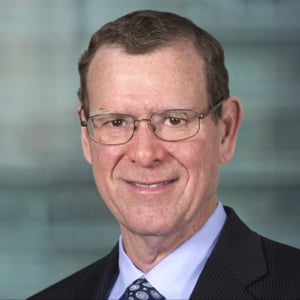
Executive in Residence, Wake Forest University School of Business
John Allison is an Executive in Residence at the Wake Forest School of Business. He is a member of the Cato Institute’s Board of Directors and Chairman of the Executive Advisory Council of the Cato Institute’s Center for Monetary and Financial Alternatives. Allison was president and CEO of the Cato Institute from October 2012 to April 2015. Prior to joining Cato, Allison was chairman and CEO of BB&T Corporation, the 10th-largest financial services holding company headquartered in the United States. During his tenure as CEO from 1989 to 2008, BB&T grew from $4.5 billion to $152 billion in assets. He was recognized by theHarvard Business Reviewas one of the top 100 most successful CEOs in the world over the last decade.
Allison has received the Corning Award for Distinguished Leadership, been inducted into the North Carolina Business Hall of Fame, and received the Lifetime Achievement Award from theAmerican Banker. He is the author of The Financial Crisis and the Free Market Cure: Why Pure Capitalism Is the World Economy’s Only Hope and The Leadership Crisis and the Free Market Cure: Why the Future of Business Depends on the Return to Life, Liberty, and the Pursuit of Happiness. In addition, he is a former Distinguished Professor of Practice at Wake Forest University School of Business, and serves on the Board of Visitors at the business schools at Wake Forest, Duke, and the University of North Carolina–Chapel Hill.
Allison is a Phi Beta Kappa graduate of the University of North Carolina–Chapel Hill. He received his master’s degree in management from Duke University and is also a graduate of the Stonier Graduate School of Banking. Allison is the recipient of six honorary doctorate degrees.

Senior Fellow, Domestic Policy Studies, American Enterprise Institute
Howard Husock is a senior fellow in Domestic Policy Studies at the American Enterprise Institute (AEI), where he focuses on municipal government, urban housing policy, civil society, and philanthropy.
Before joining AEI, Mr. Husock was vice president for research and publications at the Manhattan Institute. He has also been a director of case studies in public policy and management at the Harvard Kennedy School, a member of the board of directors of the Corporation for Public Broadcasting, and a journalist and Emmy-winning documentary filmmaker.
Mr. Husock has been widely published in policy journals and the popular press, including in The New York Times and The New York Times Magazine, The Wall Street Journal, The Atlantic, The Hill, New York Post, New York Daily News, The Boston Globe, The Chronicle of Philanthropy, City Journal, Forbes.com, the Journal of Policy Analysis and Management, National Affairs, Reason, The New Republic, Washington Examiner, and The Wilson Quarterly.
His books include the forthcoming “The Poor Side of Town: And Why We Need It” (Encounter Books, September 21, 2021); “Who Killed Civil Society? The Rise of Big Government and Decline of Bourgeois Norms” (Encounter Books, 2019), “Philanthropy Under Fire” (Encounter Broadsides, 2013), and “America’s Trillion-Dollar Housing Mistake: The Failure of American Housing Policy” (Ivan R. Dee, 2003).
Mr. Husock was a mid-career fellow at Princeton University’s Woodrow Wilson School of Public and International Affairs. He holds a BS from Boston University’s School of Public Communication.

Maurice A. Deane Distinguished Professor of Constitutional Law and Faculty Director of International Programs, Hofstra University School of Law
Professor Ku’s primary research interest is the relationship of international law to constitutional law. He has also conducted academic research on a wide range of topics including international dispute resolution, international criminal law, and China’s relationship with international law. He teaches courses such as U.S. constitutional law, U.S. foreign affairs law, transnational law, and international trade and business law. Since 2014, he has served as the faculty director of international programs, overseeing Hofstra Law’s study abroad, exchange and LL.M. programs. Professor Ku also teaches Constitutional Law in our online degree programs: Master of Laws in American Law and Master of Arts in American Legal Studies. He has also been selected as the John DeWitt Gregory Research Scholar and as a Hofstra Law Research Fellow. He is a member of the American Law Institute.
He is the co-author, with John Yoo, of Taming Globalization: International Law, the U.S. Constitution, and the New World Order (Oxford University Press 2012). He also has published more than 40 law review articles, book chapters and symposia essays. He has given dozens of academic lectures and workshops at major universities and conferences in the United States, Europe and Asia.
He co-founded the leading international law weblog Opinio Juris, which is read daily by thousands worldwide. His essays and op-eds have been published in major news publications such as the Wall Street Journal, the Los Angeles Times, and the NYTimes.com. He has been frequently interviewed for television news programs and quoted in print and electronic media. He has also signed or submitted amicus briefs to national and international courts and served as an expert witness in both domestic and international proceedings.
Before joining the Hofstra Law faculty, Professor Ku served as a law clerk to the Honorable Jerry E. Smith of the U.S. Court of Appeals for the Fifth Circuit and as an Olin Fellow and Lecturer in Law at the University of Virginia Law School. Professor Ku also practiced as an associate at the New York City law firm of Debevoise & Plimpton, specializing in litigation and arbitration arising out of international disputes. He has been a visiting professor at the College of William & Mary Marshall- Wythe School of Law in Williamsburg, Virginia; a Fulbright Distinguished Lecturer in Law at East China University of Political Science and Law in Shanghai, China; and a Taiwan Fellow at National Taiwan University in Taipei, Taiwan. He is a member of the New York Bar and a graduate of Yale College and Yale Law School.
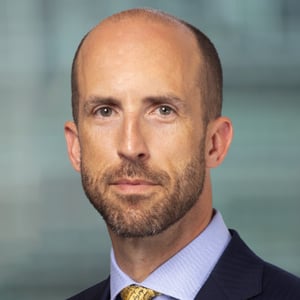
Director of Health Policy Studies, Cato Institute
Michael F. Cannon is the Cato Institute’s director of health policy studies. His scholarship spans public health; regulation of clinicians, medical facilities, pharmaceuticals, and medical devices; employer‐sponsored and other private health insurance; Medicare; Medicaid; CHIP; the Veterans Health Administration; medical malpractice litigation; administrative law; international health systems; political philosophy; and more. Cannon is “an influential health‐care wonk” (Washington Post) and “the most famous libertarian health care scholar” (Washington Examiner). Washingtonian magazine named Cannon one of Washington, DC’s “Most Influential People” in 2021, 2022, and 2023.
Cannon has appeared on ABC, Al Jazeera, BBC, CBS, CNN, CNBC, C‑SPAN, Fox News Channel, NPR, and other broadcast media. His articles have appeared in the Wall Street Journal; the New York Times; USA Today; the Washington Post; the Los Angeles Times; SCOTUSBlog; Forum for Health Economics and Policy; JAMA Internal Medicine; Health Matrix: Journal of Law‐Medicine; Harvard Health Policy Review; the Yale Journal of Health Policy, Law, and Ethics; the Journal of Health Politics, Policy and Law; and Quinnipiac Health Law Journal. His latest book is Recovery: A Guide to Reforming the U.S. Health Sector.
Cannon was previously a domestic policy analyst for the U.S. Senate Republican Policy Committee, where he advised the Senate leadership on health, education, labor, welfare, and the Second Amendment. He is a member of the Board of Advisers of Harvard Health Policy Review and the Federalist Society Regulatory Transparency Project’s FDA & Health Working Group.
Cannon holds an MA in economics and a JM in law and economics from George Mason University and a BA in American government from the University of Virginia.
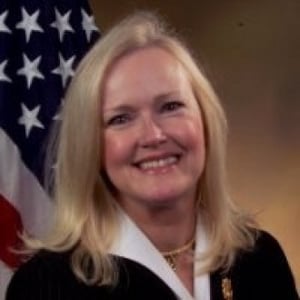
Founder, Law Office of Eileen J. O'Connor PLLC
After nearly 30 years as a national tax specialist with the IRS and major accounting firms, Eileen J. O’Connor, now an attorney in private practice, was Assistant Attorney General for the Justice Department’s Tax Division for six years during the administration of President George W. Bush and a member of then-President-elect Trump’s Treasury Department Transition Team. She focuses on federal administrative and tax law.
USC Gould School of Law
Jonathan M. Barnett is the Torrey H. Webb Professor of Law at the University of Southern California, Gould School of Law.

Vice President, Edwin Meese III Institute for the Rule of Law, Advancing American Freedom
John G. Malcolm oversees Advancing American Freedom’s work to increase understanding of the Constitution and the rule of law as Vice President of the organization’s Edwin Meese III Institute for the Rule of Law. Malcolm brings to the challenge a wealth of legal expertise and experience in both the public and private sectors.
Prior to joining Advancing American Freedom in 2025, Malcolm was the Vice President of the Institute for Constitutional Government and the Director of the Meese Center for Legal and Judicial Studies at the Heritage Foundation. Prior to joining Heritage in 2012, Malcolm was general counsel at the U.S. Commission on International Religious Freedom, as well as a distinguished practitioner in residence at Pepperdine Law School. From 2004 to 2009, Malcolm was executive vice president and director of worldwide anti-piracy operations for the Motion Picture Association.
Malcolm served as a deputy assistant attorney general in the Department of Justice’s Criminal Division from 2001 to 2004, where he oversaw sections on computer crime and intellectual property, domestic security, child exploitation and obscenity, and special investigations. Immediately prior to that, he was a founding partner in the Atlanta law firm of Malcolm & Schroeder, LLP.
From 1990 to 1997, Malcolm was an assistant U.S. attorney in Atlanta, assigned to the fraud and public corruption section, and also an associate independent counsel, investigating fraud and abuse in the Department of Housing and Urban Development. He was honored with the Director’s Award for Superior Performance for his work in connection with the successful prosecution of Walter Leroy Moody Jr., who assassinated an 11th Circuit judge and the head of the Savannah chapter of the NAACP.
A graduate of Harvard Law School and Columbia College, Malcolm began his career as a law clerk to a federal district court judge and a federal appellate court judge, and as an associate at the Atlanta-based law firm of Sutherland, Asbill & Brennan (new Eversheds Sutherland).
Malcolm, who resides in Washington, D.C., serves on the Board of Trustees of the Washington National Opera and is a Senate-confirmed member of the Board of Directors of the Legal Services Corporation, the largest funder of civil legal aid in the United States.
University of Southern California, Gould School of Law

Panel Two: How do we balance disclosure with maintaining the privacy of participants in contentious issues?
Paul Avelar, Manuel S. Klausner, Carolyn B. Kuhl, Eugene B. Meyer, Peter Scheer, Hans A. Von Spakovsky
Supporters of Proposition 8 have invoked NAACP v. Alabama to support their claims for anonymity,...
Corporations: 'New' Antitrust Enforcement Authority under the FTC Act: Defensible Statutory Interpretation or Plumbing the Penumbras?
David Balto, Thomas O. Barnett, F. Scott Kieff, Maureen K. Ohlhausen, Thomas Rosch, Stephen F. Williams
Is the antitrust enforcement authority of the Federal Trade Commission, proceeding under the FTC Act,...
From Hubris to Humility: Who Should Make Decisions About Environmental Law?
John Copeland Nagle, Brian J. Paul
On May 16, 2013, the Indianapolis Lawyers Chapter of the Federalist Society hosted an event...
Fifth Annual Rosenkranz Debate and Luncheon
Hadley P. Arkes, Thomas B. Griffith, Alex Kozinski, Eugene B. Meyer
RESOLVED: Natural Law Should Inform Constitutional Law The Fourth Annual Rosenkranz Debate was held on...
Martel v. Clair - Post-Decision SCOTUScast
Ronald Eisenberg
On March 5, 2012, the Supreme Court announced its decision in Martel v. Clair. The question...
Speech: The U.S. Financial Crisis: Causes and Consequences
John A. Allison, Howard Husock
Many politicians have blamed business for the current recession, leading to additional measures by the...
Current and Future Challenges in IP & Copyright
Promoting Results and Protecting Religious Integrity: The Promis, Legacy, and Future of the Faith-Based and Community Initiative
SCOTUScast 10-22-08 featuring Julian Ku
Julian Ku
On Wednesday, October 8, the Supreme Court heard oral argument in Winter v. Natural Resources...
Welcome and Panel I: Health Care: How Our Tax Laws Affect How Health Care is Paid for and Delivered
Michael F. Cannon, Robert B. Helms, Amy Monahan, Eileen J. O'Connor, Mark V. Pauly
The Honorable Eileen J. O'Connor of Pillsbury Winthrop Shaw Pittman LLP, and former Assistant Attorney...