

Vice President of Copyright and Legal Affairs, Motion Picture Association
Jennifer Pariser is the Vice President, Copyright and Legal Affairs at the Motion Picture Association. She provides counsel on a wide range of intellectual property and other legal issues for the association, oversees the studios’ relationship with academic institutions and runs its anti-piracy notice program. Jenny previously served as head of litigation at the RIAA and at Sony Music. Prior to that she was an associate with the firms Patterson, Belknap, Webb & Tyler and Debevoise & Plimpton in New York and also served as a judicial clerk to the Honorable Charles Tenney in the United States District Court for the Southern District of New York. She graduated from New York University Law School in 1989 where she was a member of the Law Review. She lectures extensively on copyright topics including at the Copyright Society of the USA, the American and New York Bar Associations, PLI and various law schools.

GRAMMY Award Winning Artist
Maria Schneider’s music has been hailed by critics as “evocative, majestic, magical, heart-stoppingly gorgeous, and beyond categorization.” She and her orchestra became widely known starting in 1994 when they released their first recording, Evanescence. There, Schneider began to develop her personal way of writing for what would become her 18-member collective, made up of many of the finest musicians in jazz today, tailoring her compositions to distinctly highlight the uniquely creative voices of the group. The Maria Schneider Orchestra has performed at festivals and concert halls worldwide. She herself has received numerous commissions and guest-conducting invites, working with over 90 groups from over 30 countries.
Schneider’s music blurs the lines between genres, making her long list of commissioners quite varied, stretching from Jazz at Lincoln Center, to The Saint Paul Chamber Orchestra, to collaborating with David Bowie. She is among a small few to have received GRAMMYS in multiple genres, have received the award in both jazz and classical categories, as well as for her work with David Bowie.
Schneider and her orchestra have a distinguished recording career with twelve GRAMMY nominations and five GRAMMY awards. Unique funding of projects has become a hallmark for Schneider through the trend-setting company, ArtistShare. Her album, Concert in the Garden (2004) became historic as the first recording to win a GRAMMY with Internet-only sales, even more significantly, it blazed the "crowd-funding" trail as ArtistShare’s first release. She’s been awarded many honors by the Jazz Journalists Association and DOWNBEAT and JAZZTIMES Critics and Readers Polls. In 2012, her alma mater, the University of Minnesota, presented Schneider with an honorary doctorate, and in 2014, ASCAP awarded her their esteemed Concert Music Award.
Schneider has become a strong voice for music advocacy and in 2014, testified before the US Congressional Subcommittee on Intellectual Property about digital rights. She has also appeared in CNN, participated in round-tables for the United States Copyright Office, and has been quoted in numerous publications for her views on Spotify, Pandora, YouTube, Google, digital rights, and music piracy. Most recently, she and concerned colleagues in New York have launched a widespread campaign on behalf of music-makers, MusicAnswers.org.
Her recent collaboration with her orchestra and David Bowie resulted in his single called, "Sue (Or In A Season of Crime),” and brought her a 2016 GRAMMY (Best Arrangement, Instruments and Vocals). Schneider and her orchestra also received a 2016 GRAMMY for their latest work, The Thompson Fields (Best Large Jazz Ensemble Album).

Professor of Law, Southern Illinois University School of Law
Professor Mark F. Schultz joined the faculty in 2003. He teaches and writes primarily in the area of intellectual property.
Professor Schultz is a frequent author and speaker known for his work on the law and economics of the global intellectual property system. In one of his most influential projects, he worked with the Organization for Economic Cooperation and Development (OECD) to construct a groundbreaking global trade secret protection index (the TSPI). The TSPI is influencing policy discussions on this cutting-edge topic in capitals around the world. Other recent projects have included an empirical study that quantified for the first time the backlogs in patent offices worldwide, a report on how patented innovation is meeting global health challenges, and the construction of a new global index of copyright strength.
Professor Schultz is an influential voice in public policy debates regarding intellectual property. He has testified before the U.S. Congress on copyright law at the invitation of the House Judiciary Committee and has briefed the staff of the U.S. Senate Judiciary Committee on trade secret legislation. He speaks frequently around the world about the connection between secure and effective intellectual property rights and flourishing national economies and individual lives, with invitations from the U.S. Patent and Trademark Office, the U.S. Trade Representative, and the U.S. Copyright Office, as well as numerous academic institutions, think tanks, and industry groups. He served as an NGO delegate to the World Intellectual Property Organization (WIPO) for several years during the WIPO Development Agenda talks. He is also one of the organizers of an ongoing multilateral diplomatic dialogue on best practices in national trade secret laws, and is co-founder of the Center for Protection of Intellectual Property (CPIP) at George Mason University in Washington, D.C.
Among the awards and recognition he has received for his scholarship was the School of Law's Outstanding Scholar of the Year award in 2008. He has been a distinguished visiting scholar at the University of Botswana and a visiting professor at DePaul University College of Law.
Professor Schultz graduated with honors from the George Washington University School of Law. Following law school, he was a judicial clerk for the Hon. Daniel M. Friedman of the United States Court of Appeals for the Federal Circuit in Washington, D.C., and the Hon. Eric G. Bruggink of the United States Court of Federal Claims. Prior to joining academia, he practiced law for a decade, serving as outside general counsel to several tech startups and helping technology companies to expand their businesses and commercialize their intellectual property in dozens of countries. He holds a B.A. in International Economics from George Washington University and has done PhD level coursework in development economics at Southern Illinois University.
He is active in leadership roles in local and national organizations. He has served as chair of the Federalist Society's Intellectual Property Practice Group and the AALS Section on Internet and Computer Law. He is an officer of the American Bar Association's International IP Committee of the International Law Section and the American Intellectual Property Law Association’s Trade Secret Law Committee. He currently is chair of the Academic Advisory Board of the Copyright Alliance.
Professor Schultz teaches Copyright Law, Trade Secret Law, Trademark Law, and a senior seminar on Intellectual Property and Global Development. He established and directs both the Specialization in Intellectual Property Law and the IP Semester in Practice Externship Program. He also co-founded a Legal Globalization Class, offered every other year, that takes students to South Africa and Botswana after spending a semester learning about the legal system, culture, history, and politics of southern Africa. The popular course is a once-in-a-lifetime experience that introduces students to leading lawyers, judges, government officials, and human rights advocates, taking them from Cape Town to Johannesburg to Gaborone as well as many popular destinations including game reserves, national parks, the Cape of Good Hope, and the Cradle of Humankind.
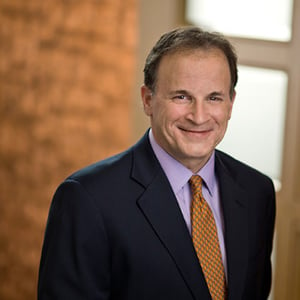
Partner, Boies Schiller Flexner
Jonathan Sherman is a general commercial litigator who combines 25 years of business litigation and First Amendment expertise to specialize in the strategic use of reputation, a unique approach to resolving information age and knowledge economy disputes.
Named since 2012 to its annual list of American’s “500 Leading Lawyers”, Lawdragon calls Jonathan a “nimble advocate with a sharp legal mind” who “can handle any task” and whose “passion for the law bubbles forth with astonishing ferocity.” A recent profile called him “Floyd Abrams meets David Boies with a side order of Hunter S. Thompson.”
Jonathan has tried cases, argued appeals, and resolved multi-party disputes in securities, financial institution, business defamation, intellectual property, unfair competition, antitrust and free speech matters. He has represented an eclectic mix of clients: from mining to media, finance to fashion, reinsurance to online gaming, political figures and cultural critics, among others. He is both a plaintiff’s lawyer and a traditional defense counsel.
At ease under heavy scrutiny since his earliest years of practice representing Court TV in the OJ Simpson criminal proceedings, Jonathan is now among the world’s leading advocates for public access to courts. The New York Times has twice published his op-ed pieces. A former member of the New York State Bar Association’s Media Law Committee, he has taught at Yale, Stanford and Fordham, and lectured in London, Brussels, Budapest and elsewhere.
Jonathan is a Trustee of DC’s acclaimed Shakespeare Theatre Company in Washington, DC, and has been listed in Who’s Who in America since 2000.

Senior Vice President, Business & Legal Affairs, National Music Publishers' Association
As Senior Vice President, Business and Legal Affairs for the National Music Publishers’ Association, Danielle’s primary role is to protect and enforce the copyrights and intellectual property interests of songwriters and music publishers. Danielle has aggressively fought digital piracy and infringement through her work litigating against services including YouTube, Limewire, LiveUniverse and Fullscreen, leading to three favorable industry-wide settlements and a judgment against LiveUniverse. She also works with the largest companies, digital services and record labels to ensure that publishers and songwriters are being fairly compensated for the use of their works. This has resulted in her negotiation of model industry licenses with YouTube for user generated videos on that site, with major record companies for music videos and more recently with YouTube multi-channel networks, which have enabled many publishers to license and be paid for the first time for the use of their songs in digital music videos. Danielle oversees NMPA’s takedown program, which focuses on shutting down or licensing illegal lyrics, sheet music and tablature websites, and has resulted in the licensing of dozens of lyrics sites which are now paying royalties to publishers and songwriters. Before the Copyright Royalty Board, she represents publishers and songwriters in their fight for fair mechanical royalty rates in Section 115 and Section 118 proceedings, including in the most recent industry settlement of the Section 115 proceeding in 2012.
Prior to joining NMPA, Danielle was an attorney at Paul, Weiss, Rifkind, Wharton & Garrison LLP. Danielle graduated from Georgetown University and the University of Pennsylvania Law School.

Policy Counsel, eBay Inc.
Usman Ahmed is Counsel and Head of Americas of the Public Policy Lab. His work covers a variety of global Internet issues including international trade, intellectual property policy, and financial services. He has given talks on these subjects at universities around the world and has published in the Journal of World Trade, the Michigan Journal of International Law, and the National Civic Review. Ahmed is an Adjunct Professor of Law at Georgetown University Law School where he teaches an innovative course on Internet Policymaking. Prior to eBay, Usman worked at a number of policy think tanks in the Washington DC area focusing on good governance issues. Ahmed earned his JD from University of Michigan and holds a BA from University of Maryland.

Senior Judge, United States Court of Appeals, District of Columbia Circuit
Circuit Judge Douglas H. Ginsburg was appointed to the United States Court of Appeals for the District of Columbia in 1986. After receiving his B.S. from Cornell University in 1970, and his J.D. from the University of Chicago Law School in 1973, he clerked on the D.C. Circuit and for Justice Thurgood Marshall on the United States Supreme Court. Thereafter, Judge Ginsburg was a professor at the Harvard Law School, the Deputy Assistant and then Assistant Attorney General for the Antitrust Division of the Department of Justice, as well as the Administrator of the Office of Information and Regulatory Affairs in the Office of Management and Budget. Concurrent with his service as a federal judge, Judge Ginsburg has taught at the University of Chicago Law School and the New York University School of Law. Judge Ginsburg is currently a Professor of Law at the George Mason University and a visiting professor at University College London, Faculty of Laws.
Judge Ginsburg is the Chairman of the International Advisory Board of the Global Antitrust Institute at the Law and Economics Center of the George Mason University School of Law. He also serves on the Advisory Boards of: Competition Policy International; the Harvard Journal of Law and Public Policy; the Journal of Competition Law and Economics; the Journal of Law, Economics & Policy; the Supreme Court Economic Review; the University of Chicago Law Review; the New York University Journal of Law and Liberty; and, at University College London, both the Centre for Law, Economics and Society and the Jevons Institute for Competition Law and Economics.
In 2020, Judge Ginsburg was the 11th recipient of the John Sherman Award, presented by the Antitrust Division of the Department of Justice in recognition of the awardee’s Lifetime Contributions to Antitrust Law and Policy.
In 2014, Judge Ginsburg received the Lifetime Achievement Award given annually by the Global Competition Review.
He is the author or co-author of several books and more than 100 articles on competition and regulation, including, most recently, Growing Convergence: The Limited Role of Antitrust in Standard Essential Patent Disputes, in CPI Antitrust Chronicle, Summer 2021, Vol. 1, No. 2.

Senior Copyright Policy Counsel, Google Inc.
Katherine Oyama is Sr. Policy Counsel for Google, where she focuses on copyright, creativity, and trademark law and policy. From 2009 to 2011, she worked in the Office of the Vice President as Associate Counsel and Deputy Counsel to Vice President Joseph R. Biden. Prior to her government service, Katherine was a litigation associate at Wilmer Cutler Pickering Hale & Dorr’s Washington office, where she worked on intellectual property cases, government and regulatory litigation, and pro bono matters. She previously worked for a New York-based strategy consulting firm, a Silicon Valley-based Internet start-up, and a Washington-based public interest research organization. Katherine is a graduate of Smith College, where she graduated with high honors in Government, and the University of California, Berkeley School of Law (Boalt Hall), where she served as senior articles editor of the Berkeley Technology Law Journal. She recently testified before Congress on issues relating to copyright, trademark, and Internet policy.
Professor of Law, Southern Illinois University School of Law
Professor Mark F. Schultz joined the faculty in 2003. He teaches and writes primarily in the area of intellectual property.
Professor Schultz is a frequent author and speaker known for his work on the law and economics of the global intellectual property system. In one of his most influential projects, he worked with the Organization for Economic Cooperation and Development (OECD) to construct a groundbreaking global trade secret protection index (the TSPI). The TSPI is influencing policy discussions on this cutting-edge topic in capitals around the world. Other recent projects have included an empirical study that quantified for the first time the backlogs in patent offices worldwide, a report on how patented innovation is meeting global health challenges, and the construction of a new global index of copyright strength.
Professor Schultz is an influential voice in public policy debates regarding intellectual property. He has testified before the U.S. Congress on copyright law at the invitation of the House Judiciary Committee and has briefed the staff of the U.S. Senate Judiciary Committee on trade secret legislation. He speaks frequently around the world about the connection between secure and effective intellectual property rights and flourishing national economies and individual lives, with invitations from the U.S. Patent and Trademark Office, the U.S. Trade Representative, and the U.S. Copyright Office, as well as numerous academic institutions, think tanks, and industry groups. He served as an NGO delegate to the World Intellectual Property Organization (WIPO) for several years during the WIPO Development Agenda talks. He is also one of the organizers of an ongoing multilateral diplomatic dialogue on best practices in national trade secret laws, and is co-founder of the Center for Protection of Intellectual Property (CPIP) at George Mason University in Washington, D.C.
Among the awards and recognition he has received for his scholarship was the School of Law's Outstanding Scholar of the Year award in 2008. He has been a distinguished visiting scholar at the University of Botswana and a visiting professor at DePaul University College of Law.
Professor Schultz graduated with honors from the George Washington University School of Law. Following law school, he was a judicial clerk for the Hon. Daniel M. Friedman of the United States Court of Appeals for the Federal Circuit in Washington, D.C., and the Hon. Eric G. Bruggink of the United States Court of Federal Claims. Prior to joining academia, he practiced law for a decade, serving as outside general counsel to several tech startups and helping technology companies to expand their businesses and commercialize their intellectual property in dozens of countries. He holds a B.A. in International Economics from George Washington University and has done PhD level coursework in development economics at Southern Illinois University.
He is active in leadership roles in local and national organizations. He has served as chair of the Federalist Society's Intellectual Property Practice Group and the AALS Section on Internet and Computer Law. He is an officer of the American Bar Association's International IP Committee of the International Law Section and the American Intellectual Property Law Association’s Trade Secret Law Committee. He currently is chair of the Academic Advisory Board of the Copyright Alliance.
Professor Schultz teaches Copyright Law, Trade Secret Law, Trademark Law, and a senior seminar on Intellectual Property and Global Development. He established and directs both the Specialization in Intellectual Property Law and the IP Semester in Practice Externship Program. He also co-founded a Legal Globalization Class, offered every other year, that takes students to South Africa and Botswana after spending a semester learning about the legal system, culture, history, and politics of southern Africa. The popular course is a once-in-a-lifetime experience that introduces students to leading lawyers, judges, government officials, and human rights advocates, taking them from Cape Town to Johannesburg to Gaborone as well as many popular destinations including game reserves, national parks, the Cape of Good Hope, and the Cradle of Humankind.

Associate Professor, Boston College Law School
David Olson is an associate professor and the Faculty Director of the Program on Innovation and Entrepreneurship. He teaches patent law, intellectual property law, antitrust law, and various seminars. His research and writing primarily focus on patents, copyrights, antitrust, and incentives for innovation and competition. Since joining BC Law in 2007, he has been recognized for his teaching excellence and contributions. In 2011, he received the Business & Law Society Faculty Award for Achievement in Business & Law. In 2012, he received the Professor Emil Slizewski Award for Faculty Excellence. For one semester in 2015, Olson served as a visiting professor at Pontifical Catholic University, Rio de Janeiro, Brazil, where he conducted research and taught a course on intellectual property.
Olson has published scholarly articles on patent law, copyright law, antitrust, music licensing, and first amendment copyright issues. His writing has been cited in Supreme Court and other legal opinions. He has testified before the U.S. Congress on matters of drug patents, FDA regulation, and antitrust.
The media frequently seeks Olson’s insights and opinions. He has been quoted in the Wall Street Journal, Associated Press, and Reuters, among others. He has appeared as a guest panelist on WBUR’s Radio Boston, WAMU's Kojo Namdi Show, and Public Radio Canada. His op-eds have appeared in the Chicago Tribune, Washington Times, and The Hill.
Olson came to Boston College from Stanford Law School's Center for Internet and Society, where he conducted research on patent law and litigated copyright fair use impact cases. Before entering academia, Olson practiced law as a patent litigator. He clerked for Judge Jerry Smith of the U.S. Court of Appeals for the Fifth Circuit.

Deep Dive Episode 16 – Is the Newest Part of the Copyright Act Antiquated?
Jennifer L. Pariser, Maria Schneider, Mark F. Schultz
Is the Newest Part of the Copyright Act Antiquated? Unchaining Creativity and Innovation. Nearly twenty...
Supreme Court Preview: Packingham v. North Carolina - Podcast
Jonathan Sherman, Melissa Sherry
On February 27, the Supreme Court will hear oral argument in Packingham v. North Carolina....
Copyright Revision
Danielle M. Aguirre, Usman Ahmed, Douglas H. Ginsburg, Katherine A. Oyama, Mark F. Schultz, David S. Olson
The U.S. Supreme Court has in the past several years begun to take several intellectual...