
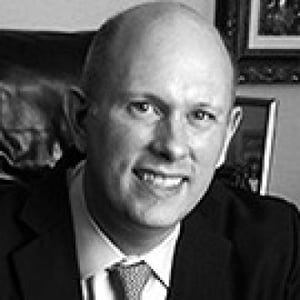
Of Counsel, Spencer Fane LLP
Anthony J. “A.J.” Ferate has built a multi-faceted background in the areas of the law, policy, energy, campaigns and elections, and defense over the last 20 years.
Through recent representation as Vice President of Regulatory Affairs for the Oklahoma Independent Petroleum Association (“OIPA”), A.J. held responsibilities over government efforts outside of the legislative branch on matters as broad as water, electric generation, commodity marketing, land matters, and seismicity. A.J. also maintained responsibility for legal matters at OIPA, including amicus briefing in appellate matters. A.J.’s extensive experience also includes management of public policy strategy for a Fortune 500 company.
For the past eleven years, A.J. has volunteered as General Counsel and spokesman for the Oklahoma Republican Party and has represented a number of elected officials, including U.S. Senator James Lankford, former statewide elected officials, a number of state legislators, and members of Congress.
Additionally, A.J. has assisted elected officials serve their constituents in all branches of government. Early in his career, A.J. held legislative aide duties in the Nebraska Legislature, then went on to work for former Nebraska Treasurer David Heineman. A.J. gained experience in the judiciary while serving Judge Gary L. Lumpkin at the Oklahoma Court of Criminal Appeals, the highest criminal appellate court in Oklahoma. Following this service, A.J. began work with Denise A. Bode of the Oklahoma Corporation Commission, assisting her in her duties regulating 70 percent of Oklahoma’s economy, including oil and gas and electric utilities.
A.J. honorably served ten years as an intelligence analyst for the United States Naval Reserve, including time at the Office of Naval Intelligence in the greater Washington DC area.
Opinion pieces authored or ghostwritten by A.J. have been published in the Seattle Times, Politico, Law360, The Oklahoman, Tulsa World and The Journal Record. A.J. has also been interviewed by national and international newspapers, and has also appeared on national radio programs including NPR’s The Diane Rehm Show and On Point with Tom Ashbrook.
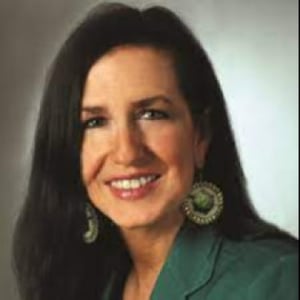
Shareholder, Greenberg Traurig
Jennifer Weddle is the Co-Chair of Greenberg Traurig's American Indian Law Practice and has wide-ranging experience in complex regulatory and jurisdictional issues, with a focus in Indian law, handling a variety of matters for tribal and non-tribal clients. She has a dynamic, inter-disciplinary practice that centers on providing strategies for resolving complex jurisdictional problems. Much of her practice focuses in the areas of tribal economic development and natural resources development. Jennifer also has U.S. Supreme Court experience, including serving as one of the attorneys for the respondent in Nevada v. Hicks (2001) and representing the petitioners in Ute Mountain Ute Tribe v. Padilla (2012) and Grand Canyon Skywalk Development, LLC v. Grand Canyon Resort Corporation (2013) and cert stage amici in Saginaw-Chippewa Tribe v. NLRB (2016) and United States v. Cooley (2020) and amici on the merits in Lewis v. Clarke (2017), U.S. v. Washington (2018), Carpenter v. Murphy (2018), McGirt v. Oklahoma (2020), and United States v. Cooley (2021).
Jennifer's work also includes negotiations for mineral leasing employment matters and representation before federal agencies. She has also been involved in civil litigation, working on numerous complex federal, state and tribal litigation matters, including class action tort litigation and large commercial disputes. Her transactional experience includes oil and gas renewables projects throughout the west, as well as Endangered Species Act work. Jennifer frequently assists tribes, banks and non-bank entities with financing and regulatory matters with Indian law components. Jennifer has wide-ranging project siting experience, including the application of NEPA, NHPA, and other environmental laws on tribal and public lands, including with respect to large linear multi-state energy and infrastructure projects. Jennifer has deep transactional, regulatory and litigation experience involving very complex matters with both legal and policy components.
Jennifer is past President of the National Native American Bar Association and past two-term Chair of the Federal Bar Association Indian Law Section. She currently serves as the Tenth Circuit Representative on the American Bar Association Standing Committee on the Federal Judiciary, a role she has held since 2018, spanning the evaluations for more than two dozen federal judicial nominees at every level of the federal courts. She is a ’00 graduate of Harvard Law School and a ’97 graduate of the University of Michigan (Classical Languages and Literature).

Partner, Clement & Murphy, PLLC
Paul served as the 43rd Solicitor General of the United States from June 2005 until June 2008. Before his confirmation as Solicitor General, he served as Acting Solicitor General for nearly a year and as Principal Deputy Solicitor General for over three years.
Paul has argued over 100 cases before the United States Supreme Court, including McConnell v. FEC, Tennessee v. Lane, United States v. Booker, MGM v. Grokster, Hobby Lobby v. Burwell, Epic Systems Corp. v. Lewis, Rucho v. Common Cause, Facebook v. Duguid, and TransUnion v. Ramirez. Paul has argued more Supreme Court cases since 2000 than any lawyer in or out of government. He has also argued many important cases in the lower courts, including Walker v. Cheney, United States v. Moussaoui and NFL v. Brady.
Paul’s practice focuses on appellate matters, constitutional litigation and strategic counseling. He represents a broad array of clients in the Supreme Court and in federal and state appellate courts. Last year, for example, he successfully argued Supreme Court cases involving significant issues of energy regulation, statutory interpretation, state sovereign immunity and Article III standing, and successfully argued a trademark appeal in the Fourth Circuit, and a constitutional appeal before the en banc Eleventh Circuit.
Paul focuses on high-stakes appeals. In recent years, he successfully defended a $1.2 billion jury verdict for clients in a Tenth Circuit case, while securing the reversal of an over $2 billion jury verdict for another client in the Seventh Circuit and the approval of a nearly $1 billion dollar class action settlement in the Third Circuit. He has initiated major administrative law challenges and constitutional litigation against the federal government, such as the successful challenge to the HHS drug-pricing rule and threatened challenges that led to the withdrawal of the Treasury Department’s proposed cryptocurrency regulations. He also counsels clients on a variety of strategic legal questions, whether arising from pending legislation, government inquiries or ongoing litigation.
Paul has undertaken substantial pro bono engagements in the Supreme Court, such as twice successfully representing the defendant in Bond v. United States and successfully representing the Omaha Tribe in Nebraska v. Parker, the guardian ad litem in Adoptive Couple v. Baby Girl, the defendant in Sekhar v. United States, a high school football coach in Kennedy v. Bremerton, and the Little Sisters of the Poor. Paul’s pro bono representation also precipitated the federal government’s confession of error in United States v. Rojas.
Following law school, Paul clerked for Judge Laurence H. Silberman of the U.S. Court of Appeals for the D.C. Circuit and for Associate Justice Antonin Scalia of the U.S. Supreme Court. After his clerkships, he went on to serve as Chief Counsel of the U.S. Senate Subcommittee on the Constitution, Federalism and Property Rights.
Paul is a Distinguished Lecturer in Law at the Georgetown University Law Center, where he has taught in various capacities since 1998. He also serves as a Senior Fellow of the Law Center’s Supreme Court Institute. He is the Justice Joseph Story Distinguished Practitioner in Residence at the Gray Center at Scalia Law School.
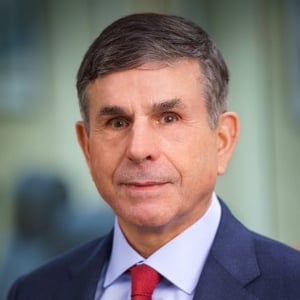
Partner, Marzulla Law
Roger J. Marzulla is one of the nation’s leading environmental, water, and property lawyers. As Assistant Attorney General in charge of the U.S. Justice Department’s Environment and Natural Resources Division, Roger learned first hand the operations and litigation styles of his client agencies: EPA, Interior Department, Bureau of Reclamation, Fish and Wildlife Service, National Marine Fisheries Service, Department of Transportation, Department of Commerce. In 1997, he co-founded Marzulla Law, where he brings to bear more than 35 years of expertise representing companies and individuals in industries as diverse as land and project development, aerospace, chemicals, oil and gas, mining, timber, manufacturing, computers, agriculture and water service.
Roger began his legal career as a trial lawyer in San Jose, California, after graduating magna cum laude from the University of Santa Clara School of Law. As a partner in Matthews & Marzulla he represented developers, title and construction companies, shopping centers, apartment owners and lenders in litigation throughout California. In 1981 he moved to Denver to become President of Mountain States Legal Foundation, litigating environmental and natural resource cases across the West.
In 1983 Roger joined the Justice Department as Special Litigation Counsel. He was subsequently promoted to Deputy Assistant Attorney General and, in 1987, was confirmed by the Senate as Assistant Attorney General in charge of the Environment and Natural Resources Division. At the Justice Department, Roger helped create litigation strategies for government programs as diverse as Superfund, the Clean Air Act, off-shore oil leasing, environmental crimes, federal facility clean-up, wetlands, endangered species and hazardous waste enforcement, as well as Presidential Order EO 12,630 (Government Interference with Private Property Rights).
In 1989 Roger returned to private law practice, successively heading the environmental law practices of the Powell, Goldstein and Akin, Gump law firms.
Since 1997, as a partner in Marzulla Law, Roger has continued to represent corporate and business clients in a wide array of environmental and property issues in courts across the country, frequently in litigation against the United States. He also assists clients in attaining compliance with environmental, health and safety regulation, and in avoiding risks in transactions.

Professor of Law, Widener University Commonwealth Law School
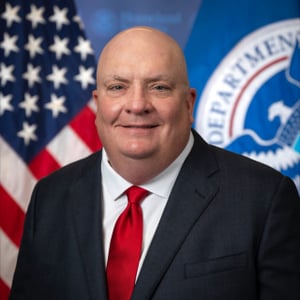
Acting Assistant Commissioner of Customs and Border Protection, Office of Professional Responsibility, U.S. Department of Homeland Security
Brian M. Fish is currently the Senior Advisor to the General Counsel at the Department of Homeland Security where he works on immigration and law enforcement issues. Previously, he was a trial attorney with the United States Immigration and Customs Enforcement, where he represented the Department of Homeland Security in removal hearings before the U.S. Immigration Court. Additionally, he was a Special Assistant United States Attorney and a Baltimore City homicide prosecutor. He is a member of the Federalist Society's Criminal Law & Procedure Practice Group Executive Committee and the President of its Baltimore Lawyers Chapter. He earned his B.A. from LaSalle University in 1992 and his J.D. from Loyola University New Orleans School of Law in 1998.
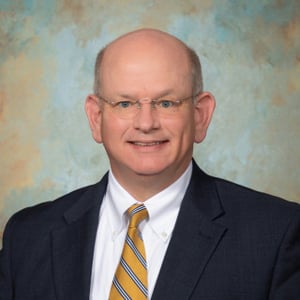
Dean and Associate Professor of Law, Faulkner University, Jones School of Law
Professor Campbell joined the faculty in 2007. He graduated from Auburn University in 1988 with a degree in International Business and from the University of Virginia School of Law in 1993. Following a judicial clerkship for the Hon. Emmett R. Cox on the United States Court of Appeals for the Eleventh Circuit, Professor Campbell entered private practice in Montgomery and Birmingham.
In 2000, Professor Campbell became an Assistant Attorney General in the Alabama Attorney General’s office, where his practice focused on constitutional law and civil rights, with an emphasis on the First, Eleventh, and Fourteenth Amendments, state immunity, election law, and the Voting Rights Act of 1965. In Spring 2002, he was a National Association of Attorneys General Supreme Court Fellow. In 2006, Professor Campbell became Deputy Chief Counsel to United States Senator Jeff Sessions, Chairman, and then Ranking Member, of the U.S. Senate Judiciary Subcommittee on Administrative Oversight and the Courts. His responsibilities included legislative analysis, drafting, and negotiations, management of hearings, and review of judicial nominations.
Professor Campbell teaches federal and Alabama civil procedure. In addition, he serves as President of the Board of Directors of Health Talents International, Inc., a nonprofit medical missions agency operating in Guatemala and Nicaragua.
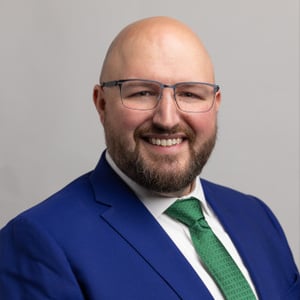
Senior Attorney, Institute for Justice
Patrick Jaicomo is a Senior Attorney with the Institute for Justice and one of the leaders of IJ’s Project on Immunity and Accountability. Through the project, Patrick works to dismantle judicially created immunity doctrines and ensure that government officials are held accountable when they violate the Constitution.
In November 2020, Patrick argued the police brutality case Brownback v. King before the U.S. Supreme Court. In March 2024, Patrick returned to the high court for the First Amendment retaliation case Gonzalez v. Trevino and again in October 2024, when the court granted, vacated, and reversed the denial of a similar retaliation claim in Murphy v. Schmitt. Patrick has litigated immunity and accountability issues—including qualified immunity, judicial immunity, and the restriction of constitutional claims against federal workers—across the United States and at every level of the court system.
Before joining IJ, Patrick was a litigator at a private firm in Grand Rapids, Michigan, where he cultivated a civil rights practice and handled a variety of cases in state and federal court. He earned his law degree from the University of Chicago and a degree in economics and political science from the University of Notre Dame.
Patrick was born and raised in rural, Steuben County, Indiana, where he met his wife and IJ colleague, Kenzie. The Jaicomos live in Arlington, Virginia, with their lovely daughter, Cora.
Patrick’s work has been featured in numerous publications, including the New York Times, Wall Street Journal, Washington Post, and USA Today. He has also appeared on numerous podcasts and television programs, authored academic articles, and frequently gives presentations on his areas of expertise.
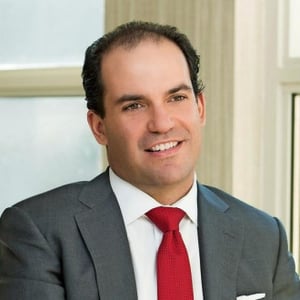
Partner, Latham & Watkins LLP
Roman Martinez is a partner in the Washington, D.C. office of Latham & Watkins. As a member of the firm’s Supreme Court and Appellate Practice, he focuses primarily on appeals in the Supreme Court of the United States, the United States Courts of Appeals, and state appellate courts. Mr. Martinez has handled civil and criminal matters involving a wide range of constitutional, statutory, and administrative law issues, and he has argued cases in the Supreme Court and the D.C., Sixth, Ninth, and Federal Circuits, among other courts.
Mr. Martinez’s appellate practice encompasses civil and criminal matters spanning virtually all areas of law. He recently rejoined Latham after serving as an Assistant to the Solicitor General at the US Department of Justice. In that role, he represented the United States in litigation before the Supreme Court and advised the Solicitor General on the government’s appellate litigation throughout the country.
Mr. Martinez has personally argued seven cases in the Supreme Court, including important cases in the fields of patent law, criminal law, civil rights, and civil procedure. He has filed over 75 briefs in the Supreme Court involving a wide range of legal issues, including administrative, tax, securities, intellectual property, criminal, environmental, education, civil rights, immigration, and First Amendment law.
Over the past year, Mr. Martinez has led Latham appellate teams in cases involving the Administrative Procedure Act, securities, ERISA, products liability, and employment law. Earlier this year, he successfully persuaded the Supreme Court to reject the State of Connecticut’s high-profile effort to reinstate the murder conviction of Michael Skakel. He frequently consults with clients to develop creative approaches to difficult legal questions that arise in and out of litigation.
Mr. Martinez’s extensive pro bono practice focuses chiefly on administrative law challenges to unlawful agency action by the Department of Veterans Affairs, as well as on criminal defense appeals. In 2018, he persuaded the Supreme Court to grant certiorari on behalf of a veteran seeking judicial review of an unlawful regulation promulgated by the Department of Veterans Affairs.
Before joining Latham, Mr. Martinez served as a law clerk to Chief Justice John G. Roberts of the Supreme Court of the United States and to then Judge Brett M. Kavanaugh of the D.C. Circuit.
From 2002 to 2005, Mr. Martinez served as an advisor on the Iraqi political and constitutional process, in various roles at the White House, at the US Embassy and Coalition Provisional Authority in Iraq, and at the Department of Defense. He received the Secretary of Defense Medal for the Global War on Terrorism and the US Department of Defense Distinguished Public Service Award for his service in Iraq.
Mr. Martinez is a member of the Edward Coke Appellate Inn of Court, and he serves on the US Chamber of Commerce's Administrative Law & Government Litigation Advisory Committee. He previously served as a member of the D.C. Circuit’s Advisory Committee on Procedures, and he now serves on the US District Court for the District of Columbia’s Committee on Grievances. His writing has appeared in The Wall Street Journal, The Washington Post, and other publications. He has appeared as a guest on the PBS NewsHour and other television programs to discuss the Supreme Court.
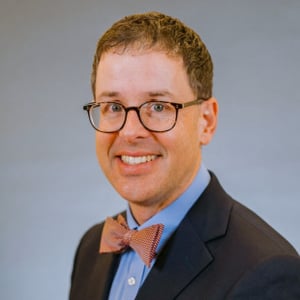
Senior Counsel and VP, Appellate Advocacy, Alliance Defending Freedom
John Bursch is senior counsel and vice president of appellate advocacy with Alliance Defending Freedom. Bursch has argued 12 U.S. Supreme Court cases and more than 30 state supreme court cases since 2011, and a recent study concluded that among all frequent Supreme Court advocates who did not work for the federal government, he had the 3rd highest success rate for persuading justices to adopt his legal position.
Bursch served as solicitor general for the state of Michigan from 2011-2013. He has argued multiple Michigan Supreme Court cases in eight of the last ten terms and has successfully litigated hundreds of matters nationwide, including six with at least $1 billion at stake. As part of his private firm, Bursch Law PLLC, he has represented Fortune 500 companies, foreign and domestic governments, top public officials, and industry associations in high-profile cases, primarily on appeal. He was inducted into the American Academy of Appellate Lawyers and serves as a member of the American Law Institute. His work has resulted in repeated listings in Michigan Super Lawyers and Best Lawyers.
Before entering private practice, Bursch served as a law clerk to the Honorable James B. Loken on the U.S. Court of Appeals for the 8th Circuit. He received his J.D. magna cum laude in 1997 from the University of Minnesota Law School, where he served as Chief Note & Comment Editor for the Minnesota Law Review. Prior to that, he attended Western Michigan University, where he received degrees in mathematics and music performance summa cum laude.
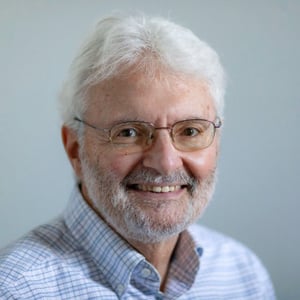
CEO, Asset Forfeiture Law, LLC
As a federal prosecutor, Stefan D. Cassella was one of the federal government’s leading experts on asset forfeiture and money laundering law for over thirty years. He now serves as an expert witness and consultant to law enforcement agencies and the private sector as the CEO of AssetForfeitureLaw, LLC.
As a Deputy Chief of the Justice Department’s Asset Forfeiture and Money Laundering Section and later as the Chief of the Asset Forfeiture and Money Laundering Section in the U.S. Attorney’s Office in Baltimore, Maryland, Mr. Cassella litigated some of the Government’s most significant forfeiture and money laundering cases and drafted many of the federal forfeiture and money laundering statutes.
He is the author of Asset Forfeiture Law in the United States, a one-volume resource designed to lead the practitioner, prosecutor, judge and policy maker through the labyrinth of statutes, rules and cases that govern this dynamic area of the law, and of more than 40 law review articles on money laundering and forfeiture. He has trained state and federal prosecutors and agents and their counterparts in numerous foreign countries, including over 200 lectures at the National Advocacy Center at the University of South Carolina.
Mr. Cassella is also the author and publisher of the Money Laundering and Forfeiture Digest, a monthly compendium of the forfeiture and money laundering cases decided by the federal courts that is circulated to hundreds of state, federal and foreign prosecutors and lawyers, law enforcement agents, academics and policy makers in the U.S. and abroad.

Adam Griffin is a graduate of the University of North Carolina School of Law. During law school, he served as a research assistant to Professor Stephen E. Sachs and UNC Law Dean Martin Brinkley. After law school, Adam spent two years litigating for liberty at the Institute for Justice as an inaugural Law and Liberty Fellow. He then served as a law clerk to Chief Judge Richard E. Myers in the United States District Court for the Eastern District of North Carolina, and previously worked at Pacific Legal Foundation and the Civil Rights Division of the Department of Justice.
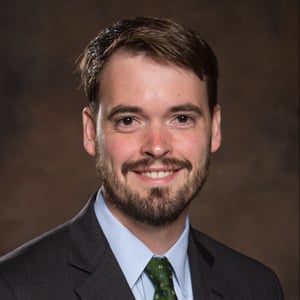
Senior Attorney, Institute for Justice
Rob Johnson is a senior attorney at the Institute for Justice, where he litigates to protect private property, free speech, and other individual rights. Rob is a nationally-recognized expert on civil forfeiture. He previously represented a series of small business owners who had their entire bank accounts seized by the IRS, and he launched an initiative that resulted in the IRS reopening hundreds of closed forfeiture cases and returning millions of dollars. He has also litigated cases challenging the constitutionality of civil forfeiture procedures, and he scored a victory striking down a forfeiture program as a violation of due process.
Beyond civil forfeiture, Rob has litigated cases defending a range of constitutional rights. He was part of teams that successfully challenged occupational licensing requirements for tour guides in Savannah and Charleston. He also developed a class action lawsuit fighting the NYPD’s use of a draconian “no-fault eviction” statute to coerce residents to waive their constitutional rights, which led New York City to reform the challenged law.
Rob’s writing has been published in the Wall Street Journal, Washington Post, Politico, and Reason, among other venues. Rob has testified about occupational licensing before the House and Senate Judiciary Committees and has twice testified about civil forfeiture before the House Ways & Means Oversight Subcommittee. He has also testified before state legislatures across the country.
From 2014-2017, Rob served as IJ’s first Elfie Gallun Fellow for Freedom and the Constitution. In that role, Rob wrote and spoke about the vital role the U.S. Constitution plays in protecting our most precious freedoms. He is currently at work on a book about the Fourteenth Amendment.
Rob studied literature and anthropology at Columbia University, and he studied law at Harvard Law School. Upon graduation, he clerked for Chief Judge Alex Kozinski on the Ninth Circuit and for Justice Anthony Kennedy on the Supreme Court.
Rob lives in Cleveland with his wife and two daughters—all named after characters in Shakespeare plays—and is an amateur large format photographer.
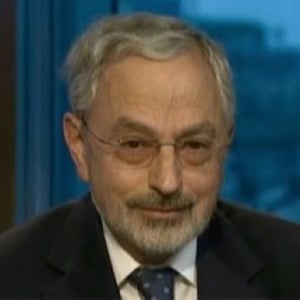
David B. Smith, PLLC
David B. Smith has over 35 years of white collar criminal experience. He has litigated scores of cases and argued more than one hundred federal criminal appeals as a federal prosecutor and defense attorney, including extensive experience with civil and criminal litigation in the Supreme Court of the United States. Mr. Smith has been repeatedly named in the list of preeminent lawyers in the field of white collar criminal defense by Best Lawyers in America (2012-2021) and Virginia Super Lawyers (2009-2020), and has received the President’s Commendation for outstanding service from the National Association of Criminal Defense Lawyers in 1993, 1994, and 2004. He served for nine years on the Board of the NACDL and has been Chair of its Forfeiture Committee since 1990. He is also a Vice-Chair of its Amicus Committee.
For nearly a decade prior to entering private practice, Mr. Smith was a prosecutor in the Criminal Division of the United States Department of Justice and at the United States Attorney’s Office for the Eastern District of Virginia, where he was involved in complex white collar criminal investigations, trials, and appeals involving defense procurement fraud, congressional bribery, espionage, tax evasion, mail fraud, false claims and other crimes. In 1995-1996, Mr. Smith served as an Associate Independent Counsel in the investigation of Michael Espy, the former secretary of agriculture.
Mr. Smith is regarded as the foremost expert in the country on asset forfeiture law and practice. He is the author of the leading two-volume legal treatise on forfeiture, Prosecution and Defense of Forfeiture Cases (2020), published by Matthew Bender, and co-author of Civil RICO (2020), also published by Matthew Bender. He has testified before congressional committees several times with respect to forfeiture, restitution, and money laundering legislation. Mr. Smith has regularly counseled the Senate and House Judiciary Committees on forfeiture legislation, and was heavily involved in drafting the Civil Asset Forfeiture Reform Act of 2000. He has also assisted the federal advisory committees in writing the procedural rules governing criminal and civil forfeiture proceedings. In 2000-2001, Mr. Smith was appointed by Senator Richard Shelby (R. Ala.), the Chairman of the Senate Intelligence Committee, to serve as a Commissioner with the Judicial Review Commission on Foreign Asset Control.
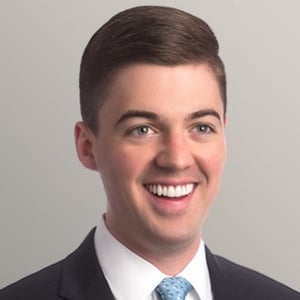
Partner, Special Matters and Government Investigations, King & Spalding LLP
William focuses his practice on government investigations, internal investigations, voluntary self-disclosures, and white collar criminal litigation. William advises clients on a range of white collar matters, including: the False Claims Act, the Anti-Kickback Statute, the Food Drug & Cosmetic Act, the Foreign Corrupt Practices Act, and whistleblower cases.
William has experience representing companies and individuals in investigations conducted by federal and state authorities, including the Department of Justice, multiple United States Attorney’s offices, the Department of Health and Human Services Office of Inspector General, the Food and Drug Administration, the Environmental Protection Agency, the Securities and Exchange Commission, the Office of Comptroller of the Currency, the Federal Election Commission, and multiple investigative committees of the United States Congress.
William previously served as a law clerk to the Honorable Richard J. Leon of the United States District Court for the District of Columbia. William graduated summa cum laude from Notre Dame Law School, where he served as the Managing Articles Editor of the Notre Dame Law Review.
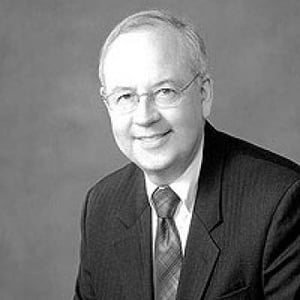
U.S. Court of Appeals, District of Columbia Circuit (1983-1989); U.S. Solicitor General (1989-1993)
Kenneth Starr is a former United States Federal Court of Appeals Judge, U.S. Solicitor General, and Independent Counsel. He is the former President and Chancellor of Baylor University where he held the Louise L. Morrison Chair of Constitutional Law at Baylor University Law School.

Courthouse Steps Decision Teleforum: United States v. Cooley
Anthony J. Ferate, Jennifer H. Weddle
In a 9-0 opinion written by Justice Breyer that could have far-reaching implications, the Supreme Court...
Courthouse Steps Oral Argument Teleforum: PennEast Pipeline LLC v. New Jersey
Paul D. Clement, Roger J. Marzulla
On April 28, 2021, the Supreme Court will hear oral argument in the case of PennEast...
Courthouse Steps Oral Argument Teleforum: Mahanoy Area School District v. B.L.
Michael R. Dimino
On April 28, 2021, the Supreme Court will hear oral argument in Mahanoy Area School...
Courthouse Steps Oral Argument Teleforum: United States v. Palomar-Santiago
Brian M. Fish
On April 27, 2021, the Supreme Court will hear oral argument in the case of U.S....
Courthouse Steps Oral Argument Teleforum: City of San Antonio, Texas v. Hotels.com
Charles Campbell
On April 21, 2021, the Supreme Court will hear oral argument in the case of City...
Courthouse Steps Decision Teleforum: Brownback v. King
Patrick Jaicomo, Roman Martinez
In Brownback v. King, the Court addressed the Federal Tort Claims Act, (FTCA) which waives...
An Evening with Ken Starr
Portland Lawyers Chapter
Portland, ORCourthouse Steps Decision Teleforum: Uzuegbunam v. Preczewski
John J. Bursch
On March 8, 2021, the U.S. Supreme Court decided Uzuegbunam v. Preczewski. Writing for the 8-justice...
Undue Delay or Due Process? Does the Due Process Clause Require a Prompt Post-Seizure Hearing When the Government Seizes an Individual’s Property?
Stefan D. Cassella, Adam F. Griffin, Robert E. Johnson, David B. Smith
The Institute for Justice (IJ) has filed a petition for certiorari in Serrano v. CPB, asking...
Edwards v. Vannoy - Post-Argument SCOTUScast
William S. McClintock
On December 2, 2020, the Supreme Court heard oral argument in Edwards v. Vannoy. The...