
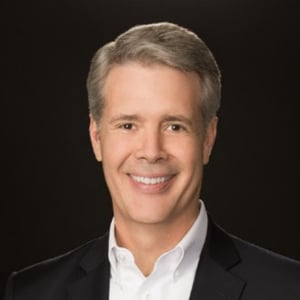
Partner, Cooley
Rob McDowell advises telecommunications, media and technology clients on their most significant regulatory, legal and business matters. As a former commissioner of the Federal Communications Commission (FCC) and a highly regarded industry leader, Rob has been at the forefront of the most complex and groundbreaking issues facing telecommunications.
Mr. McDowell was first appointed to the FCC by President George W. Bush in 2006 and again by President Obama in 2009. He was unanimously confirmed both times by the US Senate. During his tenure, Mr. McDowell led efforts to expand consumer access to spectrum through his work on the two largest wireless auctions in US history at the time, played a key role in the 2009 digital television transition and led efforts to establish the first federal civil rights rule in a generation by creating a ban on racially discriminatory practices in broadcast advertising. He also worked extensively on several large and complex mergers, including Sirius/XM and Comcast/NBC-Universal.
He is an advocate for internet freedom, serving on the US delegation to the 2012 World Conference on International Telecommunications and exposing an international bid to regulate vital aspects of the Internet through multilateral treaty-based organizations. Mr. McDowell authored an op-ed in the Wall Street Journal opposing multilateral internet regulation that led to a resolution passed unanimously in the House and Senate, as well as the ultimate defeat of the international bid at a treaty negation in Dubai later that year.
Prior to the FCC, Mr. McDowell was senior vice president for CompTel, the Competitive Telecommunications Association, where he led advocacy efforts before several government agencies, the White House and Congress.
Mr. McDowell is often called upon for speaking engagements and frequently appears on TV and radio. He has written opinion pieces for many high-profile publications, including the Wall Street Journal and Washington Post.
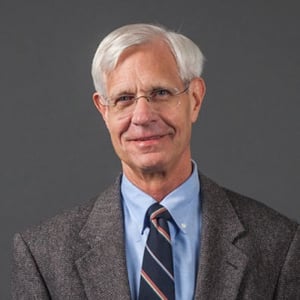
Distinguished University Professor, Antonin Scalia Law School, George Mason University
University Professor Nelson Lund is the author of Rousseau’s Rejuvenation of Political Philosophy: A New Introduction. He has also written widely in the field of constitutional law, including articles on constitutional interpretation, federalism, separation of powers, the Second Amendment, the Commerce Clause, the Speech or Debate Clause, the Equal Protection Clause, and the Uniformity Clause. In addition, he has published articles in the fields of employment discrimination and civil rights, the legal regulation of medical ethics, and the application of economic analysis to legal institutions and legal ethics.
Professor Lund graduated from St. John's College in Annapolis, Maryland, after which he received an MA in philosophy from the Catholic University of America and a PhD in political science from Harvard University. He left the faculty of the University of Chicago to attend its law school, where he served as executive editor of the University of Chicago Law Review and chapter chairman of the Federalist Society for Law and Public Policy Studies. After law school, he held positions at the United States Department of Justice in the Office of the Solicitor General and the Office of Legal Counsel. He also served as a law clerk to the Honorable Patrick E. Higginbotham of the United States Court of Appeals for the Fifth Circuit and to the Honorable Sandra Day O'Connor of the United States Supreme Court. Following his clerkship with Justice O'Connor, Professor Lund served in the White House as associate counsel to the president from 1989 to 1992.
Since joining the faculty at George Mason University's Antonin Scalia Law School, Professor Lund has taught Constitutional Law, Legislation, Federal Election Law, Employment Discrimination, State and Local Government, and seminars on the Second Amendment and on a variety of topics in Jurisprudence.
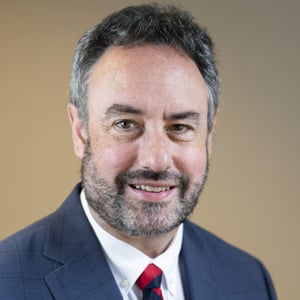
Research Director, Independence Institute
David B. Kopel is Research Director at the Independence Institute; Adjunct Scholar at the Cato Institute; and Senior Fellow at the University of Wyoming College of Law, Firearms Research Center. He received his B.A. in history with Highest Honors from Brown University and his J.D. magna cum laude from the University of Michigan Law School.
He is the author of over 20 books, including the textbook Firearm Law and the Second Amendment: Regulation, Rights, and Policy (Aspen Pubs. 4th ed. forthcoming 2026). His scholarship and briefs have been cited 7 Supreme Court cases--including Heller, McDonald, and Bruen--and in 140 lower courts opinions. He is the author of 120 scholarly articles. His shorter articles often appear on The Volokh Conspiracy blog, hosted by Reason magazine. His topics of interest include the right to arms throughout history, the Colorado Constitution, and law enforcement policy.

Founding Partner, Cooper & Kirk PLLC
Charles J. Cooper is a founding member and the chairman of Cooper & Kirk, PLLC, “one of the Nation’s leading litigation boutiques” (Above The Law 2017). The National Law Journal recently wrote that Mr. Cooper’s “brilliant legal career has so far spanned five decades and thrust Cooper into the spotlight in some of the most historic moments of the country’s modern history.” He has argued nine cases before the United States Supreme Court and scores of appeals before each of the 13 federal courts of appeals and several state supreme courts. He has been lead trial counsel in numerous complex, weeks-long trials in federal courts throughout the country. Named by the National Law Journal as one of the 10 best litigators in Washington D.C., Mr. Cooper’s work has been reported in numerous press accounts, and he has been called a “powerhouse attorney” (Fortune 2015), “a hard-nosed litigator” (Washington Post 2017), and “one of the country’s most in-demand civil litigators and a Washington legal institution unto himself” (The American Spectator 2014).
After graduating from the University of Alabama School of Law in 1977, where he ranked first in his class and served as Editor-in-Chief of the Alabama Law Review, Mr. Cooper began his career as a law clerk to Judge Paul Roney on the Fifth Circuit Court of Appeals and to Justice William H. Rehnquist in 1978–79. He then practiced law in Atlanta for two years before joining the Civil Rights Division of the U.S. Department of Justice, where he served as the Deputy Assistant Attorney General in charge of, among other things, appellate matters. In 1985 President Reagan appointed him to the position of Assistant Attorney General for the Office of Legal Counsel, which is the office responsible for providing legal opinions and advice to the White House, the Attorney General, and Executive Branch departments and agencies on issues covering the full spectrum of federal constitutional, statutory, and regulatory law.
In 1988 he returned to private practice as a litigation partner in the Washington, D.C. office of McGuireWoods. From 1990 until the founding of Cooper & Kirk in 1996, he was a partner at Shaw Pittman (now Pillsbury Winthrop Shaw Pittman), where he headed the firm’s Constitutional and Government Litigation Group.
Mr. Cooper has represented a wide range of public and private clients in highly complex constitutional, civil rights, antitrust, healthcare, banking, intellectual property, elections, campaign finance, administrative, commercial, and government contract cases. He has led trial teams in cases that have won judgments and settlements valued in the billions of dollars and that have established ground-breaking constitutional precedents.
Much of Mr. Cooper’s practice has involved representing high-profile clients in nationally prominent matters, including: the State of Florida in a First Amendment suit brought by the Disney Company concerning its autonomous regulatory authority over its Disney World property; the Commonwealth of Virginia in a suit seeking to enjoin the removal of noncitizens from its voter rolls; 38 members of the Duke Lacrosse team falsely accused of rape by officials of Duke University and the City of Durham; Harper Lee in a copyright dispute with the heirs of Gregory Peck; high-ranking former government officials such as former Attorneys General John Ashcroft, Jeff Sessions, and William Barr, and Ambassador John Bolton; several Governors and United States Senators; over 100 Members of Congress; and many state, territorial, and local government bodies and officials. He has also represented and advised government officials and public figures in connection with sensitive private issues that needed to be, and were, resolved discreetly without becoming matters of public record.
In 1998 Chief Justice Rehnquist appointed Mr. Cooper to the Standing Committee on Rules of Practice and Procedure of the Judicial Conference of the United States, where he served for three terms. He also served as a Public Member, appointed by President George H.W. Bush, of the National Commission on Judicial Discipline and Removal. He is a member of numerous professional associations, including the American Law Institute (since 1993) and the American Academy of Appellate Lawyers (since 1996). He is also an active member of the Federalist Society and the Republican National Lawyers Association, which in 2010 named him Republican Lawyer of the Year and in 2016 honored him with its Edwin Meese III Award.
Mr. Cooper has published scores of articles and spoken extensively on constitutional and legal policy topics. He has appeared before congressional committees on 26 occasions, testifying as an expert on a wide variety of legal issues, including the Chevron doctrine of judicial deference to administrative agencies, the diversity of citizenship jurisdiction of federal courts, statehood bills for Puerto Rico and the District of Columbia, and the impeachment of President Clinton.
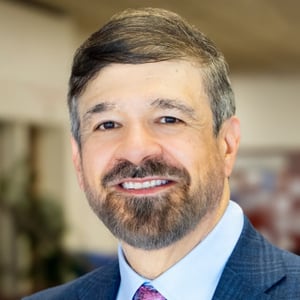
Hugh and Hazel Darling Foundation Professor of Law; Director, Center for the Study of Constitutional Originalism, University of San Diego School of Law
Jacob E. Davis and Jacob E. Davis II Chair in Law, Moritz Colleg, The Ohio State University
Professor Shane came to Ohio State in 2003 from Carnegie Mellon University's H. John Heinz III School of Public Policy and Management. He is an internationally recognized scholar in administrative law, with a specialty in separation of powers law, and has co-authored leading casebooks on each subject. He has served on the faculty at the University of Iowa College of Law and was dean at the University of Pittsburgh School of Law.
In addition to his outstanding law teaching and scholarship, Professor Shane has received a National Science Foundation grant for interdisciplinary study related to cyberspace and democracy. At Ohio State, he provides strong leadership in interdisciplinary scholarship and teaching.
Fellow in Law and Government, American University Washington College of Law
William Yeomans joined the faculty of law of the American University Washington College of law in 2009 where he teaches courses on civil rights, legislation and the legislative process. From 2006 until 2009, he served as Sen. Edward M. Kennedy’s Chief Counsel on the Senate Judiciary Committee. Prior to that, he spent 26 years at the Department of Justice where he litigated and supervised civil rights cases in the federal courts at all levels involving voting rights, school desegregation, employment discrimination, housing discrimination, hate crimes, police misconduct, abortion clinic violence, and human trafficking. He served as Deputy Assistant Attorney General, Chief of Staff, and acting Assistant Attorney General for Civil Rights. He has also been Legal Director of the Alliance for Justice and the first Director of Programs for the American Constitution Society, where he spearheaded the launch of two publications: the Harvard Law and Policy Review and Advance.

Executive Vice President, The Federalist Society
Dean Reuter is Executive Vice President at the Federalist Society for Law and Public Policy Studies. He has served in two federal government agency Offices of the Inspector General, as Counsel to the Inspector General and Deputy Inspector General, responsible for policing the use of federal funds granted and contracted through those agencies. As such, he helped conduct and oversee criminal investigations across the country. He is the principal author of the non-fiction book, The Hidden Nazi: The Untold Story of America's Deal with the Devil, and editor of Liberty’s Nemesis: The Unchecked Expansion of the State and Confronting Terror: 9/11 and the Future of American National Security. He was appointed by the President and served as Vice-Chairman of the Board of Directors of the Corporation for National and Community Service, and recently served as an appointee on the U.S. Commission on Presidential Scholars. He is a graduate of Hood College (BA with Honors) and the University of Maryland School of Law.
John Henry Wigmore Professor of Law, Northwestern University School of Law
Professor Allen is the John Henry Wigmore Professor of Law at Northwestern University, in Chicago, IL. He did his undergraduate work in mathematics at Marshall University and studied law at the University of Michigan. He is an internationally recognized expert in the fields of evidence, procedure, and constitutional law. He has published five books and approximately eighty articles in major law reviews. The New York Times referred to him as one of nation's leading experts on evidence and procedure. He has been quoted in national news outlets hundreds of times, and appears regularly on national broadcast media on matters ranging from complex litigation to constitutional law to criminal justice.
Professor Allen began his career at the State University of New York, and has held professorships at the University of Iowa and Duke University prior to coming to Northwestern. He has lectured on his research at distinguished universities across the world, among them Columbia University, Cornell University, University of Chicago, University of Virginia, University of Pennsylvania, University of Michigan, Duke University, Oxford University, University of London, Leiden University, the Royal Netherlands Academy of Arts and Sciences, University of Edinburgh, University of British Columbia, the University of Paris (Sorbonne), Parma University, Turin University, Pavia University, University of Adelaide, Australia, and Victoria University of Wellington, New Zealand, and UNAM, Mexico City. In 1991, he was the University Distinguished Visiting Scholar, at the University of Adelaide, South Australia. One of his books has been translated into Chinese by the Ministry of Education of the People's Republic of China, and he has been invited to China for a series of lectures in the summer of 2004 and the spring of 2005. He has also been invited to lecture by the governments of Mexico and Trinidad/Tobago. For the last ten years, his research has focused on the nature of juridical proof. He has been involved as a consultant on numerous cases involving complex litigation in the United States and abroad.
He is a member of the American Law Institute, has chaired the Evidence Section of the Association of American Law Schools, and was Vice-chair of the Rules of Procedure and Evidence Committee of the American Bar Association's Criminal Justice Section. He has served as a Commissioner of the Illinois Supreme Court, assigned to the Attorney Registration and Disciplinary Commission. He is presently on the Boards of the Constitutional Rights Foundation-Chicago, and the Yeager Society of Scholars of Marshall University. He is, or has served, on various boards and committees of civic and cultural institutions in Chicago.
Louis and Harriet Ancel Professor of Law and Public Policy, Northwestern University School of Law
Martin H. Redish, the Louis and Harriet Ancel Professor of Law and Public Policy at Northwestern University School of Law, teaches and writes on the subjects of federal jurisdiction, civil procedure, freedom of expression and constitutional law. In addition, he is Senior Counsel to the law firm of Sidley Austin LLP.
Professor Redish received his AB with highest honors in political science from the University of Pennsylvania and his JD magna cum laude from Harvard Law School.
Described in a review of his book, The Federal Courts in the Political Order, as "without a doubt the foremost scholar on issues of federal court jurisdiction in this generation," Professor Redish is the author or co-author of more than 80 articles and 15 books. Professor Redish's book entitled, The Logic of Persecution: Free Expression and the McCarthy Era, was published by Stanford University Press in the summer of 2005. His book entitled Wholesale Justice: Constitutional Democracy and the Problem of the Class Action Lawsuit, was published by Stanford University Press in 2009. Professor Redish was recently listed in a study conducted by William S. Hein & Company as the sixteenth most cited legal scholar of all time. He has also been consistently recognized by the Institute for Scientific Information for being among the most highly cited researchers worldwide. As a visiting professor at the University of Michigan Law School he won the L. Hart Wright Outstanding Teacher Award. He has also won the Robert Childress Memorial Award for Teaching Excellence, the Dean's Teaching Award, the First Year Course Professor Award, and the Student Bar Association Faculty Appreciation Award at Northwestern.
Professor Redish has appeared as an expert witness before numerous congressional committees. In addition, he has made frequent appearances in the national media, including the Today Show, ABC and NBC National News, CNN, Court TV, CSPAN and National Public Radio.
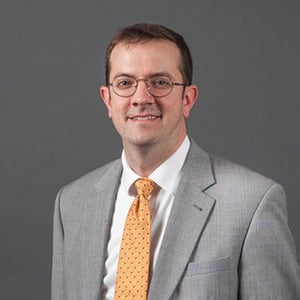
Associate Professor of Law, Antonin Scalia Law School, George Mason University
Associate Professor of Law J.W. Verret joined the Antonin Scalia Law School, George Mason University faculty in 2008. In 2013, he took leave for two years to serve as the Chief Economist and Senior Counsel for the U.S. House Committee on Financial Services. He received his JD and MA in Public Policy from Harvard Law School and the Harvard Kennedy School of Government, respectively, in 2006. While in law school, Professor Verret served an Olin Fellowship in Law and Economics at the Harvard Program on Corporate Governance under the guidance of Prof. Lucian Bebchuk.
Professor Verret then served as a law clerk for Vice-Chancellor John W. Noble of the Delaware Court of Chancery. Prior to joining the faculty at Scalia Law, Professor Verret was an associate in the SEC Enforcement Defense Practice Group at Skadden, Arps in Washington, D.C. He has written extensively on corporate law topics, including Delaware's Guidance, co-written with Chief Justice Myron T. Steele of the Delaware Supreme Court. His academic work has been featured in the Yale Journal on Regulation, The Business Lawyer, the Delaware Journal of Corporate Law, the Stanford Law Review, the University of Pennsylvania Journal of Business Law, and the Virginia Law and Business Review. Professor Verret was selected by the Northwestern Law School Searle Center on Law, Regulation, and Economic Growth for a 2009-2010 Searle-Kaufmann Research Fellowship.
Professor Verret is also a Senior Scholar at the Mercatus Center Working Group on Financial Markets, where he regularly briefs Congressional staff, members of Congress, SEC Commissioners and other financial regulatory agencies on financial regulation topics. He also directs the Corporate Federalism Initiative, where he obtains research grants for a network of students and faculty scholars who study the division between states and the federal government as sources of corporate law. Professor Verret has been invited to testify before various House and Senate Committees four times during the financial crisis of 2009 regarding all of the central provisions of the Obama Administration's 2009 financial regulatory reform proposals. For a full list of Professor Verret's C-Span appearances, including testimony before the U.S. House of Representatives and the U.S. Senate, see http://www.c-spanvideo.org/jwverret.
Professor Verret has been an invited panelist for various television appearances, including an interview on The NewsHour with Jim Lehrer. Professor Verret has been quoted in various media on financial regulation and corporate law topics, including the New York Times, CNN Money, the CNN Political Ticker, CNBC, ABC News, Investor's Business Daily, ESPN.com, The American Banker, The American Lawyer, The Huffington Post, CBS.com, and AP News. Professor Verret's op-eds have been featured in Forbes, The Chicago Tribune, The Orange County Register, and The Wall Street Journal. Professor Verret is also a regular guest contributor to three of the most noted corporate law and financial regulation law blogs: the Harvard Law School Corporate Governance and Financial Regulation Forum, Deallawyers.com, and The Conglomerate.
Former Adjunct Professor of Law; former Special Counsel to the President; former federal prosecutor, Georgetown Law (ret.)
Bill Otis is a former Adjunct Professor of Law at Georgetown University, a one-time federal prosecutor, and a former Special White House Counsel for President George H. W. Bush. After graduating from Stanford Law School, he started his career in the Criminal Division of the Justice Department, then became chief of appeals for the US Attorney's Office for the Eastern District of Virginia. In the 1980's he served on the Department's "Train the Trainer" team, which taught US Attorneys Offices across the county how to implement the then-new Sentencing Reform Act. He has held several posts in the federal government, including Special Assistant to the Secretary of Energy and Counselor to the head of the Drug Enforcement Administration, in addition to the White House post. He has testified before Congress on issues in criminal procedure, illegal drugs, the US Sentencing Commission, and the death penalty, and has given numerous media interviews on those and other subjects. He currently teaches a seminar at Georgetown Law titled "Conservatism in Law in America" with his wife, Federalist Society co-founder Lee Liberman Otis.
Death Penalty Policy Director of the ACLU of Northern California
Natasha Minsker is the Death Penalty Policy Director of the ACLU of Northern California. In this position, Ms. Minsker uses a multi-disciplinary approach to promote the goal of reforming capital sentencing procedures and the eventually ending the death penalty in California. Previously, Ms. Minsker spent five years at the Alameda County Public Defender’s Office, the first year as a research attorney in the Capital Defense Unit and the remaining four years as a Deputy Public Defender, handling all types of misdemeanor, felony, and juvenile cases. Ms. Minsker also served as staff attorney to the Judicial Council of California’s Task Force on Criminal Jury Instructions, helping the committee research and draft more than 700 new criminal jury instructions. She clerked for the Honorable Martha Vazquez, Chief Judge of the Federal District Court of New Mexico, and is a graduate of Stanford Law School.
The ACLU of Northern California is the largest of the ACLU affiliates, representing more than 55,000 members.
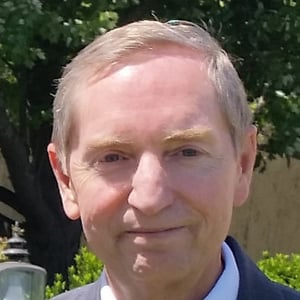
Legal Director & General Counsel, Criminal Justice Legal Foundation
Kent S. Scheidegger has been the Legal Director of the Criminal Justice Legal Foundation since December 1986. He also served as Chairman of the Criminal Law Practice Group of the Federalist Society 2003 to 2005. His articles on criminal and constitutional law have been published in law reviews, national legal publications, and congressional reports. Legal arguments authored by Mr. Scheidegger have been cited and incorporated in several precedent-setting United States Supreme Court decisions.
After receiving a degree in physics with honors from New Mexico State University in 1976, Mr. Scheidegger served for six years in the United States Air Force as a Nuclear Research Officer. He took his law degree with distinction from the University of the Pacific, McGeorge School of Law in 1982 and practiced civil law in Northern California. He was general counsel of California Cooler, Inc. from 1984 until 1986, when he joined the Foundation.
University Distinguished Professor, University of Houston Law Center
Professor Dow joined the University of Houston Law Center faculty in 1988. He graduated with a B.A. in History from Rice University, and earned his M.A. in History and his law degree from Yale. Upon graduation, he clerked for the Honorable Carolyn Dineen King, judge on the Fifth Circuit Court of Appeals.
Professor Dow has handled more than fifty appeals, including more than 25 death penalty appeals. His areas of expertise include contracts, constitutional law, and death penalty law. He has written extensively on these subjects as well as on equal protection, law and literature, and federal jurisdiction.
Professor, The Ohio State University
Professor Cornell has written A Well Regulated Militia: The Founding Fathers and the Origins of Gun Control in America and The Other Founders: Anti-Federalism and the Dissenting Tradition in America, 1788-1828. He has also published Whose Right to Bear Arms Did the Second Amendment Protect? part of the Bedford Book's "Historians At Work" series. He has written articles in the Journal of American History, American Studies, William and Mary Quarterly, William and Mary Law Review,Constitutional Commentary, and others. His book reviews have appeared in the Journal of the Early Republic, Reviews in American History, and many others. Prof. Cornell is a co-author of a forthcoming textbook, Visions of America: A History of the American Nation.
His first book won the Society of the Cincinnati Prize and was a Choice Outstanding Book. His most recent book won the 2006 Langum Prize in legal history. He has been a National Endowment for the Humanities Postdoctoral Fellow at the Institute of Early American History and Culture. He has held an NEH fellowship and ACLS fellowship. He has delivered invited lectures at Oxford University, Columbia University, Duke, NYU Law School, UCLA Law School, Stanford Law School, and Vanderbilt University Law School. He has presented papers at meetings of the American Historical Association, the American Society of Legal History, the American Studies Association, the Organization of American Historians, and many others. He has published editorials in the New York Times and the Detroit Free Press, and appeared on PBS, C-SPAN, and Fox and Friends
He has a strong interest in teaching with technology. He has written about new media in the AHA's Perspectivesand is on the Board of Advisers of Pearson's website, The History Place. He has guest blogged on the Oxford University Press Blog and at Balkinization.

Beauchamp Brogan Distinguished Professor of Law, University of Tennessee College of Law
Professor Reynolds is one of the most prolific scholars on the UT faculty. His special interests are law and technology and constitutional law issues and his work has appeared in a wide variety of publications, including the Columbia Law Review, the Virginia Law Review, the University of Pennsylvania Law Review, the Wisconsin Law Review, the William and Mary Law Review, the Southern California Law Review, the Harvard Journal of Law and Technology, The Columbia Human Rights Law Review, Law and Policy in International Business, Jurimetrics, the Journal of Space Law, and the High Technology Law Journal. Professor Reynolds has also written in the New York Times, the Washington Post, The Atlantic, the Washington Times, the Los Angeles Times, Road & Track, Urb, and the Wall Street Journal, as well as other popular publications. He was for many years a contributing editor at Popular Mechanics magazine, and today writes a regular column for USA Today. He is the co-author of Outer Space: Problems of Law and Policy, and The Appearance of Impropriety: How the Ethics Wars Have Undermined American Government, Business, and Society. His most recent books are The Social Media Upheaval, The Judiciary’s Class War, and The New School: How the Information Age Will Save American Education from Itself.
Professor Reynolds has testified before Congressional committees on space law, international trade, and domestic terrorism. He has been executive chairman of the National Space Society and a member of the White House Advisory Panel on Space Policy. A member of the UT faculty since 1989, Professor Reynolds has received the Harold C. Warner Outstanding Faculty Scholarship Award in W. Allen Separk Outstanding Faculty Scholarship Award, and the Carden Award for Outstanding Scholarship.
A songwriter and producer for such bands as Mobius Dick, The Nebraska Guitar Militia, and The Defenders Of The Faith, Professor Reynolds is a member of the American Society of Composers and Performers and a former member of the National Academy of Recording Arts and Sciences.
Professor Reynolds blogs at InstaPundit.com.
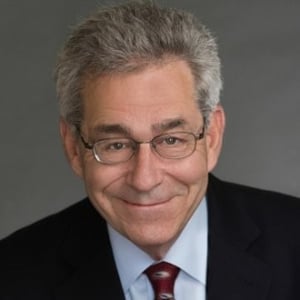
Vice President, Brady Center to Prevent Gun Violence
 Dennis A. Henigan is the Vice President of the Brady Center to Prevent Gun Violence and Founder of its Legal Action Project. He is the author of Lethal Logic: Exploding the Myths that Paralyze American Gun Policy (Potomac Books 2009).
For twenty years, he has been a leading advocate for stronger gun laws, appearing dozens of times on national television and radio shows, including 60 Minutes, The Today Show, Nightline, Larry King Live and Dateline. He also has written and spoken extensively on liability and constitutional issues relating to gun laws and gun violence, including testifying before several Congressional Committees.
Under his direction, Brady Center lawyers have recovered millions of dollars in damages for gun violence victims, as well as winning precedent-setting decisions on the liability of gun sellers. In 2004, he was named one of the top ten "Lawyers of the Year" by Lawyers' Weekly magazine. His work as a public interest lawyer has been profiled in The New Yorker.
Henigan received his B.A. from Oberlin College in 1973 and his law degree in 1977 from the University of Virginia School of Law. Prior to joining the Brady Center in 1989, he was a partner in the law firm of Foley & Lardner.
Henigan received his B.A. from Oberlin College in 1973 and his law degree in 1977 from the University of Virginia School of Law.
Executive Director, Coalition to Stop Gun Violence
Mr. Horwitz is a graduate of the University of Michigan and received his law degree from the George Washington University. He is currently a visiting scholar at the Johns Hopkins Bloomberg School of Public Health and is working on a book examining the relationship between guns and democracy which will be published by the University of Michigan Press in 2008.
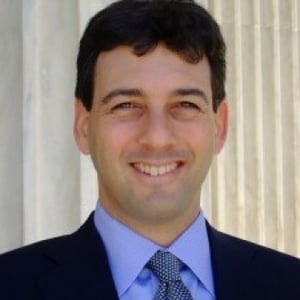
Vice President for Litigation, Institute for Free Speech
Alan joined the Institute for Free Speech as Vice President for Litigation in February 2021. In this role, Alan directs the Institute’s litigation and legal advocacy, leads our in-house legal team, and manages and works to expand our network of volunteer attorneys.
Prior to joining the Institute, Alan litigated complex federal matters for twenty years, in his own practice and as a partner in various Washington-area firms. He argued and won landmark constitutional cases in the United States Supreme Court and has appeared before numerous appellate and district courts throughout the country. Alan often speaks at law schools and continuing legal education seminars. He also teaches strategic/public interest litigation as an adjunct professor at the Georgetown University Law Center.
Alan began his career clerking for the Hon. Terrence W. Boyle, United States District Judge for the Eastern District of North Carolina. He has also served as a Deputy Attorney General for the State of California, a litigation associate at the Washington office of Sidley Austin, and as counsel to the United States Senate Judiciary Committee.
Alan earned his J.D. at Georgetown (1995) and his B.A. at Cornell University (1992). He is an active member in good standing of the Virginia, District of Columbia, and California bars, the Bar of the United States Supreme Court, and various federal appellate and district court bars.

Senior Vice President for Legal Studies, Cato Institute
Clark Neily is senior vice president for legal studies at the Cato Institute. His areas of interest include constitutional law, overcriminalization, civil forfeiture, police accountability, and gun rights. Neily is the author of Terms of Engagement: How Our Courts Should Enforce the Constitution’s Promise of Limited Government. His writing has appeared in the Wall Street Journal, Forbes, and National Review Online, as well as various law reviews, including the Harvard Journal of Law and Public Policy, George Mason Law Review, Georgetown Journal of Law and Public Policy, NYU Journal of Law and Liberty, and Texas Review of Law and Politics. Neily is a frequent guest speaker and lecturer for the Federalist Society, Institute for Humane Studies, and American Constitution Society.
Before joining Cato in 2017, Neily was a senior attorney and constitutional litigator at the Institute for Justice and director of the Institute’s Center for Judicial Engagement. He is also an adjunct professor at the University of Texas School of Law, where he teaches constitutional litigation and public-interest law.
Neily served as co-counsel in District of Columbia v. Heller, the historic case in which the Supreme Court held for the first time that the Second Amendment protects an individual right to own a gun for self-defense.
Neily began his legal career as a law clerk to Judge Royce Lamberth on the U.S. District Court for the District of Columbia. After that he spent four years in the trial department of the Dallas-based firm Thompson & Knight. Neily received his undergraduate and law degrees from the University of Texas, where he was Chief Articles Editor of the Texas Law Review.

A U.N. Regulated Internet? The Case for Defending Against Persistent Intergovernmental Threats to Internet Freedom
Robert M. McDowell
Note from the Editor: The author has adapted this paper from testimony before the U.S....
No Conservative Consensus Yet: Douglas Ginsburg, Brett Kavanaugh, and Diane Sykes on the Second Amendment
Nelson Lund
Note from the Editor: This paper examines the largely unexplored subject of the different approaches...
Mexico's Federal Law of Firearms and Explosives
David B. Kopel
In recent years, gun control has become an important international issue. For example, some persons...
Are the Recent Recess Appointments Constitutional?
Charles J. Cooper, Michael B. Rappaport, Peter M. Shane, William R. Yeomans, Dean Reuter
Mr. Reuter: Welcome to the Federalist Society’s practice group podcast. The following podcast, hosted by...
How to Think About Errors, Costs, and Their Allocation
Ronald J. Allen
Note from the Editor: In December 2010, the Federalist Society heard from a number of...
Pleading, Discovery, and the Federal Rules: Exploring the Foundations of Modern Procedure
Martin Redish
Note from the Editor: In December 2010, the Federalist Society heard from a number of...
Executive Compensation
J.W. Verret
Brought to you by the Corporations, Securities, and Antitrust Practice Group The Corporate and Financial...
Death Penalty
William G. Otis, Natasha Minsker, Kent Scheidegger, David Dow
On June 25, 2008 the Supreme Court decided Kennedy v. Louisiana, holding that the Eighth...
Parker v. District of Columbia: DC Gun Ban Case
Saul Cornell, Glenn Reynolds, Dennis A. Henigan, Joshua Horwitz, Alan Gura, Clark Neily
Earlier this year, the U.S. Court of Appeals for the District of Columbia Circuit ruled...