
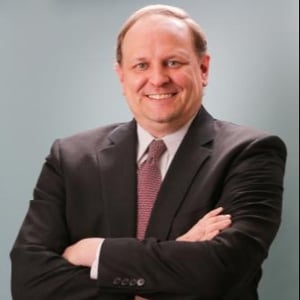
Director, Center for Legal Policy, Manhattan Institute for Policy Research
James R. Copland is a senior fellow at the Manhattan Institute and director of Legal Policy. In those roles, he develops and communicates novel, sound ideas on how to improve America’s civil- and criminal-justice systems. His forthcoming book, The Unelected: How an Unaccountable Elite is Governing America (Encounter Books) will be released on September 8, 2020. He has testified before Congress as well as state and municipal legislatures; and has authored many policy briefs, book chapters, articles and opinion pieces in a variety of publications, including the Harvard Business Law Review and Yale Journal on Regulation, the Wall Street Journal, National Law Journal, and USA Today. Copland speaks regularly on civil- and criminal-justice issues; has made hundreds of media appearances in such outlets as PBS, Fox News, MSNBC, CNBC, Fox Business, Bloomberg, C-Span, and NPR; and is frequently cited in news articles in the New York Times, Washington Post, The Economist, and Forbes. In 2011 and 2012, he was named to the National Association of Corporate Directors “Directorship 100” list, which designates the individuals most influential over U.S. corporate governance.
Prior to joining MI, Copland was a management consultant with McKinsey and Company in New York. Earlier, he was a law clerk for Ralph K. Winter on the U.S. Court of Appeals for the Second Circuit. Copland has been a director of two privately held manufacturing companies since 1997 and has served on many public and nonprofit boards. He holds a J.D. and an M.B.A. from Yale, where he was an Olin Fellow in Law and Economics; an M.Sc. in the politics of the world economy from the London School of Economics; and a B.A. in economics from the University of North Carolina at Chapel Hill, where he was a Morehead Scholar.

Founder, President, and General Counsel, Wisconsin Institute for Law & Liberty
Rick Esenberg is the founder and current President and General Counsel of the Wisconsin Institute for Law & Liberty, a rapidly expanding law and policy organization headquartered in Milwaukee. Under Rick’s leadership, WILL has grown into one of the more active state-based think tanks and litigation centers in the country. Rick is a frequent litigator in state and federal courts and nationally recognized scholar and commentator on constitutional law, particularly the First Amendment’s guarantees of freedom of speech and religion. He is one of the leading experts on the Wisconsin Constitution and a frequent advocate before the Wisconsin Supreme Court. Rick’s work seeks to advance the rule of law and individual liberty, formed by a robust civil society that forms individual and community character, preserving the wisdom of the past and an openness to the future.
Rick’s commentary has been featured in such outlets as the Wall Street Journal, National Review, Weekly Standard, Real Clear Politics, Milwaukee Journal Sentinel and Washington Examiner. Formerly on the faculty of Marquette University Law School, his scholarship has appeared in such publications as the Harvard Law Review, Harvard Journal of Law & Public Policy, Wake Forest Law Review and William & Mary Bill of Rights Journal. Back when they were a thing, he operated a blog called Shark and Shepherd where he tried to suggest something about the duality of man – “the Jungian thing.”
Rick holds a J.D., magna cum laude, from Harvard Law School, where he was an editor of the Harvard Law Review, and a B.A., summa cum laude, in political science from the University of Wisconsin-Milwaukee. In addition to service on the Marquette Faculty, he was formerly a litigation partner at Foley & Lardner and General Counsel of an international manufacturing firm headquartered in Wisconsin. He lives in Mequon Wisconsin with his wife Karen, golden retrievers Cooper and Riley and more books than he can find places for.

Vilas Research Fellow & Professor of Law, University of Wisconsin Law School
Shubha Ghosh has taught in the fields of intellectual property, business organizations, tort law, antitrust, property, and law & economics since Fall 1996. He is the author of over fifty articles and book chapters. He is the co-author of two intellectual property casebooks: Intellectual Property: Private Rights, The Public Interest, and the Regulation of Creative Activity (Thomson West 2007) and Intellectual Property in Business Organizations (Lexis-Nexis 2006).

Professor of Law, Antonin Scalia Law School, George Mason University
Adam Mossoff is Professor of Law at Antonin Scalia Law School, George Mason University. He has published extensively on why patents, copyrights, and other intellectual property rights have been—and should be—legally secured to innovators and creators as property rights. His scholarship has been relied on by the United States Supreme Court, by lower federal courts, and by U.S. federal agencies. He has been invited to testify numerous times before the U.S. Senate and the House of Representatives on intellectual property legislation. His writings on intellectual property policy have also appeared in the Wall Street Journal, New York Times, Forbes, Investors Business Daily, and in other media outlets. His journal articles can be downloaded here.
Professor Mossoff is a longstanding member of the Executive Committee of the Intellectual Property Practice Group of the Federalist Society, on which he served as Chairperson from 2016-2018, and he is Chair of the Intellectual Property Working Group of the Regulatory Transparency Project of the Federalist Society. He is a Senior Fellow and Chair of the Forum for Intellectual Property at the Hudson Institute, a Visiting Intellectual Property Fellow at the Heritage Foundation, and a member of the Board of Directors of the Center for Intellectual Property Understanding. He is a member of the Intellectual Property Rights Policy Committee of ANSI and he has served as Chair and Vice-Chair of the Intellectual Property Committee of the IEEE-USA, on which he remains a member in good standing.

Race and Policing
James R. Copland
In this teleforum, James R. Copland will discuss competing legislative proposals in Congress, in the...
A Modest Proposal for Human Limitations on Cyberdiscovery
Rick M. Esenberg
Note from the Editor: In December 2010, the Federalist Society heard from a number of...
Are Patents "Private Property" Under the Fifth Amendment? - Event Audio
Michael A. Gollin, Dean A. Monco, Loren A. Smith, Shubha Ghosh, Adam Mossoff
The modern regulatory state affects all forms of property rights, from land to chattels to...