
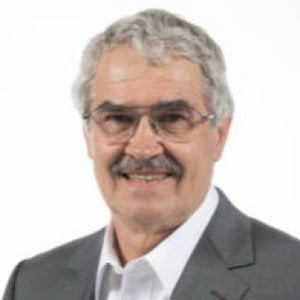
R. B. Price and Isabelle Wade & Paul C. Lyda Professor Emeritus of Law, University of Missouri School of Law
Carl H. Esbeck is R.B. Price Professor and Isabelle Wade & Paul C. Lyda Professor of Law emeritus at the University of Missouri. After attending Cornell University School of Law where he served as an editor on the Cornell Law Review, he held a judicial clerkship with the Honorable Howard C. Bratton, chief judge of the U.S. District Court in New Mexico.
Professor Esbeck publishes widely in the area of religious liberty and church-state relations. He is recognized as the progenitor of "Charitable Choice," an integral part of the 1996 Federal Welfare Reform Act, later made a part of the faith-based initiative and equal-treatment regulations under presidents George W. Bush and Barack Obama. In addition, he has taken the lead in recognizing that the modern Supreme Court has applied the Establishment Clause not as a personal right, but as a structural limit on the government's authority in disputes involving church governance. While on leave from 1999 to 2002, Professor Esbeck directed the Center for Law & Religious Freedom (CLRF) and later served as Senior Counsel to the Deputy Attorney General at the U.S. Department of Justice. While directing the CLRF, Professor Esbeck was a central part of the congressional advocacy behind the Religious Land Use and Institutionalized Persons Act of 2000 (RLUIPA). While at the Department of Justice one of his duties was to direct a task force to remove barriers to the equal-treatment of faith-based organizations applying for social service grants. He is the author of Disestablishment and Religious Dissent: Church-State Relations in the New American States, 1776 - 1833 (U. of MO Press, 2019).
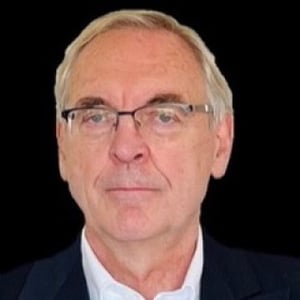
Fellow, National Security Institute, Antonin Scalia Law School, George Mason University
Vince Vitkowsky chaired the Executive Committee of the Federalist Society’s International and National Security Law and Policy Practice Group for over a decade. He is also a Fellow at the National Security Institute of George Mason University Law School. Vince spent 45 years in private practice, primarily in AmLaw 100/200 firms and their spin-offs. His practice included domestic and international commercial arbitration and litigation, as well as cyber risks and liabilities. Vince's current focus is on national security policy, artificial intelligence, cybersecurity, and counterterrorism. He has often written and spoken on national security and other public policy issues. Among other affiliations, Vince has been an Adjunct Fellow at the Center for Law and Counterterrorism of the Foundation for the Defense of Democracies, a member of the Executive Committee of the American Branch of the International Law Association, and Co-Chair of the Committee on Interventions and Trial Observations of the International Bar Association’s Human Rights Institute. He received his B.A. from Northwestern University and his J.D. from Cornell Law School.
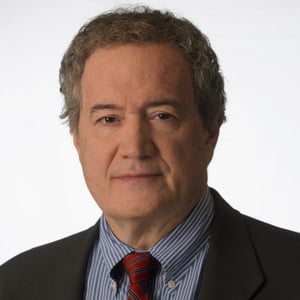
Director of the Program in Human Rights, Catholic University of America
William L. Saunders is Chair Emeritus of the Religious Liberties Practice Group of the Federalist Society. He is also a religious liberty and human rights scholar as well as director of the Center for Human rights at The Catholic University of America. He is Law Fellow with the Institute for Human Ecology, Professor and Director of the Program in Human Rights in the School of Arts & Sciences and Co-director of the Center for Religious Liberty at the Columbus School of Law. Before joining The Catholic University of America, Mr. Saunders served as Senior Vice President and Senior Counsel with Americans United for Life for ten years. From 1999 to 2009, he was Senior Fellow in Bioethics and Human Rights Counsel at the Family Research Council.
Mr. Saunders attended the University of North Carolina at Chapel Hill on a Morehead scholarship. He obtained his degree in law from the Harvard Law School.
Mr. Saunders was featured in Harvard’s first Guide to Conservative Public Interest Law in 2003 and again in the 2008 edition. He served on Harvard’s Advisory Committee for its 2008 celebration of public interest law. A member of the Supreme Court bar, he has authored numerous legal briefs in state, federal, foreign, and international courts.
Mr. Saunders’ book, Unborn Human Life and Fundamental Rights: Leading Constitutional Cases Under Scrutiny, was published in 2019. His articles and book chapters have been published by the university presses of Harvard, Villanova, Brigham Young, Fordham, Georgetown, Houston, Scranton, and the Catholic University of America, as well as by the Intercollegiate Studies Institute, Freedom House, Greenhaven Press, Rowan & Littlefield, Praeger, St. Augustine’s, and Intervarsity press. He has given lectures and participated in debates at many colleges, universities, and law schools, including Princeton, Harvard, Georgetown, and Notre Dame. He delivered the annual J. Michael Miller Lecture at the University of St. Thomas (on international law) in February 2007, the annual R. Wayne Kraft Memorial Lecture (on bioethics) at DeSales University in February 2004 and the annual James Moore Lecture (on human rights violations in Sudan) at Millikin University in 1999. He has also lectured, and/or has been published, in many foreign countries, including Italy, Germany, Poland, Austria, Spain, Greece, Slovakia, Mexico, Qatar, Malaysia, Romania, the Philippines, Hong Kong, and the United Kingdom.
In addition to speaking and writing frequently on bioethics topics, Mr. Saunders has submitted testimony to the President’s Council on Bioethics, as well as to UNESCO’s Committee on Bioethics, and has briefed Congressional staff and state legislatures. He is a regular columnist for the National Catholic Bioethics Quarterly.
Mr. Saunders has appeared often in the media, including BBC World News, CNN, Fox News, Vatican Radio, and National Public Radio. His articles on issues have appeared in a variety of journals, such as First Things, Human Events, Human Life Review, The Legal Times, Communio, The Family in America: A Journal of Public Policy, Ethics & Medics, and Touchstone.
Mr. Saunders served on the official United States delegation to the UN Special Session on Children in 2001/02. In 2011, he was a speaker at an official briefing at the UN, addressing the topic, why euthanasia is not a human right.
In 2004, he served on the NGO Working Committee in connection with the Doha Intergovernmental Conference for the Family.
Mr. Saunders is Senior Fellow with the Religious Freedom Institute, and Affiliated Scholar with the Pellegrino Center for Clinical Ethics at the Georgetown University School of Medicine. He is President of the Fellowship of Catholic Scholars and a member of the boards of the International Association of Catholic Bioethicists, the International Right to Life Federation, the Institute on Religion and Democracy, and the Society of Catholic Social Scientists.
In 1999, Mr. Saunders founded Sudan Relief and Rescue, Inc., to aid the persecuted church in Sudan. He has worked for and written on behalf of the persecuted church for many years.

Former President & CEO, The Federalist Society for Law and Public Policy Studies
Eugene B. Meyer, former President and CEO of the Federalist Society, has served as Executive Director, CEO, and/or President of the organization for more than 40 years. He is responsible for shepherding the organization from a small group of law students to a community of 90,000 lawyers, law students, academics, judges, and others interested in the rule of law. The Society now includes a Student Chapter at nearly every ABA-accredited law school in the country and Lawyers Chapters in 220 major cities across the nation. Gene earned his B.A. in history at Yale in 1975 and his M.A. in political science from the London School of Economics in 1976. Gene currently serves on the boards of the U.S. Chess Center, the Holman Foundation, the Sarah Scaife Foundation, and the advisory board of the Adam Smith Society. He holds the title of International Chess Master.
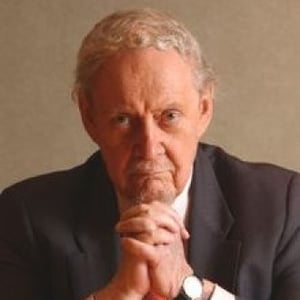
Former Judge, U.S. Court of Appeals, DC Circuit
Robert Heron Bork served as Solicitor General, acting Attorney General, and judge for the United States Court of Appeals for the District of Columbia Circuit. Judge Bork passed away in December 2012.
Tribute to Judge Robert Bork by John McGinnis - Event Audio/Video
Celebration of the Life of Robert Heron Bork 1927-2012
Judge Robert H. Bork: His Life and Legacy - Practice Group Podcast
A Conference Discussing the Contributions of Judge Robert H. Bork - June 26, 2007
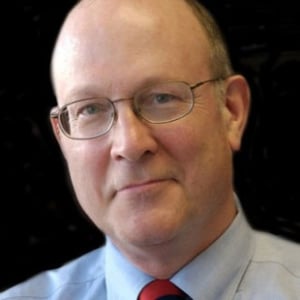
Professor Emeritus of Law, Antonin Scalia Law School, George Mason University
Jeremy A. Rabkin is a Professor Emeritus of Law at the Antonin Scalia Law School, George Mason University. Before joining the faculty in June 2007, he was for over two decades a professor in the Department of Government at Cornell University. Professor Rabkin serves on the board of directors of the Center for Individual Rights, a public interest law firm based in Washington, D.C. Previously he was a board member of the U.S. Institute of Peace and the board of academic advisors of the American Enterprise Institute.
Professor Rabkin’s books include Law Without Nations? (Princeton University Press, 2005). He authored “If You Need a Friend, Don’t Call a Cosmopolitan,” a chapter in Varieties of Sovereignty and Citizenship (Sigal R. Ben-Porath & Rogers M. Smith eds., University of Pennsylvania Press, 2012). His articles have appeared in major law reviews and political science journals and his journalistic contributions in a range of magazines and newspapers, including the Washington Post and the Wall Street Journal.
United States Court of Appeals, Second Circuit
Dennis Jacobs is the Chief Judge of the United States Court of Appeals for the Second Circuit. He became Chief Judge on October 1, 2006. At the time of his appointment in 1992, he was a partner in the New York law firm of Simpson Thacher & Bartlett.
Judge Jacobs received his B.A. degree from Queens College of the City University of New York in 1964; his M.A. degree from New York University in 1965; and his J.D. degree from the New York University School of Law in 1973.
Judge Jacobs was a lecturer in the English Department of Queens College of the City University of New York from 1967 until 1969. He was in private practice from 1973 with the New York law firm of Simpson, Thacher & Bartlett, serving as a partner there from 1980 until his judicial appointment.
In 1997-2004, Judge Jacobs was a member of the Committee on Judicial Resources of the Judicial Conference of the United States; starting in 1999 he was chair of that committee.
Judge Jacobs is a native of New York City.
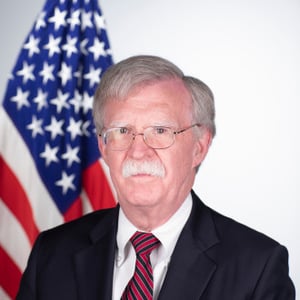
Former United States National Security Advisor
John R. Bolton served as Assistant to the President and National Security Advisor from April 2018 to September 2019.
Prior to his appointment, Ambassador Bolton served as a senior fellow at the American Enterprise Institute (AEI); of counsel at Kirkland & Ellis; a contributor to FOX News Channel and FOX Business Network; and his op-ed articles were regularly featured in major media publications.
Ambassador Bolton was appointed as United States Permanent Representative to the United Nations on August 1, 2005 and served until his resignation in December 2006. Prior to his appointment, Ambassador Bolton served as Under Secretary of State for Arms Control and International Security from May 2001 to May 2005.
Other positions he has previously held include Assistant Secretary for International Organization Affairs at the Department of State, 1989-1993; Assistant Attorney General, Department of Justice, 1985-1989; Assistant Administrator for Program and Policy Coordination, U.S. Agency for International Development, 1982-1983 and General Counsel, U.S. Agency for International Development, 1981-1982.
Ambassador Bolton is the author of Surrender is Not an Option: Defending America at the U.N. and Abroad, published by Simon and Shuster (November 2007) and How Barack Obama is Endangering our National Sovereignty, published by Encounter Books (April 2010).
Ambassador Bolton was born in Baltimore, Maryland. He graduated with a Bachelor of Arts degree, summa cum laude, Phi Beta Kappa, from Yale College in 1970, and received his Juris Doctor from Yale Law School in 1974. He currently resides in Maryland with his wife, Gretchen. They have one daughter, Jennifer Sarah, who also graduated from Yale College, and received her MBA and SM degrees from MIT in 2014 and is currently a senior manager at Nissan’s facility in Nashville.
Founder and President, American Civil Rights Institute
Ward Connerly is founder and President of the American Civil Rights Institute – a national, not-for-profit organization aimed at educating the public about the need to move beyond race and, specifically, racial and gender preferences. Mr. Connerly has gained national attention as an outspoken advocate of equal opportunity for all Americans, regardless of race, sex, or ethnic background.
Mr. Connerly is author of Creating Equal: My Fight Against Race Preferences and his new release Lessons from My Uncle James: Beyond Skin Color to the Content of Our Character. One part memoir, one part moral guide, Lessons from My Uncle James is a touching, funny and ultimately a philosophical book about living a principled and productive life regardless of skin color. Lessons illustrates how Mr. Connerly arrived at the ethics that have guided his life and is a new starting point for the discussion about character that America must have in order to move beyond race for good.
As a member of the University of California Board of Regents, Mr. Connerly focused the attention of the nation on the University's race-based system of preferences in its admissions policy. On July 20, 1995, following Mr. Connerly's lead, a majority of the Regents voted to end the University's use of race as a means for admissions. He was appointed to a 12-year term as UC Regent in March 1993.
In 1995, Mr. Connerly accepted chairmanship of the California Civil Rights Initiative (Proposition 209) campaign. Under his leadership, the campaign successfully obtained more than 1 million signatures and qualified for the November 1996 ballot. California voters passed Proposition 209 by a 55 percent to 45 percent margin.
Mr. Connerly also led the efforts to pass initiatives in the States of Washington, Michigan, Nebraska and Arizona that were patterned after California's Proposition 209, to require equal treatment under the law for all residents in public education, public employment and public contracting.
Mr. Connerly has been profiled on 60 Minutes, the cover of Parade magazine, the New York Times, Wall Street Journal, Newsweek magazine, and virtually every major news magazine in America. He has also appeared on The NewsHour with Jim Lehrer, Crossfire, Hannity & Colmes, Meet the Press, Dateline, NBC Nightly News, CNN, and C-SPAN.
Mr. Connerly is President and Chief Executive Officer of Connerly & Associates, Inc., a Sacramento-based association management and land development consulting firm founded in 1973. He is regarded as one of the housing industry's top experts, possessing a comprehensive knowledge of housing and development issues. He has been inducted as a lifetime member into the California Building Industry Hall of Fame and has been a member of the Rotary Club of Sacramento for over 15 years.
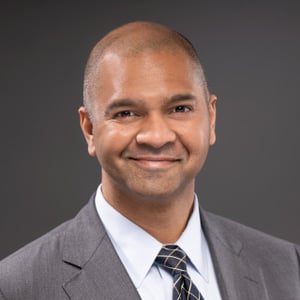
Senior Fellow, Stand Together Trust
Vikrant Reddy is a senior fellow at Stand Together Trust, specializing in the area of criminal justice reform. Reddy previously served as a senior policy analyst at the Texas Public Policy Foundation (TPPF), where he managed the launch of TPPF’s national Right on Crime initiative in 2010. He has worked as a research assistant at the Cato Institute, as a judicial clerk to the Hon. Gina M. Benavides in Texas, and as an attorney in private practice. He is a member of the State Bar of Texas, and he serves on the Executive Committee of the Criminal Law Practice Group of the Federalist Society. He is also an appointee to the U.S. Commission on Civil Rights Texas State Advisory Committee.
Reddy’s research and scholarly opinions have appeared in a range of national media outlets, including USA Today, National Review, The Federalist, and others.
Reddy earned his law degree from the Southern Methodist University School of Law. He received his undergraduate degree from the University of Texas at Austin.

An Extended Essay on Church Autonomy
Carl H. Esbeck
The doctrine of church autonomy[1] is distinct from the two more familiar lines of cases...
Cyber, Robotic, and Space Weapons in International Conflict
Vincent Vitkowsky
A review of: Striking Power: How Cyber, Robots, and Space Weapons Change the Rules for...
Courthouse Steps: Maslenjak v. United States Update
TeleforumDoes Neutrality Equal Secularism? The European Court of Human Rights Decides Lautsi v. Italy
William L. Saunders
Introduction Religion can be an intensely personal activity. However, the idea that religion is only...
2003 Barbara K. Olson Memorial Lecture - Transcript
Eugene B. Meyer, Robert H. Bork
Address by Robert H. Bork, Senior Fellow, American Enterprise Instituteand Co-Chairman, Federalist Society Board of...
Panel Proceedings: The Pinochet Case & Head of State Immunity
Kenneth Roth, Jeffrey Greenbaum, Jeremy A. Rabkin, Dennis Jacobs, John R. Bolton
Editor's Note: This issue is dedicated to a panel discussion on International Law and Head...
The American Civil Rights Institute: Taking CCRI to the National Stage
Ward Connerly
The campaign for passage of the California Civil Rights Initiative ("CCRI"), also known as Proposition...
Extra-Terrestrial Sanctions in an Interdependent World
Gregory Husisian
U.S. Unilateral Sanctions in the Post-World War Era It is almost a law of nature:...