
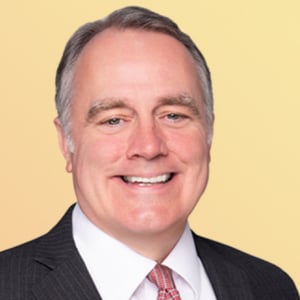
Partner, King & Spalding PLLC
Will Barnette is a partner in the Atlanta office of King & Spalding, where he is a member of the firm’s business litigation practice and class action defense group. During his 30-year career, Will has consistently led clients to successful outcomes in their most sensitive and high exposure class action, MDL, and related regulatory matters. From litigating high-stakes tobacco class actions at the turn of the century, to defending massive data breach litigation in the last decade, and winning several lucrative antitrust opt-out settlements more recently, Will has played a key role in much of the leading complex litigation of the era and led clients to tremendous success on both sides of the “v.” In particular, he has deep experience in litigating consumer, products, and antitrust class actions, commercial disputes, and managing internal investigations.
Prior to rejoining King & Spalding, where he worked earlier in his career, Will served as Associate General Counsel for The Home Depot and was a member of the company’s Legal Senior Leadership Team. As leader of The Home Depot’s commercial litigation team for more than ten years, he was responsible for the company’s most significant commercial and business litigation, which frequently challenged core aspects of the company’s business. During his 21-year tenure with The Home Depot, Will led the successful defense of several hundred class actions, created and led the company’s recovery litigation program, and successfully managed multiple high-profile investigations and favorably resolved significant related regulatory matters, including with the United States Department of Justice, the United States Environmental Protection Agency, and multi-state Attorney General groups.
A recognized thought leader in complex litigation, Will argued before the U.S. Supreme Court in the 2019 term—one of the few in-house counsel to do so. He received the Atlanta Business Chronicle’s Corporate Counsel Award for Advocacy in 2016 and has authored seven law review articles. His recent works, Misunderstanding Original Jurisdiction and There Is No Conservative Case for Class Actions, ranked among the top SSRN downloads in Federal Courts and Jurisdiction. He frequently lectures on class actions, MDL litigation, and internal investigations, and teaches Complex Litigation at the University of Tennessee Winston College of Law, where he earned the Harold C. Warner Outstanding Adjunct Professor Award in 2025.
Will chairs the Board of Georgians for Lawsuit Reform, which was instrumental in passing Georgia’s 2025 tort reform legislation. He also serves as Chair of the Class Actions Section for the State Bar of Georgia and is a former President of the Atlanta Legal Aid Society. Will played varsity college basketball at Sewanee.
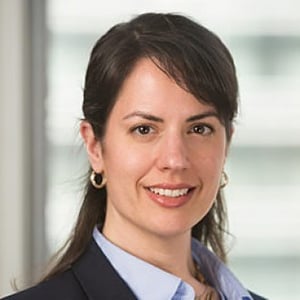
Counsel to Commissioner Hester M. Peirce, U.S. Securities and Exchange Commission
Thaya Brook Knight was associate director of financial regulation studies at the Cato Institute. She is an attorney with extensive experience in securities regulation, small business capital access, and capital markets. Before joining Cato, she co-founded and served as general counsel of CrowdCheck, a company providing due diligence and disclosure services in the online investing market. Following the recent financial crisis, she served as investigative counsel for the congressional oversight panel charged with overseeing the expenditure of Troubled Asset Relief Program funds. She also spent several years with the Washington office of the law firm WilmerHale, where her practice focused on securities litigation, securities enforcement defense, and corporate investigations.
She holds a BA from Middlebury College and a JD from the University of Michigan Law School.
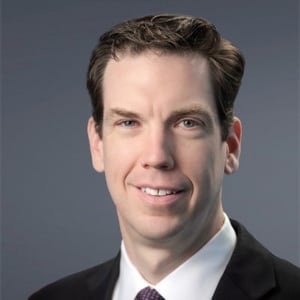
Partner, Fusion Law, PLLC
Paul is the founding partner of Fusion Law, PLLC. He has extensive experience with state, federal, and global regulators building coalitions and implementing policies to promote innovation in financial services. He is responsible for designing and implementing the first state (Arizona) and federal (CFPB) FinTech sandboxes in the United States. He also designed the CFPB no-action letter and trial disclosure policies. He helped found the first global regulatory innovation coalition (Global Financial Innovation Network) and led the founding of the first U.S. regulatory innovation coalition (American Consumer Financial Innovation Network). He served on the Financial Stability Oversight Council subcommittee on digital assets. He also has drafted state-level laws on blockchain and utility tokens.
Paul also has significant enforcement and litigation experience. He led many multi-state consumer protection enforcement matters as Civil Litigation Division Chief at the Arizona Attorney General’s Office.
Prior to his government service, Paul practiced law in the areas of securities litigation and transactional work for approximately six years at two well-known law firms. He also clerked on the U.S. Court of Appeals for the Fourth Circuit.
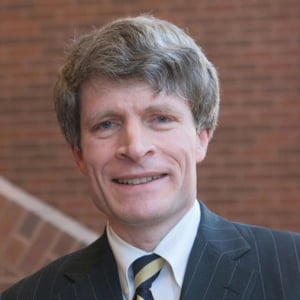
S. Walter Richey Professor of Corporate Law, University of Minnesota Law School
Professor Richard W. Painter received his B.A., summa cum laude, in history from Harvard University and his J.D. from Yale University, where he was an editor of the Yale Journal on Regulation. Following law school, he clerked for Judge John T. Noonan Jr., of the United States Court of Appeals for the Ninth Circuit and later practiced at Sullivan & Cromwell in New York City and Finn Dixon & Herling in Stamford, Connecticut.
He has served as a tenured member of the law faculty at the University of Oregon School of Law and the University of Illinois College of Law, where he was the Guy Raymond and Mildred Van Voorhis Jones Professor of Law from 2002 to 2005.
From February 2005 to July 2007, he was Associate Counsel to the President in the White House Counsel's office, serving as the chief ethics lawyer for the President, White House employees and senior nominees to Senate-confirmed positions in the Executive Branch. He is a member of the American Law Institute and is an advisor for the new ALI Principles of Government Ethics. He has also been active in the Professional Responsibility Section of the American Bar Association.
Professor Painter has also been active in law reform efforts aimed at deterring securities fraud and improving ethics of corporate managers and lawyers. A key provision of the Sarbanes-Oxley Act of 2002 requiring the SEC to issue rules of professional responsibility for securities lawyers was based on earlier proposals Professor Painter made in law review articles and to the ABA and the SEC. He has given dozens of lectures on the Sarbanes-Oxley Act to law schools, bar associations, and learned societies, such as the American Academy of Arts and Sciences. Professor Painter has on four separate occasions provided invited testimony before committees of the U.S. House of Representatives or the U.S. Senate on securities litigation and/or the role of attorneys in corporate governance.
His book, Getting the Government America Deserves: How Ethics Reform Can Make a Difference, was published by Oxford University Press in January 2009. He has written op-eds on government ethics for various publications including the New York Times, the Washington Post and the Los Angeles Times, and he has been interviewed several times on government ethics and corporate ethics by national news organizations, including appearances on Lawrence O'Donnell (MSNBC), Anderson Cooper 360 (CNN), CNN News, Fox News, National Public Radio All Things Considered, and Minnesota Public Radio News. In 2011, he testified before the U.S. House Government Oversight Committee on partisan political activity by government officials and reform of the Hatch Act. Professor Painter has also given expert testimony in cases involving securities transactions and the professional responsibility of lawyers. He testified as a defense witness in SEC. v. The Reserve Money Market Fund (SDNY, November 2012), a jury trial of an SEC enforcement action against the founders of the world's oldest money market fund that ended with a defense verdict on all of the fraud counts.
Professor Painter is the author of two casebooks: Securities Litigation and Enforcement (with Margaret Sachs and Donna Nagy; West 2003; Second Edition, 2007; Third Edition 2011) and Professional and Personal Responsibilities of the Lawyer (with Judge John T. Noonan Jr.; Foundation 1997; Second Edition, 2001; Third Edition 2011). He has written dozens of articles, book reviews, and essays, including a series of papers and a forthcoming book with Minnesota colleague Claire Hill on the personal responsibility of investment bankers.
S. Walter Richey Professor of Corporate Law, University of Minnesota Law School
Professor Richard W. Painter received his B.A., summa cum laude, in history from Harvard University and his J.D. from Yale University, where he was an editor of the Yale Journal on Regulation. Following law school, he clerked for Judge John T. Noonan Jr., of the United States Court of Appeals for the Ninth Circuit and later practiced at Sullivan & Cromwell in New York City and Finn Dixon & Herling in Stamford, Connecticut.
He has served as a tenured member of the law faculty at the University of Oregon School of Law and the University of Illinois College of Law, where he was the Guy Raymond and Mildred Van Voorhis Jones Professor of Law from 2002 to 2005.
From February 2005 to July 2007, he was Associate Counsel to the President in the White House Counsel's office, serving as the chief ethics lawyer for the President, White House employees and senior nominees to Senate-confirmed positions in the Executive Branch. He is a member of the American Law Institute and is an advisor for the new ALI Principles of Government Ethics. He has also been active in the Professional Responsibility Section of the American Bar Association.
Professor Painter has also been active in law reform efforts aimed at deterring securities fraud and improving ethics of corporate managers and lawyers. A key provision of the Sarbanes-Oxley Act of 2002 requiring the SEC to issue rules of professional responsibility for securities lawyers was based on earlier proposals Professor Painter made in law review articles and to the ABA and the SEC. He has given dozens of lectures on the Sarbanes-Oxley Act to law schools, bar associations, and learned societies, such as the American Academy of Arts and Sciences. Professor Painter has on four separate occasions provided invited testimony before committees of the U.S. House of Representatives or the U.S. Senate on securities litigation and/or the role of attorneys in corporate governance.
His book, Getting the Government America Deserves: How Ethics Reform Can Make a Difference, was published by Oxford University Press in January 2009. He has written op-eds on government ethics for various publications including the New York Times, the Washington Post and the Los Angeles Times, and he has been interviewed several times on government ethics and corporate ethics by national news organizations, including appearances on Lawrence O'Donnell (MSNBC), Anderson Cooper 360 (CNN), CNN News, Fox News, National Public Radio All Things Considered, and Minnesota Public Radio News. In 2011, he testified before the U.S. House Government Oversight Committee on partisan political activity by government officials and reform of the Hatch Act. Professor Painter has also given expert testimony in cases involving securities transactions and the professional responsibility of lawyers. He testified as a defense witness in SEC. v. The Reserve Money Market Fund (SDNY, November 2012), a jury trial of an SEC enforcement action against the founders of the world's oldest money market fund that ended with a defense verdict on all of the fraud counts.
Professor Painter is the author of two casebooks: Securities Litigation and Enforcement (with Margaret Sachs and Donna Nagy; West 2003; Second Edition, 2007; Third Edition 2011) and Professional and Personal Responsibilities of the Lawyer (with Judge John T. Noonan Jr.; Foundation 1997; Second Edition, 2001; Third Edition 2011). He has written dozens of articles, book reviews, and essays, including a series of papers and a forthcoming book with Minnesota colleague Claire Hill on the personal responsibility of investment bankers.
Partner, Fusion Law, PLLC
Paul is the founding partner of Fusion Law, PLLC. He has extensive experience with state, federal, and global regulators building coalitions and implementing policies to promote innovation in financial services. He is responsible for designing and implementing the first state (Arizona) and federal (CFPB) FinTech sandboxes in the United States. He also designed the CFPB no-action letter and trial disclosure policies. He helped found the first global regulatory innovation coalition (Global Financial Innovation Network) and led the founding of the first U.S. regulatory innovation coalition (American Consumer Financial Innovation Network). He served on the Financial Stability Oversight Council subcommittee on digital assets. He also has drafted state-level laws on blockchain and utility tokens.
Paul also has significant enforcement and litigation experience. He led many multi-state consumer protection enforcement matters as Civil Litigation Division Chief at the Arizona Attorney General’s Office.
Prior to his government service, Paul practiced law in the areas of securities litigation and transactional work for approximately six years at two well-known law firms. He also clerked on the U.S. Court of Appeals for the Fourth Circuit.

There Is No Conservative Case for Class Actions
William P. Barnette
A review of The Conservative Case for Class Actions, by Brian T. Fitzpatrick (Chicago), https://press.uchicago.edu/ucp/books/book/chicago/C/bo43233299.html (Read...
Cyan, Inc. v. Beaver County Employees Retirement Fund - Post-Argument SCOTUScast
Thaya Brook Knight
On November 28, 2017, the Supreme Court heard argument in Cyan, Inc. v. Beaver County...
Courthouse Steps: Cyan v. Beaver County Employees Retirement Fund
Paul N. Watkins
The Cyan v. Beaver County Employees Retirement Fund case examines whether state courts have subject...
Courthouse Steps: Cyan v. Beaver County Employees Retirement Fund
Corporations, Securities & Antitrust Practice Group Teleforum
TeleforumChadbourne & Parke LLP v. Troice - Post-Decision SCOTUScast
Richard W. Painter
On February 26, 2014, the Supreme Court issued its decision in three cases that question...
Chadbourne & Parke LLP v. Troice - Post-Argument SCOTUScast
Richard W. Painter
On October 7, 2013, the Supreme Court heard oral argument in three cases that question...