
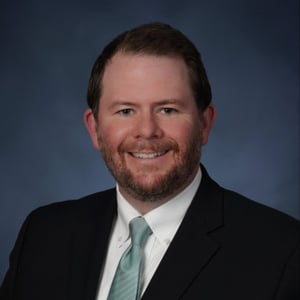
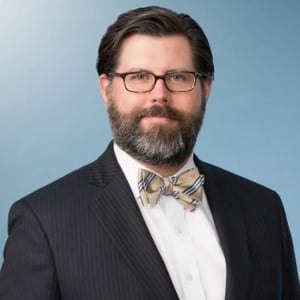
Partner, Kroger, Gardis & Regas, LLP
Séamus focuses his practice in education and public policy. He has the Martindale- Hubbell attorney rating of AV Preeminent for the highest level of professional excellence in law.
Séamus provides effective and efficient counsel, frequently advising clients on day-to-day issues and navigating clients through the Indiana Statehouse. While he often serves as general counsel, he tailors his services to best address client needs. He works with preferred service providers to offer advice as conflict counsel and internal investigations.
Séamus began his practice of law in 2006. In 2011, the Indianapolis Star featured Séamus as a “Rising Star” for his work as a lawyer, and the Indianapolis Business Journal’s Indiana Lawyer identified Séamus as an “Up & Coming Lawyer” for Indiana. Beginning in 2012, he has been recognized annually by the Super Lawyers publication as a Rising Star.
Séamus is a frequent presenter, writer and contributor for many organizations. He is active in the Indiana State Bar Association and the Indiana Bar Foundation (IBF) for which he provides counsel and has served on the governing boards for both organizations. He advised the Indiana Civic Education Task Force and received the IBF’s William G. Baker recognition for outstanding dedication to citizenship education, particularly the We the People civics education program. In addition, he helped start the State Bar’s Leadership Development Academy. He has served on the board of the national Council of School Attorneys (COSA) and continues to serve on COSA’s amicus committee. He is a founder and was the first chairman of the Indiana Council of School Attorneys (ICOSA).
Séamus attended the University of New Hampshire School of Law where he concurrently earned both a law degree and master’s degree in education law. He is an alumnus of Wabash College and is on the board of and serves as the Law Committee chairman of the Indianapolis Association of Wabash Men. While at Wabash, he became a member of the Sigma Chi Fraternity and Sphinx Club through which he reinstalled the College’s “Chapel Talk” speaker series. Séamus is on the board of OneZone Commerce and is chair of OneZone’s Advocacy Committee. He has served on the board for Janus Developmental Services. Prior to joining Kroger Gardis & Regas, he practiced law at Church, Church, Hittle & Antrim.
Séamus was born and raised in Indianapolis with his eight siblings. His wife, Erin, is a teacher focusing on literacy and special needs. He has three daughters (Lena, Nellie and Vera).
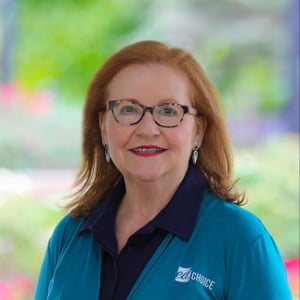
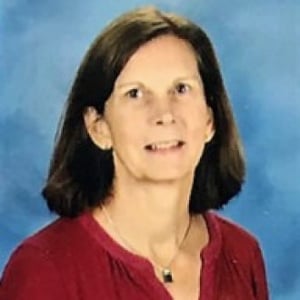
Vice President of Legal Affairs & Director of Legal Defense & Education Center, EdChoice
Leslie Hiner, Esq. is an advocate of educational freedom, a crusader fighting for the unencumbered opportunity of parents to decide how and where their children will be educated. She believes in the power of individuals to change the world, and believes personal liberty will be enhanced when our method of funding K–12 education is changed to empower parents and students before institutions.
As vice president of legal affairs at EdChoice, the nation’s leading educational choice organization, Leslie leads the EdChoice Legal Defense and Education Center for this nonpartisan, charitable nonprofit and engages with other national organizations to support school choice. She is a proven leader, advancing educational freedom and choice for all as a pathway to successful lives and a stronger society.
Hiner is an attorney with extensive state legislative and executive branch experience. In Indiana, she was the first woman chief of staff to the speaker of the house, counsel to the senate president pro tempore, and general counsel/elections deputy to the Secretary of State. She is also a former small business owner, and former litigator in private practice.
A founding board member of one of Indiana’s first charter schools, Leslie served as chairman of the board for the first several years, guiding the school’s growth from about 150 to over 1000 students. She was also directly involved in developing Indiana’s original charter school law, one of the best in the nation, and Indiana’s voucher law, the largest in the country to date.
Leslie is a member of the American Enterprise Institute Leadership Network, serves on the Schools That Can National Advisory Council, and is a Policy Advisor for The Heartland Institute. Leslie is a long-time member of the Federalist Society and a Lugar Series Excellence in Public Service alumna.
Hiner travels the country speaking on educational issues and testifying at public hearings. Recent engagements include the American Enterprise Institute With all deliberate speed: Brown v. Board of Education II 60 years later; Center for Urban Renewal and Education National Policy Summit, “Changing Policy to Change Lives”; National Conference of State Legislatures Summit debate, School Vouchers and Education Savings Accounts: Are They Constitutional; Network of Enlightened Women National Conference, Three Things You Need To Know About Education Policy; International Conference on School Choice and Reform, The Constitutionality of Educational Choice; 100 Black Men of Greater Dallas/Fort Worth, Project Soar’s Mobilizing the Village; Louisville Federalist Society Lawyers’ Chapter, Is School Choice Good Public Policy; American Conservative Union CPAC 2017.
She’s been cited in several publications, including the Wall Street Journal, New York Times, Chicago Tribune, Washington Times, Forbes, US News & World Report, The Hill, Real Clear Policy, Federalist Society DocketWatch, National Review, The Federalist, Zman Magazine, Watchdog, and has appeared on EWTN News Nightly, Wall Street Journal Video Opinion Journal podcasts, David Webb Show on Sirius/XM, ChoiceMediaTV, The Heartland Institute podcasts and school choice events, The Morning Blaze, Issues in Education and many state level broadcasts.
A native of Ohio, she earned her Juris Doctorate from the University of Akron School of Law, her Bachelor of Arts degree from the College of Wooster, and attended Rostad Teachers College as an exchange student in Sweden where she was a student teacher in grades 2 and 3. She and her husband reside in Indianapolis, and have two grown children.
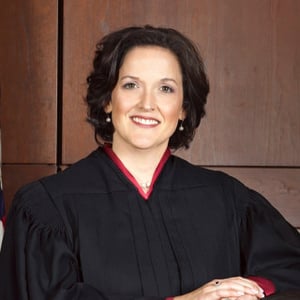
Judge, United States District Court, Eastern District of Missouri
Judge Pitlyk received her law degree from Yale Law School, after earning her undergraduate degree from Boston College and master’s degrees from Georgetown University and the Katholieke Universiteit Leuven in Belgium, where she studied as a Fulbright Scholar. Immediately before taking the bench, Judge Pitlyk served as Special Counsel for the Thomas More Society, a national public interest law firm. Before TMS, she spent several years at a small civil litigation boutique in St. Louis, MO, after starting her career at Covington & Burling in Washington, DC. From 2010 to 2011, she clerked for the Honorable Brett M. Kavanaugh, then a Circuit Judge on the United States Court of Appeals for the District of Columbia Circuit. Judge Pitlyk was sworn in as a District Judge for the Eastern District of Missouri on December 6, 2019.
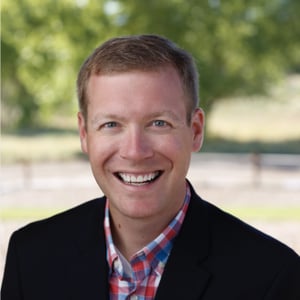
President, Center for American Rights
Daniel Suhr serves as president of the Center for American Rights, where he spends every day on the front lines of the fight to preserve our rights and liberties. The Center's mission is to advance free speech, free enterprise, and parental freedom in education through strategic, precedent-setting litigation.
Daniel formerly worked as policy director for Wisconsin Governor Scott Walker, as chief of staff for Wisconsin Lieutenant Governor Rebecca Kleefisch, and as a law clerk for Judge Diane Sykes of the U.S. Court of Appeals for the Seventh Circuit. He holds a B.A. and J.D. from Marquette University, and master’s degrees from Georgetown and the University of Missouri.
Director, Cleveland Scholarship and Tutoring Program
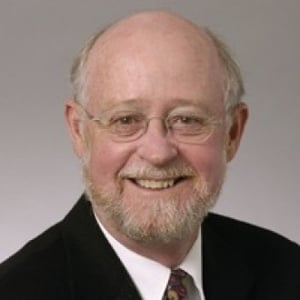
Professor Emeritus of Public Affairs & Political Science, University of Wisconsin-Madison

Justice, Supreme Court of Arizona
Clint Bolick was appointed by Governor Doug Ducey in January 2016 to serve on the Arizona Supreme Court and was retained by the voters in 2018 and 2024.
Prior to joining the Court, Justice Bolick litigated constitutional cases in state and federal courts from coast to coast, including the U.S. Supreme Court. Among other positions, he served as Vice President for Litigation at the Goldwater Institute and as Co-founder and Vice President for Litigation at the Institute for Justice. He has litigated in support of school choice, freedom of enterprise, private property rights, freedom of speech, and federalism, and against racial classifications and government subsidies.
Justice Bolick received his Juris Doctor degree from the University of California at Davis, where he has been recognized as a distinguished alumnus, and his Bachelor of Arts degree magna cum laude from Drew University. He serves as a research fellow with the Hoover Institution. Among other honors, he was named one of the 90 Greatest DC Lawyers in the Last 30 Years by Legal Times in 2008, received a Bradley Prize in 2006, and was recognized as one of the nation’s three lawyers of the year by American Lawyer in 2002 for his successful defense of school vouchers in Zelman v. Simmons-Harris.
Justice Bolick is a prolific author of a dozen books and hundreds of articles. Among his most recent books are Unshackled: Freeing America’s K-12 Education System: Immigration Wars: Forging an American Solution, co-authored with former Florida Governor Jeb Bush; and David’s Hammer: The Case for an Activist Judiciary. Bolick serves as an adjunct professor of constitutional law at Arizona State University’s Sandra Day O’Connor School of Law and has served as a lecturer at Harvard University’s John F. Kennedy School of Government.

United States Senator, Texas
Ted Cruz represents 28 million Texans in the U.S. Senate as a passionate fighter for limited government and economic growth. He has authored 39 legislative measures signed into law. Recent victories include expanding 529 college savings accounts to allow parents to save for K–12 public, private, and religious education, leading the effort to repeal Obamacare’s individual mandate, imposing sanctions on terrorists who use civilians as human shields, designating North Korea as a state sponsor of terrorism, reauthorizing and reforming NASA, ensuring the availability of additional records to help solve civil rights cold cases, supporting thousands of Texas jobs, and leading the fight to confirm principled constitutionalists to our courts.
Senator Cruz is a graduate of Princeton University and Harvard Law School, a former law clerk to Chief Justice William Rehnquist, and former solicitor general of Texas. He has argued nine cases before the Supreme Court. In November of 2018, he was re-elected to the Senate by the people of Texas.

Jennifer Anju Grossman -- JAG-- became the CEO of the Atlas Society in March of 2016. She shifted the organization's focus to the engagement of young people with the ideas of Ayn Rand in creative ways, like animated videos, graphic novels, and social media, and through the expansion into international markets.
Prior to joining The Atlas Society, she served as Senior Vice President of Dole Food Company, launching the Dole Nutrition Institute — a research and education organization— at the behest of Dole Chairman David H. Murdock. Previously Grossman served as Director of Education at the Cato Institute, and worked closely with the late philanthropist Theodore J. Forstmann to launch the Children's Scholarship Fund. A speechwriter for President George H. W. Bush, Grossman has written for both national and local publications. She graduated with honors from Harvard College.
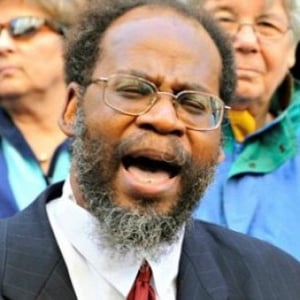
Executive Director, New York Civil Rights Coalition
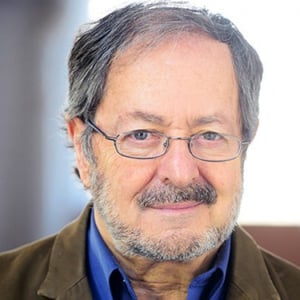
Professor of Public Policy, Hunter College, CUNY
Joseph P. Viteritti is the Thomas Hunter Professor of Public Policy and Chair of the Urban Policy and Planning Department at Hunter. He was the founding faculty chair of the Public Policy Program at Hunter’s Roosevelt House Public Policy Institute, and is a member of the doctoral faculty in education policy at the CUNY Graduate Center.
He is recently the author of The Pragmatist: Bill de Blasio’s Quest to Save the Soul of New York (Oxford University Press, 2017), which chronicles the political career and tenure of the incumbent mayor. Written from a historical perspective, the book traces mayoral leadership through the rise, fall and regeneration of progressivism in New York City since the time of Fiorello La Guardia.

Paul J. Schierl Professor of Law, University of Notre Dame Law School
Professor Richard W. Garnett teaches and writes in the areas of constitutional law, criminal law, the First Amendment, and law and religion. He is a leading authority on questions and debates regarding religious freedom and church-state relations, and is the founding director of Notre Dame Law School’s Program on Church, State, and Society.
Garnett clerked for the late Chief Justice of the United States, William H. Rehnquist, and also for the late Chief Judge of the United States Court of Appeals for the Eighth Circuit, Richard S. Arnold. He earned his J.D. from Yale Law School in 1995 and his B.A., summa cum laude, from Duke University in 1990. He joined the faculty in 1999 after practicing law in Washington, D.C. with Miller, Cassidy, Larroca & Lewin.

Co-Chairman, The Federalist Society for Law and Public Policy Studies
Leonard is Co-Chairman and former Executive Vice President of the Federalist Society, joining the organization over 25 years ago. Since that time he has been instrumental in helping the organization top 70,000, focusing on the growth of lawyers membership, operations and activities advancing limited, constitutional government. In addition to his work at the Society, Leonard has advised President Trump on judicial selection, assisted with the Gorsuch and Kavanaugh Supreme Court selection and confirmation process, and served as a member of the transition team. He also organized the outside coalition efforts in support of the Roberts and Alito U.S. Supreme Court confirmations. Leonard was appointed by President George W. Bush to three terms to the U.S. Commission on International Religious Freedom as chairman. He was also a U.S. Delegate to the UN Council and UN Commission on Human Rights during the Bush Administration. Leonard was the recipient of the 2009 Bradley Prize, along with the other founders and directors of the Federalist Society, for his work in advancing freedom and the rule of law. He is the coeditor of Presidential Leadership: Rating the Best and the Worst in the White House, as well as the author of opinion editorials in the New York Times,The Wall Street Journal, and Washington Post. Leonard holds degrees from Cornell University and Cornell Law School. He presently resides in Northern Virginia, where he and his wife Sally have raised their seven children.

Chief Judge, United States Court of Appeals, Sixth Circuit
JEFFREY S. SUTTON is the Chief Judge of the United States Court of Appeals for the Sixth Circuit. He has served as Chair of the Federal Judicial Conference Committee on Rules of Practice and Procedure, Chair of the Advisory Committee on Appellate Rules, and Chair of the Supreme Court Fellows Commission. He currently serves as Chair of the Executive Committee of the Judicial Conference of the United States. Since 1993, Chief Judge Sutton has been an adjunct professor at The Ohio State University College of Law, where he teaches seminars on State Constitutional Law, the United States Supreme Court, and Appellate Advocacy. He also teaches a class on State Constitutional Law at Harvard Law School. Among other publications, he is the author of Who Decides? States as Laboratories of Constitutional Experimentation and 51 Imperfect Solutions: States and the Making of American Constitutional Law. He is the co-author of a casebook, State Constitutional Law: The Modern Experience, as well as The Law of Judicial Precedent. He is also the co-editor of The Essential Scalia: On the Constitution, the Courts, and the Rule of Law. In 2006, Chief Judge Sutton was elected to the American Law Institute, and in 2017 he was elected to its Council.
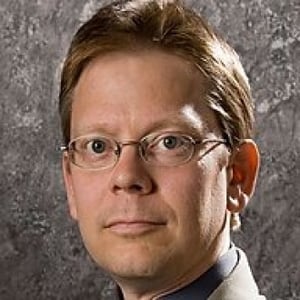
Andrew J. Coulson was the director of Cato’s Center for Educational Freedom from 2005 to 2015 and a senior fellow from 2015 until his death in February 2016. Previously, he was senior fellow in education policy at the Mackinac Center for Public Policy. He served on the advisory council of the E.G. West Centre for Market Solutions in Education at the University of Newcastle, UK, and contributed to books published by the Fraser Institute and the Hoover Institution.
Coulson was author of Market Education: The Unknown History, the only book to address contemporary education policy questions by drawing on case studies from across the entire span of recorded human history. He also wrote for academic journals, including the Journal of Research in the Teaching of English, the Journal of School Choice, and the Education Policy Analysis Archives and for newspapers such as the Wall Street Journal, the Washington Post, and Canada’s Globe and Mail. His documentary series, School Inc., is scheduled for television broadcast later this year.
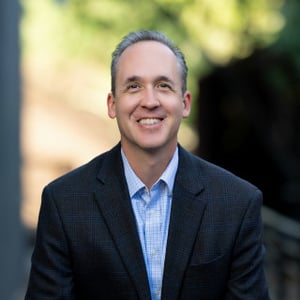
Legal Director, The Center for the Rights of Abused Children
Tim Keller is a lawyer who works to ensure all abused and abandoned children are safe and have access to their constitutionally guaranteed rights.
As senior vice president and legal director at the Center for the Rights of Abused Children, Tim’s public interest legal work seeks to defend the constitutional rights of children to be safe from abuse, to prompt timely placement with permanent parents, and to assure a child’s representation by legal counsel. In addition to constitutional litigation, Tim oversees the lawyers in the Center for the Rights of Abused Children’s one-of-a-kind pro bono Children’s Law Clinic and guides its policy initiatives.
When he and his wife, Lisa, hosted a teenage exchange student from Brazil several years ago, they realized how much they enjoyed helping a child thrive. The two felt called to help more kids. Over the following years, Tim and Lisa would become foster parents. Today, they enjoy offering respite care for children in foster care.
Intensely motivated by his time fostering children who’d been abused and neglected, Tim sees his work to ensure children have a constitutional right to counsel as a matter of life and death. As such, he’s particularly proud that in 2021 the Center for the Rights of Abused Children secured the rights of all children in Arizona’s foster system to be represented by legal counsel.
Before joining the Center for the Rights of Abused Children, Tim worked for nearly 20 years at the Institute for Justice. He served as lead counsel in Arizona Christian School Tuition Organization v. Winn, a U.S. Supreme Court victory that protected Arizona’s pioneering school scholarship program. Tim also led the team that secured a U.S. Supreme Court victory in Espinoza v. Montana Department of Revenue, which prevents states from discriminating against religious families and schools in educational choice programs. He has also litigated economic liberty and property rights cases in state and federal courts.
Tim earned his bachelor’s and law degrees from Arizona State University. He clerked for Robert D. Myers, at the time the presiding judge of the Maricopa County Superior Court, and for Ann A. Scott Timmer on the Arizona Court of Appeals.
Tim and Lisa live in Chandler, Ariz., with their four sons, Daniel, Benjamin, Ethan and Noah, and a miniature schnauzer named Gus who has more than 12,000 Instagram followers. The Kellers have traveled to 49 of the 50 United States, and are always looking for recommendations for new card or board games for family game nights.

Judge, United States Court of Appeals, Ninth Circuit
Judge Carlos Bea serves as a judge on the United States Court of Appeals for the Ninth Circuit. He received his Bachelor's Degree from Stanford University in 1956 and his J.D. from Stanford Law School in 1958. Judge Bea was born in San Sebastian, Spain, and immigrated with his family to Cuba in 1939. In 1952, he represented Cuba on the Cuban National basketball team in the Helsinki Olympics. Judge Bea became a naturalized citizen of the United States in 1958. He engaged in private practice in San Francisco, principally in the area of civil trials (jury and non-jury), from 1959-75 at Dunne, Phelps & Mills and from 1975-90 at Carlos Bea, A Law Corporation. He taught courses in civil litigation advocacy at Hastings College of Law and Stanford Law School. From 1990 to 2003, Judge Bea served as a judge of the San Francisco Superior Court. He was nominated by President George W. Bush to the United States Court of Appeals for the Ninth Circuit and was confirmed in 2003.
Judge Bea and his wife Louise reside in San Francisco, where they raised their four sons, Sebastian, Alexander, Nicholas, and Dominic.

Professor of Economics, University of California, San Diego
Julian Betts is a Professor in (and former Chair of) the Department of Economics at the University of California, San Diego. He is also the Executive Director of the San Diego Education Research Alliance at UCSD (sandera.ucsd.edu), a Research Associate at the National Bureau of Economic Research and a Bren Fellow at the Public Policy Institute of California (PPIC).
His research focuses on the economics of education. He has written extensively on the link between student outcomes and measures of public school spending including class size, teachers' salaries, and teachers' level of education. He has also examined the role that standards and expectations play in student achievement. Examples of his work include a theoretical analysis of the impact of educational standards published in the American Economic Review (1998), the book “Taking Measure of Charter Schools: Better Assessments, Better Policymaking, Better Schools,” co-edited with Paul Hill, the book “Getting Choice Right: Ensuring Equity and Efficiency in Education Policy” (Brookings Institution Press 2005) co-edited with Tom Loveless, and the co-authored books “Predicting Success, Preventing Failure: An Investigation of the California High School Exit Exam” (PPIC 2008), “Does School Choice Work?” (PPIC 2006), “From Blueprint to Reality: San Diego’s Education Reforms” (PPIC 2005), “Determinants of Student Achievement: New Evidence from San Diego” (PPIC 2003) and “Equal Resources, Equal Outcomes? The Distribution of School Resources and Student Achievement in California” (PPIC, 2000). Current research includes studies of school choice, California’s Mathematics Diagnostic Testing Project, and San Diego’s controversial Blueprint for Student Success.
His other main areas of research include higher education; immigration; technology, skills, and the labor market; and the economics of unions.
Betts is Principal Investigator on a multi-year study of magnet elementary schools funded by the U.S. Department of Education. This project, which is examining the impact of magnet schools on the achievement of both local and non-local enrollees, is joint with the American Institutes of Research (AIR) and Berkeley Policy Associates (BPA). He was also Principal Investigator of a three-year study for the U.S. Department of Education of the effects of career and technical education on students’ academic trajectories. Betts has served on two National Academy of Sciences panels, including (from 2005-2008) the congressionally mandated “Committee on Evaluation of Teacher Certification by the National Board for Professional Teaching Standards (NBPTS)”. Betts became a council member of the California Council on Science and Technology in 2007. Betts has also served on several technical review panels for the U.S. Department of Education, and the national advisory committees for the National Charter School Research Center at the University of Washington. In 2001-2003 Betts served on the National Working Commission on Choice in K-12 Education. He is a member of the editorial board of Education Finance and Policy, published by MIT Press.
At UCSD Betts is a professor in the Department of Economics, where he served as Department Chair from 2008 through 2011. Within the Department of Economics Betts has also served as Computing Director and more recently as Vice Chair, Graduate Studies, for the Department between 2004 and 2007. Betts was a member of the UCSD Admissions Committee from 1999 to 2003, serving as both Chair and Vice Chair in various years. In 2001 he served on the University’s Gender Equity Taskforce. Between 1999 and 2008 he also served on the Board of Directors of the Preuss School at UCSD, a
charter school on the UCSD campus that admits disadvantaged students from the local area. Betts also serves as UCSD campus director of the UC Educational Evaluation Center.
Betts obtained a Bachelor's degree in chemistry from McGill University, the M.Phil. in economics from Oxford University, Oxford, England, and a Ph.D. in economics from Queen's University, Kingston, Ontario, Canada.
Justice, Supreme Court of Arizona
Clint Bolick was appointed by Governor Doug Ducey in January 2016 to serve on the Arizona Supreme Court and was retained by the voters in 2018 and 2024.
Prior to joining the Court, Justice Bolick litigated constitutional cases in state and federal courts from coast to coast, including the U.S. Supreme Court. Among other positions, he served as Vice President for Litigation at the Goldwater Institute and as Co-founder and Vice President for Litigation at the Institute for Justice. He has litigated in support of school choice, freedom of enterprise, private property rights, freedom of speech, and federalism, and against racial classifications and government subsidies.
Justice Bolick received his Juris Doctor degree from the University of California at Davis, where he has been recognized as a distinguished alumnus, and his Bachelor of Arts degree magna cum laude from Drew University. He serves as a research fellow with the Hoover Institution. Among other honors, he was named one of the 90 Greatest DC Lawyers in the Last 30 Years by Legal Times in 2008, received a Bradley Prize in 2006, and was recognized as one of the nation’s three lawyers of the year by American Lawyer in 2002 for his successful defense of school vouchers in Zelman v. Simmons-Harris.
Justice Bolick is a prolific author of a dozen books and hundreds of articles. Among his most recent books are Unshackled: Freeing America’s K-12 Education System: Immigration Wars: Forging an American Solution, co-authored with former Florida Governor Jeb Bush; and David’s Hammer: The Case for an Activist Judiciary. Bolick serves as an adjunct professor of constitutional law at Arizona State University’s Sandra Day O’Connor School of Law and has served as a lecturer at Harvard University’s John F. Kennedy School of Government.
Professor of Education and Public Policy, University of Californ, Berkeley
Working inside policy organizations and the academy over the past three decades, Bruce Fuller has asked how public action best strengthens families and schools. He helped to design policy reforms for a free-thinking California governor, and advised opposition leaders on education reform as democracy emerged in southern Africa. Professor Fuller has studied child care programs arising at the grassroots or state run in Latin America. A fundamental question continues to motivate this array of research and writings: How can central governments enrich families and schools when situated in colorfully pluralistic societies? In short, what happens when government confronts culture?
Trained in political sociology, Professor Fuller's recent projects center on small-scale organizations that sprout across diverse communities, such as charter schools and preschools, which often spread in response to the clumsy or gray character of central states. Yet, decentralized institutions can disempower central governments, a worrisome scenario for those concerned with equity. Professor Fuller's current research delves into how young children are socialized in diverse Mexican-American homes, and what neighborhood organizations effectively advance their development. His recent book, Standardized Childhood: The Political and Cultural Struggle over Early Education, examines how elite reformers often push for state incorporation of community programs, even eroding the authority and resources spread across diverse ethnic leaders.
Professor Fuller also looks into fields that have become hyper-centralized, exemplified by his critical work on No Child Left Behind. A college dropout, he eventually received his Ph.D. from Stanford University. Before coming to Berkeley, Professor Fuller was a research sociologist at the World Bank and taught at Harvard's School of Education.
Co-Chairman, The Federalist Society for Law and Public Policy Studies
Leonard is Co-Chairman and former Executive Vice President of the Federalist Society, joining the organization over 25 years ago. Since that time he has been instrumental in helping the organization top 70,000, focusing on the growth of lawyers membership, operations and activities advancing limited, constitutional government. In addition to his work at the Society, Leonard has advised President Trump on judicial selection, assisted with the Gorsuch and Kavanaugh Supreme Court selection and confirmation process, and served as a member of the transition team. He also organized the outside coalition efforts in support of the Roberts and Alito U.S. Supreme Court confirmations. Leonard was appointed by President George W. Bush to three terms to the U.S. Commission on International Religious Freedom as chairman. He was also a U.S. Delegate to the UN Council and UN Commission on Human Rights during the Bush Administration. Leonard was the recipient of the 2009 Bradley Prize, along with the other founders and directors of the Federalist Society, for his work in advancing freedom and the rule of law. He is the coeditor of Presidential Leadership: Rating the Best and the Worst in the White House, as well as the author of opinion editorials in the New York Times,The Wall Street Journal, and Washington Post. Leonard holds degrees from Cornell University and Cornell Law School. He presently resides in Northern Virginia, where he and his wife Sally have raised their seven children.
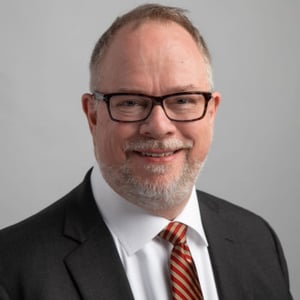
Managing Attorney of the Washington Office, Institute for Justice
William R. Maurer is the Managing Attorney of the Washington state office of the Institute for Justice, which engages in litigation in the areas of economic liberty, private property rights, educational choice, & freedom of speech.
Maurer is an advocate against the criminalization of poverty and the governmental use of the criminal and civil enforcement systems to raise revenue. He was lead counsel in a class action challenging the use of tickets to raise revenue in the city of Pagedale, Missouri. The suit resulted in a federal consent decree that reformed the city’s ticketing and municipal court system. He regularly speaks, teaches, and writes about the abuse of fines and fees in the criminal justice system. He was a participant in summits on taxation by citation put on by the White House and Department of Justice during the Obama Administration. His work on the issue includes serving as an advisory board member of the Fines and Fees Justice Center.
In addition to his work on criminal and civil justice reform, Maurer is a First Amendment litigator. In 2011, he successfully argued before the U.S. Supreme Court that Arizona’s punitive campaign financing regime was unconstitutional. Before the Washington Supreme Court, he successfully argued against efforts to classify radio commentary as a contribution under the state’s campaign finance law.
His cases and advocacy have been covered in the Washington Post, the New York Times, the Economist, the Wall Street Journal, and other major media outlets.
Maurer was named a “Washington Superlawyer” by Washington Law & Politics Magazine for several years. He is a chapter author in numerous legal reference works and has written several articles for law reviews and legal publications across the country.
Prior to joining IJ-WA, Maurer clerked for Washington Supreme Court Justice Richard Sanders and then practiced law at Perkins Coie LLP. Maurer received his law degree in 1994 from the University of Wisconsin – Madison, where he was an editor of the Wisconsin Law Review. He received his BA from Bard College in 1989.
State Director, Democrats for Education Reform and former California State Senator
Former California State Senator Gloria Romero is the State Director of Democrats for Education Reform and has been a forceful advocate for education reform and civil rights.
She brings to the post not only a great passion for quality education opportunities for all children, but a keen knowledge of the legislative and political process. She was elected to the 24th Senate District in 2001, representing East Los Angeles and the greater San Gabriel Valley. Upon her election she was recognized as one of the hardest working members of the Legislature and quickly rose in leadership positions. She was elected by her peers to serve as Senate Democratic Caucus Chair and as Senate Majority Leader -- the first woman to ever hold that leadership position in the history of the California State Senate.
Romero served as Chair of both the Education Committee and the Senate Budget and Fiscal Review Subcommittee on Education, making her one of the most influential voices on education policy in California. She believes that education is the civil rights issue of our time. States Romero, "My mother had a sixth grade education; I have a PhD. I understand the transformational power of education and the key it holds to accessing the American Dream".
Paul J. Schierl Professor of Law, University of Notre Dame Law School
Professor Richard W. Garnett teaches and writes in the areas of constitutional law, criminal law, the First Amendment, and law and religion. He is a leading authority on questions and debates regarding religious freedom and church-state relations, and is the founding director of Notre Dame Law School’s Program on Church, State, and Society.
Garnett clerked for the late Chief Justice of the United States, William H. Rehnquist, and also for the late Chief Judge of the United States Court of Appeals for the Eighth Circuit, Richard S. Arnold. He earned his J.D. from Yale Law School in 1995 and his B.A., summa cum laude, from Duke University in 1990. He joined the faculty in 1999 after practicing law in Washington, D.C. with Miller, Cassidy, Larroca & Lewin.
Partner, Faegre Drinker Biddle & Reath LLP
Brian J. Paul is an appellate lawyer and leads law teams in high-stakes commercial litigation. He has briefed and argued everything from weighty abstract constitutional issues to dollars-and-cents business issues and everything in-between, both on appeal and in trial courts around the country. A member of the American Law Institute, recent past-president of the Seventh Circuit Bar Association and top-tier ranked Chambers appellate lawyer, Brian had one client say about him: “Brian is one of the most respected and skilled appellate lawyers, not only in Indianapolis but across the country. He is trusted to deliver timely guidance on complex issues.” Another said: “He is excellent. I enjoyed working with him. He is able to put things into layman’s terms and explains things really well. His written and oral advocacy are short, crisp and to the point.”
Clients hire Brian to digest the complex, and make the complex simple and compelling for busy, generalist judges. In his writing, he strives to cut through jargon and legalese, and distill things down to what’s important. In his oral advocacy, by intense preparation, he strives to be the advocate whom judges trust for the right answers. In the dozens of cases he has argued, Brian has helped clients win on both sides of the “v.” His recent representations include:

Challenges to Originalism V: Originalism is Not Up to the Task of Dealing with Modern Problems
The Federalist Society's Student Division & University of South Dakota School of Law Student...
Panel II: School Choice
Séamus Boyce, Leslie Davis Hiner, Sarah Pitlyk, Daniel Suhr
Policymaker interest in alternatives to traditional public schools has sharply increased post-pandemic, with some states...
Panel Four: School Choice in Action [Archive Collection]
Roberta Holt, Myron Lieberman, Ann Payne, Bob Smith, John Witte
On March 26, 1999, the Federalist Society co-sponsored the Stranahan National Issues Forum with the...
Panel Three: School Choice: The Next Civil Rights Crusade? [Archive Collection]
Clint Bolick, Ted Cruz, Jennifer A. Grossman, Michael Meyers, Joseph Viteritti
On March 26, 1999, the Federalist Society co-sponsored the Stranahan National Issues Forum with the...
Panel Two: School Choice in the Courts [Archive Collection]
Richard W. Garnett, Leonard A. Leo, Steve Shapiro, Jeffrey S. Sutton
On March 26, 1999, the Federalist Society co-sponsored the Stranahan National Issues Forum with the...
Panel One: The History and Politics of School Choice [Archive Collection]
Andrew J. Coulson, Douglas Haynes, Dal Lawrence, Richard Leonardi, Fannie Lewis
On March 26, 1999, the Federalist Society co-sponsored the Stranahan National Issues Forum with the...
Federal Special Education Law and State School Choice Programs
Timothy Keller, Nat Malkus
Note from the Editor: In this article, Nat Malkus and Tim Keller outline the federal...
Topics
State Court Docket Watch News Clips: 2/17/2016
The Oklahoma Supreme Court unanimously upheld the state's school voucher program for students with special...
Panel One: Are Vouchers and Charter Schools Viable Alternatives to Public Schools?
Carlos T. Bea, Julian R. Betts, Clint Bolick, Bruce Fuller, Leonard A. Leo, William R. Maurer, Gloria Romero
Parental and community support for school choice has increased dramatically in recent years, with vouchers,...
School Choice, Religious Freedom, and the Constitution(s)
Richard W. Garnett, Brian J. Paul
On June 9, 2011, the Indianapolis Lawyers Chapter hosted Prof. Richard W. Garnett of the...