
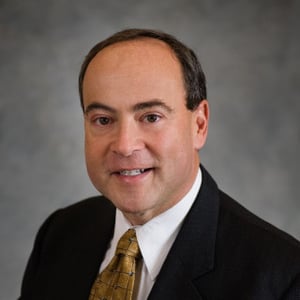
Justice, Supreme Court of Arizona
Clint Bolick was appointed by Governor Doug Ducey in January 2016 to serve on the Arizona Supreme Court and was retained by the voters in 2018 and 2024.
Prior to joining the Court, Justice Bolick litigated constitutional cases in state and federal courts from coast to coast, including the U.S. Supreme Court. Among other positions, he served as Vice President for Litigation at the Goldwater Institute and as Co-founder and Vice President for Litigation at the Institute for Justice. He has litigated in support of school choice, freedom of enterprise, private property rights, freedom of speech, and federalism, and against racial classifications and government subsidies.
Justice Bolick received his Juris Doctor degree from the University of California at Davis, where he has been recognized as a distinguished alumnus, and his Bachelor of Arts degree magna cum laude from Drew University. He serves as a research fellow with the Hoover Institution. Among other honors, he was named one of the 90 Greatest DC Lawyers in the Last 30 Years by Legal Times in 2008, received a Bradley Prize in 2006, and was recognized as one of the nation’s three lawyers of the year by American Lawyer in 2002 for his successful defense of school vouchers in Zelman v. Simmons-Harris.
Justice Bolick is a prolific author of a dozen books and hundreds of articles. Among his most recent books are Unshackled: Freeing America’s K-12 Education System: Immigration Wars: Forging an American Solution, co-authored with former Florida Governor Jeb Bush; and David’s Hammer: The Case for an Activist Judiciary. Bolick serves as an adjunct professor of constitutional law at Arizona State University’s Sandra Day O’Connor School of Law and has served as a lecturer at Harvard University’s John F. Kennedy School of Government.
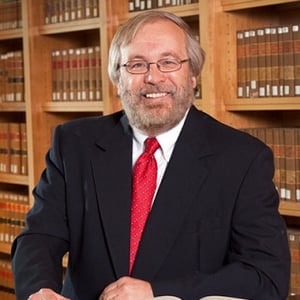
Welpton & Wise Professor of Law, University of Nebraska College of Law
Professor Rick Duncan is the Welpton & Wise Professor of Law at the University Of Nebraska College Of Law. He is a graduate of the Cornell Law School and served as an editor of the Cornell Law Review. He teaches Constitutional Law with a special emphasis on the law of religious freedom, free speech, and federalism. Duncan has written numerous books, articles, and commentaries on a wide variety of legal topics. His recent publications include an article on Justice Scalia’s legacy, another on Kermit Gosnell and Roe v. Wade, a piece on the Electoral College and Federalism, a 2019 piece on Masterpiece Cakeshop and the First Amendment, and three recent articles on the “no compelled speech” doctrine as a First Amendment defense against authoritarianism and tyranny. His most recent article, on School Choice and the First Amendment, will be published in 2023 in Case Western Law Review. He is also the co-author of a book on Secured Transactions under Article 9 of the UCC. He served as Chairman of the Nebraska Advisory Committee to the U.S. Commission on Civil Rights during the Reagan Administration. He also loves to speak at Federalist Society meetings around the country on life, liberty, and the pursuit of federalism.
Duncan has five children, five grandchildren, and a wonderful wife who help him pursue happiness. He loves lifting weights (particularly going heavy on the incline bench press), attending Broadway musicals and plays, including Hamilton: An American Musical which he has seen 12 times (possibly a Nebraska record). He regularly reads both the Bible and the New York Times because it is important to keep up with what both sides have to say. He loves following major league baseball, especially the San Diego Padres. And his favorite legal aphorism is “first come rights then comes government to secure those rights.”
Welpton & Wise Professor of Law, University of Nebraska College of Law
Professor Rick Duncan is the Welpton & Wise Professor of Law at the University Of Nebraska College Of Law. He is a graduate of the Cornell Law School and served as an editor of the Cornell Law Review. He teaches Constitutional Law with a special emphasis on the law of religious freedom, free speech, and federalism. Duncan has written numerous books, articles, and commentaries on a wide variety of legal topics. His recent publications include an article on Justice Scalia’s legacy, another on Kermit Gosnell and Roe v. Wade, a piece on the Electoral College and Federalism, a 2019 piece on Masterpiece Cakeshop and the First Amendment, and three recent articles on the “no compelled speech” doctrine as a First Amendment defense against authoritarianism and tyranny. His most recent article, on School Choice and the First Amendment, will be published in 2023 in Case Western Law Review. He is also the co-author of a book on Secured Transactions under Article 9 of the UCC. He served as Chairman of the Nebraska Advisory Committee to the U.S. Commission on Civil Rights during the Reagan Administration. He also loves to speak at Federalist Society meetings around the country on life, liberty, and the pursuit of federalism.
Duncan has five children, five grandchildren, and a wonderful wife who help him pursue happiness. He loves lifting weights (particularly going heavy on the incline bench press), attending Broadway musicals and plays, including Hamilton: An American Musical which he has seen 12 times (possibly a Nebraska record). He regularly reads both the Bible and the New York Times because it is important to keep up with what both sides have to say. He loves following major league baseball, especially the San Diego Padres. And his favorite legal aphorism is “first come rights then comes government to secure those rights.”
U.S. Court of Appeals, Ninth Circuit
Jay Scott Bybee is a federal judge on the United States Court of Appeals for the Ninth Circuit. He has published numerous articles in law journals and has taught in law school. His primary research interests are in constitutional and administrative law.
Welpton & Wise Professor of Law, University of Nebraska College of Law
Professor Rick Duncan is the Welpton & Wise Professor of Law at the University Of Nebraska College Of Law. He is a graduate of the Cornell Law School and served as an editor of the Cornell Law Review. He teaches Constitutional Law with a special emphasis on the law of religious freedom, free speech, and federalism. Duncan has written numerous books, articles, and commentaries on a wide variety of legal topics. His recent publications include an article on Justice Scalia’s legacy, another on Kermit Gosnell and Roe v. Wade, a piece on the Electoral College and Federalism, a 2019 piece on Masterpiece Cakeshop and the First Amendment, and three recent articles on the “no compelled speech” doctrine as a First Amendment defense against authoritarianism and tyranny. His most recent article, on School Choice and the First Amendment, will be published in 2023 in Case Western Law Review. He is also the co-author of a book on Secured Transactions under Article 9 of the UCC. He served as Chairman of the Nebraska Advisory Committee to the U.S. Commission on Civil Rights during the Reagan Administration. He also loves to speak at Federalist Society meetings around the country on life, liberty, and the pursuit of federalism.
Duncan has five children, five grandchildren, and a wonderful wife who help him pursue happiness. He loves lifting weights (particularly going heavy on the incline bench press), attending Broadway musicals and plays, including Hamilton: An American Musical which he has seen 12 times (possibly a Nebraska record). He regularly reads both the Bible and the New York Times because it is important to keep up with what both sides have to say. He loves following major league baseball, especially the San Diego Padres. And his favorite legal aphorism is “first come rights then comes government to secure those rights.”
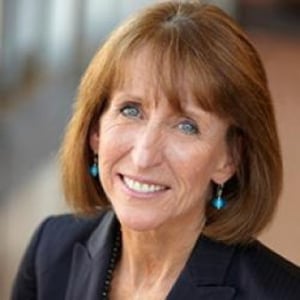
William S. Boyd Professor of Law, University of Nevada, Las Vegas, William S. Boyd School of Law
Dr. Leslie C. Griffin is the William S. Boyd Professor of Law at the University of Nevada, Las Vegas, William S. Boyd School of Law. Professor Griffin, who teaches constitutional law, is known for her interdisciplinary work in law and religion. She holds a Ph.D. in Religious Studies from Yale University and a J.D. from Stanford Law School. She is author of the Foundation Press casebook Law and Religion: Cases and Materials (5th edition, 2022) with Andrew L. Seidel. Practicing Bioethics Law (2d ed. 2021) is co-authored with Joan H. Krause, Dan K. Moore Distinguished Professor of Law at the University of North Carolina School of Law. She and University of Pennsylvania Professor Marci Hamilton published Learning Constitutional Law (Cognella Press, 2023).
She wrote the recent book chapter, Bambi Trauma—Surviving TBI Twice, in Traumatic Brain Injury—Challenges (Dr. Ioannis Mavroudis & Alin Ciobica, eds., IntechOpen, 2024), https://www.intechopen.com/online-first/1179800#. And Catholic Sexual Abuse in Louisiana is in the University of Detroit Mercy Law Review, volume 101, p. 375 (2024).
Another article is What Did Those Sixteen Justices Say?, 58 Willamette L. Rev. 163 (2022). A book chapter entitled Rewritten Opinion, Means v. United States Conference of Catholic Bishops, is in the book Feminist Judgments: Rewritten Health Law Opinions (S. Mohapatra & L. Wiley, eds., Cambridge University Press, 2022). Other recent articles include What is Ethical Discharge?, 10:3 Narrative Inquiry in Bioethics 193 (2020); What Can We Expect of Law and Religion in 2020?, 79 SMU L. Rev. F. 73 (2020); Traumatic Brain Injury: Compassionate Care, Not Clinical Nihilism, 6:2 Journal of Hospital Ethics 87 (Fall 2019) (with Carole S. Anhalt); Conquering Brain Injury, 34:5 Journal of Head Trauma Rehabilitation 366 (2019), Religious Freedom, Human Rights, and Peaceful Coexistence, 50 Loyola University Chicago Law Journal 77 (2018), Pre-or Post Mortem?, 18 Nevada Law Journal 221 (2017). Her rewritten opinion about the abortion funding case, Harris v. McRae, 448 U.S. 297 (1980), is in Feminist Judgments: Rewritten Opinions of the United States Supreme Court (L. Berger, B. Crawford & K. Stanchi, eds., Cambridge University Press, 2016).
Griffin has written numerous amicus briefs defending children's and employees' religious freedom. She blogs for Justia's Verdict column, and posts occasionally on Petrie-Flom’s health law blog.
Other writings include Marriage Rights and Religious Exemptions in the United States, Oxford Handbooks Online (2017), Beyond the Basketball Court: How Brittney Griner’s In My Skin Illustrates Title IX’s Failure to Protect LGBT Athletes at Religious Institutions, 34 Law and Inequality 489 (2016), A Word of Warning from A Woman: Arbitrary, Categorical, and Hidden Religious Exemptions Threaten LGBT Rights, 7 Ala. C.R. & C.L.L. Rev. 97 (2015), and The Catholic Bishops vs. the Contraceptive Mandate, Religions 2015, 6, 1411–1432.
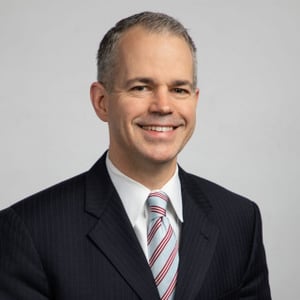
Senior Attorney, Institute for Justice
Michael Bindas is a senior attorney with the Institute for Justice (IJ) and leads IJ’s educational choice team. In this role, he oversees a talented group of IJ attorneys who help policymakers design constitutionally defensible educational choice programs and who defend educational choice programs in courtrooms nationwide. He joined IJ in 2005.
Michael was part of IJ’s litigation team in Espinoza v. Montana Department of Revenue, in which the U.S. Supreme Court held the exclusion of religious options from Montana’s educational choice program unconstitutional, and he led IJ’s defense of the Choice Scholarship Program for elementary and secondary students in Douglas County, Colorado. He also successfully challenged Washington’s denial of special education services to children in religious schools, as well as the state’s exclusion of sectarian options from its state work study program. Currently, he leads IJ’s team in Carson v. Makin, challenging Maine’s exclusion of religious options from its educational choice program.
Prior to leading IJ’s educational choice team, Michael litigated extensively to secure economic liberty, property rights, and freedom of speech throughout the nation. He was counsel of record at the U.S. Supreme Court for Kimbrough Fine Wine & Spirits in Tennessee Wine and Spirits Retailers Association v. Thomas, a successful challenge to Tennessee’s durational residency requirements for retail liquor licenses. He also led successful challenges to the municipal sign codes of St. Louis, Mo. and Norfolk, Va., after those cities attempted to silence protests of their abusive eminent domain practices.
Prior to joining IJ, Michael spent three years as an attorney with Perkins Coie LLP. He is a former law clerk to Judge Rhesa Hawkins Barksdale of the U.S. Court of Appeals for the Fifth Circuit and served as an engineer officer in the United States Army and Pennsylvania Army National Guard before beginning his legal career.
Michael received his law degree cum laude from the University of Pennsylvania Law School in 2001, where he served as Articles Editor for the Journal of Constitutional Law and was elected to the Order of the Coif. He received his undergraduate degree from the United States Military Academy at West Point in 1995.
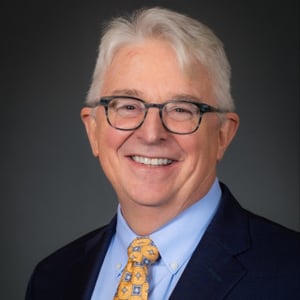
Co-Founder, Defense of Freedom Institute
Jim Blew is a co-founder of DFI, the Defense of Freedom Institute for Public Policy Studies, and president of DFI Action. These DC-based nonprofits promote education freedom, civil rights, and a limited federal role in education and workforce development.
Jim served as U.S. assistant secretary for policy and budget under Betsy DeVos. Prior to his federal service, he worked in state-based education reform for more than 20 years, including leadership roles at StudentsFirst, 50CAN, and the predecessor to the American Federation for Children. He also helped guide the education reform investments of the Walton Family Foundation for nearly a decade until 2014. Before committing himself full time to education reform, Jim worked at political and communications firms in New York and California. He holds a bachelor’s degree from Occidental College and a master’s in business administration from the Yale School of Management.
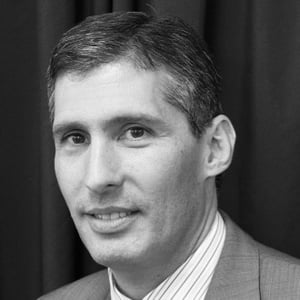
Vice President and Legal Director, Americans United for Separation of Church and State
Richard B. Katskee is the Vice President and Legal Director at Americans United for Separation of Church and State.
Richard is a nationally recognized First Amendment expert and advocate. He has litigated cases under the First Amendment’s Establishment, Free Exercise, and Free Speech Clauses in appellate and trial courts throughout the country, including challenging creationism in the public schools; religiously based discrimination in public accommodations, healthcare, foster care, and the workplace; presentation of official prayer at governmental meetings and functions; and the provision of federal funding for social services that include religious content.
Journalist Lauri Lebo has described Richard as “a First Amendment expert known for his encyclopedic knowledge and the engaging prose he brings to his legal briefs.” Pulitzer Prize-winning author Edward Humes has added that Richard’s “elegantly written briefs are legendary, veritable beach reading in a field better known for its ponderous prose.” Richard is also an accomplished oral advocate who has argued cases before the U.S. Supreme Court, the U.S. Courts of Appeals for the Second, Third, Fifth, Sixth, Ninth and D.C. Circuits, and federal district courts and state courts across the country.
Richard formerly specialized in constitutional litigation as a member of the Supreme Court & Appellate practice at Mayer Brown LLP in Washington, D.C. He also previously served as deputy director of the Program Legal Group in the U.S. Department of Education’s Office for Civil Rights, where he led the development of policy initiatives to implement federal antidiscrimination laws in the nation’s schools, colleges and universities.
Richard received his Juris Doctor from the Yale Law School (where he was an articles editor on the Yale Law Journal), his master’s degree in political science from Harvard University (where he was a National Science Foundation Graduate Fellow) and his bachelor’s degree with highest distinction and high honors from the University of Michigan. He clerked for Judge Stephen Reinhardt on the U.S. Court of Appeals for the Ninth Circuit and for Judge Guido Calabresi on the U.S. Court of Appeals for the Second Circuit; he was a Eugene P. Beard Graduate Fellow in Ethics at Harvard’s Edmond J. Safra Foundation Center for Ethics; he taught courses in professional and political ethics at the John F. Kennedy School of Government and at Harvard College; and he served as an adjunct associate professor of church–state law at the American University Washington College of Law.
Richard is a member of the American Law Institute and an adviser to the Restatement of the Law: Children and the Law. He is Special Adviser to, and former Co-Chair of, the Religious Liberty Committee of the American Bar Association’s Section of Civil Rights and Social Justice. He serves on the Board of Advisers for a new National Museum of American Religion and formerly served on the Board of Directors for the National Center for Science Education. He is a Visiting Fellow with the Council of Independent Colleges. And he regularly delivers guest lectures and participates as a panelist at universities and legal, educational and scientific associations across the country.
Senior Attorney, Institute for Justice
Michael Bindas is a senior attorney with the Institute for Justice (IJ) and leads IJ’s educational choice team. In this role, he oversees a talented group of IJ attorneys who help policymakers design constitutionally defensible educational choice programs and who defend educational choice programs in courtrooms nationwide. He joined IJ in 2005.
Michael was part of IJ’s litigation team in Espinoza v. Montana Department of Revenue, in which the U.S. Supreme Court held the exclusion of religious options from Montana’s educational choice program unconstitutional, and he led IJ’s defense of the Choice Scholarship Program for elementary and secondary students in Douglas County, Colorado. He also successfully challenged Washington’s denial of special education services to children in religious schools, as well as the state’s exclusion of sectarian options from its state work study program. Currently, he leads IJ’s team in Carson v. Makin, challenging Maine’s exclusion of religious options from its educational choice program.
Prior to leading IJ’s educational choice team, Michael litigated extensively to secure economic liberty, property rights, and freedom of speech throughout the nation. He was counsel of record at the U.S. Supreme Court for Kimbrough Fine Wine & Spirits in Tennessee Wine and Spirits Retailers Association v. Thomas, a successful challenge to Tennessee’s durational residency requirements for retail liquor licenses. He also led successful challenges to the municipal sign codes of St. Louis, Mo. and Norfolk, Va., after those cities attempted to silence protests of their abusive eminent domain practices.
Prior to joining IJ, Michael spent three years as an attorney with Perkins Coie LLP. He is a former law clerk to Judge Rhesa Hawkins Barksdale of the U.S. Court of Appeals for the Fifth Circuit and served as an engineer officer in the United States Army and Pennsylvania Army National Guard before beginning his legal career.
Michael received his law degree cum laude from the University of Pennsylvania Law School in 2001, where he served as Articles Editor for the Journal of Constitutional Law and was elected to the Order of the Coif. He received his undergraduate degree from the United States Military Academy at West Point in 1995.
Co-Founder, Defense of Freedom Institute
Jim Blew is a co-founder of DFI, the Defense of Freedom Institute for Public Policy Studies, and president of DFI Action. These DC-based nonprofits promote education freedom, civil rights, and a limited federal role in education and workforce development.
Jim served as U.S. assistant secretary for policy and budget under Betsy DeVos. Prior to his federal service, he worked in state-based education reform for more than 20 years, including leadership roles at StudentsFirst, 50CAN, and the predecessor to the American Federation for Children. He also helped guide the education reform investments of the Walton Family Foundation for nearly a decade until 2014. Before committing himself full time to education reform, Jim worked at political and communications firms in New York and California. He holds a bachelor’s degree from Occidental College and a master’s in business administration from the Yale School of Management.
Vice President and Legal Director, Americans United for Separation of Church and State
Richard B. Katskee is the Vice President and Legal Director at Americans United for Separation of Church and State.
Richard is a nationally recognized First Amendment expert and advocate. He has litigated cases under the First Amendment’s Establishment, Free Exercise, and Free Speech Clauses in appellate and trial courts throughout the country, including challenging creationism in the public schools; religiously based discrimination in public accommodations, healthcare, foster care, and the workplace; presentation of official prayer at governmental meetings and functions; and the provision of federal funding for social services that include religious content.
Journalist Lauri Lebo has described Richard as “a First Amendment expert known for his encyclopedic knowledge and the engaging prose he brings to his legal briefs.” Pulitzer Prize-winning author Edward Humes has added that Richard’s “elegantly written briefs are legendary, veritable beach reading in a field better known for its ponderous prose.” Richard is also an accomplished oral advocate who has argued cases before the U.S. Supreme Court, the U.S. Courts of Appeals for the Second, Third, Fifth, Sixth, Ninth and D.C. Circuits, and federal district courts and state courts across the country.
Richard formerly specialized in constitutional litigation as a member of the Supreme Court & Appellate practice at Mayer Brown LLP in Washington, D.C. He also previously served as deputy director of the Program Legal Group in the U.S. Department of Education’s Office for Civil Rights, where he led the development of policy initiatives to implement federal antidiscrimination laws in the nation’s schools, colleges and universities.
Richard received his Juris Doctor from the Yale Law School (where he was an articles editor on the Yale Law Journal), his master’s degree in political science from Harvard University (where he was a National Science Foundation Graduate Fellow) and his bachelor’s degree with highest distinction and high honors from the University of Michigan. He clerked for Judge Stephen Reinhardt on the U.S. Court of Appeals for the Ninth Circuit and for Judge Guido Calabresi on the U.S. Court of Appeals for the Second Circuit; he was a Eugene P. Beard Graduate Fellow in Ethics at Harvard’s Edmond J. Safra Foundation Center for Ethics; he taught courses in professional and political ethics at the John F. Kennedy School of Government and at Harvard College; and he served as an adjunct associate professor of church–state law at the American University Washington College of Law.
Richard is a member of the American Law Institute and an adviser to the Restatement of the Law: Children and the Law. He is Special Adviser to, and former Co-Chair of, the Religious Liberty Committee of the American Bar Association’s Section of Civil Rights and Social Justice. He serves on the Board of Advisers for a new National Museum of American Religion and formerly served on the Board of Directors for the National Center for Science Education. He is a Visiting Fellow with the Council of Independent Colleges. And he regularly delivers guest lectures and participates as a panelist at universities and legal, educational and scientific associations across the country.
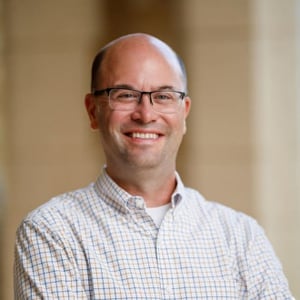
Paul J. Schierl Professor of Law, University of Notre Dame Law School
Professor Richard W. Garnett teaches and writes in the areas of constitutional law, criminal law, the First Amendment, and law and religion. He is a leading authority on questions and debates regarding religious freedom and church-state relations, and is the founding director of Notre Dame Law School’s Program on Church, State, and Society.
Garnett clerked for the late Chief Justice of the United States, William H. Rehnquist, and also for the late Chief Judge of the United States Court of Appeals for the Eighth Circuit, Richard S. Arnold. He earned his J.D. from Yale Law School in 1995 and his B.A., summa cum laude, from Duke University in 1990. He joined the faculty in 1999 after practicing law in Washington, D.C. with Miller, Cassidy, Larroca & Lewin.
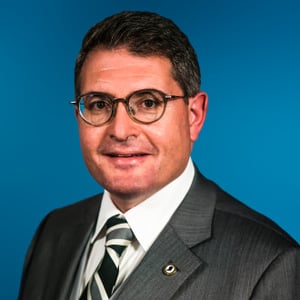
Co-Chairman, The Federalist Society for Law and Public Policy Studies
Leonard is Co-Chairman and former Executive Vice President of the Federalist Society, joining the organization over 25 years ago. Since that time he has been instrumental in helping the organization top 70,000, focusing on the growth of lawyers membership, operations and activities advancing limited, constitutional government. In addition to his work at the Society, Leonard has advised President Trump on judicial selection, assisted with the Gorsuch and Kavanaugh Supreme Court selection and confirmation process, and served as a member of the transition team. He also organized the outside coalition efforts in support of the Roberts and Alito U.S. Supreme Court confirmations. Leonard was appointed by President George W. Bush to three terms to the U.S. Commission on International Religious Freedom as chairman. He was also a U.S. Delegate to the UN Council and UN Commission on Human Rights during the Bush Administration. Leonard was the recipient of the 2009 Bradley Prize, along with the other founders and directors of the Federalist Society, for his work in advancing freedom and the rule of law. He is the coeditor of Presidential Leadership: Rating the Best and the Worst in the White House, as well as the author of opinion editorials in the New York Times,The Wall Street Journal, and Washington Post. Leonard holds degrees from Cornell University and Cornell Law School. He presently resides in Northern Virginia, where he and his wife Sally have raised their seven children.
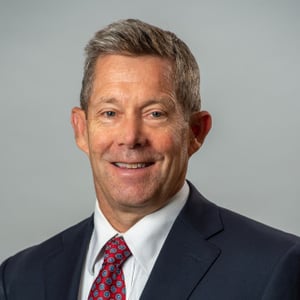
Chief Judge, United States Court of Appeals, Sixth Circuit
JEFFREY S. SUTTON is the Chief Judge of the United States Court of Appeals for the Sixth Circuit. He has served as Chair of the Federal Judicial Conference Committee on Rules of Practice and Procedure, Chair of the Advisory Committee on Appellate Rules, and Chair of the Supreme Court Fellows Commission. He currently serves as Chair of the Executive Committee of the Judicial Conference of the United States. Since 1993, Chief Judge Sutton has been an adjunct professor at The Ohio State University College of Law, where he teaches seminars on State Constitutional Law, the United States Supreme Court, and Appellate Advocacy. He also teaches a class on State Constitutional Law at Harvard Law School. Among other publications, he is the author of Who Decides? States as Laboratories of Constitutional Experimentation and 51 Imperfect Solutions: States and the Making of American Constitutional Law. He is the co-author of a casebook, State Constitutional Law: The Modern Experience, as well as The Law of Judicial Precedent. He is also the co-editor of The Essential Scalia: On the Constitution, the Courts, and the Rule of Law. In 2006, Chief Judge Sutton was elected to the American Law Institute, and in 2017 he was elected to its Council.
Paul J. Schierl Professor of Law, University of Notre Dame Law School
Professor Richard W. Garnett teaches and writes in the areas of constitutional law, criminal law, the First Amendment, and law and religion. He is a leading authority on questions and debates regarding religious freedom and church-state relations, and is the founding director of Notre Dame Law School’s Program on Church, State, and Society.
Garnett clerked for the late Chief Justice of the United States, William H. Rehnquist, and also for the late Chief Judge of the United States Court of Appeals for the Eighth Circuit, Richard S. Arnold. He earned his J.D. from Yale Law School in 1995 and his B.A., summa cum laude, from Duke University in 1990. He joined the faculty in 1999 after practicing law in Washington, D.C. with Miller, Cassidy, Larroca & Lewin.
Co-Chairman, The Federalist Society for Law and Public Policy Studies
Leonard is Co-Chairman and former Executive Vice President of the Federalist Society, joining the organization over 25 years ago. Since that time he has been instrumental in helping the organization top 70,000, focusing on the growth of lawyers membership, operations and activities advancing limited, constitutional government. In addition to his work at the Society, Leonard has advised President Trump on judicial selection, assisted with the Gorsuch and Kavanaugh Supreme Court selection and confirmation process, and served as a member of the transition team. He also organized the outside coalition efforts in support of the Roberts and Alito U.S. Supreme Court confirmations. Leonard was appointed by President George W. Bush to three terms to the U.S. Commission on International Religious Freedom as chairman. He was also a U.S. Delegate to the UN Council and UN Commission on Human Rights during the Bush Administration. Leonard was the recipient of the 2009 Bradley Prize, along with the other founders and directors of the Federalist Society, for his work in advancing freedom and the rule of law. He is the coeditor of Presidential Leadership: Rating the Best and the Worst in the White House, as well as the author of opinion editorials in the New York Times,The Wall Street Journal, and Washington Post. Leonard holds degrees from Cornell University and Cornell Law School. He presently resides in Northern Virginia, where he and his wife Sally have raised their seven children.
Chief Judge, United States Court of Appeals, Sixth Circuit
JEFFREY S. SUTTON is the Chief Judge of the United States Court of Appeals for the Sixth Circuit. He has served as Chair of the Federal Judicial Conference Committee on Rules of Practice and Procedure, Chair of the Advisory Committee on Appellate Rules, and Chair of the Supreme Court Fellows Commission. He currently serves as Chair of the Executive Committee of the Judicial Conference of the United States. Since 1993, Chief Judge Sutton has been an adjunct professor at The Ohio State University College of Law, where he teaches seminars on State Constitutional Law, the United States Supreme Court, and Appellate Advocacy. He also teaches a class on State Constitutional Law at Harvard Law School. Among other publications, he is the author of Who Decides? States as Laboratories of Constitutional Experimentation and 51 Imperfect Solutions: States and the Making of American Constitutional Law. He is the co-author of a casebook, State Constitutional Law: The Modern Experience, as well as The Law of Judicial Precedent. He is also the co-editor of The Essential Scalia: On the Constitution, the Courts, and the Rule of Law. In 2006, Chief Judge Sutton was elected to the American Law Institute, and in 2017 he was elected to its Council.

School Choice Debate
Arizona State Student Chapter
Phoenix, AZWhy School Choice is Necessary for Religious Liberty and Freedom of Thought
Long Island Lawyers Chapter
Mineola, NYWhy School Choice is Necessary for Religious Liberty and Freedom of Thought
Suffolk Student Chapter
Boston, MASchool Choice and Its Impact on Freedom of Religion
Nevada Student Chapter
Las Vegas, NVDebate on School Choice after Carson v. Makin
Washington, DCEducation Law & Policy Conference
Co-Sponsored by the Defense of Freedom Institute for Policy Studies
Washington, DCDebate on School Choice after Carson v. Makin
Michael Bindas, Jim Blew, Richard B. Katskee
Featuring: Michael Bindas, Senior Attorney, Institute for Justice Richard Katskee, Vice President and Legal Director,...
Panel Two: School Choice in the Courts [Archive Collection]
Richard W. Garnett, Leonard A. Leo, Steve Shapiro, Jeffrey S. Sutton
On March 26, 1999, the Federalist Society co-sponsored the Stranahan National Issues Forum with the...
Panel Two: School Choice in the Courts [Archive Collection]
Richard W. Garnett, Leonard A. Leo, Steve Shapiro, Jeffrey S. Sutton
On March 26, 1999, the Federalist Society co-sponsored the Stranahan National Issues Forum with the...
2021 Third Circuit Chapters Conference
Pennsylvania, Delaware and New Jersey Lawyers Chapters
Philadelphia, PA