
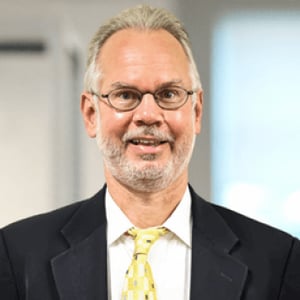
Associate Professor, Charleston School of Law
Bill Merkel joined the Charleston School of Law faculty in 2012. Merkel graduated from Johns Hopkins University with a B.A. in history in 1988 and proceeded to work as a cook in Baltimore and then as an analyst with the Department of Transportation in Washington, D.C. before returning to graduate studies in history and law.
He completed his J.D. at Columbia Law School in 1996 and then worked in appellate litigation with Wiley, Rein & Fielding in Washington, D.C. from 1997-1998. Merkel is the author, with the late Richard Uviller, of The Militia and the Right to Arms, Or, How the Second Amendment Fell Silent (Duke University Press, 2002). He taught American history at Oxford University from 2001-2003 and Comparative Introduction to American Law to foreign trained LL.M. students at Columbia Law School from 2003-2005. From 2005-2011, Merkel was an Associate Professor of Law at Washburn Law School in Topeka, Kansas, where he was named Professor of the Year by the graduating class in 2008. At Washburn, Merkel taught Constitutional Law I & II, Comparative Constitutional Law, Public International Law, and International Criminal Law and the Law of War. He received a doctorate in history from Oxford University in 2007.
Merkel has held visiting positions at the University of North Dakota School of Law in 2009 and at the University of South Carolina School of Law in 2011-12. In 2013 and 2014, Merkel taught The United States and the International Court of Justice in the Hague, Netherlands as part of the Charleston School of Law’s summer school consortium program administered by Stetson University School of Law. At the Charleston School of Law, Merkel continues to teach courses in Constitutional Law, International Law, Comparative Law, and Legal History. Merkel’s article “Jefferson’s Failed Anti-Slavery Proviso of 1784 and the Nascence of Free Soil Constitutionalism” was selected as the best submission in constitutional history by the Stanford/Yale Junior Faculty Forum in 2006. Merkel is in the process of revising his Oxford doctoral thesis “Race, Liberty, and Law: Thomas Jefferson and Slavery, 1770-1800” for publication as a book to be titled Ambiguous Beginnings: Thomas Jefferson, Slavery, and the Foundations of American Constitutionalism. Merkel has published numerous articles in journals including the Chicago-Kent Law Review, Connecticut Law Review, Lewis and Clark Law Review, Santa Clara Law Review, Seton Hall Law Review, Rutgers Law Review, and Law and History Review. His scholarship on the Second Amendment has been cited by many authors and jurists, including Justice Breyer in a dissenting opinion in McDonald v. City of Chicago. In 2013, following the successful defense of his dissertation “The Second Amendment and the Constitutional Right to Self-Defense,” Merkel was awarded a J.S.D. degree by Columbia University.
Merkel is a member of the District of Columbia, New York, and United States Supreme Court Bars.
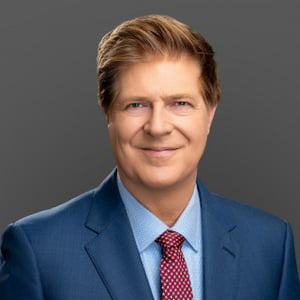
Senior Fellow, Ave Maria School of Law and Host of the Four Boxes Diner Second Amendment Channel
Mark W. Smith is a visiting member of the Senior Common Room, New College, Oxford University and a Visiting Fellow in Pharmaceutical Public Policy and Law in the Department of Pharmacology, Oxford University. Mark is also a Distinguished Scholar and Senior Fellow of Law and Public Policy at the Ave Maria School of Law. He hosts the Four Boxes Diner YouTube Channel (youtube.com/TheFourBoxesDiner), which addresses Second Amendment scholarship, cases, history and related issues, and whose videos have received almost 90 million views. Mark's scholarship has been cited by federal courts and by parties before the United States Supreme Court in Viramontes v. Cook County, New York State Rifle & Pistol Ass’n v. Bruen and in United States v. Rahimi. He is a graduate of the NYU School of Law. Mark is also a New York Times bestselling author who appears frequently in the national media including on the Fox News Channel.
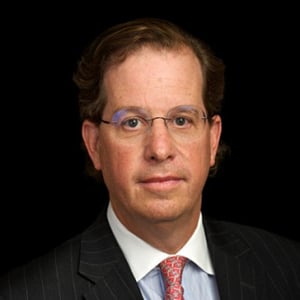
Managing Partner, Cooper & Kirk PLLC
David Thompson is the Managing Partner of Cooper & Kirk and joined the firm at its founding. Mr. Thompson has extensive trial and appellate experience in a wide range of matters and has secured victories worth billions of dollars. He has successfully challenged numerous laws on Second Amendment grounds. He has also litigated cases in over 30 federal district courts, argued in each of the 13 federal circuit courts of appeal, and argued before the U.S. Supreme Court, as well as many state courts. Mr. Thompson was awarded an A.B. degree, magna cum laude, from Harvard University in 1991, where he was elected to Phi Beta Kappa. In 1994, Mr. Thompson received a J.D. degree, cum laude, from Harvard Law School.
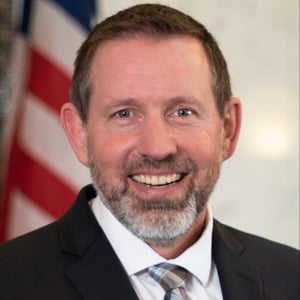
Judge, United States Court of Appeals, Ninth Circuit
Lawrence VanDyke serves as a circuit judge on the U.S. Court of Appeals for the Ninth Circuit. Prior to that appointment in January 2020, he served as a Deputy Assistant Attorney General in the Environment and Natural Resources Division of the United States Department of Justice. Before that, he served consecutively as the Solicitor General of two western states – Nevada and Montana. At the beginning of his legal career, he worked as an attorney in the Appellate and Constitutional Issues practice group at Gibson Dunn & Crutcher, LLP.
Judge VanDyke received his law degree magna cum laude from Harvard Law School, where he was an editor on the Harvard Law Review. He has engineering and theology undergraduate degrees and a masters degree in engineering management. He served as a law clerk to the Honorable Janice Rogers Brown of the United States Court of Appeals for the District of Columbia Circuit. Judge VanDyke and his wife Cheryl live in Reno, Nevada, and they have three children.

Senior Fellow in Constitutional Jurisprudence, Independence Institute
Professor Robert G. Natelson is a constitutional scholar and author.
Rob’s constitutional scholarship has been cited repeatedly by justices and parties at the U.S. Supreme Court—as well as by federal appeals courts, and at least 18 state supreme courts.
Rob’s research into the Constitution’s original meaning has carried him to libraries throughout the United States and in Britain, including four months at Oxford University. His books and articles span many different parts of the Constitution, including groundbreaking studies of the Necessary and Proper Clause, the Indian Commerce Clause, federalism, Founding-Era interpretation, regulation of elections, and the amendment process of Article V. He created the first-ever online bibliography for 18th century materials used in constitutional research. He is a contributing author to the Encyclopedia of the Supreme Court of the United States (on Magna Carta). He contributed eight essays to the third edition of the Heritage Guide to the Constitution: five on the amendment procedure and one each on the Guarantee Clause, the Postal Clause, and the Recess Appointments Clause.
U.S. Supreme Court justices have relied explicitly on Rob’s research in 41 citations in 13 separate cases.
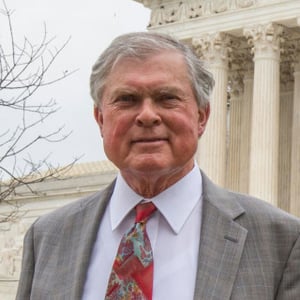
Senior Fellow, Independent Institute
Dr. Stephen P. Halbrook is a Senior Fellow at the Independent Institute. He has taught legal and political philosophy at George Mason University, Howard University, and Tuskegee Institute, and he received his J.D. from the Georgetown University Law Center and Ph.D. in social philosophy from Florida State University.
The winner of three cases before the U.S. Supreme Court (Printz v. United States, United States v. Thompson/Center Arms Company, and Castillo v. United States), he has testified before the Subcommittee on the Constitution of the Senate Judiciary Committee, Senate Subcommittee on the Constitution, Subcommittee on Crime of the House Judiciary Committee, Senate Governmental Affairs Committee, and House Committee on the District of Columbia.
A contributor to numerous scholarly volumes, he is the author of the books, Gun Control in Nazi-Occupied France: Tyranny and Resistance; Gun Control in the Third Reich: Disarming the Jews and “Enemies of the State”; The Founders’ Second Amendment: Origins of the Right to Bear Arms; That Every Man Be Armed: Evolution of a Constitutional Right; A Right to Bear Arms; Firearms Law Deskbook: Federal and State Criminal Practice; Securing Civil Rights: Freedmen, the Fourteenth Amendment, and the Right to Bear Arms; State and Federal Bills of Rights and Constitutional Guarantees; and Target Switzerland: Swiss Armed Neutrality in World War II. Dr. Halbrook’s scholarly articles have appeared in such journals as the Arizona Journal of International and Comparative Law, Drug Law Report, George Mason University Law Review, Journal of Air Law and Commerce, Journal of Law and Policy, Law & Contemporary Problems, National Law Journal, Northern Kentucky Law Review, St. John’s Journal of Legal Commentary; Seton Hall Constitutional Law Journal, Tennessee Law Review, University of Dayton Law Review, Valparaiso University Law Review, Vermont Law Review, and William & Mary Bill of Rights Journal.
Dr. Halbrook's popular articles have appeared in such publications as the Wall Street Journal, Newsday, San Francisco Chronicle, National Review, Investor’s Business Daily, Kansas City Star, Washington Examiner, Shreveport Times, Sacramento Bee, Providence Journal, Tampa Tribune, Pittsburgh Tribune-Review, History News Network, San Antonio Express-News, The Daily Caller, Detroit News, Honolulu Star Advertiser, Birmingham News, Environmental Forum, USA Today, and Washington Times. He has also appeared on numerous national TV/radio programs on CNN, Fox News Channel, Fox Business Network, Court TV, NewsMax TV, CBN, Voice of America, and C-SPAN.
Senior Fellow in Constitutional Jurisprudence, Independence Institute
Professor Robert G. Natelson is a constitutional scholar and author.
Rob’s constitutional scholarship has been cited repeatedly by justices and parties at the U.S. Supreme Court—as well as by federal appeals courts, and at least 18 state supreme courts.
Rob’s research into the Constitution’s original meaning has carried him to libraries throughout the United States and in Britain, including four months at Oxford University. His books and articles span many different parts of the Constitution, including groundbreaking studies of the Necessary and Proper Clause, the Indian Commerce Clause, federalism, Founding-Era interpretation, regulation of elections, and the amendment process of Article V. He created the first-ever online bibliography for 18th century materials used in constitutional research. He is a contributing author to the Encyclopedia of the Supreme Court of the United States (on Magna Carta). He contributed eight essays to the third edition of the Heritage Guide to the Constitution: five on the amendment procedure and one each on the Guarantee Clause, the Postal Clause, and the Recess Appointments Clause.
U.S. Supreme Court justices have relied explicitly on Rob’s research in 41 citations in 13 separate cases.

Judge, United States Court of Appeals, D.C. Circuit
Judge Randolph was confirmed by the Senate and appointed to the United States Court of Appeals for the District of Columbia Circuit by President George H. W. Bush in July 1990.
Judge Randolph received his B.S. degree in 1966 from Drexel University, majoring in economics and basic engineering. At Drexel, he was president of the debate society, vice president of the Student Senate, and a member of the varsity wrestling squad. In 1969, he received his J.D. from the University of Pennsylvania, summa cum laude. Judge Randolph ranked first in his law school class all three years and was managing editor of the Law Review.
After graduation, Judge Randolph served as a law clerk to Judge Henry J. Friendly of the United States Court of Appeals for the Second Circuit in New York.
Admitted to the California Bar in 1970 (and to the District of Columbia bar in 1973), Judge Randolph worked as Assistant to the Solicitor General, U.S. Department of Justice, in Washington, D.C., 1970-1973.
After two years in private practice, Judge Randolph was named Deputy Solicitor General of the United States, a position he held from 1975-1977.
In 1979, Judge Randolph was appointed Special Counsel to the Committee on Standards of Official Conduct (the Ethics Committee) of the United States House of Representatives, remaining in this position until 1980.
In the 1980s, Judge Randolph held a number of positions while in private practice, including Special Assistant Attorney General for the states of New Mexico (1985 90), Utah (1986-1990) and Montana (1983-1990). He also served as a Member of the Advisory Panel of the Federal Courts Study Committee.
From 1971-1990, Judge Randolph argued 23 times in the United States Supreme Court, winning 20 of his cases.
As an Adjunct Professor of Law at Georgetown University Law Center from 1974-1978 he taught courses in civil procedure and injunctions. In 1992 he taught a course in constitutional law. He is a Distinguished Adjunct Professor of Law at George Mason School of Law and for the past ten years has been teaching First Amendment law. He also serves on the Judicial Advisory Board of the George Mason University Law and Economics Center.
From 1993 through 1995 Judge Randolph was a member of the Committee on Codes of Conduct of the Judicial Conference of the United States, and from 1995 to 1998 served as the Committee's chairman. He also served as the judicial liaison to the American Bar Association’s Administrative Law Section.
Judge Randolph is a member of the Board of Visitors at Drexel University Law School and was named to the “Drexel One Hundred” as a leading alumnus. In 2002 he was presented the James Wilson Award by the University of Pennsylvania Law School. In November 2005 he delivered the Fifth Annual Barbara K. Olson Memorial Lecture at the Annual Lawyers Convention of the Federalist Society. He has published numerous articles, the most recent of which is in the June 2006 issue of the Harvard Journal of Law and Public Policy.
Judge Randolph is married to the Honorable Eileen J. O’Connor, formerly Assistant Attorney General, Tax Division, U.S. Department of Justice. His son John Trevor Randolph is an investment banker in New York. His daughter Cynthia Lee Randolph is an artist living in San Francisco.
Senior Fellow in Constitutional Jurisprudence, Independence Institute
Professor Robert G. Natelson is a constitutional scholar and author.
Rob’s constitutional scholarship has been cited repeatedly by justices and parties at the U.S. Supreme Court—as well as by federal appeals courts, and at least 18 state supreme courts.
Rob’s research into the Constitution’s original meaning has carried him to libraries throughout the United States and in Britain, including four months at Oxford University. His books and articles span many different parts of the Constitution, including groundbreaking studies of the Necessary and Proper Clause, the Indian Commerce Clause, federalism, Founding-Era interpretation, regulation of elections, and the amendment process of Article V. He created the first-ever online bibliography for 18th century materials used in constitutional research. He is a contributing author to the Encyclopedia of the Supreme Court of the United States (on Magna Carta). He contributed eight essays to the third edition of the Heritage Guide to the Constitution: five on the amendment procedure and one each on the Guarantee Clause, the Postal Clause, and the Recess Appointments Clause.
U.S. Supreme Court justices have relied explicitly on Rob’s research in 41 citations in 13 separate cases.

Judge, United States Court of Appeals, Third Circuit
Judge Hardiman was appointed to the United States Court of Appeals for the Third Circuit on January 9, 2007 and was confirmed by the Senate (95-0) on March 15, 2007. Prior to becoming an appellate judge, Judge Hardiman served as a trial judge on the United States District Court for the Western District of Pennsylvania as of November 1, 2003. In 2008, Chief Justice John Roberts appointed Judge Hardiman to the Information Technology Committee of the Judicial Conference of the United States. Judge Hardiman was appointed Chairman of the IT Committee in 2013 and served in that capacity until September 2021. In 2021 he was appointed by the Director of the Administrative Office of the United States Courts to serve as Chair of the Judiciary IT Security Task Force, which completed its work in fall 2023. Chief Justice Roberts appointed Judge Hardiman to the Board of the Federal Judicial Center to serve from March 2020 until March 2024. As part of his work with the Center, Judge Hardiman now serves as Editor in Chief for the Manual for Complex Civil Litigation, Fifth.
Before entering judicial service, Judge Hardiman handled a wide variety of litigation matters in state and federal trial and appellate courts as a partner at Reed Smith LLP (1999-2003), a partner at Titus & McConomy LLP (1996-1999), and as an associate with its predecessor firm, Cindrich & Titus (1992-1996). Judge Hardiman began his legal career as an associate in the Washington, D.C. office of Skadden, Arps, Slate, Meagher & Flom (1990-1992).
A 1987 honors graduate of the University of Notre Dame, Judge Hardiman received his law degree in 1990 from the Georgetown University Law Center, where he served as a Notes and Comments Editor on the Georgetown Law Journal. In 2012, Judge Hardiman was elected as a member of the American Law Institute and was elected to its Council in 2019 and its Executive Committee in 2025. Judge Hardiman regularly teaches a seminar on Advanced Constitutional Law at Duquesne University School of Law and a one-week course entitled “Constitutional Law: the First and Second Amendments” at Georgetown University Law Center.
A native of Waltham, Massachusetts, Judge Hardiman has chambers in Pittsburgh, Pennsylvania. He and his wife Lori married in 1992 and have three children.
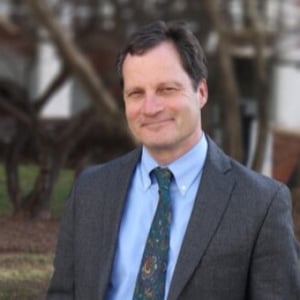
Vice President, Legal & Chief Counsel, Legal, Brady
Jonathan E. Lowy is the Vice President, Legal and Chief Counsel at Brady. Since 1997 Jon has argued in courts across the country to reduce gun violence, providing pro bono legal representation to victims of gun violence in lawsuits to reform dangerous gun industry practices, and assisting governments and public officials in defense of reasonable gun laws. Jon has litigated in over 40 states, successfully arguing several precedent-setting cases in appellate and trial courts establishing gun industry liability and Second Amendment law, obtaining several multi-million dollar settlements, and reforming gun industry practices. Jon has been named one of the 500 Leading Lawyers in America by Lawdragon magazine for the past 10 years, and has published numerous articles on gun litigation and policy including, The Right Not To Be Shot: Public Safety, Private Guns, and the Constellation of Constitutional Liberties in the Georgetown Journal of Law and Policy. He graduated from Harvard College and the University of Virginia School of Law.
Senior Fellow, Ave Maria School of Law and Host of the Four Boxes Diner Second Amendment Channel
Mark W. Smith is a visiting member of the Senior Common Room, New College, Oxford University and a Visiting Fellow in Pharmaceutical Public Policy and Law in the Department of Pharmacology, Oxford University. Mark is also a Distinguished Scholar and Senior Fellow of Law and Public Policy at the Ave Maria School of Law. He hosts the Four Boxes Diner YouTube Channel (youtube.com/TheFourBoxesDiner), which addresses Second Amendment scholarship, cases, history and related issues, and whose videos have received almost 90 million views. Mark's scholarship has been cited by federal courts and by parties before the United States Supreme Court in Viramontes v. Cook County, New York State Rifle & Pistol Ass’n v. Bruen and in United States v. Rahimi. He is a graduate of the NYU School of Law. Mark is also a New York Times bestselling author who appears frequently in the national media including on the Fox News Channel.
Managing Partner, Cooper & Kirk PLLC
David Thompson is the Managing Partner of Cooper & Kirk and joined the firm at its founding. Mr. Thompson has extensive trial and appellate experience in a wide range of matters and has secured victories worth billions of dollars. He has successfully challenged numerous laws on Second Amendment grounds. He has also litigated cases in over 30 federal district courts, argued in each of the 13 federal circuit courts of appeal, and argued before the U.S. Supreme Court, as well as many state courts. Mr. Thompson was awarded an A.B. degree, magna cum laude, from Harvard University in 1991, where he was elected to Phi Beta Kappa. In 1994, Mr. Thompson received a J.D. degree, cum laude, from Harvard Law School.
Professor of Political Science, Northeastern University
Professor of Law Emeritus, Brooklyn Law
Henry Mark Holzer received his B.A. degree from New York University where he studied Russian and political science. After graduation in 1954 he served in South Korea with United States Army intelligence, holding top secret clearance as chief order of battle analyst (Chinese Communist Forces) at Eighth Army Headquarters in Seoul. Following Professor Holzer’s military service he earned his Juris Doctor degree at New York University School of Law. After his admission to the New York bar in December 1959 he practiced constitutional and appellate law.
From 1972 to 1993 he taught full time at Brooklyn Law School, and for two years was an associate dean. His courses included Constitutional Law, Administrative Law, Civil Liberties, First Amendment and Appellate Advocacy. In the fall of 1993, he taught as a visiting professor at the University of New Mexico School of Law in Albuquerque.
He is author of approximately 300 articles, essays, and reviews. He has published legal and political commentary on current issues in print and electronic media, and has often been interviewed on radio and television.
Several of his out-of-print books are The Gold Clause: Government’s Money Monopoly; Sweet Land of Liberty? The Supreme Court and Individual Rights; Speaking Freely: The Case Against Speech Codes; Why Not Call it Treason? Korea, Vietnam, Afghanistan and Today. With his wife, Erika Holzer, he is co-author of “Aid and Comfort”: Jane Fonda in North Vietnam; and Fake Warriors: Identifying, Exposing, and Punishing Those Who Falsify Their Military Service.
His book The Supreme Court Opinions of Clarence Thomas, 1919-2006, was published in 2007. The second edition, covering the years 1991-2011 was published in 2012. Also published in 2012, in a print edition and eBook, was Professor Holzer’s book The American Constitution and Ayn Rand’s “Inner Contradiction.”

Richard and Frances Mallery Professor of Law and Faculty Director, Constitutional Law Center, Stanford Law School
Michael W. McConnell is the Richard and Frances Mallery Professor and Faculty Director of the Constitutional Law Center at Stanford Law School, and a Senior Fellow at the Hoover Institution. From 2002 to 2009, he served as a Circuit Judge on the United States Court of Appeals for the Tenth Circuit. He was nominated by President George W. Bush, a Republican, and confirmed by a Democratic Senate by unanimous consent. McConnell has previously held chaired professorships at the University of Chicago and the University of Utah, and visiting professorships at Harvard and NYU. He teaches courses on constitutional law, constitutional history, First Amendment, and interpretive theory. He has published widely in the fields of constitutional law and theory, especially church and state, equal protection, and separation of powers. His book, “The President Who Would Not Be King: Executive Power Under the Constitution,” was published by Princeton University Press in 2020, based on the Tanner Lectures in Human Values, which he delivered at Princeton in 2019. His latest book, co-authored with Nathan Chapman, “Agreeing to Disagree: How the Establishment Clause Protects Religious Diversity and Freedom of Conscience,” was published by Oxford University Press in mid-2023. McConnell has argued sixteen cases in the United States Supreme Court, most recently Carney v. Adams (2020). defending a provision of the Delaware Constitution requiring political balance on that state’s courts. More recently, he was co-counsel in Gonzalez v. Google. He earned his B.A. from Michigan State University and his J.D. from the University of Chicago, and has received honorary degrees from Notre Dame University and Michigan State. He served as law clerk to Supreme Court Justice William J. Brennan, Jr. and D.C. Circuit Chief Judge J. Skelly Wright. He has been Assistant General Counsel of the Office of Management & Budget, Assistant to the Solicitor General of the Department of Justice, and a member of the President’s Intelligence Oversight Board. He is Senior of Counsel to the law firm Wilson, Sonsini, Goodrich & Rosati, and is co-chair of Meta’s Oversight Review Board.
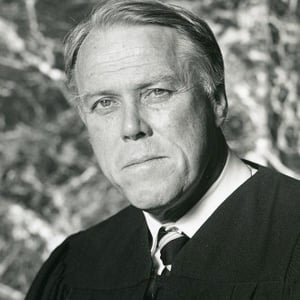
Senior Judge, United States Court of Appeals, Ninth Circuit
John T. Noonan, Jr. was a federal judge on senior status with the United States Court of Appeals for the 9th Circuit. He joined the court in 1985 after being nominated by President Ronald Reagan. He assumed senior status on December 27, 1996, and served as a senior judge until his death on April 17, 2017.
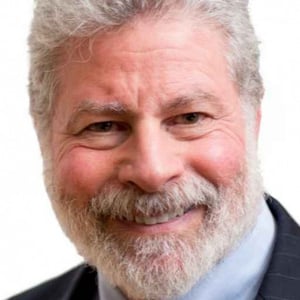
Senior Counsel, American Civil Liberties Union
Arthur B. Spitzer was the Legal Director of the ACLU of the District of Columbia from April Fool’s Day, 1980 until April 2020, when he became Senior Counsel. His work has spanned the range of ACLU issues, including freedom of speech and religion, police misconduct, national security, due process, privacy, prisoners’ rights, the rights of government employees, freedom of information, discrimination based on race, sex, religion, sexual orientation and gender preference, and more.
He has represented such varied clients as Mohamedou Ould Slahi (a Guantánamo detainee held without charge for 14 years), Louis Farrakhan (when he was barred from attending then-D.C. Mayor Marion Barry’s criminal trial), the Ku Klux Klan (when it was denied a permit to march in D.C.), the National Black Police Association (challenging ultra-low D.C. election campaign contribution limits), the White House Vigil for the Equal Rights Amendment (challenging restrictive regulations for demonstrating near the White House), People for the Ethical Treatment of Animals (when its design for an abused circus elephant was rejected from a public art display), Milo Yiannopoulos (whose advertisement for his new book was denied advertising by the D.C. transit authority), and both John and Jane Doe.
In Abbate v. Ramsey, Art represented some of the nearly 400 protestors arrested at an anti-World Bank demonstration in Pershing Park in 2002, challenging their illegal arrest and inhumane detention, and resulting in a settlement that included major changes in D.C. police practices in demonstration situations. He also had a major hand in crafting the legislation that created the D.C. police civilian review board (now known as the Office of Police Complaints) and the First Amendment Rights and Police Practices Act, a model statute governing D.C. police conduct during the peaceful exercise of free speech rights.
Other cases include Harmon v. Thornburgh (challenging random drug testing of Justice Department employees), Walsh v. Montrose Christian School (representing longtime school secretaries and a cafeteria worker at a Christian School who were fired because they were not members of the church), Schroer v. Billington (representing a trans woman who was fired by the Library of Congress when she disclosed her status), Center for National Security Studies v. U.S. Department of Justice (challenging the secret detention of immigrants after 9/11), Wimberly v. D.C. Board of Elections and Ethics (blocking a proposed ballot initiative to permit organized group prayer in D.C. public schools), and LaShawn A. v. Bowser (a still-ongoing class action filed in 1989 to reform D.C.’s dysfunctional foster care system).
In the Supreme Court, Art successfully argued Ake v. Oklahoma, which ruled that poor criminal defendants are entitled to free expert witnesses when needed for their defense, just as they’re entitled to free lawyers.
Art was born in Brooklyn (yay!), raised in Queens, and educated at Cornell University and Yale Law School. Before ascending to the ACLU, he practiced for several years at the law firm now known as WilmerHale. He has taught a course in “Demonstration Law” at the University of the District of Columbia School of Law.
His dog is Taxi; his cats are Tigris and Euphrates. He is not and has never been related to former New York governor Elliot Spitzer.
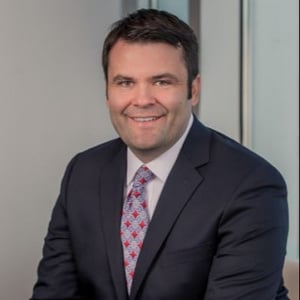
Shareholder, Parr Brown Gee & Loveless
Stephen Mouritsen is a member of Parr Brown’s commercial litigation group. Prior to joining Parr Brown, Mr. Mouritsen was an associate with the law firms of Willkie Farr & Gallagher LLP and Cravath, Swaine & Moore LLP in New York. Mr. Mouritsen served as a law clerk to the Honorable Associate Chief Justice Thomas R. Lee of the Utah Supreme Court. Prior to law school, Mr. Mouritsen worked as a registered financial representative for Fidelity Investments.
Mr. Mouritsen has experience with a wide variety of securities-related matters, including securities fraud, mortgage fraud, trading violations, market manipulation schemes, as well as SEC and PCAOB investigations. Mr. Mouritsen also has significant experience with internal investigations, environmental litigation, and corporate restructuring litigation.
With a background in linguistics, Mr. Mouritsen has written and lectured extensively on the intersection between law and language. His writing has appeared in the Yale Law Journal, the Washington Law Review, the Columbia Science and Technology Law Review, and at the Volokh Conspiracy legal blog. His work has been cited by judges in the United States Courts of Appeals for the Third, Sixth, and Tenth Circuits, as well as the Idaho, Michigan, Montana, and Utah Supreme Court. His work has also been cited in leading casebooks on legislation and contracts, and in the Congressional Research Service’s report on Statutory Interpretation.
Mr. Mouritsen currently serves as an adjunct professor at the J. Reuben Clark Law School at Brigham Young University, where he teaches courses on the theory and practice of legal interpretation and law and corpus linguistics. From 2016 through 2018, Mr. Mouritsen served as an associate (non-resident research fellow) at the University of Chicago Law School.
Mr. Mouritsen received his B.A. in English, from the Brigham Young University, in 2002. In 2007 he received his M.A. in linguistics from Brigham Young University. He attended Brigham Young University’s J. Reuben Clark Law School, where he was the Lead Articles Editor of the BYU Law Review, a First Prize, John S. Welch Award for Outstanding Legal Writing, and graduated magna cum laude in 2010.
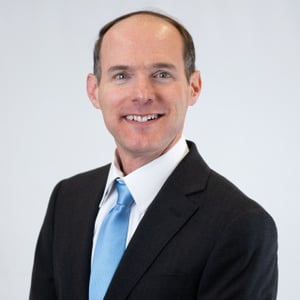
Associate Professor & Director, Constitutional Government Initiative, Wheatley Institute, Brigham Young University
James C. Phillips is the Constitutional Government Initiative Director and an associate professor at BYU’s Wheatley Institute. He is also a fellow with the UC-Berkeley School of Law’s Public Law and Policy Program and an academic affiliate with the D.C.-based law firm Schaerr|Jaffe. His scholarship has been cited by judges around the country, including at the U.S. Supreme Court, and has been covered in various media outlets, including the New York Times Magazine, USA Today, Reuters, CNN, and Fox News. He is a member of the Executive Committee of the Federalist Society's Religious Liberty Practice Group and the J. Reuben Clark Law Society Religious Liberty Committee.
Prior to joining Wheatley, Phillips was associate professor of law at Chapman University’s Fowler School of Law, where he taught Constitutional Law, Religion and the Constitution, Civil Procedure, Family Law, and Professional Responsibility and was named 1L Professor of the Year. Dr. Phillips has taught Administrative Law at BYU’s J. Reuben Clark Law School, where he also helped conceive and design the Corpus of Founding-Era American English. He was also a Non-resident Fellow with Stanford Law School’s Constitutional Law Center.
Dr. Phillips has published dozens of academic articles, primarily in law journals, but also communications, business, and history journals. His longer pieces have been published in, for example, the University of Pennsylvania Law Review, the Southern California Law Review, and the Harvard Journal of Law and Public Policy, and his shorter articles have been published in journals such as the Yale Law Journal Forum and the Duke Law Journal Online. Dr. Phillips has also written op-eds on constitutional issues for Newsweek, The Atlantic, the Los Angeles Times, the Orange County Register, Deseret News, and National Review.
Prior to his university posts, Dr. Phillips practiced law as a Constitutional Law Fellow for the Becket Fund for Religious Liberty and an associate for Kirton | McConkie. He has worked on dozens of cases at the U.S. Supreme Court, as well as cases in federal and state courts throughout the country. He is a member of the bar in Utah and D.C. He clerked for Judge Thomas B. Griffith on the U.S. Court of Appeal for the D.C. Circuit and for Justice Thomas R. Lee on the Utah Supreme Court. Dr. Phillips earned his JD, Order of the Coif, from UC-Berkeley’s School of Law, where he was a member of the California Law Review. He also has a PhD in Jurisprudence & Social Policy from UC-Berkeley, an M.A. in Mass Communication from BYU, and a B.A. in History from Arizona State University.

Second Amendment: Will the Supreme Court Adhere to Bruen (and Originalism) in Rahimi and Beyond?
William G. Merkel, Mark W. Smith, David H. Thompson, Lawrence VanDyke
Oral argument was held in U.S. v. Rahimi on November 7, 2023. The case asks...
The False Doctrine of Inherent Sovereign Authority
Robert G. Natelson
This essay examines the hypothesis that the federal government and its departments and officials hold...
Text-and-History or Means-End Scrutiny? A Response to Professor Nelson Lund's Critique of Bruen
Stephen P. Halbrook
Professor Nelson Lund’s “Bruen’s Preliminary Preservation of the Second Amendment,” recently published in the Federalist...
The Meaning of "Regulate Commerce" to the Constitution's Ratifiers
Robert G. Natelson
I. Previous Scholarship[1] A. Views of “Commerce”: Traditional and “Mega” The Constitution grants Congress power...
Hon. Robert H. Bork Memorial Lecture
A. Raymond Randolph
The 2022 National Lawyers Convention will take place November 10-12, 2022 at the Mayflower Hotel in...
The Original Understanding of the Indian Commerce Clause: An Update
Robert G. Natelson
The Congress shall have Power . . . To regulate Commerce with foreign Nations, and...
Second Amendment: Next Steps in the Unfolding Litigation Battle
Thomas M. Hardiman, Jonathan Lowy, Mark W. Smith, David H. Thompson
The 2021 National Lawyers Convention took place November 11-13, 2021 at the Mayflower Hotel in...
Panel II: The Freedom of Religion [Archive Collection]
Robert L. Cord, Mitchell L. Edwards, Henry Mark Holzer, Michael W. McConnell, John T. Noonan, Arthur B. Spitzer
On March 7-8, 1986, The Federalist Society hosted its annual National Student Symposium at Stanford...
Topics
Lange v. California: Restoring the Fourth Amendment’s Forgotten Right to Be Secure
The question of when and how police may enter our homes strikes at the core...
Corpus Linguistics in Legal Interpretation
Stephen Mouritsen, James C. Phillips
Corpus linguistics has recently emerged as a method for addressing problems in legal interpretation. Corpus...