
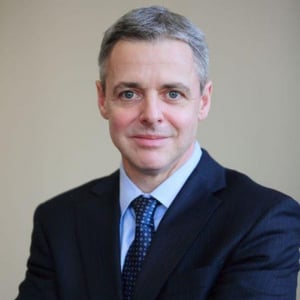
Judge, United States Court of Appeals, Sixth Circuit
Raymond M. Kethledge is a Circuit Judge on the United States Court of Appeals for the Sixth Circuit, to which he was appointed on July 8, 2008. He received his BA in history from the University of Michigan in 1989, and his JD from the University of Michigan Law School in 1993. He clerked for Justice Anthony Kennedy of the United States Supreme Court and Judge Ralph B. Guy, Jr. of the United States Court of Appeals for the Sixth Circuit. He also worked in the United States Senate and later, with two partners, founded a boutique litigation firm, now known as Bush Seyferth PLLC, in Troy, Michigan. His practice there included a broad mix of trial-court, appellate, and class-action litigation.

Robert Walmsley University Professor, Harvard Law School
Cass R. Sunstein is currently the Robert Walmsley University Professor at Harvard. He is the founder and director of the Program on Behavioral Economics and Public Policy at Harvard Law School. In 2018, he received the Holberg Prize from the government of Norway, sometimes described as the equivalent of the Nobel Prize for law and the humanities. From 2009 to 2012, he was Administrator of the White House Office of Information and Regulatory Affairs, and after that, he served on the President's Review Board on Intelligence and Communications Technologies and on the Pentagon's Defense Innovation Board. Mr. Sunstein has testified before congressional committees on many subjects, and he has advised officials at the United Nations, the European Commission, the World Bank, and many nations on issues of law and public policy. He serves as an adviser to the Behavioural Insights Team in the United Kingdom.
Mr. Sunstein is author of hundreds of articles and dozens of books, including Nudge: Improving Decisions about Health, Wealth, and Happiness (with Richard H. Thaler, 2008), Simpler: The Future of Government (2013), The Ethics of Influence (2015), #Republic (2017), Impeachment: A Citizen's Guide (2017), The Cost-Benefit Revolution (2018), On Freedom (2019), Conformity (2019), How Change Happens (2019), and Too Much Information (2020). He is now working on a variety of projects involving the regulatory state, "sludge" (defined to include paperwork and similar burdens), fake news, and freedom of speech.
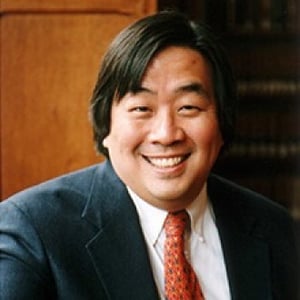
Sterling Professor of International Law, Yale Law School
Harold Hongju Koh is Sterling Professor of International Law at Yale Law School. He returned to Yale Law School in January 2013 after serving for nearly four years as the 22nd Legal Adviser of the U.S. Department of State.
Professor Koh is one of the country’s leading experts in public and private international law, national security law, and human rights. He first began teaching at Yale Law School in 1985 and served as its fifteenth Dean from 2004 until 2009. From 2009 to 2013, he took leave as the Martin R. Flug ’55 Professor of International Law to join the State Department as Legal Adviser, service for which he received the Secretary of State's Distinguished Service Award. From 1993 to 2009, he was the Gerard C. & Bernice Latrobe Smith Professor of International Law at Yale Law School, and from 1998 to 2001, he served as U.S. Assistant Secretary of State for Democracy, Human Rights and Labor.
Professor Koh has received seventeen honorary degrees and more than thirty awards for his human rights work, including awards from Columbia Law School and the American Bar Association for his lifetime achievements in international law. He has authored or co-authored eight books, published more than 200 articles, testified regularly before Congress, and litigated numerous cases involving international law issues in both U.S. and international tribunals. He is a Fellow of the American Philosophical Society and the American Academy of Arts and Sciences, an Honorary Fellow of Magdalen College, Oxford, and a member of the Council of the American Law Institute.
He holds a B.A. degree from Harvard College and B.A. and M.A. degrees from Oxford University, where he was a Marshall Scholar. He earned his J.D. from Harvard Law School, where he was Developments Editor of the Harvard Law Review. Before coming to Yale, he served as a law clerk for Justice Harry A. Blackmun of the United States Supreme Court and Judge Malcolm Richard Wilkey of the U.S. Court of Appeals for the D.C. Circuit, worked as an attorney in private practice in Washington, and served as an Attorney-Adviser for the Office of Legal Counsel, U.S. Department of Justice.
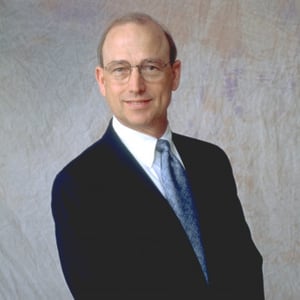
David C. Baum Professor Emeritus, University of Illinois College of Law
John Nowak graduated from College of Law in 1971, with the highest grade point average in the graduating class. During his third year at the College of Law, he served as the editor-in-chief of the University of Illinois Law Forum [now renamed as the University of Illinois Law Review]. Following graduation, John clerked for Justice Walter Schaefer of the Illinois Supreme Court. Professor Nowak joined the University of Illinois College of Law faculty in 1972; for thirty years he was what academics euphemistically call “a full-time professor.” He was the David C. Baum Professor at the College of Law from 1993 until his retirement in 2002; he received the “outstanding professor award” from three graduating classes of the College. As an emeritus professor, John taught courses at the College of Law from 2002 to 2008.
In 2008, Professor Nowak was the first professor appointed to the Raymond and Mary Simon Chair in Constitutional Law at Loyola University Chicago. He served in that position at Loyola from 2008-2014; he was awarded the “outstanding professor award” by the Loyola graduating class of 2011. In 2014, illness once again led Professor Nowak to retire. The Loyola University Chicago Board of Trustees awarded Professor Nowak the title of Professor and Raymond and Mary Simon Chair in Constitutional Law Emeritus.
Professor Nowak is the author, or coauthor, of more than a score of law review articles, including articles in the California, Columbia, Georgetown, Michigan, Northwestern, U.C.L.A., and Virginia Law Reviews, and the Supreme Court Review (published by the University of Chicago Press). With Jenner Professor Emeritus Professor Ronald D. Rotunda, Professor Nowak has coauthored: Concise Hornbook on Constitutional Law (4th edition, Thomson-West 2010); Constitutional Law (8th edition, Thomson-West 2010); and the six-volume Treatise on Constitutional Law: Substance and Procedure (5th ed., 2012-2013, West & Thomson-Reuters-Westlaw). Their multi-volume Treatise, which has annual supplements, also serves as the “conlaw” database on Westlaw. A chapter of Constitutional Law was translated into Korean by Professor Lee Boo-Ha, Yeungnam University College of Law and Political Science, and published in Korea as Nowak & Rotunda, Freedom of Speech and the American Constitution. Professors Nowak and Rotunda are also the editors of Story’s Commentaries on the Constitution (1987, Carolina Academic Press).
Professor Nowak has been a scholar in residence at the University of Arizona; a visiting professor at the University of Michigan; the Lee Distinguished Visiting Professor at the College of William and Mary, and the Williams Visiting Professor at the University of Richmond. He has presented lectures at several law schools; the National Conference of Law Reviews annual meeting; and at a variety of Federal Judicial Center programs. Professor Nowak served as Reporter for the National Center for State Courts’ Task Force on Courts in the American System of Government; Reporter for the Illinois Supreme Court’s Committee on Jury Instructions in Criminal Cases; Reporter for the United States District Courts for the Central and Southern Districts of Illinois Speedy Trial Act Planning Groups; and as a member of the Rules Committee of the United States District Court for the Northern District of Illinois.
Professor Nowak is a member of the American Bar Foundation, and a “life member” of the American Law Institute. He has served as a member of the Order of the Coif Triennial Book Award Committee; and as a member or a chairperson of the several committees of the Association of American Law Schools. Twice, Professor Nowak was elected to serve as the chairperson of the AALS Section on Constitutional Law. He served as the University of Illinois Faculty Athletic Representative to the Big Ten Conference and NCAA from 1981 through 1989; and a member of the NCAA’s Committee on Infractions from 1987 to 1990. Professor Nowak served as the “Interim Deputy Chancellor for Intercollegiate Athletics,” during the time when the University of Illinois Division of Intercollegiate Athletics replaced the University’s “Athletic Association,” and the campus did not have an Athletics Director.

Former General Counsel of the U.S. Immigration and Naturalization, Former United States Ambassador to East Timor
Grover Joseph Rees is a Louisiana native whose family has lived in the Breaux Bridge/Lafayette area since the 1700s.
His first job after college was as an assistant to Congressman Dave Treen (R-LA3), who had just been elected as the first Republican Congressman from Louisiana since Reconstruction.
Rees graduated with honors from LSU Law School, where he served as Editor-in-Chief of the Louisiana Law Review. While in law school he worked on Ronald Reagan’s 1976 presidential campaign and was a Reagan delegate from Louisiana to the Republican National Convention. He also served as a member of the Lafayette Parish Republican Executive Committee and as a board member of Acadiana Right to Life.
In 1979, when Congressman Treen ran successfully for Governor, he asked Rees to write his authorized biography. The book, Dave Treen of Louisiana, was read and discussed widely during the campaign and after Treen’s election.
In 1985-86 Rees served as Special Counsel for Judicial Selection in President Reagan’s Justice Department, working closely with Attorney General Ed Meese to reorganize the judicial selection process to make it more philosophically oriented. These efforts resulted in the appointment of over 100 federal judges and were widely credited with transforming the federal judiciary.
From 1986 through 1991 Rees served as Chief Justice of the High Court of American Samoa, an Article I federal judicial position.
From 1991 through 1993 he was General Counsel of the U.S. Immigration and Naturalization Service.
In 1995 Rees went to work for the new Republican Congress as staff director and chief counsel of the Subcommittee on International Operations and Human Rights. He worked with subcommittee chairman Chris Smith (R.-N.J.) to cut U.S. funding for the International Planned Parenthood Federation and other organizations that perform and promote abortions overseas. Rees also worked on the drafting and enactment of the International Religious Freedom Act, the Trafficking Victims Protection Act, and other legislation that has helped to bring U.S. foreign policy into closer alignment not only with our national interests but also with our values.
In 2001-2002 Rees worked for Congressman Henry Hyde (R.-Ill.), who was then serving as Chairman of the House International Relations Committee.
From 2002 until 2006 Rees served as the first United States Ambassador to newly independent East Timor.
From 2006 until 2009 Ambassador Rees was the United States Special Representative for Social Issues, responsible for representing the United States on issues relating to vulnerable persons and the family within the United Nations system.
Ambassador Rees retired from government service in January 2009 and returned to Lafayette. He is married to Lan Dai Nguyen Rees and is a member of St. Genevieve’s Catholic parish in Lafayette. He was recently elected to serve as a member of the Louisiana Republican State Central Committee.
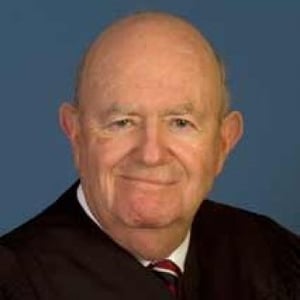
Judge, United States Court of Appeals, District of Columbia Circuit
LAURENCE HIRSCH SILBERMAN, senior circuit judge; recipient of the Presidential Medal of Freedom, June 19, 2008; born in York, PA, October 12, 1935; son of William Silberman and Anna (Hirsch); married to Rosalie G. Gaull on April 28, 1957 (deceased), married Patricia Winn on January 5, 2008; children: Robert Steven Silberman, Katherine DeBoer Fischer, and Anne Gaull Otis; B.A., Dartmouth College, 1957; LL.B., Harvard Law School, 1961; admitted to Hawaii Bar, 1962; District of Columbia Bar, 1973; associate, Moore, Torkildson and Rice, 1961–64; partner (Moore, Silberman and Schulze), Honolulu, 1964–67; attorney, National Labor Relations Board, Office of General Counsel, Appellate Division, 1967–69; Solicitor, Department of Labor, 1969–70; Under Secretary of Labor, 1970–73; partner, Steptoe and Johnson, 1973–74; Deputy Attorney General of the United States, 1974–75; Ambassador to Yugoslavia, 1975–77; President’s Special Envoy on ILO Affairs, 1976; senior fellow, American Enterprise Institute, 1977–78; visiting fellow, 1978–85; managing partner, Morrison and Foerster, 1978–79 and 1983–85; executive vice president, Crocker National Bank, 1979–83; lecturer, University of Hawaii, 1962–63; board of directors, Commission on Present Danger, 1978–85, Institute for Educational Affairs, New York, NY, 1981–85, member: General Advisory Committee on Arms Control and Disarmament, 1981–85; Defense Policy Board, 1981–85; vice chairman, State Department’s Commission on Security and Economic Assistance, 1983–84; American Bar Association (Labor Law Committee, 1965–72, Corporations and Banking Committee, 1973, Law and National Security Advisory Committee, 1981–85); Hawaii Bar Association Ethics Committee, 1965–67; Council on Foreign Relations, 1977–present; Judicial Conference Committee on Court Administration and Case Management, 1994; member, U.S. Foreign Intelligence Surveillance Act Court of Review, 1996–2003; Adjunct Professor of Law (Administrative Law and Labor Law) Georgetown Law Center, 1987–94; 1997; Adjunct Professor of Law, Harvard Law School, 1994-95, Adjunct Professor of Law, New York University Law School, 1995–96; Distinguished Visitor from the Judiciary, Georgetown Law Center, 2003–2019; co-chairman of the President’s Commission on The Intelligence Capabilities of the United States Regarding Weapons of Mass Destruction, 2004–05; appointed to the U.S. Court of Appeals for the District of Columbia Circuit by President Reagan on October 28, 1985.
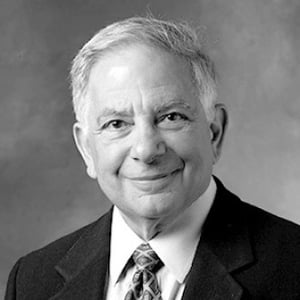
George P. Shultz Senior Fellow in Foreign Policy and National Security Affairs, Emeritus, Hoover Institution
Abraham D. Sofaer was appointed the first George P. Shultz Distinguished Scholar and Senior Fellow at the Hoover Institution in 1994. Named in honor of former US secretary of state George P. Shultz, the appointment is awarded to a senior scholar whose broad vision, knowledge, and skill will be brought to bear on the problems presented by a radically transformed global environment.
Sofaer's work focuses on the power over war within the US government and on issues related to international law, terrorism, diplomacy, and national security. His most recent books are Taking on Iran: Strength, Diplomacy, and the Iranian Threat(Hoover Institution Press, 2013) and The Best Defense?: Legitimacy and Preventive Force (Hoover Institution Press, 2010).
From 1985 to 1990, he served as a legal adviser to the US Department of State, where he resolved several interstate matters, including the dispute between Egypt and Israel over Taba, the claim against Iraq for its attack on the USS Stark, and the claims against Chile for the assassination of Orlando Letelier. He received the Distinguished Service Award in 1989, the highest state department award given to a non–civil servant.
From 1979 to 1985, Sofaer served as a US district judge in the Southern District of New York. From 1969 to 1979, he was a professor of law at Columbia University School of Law and wrote War, Foreign Affairs, and Constitutional Power: The Origins.From 1967 to 1969, he was an assistant US attorney in the Southern District of New York, after clerking for Judge J. Skelly Wright on the US Court of Appeals in Washington, DC, and the Honorable William J. Brennan Jr. on the US Supreme Court. He practiced law at Hughes, Hubbard and Reed from 1990 to 1994.
A veteran of the US Air Force, Sofaer received an LLB degree from New York University School of Law in 1965, where he was editor in chief of the law review. He holds a BA in history from Yeshiva College (1962). Sofaer is a founding trustee of the National Museum of Jazz in Harlem and a member of the board of the Koret Foundation.
His research papers are available at the Hoover Institution Archives.

Founding Partner, Cooper & Kirk PLLC
Charles J. Cooper is a founding member and the chairman of Cooper & Kirk, PLLC, “one of the Nation’s leading litigation boutiques” (Above The Law 2017). The National Law Journal recently wrote that Mr. Cooper’s “brilliant legal career has so far spanned five decades and thrust Cooper into the spotlight in some of the most historic moments of the country’s modern history.” He has argued nine cases before the United States Supreme Court and scores of appeals before each of the 13 federal courts of appeals and several state supreme courts. He has been lead trial counsel in numerous complex, weeks-long trials in federal courts throughout the country. Named by the National Law Journal as one of the 10 best litigators in Washington D.C., Mr. Cooper’s work has been reported in numerous press accounts, and he has been called a “powerhouse attorney” (Fortune 2015), “a hard-nosed litigator” (Washington Post 2017), and “one of the country’s most in-demand civil litigators and a Washington legal institution unto himself” (The American Spectator 2014).
After graduating from the University of Alabama School of Law in 1977, where he ranked first in his class and served as Editor-in-Chief of the Alabama Law Review, Mr. Cooper began his career as a law clerk to Judge Paul Roney on the Fifth Circuit Court of Appeals and to Justice William H. Rehnquist in 1978–79. He then practiced law in Atlanta for two years before joining the Civil Rights Division of the U.S. Department of Justice, where he served as the Deputy Assistant Attorney General in charge of, among other things, appellate matters. In 1985 President Reagan appointed him to the position of Assistant Attorney General for the Office of Legal Counsel, which is the office responsible for providing legal opinions and advice to the White House, the Attorney General, and Executive Branch departments and agencies on issues covering the full spectrum of federal constitutional, statutory, and regulatory law.
In 1988 he returned to private practice as a litigation partner in the Washington, D.C. office of McGuireWoods. From 1990 until the founding of Cooper & Kirk in 1996, he was a partner at Shaw Pittman (now Pillsbury Winthrop Shaw Pittman), where he headed the firm’s Constitutional and Government Litigation Group.
Mr. Cooper has represented a wide range of public and private clients in highly complex constitutional, civil rights, antitrust, healthcare, banking, intellectual property, elections, campaign finance, administrative, commercial, and government contract cases. He has led trial teams in cases that have won judgments and settlements valued in the billions of dollars and that have established ground-breaking constitutional precedents.
Much of Mr. Cooper’s practice has involved representing high-profile clients in nationally prominent matters, including: the State of Florida in a First Amendment suit brought by the Disney Company concerning its autonomous regulatory authority over its Disney World property; the Commonwealth of Virginia in a suit seeking to enjoin the removal of noncitizens from its voter rolls; 38 members of the Duke Lacrosse team falsely accused of rape by officials of Duke University and the City of Durham; Harper Lee in a copyright dispute with the heirs of Gregory Peck; high-ranking former government officials such as former Attorneys General John Ashcroft, Jeff Sessions, and William Barr, and Ambassador John Bolton; several Governors and United States Senators; over 100 Members of Congress; and many state, territorial, and local government bodies and officials. He has also represented and advised government officials and public figures in connection with sensitive private issues that needed to be, and were, resolved discreetly without becoming matters of public record.
In 1998 Chief Justice Rehnquist appointed Mr. Cooper to the Standing Committee on Rules of Practice and Procedure of the Judicial Conference of the United States, where he served for three terms. He also served as a Public Member, appointed by President George H.W. Bush, of the National Commission on Judicial Discipline and Removal. He is a member of numerous professional associations, including the American Law Institute (since 1993) and the American Academy of Appellate Lawyers (since 1996). He is also an active member of the Federalist Society and the Republican National Lawyers Association, which in 2010 named him Republican Lawyer of the Year and in 2016 honored him with its Edwin Meese III Award.
Mr. Cooper has published scores of articles and spoken extensively on constitutional and legal policy topics. He has appeared before congressional committees on 26 occasions, testifying as an expert on a wide variety of legal issues, including the Chevron doctrine of judicial deference to administrative agencies, the diversity of citizenship jurisdiction of federal courts, statehood bills for Puerto Rico and the District of Columbia, and the impeachment of President Clinton.
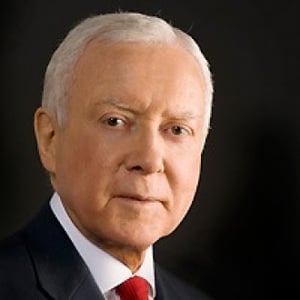
Former United States Senator, Utah
Over nearly four decades of public service, Senator Orrin Hatch established himself as a leading conservative voice in the United States Senate. As the upper chamber’s most senior Republican, he served as President Pro Tempore and as Chairman of the Senate Finance Committee. In this capacity, he fought to create jobs and strengthen the economy by repealing and replacing Obamacare, reforming the tax code, and opening up overseas markets to American exports.
As a long-time member and former Chairman of the Senate Judiciary Committee, Senator Hatch also fought to check judicial activism and protect our liberties. He was instrumental in confirming conservative judges to the federal bench and played an indispensable role in confirming Supreme Court Justices Antonin Scalia, Clarence Thomas, and Samuel Alito as well as scores of district and circuit court judges.
One of Senator Hatch’s particularly noteworthy achievements on the Judiciary Committee is the Religious Freedom Restoration Act of 1993—a bill he co-authored with the late Senator Ted Kennedy. This landmark legislation prohibits substantial government burdens on the free exercise of religion, allowing all Americans to live, work, and worship in accordance with their beliefs.
In addition to protecting our individual liberties, Senator Hatch was on the front lines of legislative battles to protect our free-market economy and system of limited government under the Constitution. His reputation as a statesman and his record of fiscal responsibility earned him the nickname “Mr. Balanced Budget” from President Reagan.
By virtually all measures, Senator Hatch was among the most effective and consequential legislators in history. Since he first came to Congress in 1977, no legislator alive today has authored more bills that have become law than Senator Hatch.
Of all Senator Hatch’s achievements, he is proudest of his family, and he credits the love of his wife and children as the key to his success. He and Elaine have been married for more than fifty years. Together, they are the parents of six children, twenty-three grandchildren, and sixteen great-grandchildren.
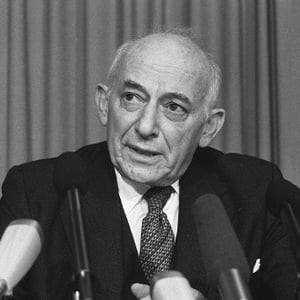
Former Dean, Yale Law School
Eugene Victor Debs Rostow (August 25, 1913 – November 25, 2002) was an American legal scholar and public servant. He was Dean of Yale Law School and served as Under Secretary of State for Political Affairs under President Lyndon B. Johnson. In the 1970s Rostow was a leader of the movement against détente with Russia and in 1981, President Ronald Reagan appointed him director of the Arms Control and Disarmament Agency.
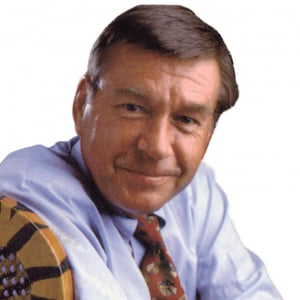
Professor Emeritus of the Practice of Law, Duke University School of Law; Professor Emeritus of Law, Washington College of Law, American University
Michael E. Tigar is Professor Emeritus of the Practice of Law at Duke University School of Law, and Professor Emeritus of Law at Washington College of Law, American University,Washington, D.C. He has held full-time positions at UCLA and The University of Texas. He has been a lecturer at dozens of law schools and bar associations in the United States, Europe, Africa, and Latin America, including service as Professeur Invité at the Faculty of Law of Université Paul-Cezanne, Aix-en-Provence. He is a 1966 graduate of Boalt Hall, University of California, Berkeley, where he was first in his class, Editor-in-Chief of the law review and Order of the Coif. He has authored or co-authored twelve books, three plays, and scores of articles and essays. He has argued seven cases in the U.S. Supreme Court, about 100 federal appeals, and has tried cases in all parts of the country in state and federal courts. His latest books are Trial Stories (2008) (edited with Angela Jordan Davis), and Thinking About Terrorism: The Threat to Civil Liberties in Times of National Emergency (2007). His clients have included Angela Davis, H. Rap Brown, John Connally, Kay Bailey Hutchison, the Washington Post, Mobil Oil, Fantasy Films, Terry Nichols, Allen Ginsberg, Leonard Peltier, the Charleston Five, Fernando Chavez and Lynne Stewart. He has been chair of the 60,000-member Section of Litigation of the American Bar Association, and chair of the board of directors of the Texas Resource Center for Capital Litigation. In his teaching, he has worked with law students in clinical programs where students are counsel or law clerks in significant human rights litigation. He has made several trips to South Africa, working with organizations of African lawyers engaged in the struggle to end apartheid, and, after the release of Nelson Mandela from prison, to lecture on human rights issues and to advise the African National Congress on issues in drafting a new constitution. He has been actively involved in efforts to bring to justice members of the Chilean junta, including former President Pinochet. Of Mr. Tigar's career, Justice William J. Brennan has written that his "tireless striving for justice stretches his arms towards perfection." In 1999, the California Attorneys for Criminal Justice held a ballot for "Lawyer of the Century." Mr. Tigar was third in the balloting, behind Clarence Darrow and Thurgood Marshall. In 2003, the Texas Civil Rights Project named its new building in Austin, Texas, (purchased with a gift from attorney Wayne Reaud) the "Michael Tigar Human Rights Center."
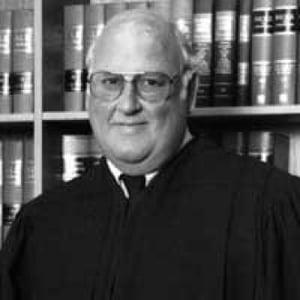
Judge, United States Court of Appeals, Second Circuit
Judge Winter was appointed United States Circuit Judge for the Second Circuit on December 10, 1981 and entered on duty January 5, 1982. He received a B.A. degree from Yale College in 1957 and an LL.B. degree from Yale Law School in 1960. He served as a law clerk to Judge Caleb M. Wright, Chief Judge, U.S. District Court, Delaware, 1960-61, and to Judge Thurgood Marshall, U.S. Court of Appeals, Second Circuit, 1961-62.
Judge Winter was a full-time member of the Yale Law School Faculty from 1962 until entering judicial service. At the time of his appointment, he was the William K. Townsend Professor of Law. He was also a Consultant to the Subcommittee of Separation of Powers, Committee on the Judiciary, U.S. Senate from 1968 to 1972, a Senior Fellow, The Brookings Institute, Washington, D.C. from 1968 to 1970, a John Simon Guggenheim Fellow from 1971 to 1972 and an Adjutant Scholar, American Enterprise Institute from 1972 to 1981.
He served from 1987 to 1992 as a member of the Judicial Conference Advisory Committee on Civil Rules. He served as Chair of the Judicial Conference Advisory Committee on the Rules of Evidence from 1992 to 1996. From July 1, 1997 to September 30, 2000, Judge Winter served as Chief Judge of the U.S. Court of Appeals for the Second Circuit. In April 1998, he was appointed to the Executive Committee of the U.S. Judicial Conference. From October 1999 to September 2000, he served as Chair of the Executive Committee. On October 1, 2000, he took Senior Judge status.
He served as Chair of the Committee to Review Circuit Council Conduct and Disability Orders from 2005 to 2008. He was a member of the United States Foreign Intelligence Surveillance Act Court of Review from 2003 to 2010.
Judge Winter has received the Connecticut Law Review Award, Honorary Doctors of Law from Brooklyn Law School and New York Law School, the Federal Bar Council's Learned Hand Award for Excellence in Federal Jurisprudence, and the Yale Law School's Association's Award of Merit. He is a Fellow of the American Academy of Arts and Sciences.
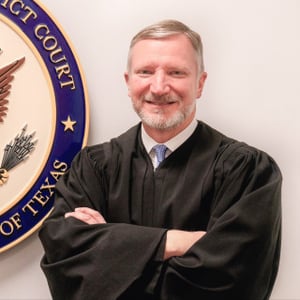
United States District Court, Southern District of Texas
Prior to joining TXSE, Jeff served as acting general counsel of Charles Schwab and led its Office of Legislative and Regulatory Affairs in Washington, D.C. for the past two decades, managing the company's response to public policy initiatives and advocating for policies that aid individual investors. He has over four decades of securities markets experience, starting his career as an options trader at the Philadelphia Stock Exchange, then founding his own trading firm, and later serving on the exchange's Board of Governors. He also served as senior counsel in the Division of Market Regulation at the U.S. Securities and Exchange Commission. Jeff's additional experience in the securities industry includes serving as vice president for regulation and general counsel at the Cincinnati Stock Exchange and as chairman of the Operating Committee of the National Market System Plan governing Nasdaq securities. Jeff holds degrees from the Wharton School of the University of Pennsylvania and Ohio Northern School of Law.
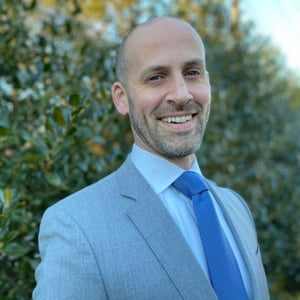
Partner, Lehotsky Keller LLP
The New York Times recognized Scott A. Keller as a “legal heavyweight,” who “is praised by opponents as a formidable advocate.”
Mr. Keller has argued 12 cases before the U.S. Supreme Court and 12 cases before the Texas Supreme Court. He is the only practicing lawyer to have argued at least 10 cases in both courts. Mr. Keller frequently represents parties in high stakes appeals, and he has argued many cases in federal courts of appeals throughout the nation. He has earned individual accolades from Lawdragon 500 Leading Litigators in America, Chambers, Legal 500, The American Lawyer, The National Law Journal, Law360, Super Lawyers, The Best Lawyers in America, and other publications.
Before founding Lehotsky Keller Cohn LLP, Mr. Keller headed Baker Botts LLP’s Supreme Court Practice. He also has significant experience at the highest levels in all three branches of government. Mr. Keller served as the Solicitor General of Texas, the State’s chief appellate litigator. He was U.S. Senator Ted Cruz’s chief counsel on the Senate Judiciary Committee. Mr. Keller was a law clerk for Justice Anthony Kennedy of the Supreme Court of the United States and Chief Judge Alex Kozinski of the U.S. Court of Appeals for the Ninth Circuit. He was also a Bristow Fellow in the U.S. Department of Justice’s Office of the Solicitor General.
Mr. Keller represents clients in cases where public communications strategy is crucial, and he has made numerous media appearances in major outlets such as The New York Times, The Wall Street Journal, BBC, Fox News, NPR, and Politico. As a sought after speaker and writer, Mr. Keller’s articles have appeared in the Stanford Law Review, Virginia Law Review, and Texas Law Review. He has also served as an adjunct professor of constitutional litigation, Supreme Court practice, and federal courts at the University of Texas School of Law.
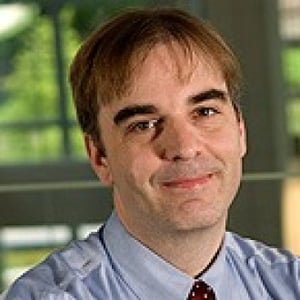
Alston & Bird Professor of Law, Duke University School of Law
Professor Young teaches constitutional law, federal courts, and foreign relations law. He is one of the nation's leading authorities on the constitutional law of federalism, having written extensively on the Rehnquist Court's "Federalist Revival" and the difficulties confronting courts as they seek to draw lines between national and state authority. He also is an active commentator on foreign relations law, where he focuses on the interaction between domestic and supranational courts and the application of international law by domestic courts. Professor Young also writes on constitutional interpretation and constitutional theory. He has been known to dabble in maritime law and comparative constitutional law.
A native of Abilene, Texas, Professor Young joined the Duke Law faculty in 2008, after serving as the Charles Alan Wright Chair in Federal Courts at the University of Texas at Austin School of Law, where he had taught since 1999. He graduated from Dartmouth College in 1990 and Harvard Law School in 1993. After law school, he served as a law clerk to Judge Michael Boudin of the 1st U.S. Circuit Court of Appeals (1993-94) and to Justice David Souter of the U.S. Supreme Court (1995-96). Professor Young practiced law at Cohan, Simpson, Cowlishaw, & Wulff in Dallas, Texas (1994-95) and at Covington & Burling in Washington, D.C. (1996-98), where he specialized in appellate litigation. He has also been a visiting professor at Harvard Law School (2004-05) and Villanova University School of Law (1998-99), as well as an adjunct professor at Georgetown University Law Center (1997).
Elected to the American Law Institute in 2006, Professor Young is an active participant in both public and private litigation in his areas of interest. He has been the principal author of amicus briefs on behalf of leading constitutional scholars in several recent Supreme Court cases, including Medellin v. Texas(concerning presidential power and the authority of the International Court of Justice over domestic courts) and Gonzales v. Raich (concerning federal power to regulate medical marijuana).
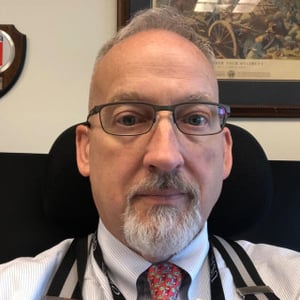
Appellate Counsel, Theodore Cooperstein PLLC
Theodore Cooperstein currently is an appellate attorney in the boutique law firm of Theodore Cooperstein PLLC, available for criminal and civil appeals in both state and federal courts. A former career prosecutor with twenty five years of service in the US Department of Justice, he was an Assistant United States Attorney for the Southern District of Florida and the Southern District of Mississippi, and has served as a Military Intelligence Officer in the Army Reserves from 1989 to 2011, retiring with the rank of Lieutenant Colonel. During the Trump Administration, he was appointed and served as the General Counsel of the U.S. Office of Personnel Management. Prior to joining the Southern District of Florida, Mr. Cooperstein served as a Special Assistant U.S. Attorney in the U.S. Attorney's Office for the District of Maryland. He previously had served as Counsel to the Deputy Attorney General at the Department of Justice, and as Assistant General Counsel in the FBI Office of the General Counsel.
A.B., Dartmouth College; J.D., Stanford University; LL.M., Comparative and International Law, Georgetown University Law Center; Masters of Strategic Studies, U.S. Army War College
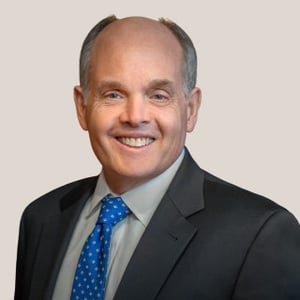
Shareholder, Kirton McConkie
R. Shawn Gunnarson is a shareholder with Kirton McConkie in Salt Lake City.
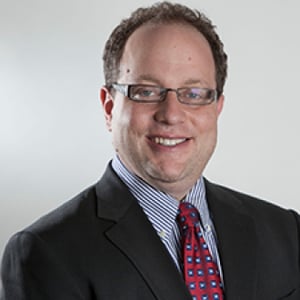
Director of Asian Studies and Resident Fellow, American Enterprise Institute
Dan Blumenthal is the director of Asian Studies at the American Enterprise Institute, where he focuses on East Asian security issues and Sino-American relations. Mr. Blumenthal has both served in and advised the U.S. government on China issues for over a decade. From 2001 to 2004, he served as senior director for China, Taiwan, and Mongolia at the Department of Defense. Additionally, he served as a commissioner on the congressionally-mandated U.S.-China Economic and Security Review Commission since 2006-2012, and held the position of vice chairman in 2007. He has also served on the Academic Advisory Board of the congressional U.S.-China Working Group. Mr. Blumenthal is the co-author of “An Awkward Embrace: The United States and China in the 21st Century” (AEI Press, November 2012).
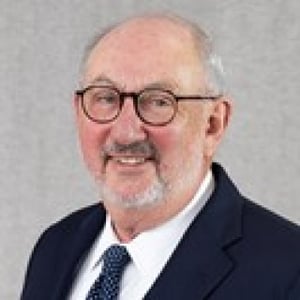
Partner, McGuireWoods LLP
George Terwilliger is co-head of the firm's white collar practice and leads the firm's Strategic Response and Crisis Management practice group. Following his fifteen years of public service in the US Department of Justice, where he began as a law clerk and concluded as Acting Attorney General, George has provided counsel in government and internal investigations, agency enforcement proceedings and in civil and criminal litigation. He has represented many of the nation's and the world's largest corporations, including major financial institutions, energy companies, public institutions as well as leading business and government officials, including members of the US Senate and House as well as cabinet officials. He has also represented lawyers and corporate legal departments in investigations. As a result of both his private sector work and government positions, George is called upon to provide counsel as well as commentary to government officials, Congress and private organizations on national security, homeland defense, terrorism, and other public policy and legal issues. George's work regularly involves providing counsel in the executive suites and boardrooms of major corporations.
In private practice for international law firms, George has represented national and international financial, energy, telecommunications, industrial and healthcare companies. He is a recognized expert in leading credible corporate internal investigations and his experience designing and executing both targeted and global legal compliance reviews has involved work in more than 60 countries around the globe. George is an expert on the Foreign Corrupt Practices Act and regularly provides counsel to companies addressing FCPA issues. No stranger to high stakes litigation and crisis events, George helped lead the Bush-Cheney legal team in the 2000 Florida vote recount, served as special outside counsel to a Senate committee investigating vote fraud allegations, served as counsel to an executive commission on gambling, and has represented many clients in politically charged election law and similar cases. He has guided corporations and individual through high stakes matters of intense public interest. He represented an incumbent president in First Amendment litigation concerning the right to have an inaugural prayer said in a public ceremony.
At the Department of Justice, George served for 10 years as a frontline federal prosecutor, handling hundreds of investigations, trials and appeals, including in white collar and national security cases. President Ronald Reagan appointed him as a U.S. attorney, and he next served as the deputy attorney general and as acting attorney general during the George H.W. Bush administration. As Deputy Attorney General, George ran the Justice Department's operations, overseeing all the nation's federal prosecutors, as well as the FBI and other law enforcement agencies. He also had leadership responsibility in several national and international crises, including a hostage-taking in a federal prison and the federal law enforcement response to domestic unrest in Los Angeles. In several instances, he personally handled negotiations of high-profile criminal and civil matters in the United States and abroad.
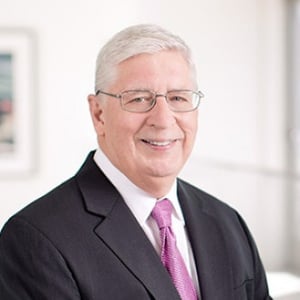
Partner, O'Melveny & Myers LLP
Walter Dellinger is an influential authority on appellate and Supreme Court decisions, lending his experience as a former Solicitor General and decades of legal knowledge to amicus briefs, a multitude of pro bono clients, and public and private companies involved in bet-the-company litigation. A frequent commentator for the Wall Street Journal, Slate, and major television networks, Walter holds the designation of the Douglas B. Maggs Emeritus Professor of Law at Duke University. He was named one of the 100 Most Influential Lawyers in America by the National Law Journal and recognized with a Lifetime Achievement Award from the American Lawyer.
Walter, who formerly served as O’Melveny’s Diversity and Inclusion Partner, helped convince the US Supreme Court that proponents of Proposition 8, California's ban on same-sex marriage, did not have standing to appeal a court order invalidating it. That ruling, Hollingsworth v. Perry, cleared the way for marriage equality in California and eventually nationwide.
Walter served as Assistant Attorney General and head of the Office of Legal Counsel (OLC) from 1993 to 1996. He was acting Solicitor General for the 1996-97 Term of the US Supreme Court. During that time, Walter argued nine cases before the Court, the most by any Solicitor General in more than 20 years. His arguments included cases dealing with physician-assisted suicide, the line item veto, the cable television act, the Brady Act, the Religious Freedom Restoration Act, and the constitutionality of remedial services for parochial school children.
Walter has served as Special Counsel to the Board of Directors of the New York Stock Exchange in connection with the NYSE’s transformation into a publicly held company and its acquisition of an electronic trading company.
After serving in early 1993 in the White House as an advisor to the President on constitutional issues, Walter was nominated by the President to be Assistant Attorney General. He was confirmed by the Senate in October 1993 and served for three years. As head of the OLC, Walter issued opinions on a wide variety of issues, including: the President's authority to deploy United States forces in Haiti and Bosnia; whether the trade agreements required treaty ratification; and a major review of separation of powers questions. He provided extensive legal advice on questions arising out of the shutdown of the federal government, on national debt ceiling issues, and on loan guarantees for Mexico.
Walter has published articles on constitutional issues for scholarly journals including the Harvard Law Review, the Yale Law Journal, and the Duke Law Journal, and has written for the New York Times, the Washington Post, Newsweek, the New Republic, and the London Times. He has been a visiting professor at the Catholic University of Belgium and has given lectures to university faculties in Florence, Siena, Nuremberg, Copenhagen, Leiden, Utrecht, Tilburg, Mexico, and Rio de Janeiro, and has delivered major lectures at Stanford, Yale, Harvard, Michigan, Berkeley, Penn, Duke, Chicago, and other US law schools. He has testified more than 25 times before committees of Congress.
In private practice, Walter’s arguments before the United States Supreme Court have included Exxon Shipping Co. v. Baker, Morgan Stanley Capital Group Inc. v. Public Utility District No. 1 of Snohomish County, Alabama v. North Carolina, Hosanna-Tabor v. EEOC, Heller v. District of Columbia, Jackson v. Birmingham School District, Brown v. Legal Foundation of Washington, US Airways v. Barnett, Utah v. Evans, Hunt v. Cromartie, and Hunt v. Easley. His most notable Court of Appeals and state supreme court arguments include Martha Stewart v. United States, Whiteside v. United States, and Exxon v. Alabama, LCI v. Phillips.
General Counsel, Department of the Army
Mr. Benedict S. Cohen was appointed by President Bush to serve as the General Counsel for the Department of the Army effective on August 4, 2006. Mr. Cohen has twenty years of experience in high-level positions across the federal government, with a principal focus on national security and foreign policy. Prior to his current position, he served as the Managing Executive for Policy and Counselor to Chairman Cox at the U.S. Securities and Exchange Commission, where he focused on legal and policy issues facing the agency and enhancing the Commission’s crisis-management and homeland-security capabilities. Prior to taking this position, he served as staff director of the Committee on Homeland Security of the U.S. House of Representatives, where he managed the transition from select committee to full standing committee status and the passage of authorization legislation for the Department of Homeland Security and of legislation reforming DHS’ homeland security grant program.
Mr. Cohen has also served as Deputy General Counsel (Environment & Installations) for the Defense Department, in which capacity he spearheaded DoD’s Readiness and Range Preservation Initiative, a multifaceted legislative, regulatory, and resource-management program to ensure sustainability of the military’s test and training capabilities and foster better environmental stewardship. He also provided legal support for DoD’s installation initiatives, and served as a principal spokesman for the Department on environmental and installations issues. He has also served in senior positions in the White House Counsel’s Office, the congressional leadership staff, and the Department of Justice, as well as serving in two law firms.
Mr. Cohen graduated from Yale magna cum laude in 1980 with a B.A. in history, and from the University of Chicago Law School in 1983, having served as an Associate Editor of the Law Review. He clerked for Judge Laurence H. Silberman of the U.S. Court of Appeals for the D.C. Circuit. He lives in American University Park in Washington, D.C. His wife is an attorney in private practice. He has two children, aged eight and ten.
Scholar in Residence, The Constitution Project
Louis Fisher is Scholar in Residence at the Constitution Project. Previously he worked for four decades at the Library of Congress as Senior Specialist in Separation of Powers (Congressional Research Service, from 1970 to 2006) and Specialist in Constitutional Law (the Law Library, from 2006 to 2010). During his service with CRS he was research director of the House Iran-Contra Committee in 1987, writing major sections of the final report. Fisher's specialties include constitutional law, war powers, budget policy, executive-legislative relations, and judicial-congressional relations.
After completing his doctoral work in political science at the New School for Social Research in 1967, he taught full-time at Queens College for three years. Later he taught part-time at Georgetown University, American University, Catholic University law school, Indiana University, Catholic University, the College of William and Mary law school, and Johns Hopkins University. Currently he is a Visiting Professor at the William and Mary law school.
His books include President and Congress (1972), Presidential Spending Power (1975), The Constitution Between Friends (1978), The Politics of Shared Power (4th ed. 1998), Constitutional Conflicts Between Congress and the President (6th ed. 2014), Constitutional Dialogues (1988),American Constitutional Law (with Katy J. Harriger, 10th ed. 2013), Presidential War Power (3rd ed. 2014), Political Dynamics of Constitutional Law (with Neal Devins, 5th ed. 2011), Congressional Abdication on War and Spending (2000), Religious Liberty in America: Political Safeguards (2002), Nazi Saboteurs on Trial: A Military Tribunal & American Law (2003; 2d ed. 2005), The Politics of Executive Privilege (2004), The Democratic Constitution (with Neal Devins, 2004), Military Tribunals and Presidential Power: American Revolution to the War on Terrorism (2005), In the Name of National Security: Unchecked Presidential Power and the Reynolds Case (2006), The Constitution and 9/11: Recurring Threats to America’s Freedoms (2008), The Supreme Court and Congress: Rival Interpretations (2009), On Appreciating Congress: The People’s Branch (2010), Defending Congress and the Constitution (2011), On the Supreme Court: Without Illusion and Idolatry(2013), and The Law of the Executive Branch: Presidential Power (2014). His textbook in constitutional law is available in two paperbacks:Constitutional Structures: Separation of Powers and Federalism and Constitutional Rights: Civil Rights and Civil Liberties. With Leonard W. Levy he edited the four-volume Encyclopedia of the American Presidency (1994).
He has twice won the Louis Brownlow Book Award (for Presidential Spending Power and Constitutional Dialogues). The encyclopedia he co-edited was awarded the Dartmouth Medal. In 1995 he received the Aaron B. Wildavsky Award “For Lifetime Scholarly Achievement in Public Budgeting” from the Association for Budgeting and Financial Management. In 2006 he received the Neustadt Book Award for Military Tribunals and Presidential Power. In 2011 he received the Walter Beach Pi Sigma Alpha Award from the National Capital Area Political Science Association for strengthening the relationship between political science and public service. In 2012 he received the Hubert H. Humphrey Award from the American Political Science Association in recognition of notable public service by a political scientist. The July 2013 issue of PS: Political Science & Politics includes a symposium on "Law and (Disciplinary) Order: A Dialogue about Louis Fisher, Constitutionalism, and Political Science.
Dr. Fisher has been invited to testify before Congress more than 50 times on such issues as war powers, state secrets privilege, NSA surveillance, executive spending discretion, presidential reorganization authority, Congress and the Constitution, the legislative veto, the item veto, the Gramm-Rudman deficit control act, executive privilege, committee subpoenas, executive lobbying, CIA whistleblowing, covert spending, the pocket veto, recess appointments, the budget process, the balanced budget amendment, biennial budgeting, and presidential impoundment powers.
He has been active with CEELI (Central and East European Law Initiative) of the American Bar Association, traveling to Bulgaria, Albania, and Hungary to assist constitution-writers; participating in CEELI conferences in Washington, D.C. with delegations from Bosnia-Herzegovina, Lithuania, Romania, and Russia; serving on CEELI "working groups" on Armenia and Belarus; and assisted in drafting constitutional amendments for the Kyrgyz Republic. As part of CRS delegations he traveled to Russia and Ukraine to assist on constitutional questions. For the International Bar Association he helped analyze the draft constitutions for Swaziland and Zimbabwe.
He is the author of more than 500 articles in law reviews, political science journals, encyclopedias, books, magazines, and newspapers. He has been invited to speak in Albania, Australia, Belgium, Bulgaria, Canada, China, the Czech Republic, Denmark, England, France, Germany, Greece, Israel, Japan, Macedonia, Malaysia, Mexico, the Netherlands, Oman, the Philippines, Poland, Romania, Russia, Slovenia, South Korea, Sweden, Taiwan, Ukraine, and the United Arab Emirates. The topics include a range of constitutional, political, and institutional issues.
George P. Shultz Senior Fellow in Foreign Policy and National Security Affairs, Emeritus, Hoover Institution
Abraham D. Sofaer was appointed the first George P. Shultz Distinguished Scholar and Senior Fellow at the Hoover Institution in 1994. Named in honor of former US secretary of state George P. Shultz, the appointment is awarded to a senior scholar whose broad vision, knowledge, and skill will be brought to bear on the problems presented by a radically transformed global environment.
Sofaer's work focuses on the power over war within the US government and on issues related to international law, terrorism, diplomacy, and national security. His most recent books are Taking on Iran: Strength, Diplomacy, and the Iranian Threat(Hoover Institution Press, 2013) and The Best Defense?: Legitimacy and Preventive Force (Hoover Institution Press, 2010).
From 1985 to 1990, he served as a legal adviser to the US Department of State, where he resolved several interstate matters, including the dispute between Egypt and Israel over Taba, the claim against Iraq for its attack on the USS Stark, and the claims against Chile for the assassination of Orlando Letelier. He received the Distinguished Service Award in 1989, the highest state department award given to a non–civil servant.
From 1979 to 1985, Sofaer served as a US district judge in the Southern District of New York. From 1969 to 1979, he was a professor of law at Columbia University School of Law and wrote War, Foreign Affairs, and Constitutional Power: The Origins.From 1967 to 1969, he was an assistant US attorney in the Southern District of New York, after clerking for Judge J. Skelly Wright on the US Court of Appeals in Washington, DC, and the Honorable William J. Brennan Jr. on the US Supreme Court. He practiced law at Hughes, Hubbard and Reed from 1990 to 1994.
A veteran of the US Air Force, Sofaer received an LLB degree from New York University School of Law in 1965, where he was editor in chief of the law review. He holds a BA in history from Yeshiva College (1962). Sofaer is a founding trustee of the National Museum of Jazz in Harlem and a member of the board of the Koret Foundation.
His research papers are available at the Hoover Institution Archives.

Emanuel S. Heller Professor of Law, University of California at Berkeley; Thomas Smith Senior Research Fellow, The Civitas Institute, University of Texas at Austin
John Yoo is the Emanuel Heller Professor of Law at the University of California at Berkeley. He is also the Thomas Smith Senior Research Fellow, Civitas Institute, at the University of Texas at Austin. He is also a Nonresident Senior Fellow at the American Enterprise Institute.
His most recent book, The Politically Incorrect Guide to the Supreme Court, co-authored with Robert Delahunty, was published in 2023. Professor Yoo’s other books include Defender-in-Chief: Trump’s Fight for Presidential Power; Striking Power: How Cyber, Robots, and Space Weapons Change the Rules for War; Point of Attack: Preventive War, International Law, and Global Welfare; and Crisis and Command: A History of Executive Power from George Washington to George Bush.
He is a co-author of volumes 1 and 2 of R. Rossum, G. Tarr, V. Munoz & J. Yoo American Constitution Law (Routledge, 2026), and a co-editor of the eight-volume series on the 250th anniversary of the American Revolution, We Hold These Truths, with Yuval Levin and Adam White of the American Enterprise Institute.
Professor Yoo has published more than 100 articles in academic journals on subjects including national security, constitutional law, international law, and the Supreme Court. He also regularly contributes to the editorial pages of the Wall Street Journal, New York Times, Washington Post, Los Angeles Times, and National Review, among others.
Professor Yoo has served in all three branches of government. He was an official in the U.S. Department of Justice, where he worked on national security and terrorism issues after the 9/11 attacks. He served as general counsel of the U.S. Senate Judiciary Committee. He has been a law clerk for Supreme Court Justice Clarence Thomas and federal appeals Judge Laurence Silberman. He has been a visiting professor at the University of Texas at Austin’s School of Civic Leadership, Seoul National University, the Interdisciplinary Center Herzliya, Keio University, Trento University, the University of Chicago, and the Free University of Amsterdam.
Professor Yoo supervises the Public Law and Policy Program and the California Constitution Center. He also serves on the boards of Founding Forward, the Washington Legal Foundation, the Pacific Legal Foundation, the Ulysses Grant Institute, the Federalist Society’s Separation of Powers and Federalism Division, the Universidad Cientifica del Sur Law School, and the Asia-Pacific Law Institute at Seoul National University. He is a winner of the Federalist Society’s Paul Bator award and the Heritage Foundation’s Edwin Meese III Originalism Lectureship.
Professor Yoo graduated from Yale Law School and summa cum laude from Harvard College.

Retired Partner, Sullivan & Cromwell LLP
Upon his resignation as the Legal Adviser of the U.S. Department of State in January 1993, Mr. Williamson rejoined Sullivan & Cromwell's Washington, D.C. office. He originally joined the Firm in 1964 after graduating from New York University School of Law, where he was an editor of the Law Review. He became a partner of the Firm in 1971, moved to its London office in 1976, returned to its New York office in 1979, moved to its Washington, D.C. office in 1988 and became Of Counsel in 2007. In 2018, he retired from the firm.
At Sullivan & Cromwell, Mr. Williamson engaged in a broad and wide-ranging domestic and international financing and transactions practice, as well as advice with respect to corporate governance issues, the United States’ economic sanctions laws, the ethics rules applicable to government officials and the immunities of foreign sovereigns and international organizations.
Mr. Williamson has been an active participant on panels and other forums involving public international law and national security issues, such as the domestic and international bases for the use of force, the role of the United States with respect to the International Criminal Court, the law of the sea and the application of international legal principles in the war against terrorism.
Mr. Williamson is a member of the Council on Foreign Relations and a former member of the Executive Council of the American Society of International Law, the Executive Committees of the Business and Advisory Committee (BIAC) to the OECD and the U.S. Council for International Business, the United States Advisory Board of NTT DoCoMo, Inc. and the Board of Directors of Triton Oil & Gas Limited.
Mr. Williamson has served on the Boards of Regents and Trustees of the University of the South and as chair of the Board of Regents. He is currently a member of the Board of Directors of the American Council of Trustees and Alumni, a higher education watchdog.

Fireside Chat: “Why Separate Powers?” A Conceptual Introduction
Raymond Kethledge, Cass Sunstein
Professor Cass Sunstein and Judge Raymond Kethledge will open the symposium with a fireside chat...
Panel III: The Treaty Power [Archive Collection]
Harold Hongju Koh, John E. Nowak, Grover Joseph Rees, Laurence H. Silberman, Abraham D. Sofaer
On November 6-7, 1987, The Federalist Society held a symposium at the Grand Hyatt Hotel...
Panel IV: What the Constitution Means by Executive Power [Archive Collection]
Charles J. Cooper, Orrin Hatch, Eugene V. Rostow, Michael Tigar, Ralph K. Winter
On November 6-7, 1987, The Federalist Society held a symposium at the Grand Hyatt Hotel...
Panel Three: Federalism as a Check on Executive Authority
Jeffrey Vincent Brown, Caitlin Halligan, Scott Allen Keller, Ernest Young
EPA regulatory power, voting rights and redistricting, federal directives regarding transgender persons, the constitutionality of...
The War on Terrorism: Law Enforcement or National Security?
Theodore Cooperstein, R. Shawn Gunnarson, Daniel Blumenthal, Robert Parker, George J. Terwilliger
George Terwilliger*Theodore Cooperstein**Shawn Gunnarson***Daniel Blumenthal****Robert Parker***** The horrific events of September 11th were immediately labeled...
Separation of Powers and Foreign Policy
Walter E. Dellinger, Benedict S. Cohen, Louis Fisher, Abraham D. Sofaer, John C. Yoo, Edwin D. Williamson
Following are excerpts from a panel discussion entitled "Separation of Powers and Foreign Policy" which...
The Coming War Over Encryption Technology
Eric Vance
Encryption technology is at the center of a bitter dispute that promises to hold serious...