
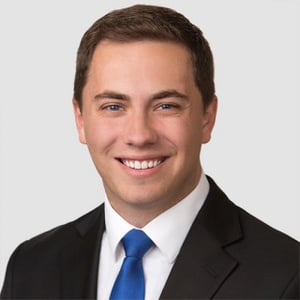
Assistant General Counsel, Office of General Counsel of the United States House of Representatives
Ken Daines serves in the Office of General Counsel of the U.S. House of Representatives, representing the House, Committees, and Members in the U.S. Supreme Court, courts of appeal, and federal district courts on matters related to their official duties. Previously, he served as an enforcement attorney at the Federal Election Commission’s Office of General Counsel. His experience also includes working at both a boutique and a large law firm where his practice focused on trial and appellate litigation in federal and state courts, including matters presenting constitutional law, FOIA, redistricting, and election-related issues, as well as drafting amicus briefs for the Supreme Court and other federal courts.
Ken clerked for Judge Ryan D. Nelson of the U.S. Court of Appeals for the Ninth Circuit and for Judge Dee V. Benson of the U.S. District Court for the District of Utah. He earned his J.D. from Stanford Law School and a B.A. in International Relations and Chinese, magna cum laude, from Brigham Young University. While in law school, he worked as a student attorney for the Religious Liberty Clinic. Ken is a member of the District of Columbia and Maryland Bars.
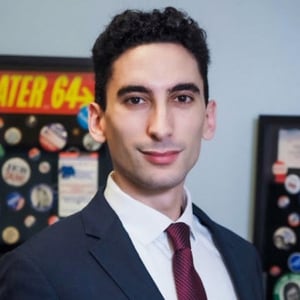
Andrew Pardue is an associate at Holtzman Vogel Baran Torchinsky Josefiak PLLC specializing in election and campaign finance law.
Prior to joining the firm, Andrew served as a law clerk for the D.C. Criminal Code Reform Commission and the Office of the Virginia Attorney General’s Civil Litigation Division, Consumer Protection Section. He also interned in the chambers of Magistrate Judge Lawrence Leonard of the United States District Court for the Eastern District of Virginia.
Andrew graduated from Harvard University with a B.A. in Government and a secondary concentration in Economics. He earned his J.D. from William & Mary Law School. While in law school, he served as Senior Notes Editor on the William & Mary Law Review and authored a published student note on congressional investigations of the executive branch. He also served as a graduate research fellow with the Center for the Study of Law and Markets. Andrew is a member of the Virginia Bar, the Federalist Society, and the Republican National Lawyers Association.
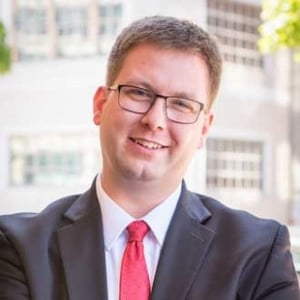
Senior Associate, Holtzman Vogel Josefiak Torchinsky PLLC
Drew Watkins is a senior associate with Holtzman Vogel Josefiak Torchinsky PLLC, providing counsel in the areas of campaign finance and election law, lobbying and ethics compliance, and tax-exempt organizations.
Prior to joining the firm, Drew served as a law clerk to the Honorable Joseph R. Goeke, Senior Judge of the United States Tax Court in Washington, D.C., and worked in the Office of General Counsel for the Governor of Kentucky, Matthew G. Bevin. While in law school, Drew served as a law clerk for the Kentucky Executive Branch Ethics Commission and interned for Senate Majority Leader Mitch McConnell in his office in Washington, D.C.
Drew graduated from the University of Louisville with a B.S. in Justice Administration. He earned his Juris Doctor, magna cum laude, from the University of Kentucky College of Law and was a member of the Order of the Coif. During law school, he served as a senior staff editor on the Kentucky Law Journal and authored a published student note on the Justice Against Sponsors of Terrorism Act. He is a member of the Kentucky, D.C. and Virginia bars and the Federalist Society.
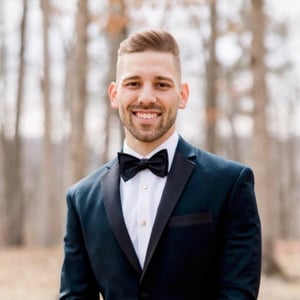
Associate Counsel, Lawyers Democracy Fund
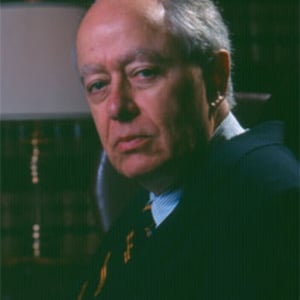
The William J. and Dorothy K. O'Neill Chair in Law Emeritus, Notre Dame Law School
Professor G. Robert Blakey, the nation's foremost authority on the Racketeer Influenced and Corrupt Organization Act (RICO), has served on the Notre Dame Law School faculty for more than 30 years. He teaches in the areas of criminal law and procedure, federal criminal law and procedure, terrorism, and jurisprudence. Blakey's extensive legislative drafting experience resulted in the passage of the Crime Control Act of 1973, the Omnibus Crime Control Act of 1970 and the Organized Crime Control Act of 1970, Title IX of which is known as RICO. He has been personally involved in drafting and implementing RICO-type legislation in 22 of the more than 30 states that have enacted racketeering laws. He frequently argues in or consults on cases involving RICO statutes at both the federal and state levels, including several cases before the United States Supreme Court. Blakey has considerable expertise in federal and state wiretapping statutes as well. He helped draft and secure passage of Title III on wiretapping of the federal 1968 Crime Control Act, and has been personally involved in drafting and implementing wiretapping legislation in 39 of the 43 states that have enacted such laws. Blakey has extensively investigated the assassinations of President John F. Kennedy and Dr. Martin Luther King Jr. He served as chief counsel and staff director to the U.S. House Select Committee on Assassinations from 1977 to 1979, and helped to draft the President John F. Kennedy Assassination Records Collection Act of 1992. Blakey gave remarks at the 2012 Law School Hooding/Diploma Commencement Ceremony on May 19, 2012. Blakey received Emeritus status in December 2012.
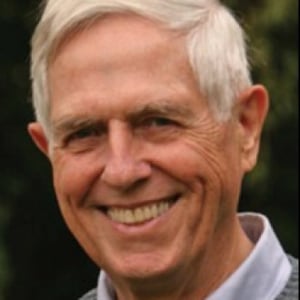
U.S. Court of Appeals for the D.C. Circuit (ret.) and former U.S. Senator
James L. Buckley was born in New York City in 1923, grew up in rural Connecticut, and received his B.A. degree from Yale. Following service as a naval officer in World War II, he returned to New Haven to secure his law degree. After several years in private practice, he joined a group of small companies engaged in oil exploration abroad. He was elected to the United States Senate in 1970 as the candidate of New York's Conservative Party. He failed of re-election; but he has since served as an under secretary of state in the Reagan administration, as president of Radio Free Europe/Radio Liberty in Munich, Germany, and, most recently, as a judge on the U.S. Court of Appeals for the District of Columbia Circuit. He retired in 2000 and now resides in Bethesda, Maryland.
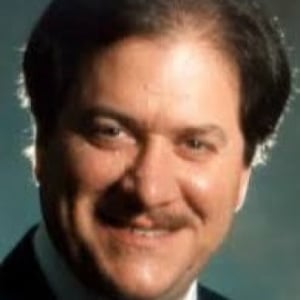
Founding Partner, diGenova & Toensing LLP
Joseph E. diGenova, founding partner of the Washington, D.C. law firm of diGenova & Toensing, LLP represents individuals, corporations and other entities before the Federal courts, Congress, and U.S. cabinet departments and agencies on criminal, civil, administrative and investigative matters. In December 1992, he was appointed Independent Counsel in the Clinton Passport File Search matter. He was appointed Chairman of the Grievance Committee of the D.C. District Court in 1995 by the judges of that court. In 1997, he was named Special Counsel by the U.S. House of Representatives to probe the International Brotherhood of Teamsters. As a result of that assignment, he was appointed by the U.S. District Court, Southern District of New York, to sit on the Independent Review Board, which oversees the Teamsters pursuant to a 1989 Consent Decree. He is on that Board with former FBI and CIA Director William Webster and former U.S. Attorney General Benjamin Civiletti. In 2007, Mr. diGenova was retained by the New York State Senate to investigate then-Gov. Eliot Spitzer in the Troopergate matter.
His practice emphasizes representation to resolve disputes with various branches of the Federal government through negotiation, litigation, and/or legislation. He does white collar criminal defense work for individuals (such as the former CEO of BCCI) and corporations, conducting internal investigations as well. He represents individuals and organizations in Congressional investigations.
For four years, diGenova was United States Attorney, District of Columbia, which is the largest such office, having more than 400 attorneys. He supervised complex Federal criminal and civil matters including international drug smuggling, public corruption, espionage, insider trading, tax fraud, extradition, fraud, RICO, export control and international terrorism. Many of these prosecutions involved negotiations with foreign governments. He conducted a wide-ranging probe of corruption in the D.C. government, which led to the conviction of two deputy mayors. He led the prosecution of Israeli spy Jonathan Pollard. He was the Principal Assistant U.S. Attorney during the prosecution of attempted Presidential assassin, John W. Hinckley.
DiGenova has extensive experience on Capitol Hill. He was Chief Counsel and Staff Director of the Senate Rules Committee and Counsel to the Senate Judiciary, Governmental Affairs and Select Intelligence Committees. He has conducted confirmation, investigative, legislative and oversight hearings, drafted legislation and testified before both Houses of Congress. He also served as Administrative Assistant and Legislative Director to U.S. Senator Charles Mathias.
Mr. diGenova has published articles on criminal law, terrorism, and Congressional oversight and has spoken on those and other issues to various organizations throughout the United States. As part of his advocacy approach, he has appeared on Court TV, Lehrer News Hour, Meet the Press, Face the Nation, Nightline, 60 Minutes, Crossfire, This Week With David Brinkley, John McLaughlin’s One On One, Today Show, Good Morning America, and other national television programs. He received his undergraduate degree from the University of Cincinnati and his law degree from Georgetown University.
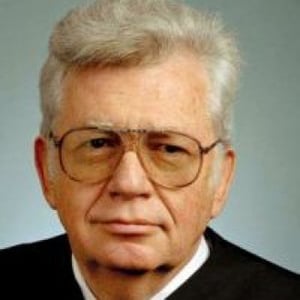
Judge, U.S. Court of Appeals, District of Columbia Circuit
Judge Sentelle was appointed United States Circuit Judge in October 1987, served as Chief Judge from February 11, 2008 until February 11, 2013, and took senior status on February 12, 2013. He is a 1968 graduate of the University of North Carolina Law School. Following law school, he practiced with the firm of Uzzell & DuMont until he became an Assistant U.S. Attorney in Charlotte, N.C. in 1970. From 1974 to 1977, he served as a North Carolina State District Judge but left the bench in 1977 to become a partner with the firm of Tucker, Hicks, Sentelle, Moon & Hodge. In 1985, Judge Sentelle joined the U.S. District Court, Western District of North Carolina, in Asheville, where he served until his appointment to the D.C. Circuit. Judge Sentelle was the Presiding Judge of the Special Division for the Purpose of Appointing Independent Counsels (1992-2006). He also served as the Chair of the U.S. Judicial Conference's Executive Committee (2010-2013). Judge Sentelle served for over 20 years as President of the Edward Bennett Williams Inn of the American Inns of Court.
Professor of Law, Emeritus, Marshall-Wythe Law School at the College of William and Mary
William W. Van Alstyne, one of the nation's foremost constitutional law scholars, and William & Mary’s Lee Professor of Law from 2004 to 2012, died on January 29, 2019, in Southern California.
Professor Van Alstyne was appointed Lee Professor of Law at the Marshall-Wythe Law School at the College of William and Mary in 2004. He is a graduate of the University of Southern California (B.A. in philosophy, magna cum laude) and Stanford University Law School (J.D., Articles and Book Review Editor of The Stanford Law Review). Following his admission to the California Bar and brief service as Deputy Attorney General of California, he joined the Civil Rights Division of the U. S. Department of Justice handling voting rights cases in the South. After active duty with the U. S. Air Force, he was appointed to the law faculty of the Ohio State University, advancing to full professor in three years. Appointed to the Duke law faculty shortly thereafter, he was named to the William R. & Thomas S. Perkins Chair of Law in 1974.
Professor Van Alstyne’s professional writings have appeared during four decades in the principal law journals in the United States, with frequent republication in foreign journals. They address virtually every major subject in the field of constitutional law. His work has been cited in a large number of judicial opinions including those of the Supreme Court. The Journal of Legal Studies for January, 2000, named Professor Van Alstyne in the top forty most frequently cited legal scholars in the United States of the preceding half-century.
Professor Van Alstyne has also taught and given professional papers internationally, in Germany, Austria, and Denmark, in Chile, the former Soviet Union, China, Japan, Canada, and Australia. He has been a visiting faculty member on the law faculties of the University of Chicago, Stanford, California (Berkeley and UCLA), Pennsylvania, Michigan, and Illinois, a Fulbright Lecturer in Chile, a Senior Fellow at the Yale Law School, and a faculty fellow at the Hague International Court of Justice. He has appeared as counsel and as amicus curiae in constitutional litigation in the federal courts, including the Supreme Court. He has also appeared in numerous hearings before Senate and House Committees, on legislation affecting the separation of powers, war powers, constitutional amendments, impeachments, legislation affecting civil rights and civil liberties, and nominations to the Supreme Court.
In 1987, Professor Van Alstyne was selected in a poll of federal judges, lawyers, and academics by the New York Law Journal as one of three academics among "the ten most qualified" persons in the country for appointment to the Supreme Court, a distinction repeated in a similar poll by The American Lawyer, in 1991. Past National President of the American Association of University Professors, and former member of the National Board of Directors of the A.C.L.U., he was elected into the American Academy of Arts and Sciences in 1994.

Vice President, Edwin Meese III Institute for the Rule of Law, Advancing American Freedom
John G. Malcolm oversees Advancing American Freedom’s work to increase understanding of the Constitution and the rule of law as Vice President of the organization’s Edwin Meese III Institute for the Rule of Law. Malcolm brings to the challenge a wealth of legal expertise and experience in both the public and private sectors.
Prior to joining Advancing American Freedom in 2025, Malcolm was the Vice President of the Institute for Constitutional Government and the Director of the Meese Center for Legal and Judicial Studies at the Heritage Foundation. Prior to joining Heritage in 2012, Malcolm was general counsel at the U.S. Commission on International Religious Freedom, as well as a distinguished practitioner in residence at Pepperdine Law School. From 2004 to 2009, Malcolm was executive vice president and director of worldwide anti-piracy operations for the Motion Picture Association.
Malcolm served as a deputy assistant attorney general in the Department of Justice’s Criminal Division from 2001 to 2004, where he oversaw sections on computer crime and intellectual property, domestic security, child exploitation and obscenity, and special investigations. Immediately prior to that, he was a founding partner in the Atlanta law firm of Malcolm & Schroeder, LLP.
From 1990 to 1997, Malcolm was an assistant U.S. attorney in Atlanta, assigned to the fraud and public corruption section, and also an associate independent counsel, investigating fraud and abuse in the Department of Housing and Urban Development. He was honored with the Director’s Award for Superior Performance for his work in connection with the successful prosecution of Walter Leroy Moody Jr., who assassinated an 11th Circuit judge and the head of the Savannah chapter of the NAACP.
A graduate of Harvard Law School and Columbia College, Malcolm began his career as a law clerk to a federal district court judge and a federal appellate court judge, and as an associate at the Atlanta-based law firm of Sutherland, Asbill & Brennan (new Eversheds Sutherland).
Malcolm, who resides in Washington, D.C., serves on the Board of Trustees of the Washington National Opera and is a Senate-confirmed member of the Board of Directors of the Legal Services Corporation, the largest funder of civil legal aid in the United States.

Emanuel S. Heller Professor of Law, University of California at Berkeley; Thomas Smith Senior Research Fellow, The Civitas Institute, University of Texas at Austin
John Yoo is the Emanuel Heller Professor of Law at the University of California at Berkeley. He is also the Thomas Smith Senior Research Fellow, Civitas Institute, at the University of Texas at Austin. He is also a Nonresident Senior Fellow at the American Enterprise Institute.
His most recent book, The Politically Incorrect Guide to the Supreme Court, co-authored with Robert Delahunty, was published in 2023. Professor Yoo’s other books include Defender-in-Chief: Trump’s Fight for Presidential Power; Striking Power: How Cyber, Robots, and Space Weapons Change the Rules for War; Point of Attack: Preventive War, International Law, and Global Welfare; and Crisis and Command: A History of Executive Power from George Washington to George Bush.
He is a co-author of volumes 1 and 2 of R. Rossum, G. Tarr, V. Munoz & J. Yoo American Constitution Law (Routledge, 2026), and a co-editor of the eight-volume series on the 250th anniversary of the American Revolution, We Hold These Truths, with Yuval Levin and Adam White of the American Enterprise Institute.
Professor Yoo has published more than 100 articles in academic journals on subjects including national security, constitutional law, international law, and the Supreme Court. He also regularly contributes to the editorial pages of the Wall Street Journal, New York Times, Washington Post, Los Angeles Times, and National Review, among others.
Professor Yoo has served in all three branches of government. He was an official in the U.S. Department of Justice, where he worked on national security and terrorism issues after the 9/11 attacks. He served as general counsel of the U.S. Senate Judiciary Committee. He has been a law clerk for Supreme Court Justice Clarence Thomas and federal appeals Judge Laurence Silberman. He has been a visiting professor at the University of Texas at Austin’s School of Civic Leadership, Seoul National University, the Interdisciplinary Center Herzliya, Keio University, Trento University, the University of Chicago, and the Free University of Amsterdam.
Professor Yoo supervises the Public Law and Policy Program and the California Constitution Center. He also serves on the boards of Founding Forward, the Washington Legal Foundation, the Pacific Legal Foundation, the Ulysses Grant Institute, the Federalist Society’s Separation of Powers and Federalism Division, the Universidad Cientifica del Sur Law School, and the Asia-Pacific Law Institute at Seoul National University. He is a winner of the Federalist Society’s Paul Bator award and the Heritage Foundation’s Edwin Meese III Originalism Lectureship.
Professor Yoo graduated from Yale Law School and summa cum laude from Harvard College.
Oppenheim Professor Emeritus of Antitrust and Trade Regulation Law, George Washington University Law School
Thomas D. Morgan is Oppenheim Professor of Antitrust and Trade Regulation Law Emeritus at George Washington University. He was Dean of the Emory University School of Law and on the faculties of the University of Illinois and Brigham Young University. He is co-author of Problems and Materials on Professional Responsibility (14th Ed. 2022), with Professors Mitt Regan and John Dzienkowski. Professor Morgan served as an Associate Reporter for both the American Law Institute’s Restatement of the Law (Third): The Law Governing Lawyers and the American Bar Association’s Ethics 2000 Commission. He is an Executive Committee member of the Federalist Society’s Professional Responsibility and Legal Education Practice Group and a member of the ABA Business Law Section’s Professional Responsibility committee. His book, “The Vanishing American Lawyer” (2010), was published by Oxford University Press.

Senior Fellow in Constitutional Jurisprudence, Independence Institute
Professor Robert G. Natelson is a constitutional scholar and author.
Rob’s constitutional scholarship has been cited repeatedly by justices and parties at the U.S. Supreme Court—as well as by federal appeals courts, and at least 18 state supreme courts.
Rob’s research into the Constitution’s original meaning has carried him to libraries throughout the United States and in Britain, including four months at Oxford University. His books and articles span many different parts of the Constitution, including groundbreaking studies of the Necessary and Proper Clause, the Indian Commerce Clause, federalism, Founding-Era interpretation, regulation of elections, and the amendment process of Article V. He created the first-ever online bibliography for 18th century materials used in constitutional research. He is a contributing author to the Encyclopedia of the Supreme Court of the United States (on Magna Carta). He contributed eight essays to the third edition of the Heritage Guide to the Constitution: five on the amendment procedure and one each on the Guarantee Clause, the Postal Clause, and the Recess Appointments Clause.
U.S. Supreme Court justices have relied explicitly on Rob’s research in 41 citations in 13 separate cases.
Raoul Berger Professor of Legal History at Northwestern University School of Law
Stephen Presser is a leading American legal historian and expert on shareholder liability for corporate debts. He is frequently an invited witness before committees of the U.S. Senate and House of Representatives on issues of constitutional law. He holds a joint appointment with the J. L. Kellogg Graduate School of Management and also teaches in Northwestern's history department.

Founding Partner, Cooper & Kirk PLLC
Charles J. Cooper is a founding member and the chairman of Cooper & Kirk, PLLC, “one of the Nation’s leading litigation boutiques” (Above The Law 2017). The National Law Journal recently wrote that Mr. Cooper’s “brilliant legal career has so far spanned five decades and thrust Cooper into the spotlight in some of the most historic moments of the country’s modern history.” He has argued nine cases before the United States Supreme Court and scores of appeals before each of the 13 federal courts of appeals and several state supreme courts. He has been lead trial counsel in numerous complex, weeks-long trials in federal courts throughout the country. Named by the National Law Journal as one of the 10 best litigators in Washington D.C., Mr. Cooper’s work has been reported in numerous press accounts, and he has been called a “powerhouse attorney” (Fortune 2015), “a hard-nosed litigator” (Washington Post 2017), and “one of the country’s most in-demand civil litigators and a Washington legal institution unto himself” (The American Spectator 2014).
After graduating from the University of Alabama School of Law in 1977, where he ranked first in his class and served as Editor-in-Chief of the Alabama Law Review, Mr. Cooper began his career as a law clerk to Judge Paul Roney on the Fifth Circuit Court of Appeals and to Justice William H. Rehnquist in 1978–79. He then practiced law in Atlanta for two years before joining the Civil Rights Division of the U.S. Department of Justice, where he served as the Deputy Assistant Attorney General in charge of, among other things, appellate matters. In 1985 President Reagan appointed him to the position of Assistant Attorney General for the Office of Legal Counsel, which is the office responsible for providing legal opinions and advice to the White House, the Attorney General, and Executive Branch departments and agencies on issues covering the full spectrum of federal constitutional, statutory, and regulatory law.
In 1988 he returned to private practice as a litigation partner in the Washington, D.C. office of McGuireWoods. From 1990 until the founding of Cooper & Kirk in 1996, he was a partner at Shaw Pittman (now Pillsbury Winthrop Shaw Pittman), where he headed the firm’s Constitutional and Government Litigation Group.
Mr. Cooper has represented a wide range of public and private clients in highly complex constitutional, civil rights, antitrust, healthcare, banking, intellectual property, elections, campaign finance, administrative, commercial, and government contract cases. He has led trial teams in cases that have won judgments and settlements valued in the billions of dollars and that have established ground-breaking constitutional precedents.
Much of Mr. Cooper’s practice has involved representing high-profile clients in nationally prominent matters, including: the State of Florida in a First Amendment suit brought by the Disney Company concerning its autonomous regulatory authority over its Disney World property; the Commonwealth of Virginia in a suit seeking to enjoin the removal of noncitizens from its voter rolls; 38 members of the Duke Lacrosse team falsely accused of rape by officials of Duke University and the City of Durham; Harper Lee in a copyright dispute with the heirs of Gregory Peck; high-ranking former government officials such as former Attorneys General John Ashcroft, Jeff Sessions, and William Barr, and Ambassador John Bolton; several Governors and United States Senators; over 100 Members of Congress; and many state, territorial, and local government bodies and officials. He has also represented and advised government officials and public figures in connection with sensitive private issues that needed to be, and were, resolved discreetly without becoming matters of public record.
In 1998 Chief Justice Rehnquist appointed Mr. Cooper to the Standing Committee on Rules of Practice and Procedure of the Judicial Conference of the United States, where he served for three terms. He also served as a Public Member, appointed by President George H.W. Bush, of the National Commission on Judicial Discipline and Removal. He is a member of numerous professional associations, including the American Law Institute (since 1993) and the American Academy of Appellate Lawyers (since 1996). He is also an active member of the Federalist Society and the Republican National Lawyers Association, which in 2010 named him Republican Lawyer of the Year and in 2016 honored him with its Edwin Meese III Award.
Mr. Cooper has published scores of articles and spoken extensively on constitutional and legal policy topics. He has appeared before congressional committees on 26 occasions, testifying as an expert on a wide variety of legal issues, including the Chevron doctrine of judicial deference to administrative agencies, the diversity of citizenship jurisdiction of federal courts, statehood bills for Puerto Rico and the District of Columbia, and the impeachment of President Clinton.

Judge, United States Court of Appeals, Fifth Circuit
Edith Jones graduated from Alamo Heights High School, where she was a National Merit Scholar. In 1971, she received her B.A. in Economics from Cornell University, graduating with honors. In 1974, she was awarded her J.D. at the University of Texas Law School, where she was a law review editor and received the Order of the Coif.
Judge Jones was the first female partner at Andrews, Kurth, Campbell & Jones (now Hunton Andrews Kurth) where she practiced various types of litigation and bankruptcy cases. Judge Jones went on the federal bench on June 1, 1985.
Judge Jones served as a former member of the National Bankruptcy Review Commission, and as a member of the Judicial Conference Commission on Bankruptcy Rules. Judge Jones served on the White House Fellows Commission. Judge Jones served on the board of the Sam Houston Area Council of the Boy Scouts of America. She has been a member of the Garland Walker Inn of Court in Houston for more than 20 years and its President for at least ten years. Judge Jones is also on the Board of the Calvin Coolidge Presidential Foundation.

Executive Vice President, The Federalist Society
Dean Reuter is Executive Vice President at the Federalist Society for Law and Public Policy Studies. He has served in two federal government agency Offices of the Inspector General, as Counsel to the Inspector General and Deputy Inspector General, responsible for policing the use of federal funds granted and contracted through those agencies. As such, he helped conduct and oversee criminal investigations across the country. He is the principal author of the non-fiction book, The Hidden Nazi: The Untold Story of America's Deal with the Devil, and editor of Liberty’s Nemesis: The Unchecked Expansion of the State and Confronting Terror: 9/11 and the Future of American National Security. He was appointed by the President and served as Vice-Chairman of the Board of Directors of the Corporation for National and Community Service, and recently served as an appointee on the U.S. Commission on Presidential Scholars. He is a graduate of Hood College (BA with Honors) and the University of Maryland School of Law.

United States Court of Appeals, Fourth Circuit
James Harvie Wilkinson III is an Article III federal judge on the United States Court of Appeals for the Fourth Circuit. He joined the Court in 1984 after being nominated by President Ronald Reagan.
Born in New York City, New York, Wilkinson graduated from Yale University with his Bachelor's degree in 1967. Wilkinson served in the United States Army from 1968 to 1969 and received his Juris Doctor degree from the University of Virginia School of Law in 1972.
On the recommendation of Virginia U.S. Senator John Warner, Wilkinson was nominated to the United States Court of Appeals for the Fourth Circuit by President Ronald Reagan on January 30, 1984 to a seat vacated by John Butzner, Jr.,. Wilkinson was confirmed by the Senate on August 9, 1984 on a Senate vote and received commission on August 13, 1984. Wilkinson served as the Chief Judge of the Court from 1996 to 2003.

Former United States Attorney General
Michael B. Mukasey is the former Attorney General of the United States, the nation’s chief law enforcement officer. As Attorney General from November 2007 to January 2009, he oversaw the U.S. Department of Justice and advised on critical issues of domestic and international law.
From 1988 to 2006, Judge Mukasey served as a district judge in the United States District Court for the Southern District of New York, becoming Chief Judge in 2000.
From 1972 to 1976, Judge Mukasey served as an Assistant United States Attorney for the Southern District of New York, and as Chief of the Official Corruption Unit from 1975 to 1976. His practice consisted of criminal litigation on behalf of the government, including investigation and prosecution of narcotics, bank robbery, interstate theft, securities fraud, fraud on the government and bribery. From 1976 to 1987 and from 2006 to 2007 he was in private practice.
Judge Mukasey has received numerous honors, including the Federal Bar Council’s Learned Hand Medal for Excellence in Federal Jurisprudence. He served as Chairman of the Committee on Public Access to Information and Proceedings of the New York Bar Association from 1984 to 1987. He served on the Federal Courts Committee of the Association of the Bar of the City of New York from 1979 to 1982 and its Communications Law Committee from 1983 to 1986. Judge Mukasey was also a part-time lecturer at Columbia School of Law from January 1993 to May 2007, teaching trial advocacy.
He received his LL.B. from Yale Law School in 1967 and his B.A. from Columbia College in 1963.

Professor Emeritus of Law, Antonin Scalia Law School, George Mason University
Jeremy A. Rabkin is a Professor Emeritus of Law at the Antonin Scalia Law School, George Mason University. Before joining the faculty in June 2007, he was for over two decades a professor in the Department of Government at Cornell University. Professor Rabkin serves on the board of directors of the Center for Individual Rights, a public interest law firm based in Washington, D.C. Previously he was a board member of the U.S. Institute of Peace and the board of academic advisors of the American Enterprise Institute.
Professor Rabkin’s books include Law Without Nations? (Princeton University Press, 2005). He authored “If You Need a Friend, Don’t Call a Cosmopolitan,” a chapter in Varieties of Sovereignty and Citizenship (Sigal R. Ben-Porath & Rogers M. Smith eds., University of Pennsylvania Press, 2012). His articles have appeared in major law reviews and political science journals and his journalistic contributions in a range of magazines and newspapers, including the Washington Post and the Wall Street Journal.
Partner, McGuireWoods LLP
George Terwilliger is co-head of the firm's white collar practice and leads the firm's Strategic Response and Crisis Management practice group. Following his fifteen years of public service in the US Department of Justice, where he began as a law clerk and concluded as Acting Attorney General, George has provided counsel in government and internal investigations, agency enforcement proceedings and in civil and criminal litigation. He has represented many of the nation's and the world's largest corporations, including major financial institutions, energy companies, public institutions as well as leading business and government officials, including members of the US Senate and House as well as cabinet officials. He has also represented lawyers and corporate legal departments in investigations. As a result of both his private sector work and government positions, George is called upon to provide counsel as well as commentary to government officials, Congress and private organizations on national security, homeland defense, terrorism, and other public policy and legal issues. George's work regularly involves providing counsel in the executive suites and boardrooms of major corporations.
In private practice for international law firms, George has represented national and international financial, energy, telecommunications, industrial and healthcare companies. He is a recognized expert in leading credible corporate internal investigations and his experience designing and executing both targeted and global legal compliance reviews has involved work in more than 60 countries around the globe. George is an expert on the Foreign Corrupt Practices Act and regularly provides counsel to companies addressing FCPA issues. No stranger to high stakes litigation and crisis events, George helped lead the Bush-Cheney legal team in the 2000 Florida vote recount, served as special outside counsel to a Senate committee investigating vote fraud allegations, served as counsel to an executive commission on gambling, and has represented many clients in politically charged election law and similar cases. He has guided corporations and individual through high stakes matters of intense public interest. He represented an incumbent president in First Amendment litigation concerning the right to have an inaugural prayer said in a public ceremony.
At the Department of Justice, George served for 10 years as a frontline federal prosecutor, handling hundreds of investigations, trials and appeals, including in white collar and national security cases. President Ronald Reagan appointed him as a U.S. attorney, and he next served as the deputy attorney general and as acting attorney general during the George H.W. Bush administration. As Deputy Attorney General, George ran the Justice Department's operations, overseeing all the nation's federal prosecutors, as well as the FBI and other law enforcement agencies. He also had leadership responsibility in several national and international crises, including a hostage-taking in a federal prison and the federal law enforcement response to domestic unrest in Los Angeles. In several instances, he personally handled negotiations of high-profile criminal and civil matters in the United States and abroad.

North Carolina Supreme Court Invalidates Redistricting Map and Voter ID Law Enacted By Legislature
Ken Daines, Andrew Pardue, Andrew Watkins
State courts often play an important role in reviewing and interpreting state laws that govern...
State Court Docket Watch: NC NAACP v. Moore
Austin Cromack
In North Carolina State Conference of National Association for the Advancement of Colored People...
Federalism and the Scope of Federal Criminal Law [Archive Collection]
G. Robert Blakey, James L. Buckley, Joseph E. diGenova, David B. Sentelle, William Van Alstyne
On September 9-10, 1988, The Federalist Society hosted its second annual National Lawyers Convention at...
Impeachment and Presidential Powers
John G. Malcolm, John C. Yoo
Join us as John Malcolm and John Yoo discuss developments on impeachment: the latest on...
In Memoriam: Ronald Rotunda and Legal Ethics
Thomas D. Morgan
Ronald D. Rotunda was a highly-respected, widely-published professor of both Legal Ethics and Constitutional Law. ...
Counting to Two Thirds: How Close Are We to a Convention for Proposing Amendments to the Constitution?
Robert G. Natelson
Note from the Editor: This article argues that, in aggregating applications from states to call...
The Principled Scalia: A Liberal Friend on Scalia’s Liberal Opinions
Stephen B. Presser
A Review of: The Unexpected Scalia: A Conservative Justice’s Liberal Opinions, by David M. Dorsen...
Diversity Jurisdiction from Strawbridge to CAFA
Charles J. Cooper, Edith H. Jones, Dean Reuter, J. Harvie Wilkinson
In a recent article, constitutional lawyer Charles Cooper argued that federal courts have erred by...
2014 North Carolina Supreme Court Judicial Candidate Forum
Charlotte, North CarolinaDiscussion: NSA Data Collection
Michael B. Mukasey, Jeremy A. Rabkin, George J. Terwilliger
On Friday, November 15, 2013, the Federalist Society hosted a discussion between Former United States...