
Senior Legal Fellow, Courts and the Constitution, Legal Policy Center, The Heritage Foundation
Zack is a Senior Legal Fellow of Courts and the Constitution at The Heritage Foundation.
He previously served for several years as an Assistant United States Attorney in the Northern District of Florida. Prior to that, he spent two years as an associate in the Washington, D.C. office of Cleary Gottlieb Steen & Hamilton, which he joined after clerking for the Hon. Emmett R. Cox on the United States Court of Appeals for the Eleventh Circuit.
Smith received his undergraduate, master’s, and law degrees from the University of Florida. During law school, Smith served as the Editor in Chief of the Florida Law Review and served on the executive boards of several student organizations, including the UF Chapter of the Federalist Society.
State’s Attorney, DuPage County, Illinois
A career prosecutor with over 31 years of experience and counting, Bob Berlin was sworn in as DuPage County State’s Attorney on December 14, 2010, after being appointed to complete the unexpired term of Joseph Birkett. In 2012, 2016, and 2020, Bob was elected to full four-year terms as DuPage County State’s Attorney. He serves as the Chief Law Enforcement Officer for the 2nd largest county in Illinois and leads an office of 87 Assistant State’s Attorneys and 90 support staff and investigators.
Berlin began his career in 1987 as an Assistant State’s Attorney in Cook County. During his tenure in Cook County, Bob’s assignments included the criminal appeals, misdemeanor, felony review, homicide-sexual assault preliminary hearing, child exploitation, and felony trial divisions. In 2001, Bob left the Cook County State’s Attorney’s Office opting to continue his career as First Assistant State’s Attorney for the Kane County State’s Attorney’s Office. As First Assistant State’s Attorney, Bob managed and supervised the entire Office staff of more than 140 lawyers and support staff.
While in Kane County, Bob developed and implemented new policies including the Community Prosecutions and a Felony Review Unit. Bob also served as Chief of the Priority Prosecutions Unit. In 2004, Bob began working for the DuPage County State’s Attorney’s Office as Deputy Chief of the Office’s Juvenile Division. During the next several years, Bob was promoted to Deputy Chief of the Felony Trial Division and in April 2010, Chief of the Criminal Bureau, where he supervised all Assistant State’s Attorneys charged with the criminal prosecutions function of the Office.
In his 31-year career as a prosecutor, Bob has tried more than 85 felony jury trials, 55 of which involved first-degree murder. Bob has also tried hundreds of felony bench trials, including more than 50 homicide cases.
Appellate Court Justice, Illinois Appellate Court for the Fourth District
Justice Eugene Doherty graduated summa cum laude from the Northern Illinois University School of Law in 1989. After serving as a law clerk to Honorable Philip G. Reinhard at the Illinois Appellate Court, Justice Doherty engaged in a civil litigation practice in Rockford, Illinois. The Illinois Supreme Court appointed him to the 17th Judicial Circuit Court in 2007, a position to which he was elected in 2008 and retained in 2012 and 2020. He served as chief judge of the 17th Circuit from 2018 through 2021. Justice Doherty is the author of a variety of articles in several legal publications including the Illinois Bar Journal, and he has been an instructor at the Illinois Education Conference multiple times. He serves on several Supreme Court Committees, including serving as chair of the e-Business Policy Advisory Board and vice-chair of the COVID-19 Task Force. In 2022, the Illinois Supreme Court assigned him to the Illinois Appellate Court for the Fourth District.

Chief Policy Counsel, Council on Criminal Justice and Senior Advisor, Right on Crime
Marc A. Levin is the Chief Policy Counsel for the Council on Criminal Justice (counciloncj.org) and Senior Advisor for Right on Crime.
An attorney and accomplished author on legal and public policy issues, Marc began the Foundation’s criminal justice program in 2005. This work contributed to nationally praised policy changes that have been followed by dramatic declines in crime and incarceration in Texas. Building on this success, in 2010, Levin developed the concept for the Right on Crime initiative, a TPPF project in partnership with Prison Fellowship and the American Conservative Union Foundation. Right on Crime has become the national clearinghouse for conservative criminal justice reforms and has contributed to the adoption of policies in dozens of states that fight crime, support victims, and protect taxpayers.
In 2014, Levin was named one of the “Politico 50” in the magazine’s annual “list of thinkers, doers, and dreamers who really matter in this age of gridlock and dysfunction.”
Marc has testified on criminal justice policy on four occasions before Congress and has testified before legislatures in states including Texas, Nevada, Kansas, Wisconsin, and California. He also has met personally with leaders such as U.S. Presidents, Speakers of the House, and the Justice Commtitee of the United Kingdom Parliament to share his ideas on criminal justice reform. In 2007, he was honored in a resolution unanimously passed by the Texas House of Representatives that stated, “Mr. Levin’s intellect is unparalleled and his research is impeccable.”
Since 2005, Marc has published dozens of policy papers on topics such as sentencing, probation, parole, reentry, and overcriminalization which are available on the TPPF website. Levin’s articles on law and public policy have been featured in publications such as the Wall Street Journal, USA Today, Texas Review of Law & Politics, National Law Journal, New York Daily News, Jerusalem Post, Toronto Star, Atlanta Journal-Constitution, Philadelphia Inquirer, San Francisco Chronicle, Washington Times, Los Angeles Daily Journal, Charlotte Observer, Dallas Morning News, Houston Chronicle, Austin American-Statesman, San Antonio Express-News and Reason Magazine.
In 1999, Marc graduated with honors from the University of Texas with a B.A. in Plan II Honors and Government. In 2002, Marc received his J.D. with honors from the University of Texas School of Law. Marc was a Charles G. Koch Summer Fellow in 1996. He served as a law clerk to Judge Will Garwood on the U.S. Court of Appeals for the Fifth Circuit and Staff Attorney at the Texas Supreme Court.
Professor, Department of Criminal Justice and Criminology & Co-Director, Center for Criminal Justice, Loyola University Chicago
David Olson is a Professor in the Criminal Justice and Criminology Department at Loyola University Chicago, where he is the Co-Director (with Don Stemen) of Loyola’s interdisciplinary Center for Criminal Justice Research. Previously Dr. Olson served as the Chair of the Department of Criminal Justice and Criminology, the Director of the Department’s Graduate Program, and as Director of Loyola’s interdisciplinary Forensic Science Program. Dr. Olson currently serves as the Chairperson for the advisory boards of the Illinois Department of Corrections and the Illinois Department of Juvenile Justice, and as a member of the Illinois Criminal Justice Information Authority’s Board through separate gubernatorial appointments. Dr. Olson also currently serves on the Illinois Supreme Court Commission on Pretrial Practices Implementation Task Force, the Illinois Department of Human Services’ Firearm Violence Research Group, and the Illinois Pretrial Practices Data Oversight Board.
For nearly 20 years, Dr. Olson worked at the Illinois Criminal Justice Information Authority, where he was the director of Illinois’ Statewide Drug and Violent Crime Control Strategy Impact Evaluation Program and was responsible for overseeing the evaluation and monitoring of federally funded drug control efforts in the State of Illinois. For six years, Dr. Olson served as a Special Assistant to the Cook County Sheriff through a cooperative agreement between Loyola and the Cook County Sheriff’s Office.
David has served as staff to the Illinois Governor’s Task Force on Crime and Corrections (1992-1993), the Illinois Legislative Committee on Juvenile Justice (1994-1996), the Illinois Truth-in-Sentencing Commission (1996-1998), the Illinois Governor’s Community Safety and Prisoner Re-Entry Management Workgroup/Commission (2004-2006), and the Illinois Capital Punishment Reform Study Committee (2007-2010). In 2015 Dr. Olson was appointed as a Commissioner to the Illinois Governor’s Commission on Criminal Justice and Sentencing Reform. Dr. Olson has worked with a variety of federal, state and local agencies to develop and evaluate programs and policies, particularly in the area of community and institutional corrections, during his 35 years in the field of criminal justice.
Dr. Olson has published more than 100 articles, research bulletins and research reports, and has made more than 100 presentations at professional conferences and training symposia. Some of David’s most recent research has been published in The Journal of Substance Abuse Treatment, the Journal of Crime and Justice, and by the Duke University School of Law’s Center for Firearms Law.
Dr. Olson received his B.S. in Criminal Justice from Loyola University Chicago, his M.A. in Criminal Justice from the University of Illinois at Chicago, and his Ph.D. in Political Science/Public Policy Analysis from the University of Illinois at Chicago, where he was the recipient of the Assistant United States Attorney General’s Graduate Research Fellowship. In 2015 Dr. Olson received the John Howard Association Outstanding Research Contributions Award, and in 2011 he received the Hans W. Mattick Award for outstanding accomplishments in the field of criminology and criminal justice research from the Illinois Academy of Criminology.

Professor of Law, Georgetown University Law Center
Nicholas Quinn Rosenkranz teaches constitutional law and federal jurisdiction, and he writes articles for the Harvard Law Review and the Stanford Law Review.
He is currently developing a new theory of constitutional interpretation and judicial review. The first installment, entitledThe Subjects of the Constitution, was published in the Stanford Law Review in May of 2010, and it is among the most downloaded articles about constitutional interpretation, judicial review, and/or federal courts in the history of SSRN. The second installment, The Objects of the Constitution, was published in May of 2011, also in the Stanford Law Review. And the comprehensive version is forthcoming as a book by Oxford University Press.
Rosenkranz has served and advised the federal government in a variety of capacities. He clerked for Judge Frank H. Easterbrook on the U.S. Court of Appeals for the Seventh Circuit (1999-2000) and for Justice Anthony M. Kennedy at the U.S. Supreme Court (October Term 2001). He served as an Attorney-Advisor at the Office of Legal Counsel in the U.S. Department of Justice (November 2002 - July 2004). He often testifies before Congress as a constitutional expert—most recently before the House Financial Services Oversight Subcommittee, regarding the Obama Administration's use of bank settlement agreements to circumvent the Appropriations Clause. He has also filed briefs and presented oral argument before the U.S. Supreme Court. His most recent Supreme Court brief, in Los Angeles v. Patel, was cited by Justice Alito in dissent.
Rosenkranz is a member of the New York Bar and the U.S. Supreme Court Bar. He is a Senior Fellow at the Cato Institute. He serves on the Board of Directors of the Foundation for Individual Rights in Education (FIRE). He is a founding member of Heterodox Academy and a member of its Executive Committee. He also serves on the Board of Directors of the Federalist Society and as the faculty advisor to the Georgetown chapter.
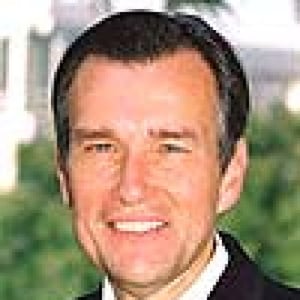
Professor of Constitutional Law, Pepperdine University School of Law
One of America's best known scholars and popular commentators on the law, Professor Douglas W. Kmiec holds the endowed chair in constitutional law at Pepperdine Law School. He came to this position after serving several years as dean and St. Thomas More Professor of Law at The Catholic University of America in Washington, D.C., and for nearly two decades, on the law faculty at the University of Notre Dame. As dean at Catholic University, Professor Kmiec did what many said would be impossible; he greatly increased academic quality and student selectivity at the same time he deepened the school's religious commitment. During his tenure, the law school moved into the upper tier of the U.S. News ranking from tier three. At Notre Dame, he was director of Notre Dame's Center on Law & Government, and the founder of its Journal of Law, Ethics & Public Policy. Beyond the university setting, Kmiec served Presidents Ronald Reagan and George Bush during 1985-89 as constitutional legal counsel (Assistant Attorney General, Office of Legal Counsel, U.S. Department of Justice).
A wide-ranging writer and engaging speaker, Professor Kmiec writes a syndicated column for the Catholic News Service, and for several years wrote a regular column in the Chicago Tribune. He is also a frequent contributor to the pages of the Los Angeles Times, Wall Street Journal, and other periodicals. He is the co-author (with legal historian Stephen Presser of Northwestern) of three books on the Constitution -- The American Constitutional Order; Individual Rights and the American Constitution and The History, Structure and Philosophy of the American Constitution. Another recent book, Cease-Fire on the Family (Crisis Books/Notre Dame) attracted scholarly and popular acclaim for proposing realistic ways for families to "end the culture war" by renewing personal virtue and civic responsibility within itself. He has also written The Attorney General's Lawyer (Praeger 1992), and several respected legal treatises.
Professor Kmiec's scholarly research spans legal and non-legal subjects, from the Constitution and the federal system, to land use and the organization of America society. He is a frequent guest on national news programs, such as Nightline, the Newshour, and NPR's Talk of the Nation, analyzing constitutional questions.
A White House Fellow (1982-83), Professor Kmiec is one of a few individuals who has received the Distinguished Service Award from two cabinet departments —the Department of Justice in 1987 and Housing and Urban Development in 1983. In 1988, he was awarded the Edmund J. Randolph Award by the attorney general. He has lectured on the U.S. Constitution in Asia as a Fulbright Distinguished Scholar.
An honors graduate of Northwestern, Professor Kmiec received his law degree from the University of Southern California, where he served on the Law Review and received the Legion Lex Commencement Prize for Legal Writing. He is a member of the bar of the U.S. Supreme Court and the state bars of Illinois and California.
B.A., with honors, Northwestern University, 1973
J.D., University of Southern California, 1976
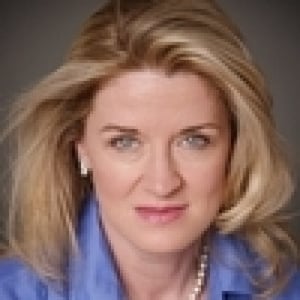
Counsel, The Judicial Confirmation Network
Wendy Long is legal counsel to the Judicial Confirmation Network. Until March 2005, she was a litigation partner in the New York office of Kirkland & Ellis LLP. Wendy was a law clerk to U.S. Supreme Court Justice Clarence Thomas and to Judge Ralph Winter of the U.S. Court of Appeals for the Second Circuit in New York. She is a graduate of Northwestern University School of Law, cum laude and Order of the Coif, where she was articles editor of the Northwestern University Law Review, and of Dartmouth College. She previously served as a press secretary in the U.S. Senate, for former U.S. Senator Bill Armstrong (R-Colo.) and former U.S. Senator Gordon Humphrey (R-N.H.).

Dean and Jesse H. Choper Distinguished Professor of Law, UC Berkeley School of Law
Erwin Chemerinsky became the 13th Dean of Berkeley Law on July 1, 2017, when he joined the faculty as the Jesse H. Choper Distinguished Professor of Law.
Prior to assuming this position, from 2008-2017, he was the founding Dean and Distinguished Professor of Law, and Raymond Pryke Professor of First Amendment Law, at University of California, Irvine School of Law, with a joint appointment in Political Science. Before that he was the Alston and Bird Professor of Law and Political Science at Duke University from 2004-2008, and from 1983-2004 was a professor at the University of Southern California Law School, including as the Sydney M. Irmas Professor of Public Interest Law, Legal Ethics, and Political Science. He also has taught at DePaul College of Law and UCLA Law School.
He is the author of eleven books, including leading casebooks and treatises about constitutional law, criminal procedure, and federal jurisdiction. His most recent books are, We the People: A Progressive Reading of the Constitution for the Twenty-First Century (Picador Macmillan) published in November 2018, and two books published by Yale University Press in 2017, Closing the Courthouse Doors: How Your Constitutional Rights Became Unenforceable and Free Speech on Campus (with Howard Gillman).
He also is the author of more than 200 law review articles. He writes a regular column for the Sacramento Bee, monthly columns for the ABA Journal and the Daily Journal, and frequent op-eds in newspapers across the country. He frequently argues appellate cases, including in the United States Supreme Court.
In 2016, he was named a fellow of the American Academy of Arts and Sciences. In 2017, National Jurist magazine again named Dean Chemerinsky as the most influential person in legal education in the United States.

Patrick Hotung Professor of Constitutional Law, Georgetown University Law Center; Faculty Director, Georgetown Center for the Constitution
Randy E. Barnett is the Patrick Hotung Professor of Constitutional Law at the Georgetown University Law Center and is the Faculty Director of the Georgetown Center for the Constitution. After graduating from Northwestern University and Harvard Law School, he tried many felony cases as a prosecutor in the Cook County States’ Attorney’s Office in Chicago. A recipient of a Guggenheim Fellowship in Constitutional Studies and the Bradley Prize, Professor Barnett has been a visiting professor at Penn, Northwestern and Harvard Law School.
Professor Barnett’s publications includes thirteen books, more than one hundred articles and reviews, as well as numerous op-eds. His most recent book is Felony Review: Tales of True Crime and Corruption in Chicago (2026). His other books on the Constitution include: A Life for Liberty: The Making of an American Originalist (2024); The Original Meaning of the Fourteenth Amendment: Its Letter and Spirit (2021) (with Evan Bernick); An Introduction to Constitutional Law: 100 Supreme Court Cases Everyone Should Know (2019) (with Josh Blackman); Restoring the Lost Constitution: The Presumption of Liberty (2nd ed. 2013); Our Republican Constitution: Securing the Liberty and Sovereignty of We the People (2016); and Constitutional Law: Cases in Context (5th ed. forthcoming 2027) (with Josh Blackman). His books on contracts are The Oxford Introductions to U.S. Law: Contracts (2010) and Contracts: Cases and Doctrine (7th ed. 2021) (with Nate Oman). And he is the author of The Structure of Liberty: Justice and the Rule of Law (2nd ed. 2014).
In 2004, he argued the medical marijuana case of Gonzalez v. Raich before the U.S. Supreme Court. In 2012, he was one of the lawyers representing the National Federation of Independent Business in its constitutional challenge to the Affordable Care Act in NFIB v. Sebelius. He’s appeared in numerous documentaries and portrayed a prosecutor in the 2010 science-fiction feature film, InAlienable: The Movie. On X he is @RandyEBarnett

Courthouse Steps Decision: Bondi v. VanDerStok
Zack Smith
Bondi v. VanDerStok concerned whether the ATF's 2022 update to its regulations under the Gun...
Topics
Using Originalism to Attack Mass Incarceration: A Review of Rachel Barkow’s Justice Abandoned
It is a singular fact of life in America that with five percent of the...
Bail Reform: Illinois’ Experience After 9 months
Robert Berlin, Eugene Doherty, Marc Levin, David Olson
Balancing safety and justice is especially challenging in the pretrial context where difficult decisions must...
City of Los Angeles v. Patel: What is the Proper Structure of a Fourth Amendment Challenge? - Podcast
Nicholas Quinn Rosenkranz
On Tuesday, March 3, 2015 the United States Supreme Court heard oral arguments in City...
Partial-Birth Abortion Ban Act
Douglas W. Kmiec, Wendy Long, Erwin Chemerinsky, Randy E. Barnett
On April 18, 2007, the Supreme Court upheld the constitutionality of the Partial-Birth Abortion Ban...