

Patrick Hotung Professor of Constitutional Law, Georgetown University Law Center; Faculty Director, Georgetown Center for the Constitution
Randy E. Barnett is the Patrick Hotung Professor of Constitutional Law at the Georgetown University Law Center and is the Faculty Director of the Georgetown Center for the Constitution. After graduating from Northwestern University and Harvard Law School, he tried many felony cases as a prosecutor in the Cook County States’ Attorney’s Office in Chicago. A recipient of a Guggenheim Fellowship in Constitutional Studies and the Bradley Prize, Professor Barnett has been a visiting professor at Penn, Northwestern and Harvard Law School.
Professor Barnett’s publications includes thirteen books, more than one hundred articles and reviews, as well as numerous op-eds. His most recent book is Felony Review: Tales of True Crime and Corruption in Chicago (2026). His other books on the Constitution include: A Life for Liberty: The Making of an American Originalist (2024); The Original Meaning of the Fourteenth Amendment: Its Letter and Spirit (2021) (with Evan Bernick); An Introduction to Constitutional Law: 100 Supreme Court Cases Everyone Should Know (2019) (with Josh Blackman); Restoring the Lost Constitution: The Presumption of Liberty (2nd ed. 2013); Our Republican Constitution: Securing the Liberty and Sovereignty of We the People (2016); and Constitutional Law: Cases in Context (5th ed. forthcoming 2027) (with Josh Blackman). His books on contracts are The Oxford Introductions to U.S. Law: Contracts (2010) and Contracts: Cases and Doctrine (7th ed. 2021) (with Nate Oman). And he is the author of The Structure of Liberty: Justice and the Rule of Law (2nd ed. 2014).
In 2004, he argued the medical marijuana case of Gonzalez v. Raich before the U.S. Supreme Court. In 2012, he was one of the lawyers representing the National Federation of Independent Business in its constitutional challenge to the Affordable Care Act in NFIB v. Sebelius. He’s appeared in numerous documentaries and portrayed a prosecutor in the 2010 science-fiction feature film, InAlienable: The Movie. On X he is @RandyEBarnett

Professor, The University of South Dakota School of Law
Patrick Garry is a professor of law at The University of South Dakota and the Director of the Hagemann Center for Legal & Public Policy Research.
Professor Garry has published more than forty scholarly articles and authored ten books, many of which have been the subject of numerous conferences and symposia. Professor Garry has been invited on several occasions to testify before Congress on legal and constitutional matters, and he is a frequent speaker at Federalist Society sponsored events. Aside from his public speaking appearances, Professor Garry often writes for popular audience websites, magazines, and newspapers, including the Chicago Tribune and Washington Times. These writings offer commentary and analysis of current political and legal issues.
Professor Garry received his Ph.D. and J.D. from the University of Minnesota. And he has been invited to teach as a visiting professor at the George Washington University Law School, the University of Utah School of Law, the University of Missouri School of Law, and the University of St. Thomas School of Law.
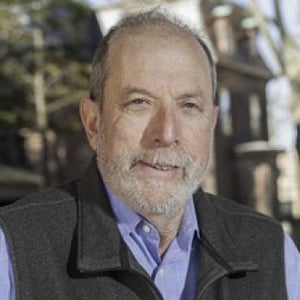
Distinguished Professor of Law, Rutgers Law School
Earl Maltz is a Distinguished Professor and the author of two books and more than 50 articles on constitutional law, statutory interpretation, the role of the courts and legal history. He teaches constitutional law, employment discrimination, conflicts of law and a seminar on the Supreme Court.
Professor Maltz is the author of Rethinking Constitutional Law: Originalism, Interventionism, and the Politics of Judicial Review (1994), Civil Rights, The Constitution and Congress, 1863-1865 (1990), and over 50 articles on constitutional law, statutory interpretation, the role of the courts and legal history. He received his B.A. from Northwestern University, where he was elected to Phi Beta Kappa, and his J.D. cum laude from Harvard. Professor Maltz teaches Constitutional Law, Employment Discrimination, Conflicts of Law, and a seminar on the Supreme Court.

The Constitutionality of Healthcare
Free Speech and Violent Video Games
Do Corporations Have Freedom of Speech? The Aftermath of Citizens United v. FEC
Is There a Right to Same Sex Marriage?
Bong Hits for Jesus