

Vice President, Edwin Meese III Institute for the Rule of Law, Advancing American Freedom
John G. Malcolm oversees Advancing American Freedom’s work to increase understanding of the Constitution and the rule of law as Vice President of the organization’s Edwin Meese III Institute for the Rule of Law. Malcolm brings to the challenge a wealth of legal expertise and experience in both the public and private sectors.
Prior to joining Advancing American Freedom in 2025, Malcolm was the Vice President of the Institute for Constitutional Government and the Director of the Meese Center for Legal and Judicial Studies at the Heritage Foundation. Prior to joining Heritage in 2012, Malcolm was general counsel at the U.S. Commission on International Religious Freedom, as well as a distinguished practitioner in residence at Pepperdine Law School. From 2004 to 2009, Malcolm was executive vice president and director of worldwide anti-piracy operations for the Motion Picture Association.
Malcolm served as a deputy assistant attorney general in the Department of Justice’s Criminal Division from 2001 to 2004, where he oversaw sections on computer crime and intellectual property, domestic security, child exploitation and obscenity, and special investigations. Immediately prior to that, he was a founding partner in the Atlanta law firm of Malcolm & Schroeder, LLP.
From 1990 to 1997, Malcolm was an assistant U.S. attorney in Atlanta, assigned to the fraud and public corruption section, and also an associate independent counsel, investigating fraud and abuse in the Department of Housing and Urban Development. He was honored with the Director’s Award for Superior Performance for his work in connection with the successful prosecution of Walter Leroy Moody Jr., who assassinated an 11th Circuit judge and the head of the Savannah chapter of the NAACP.
A graduate of Harvard Law School and Columbia College, Malcolm began his career as a law clerk to a federal district court judge and a federal appellate court judge, and as an associate at the Atlanta-based law firm of Sutherland, Asbill & Brennan (new Eversheds Sutherland).
Malcolm, who resides in Washington, D.C., serves on the Board of Trustees of the Washington National Opera and is a Senate-confirmed member of the Board of Directors of the Legal Services Corporation, the largest funder of civil legal aid in the United States.

Emanuel S. Heller Professor of Law, University of California at Berkeley; Thomas Smith Senior Research Fellow, The Civitas Institute, University of Texas at Austin
John Yoo is the Emanuel Heller Professor of Law at the University of California at Berkeley. He is also the Thomas Smith Senior Research Fellow, Civitas Institute, at the University of Texas at Austin. He is also a Nonresident Senior Fellow at the American Enterprise Institute.
His most recent book, The Politically Incorrect Guide to the Supreme Court, co-authored with Robert Delahunty, was published in 2023. Professor Yoo’s other books include Defender-in-Chief: Trump’s Fight for Presidential Power; Striking Power: How Cyber, Robots, and Space Weapons Change the Rules for War; Point of Attack: Preventive War, International Law, and Global Welfare; and Crisis and Command: A History of Executive Power from George Washington to George Bush.
He is a co-author of volumes 1 and 2 of R. Rossum, G. Tarr, V. Munoz & J. Yoo American Constitution Law (Routledge, 2026), and a co-editor of the eight-volume series on the 250th anniversary of the American Revolution, We Hold These Truths, with Yuval Levin and Adam White of the American Enterprise Institute.
Professor Yoo has published more than 100 articles in academic journals on subjects including national security, constitutional law, international law, and the Supreme Court. He also regularly contributes to the editorial pages of the Wall Street Journal, New York Times, Washington Post, Los Angeles Times, and National Review, among others.
Professor Yoo has served in all three branches of government. He was an official in the U.S. Department of Justice, where he worked on national security and terrorism issues after the 9/11 attacks. He served as general counsel of the U.S. Senate Judiciary Committee. He has been a law clerk for Supreme Court Justice Clarence Thomas and federal appeals Judge Laurence Silberman. He has been a visiting professor at the University of Texas at Austin’s School of Civic Leadership, Seoul National University, the Interdisciplinary Center Herzliya, Keio University, Trento University, the University of Chicago, and the Free University of Amsterdam.
Professor Yoo supervises the Public Law and Policy Program and the California Constitution Center. He also serves on the boards of Founding Forward, the Washington Legal Foundation, the Pacific Legal Foundation, the Ulysses Grant Institute, the Federalist Society’s Separation of Powers and Federalism Division, the Universidad Cientifica del Sur Law School, and the Asia-Pacific Law Institute at Seoul National University. He is a winner of the Federalist Society’s Paul Bator award and the Heritage Foundation’s Edwin Meese III Originalism Lectureship.
Professor Yoo graduated from Yale Law School and summa cum laude from Harvard College.

President, Cass & Associates, PC
Ronald A. Cass is Dean Emeritus of Boston University School of Law (where he was Dean from 1990-2004), President of Cass & Associates, PC, former Vice-Chairman and Commissioner of the U.S. International Trade Commission, former faculty member at Boston University School of Law and the University of Virginia Law School, and Distinguished Senior Fellow at the C. Boyden Gray Center for the Study of the Administrative State. Dean Cass also sits as an arbitrator for commercial, international, and intellectual property rights disputes, and is a former United States member of the Panel of Conciliators of the International Centre for Settlement of Investment Disputes. He is a member of the Council of the Administrative Conference of the United States and has received seven presidential appointments, spanning Presidents Ronald Reagan to Donald J. Trump.
As a law professor, lecturer, and scholar, Dean Cass has been teaching and writing about a wide array of legal issues on topics such as administrative law and regulation, antitrust, constitutional law, communications, intellectual property, international trade, separation of powers, and legal process. He has published more than 160 scholarly books, chapters, articles, and papers, including a leading casebook on administrative law. Dean Cass has taught judges as well as students in schools of law, economics, business, and public policy and has held academic appointments in the United States, Europe, and Latin America.
In addition to his academic work, Dean Cass has participated in numerous important legal cases as an amicus, consultant, or expert, and has advised businesses, law firms, investment funds, and government agencies on a range of trade, antitrust, intellectual property, and regulatory issues. He has a broad range of affiliations with professional groups, and has received numerous honors, fellowships and awards.
Dean Cass is a graduate of the University of Virginia and the University of Chicago Law School.
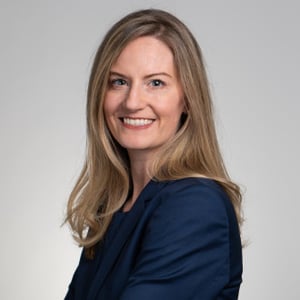
Director, Campaign Finance Strategy, Campaign Legal Center
Erin Chlopak joined the Campaign Legal Center in August 2018, after spending nearly a decade working on a wide range of campaign finance issues in the Federal Election Commission’s Office of General Counsel. Her areas of focus include CLC’s appellate and district court litigation and its Federal Reform and State & Local Reform programs.
From 2017 to 2018, Erin served as the head of the FEC’s Policy Division, overseeing all of the Division’s work on FEC regulations, advisory opinions, and other legal policy guidance. From 2009 to 2017, Erin worked in the FEC’s Litigation Division as a staff attorney and then as Assistant General Counsel, litigating numerous constitutional and other campaign finance cases. She has argued before federal district and appellate courts, including before the en banc U.S. Court of Appeals for the D.C. Circuit in Holmes v. FEC, in which the court unanimously upheld the federal per-election limits on individual contributions to candidates.
Erin began her legal career as a litigation associate at Sullivan & Cromwell, after clerking for Judge Helen Gillmor of the U.S. District Court for the District of Hawaii. She received her undergraduate degree from Johns Hopkins University and her law degree from American University’s Washington College of Law.
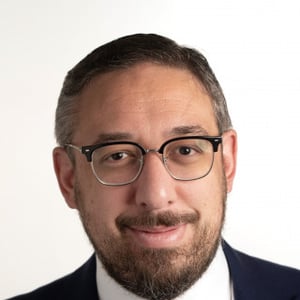
Senior Attorney, National Taxpayers Union Foundation
Tyler Martinez is a Senior Attorney at the Taxpayer Defense Center, the strategic litigation arm of National Taxpayers Union Foundation. He has experience setting up nonprofit public interest arms for multiple organizations in the Washington, DC area and thus has experience in First Amendment, Tax, and Administrative Law. He has practiced strategic litigation against government overreach since 2011, handling federal and state cases across the country.
Tyler’s interest in strategic public interest work and in tax law comes down to the simple principle: getting the government out of people’s business. Transparency is for the government, but privacy is for the people. He finds and focuses on examples of government overreach particularly those involving use of private information, dragnet data collection, and other attacks on privacy of association.
Tyler earned his Juris Doctor from the University of Colorado Law School, while winning accolades for his advocacy skills and serving as Executive Editor of the Journal on Telecommunications and High Technology Law. He is licensed to practice law in Colorado and the District of Columbia. He is further admitted to the bars of the following federal courts: Supreme Court of the United States, D.C. Circuit, First Circuit, Second Circuit, Third Circuit, Fourth Circuit, Fifth Circuit, Eighth Circuit, Tenth Circuit, and various federal district courts across the country.
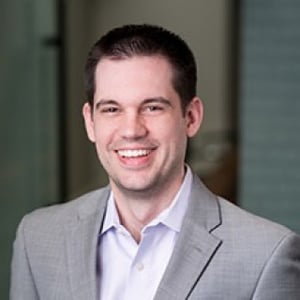
Executive Director, Consumers’ Research
Will Hild is the Executive Director of Consumers’ Research. Will has a decade of non-profit, legal and public policy experience. Prior to joining CR, Will served as the Deputy Director of the Regulatory Transparency Project. Before that, he worked at the Philanthropy Roundtable as the Director of External Affairs for the Culture of Freedom Initiative, and as the Chief Operating Officer of that Initiative when it grew to become a separate organization. He helped co-found the public interest law firm, Cause of Action, and served as the firm’s acting communications director for nearly a year.
Will received his J.D. from Georgetown University Law Center, and a B.A. in Political Science from the University of Florida. He is licensed to practice law in the Commonwealth of Virginia.
Will resides in Bethesda, MD, with his wife Cheryl, a practicing OB/GYN, and their son Liam.
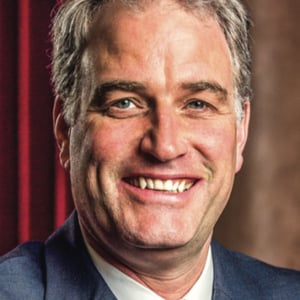
Former Congressman, VP and Dir., Center for Law and Government, Liberty University
Former Congressman Hurt is the Vice President and Director of the Center for Law and Government at Liberty University. From 2011 to 2017 he represented Virginia’s 5th Congressional District in the U.S. House of Representatives and served on the House Financial Services Committee.
Congressman Hurt began his time in public service in 2001 as a member of the Chatham Town Council. From 2002 to 2007, Hurt served in the Virginia House of Delegates, and from 2008 to 2010, he represented the 19th District in the Senate of Virginia for two years.
Congressman Hurt lives in Chatham, Virginia with his wife, Kathy, and their three sons, Charles, Clement and John.
Principal, Legis Matters
Karl T. Kurtz is principal of Legis Matters, a consulting firm that focuses on strengthening democratic institutions, especially legislatures, at home and abroad. He previously worked for the National Conference of State Legislatures (NCSL) from its founding in 1975 until his retirement in 2014.
Karl has written, consulted and lectured widely on American state legislatures, elections and public opinion. He is coauthor of Republic on Trial: The Case for Representative Democracy and coeditor of Institutional Change in American Politics: The Case of Term Limits. He has provided advice and assistance in the development of democratic institutions to legislators and legislative staff throughout the world. As a consultant to NCSL, Karl is currently leading a national study of how legislatures can overcome problems of political polarization and effectively reach settlements and negotiate differences on critical issues.
Before joining NCSL, Karl taught political science at the University of Georgia. He worked on the staff of the United States Congress as a Congressional Fellow of the American Political Science Association. He holds an AB degree from Oberlin College and a Ph.D. from Washington University (St. Louis).
Vice Chairman, Caris Life Sciences
Brian J. Brille joined Caris Life Sciences in January of 2018 as Vice Chairman of the Company. Mr. Brille currently provides executive leadership for strategic, corporate and business development activities. He is also a member of the Board of Directors.
Prior to joining Caris Life Sciences, Mr. Brille worked in various capacities for Bank of America Merrill Lynch since 2009. Most recently, Mr. Brille was based in Hong Kong and served as Chairman/President Asia Pacific for Bank of America Merrill Lynch, with responsibility for the combined Asia Pacific platform across 12 countries and 4 business lines. Prior to this, he served as Global Head of Corporate & Investment Banking at Bank of America. He was also responsible for building and leading Bank of America’s Healthcare Corporate & Investment Banking business, as well as previously establishing and leading Morgan Stanley’s Healthcare Services Group. In 2003, he was named Investment Dealer’s Digest Banker of the Year.
Mr. Brille holds a JD from Stanford Law School, a Masters of Public Policy from Harvard’s Kennedy School of Government, and a BS in Accounting from the University of Illinois. Mr. Brille currently serves on the Asia Pacific Council of The Nature Conservancy, and is a member of the Board of Overseers of the Museum of Fine Arts in Boston.
Former Dean, Stanford Law School
John Hart Ely was one of the most important constitutional scholars of his generation. He was born in 1938 and died in 2003. As a summer associate following his second year at YLS, Ely assisted Abe Fortas in litigating Gideon v. Wainwright, the landmark Supreme Court decision that established a criminal defendant's right to counsel. After graduating from Yale, Ely served as a staff attorney on the Warren Commission, and then clerked for Chief Justice Earl Warren before going on to serve as a public defender in San Diego. Later in his career, he served as General Counsel of the Department of Transportation during the Ford Administration.
Ely taught at Yale Law School, Harvard Law School, Stanford Law School, and the University of Miami School of Law and served as dean at Stanford. In 1980, Ely published the highly influential Democracy and Distrust, which developed a theory of judicial review that emphasized the role of the courts in safeguarding the democratic process. In 1993, Ely published War and Responsibility, a comprehensive constitutional analysis of war powers. His last book, On Constitutional Ground, was published in 1996 and covers a variety of constitutional law issues, including federalism and criminal procedure.
Nobel Laureate
Milton Friedman, recipient of the 1976 Nobel Prize for Economic Science, was a Senior Research Fellow at the Hoover Institution, Stanford University, from 1977 to 2006. He was also Paul Snowden Russell Distinguished Service Professor Emeritus of Economics at the University of Chicago, where he taught from 1946 to 1976, and was a member of the research staff of the National Bureau of Economic Research from 1937 to 1981.
Professor Friedman was awarded the Presidential Medal of Freedom in 1988 and received the National Medal of Science the same year. He is widely regarded as the leader of the Chicago School of monetary economics, which stresses the importance of the quantity of money as an instrument of government policy and as a determinant of business cycles and inflation.
In addition to his scientific work, Professor Friedman had also written extensively on public policy, always with primary emphasis on the preservation and extension of individual freedom. His most important books in this field are (with Rose D. Friedman) Capitalism and Freedom (University of Chicago Press, 1962); Bright Promises, Dismal Performance (Thomas Horton and Daughters, 1983), which consists mostly of reprints of tri-weekly columns that he wrote for Newsweek from 1966 to 1983; and (with Rose Friedman) Free to Choose (Harcourt Brace Jovanovich, 1980), which complements a ten-part TV series of the same name, shown over PBS in early 1980, and (with Rose D. Friedman) Tyranny of the Status Quo (Harcourt Brace Jovanovich, 1984), which complements a three-part TV series of the same name, shown over PBS in early 1984.
He was a member of the President’s Commission on an All-Volunteer Armed Force (1969-70) and of the President’s Commission on White House Fellows (1971-73). He was a member of President Reagan’s Economic Policy Advisory Board, a group of experts outside the government, named in early 1981 by President Reagan.
He had also been active in public affairs, serving as an informal economic adviser to Senator Goldwater in his unsuccessful campaign for the presidency in 1964, to Richard Nixon in his successful campaign in 1968, to President Nixon subsequently, and to Ronald Reagan in his 1980 campaign.
He had published many books and articles, most notably A Theory of the Consumption Function (University of Chicago Press, 1957), The Optimum Quantity of Money and Other Essays (Aldine, 1969), and (with A. J. Schwartz) A Monetary History of the United States (Princeton University Press, 1963), Monetary Statistics of the United States (Columbia University Press, 1970), and Monetary Trends in the United States and the United Kingdom (University of Chicago Press, 1982).
Professor Friedman was a past president of the American Economic Association, the Western Economic Association, and the Mont Pelerin Society, and is a member of the American Philosophical Society and of the National Academy of Sciences.
He also had been awarded honorary degrees by universities in the United States, Japan, Israel, and Guatemala, as well as the Grand Cordon of the First Class Order of the Sacred Treasure by the Japanese government in 1986.
Friedman received a B.A. in 1932 from Rutgers University, an M.A. in 1933 from the University of Chicago, and a Ph.D. in 1946 from Columbia University.
He and his wife established the Milton and Rose D. Friedman Foundation, for the purpose of promoting parental choice of the schools their children attend. The Foundation is based in Indianapolis and its president and chief executive officer is Robert C. Enlow.
He and his wife published their memoirs: Milton and Rose D. Friedman, Two Lucky People: Memoirs (University of Chicago Press, 1998).
On November 16, 2006, Dr. Friedman passed away at the age of 94 in San Francisco.
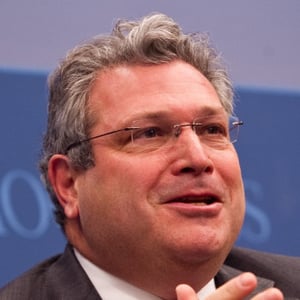
Stephen & Barbara Friedman Senior Fellow, The Brookings Institution
Robert Kagan is the Stephen & Barbara Friedman Senior Fellow with the Project on International Order and Strategy in the Foreign Policy program at Brookings. He is a contributing columnist at The Washington Post. His new book is The Jungle Grows Back: America and Our Imperiled World (Knopf, 2018). His previous book was The New York Times bestseller, The World America Made (Knopf, 2012).
He is also the author of Return of History and the End of Dreams (Knopf, 2008), Dangerous Nation: America’s Place in the World from its Earliest Days to the Dawn of the 20th Century (Knopf 2006), Of Paradise and Power (Knopf 2003), and A Twilight Struggle: American Power and Nicaragua, 1977-1990 (Free Press, 1996).
For his writings, Politico Magazine named Kagan one of the “Politico 50” in 2016, the “thinkers, doers and visionaries transforming American politics in 2016.” His most recent pieces include “The Twilight of the Liberal World Order” in “Brookings Big Ideas for America” and “Backing into World War III” in Foreign Policy.
He served in the State Department from 1984 to 1988 as a member of the policy planning staff, as principal speechwriter for Secretary of State George P. Shultz, and as deputy for policy in the Bureau of Inter-American Affairs. He is a graduate of Yale University and Harvard University’s Kennedy School of Government and holds a doctorate in American history from American University.

Professor Emeritus of Law, Antonin Scalia Law School, George Mason University
Jeremy A. Rabkin is a Professor Emeritus of Law at the Antonin Scalia Law School, George Mason University. Before joining the faculty in June 2007, he was for over two decades a professor in the Department of Government at Cornell University. Professor Rabkin serves on the board of directors of the Center for Individual Rights, a public interest law firm based in Washington, D.C. Previously he was a board member of the U.S. Institute of Peace and the board of academic advisors of the American Enterprise Institute.
Professor Rabkin’s books include Law Without Nations? (Princeton University Press, 2005). He authored “If You Need a Friend, Don’t Call a Cosmopolitan,” a chapter in Varieties of Sovereignty and Citizenship (Sigal R. Ben-Porath & Rogers M. Smith eds., University of Pennsylvania Press, 2012). His articles have appeared in major law reviews and political science journals and his journalistic contributions in a range of magazines and newspapers, including the Washington Post and the Wall Street Journal.
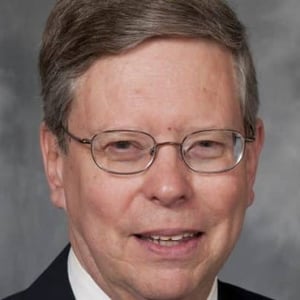
Professor of History and Charles O. Lee and Louise K. Lee Chair in the Western Heritage, Hillsdale College
After reading Litterae Humaniores at Wadham College, Oxford, on a Rhodes Scholarship from 1971-1974, Paul A. Rahe completed a Ph.D. in ancient history at Yale University under the direction of Donald Kagan in 1977. In subsequent years, he taught at Cornell University, Franklin and Marshall College, and the University of Tulsa, where he spent twenty-four years before accepting a position at Hillsdale College, where he is Professor of History and Political Science and holds The Charles O. Lee and Louise K. Lee Chair in the Western Heritage.
Professor Rahe’s entire scholarly career has been focused on studying the origins and evolution of self-government within the West. His range is considerable. His first book, Republics Ancient and Modern: Classical Republicanism and the American Revolution (1992), was 1200 pages in length and surveyed the origins and development of self-government in ancient Greece and Rome, its re-emergence in a new form in the Middle Ages, the transformation it underwent at the hands of the political philosophers of early modernity, and the statesmanship of the American Founding Fathers. Within the first thirteen months of publication, the hardback edition sold out. Thereafter, it reappeared as an alternative selection of the History Book Club. In 1994, it was reissued in a three-volume paperback edition by the University of North Carolina Press, and it remains in print.
In the course of his career, Professor Rahe has published dozens of chapters on related subjects in edited books and scholarly articles in journals such as The American Journal of Philology, Historia, The American Journal of Archaeology, The American Historical Review, The Review of Politics, The American Journal of Business and Professional Ethics, The Journal of the Historical Society, The National Interest, The Woodrow Wilson Quarterly, and History of Political Thought. He spent two years in Istanbul, Turkey in the mid-1980s as a fellow of the Institute of Current World Affairs; he has been awarded research fellowships by the National Endowment for the Humanities and the Earhart Foundation; and he has held research fellowships at the Center for Hellenic Study, the National Humanities Center, the Woodrow Wilson International Center for Scholars in Washington, D. C. , Clare College at Cambridge University, All Souls College at Oxford University, and the American Academy in Berlin; and he has given a host of public lectures at universities in the United States and abroad – most recently at the Hebrew University and at Al-Quds University in Jerusalem, at the Sorbonne in Paris, at the Royal Military Academy at Sandhurst in England and the Free University in Berlin. In 1997-98, he was named to the Templeton Honor Rolls for Education in a Free Society by The John M. Templeton Foundation, and in 2006 the Society for French Historical Studies awarded him the Koren Prize for the Best Article Published in French History the preceding year.
Professor Rahe co-edited Montesquieu’s Science of Politics: Essays on the Spirit of Laws(2001) with David W. Carrithers and Michael A. Mosher, and he edited Machiavelli’s Liberal Republican Legacy (2006). His second book, Against Throne and Altar: Machiavelli and Political Theory under the English Republic, which examines the political thought inspired by the abortive republican experiment that took place in England in the period stretching from 1649 to 1660, was published by Cambridge University Press in April, 2008. His third and fourth books, Montesquieu and the Logic of Liberty: War, Religion, Commerce, Climate, Terrain, Technology, Uneasiness of Mind, the Spirit of Political Vigilance, and the Foundations of the Modern Republic and Soft Despotism, Democracy’s Drift: Montesquieu, Rousseau, and Tocqueville on the Modern Prospect, were published by Yale University Press in 2009. For his fifth book, The Spartan Way of War, which he hopes to have finished by the end of 2010, Professor Rahe has received a contract from Yale University Press.
Vice President, Edwin Meese III Institute for the Rule of Law, Advancing American Freedom
John G. Malcolm oversees Advancing American Freedom’s work to increase understanding of the Constitution and the rule of law as Vice President of the organization’s Edwin Meese III Institute for the Rule of Law. Malcolm brings to the challenge a wealth of legal expertise and experience in both the public and private sectors.
Prior to joining Advancing American Freedom in 2025, Malcolm was the Vice President of the Institute for Constitutional Government and the Director of the Meese Center for Legal and Judicial Studies at the Heritage Foundation. Prior to joining Heritage in 2012, Malcolm was general counsel at the U.S. Commission on International Religious Freedom, as well as a distinguished practitioner in residence at Pepperdine Law School. From 2004 to 2009, Malcolm was executive vice president and director of worldwide anti-piracy operations for the Motion Picture Association.
Malcolm served as a deputy assistant attorney general in the Department of Justice’s Criminal Division from 2001 to 2004, where he oversaw sections on computer crime and intellectual property, domestic security, child exploitation and obscenity, and special investigations. Immediately prior to that, he was a founding partner in the Atlanta law firm of Malcolm & Schroeder, LLP.
From 1990 to 1997, Malcolm was an assistant U.S. attorney in Atlanta, assigned to the fraud and public corruption section, and also an associate independent counsel, investigating fraud and abuse in the Department of Housing and Urban Development. He was honored with the Director’s Award for Superior Performance for his work in connection with the successful prosecution of Walter Leroy Moody Jr., who assassinated an 11th Circuit judge and the head of the Savannah chapter of the NAACP.
A graduate of Harvard Law School and Columbia College, Malcolm began his career as a law clerk to a federal district court judge and a federal appellate court judge, and as an associate at the Atlanta-based law firm of Sutherland, Asbill & Brennan (new Eversheds Sutherland).
Malcolm, who resides in Washington, D.C., serves on the Board of Trustees of the Washington National Opera and is a Senate-confirmed member of the Board of Directors of the Legal Services Corporation, the largest funder of civil legal aid in the United States.
Emanuel S. Heller Professor of Law, University of California at Berkeley; Thomas Smith Senior Research Fellow, The Civitas Institute, University of Texas at Austin
John Yoo is the Emanuel Heller Professor of Law at the University of California at Berkeley. He is also the Thomas Smith Senior Research Fellow, Civitas Institute, at the University of Texas at Austin. He is also a Nonresident Senior Fellow at the American Enterprise Institute.
His most recent book, The Politically Incorrect Guide to the Supreme Court, co-authored with Robert Delahunty, was published in 2023. Professor Yoo’s other books include Defender-in-Chief: Trump’s Fight for Presidential Power; Striking Power: How Cyber, Robots, and Space Weapons Change the Rules for War; Point of Attack: Preventive War, International Law, and Global Welfare; and Crisis and Command: A History of Executive Power from George Washington to George Bush.
He is a co-author of volumes 1 and 2 of R. Rossum, G. Tarr, V. Munoz & J. Yoo American Constitution Law (Routledge, 2026), and a co-editor of the eight-volume series on the 250th anniversary of the American Revolution, We Hold These Truths, with Yuval Levin and Adam White of the American Enterprise Institute.
Professor Yoo has published more than 100 articles in academic journals on subjects including national security, constitutional law, international law, and the Supreme Court. He also regularly contributes to the editorial pages of the Wall Street Journal, New York Times, Washington Post, Los Angeles Times, and National Review, among others.
Professor Yoo has served in all three branches of government. He was an official in the U.S. Department of Justice, where he worked on national security and terrorism issues after the 9/11 attacks. He served as general counsel of the U.S. Senate Judiciary Committee. He has been a law clerk for Supreme Court Justice Clarence Thomas and federal appeals Judge Laurence Silberman. He has been a visiting professor at the University of Texas at Austin’s School of Civic Leadership, Seoul National University, the Interdisciplinary Center Herzliya, Keio University, Trento University, the University of Chicago, and the Free University of Amsterdam.
Professor Yoo supervises the Public Law and Policy Program and the California Constitution Center. He also serves on the boards of Founding Forward, the Washington Legal Foundation, the Pacific Legal Foundation, the Ulysses Grant Institute, the Federalist Society’s Separation of Powers and Federalism Division, the Universidad Cientifica del Sur Law School, and the Asia-Pacific Law Institute at Seoul National University. He is a winner of the Federalist Society’s Paul Bator award and the Heritage Foundation’s Edwin Meese III Originalism Lectureship.
Professor Yoo graduated from Yale Law School and summa cum laude from Harvard College.

Partner, Arnold & Porter LLP
John Bellinger heads the firm's Global Law and Public Policy practice. He joined the firm in 2009, after holding several senior Presidential appointments in the US government, including as the Senate-confirmed Legal Adviser to the Department of State and Senior Associate Counsel to the President and Legal Adviser to the National Security Council (NSC) at the White House in the George W. Bush Administration.
Mr. Bellinger represents individuals, corporations, and sovereign governments in litigation in US courts and before international institutions. He has extensive experience in US foreign relations litigation involving the Alien Tort Statute, the Foreign Sovereign Immunities Act, the Anti-Terrorism Act, and the diplomatic and official immunities of foreign governments and government officials. He advises clients on other public international law matters, including treaties and international agreements as well as international humanitarian law and human rights law. He also counsels US and foreign clients on national security legal and policy issues, including US and multilateral financial sanctions and asset controls, the extraterritorial application of US criminal and civil laws, and transactions reviewed by the Committee on Foreign Investment in the United States (CFIUS).
Chambers Global ranks Mr. Bellinger among the best international lawyers in the world, reporting that he has "second-to-none experience in public international law, international litigation and foreign sovereign immunity" and that his "experience at the highest levels of the Executive branch...gives him a distinct and important vantage point on legal issues." Chambers adds: "For any cross border work he's just extraordinary, he knows the area inside-out."
Mr. Bellinger was the State Department Legal Adviser–the most senior international lawyer in the US Government–from 2005 to 2009, serving under Secretary of State Condoleezza Rice. He directed more than 170 lawyers on domestic and international law matters affecting US foreign relations. Before joining the State Department, Mr. Bellinger managed Secretary Rice's Senate confirmation process and co-directed her State Department transition team. In 2009, Mr. Bellinger received the Secretary of State's Distinguished Service Award.
Mr. Bellinger has argued cases before the International Court of Justice (Mexico v. United States–(Medellin)) and the Iran-United States Claims Tribunal in The Hague. He has appeared on numerous briefs in US federal courts, including the Supreme Court, in litigation involving international law issues.
As Legal Adviser to the NSC from 2001 to 2005, Mr. Bellinger advised President Bush, Cabinet officials, National Security Advisor Rice, and NSC staff on a wide range of national security and international law issues, including counterterrorism issues after the 9-11 attacks. He was one of the principal drafters of the legislation that created the Director of National Intelligence.
Prior to his service in the Bush Administration, Mr. Bellinger served as Counsel for National Security Matters in the Criminal Division at the US Department of Justice (1997-2001); Of Counsel to the Senate Select Committee on Intelligence (1996); General Counsel of the Commission on the Roles and Capabilities of the US Intelligence Community (1995-1996); and Special Assistant to Director of Central Intelligence William Webster (1988-1991). Mr. Bellinger is an Adjunct Senior Fellow in International and National Security Law at the Council on Foreign Relations. He has testified before Congress on numerous occasions, is quoted regularly in the media on international and national security law matters, and has lectured at numerous US and foreign universities and law schools. He is the author of many law review articles and op-eds on international law, including op-eds in The Washington Post, The New York Times, and The Wall Street Journal. Mr. Bellinger is a senior contributor to the Lawfare blog.
Mr. Bellinger is a member of the Secretary of State's Advisory Committee on International Law. He served from 2005-2019 as one of four US Members of the Permanent Court of Arbitration in The Hague and a member of the US "National Group", which nominates judges to the International Court of Justice. He is also a member of the Council on Foreign Relations and the American Society of International Law. He is a member of the Council of the American Law Institute; the boards of directors of the American Ditchley Foundation, the Salzburg Global Seminar, and the Stimson Center; and the advisory committee of Foreign Affairs magazine.
Mr. Bellinger is a graduate of Princeton University's Woodrow Wilson School of Public and International Affairs, and he holds an MA in Foreign Affairs from the University of Virginia and a JD from Harvard Law School, where he was an editor of the Harvard International Law Journal.
Emanuel S. Heller Professor of Law, University of California at Berkeley; Thomas Smith Senior Research Fellow, The Civitas Institute, University of Texas at Austin
John Yoo is the Emanuel Heller Professor of Law at the University of California at Berkeley. He is also the Thomas Smith Senior Research Fellow, Civitas Institute, at the University of Texas at Austin. He is also a Nonresident Senior Fellow at the American Enterprise Institute.
His most recent book, The Politically Incorrect Guide to the Supreme Court, co-authored with Robert Delahunty, was published in 2023. Professor Yoo’s other books include Defender-in-Chief: Trump’s Fight for Presidential Power; Striking Power: How Cyber, Robots, and Space Weapons Change the Rules for War; Point of Attack: Preventive War, International Law, and Global Welfare; and Crisis and Command: A History of Executive Power from George Washington to George Bush.
He is a co-author of volumes 1 and 2 of R. Rossum, G. Tarr, V. Munoz & J. Yoo American Constitution Law (Routledge, 2026), and a co-editor of the eight-volume series on the 250th anniversary of the American Revolution, We Hold These Truths, with Yuval Levin and Adam White of the American Enterprise Institute.
Professor Yoo has published more than 100 articles in academic journals on subjects including national security, constitutional law, international law, and the Supreme Court. He also regularly contributes to the editorial pages of the Wall Street Journal, New York Times, Washington Post, Los Angeles Times, and National Review, among others.
Professor Yoo has served in all three branches of government. He was an official in the U.S. Department of Justice, where he worked on national security and terrorism issues after the 9/11 attacks. He served as general counsel of the U.S. Senate Judiciary Committee. He has been a law clerk for Supreme Court Justice Clarence Thomas and federal appeals Judge Laurence Silberman. He has been a visiting professor at the University of Texas at Austin’s School of Civic Leadership, Seoul National University, the Interdisciplinary Center Herzliya, Keio University, Trento University, the University of Chicago, and the Free University of Amsterdam.
Professor Yoo supervises the Public Law and Policy Program and the California Constitution Center. He also serves on the boards of Founding Forward, the Washington Legal Foundation, the Pacific Legal Foundation, the Ulysses Grant Institute, the Federalist Society’s Separation of Powers and Federalism Division, the Universidad Cientifica del Sur Law School, and the Asia-Pacific Law Institute at Seoul National University. He is a winner of the Federalist Society’s Paul Bator award and the Heritage Foundation’s Edwin Meese III Originalism Lectureship.
Professor Yoo graduated from Yale Law School and summa cum laude from Harvard College.
Senior Attorney, National Taxpayers Union Foundation
Tyler Martinez is a Senior Attorney at the Taxpayer Defense Center, the strategic litigation arm of National Taxpayers Union Foundation. He has experience setting up nonprofit public interest arms for multiple organizations in the Washington, DC area and thus has experience in First Amendment, Tax, and Administrative Law. He has practiced strategic litigation against government overreach since 2011, handling federal and state cases across the country.
Tyler’s interest in strategic public interest work and in tax law comes down to the simple principle: getting the government out of people’s business. Transparency is for the government, but privacy is for the people. He finds and focuses on examples of government overreach particularly those involving use of private information, dragnet data collection, and other attacks on privacy of association.
Tyler earned his Juris Doctor from the University of Colorado Law School, while winning accolades for his advocacy skills and serving as Executive Editor of the Journal on Telecommunications and High Technology Law. He is licensed to practice law in Colorado and the District of Columbia. He is further admitted to the bars of the following federal courts: Supreme Court of the United States, D.C. Circuit, First Circuit, Second Circuit, Third Circuit, Fourth Circuit, Fifth Circuit, Eighth Circuit, Tenth Circuit, and various federal district courts across the country.

The Trump Impeachment Effort
John G. Malcolm, John C. Yoo
Defenders of the Constitution designed impeachment to be a rare event, especially by making the...
National Security, Trade, and China: Risks and Responses in the Internet Age
Ronald A. Cass
Note from the Editor: The Federalist Society takes no positions on particular legal and public...
Is It Transparency or Is It Censorship? Washington Post v. McManus
Erin Chlopak, Tyler Martinez
In Washington Post v. McManus, various newspapers brought suit to strike down a new Maryland law...
Laboratories of Democracy, Part 2: Can Congress learn from State Legislatures?
Will Hild, Robert Hurt, Karl Kurtz
The concept of states serving as important test cases for national governance dates to the...
Russia, Facebook, and Campaigns: What to do About Foreign Influence in Social Media While Protecting the First Amendment
Southern Illinois Student Chapter
Carbondale, ILTopics
Impeaching Donald Trump: A Game of Political High Stakes Poker
On September 24, Speaker Nancy Pelosi announced that the House of Representatives would begin a...
Keynote Address by Milton Friedman [Archive Collection]
Brian J. Brille, John Hart Ely, Milton Friedman
On March 7, 1986, The Federalist Society hosted its annual National Student Symposium at Stanford...
Book Review: The Jungle Grows Back: America and Our Imperiled World
Robert Kagan, Jeremy A. Rabkin, Paul Rahe
So many international developments vie for America’s attention. Dr. Robert Kagan’s book, The Jungle Grows...
James Comey, Andrew McCabe, and the Office of the Inspector General
John G. Malcolm, John C. Yoo
On Thursday, August 29th, the Justice Department’s Office of the Inspector General released its “Report...
The Authorization for Use of Military Force (AUMF)
John B. Bellinger, John C. Yoo
Nearly 18 years after its overwhelming enactment by Congress, the 2001 Authorization to Use Military...