
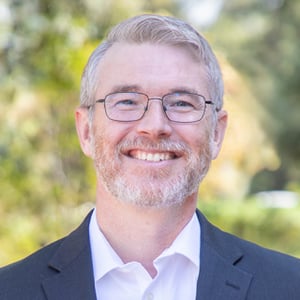
Professor of Law, UC Davis School of Law; Senior Fellow, California Environmental Law and Policy Center; and Director, UC Davis Center for Watershed Sciences
Professor Börk graduated with Distinction and Pro Bono Distinction from Stanford Law School in 2009, and completed his PhD dissertation in Ecology at UC Davis in September 2011. He received the Shapiro Family Award in 2011 as the Outstanding PhD Graduate in Ecology at UC Davis. He clerked for Tenth Circuit Chief Judge Mary Beck Briscoe, U.S. District Court Judge Julie Robinson, and Judge Janice Karlin on the U.S. Bankruptcy Court for the District of Kansas.
Professor Börk graduated Phi Beta Kappa from the University of Kansas in 2002, and was named a Truman Scholar in 2001 and a Switzer Fellow in 2010. Professor Börk's publications run the gamut from the definitive text on the history and application of California Fish and Game Code Section 5937 to a hatchery and genetic management plan for spring-run Chinook salmon. Professor Börk is currently examining legal and ethical issues in ecological restoration. His past work has focused on the management of guest species, those invasive species that managers invite in and make comfortable, and on the evolution of law via administrative actions. He is currently working on local governance issues in ecosystem management.
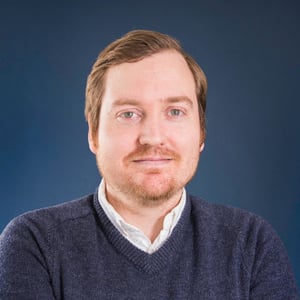
Vice President of Law & Policy, Property and Environment Research Center
Jonathan Wood is vice president of law and policy at the Property and Environment Research Center (PERC). An attorney, Jonathan has litigated environmental and property-rights cases in the Supreme Court of the United States, federal and state appellate courts, and trial courts across the country. His writing has appeared in the Wall Street Journal, Washington Post, National Review, Reason, and other outlets. And his research has been published in journals such as Environmental Law Reporter, Yale Journal on Regulation Notice & Comment, Pace Environmental Law Review, and California Western Law Review.
Prior to coming to PERC, Jonathan was a senior attorney at Pacific Legal Foundation, where he litigated cases concerning the Endangered Species Act, Clean Water Act, and other federal environmental laws. He was co-counsel for forest landowners in Weyerhaeuser Co. v. U.S. Fish and Wildlife Service, in which the Supreme Court ruled unanimously that private land could not be arbitrarily regulated as critical habitat under the ESA. He also led a successful effort to reform regulation of threatened species to better align the incentives of private landowners with the interests of rare species.
Jonathan has testified before several congressional committees on wildlife conservation and endangered species topics. He has also appeared on national television and radio, including NPR’s All Things Considered, C-Span’s Washington Journal, Stossel, Fox News, and Hill.TV.
Jonathan has a law degree from the New York University School of Law, a masters degree in economic policy from the London School of Economics, and a bachelor’s degree in economics from the University of Texas. He is on the executive committee for the Federalist Society’s Environmental Law and Property Rights Practice Group and a steering committee member for the Environmental Law Institute’s Emerging Leaders Initiative.
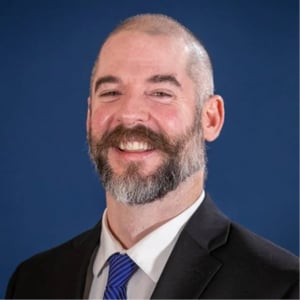
Deputy Director, Regulatory Studies Center, George Washington University
Will Yeatman is deputy director of the GW Regulatory Studies Center. A lawyer, he has spent almost two decades working on federal regulatory policy, with an emphasis on administrative law.
Yeatman has testified many times before Congress and state legislatures, and his scholarly work has appeared in such academic journals as Georgetown Law Journal, Administrative Law Review, and the (forthcoming) Catholic University Law Review. His popular writing has appeared in The Wall Street Journal, Foreign Policy, and Bloomberg.
Yeatman came to the RSC from the Pacific Legal Foundation. Previously, he had been at the Cato Institute’s Center for Constitutional Studies and the Competitive Enterprise Institute. From 2004 to 2006, he served as a Peace Corps volunteer in the Kyrgyz Republic.
Yeatman holds a BA in environmental sciences from the University of Virginia, an MA in international studies from the Denver University Graduate School of International Studies, and a JD from the Georgetown University Law Center. He is a member of the Washington, DC Bar.
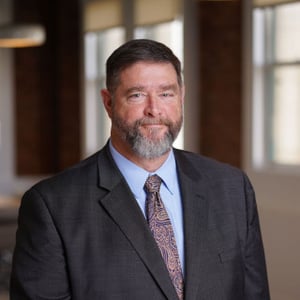
Partner, Briscoe Prows Kao Ivester & Bazel LLP
Tony Francois is experienced in Water and Real Property Law, Land Use and Zoning, Environmental Regulation, Natural Resources Development, Agricultural Law, and Constitutional Law. He has represented homeowners, builders, farmers and ranchers, trade associations, and water districts in administrative, civil, and criminal proceedings before state and federal administrative agencies and state and federal trial and appellate courts. He is a member of the California State Bar and the Northern, Eastern, and Central Districts of California and the Districts of New Mexico and North Dakota, and has litigated cases in federal courts in California, Oregon, Washington, Idaho, Montana, Nevada, Arizona, New Mexico, Colorado, North and South Dakota, Minnesota, Massachusetts, Maryland, South Carolina, and the District of Columbia, as well as the Sixth, Eighth, Ninth, and Tenth Circuit Courts of Appeals. He has appeared before the Supreme Courts of California, Idaho, Nevada, and the United States.
Prior to attending law school, he served as an infantry officer in the United States Army, and was stationed in the former West Germany during the fall of the Berlin Wall.
Tony was an Attorney at Pacific Legal Foundation from 2012 to 2021. He was a lobbyist for 10 years, first with California Farm Bureau Federation from 2003 to 2007, and then with KP Public Affairs from 2007 to 2012. He was an attorney at McQuaid, Bedford & Van Zandt in San Francisco from 1999 – 2003.
Senior Fellow, Pacific Research Institute
Tom Tanton is a Senior Fellow with the Pacific Research Institute as well as the Principal of T2 & Associates, a firm providing consulting services to the energy and technology industries. Mr. Tanton has over 35 years experience in the energy, economy, and environmental fields.
T2 & Associates are active in the area of energy and interconnected infrastructures, analyzing and providing advice on their impacts on energy prices, environmental quality, and regional economic development. Principals and associates of T2 & Associates have well over a half-century of experience in technology and legislative interface, having been central to many of the critical legislative changes that enabled technology choice and economic development at the state and federal level.
Mr. Tanton’s previous employment includes serving as Vice President and Senior Fellow with the Institute for Energy Research, from 2002 to 2006, and General Manager for EPRI, the Electric Power Research Institute, from 2000 to 2003.
Mr. Tanton has a wealth of experience in energy-related issues in the state of California and nationally. Prior to 2000, Mr. Tanton was the principal policy advisor with the California Energy Commission (CEC) where he was responsible for designing and implementing legislation including electric restructuring, gasoline and natural gas supply and pricing, energy facility siting, environmental issues, technology development, and transportation.
In 1998, Mr. Tanton also served as a team member of the California Governor's Office task force on critical infrastructure security. He was also the lead advisor on energy and infrastructure to California's task force on 21st Century development in 1999.
He has made presentations to a number of commissions and boards in California and nationally, including the California Energy and Public Utilities Commissions. He has also testified before several state legislatures and Congress and provided expert testimony in power plant sitting cases.
Counsel, Environmental Defense Fund
James T. B. Tripp has served as Counsel for Environmental Defense Fund since 1973 and as General Counsel since 1983. Mr. Tripp is responsible for the review of all Environmental Defense Fund legal action initiatives and has been admitted to the New York State Bar, the Southern and Eastern Districts of New York, several U.S. courts of appeal and the United States Supreme Court.
Through Environmental Defense Fund’s Living Cities program, he works on a wide range of land use, transportation, water resources, solid waste, ecosystem restoration and energy issues in the NY metropolitan region. His expertise led to his appointment to the New York State Department of Transportation's Advisory Panel on Transportation Policy for 2025 (2004), New York Governor George Pataki's Greenhouse Gas Task Force (2001-2002), and to Governor Pataki's Superfund Work Group (1999-2000).
Mr. Tripp helped to design a Transfer of Development Rights (TDR) program in the Long Island Pine Barrens, and has also been extensively involved in land conservation and smart growth efforts in the Highlands ecosystem, which stretches from eastern Pennsylvania through New Jersey and New York into western Connecticut.
Through EDF’s Land Water and Wildlife program, he has also been engaged in state and federal efforts to restore the Mississippi River Delta in south Louisiana and bottomland hardwood resources in the lower Mississippi Basin for more than 30 years. He served on former Louisiana Governor Michael Foster's Commission on the Future of Coastal Louisiana, and has served on the Louisiana Governor's Commission on Coastal Restoration and Conservation.
Chairs the board of New Partners for Community Revitalization and the Long Island Pine Barrens Clearinghouse Advisory Board. Formerly, he has chaired the Highlands Coalition Board and the New York City Water Board. He is a member of the Civitas Board, and also serves on the Boards of the Tri-State (New York, New Jersey, & Connecticut) Transportation Campaign, the Pinelands Preservation Alliance, and the Coalition to Restore Coastal Louisiana.
Author or co-author of numerous articles on wetland preservation, groundwater quality, solid waste, design of rights transfer systems, Cuba environmental law and NEPA reform. Recipient, Robert C. Stover Environmental Advocate Award, given by New York State Bar Association (1986).
Assistant US attorney, Southern District of New York (1968- 1973); summer volunteer, lawyers Committee for Civil Rights Under Law (1967, 1968); associate, Hale, Russell & Stentzel (1966-1968).
Professor of Law, George Mason University School of Law
With his work in regulatory takings and other aspects of property law, professor of law Steven Eagle plays an important role in the ongoing dialogue among American legal scholars, lawyers, and judges on the proper interpretation of property rights in the Constitution. He is the author of a leading property treatise and scholarly and popular articles and teaches in programs for judges and the practicing bar.
Professor Eagle came to George Mason in 1987 and also has taught at the law schools of Vanderbilt University, the University of Toledo, and Pace University. He earned his B.B.A. from the City College of New York (1965) and his J.D. from Yale Law School (1970). Professor Eagle teaches the first-year course, Property, Land Use Planning, and an advanced constitutional law seminar on property rights.

What’s The “Harm?" ESA Rulemaking after Loper Bright
Karrigan Börk, Jonathan Wood, Will Yeatman
In April, the Fish and Wildlife Service proposed to rescind a regulation defining the Endangered...
Courthouse Steps Decision Teleforum: Florida v. Georgia
Tony Francois
On April 1, the Supreme Court ruled on an original jurisdiction dispute in Florida v....
Article: No Workplace Cooperation Allowed
In the National Review, Thomas M. Johnson, Jr. writes about a fascinating labor issue at a...
Should Vehicle Fuel Emissions Standard Be More Strict? Why and How?
Thomas Tanton, James T.B Tripp, Steven J. Eagle
On September 15, 2009, following the administration’s announcement in May of a new regulation limiting...