
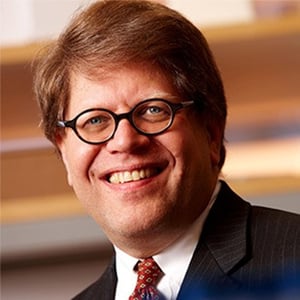
Faculty Fellow, Center for Law, Science & Innovation, Sandra Day O'Connor College of Law, Arizona State University
Dr. Klein is a Faculty Fellow at the Center for Law, Science & Innovation at the Sandra Day O'Connor College of Law at Arizona State University. He is also Principal at Roger D. Klein, MD JD Consulting and Klein & Klein Co., L.P.A. He was formerly Chief Medical Officer at OmniSeq, an oncology focused genomic profiling company that was recently acquired by LabCorp. Previously, Roger was the Medical Director at the Molecular Oncology division at the Cleveland Clinic. He was also the Chair of the Professional Relations Committee at the Association for Molecular Pathology. Prior to joining the Cleveland Clinic, he served as Medical Director of Molecular Oncology at the BloodCenter of Wisconsin where he led the center’s Diagnostic Laboratories’ initiative focused on DNA- and RNA-based testing for evaluation of cancer patients.
Dr. Klein has been an advisor to the Department of Health and Human Services (HHS), the Food and Drug Administration (FDA), the Centers for Medicare and Medicaid Services (CMS), and the Centers for Disease Control and Prevention (CDC). He has participated in and assumed leadership roles in many professional society committees and corporate advisory boards and is a policy advisor to the Heartland Institute.
Dr. Klein is licensed to practice medicine in Ohio, Florida, and Wisconsin. Additionally, he is licensed to practice law in the District of Columbia and Ohio. Roger obtained his Molecular Genetic Pathology certification at Mayo Medical School following completion of his M.D. Yale University School of Medicine. He obtained his J.D. from Yale Law School.

Vice President and Counsel for Privacy and Cyber Policy, CrowdStrike
Drew Bagley, CIPP/E, CrowdStrike Vice President and Counsel for Privacy and Cyber Policy, is responsible for leading CrowdStrike’s data protection initiatives, privacy strategy and global policy engagement. He serves on the Europol Advisory Group on Internet Security and the U.S. Department of State’s International Telecommunications Advisory Committee. Recently, Drew helped lead the ICANN Competition, Consumer Choice, and Consumer Trust Review Team, which assessed the expansion of the Internet’s Domain Name System. Prior to joining CrowdStrike, Drew served in the Office of the General Counsel at the Federal Bureau of Investigation. He is a member of the New York State Bar and a former German Chancellor Fellow. Drew has taught at the University of Maryland, University of Leipzig, and University of Florida and holds degrees from the University of Miami (JD) and the University of Florida (MA, BS, and BA).

Head of AI Policy, Abundance Institute
Neil Chilson is the Head of AI Policy at the Abundance Institute. Prior to this position, he served as a Senior Research Fellow at the Center for Growth and Opportunity. Chilson is a lawyer, computer scientist, and author of the book “Getting Out of Control: Emergent Leadership in a Complex World.”
Chilson was previously the senior research fellow for Technology and Innovation at Stand Together, where he guided efforts to understand and promote the legal and cultural paradigms that best enable people to discover, innovate, and improve all our lives.
Before Stand Together, Chilson was the Chief Technologist at the Federal Trade Commission, where he focused on the economics of privacy and blockchain-related issues. Previously, he was an attorney advisor to Acting FTC Chairman Maureen K. Ohlhausen. In both roles he advised Chairman Ohlhausen and worked with staff on nearly every major technology-related case, report, workshop, or other FTC proceeding since January 2014. Neil joined the FTC from telecom firm Wilkinson Barker Knauer. Neil is frequently quoted by the press and his work has appeared in numerous news outlets, including The Wall Street Journal, The Washington Post, USAToday, and Newsweek. Neil has a J.D. from The George Washington Law School, a M.S. in computer science from University of Illinois, Urbana-Champaign, and a B.S. in computer science from Harding University.
Faculty Fellow, Center for Law, Science & Innovation, Sandra Day O'Connor College of Law, Arizona State University
Dr. Klein is a Faculty Fellow at the Center for Law, Science & Innovation at the Sandra Day O'Connor College of Law at Arizona State University. He is also Principal at Roger D. Klein, MD JD Consulting and Klein & Klein Co., L.P.A. He was formerly Chief Medical Officer at OmniSeq, an oncology focused genomic profiling company that was recently acquired by LabCorp. Previously, Roger was the Medical Director at the Molecular Oncology division at the Cleveland Clinic. He was also the Chair of the Professional Relations Committee at the Association for Molecular Pathology. Prior to joining the Cleveland Clinic, he served as Medical Director of Molecular Oncology at the BloodCenter of Wisconsin where he led the center’s Diagnostic Laboratories’ initiative focused on DNA- and RNA-based testing for evaluation of cancer patients.
Dr. Klein has been an advisor to the Department of Health and Human Services (HHS), the Food and Drug Administration (FDA), the Centers for Medicare and Medicaid Services (CMS), and the Centers for Disease Control and Prevention (CDC). He has participated in and assumed leadership roles in many professional society committees and corporate advisory boards and is a policy advisor to the Heartland Institute.
Dr. Klein is licensed to practice medicine in Ohio, Florida, and Wisconsin. Additionally, he is licensed to practice law in the District of Columbia and Ohio. Roger obtained his Molecular Genetic Pathology certification at Mayo Medical School following completion of his M.D. Yale University School of Medicine. He obtained his J.D. from Yale Law School.
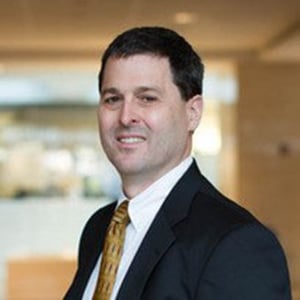
Scott K. Ginsburg Professor of Health Law & Policy, Georgetown University
David A. Hyman, M.D., J.D., is the Scott K. Ginsburg Professor of Health Law & Policy at Georgetown University. Professor Hyman focuses his research and writing on the regulation and financing of health care. He teaches or has taught administrative law, civil procedure, health care regulation, "how to regulate," insurance, medical malpractice, law & economics, professional responsibility, and tax policy.
While serving as Special Counsel to the Federal Trade Commission, Professor Hyman was principal author and project leader for the first joint report ever issued by the Federal Trade Commission and Department of Justice, “Improving Health Care: A Dose of Competition” (2004). He is also the author of Medicare Meets Mephistopheles, which was selected by the U.S. Chamber of Commerce/National Chamber Foundation as one of the top ten books of 2007, and the co-author (with Charles Silver) of Overcharged: Why Americans Pay Too Much for Health Care (2018). He has published widely in student-edited law reviews and peer-reviewed medical, health policy, law, and economics journals.
Faculty Fellow, Center for Law, Science & Innovation, Sandra Day O'Connor College of Law, Arizona State University
Dr. Klein is a Faculty Fellow at the Center for Law, Science & Innovation at the Sandra Day O'Connor College of Law at Arizona State University. He is also Principal at Roger D. Klein, MD JD Consulting and Klein & Klein Co., L.P.A. He was formerly Chief Medical Officer at OmniSeq, an oncology focused genomic profiling company that was recently acquired by LabCorp. Previously, Roger was the Medical Director at the Molecular Oncology division at the Cleveland Clinic. He was also the Chair of the Professional Relations Committee at the Association for Molecular Pathology. Prior to joining the Cleveland Clinic, he served as Medical Director of Molecular Oncology at the BloodCenter of Wisconsin where he led the center’s Diagnostic Laboratories’ initiative focused on DNA- and RNA-based testing for evaluation of cancer patients.
Dr. Klein has been an advisor to the Department of Health and Human Services (HHS), the Food and Drug Administration (FDA), the Centers for Medicare and Medicaid Services (CMS), and the Centers for Disease Control and Prevention (CDC). He has participated in and assumed leadership roles in many professional society committees and corporate advisory boards and is a policy advisor to the Heartland Institute.
Dr. Klein is licensed to practice medicine in Ohio, Florida, and Wisconsin. Additionally, he is licensed to practice law in the District of Columbia and Ohio. Roger obtained his Molecular Genetic Pathology certification at Mayo Medical School following completion of his M.D. Yale University School of Medicine. He obtained his J.D. from Yale Law School.
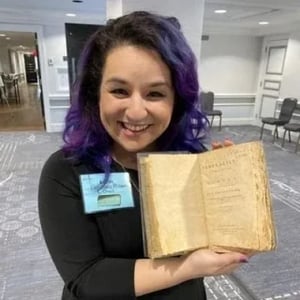
Director, Digital Media, Communications and Fellow, R Street Institute
Shoshana Weissmann manages R Street’s social media, email marketing and other digital assets. She also works on occupational licensing reform, social media regulatory policy, Section 230 and other issues, and has written for various publications, including The Wall Street Journal and USA Today.
Shoshana most recently managed digital communications for Opportunity Lives, a group that highlighted positive stories and policy solutions. Before that, she managed social media and wrote for The Weekly Standard. Earlier in her career, she managed digital communications for the America Rising PAC, where her strategy was highlighted in a piece that appeared in The New York Times.
She is on the board of The Conservation Coalition and a member of the Federalist Society’s Regulatory Transparency Project’s state and local and emerging technology working groups.
She lives in Washington, D.C. and has a stuffed sloth named James Madisloth, and she enjoys the Snapchat hot dog.

Explainer Episode 53 - Biologics, Biosimilars, and the Two-fold U.S. Approval Framework’s Possible Impact on Prices
Roger D. Klein
Biosimilars, a category of biologic (medicine derived from a living organism), require approval, at least...
Deep Dive Episode 117 – How to Approach Data Collection and Breaches in the Age of COVID-19
Drew Bagley, Neil Chilson, Roger D. Klein
In an effort to combat the spread of COVID-19 and contain its impact, nations across...
FDA Regulation of Diagnostic Testing and COVID-19
Roger D. Klein
Did Food and Drug Administration (FDA) regulations hamper the fight against COVID-19 at a critical...
Deep Dive Episode 98 – Regulatory Reforms and the COVID Pandemic
David Hyman, Roger D. Klein, Shoshana Weissmann
Governments at all levels are figuring out how to make sure sick people are treated...