
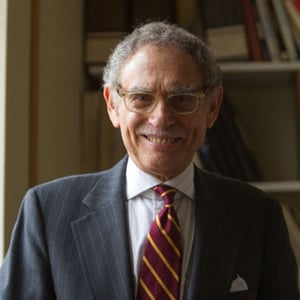
Founder and Director, James Wilson Institute on Natural Rights & the American Founding
Hadley Arkes joined the faculty of Amherst College in 1966. He became the Edward Ney Professor of Jurisprudence in 1987, and held that chair until he retired officially in July 2015. But he has not retired from writing and speaking. He has carried that teaching into a new phase; he has become the Founder and Director of the James Wilson Institute on Natural Rights and the American Founding in Washington, D.C. He has written eight books, mostly with Princeton and Cambridge University Presss. Among the books at Princeton have been: The Philosopher in the City (1981), First Things (1986), Beyond the Constitution (1990), and The Return of George Sutherland (1994). With Cambridge Press he has done Natural Rights and the Right to Choose (2002), and Constitutional Illusions & Anchoring Truths: The Touchstone of the Natural Law (2010). His most recent book, with Regnery Press is Mere Natural Law (2023) His articles have appeared in professional journals, but apart from his writing in more scholarly formats, he has become known to a wider audience through his writings in the Wall Street Journal, National Review, Civitas and First Things, a journal that took its name from his book of that title.
He was the main advocate, and architect, of the bill that became known as the Born-Alive Infants’ Protection Act. The account of his experience, in moving the bill through Congress, is contained as an epilogue or memoir in his book, Natural Rights & the Right to Choose. Arkes first prepared his proposal as part of the debating kit assembled for the first George Bush in 1988. The purpose of that proposal was to offer the “most modest first step” of all in legislating on abortion, and opening a conversation even with people who called themselves “pro-choice.” Professor Arkes proposed to begin simply by preserving the life of a child who survived an abortion–contrary to the holding of one federal judge, that such a child was not protected by the laws. Professor Arkes led the testimony on the bill before the Judiciary Committee of the U.S. House in July 2000, then again in July 2001. The legislative calendar was upended in the aftermath of September 11th, but in March 2002, the bill was brought to the floor of the House, where it passed unanimously. To the surprise of Professor Arkes, the bill was brought to the floor of the Senate on July 18 by the Deputy Majority Leader, Harry Reid, and passed in the same way. On August 5, President Bush signed the bill into law with Professor Arkes in attendance.
Professor Arkes was the founder, at Amherst, of the Committee for the American Founding, a group of alumni and students seeking to preserve, at Amherst, the doctrines of “natural rights” taught by the American Founders and Lincoln. That interest has been carried over now to the founding of a new center for the jurisprudence of natural law, in Washington, D.C.: the James Wilson Institute on Natural Rights and the American Founding, named for one of the premier minds among the American Founders. Professor Arkes has drawn to this project a cluster of accomplished federal judges who have wanted to get a firmer hold on the natural law, and brought them together with some gifted teachers of philosophy and law. The new institute will be sponsoring lectures and seminars in Washington and other parts of the country. The purpose of this new James Wilson Institute is to teach anew, to lawyers, judges, and students those principles of law that furnished the guide to the American Founders as they set about framing a Constitution. And the hope is to restore, to a new generation, the furnishings of mind of the men who formed this regime.

Patrick Hotung Professor of Constitutional Law, Georgetown University Law Center
Randy Barnett is the Patrick Hotung Professor of Constitutional Law at Georgetown University Law Center. He has argued before the United States Supreme Court, tried murder cases to juries as a prosecutor in Chicago, and appeared as a prosecutor in the feature film Inalienable. He is the author of numerous books, including Restoring the Lost Constitution, The Structure of Liberty, Our Republican Constitution, and The Original Meaning of the Fourteenth Amendment. He has published two memoirs, A Life for Liberty: The Making of an American Originalist, and Felony Review: Tales of True Crime and Corruption in Chicago. He is currently working on a new book, Freedom and Flourishing: Libertarianism for the Real World.
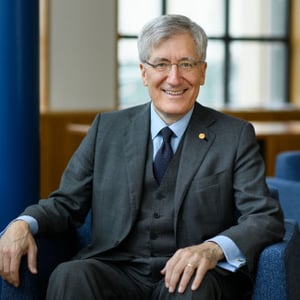
McCormick Professor of Jurisprudence; Director, James Madison Program, Princeton University
Robert P. George is McCormick Professor of Jurisprudence and Director of the James Madison Program in American Ideals and Institutions at Princeton University. He has several times been a Visiting Professor at Harvard Law School. He has served as Chairman of the U.S. Commission on International Religious Freedom and on the U.S. Commission on Civil Rights and the President’s Council on Bioethics. He has also served as the U.S. member of UNESCO’s World Commission on the Ethics of Scientific Knowledge and Technology. He was a Judicial Fellow at the Supreme Court of the United States, where he received the Justice Tom C. Clark Award. A Phi Beta Kappa graduate of Swarthmore, he holds the degrees of J.D. and M.T.S. from Harvard University and the degrees of D.Phil., B.C.L., D.C.L., and D.Litt. from Oxford University, in addition to twenty-one honorary doctorates. He is a recipient of the U.S. Presidential Citizens Medal, the Honorific Medal for the Defense of Human Rights of the Republic of Poland, the Canterbury Medal of the Becket Fund for Religious Liberty, the Bradley Prize, the Irving Kristol Award of the American Enterprise Institute, and Princeton University’s President’s Award for Distinguished Teaching. His books include Making Men Moral: Civil Liberties and Public Morality and In Defense of Natural Law (both published by Oxford University Press), as well as The Clash of Orthodoxies and Conscience and Its Enemies (both published by ISI Books).
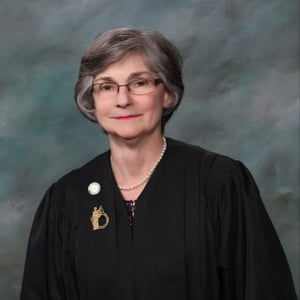
Judge, United States Court of Appeals, Fifth Circuit
Edith Jones graduated from Alamo Heights High School, where she was a National Merit Scholar. In 1971, she received her B.A. in Economics from Cornell University, graduating with honors. In 1974, she was awarded her J.D. at the University of Texas Law School, where she was a law review editor and received the Order of the Coif.
Judge Jones was the first female partner at Andrews, Kurth, Campbell & Jones (now Hunton Andrews Kurth) where she practiced various types of litigation and bankruptcy cases. Judge Jones went on the federal bench on June 1, 1985.
Judge Jones served as a former member of the National Bankruptcy Review Commission, and as a member of the Judicial Conference Commission on Bankruptcy Rules. Judge Jones served on the White House Fellows Commission. Judge Jones served on the board of the Sam Houston Area Council of the Boy Scouts of America. She has been a member of the Garland Walker Inn of Court in Houston for more than 20 years and its President for at least ten years. Judge Jones is also on the Board of the Calvin Coolidge Presidential Foundation.

Chief Judge, United States Court of Appeals, Eleventh Circuit
William H. Pryor Jr. serves as Chief Circuit Judge on the United States Court of Appeals for the Eleventh Circuit.
In 2013–18, he served on the United States Sentencing Commission and, in 2017–18, served as Acting Chair.
He has taught as a visiting professor at the University of Alabama School of Law and previously taught as an adjunct professor at the Cumberland School of Law of Samford University.
He served as the 45th Attorney General of Alabama from 1997 to 2004. When he took office, he was the youngest attorney general in the nation. In his reelection, he received the highest percentage of votes of any statewide candidate.
He graduated magna cum laude from Tulane Law School where he finished first in the common-law curriculum and was editor in chief of the Tulane Law Review. He then served as a law clerk for Judge John Minor Wisdom of the U.S. Court of Appeals for the Fifth Circuit.
He is a member of The American Law Institute and an Adviser for the RESTATEMENT OF THE LAW THIRD, CONFLICT OF LAWS. He is a coauthor with Bryan Garner, Justices Gorsuch and Kavanaugh, and several other judges of a treatise, THE LAW OF JUDICIAL PRECEDENT. He has published in the Yale Law Journal, Columbia Law Review, Virginia Law Review, Notre Dame Law Review, Harvard Journal of Law & Public Policy, Yale Law & Policy Review, George Mason Law Review, Florida Law Review, Alabama Law Review, Case Western Reserve Law Review, and Tulane Law Review. He has published op-eds in The Wall Street Journal, The New York Times, National Review, and USA Today. He has debated at National Lawyers’ Conventions of the Federalist Society (including on National Public Radio) and at the Oxford Union in the United Kingdom. And he is listed among several “widely admired judicial writers” in Bryan Garner’s The Redbook: A Manual on Legal Style.
He is a member of the Tulane Law School Hall of Fame and has received the Defender of the Constitution Award from the Heritage Foundation, the Jurist of the Year Award from the Texas Review of Law & Politics, and the St. Thomas More Award from the St. Thomas More Society of Atlanta. Judge Pryor is also a proud member of the National Society of the Sons of the American Revolution.
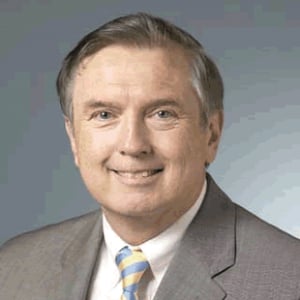
Professor of Law, University of Notre Dame Law School
Gerard V. Bradley is Professor of Law at the University of Notre Dame, where he teaches Legal Ethics and Constitutional Law. At Notre Dame he directs (with John Finnis) the Natural Law Institute and co-edits The American Journal of Jurisprudence, an international forum for legal philosophy. Bradley has been a Visiting Fellow at the Hoover Institution of Stanford University, and a Senior Fellow of the Witherspoon Institute, in Princeton, New Jersey. He served for many years as President of the Fellowship of Catholic Scholars.
Bradley received his B.A and J.D. degrees from Cornell University, graduating Summa cum laude from the law school in 1980. After serving in the Trial Division of the Manhattan District Attorney’s Office he joined the law faculty at the University of Illinois. He moved to Notre Dame in 1992. Bradley has published over one hundred scholarly articles and reviews. His most recent books are an edited collection of essays titled, Challenges to Religious Liberty in the Twenty-First Century (published by Cambridge University Press in 2012), Essays on Law, Religion, and Morality and Unquiet Americans: U.S. Catholics and the Common Good (both to be published in 2014.) He is currently working on a book about regulating obscenity in the Internet Age.
McCormick Professor of Jurisprudence; Director, James Madison Program, Princeton University
Robert P. George is McCormick Professor of Jurisprudence and Director of the James Madison Program in American Ideals and Institutions at Princeton University. He has several times been a Visiting Professor at Harvard Law School. He has served as Chairman of the U.S. Commission on International Religious Freedom and on the U.S. Commission on Civil Rights and the President’s Council on Bioethics. He has also served as the U.S. member of UNESCO’s World Commission on the Ethics of Scientific Knowledge and Technology. He was a Judicial Fellow at the Supreme Court of the United States, where he received the Justice Tom C. Clark Award. A Phi Beta Kappa graduate of Swarthmore, he holds the degrees of J.D. and M.T.S. from Harvard University and the degrees of D.Phil., B.C.L., D.C.L., and D.Litt. from Oxford University, in addition to twenty-one honorary doctorates. He is a recipient of the U.S. Presidential Citizens Medal, the Honorific Medal for the Defense of Human Rights of the Republic of Poland, the Canterbury Medal of the Becket Fund for Religious Liberty, the Bradley Prize, the Irving Kristol Award of the American Enterprise Institute, and Princeton University’s President’s Award for Distinguished Teaching. His books include Making Men Moral: Civil Liberties and Public Morality and In Defense of Natural Law (both published by Oxford University Press), as well as The Clash of Orthodoxies and Conscience and Its Enemies (both published by ISI Books).
Professor of Law, University of Notre Dame Law School
Gerard V. Bradley is Professor of Law at the University of Notre Dame, where he teaches Legal Ethics and Constitutional Law. At Notre Dame he directs (with John Finnis) the Natural Law Institute and co-edits The American Journal of Jurisprudence, an international forum for legal philosophy. Bradley has been a Visiting Fellow at the Hoover Institution of Stanford University, and a Senior Fellow of the Witherspoon Institute, in Princeton, New Jersey. He served for many years as President of the Fellowship of Catholic Scholars.
Bradley received his B.A and J.D. degrees from Cornell University, graduating Summa cum laude from the law school in 1980. After serving in the Trial Division of the Manhattan District Attorney’s Office he joined the law faculty at the University of Illinois. He moved to Notre Dame in 1992. Bradley has published over one hundred scholarly articles and reviews. His most recent books are an edited collection of essays titled, Challenges to Religious Liberty in the Twenty-First Century (published by Cambridge University Press in 2012), Essays on Law, Religion, and Morality and Unquiet Americans: U.S. Catholics and the Common Good (both to be published in 2014.) He is currently working on a book about regulating obscenity in the Internet Age.
McCormick Professor of Jurisprudence; Director, James Madison Program, Princeton University
Robert P. George is McCormick Professor of Jurisprudence and Director of the James Madison Program in American Ideals and Institutions at Princeton University. He has several times been a Visiting Professor at Harvard Law School. He has served as Chairman of the U.S. Commission on International Religious Freedom and on the U.S. Commission on Civil Rights and the President’s Council on Bioethics. He has also served as the U.S. member of UNESCO’s World Commission on the Ethics of Scientific Knowledge and Technology. He was a Judicial Fellow at the Supreme Court of the United States, where he received the Justice Tom C. Clark Award. A Phi Beta Kappa graduate of Swarthmore, he holds the degrees of J.D. and M.T.S. from Harvard University and the degrees of D.Phil., B.C.L., D.C.L., and D.Litt. from Oxford University, in addition to twenty-one honorary doctorates. He is a recipient of the U.S. Presidential Citizens Medal, the Honorific Medal for the Defense of Human Rights of the Republic of Poland, the Canterbury Medal of the Becket Fund for Religious Liberty, the Bradley Prize, the Irving Kristol Award of the American Enterprise Institute, and Princeton University’s President’s Award for Distinguished Teaching. His books include Making Men Moral: Civil Liberties and Public Morality and In Defense of Natural Law (both published by Oxford University Press), as well as The Clash of Orthodoxies and Conscience and Its Enemies (both published by ISI Books).
UC Foundation Assistant Professor, U.T. Chattanooga
Senior Director of Strategic Partnerships, First Liberty Institute
Lisa Budzynski Ezell is the former Vice President and Director of the Federalist Society’s Lawyers Chapters. In this role, she managed a growing network of over 90 lawyers chapters nationwide, including oversight of leadership recruitment, chapter programming, state conferences, civics education outreach, and young lawyers activities. She holds a Bachelor of Arts degree from Saint Mary’s College in Political Science and History and a Master of Public Policy from George Mason University.
McCormick Professor of Jurisprudence; Director, James Madison Program, Princeton University
Robert P. George is McCormick Professor of Jurisprudence and Director of the James Madison Program in American Ideals and Institutions at Princeton University. He has several times been a Visiting Professor at Harvard Law School. He has served as Chairman of the U.S. Commission on International Religious Freedom and on the U.S. Commission on Civil Rights and the President’s Council on Bioethics. He has also served as the U.S. member of UNESCO’s World Commission on the Ethics of Scientific Knowledge and Technology. He was a Judicial Fellow at the Supreme Court of the United States, where he received the Justice Tom C. Clark Award. A Phi Beta Kappa graduate of Swarthmore, he holds the degrees of J.D. and M.T.S. from Harvard University and the degrees of D.Phil., B.C.L., D.C.L., and D.Litt. from Oxford University, in addition to twenty-one honorary doctorates. He is a recipient of the U.S. Presidential Citizens Medal, the Honorific Medal for the Defense of Human Rights of the Republic of Poland, the Canterbury Medal of the Becket Fund for Religious Liberty, the Bradley Prize, the Irving Kristol Award of the American Enterprise Institute, and Princeton University’s President’s Award for Distinguished Teaching. His books include Making Men Moral: Civil Liberties and Public Morality and In Defense of Natural Law (both published by Oxford University Press), as well as The Clash of Orthodoxies and Conscience and Its Enemies (both published by ISI Books).
Founder and Director, James Wilson Institute on Natural Rights & the American Founding
Hadley Arkes joined the faculty of Amherst College in 1966. He became the Edward Ney Professor of Jurisprudence in 1987, and held that chair until he retired officially in July 2015. But he has not retired from writing and speaking. He has carried that teaching into a new phase; he has become the Founder and Director of the James Wilson Institute on Natural Rights and the American Founding in Washington, D.C. He has written eight books, mostly with Princeton and Cambridge University Presss. Among the books at Princeton have been: The Philosopher in the City (1981), First Things (1986), Beyond the Constitution (1990), and The Return of George Sutherland (1994). With Cambridge Press he has done Natural Rights and the Right to Choose (2002), and Constitutional Illusions & Anchoring Truths: The Touchstone of the Natural Law (2010). His most recent book, with Regnery Press is Mere Natural Law (2023) His articles have appeared in professional journals, but apart from his writing in more scholarly formats, he has become known to a wider audience through his writings in the Wall Street Journal, National Review, Civitas and First Things, a journal that took its name from his book of that title.
He was the main advocate, and architect, of the bill that became known as the Born-Alive Infants’ Protection Act. The account of his experience, in moving the bill through Congress, is contained as an epilogue or memoir in his book, Natural Rights & the Right to Choose. Arkes first prepared his proposal as part of the debating kit assembled for the first George Bush in 1988. The purpose of that proposal was to offer the “most modest first step” of all in legislating on abortion, and opening a conversation even with people who called themselves “pro-choice.” Professor Arkes proposed to begin simply by preserving the life of a child who survived an abortion–contrary to the holding of one federal judge, that such a child was not protected by the laws. Professor Arkes led the testimony on the bill before the Judiciary Committee of the U.S. House in July 2000, then again in July 2001. The legislative calendar was upended in the aftermath of September 11th, but in March 2002, the bill was brought to the floor of the House, where it passed unanimously. To the surprise of Professor Arkes, the bill was brought to the floor of the Senate on July 18 by the Deputy Majority Leader, Harry Reid, and passed in the same way. On August 5, President Bush signed the bill into law with Professor Arkes in attendance.
Professor Arkes was the founder, at Amherst, of the Committee for the American Founding, a group of alumni and students seeking to preserve, at Amherst, the doctrines of “natural rights” taught by the American Founders and Lincoln. That interest has been carried over now to the founding of a new center for the jurisprudence of natural law, in Washington, D.C.: the James Wilson Institute on Natural Rights and the American Founding, named for one of the premier minds among the American Founders. Professor Arkes has drawn to this project a cluster of accomplished federal judges who have wanted to get a firmer hold on the natural law, and brought them together with some gifted teachers of philosophy and law. The new institute will be sponsoring lectures and seminars in Washington and other parts of the country. The purpose of this new James Wilson Institute is to teach anew, to lawyers, judges, and students those principles of law that furnished the guide to the American Founders as they set about framing a Constitution. And the hope is to restore, to a new generation, the furnishings of mind of the men who formed this regime.
Patrick Hotung Professor of Constitutional Law, Georgetown University Law Center
Randy Barnett is the Patrick Hotung Professor of Constitutional Law at Georgetown University Law Center. He has argued before the United States Supreme Court, tried murder cases to juries as a prosecutor in Chicago, and appeared as a prosecutor in the feature film Inalienable. He is the author of numerous books, including Restoring the Lost Constitution, The Structure of Liberty, Our Republican Constitution, and The Original Meaning of the Fourteenth Amendment. He has published two memoirs, A Life for Liberty: The Making of an American Originalist, and Felony Review: Tales of True Crime and Corruption in Chicago. He is currently working on a new book, Freedom and Flourishing: Libertarianism for the Real World.
McCormick Professor of Jurisprudence; Director, James Madison Program, Princeton University
Robert P. George is McCormick Professor of Jurisprudence and Director of the James Madison Program in American Ideals and Institutions at Princeton University. He has several times been a Visiting Professor at Harvard Law School. He has served as Chairman of the U.S. Commission on International Religious Freedom and on the U.S. Commission on Civil Rights and the President’s Council on Bioethics. He has also served as the U.S. member of UNESCO’s World Commission on the Ethics of Scientific Knowledge and Technology. He was a Judicial Fellow at the Supreme Court of the United States, where he received the Justice Tom C. Clark Award. A Phi Beta Kappa graduate of Swarthmore, he holds the degrees of J.D. and M.T.S. from Harvard University and the degrees of D.Phil., B.C.L., D.C.L., and D.Litt. from Oxford University, in addition to twenty-one honorary doctorates. He is a recipient of the U.S. Presidential Citizens Medal, the Honorific Medal for the Defense of Human Rights of the Republic of Poland, the Canterbury Medal of the Becket Fund for Religious Liberty, the Bradley Prize, the Irving Kristol Award of the American Enterprise Institute, and Princeton University’s President’s Award for Distinguished Teaching. His books include Making Men Moral: Civil Liberties and Public Morality and In Defense of Natural Law (both published by Oxford University Press), as well as The Clash of Orthodoxies and Conscience and Its Enemies (both published by ISI Books).
Judge, United States Court of Appeals, Fifth Circuit
Edith Jones graduated from Alamo Heights High School, where she was a National Merit Scholar. In 1971, she received her B.A. in Economics from Cornell University, graduating with honors. In 1974, she was awarded her J.D. at the University of Texas Law School, where she was a law review editor and received the Order of the Coif.
Judge Jones was the first female partner at Andrews, Kurth, Campbell & Jones (now Hunton Andrews Kurth) where she practiced various types of litigation and bankruptcy cases. Judge Jones went on the federal bench on June 1, 1985.
Judge Jones served as a former member of the National Bankruptcy Review Commission, and as a member of the Judicial Conference Commission on Bankruptcy Rules. Judge Jones served on the White House Fellows Commission. Judge Jones served on the board of the Sam Houston Area Council of the Boy Scouts of America. She has been a member of the Garland Walker Inn of Court in Houston for more than 20 years and its President for at least ten years. Judge Jones is also on the Board of the Calvin Coolidge Presidential Foundation.
Professor of Law, University of Notre Dame Law School
Gerard V. Bradley is Professor of Law at the University of Notre Dame, where he teaches Legal Ethics and Constitutional Law. At Notre Dame he directs (with John Finnis) the Natural Law Institute and co-edits The American Journal of Jurisprudence, an international forum for legal philosophy. Bradley has been a Visiting Fellow at the Hoover Institution of Stanford University, and a Senior Fellow of the Witherspoon Institute, in Princeton, New Jersey. He served for many years as President of the Fellowship of Catholic Scholars.
Bradley received his B.A and J.D. degrees from Cornell University, graduating Summa cum laude from the law school in 1980. After serving in the Trial Division of the Manhattan District Attorney’s Office he joined the law faculty at the University of Illinois. He moved to Notre Dame in 1992. Bradley has published over one hundred scholarly articles and reviews. His most recent books are an edited collection of essays titled, Challenges to Religious Liberty in the Twenty-First Century (published by Cambridge University Press in 2012), Essays on Law, Religion, and Morality and Unquiet Americans: U.S. Catholics and the Common Good (both to be published in 2014.) He is currently working on a book about regulating obscenity in the Internet Age.
McCormick Professor of Jurisprudence; Director, James Madison Program, Princeton University
Robert P. George is McCormick Professor of Jurisprudence and Director of the James Madison Program in American Ideals and Institutions at Princeton University. He has several times been a Visiting Professor at Harvard Law School. He has served as Chairman of the U.S. Commission on International Religious Freedom and on the U.S. Commission on Civil Rights and the President’s Council on Bioethics. He has also served as the U.S. member of UNESCO’s World Commission on the Ethics of Scientific Knowledge and Technology. He was a Judicial Fellow at the Supreme Court of the United States, where he received the Justice Tom C. Clark Award. A Phi Beta Kappa graduate of Swarthmore, he holds the degrees of J.D. and M.T.S. from Harvard University and the degrees of D.Phil., B.C.L., D.C.L., and D.Litt. from Oxford University, in addition to twenty-one honorary doctorates. He is a recipient of the U.S. Presidential Citizens Medal, the Honorific Medal for the Defense of Human Rights of the Republic of Poland, the Canterbury Medal of the Becket Fund for Religious Liberty, the Bradley Prize, the Irving Kristol Award of the American Enterprise Institute, and Princeton University’s President’s Award for Distinguished Teaching. His books include Making Men Moral: Civil Liberties and Public Morality and In Defense of Natural Law (both published by Oxford University Press), as well as The Clash of Orthodoxies and Conscience and Its Enemies (both published by ISI Books).
McCormick Professor of Jurisprudence; Director, James Madison Program, Princeton University
Robert P. George is McCormick Professor of Jurisprudence and Director of the James Madison Program in American Ideals and Institutions at Princeton University. He has several times been a Visiting Professor at Harvard Law School. He has served as Chairman of the U.S. Commission on International Religious Freedom and on the U.S. Commission on Civil Rights and the President’s Council on Bioethics. He has also served as the U.S. member of UNESCO’s World Commission on the Ethics of Scientific Knowledge and Technology. He was a Judicial Fellow at the Supreme Court of the United States, where he received the Justice Tom C. Clark Award. A Phi Beta Kappa graduate of Swarthmore, he holds the degrees of J.D. and M.T.S. from Harvard University and the degrees of D.Phil., B.C.L., D.C.L., and D.Litt. from Oxford University, in addition to twenty-one honorary doctorates. He is a recipient of the U.S. Presidential Citizens Medal, the Honorific Medal for the Defense of Human Rights of the Republic of Poland, the Canterbury Medal of the Becket Fund for Religious Liberty, the Bradley Prize, the Irving Kristol Award of the American Enterprise Institute, and Princeton University’s President’s Award for Distinguished Teaching. His books include Making Men Moral: Civil Liberties and Public Morality and In Defense of Natural Law (both published by Oxford University Press), as well as The Clash of Orthodoxies and Conscience and Its Enemies (both published by ISI Books).

Mere Natural Law
Hadley P. Arkes, Randy E. Barnett, Robert P. George, Edith H. Jones
The U.S. Supreme Court’s originalist jurisprudence has been on display in its most recent terms...
Mere Natural Law
2023 National Lawyers Convention
Washington, DCAgainst Living Common Goodism
William H. Pryor
Today I want to discuss a new version of an old debate. In 1985, then-Attorney...
Book Review: Unborn Human Life and Fundamental Rights: Leading Constitutional Cases under Scrutiny
Gerard V. Bradley, Robert P. George
In Unborn Human Life and Fundamental Rights: Leading Constitutional Cases under Scrutiny (Peter Lang, 2019), editors William...
Book Review: Unborn Human Life and Fundamental Rights: Leading Constitutional Cases under Scrutiny
Gerard V. Bradley, Robert P. George
In Unborn Human Life and Fundamental Rights: Leading Constitutional Cases under Scrutiny (Peter Lang, 2019), editors William...
Book Review: Unborn Human Life and Fundamental Rights: Leading Constitutional Cases under Scrutiny
TeleforumWhat Happened to Natural Law in American Jurisprudence?
Kody Cooper
A Review of The Decline of Natural Law: How American Lawyers Once Used Natural Law and...
A Conversation with Professor Robbie George
Columbia Student Chapter
New York, NYIn Dobbs v. Jackson, History is On Mississippi's Side
This post originally appeared at Newsweek and is being republished here with permission. The Supreme...
Lunch and Keynote Address: What Causes, and What Might Cure, Campus Illiberalism?
Lisa Ezell, Robert P. George
Featuring: Prof. Robert P. George, Princeton University Introduction: Lisa Ezell, Vice President & Director, Lawyers...