
John C. Hutchins Professor of Law; Director, Compliance Risk Management and Financial Integrity Institute; Co-Director, Center for Business Law; Associate Dean of Graduate Studies and Strategic Programs, Case Western Reserve University School of Law
Eric Chaffee is a professor at Case Western Reserve University School of Law, specializing in business law, taxation, and law & technology. He is a recognized educator and prolific writer in his field.
Assistant Professor Law, St. Thomas University College of Law
Itai Fiegenbaum is an Assistant Professor at St. Thomas University College of Law, where he teaches Business Associations and related commercial law courses.

L.L. Stewart Professor of Business Law, University of Oregon School of Law
Professor Manesh's scholarship focuses on the intersections of corporate, contract and LLC law. His work has been cited in leading casebooks and more than 40 court decisions, including opinions of the U.S. Courts of Appeals for the Second, Ninth, and Eleventh Circuits, the Delaware Supreme Court, and the Delaware Court of Chancery. At Oregon Law, he teaches a variety of business law courses encapsulating corporations, LLCs, securities, contracts, and mergers and acquisitions. During his time at Oregon, he has received the Orlando J. Hollis Faculty Teaching Award, the law school's highest teaching honor, and the Herman Award for Outstanding Online Education from University of Oregon Office of the Provost. Prior to joining the Oregon law faculty, Professor Manesh was an attorney in the office of Davis Wright Tremaine LLP, focusing on corporate finance and business transactions. He earned his undergraduate degree in industrial engineering summa cum laude from the University of Arkansas and his law degree magna cum laude from Georgetown University, where he was named Order of the Coif.
Professor of Law and Rouse Chairholder, Antonin Scalia Law School, George Mason University
Professor Miller holds an Allison and Dorothy Rouse Chair in Law at the Antonin Scalia Law School. An elected member of the American Law Institute and a research member of the European Corporate Governance Institute, Professor Miller is also a Fellow and the Co-Director of the Program on Organizations, Business and Markets at the Classical Liberal Institute at the New York University Law School, an Adjunct Fellow at the Manhattan Institute, and an Affiliated Scholar at the James Wilson Institute on Natural Rights and the American Founding. Prior to joining George Mason University in 2025, Professor Miller was the F. Arnold Daum Chair in Corporate Finance and Law and a Professor of Law at the University of Iowa College of Law, where he had also served as the Associate Dean for Faculty Development.
Professor Miller’s research concerns corporate and securities law, the economic analysis of law, and the philosophy of law. He is particularly interested in applying economic concepts and methods to understand provisions in contracts between sophisticated commercial parties. He has written on material adverse effect clauses under Delaware law, the fiduciary duties of corporate directors, director oversight liability, the history and development of Delaware corporate law, and much more. His articles and working papers are available on his SSRN page.
Professor Miller has been cited by federal and state courts in the United States, including the Delaware Supreme Court and the Delaware Court of Chancery, as well as by the Commercial Court of the United Kingdom and the Ontario Superior Court of Justice (Commercial List) in Canada. Additionally, he is a member of the Committee on Mergers, Acquisitions & Corporate Control Contests and a former chair of the Corporation Law Committee of the New York City Bar Association.
Earlier in his career, Professor Miller was a Professor of Law at the Villanova University School of Law and the Associate Director of the Matthew J. Ryan Center for the Study of Free Institutions and the Public Good at Villanova University. He has been a Visiting Professor of Law at the University of Pennsylvania Law School, a Visiting Assistant Professor of Law at the Cardozo Law School, and an Olin Fellow in Law and Economics at the Columbia Law School.
Before entering academia, Professor Miller was an associate with Wachtell, Lipton, Rosen & Katz. He earned his J.D. from the Yale Law School where he was a Senior Editor of the Yale Law Journal and an Olin Fellow in Law, Economics and Public Policy. He earned his M.A. and M.Phil. degrees in philosophy from Columbia University, where he held a Mellon Fellowship in the Humanities from the Woodrow Wilson National Fellowship Foundation and a Western Civilization Fellowship from the Intercollegiate Studies Institute. He earned his B.A. in philosophy and mathematics from Columbia College.
Cornelius Vanderbilt Chair in Law; Co-Director, Law & Business Program, Vanderbilt University Law School
Professor Rose is a Cornelius Vanderbilt Chair in law and the co-director of the Law and Business Program at Vanderbilt University. She is an expert on corporate and securities law and the institutional design of enforcement regimes. Prior to joining Vanderbilt’s law faculty in 2008, Professor Rose was a law clerk for Judge William Fletcher on the U.S. Court of Appeals for the Ninth Circuit. She then served as a litigation associate with Gibson Dunn & Crutcher in San Francisco for five years, where her practice included the defense of state regulatory proceedings, SEC enforcement actions, and state and federal class action and derivative litigation. Her articles have been published in numerous top journals including Columbia Law Review, University of Chicago Law Review, University of Pennsylvania Law Review, and Northwestern University Law Review.

Director of the Center for Energy and Environment and Senior Fellow, Competitive Enterprise Institute
Daren Bakst is Director of the Competitive Enterprise Institute’s Center for Energy and Environment and a Senior Fellow. In this role, he manages, develops, and leads the coalition, advocacy, and research activities of the Center, which is one of the most effective advocates for Free Market Environmentalism.
Before joining CEI as Deputy Director in March, 2023, Daren was a Senior Research Fellow in Environmental Policy and Regulation at the Heritage Foundation, where he played a leading role in the launch of the organization’s new energy and environment center, and created and hosted the Heritage Foundation’s energy and environment podcast the “PowerCast.” During his decade at Heritage, Daren wrote about energy and environmental policy, food and agricultural policy (including editing and co-authoring the book Farms and Free Enterprise), regulation, and trade among other topics.
Daren also worked on environmental policy and regulation at the U.S. Chamber of Commerce, where he was a policy counsel and served as the executive to the association’s Government Oversight, Operations & Consumer Affairs committee, which was responsible for issues such as regulatory process reform. Daren has significant state level experience, working for seven years at the Raleigh, N.C.-based John Locke Foundation, one of the largest state-based, free-market think tanks. As director of legal and regulatory studies, his broad portfolio included energy and environmental policy, regulatory reform, and property rights.
Daren has testified numerous times before Congress, regularly submits comments to federal agencies and has appeared in or been quoted by a wide range of media outlets such as The Wall Street Journal, USA Today, The Washington Times, CNN, Fox Business News, Al-Jazeera America, and U.S. News and World Report. He is a member of the Federalist Society’s Environmental Law and Property Rights Executive Committee and serves on the College Level Advisory Board for Constituting America, an organization that informs and educates about the importance of the U.S. Constitution.
Daren, who hails from Florida, received his bachelor’s and master’s degrees from George Washington University. A licensed attorney, he holds a law degree from the University of Miami and a master of laws degree from American University.
Vice President, Energy & Resources Policy, The National Association of Manufacturers (NAM)
Rachel Jones is vice president of energy and resources policy at the National Association of Manufacturers (NAM). Ms. Jones oversees the NAM’s energy and environmental policy work and has expertise on issues ranging from energy production and use to air and water quality, climate change, energy efficiency and environmental regulation. She is a key voice for manufacturing on Capitol Hill, at federal agencies and across all forms of media.
Before joining the NAM, Jones was the environment and energy counsel for the U.S. House of Representatives Committee on Science, Space, and Technology, where she advised the Committee on EPA, Department of Energy, Department of the Interior, FERC, NASA, NOAA and the White House Office of Science and Technology activities. She served as a legal fellow for the U.S. Senate Committee on Environment and Public Works and as executive student notes and comments editor for the Energy Law Journal.
Ms. Jones’s relentless drive has made her a powerful advocate for our members and a respected voice on the Hill and in the Administration on issues ranging from environmental policy to energy production to infrastructure and regulatory issues.
Ms. Jones has a B.A. from Oklahoma Baptist University and a J.D. from University of Tulsa College of Law.
Policy Fellow for Regulations, Americans for Prosperity
Clint Woods is the policy fellow for regulations at Americans for Prosperity. From 2017 to 2019, he served as the deputy assistant administrator for Air and Radiation at the U.S. Environmental Protection Agency, and previously worked as executive director for the Association of Air Pollution Control Agencies, and in positions with the U.S. House Committee on Science, Space, and Technology, American Legislative Exchange Council, and the Recreation Vehicle Industry Association. He has also served on a number of state and national committees, including the U.S. Group on Earth Observations of the National Science and Technology Council and the National Advisory Council on Environmental Policy and Technology. He holds an MA in international commerce and policy from George Mason University and a BA from the University of Mary Washington. Originally from the Pacific Northwest, he now resides in Delaware County, Ohio with his family.
Partner and Co-Chair, Public Policy Group, Shook Hardy & Bacon LLP
Mark Behrens co-chairs Shook's Washington, DC-based Public Policy Practice Group and is a leading national expert on civil justice issues with over thirty years of experience. A substantial part of his practice is working to improve the civil litigation environment through state and federal legislation; in the courts through amicus curiae briefs; through legal scholarship and judicial education; and in the court of public opinion.
Mark is actively involved in civil justice reform efforts at the federal and state levels. He has testified before the U.S. Congress and most state legislatures on behalf of business and civil justice organizations. Mark also has an active amicus brief practice specializing in tort liability and civil justice issues. He has authored or co-authored over 150 amicus briefs in cases before the United States Supreme Court and federal and state appellate courts on behalf of business, civil justice, and defense lawyer organizations. In addition, Mark routinely files comments on behalf of business, civil justice, and defense lawyer organizations regarding potential changes to federal and state court rules. He chairs the International Association of Defense Counsel’s (IADC) Civil Justice Response Committee and serves on the Board of Directors of Lawyers for Civil Justice (LCJ).
Mark is a member of the American Law Institute (ALI). He received his J.D. in 1990 from Vanderbilt University Law School, where he was a member of the Vanderbilt Law Review. He received his B.A. in economics from the University of Wisconsin in 1987.
Senior Counsel, FCC
For the past four years, Mr. Degani has served as Commissioner Pai's Wireline Legal Advisor. He joined the office from a detail to the U.S. House of Representatives Committee on Energy and Commerce, where he served as counsel under Chairman Fred Upton and Communications and Technology Subcommittee Chairman Greg Walden. Before his detail, Mr. Degani served as an Attorney Advisor in the Wireline Competition Bureau's Telecommunications Access Policy Division and Competition Policy Division, as well as the Commission's Office of General Counsel. Mr. Degani entered the Commission through the Attorney Honors Program. Earlier in his career, Mr. Degani clerked for Judge Jeffrey Sutton of the United States Court of Appeals for the Sixth Circuit. He graduated cum laude from Harvard Law School and magna cum laude from Yale University, where he studied Electrical Engineering/Computer Science and History.
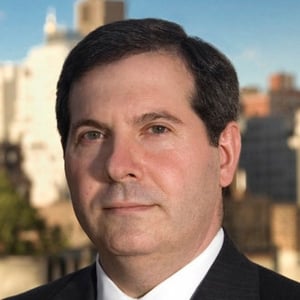
Partner, DeMarco Law, PLLC
Joseph V. DeMarco is a partner at DeMarco Law, PLLC where he focuses on counseling clients on complex issues involving information privacy and security, theft of intellectual property, computer intrusions, on-line fraud, and the lawful use of new technology. His years of experience in private practice and in government handling the most difficult cybercrime investigations handled by the United States Attorney’s Office have made him one of the nation’s most sought-after lawyers on Internet crime and the law relating to emerging technologies. In addition to his counsel practice, Mr. DeMarco serves as an Arbitrator, resolving complex commercial and high-technology disputes between businesses. He is on the National Panel of Neutrals of the American Arbitration Association (AAA) and Federal Arbitration, Inc. (FedArb).
From 1997 to 2007, Mr. DeMarco served an Assistant United States Attorney for the Southern District of New York, where he founded and headed the Computer Hacking and Intellectual Property (CHIPs) Program, a group of five prosecutors dedicated to investigating and prosecuting violations of federal cybercrime laws and intellectual property offenses. Under his leadership, CHIPs prosecutions grew from a trickle in 1997 to a top priority of the United States Attorney’s Office, encompassing all forms of criminal activity affecting e-commerce and critical infrastructures including computer hacking crimes; transmission of Internet worms and viruses; electronic theft of trade secrets; illegal use of “spyware”; web-based frauds; unlawful Internet gambling; and criminal copyright and trademark infringement offenses. As a recognized thought leader in the field, Mr. DeMarco was frequently asked to counsel prosecutors and law enforcement agents regarding novel investigative and surveillance techniques and methodologies, and regularly provided advice to the United States Attorney concerning the Office’s most sensitive computer-related investigations. In 2001, Mr. DeMarco also served as a visiting Trial Attorney at the Department of Justice Computer Crimes and Intellectual Property Section in Washington, D.C., where he focused his work on Internet privacy, gaming, and theft of intellectual property.
Since 2002, Mr. DeMarco has served as an Adjunct Professor at Columbia Law School, where he teaches the upper-class Internet and Computer Crimes seminar. He has been invited to speak throughout the world on cybercrime, e-commerce, and IP enforcement. He has lectured on the subject of cybercrime at Harvard Law School, the Practicing Law Institute, the National Advocacy Center, and at the FBI Academy in Quantico, Virginia, and has served as an instructor on cybercrime to judges attending the New York State Judicial Institute.
Prior to joining the United States Attorney’s Office, Mr. DeMarco was a litigation associate at Cravath, Swaine & Moore in New York City, where he concentrated his work on intellectual property, antitrust, and securities law issues for various high-technology clients. Prior to that, Mr. DeMarco served as law clerk to the Honorable J. Daniel Mahoney, United States Circuit Judge for the Second Circuit Court of Appeals.
Mr. DeMarco holds a J.D. magna cum laude from New York University School of Law. At NYU he was a member of the NYU Law Review. He received his B.S.F.S. summa cum laude from the Edmund A. Walsh School of Foreign Service at Georgetown University.
Director, Cybersecurity, USTelecom
Paul Eisler coordinates a variety of cybersecurity and technology objectives, including legal and policy analysis, for USTelecom, the Communications Sector Coordinating Council (CSCC), and the Council to Secure the Digital Economy (CSDE).

U.S. Court of Appeals, Seventh Circuit
Frank H. Easterbrook is a judge of the United States Court of Appeals for the Seventh Circuit and a Senior Lecturer at the Law School of the University of Chicago. He was Chief Judge from 2006–2013. Before joining the court in 1985, he was the Lee andBrena Freeman Professor of Law at the University of Chicago, where he taught and wrote in antitrust, securities, corporate law, jurisprudence, and criminal procedure. He has published The Economic Structure of Corporate Law (with Daniel R. Fischel) and about 100 scholarly articles. He served as Co-Editor of the Journal of Law and Economics from 1982 to 1991 and as a member of the Judicial Conference’s Standing Committee on Rules of Practice and Procedure from 1991 to 1997. Before joining the faculty of the Law School in 1979, Judge Easterbrook was Deputy Solicitor General of the United States. He holds degrees from Swarthmore College (B.A. with high honors, 1970) and the University of Chicago (J.D. cum laude, 1973), and is a member of the American Academy of Arts and Sciences, the American Law Institute, the Mont Pelerin Society, Phi Beta Kappa, and the Order of the Coif.

Founding Partner, Boyden Gray & Associates
Ambassador C. Boyden Gray is the founding partner of Boyden Gray & Associates, a law and strategy firm in Washington, D.C., focused on constitutional and regulatory issues.
Mr. Gray worked in the White House for twelve years, first as counsel to the Vice President during the Reagan administration and then as White House Counsel to President George H.W. Bush. In the Reagan administration, he was Counsel to the Presidential Task Force on Regulatory Relief, for which he wrote the original Executive Order 12291 requiring cost-benefit analysis and White House review of regulations (later renumbered as current EO 12866). In the George H.W. Bush Administration, Mr. Gray was in charge of judicial selection and was also instrumental in the enactment of the Clean Air Act Amendments of 1990, the Energy Policy Act of 1992, and a cap-and-trade system for acid rain emissions. In 1993, he received the Presidential Citizens Medal. Under President George W. Bush, Mr. Gray was U.S. Ambassador to the European Union and U.S. Special Envoy to Europe for Eurasian Energy.
Mr. Gray practiced law for 25 years at the law firm of Wilmer, Cutler & Pickering and was chairman of the Administrative Law and Regulatory Practice Section of the American Bar Association from 2000 to 2002. Early in his career, Mr. Gray helped to develop the Business Roundtable and served as its first counsel. He is an adjunct professor at Antonin Scalia Law School and a former adjunct professor at NYU Law School (teaching energy and environmental law). Mr. Gray is on the Board of Directors of the Atlantic Council, the Federalist Society, Reason Foundation, and the Trust for the National Mall.
Mr. Gray earned his A.B. magna cum laude from Harvard, where he was an editor of the Crimson, and his J.D. with high honors from the University of North Carolina at Chapel Hill, where he was editor-in-chief of the Law Review. Mr. Gray served in the United States Marine Corps, and after law school, he clerked for Earl Warren, Chief Justice of the United States Supreme Court.

Judge, United States Court of Appeals, Fifth Circuit
Edith Jones graduated from Alamo Heights High School, where she was a National Merit Scholar. In 1971, she received her B.A. in Economics from Cornell University, graduating with honors. In 1974, she was awarded her J.D. at the University of Texas Law School, where she was a law review editor and received the Order of the Coif.
Judge Jones was the first female partner at Andrews, Kurth, Campbell & Jones (now Hunton Andrews Kurth) where she practiced various types of litigation and bankruptcy cases. Judge Jones went on the federal bench on June 1, 1985.
Judge Jones served as a former member of the National Bankruptcy Review Commission, and as a member of the Judicial Conference Commission on Bankruptcy Rules. Judge Jones served on the White House Fellows Commission. Judge Jones served on the board of the Sam Houston Area Council of the Boy Scouts of America. She has been a member of the Garland Walker Inn of Court in Houston for more than 20 years and its President for at least ten years. Judge Jones is also on the Board of the Calvin Coolidge Presidential Foundation.
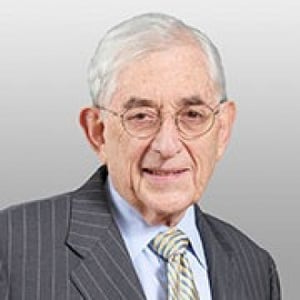
Retired Partner, Covington & Burling LLP
With the exception of two periods of United States Government service, Harris Weinstein practiced law with Covington's Washington office as an associate, partner, and senior counsel between 1962 and his retirement from practice in 2009. He was with the Department of Justice during the period 1967-1969 as an Assistant to the Solicitor General of the United States and with the Department of the Treasury during 1990-1992 as Chief Counsel of the then Office of Thrift Supervision. Before joining Covington, Mr. Weinstein was law clerk to Judge William H. Hastie of the United States Court of Appeals for the Third Circuit.
His private practice focused on civil litigation, including disputes under antitrust, securities, tax and banking laws, and patent and related trade issues. He has appeared in federal trial and appellate courts throughout the United States and, as a government attorney, argued nine cases in the United States Supreme Court.
From January 2007 through December 2016, Mr. Weinstein served as a Distinguished Lecturer on the faculty of the Columbus School of Law of The Catholic University of America, teaching International Commercial Arbitration as well as other subjects. He also coached the law school’s team in the Willem C. Vis International Commercial Arbitration Moot. He has taught the arbitration course at the University of California, Davis and lectured on the subject at Penn State Law School and the University of Lisbon, Portugal.
Mr. Weinstein’s teaching activity has included lectures on banking law or corporate fiduciary issues at American University, George Washington University, and the Universities of Illinois, Michigan and Virginia. He has also taught one-week courses on Banking and International Arbitration under United States Law as part of Catholic University’s American Law program at the Jagiellonian University in Krakow, Poland.
In his pro bono work, Mr. Weinstein was a member of the Administrative Conference of the United States and chaired the Conference’s Committee on Government Processes. He also has been a member of the Corporation of the Massachusetts Institute of Technology, President of its alumni/ae association, and Chair of its Alumni/ae Fund; Counsel to the Contests and Credentials Committees of the Republican National Conventions of 1984 and 1988; and a member of the initial advisory committee of the Commonwealth Institute (Richmond, VA).
His law degree is from Columbia University, where he was editor-in-chief of the Columbia Law Review. He received S.B. and S.M. degrees in mathematics from M.I.T. and was elected an associate member of the Sigma Xi science honorary society.
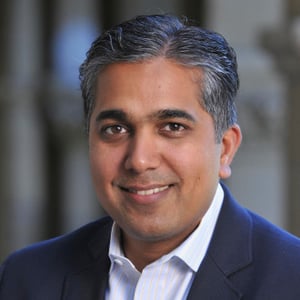
Raj M. Shah is currently the Co-founder and CEO of Arceo.ai, a start-up powering new approaches to cybersecurity through insurance and risk management. A seasoned entrepreneur and national security leader, Shah has transitioned often between the public and private sectors. Previously the Managing Partner of the Pentagon's Defense Innovation Unit Experimental (DIUx), he reported directly to the Secretary of Defense. Shah led DIUx in its efforts to strengthen our Armed Forces through contractual and cultural bridges between Silicon Valley and the Pentagon.
Previously, Shah was senior director of strategy at Palo Alto Networks, which acquired Morta Security, where he was Co-founder and CEO. He began his business career as a consultant with McKinsey & Co. Shah serves as a reserve F-16 pilot in the Air National Guard and has completed multiple combat tours. He holds an AB from Princeton University’s Woodrow Wilson School and an MBA from The Wharton School. Shah is also a visiting fellow at the Hoover Institution at Stanford University.
Chief Counsel, Cybersecurity and Infrastructure Security Agency (CISA)
Daniel Sutherland is the Chief Counsel for CISA, the Cybersecurity and Infrastructure Security Agency. CISA is responsible for cybersecurity, telecommunications, risk management and infrastructure resilience, operating with a budget over $1 billion and a workforce of approximately 2,000. He leads an office of attorneys who negotiate complex technology agreements, provide daily operational support to a cybersecurity operations center, advocate the agency’s positions in litigation, draft and negotiate legislation, and respond to audits and investigations.
Mr. Sutherland’s position builds on a career focused on issues at the intersection of civil liberties and national security. In 2003, Mr. Sutherland was appointed by President Bush to serve as the first Officer for Civil Rights and Civil Liberties at the Department of Homeland Security. He provided advice to Secretaries Ridge and Chertoff on intelligence policy, disability law and policy, emergency preparedness and response, and immigration law. His speech on the need for the government to engage with American Arab and Muslim communities appeared in the publication Vital Speeches of the Day. Mr. Sutherland has also served in the Senior National Intelligence Service at the National Counterterrorism Center where he coordinated the government’s efforts to prevent violent extremism; Mr. Sutherland was referred to by Wired as “one of the government’s point people on stemming the appeal of al-Qaida.” Mr. Sutherland is a Certified Information Privacy Professional (CIPP/G).
Mr. Sutherland started his federal career as a civil rights attorney with the U.S. Department of Justice, where for 14 years he litigated cases in courts across the country. Mr. Sutherland is a graduate of the University of Louisville and University of Virginia School of Law.
Managing Director, SCF Partners
Daniel G. West invests in energy services, equipment, and technology companies at SCF Partners in Houston, Texas. He provides equity capital and strategic growth assistance to entrepreneurs and leaders of both start-up ventures and established, growing businesses.
Prior to joining the private sector, Mr. West served as an infantry officer in the United States Marine Corps. As a platoon commander with the 22nd Marine Expeditionary Unit aboard the USS Mesa Verde, he led the Tactical Recovery of Aircraft and Personnel force in support of the NATO aerial campaign over Libya. He then served as executive officer of India Company, 3rd Battalion, 9th Marines as it mentored Afghan forces to assume lead security responsibility and executed counter-narcotics missions in Marjah, Helmand Province, Afghanistan. He also served as a clerk for Judge Laurence H. Silberman on the U.S. Court of Appeals for the D.C. Circuit.
Mr. West holds degrees in law, business administration, and economics from Harvard University, where he served as an editor of the Harvard Law Review and taught undergraduate courses in economics and government. He is a member of the Executive Committee of the International & National Security Law Practice Group of the Federalist Society and a term member of the Council on Foreign Relations.
Editorial and Programme Director, Institute of Economic Affairs, Cass Business School
Philip Booth is Editorial and Programme Director at the Institute of Economic Affairs and Professor of Insurance and Risk Management at Cass Business School. Previously, Philip Booth worked for the Bank of England as an advisor on financial stability issues and he was also Associate Dean of Cass business School. He has written widely, including a number of books, on investment, finance, social insurance and pensions as well as on the relationship between Catholic social teaching and economics. He is Deputy Editor of Economic Affairs and on the editorial boards of various other academic journals. Prof. Booth is a Fellow of the Royal Statistical Society, a Fellow of the Institute of Actuaries and an honorary member of the Society of Actuaries of Poland. He has previously worked in the investment department of Axa Equity and Law and was been involved in a number of projects to help develop actuarial professions and actuarial, finance and investment professional teaching programmes in Central and Eastern Europe. Prof. Booth has a BA in Economics from the University of Durham and a PhD from City University.

Professor of Law, Antonin Scalia Law School, George Mason University
ILYA SOMIN is Professor of Law at George Mason University and the B. Kenneth Simon Chair in Constitutional Studies at the Cato Institute. His research focuses on constitutional law, property law, democratic theory, federalism, and migration rights. He is the author of Free to Move: Foot Voting, Migration, and Political Freedom (Oxford University Press, revised and expanded edition, 2022), Democracy and Political Ignorance: Why Smaller Government is Smarter (Stanford University Press, revised and expanded second edition, 2016), and The Grasping Hand: Kelo v. City of New London and the Limits of Eminent Domain (University of Chicago Press, 2015, rev. paperback ed., 2016), coauthor of A Conspiracy Against Obamacare: The Volokh Conspiracy and the Health Care Case (Palgrave Macmillan, 2013), and co-editor of Eminent Domain: A Comparative Perspective (Cambridge University Press, 2017). Democracy and Political Ignorance has been translated into Italian and Japanese.
Somin’s work has appeared in numerous scholarly journals, including the Yale Law Journal, Stanford Law Review, Northwestern University Law Review, Georgetown Law Journal, Critical Review, and others. Somin has also published articles in a variety of popular press outlets, including the New York Times, Washington Post, Wall Street Journal, Los Angeles Times, CNN, NBC, The Atlantic, USA Today, Boston Globe, US News and World Report, South China Morning Post, National Law Journal and Reason. He has been quoted or interviewed by the New York Times, Washington Post, Wall Street Journal, Time, Newsweek, The Economist, the Christian Science Monitor, the Financial Times, The Guardian, the Associated Press, CBS, MSNBC, NPR, BBC, Reuters, the Canadian Broadcasting Corporation, the Australian Broadcasting Corporation, Radio Free Europe/Radio Liberty, Al Jazeera, and the Voice of America, among other media.
Somin’s writings have been cited in decisions by the United States Supreme Court, multiple state supreme courts and lower federal courts, and the Supreme Court of Israel. He is co-counsel for the plaintiffs in VOS Selections, Inc. v. Trump, a case challenging the constitutionality of President Trump’s “Liberation Day” tariffs. Somin has testified on the use of drones for targeted killing in the War on Terror before the US Senate Judiciary Subcommittee on the Constitution, Civil Rights, and Human Rights. In 2009, he testified on property rights issues at the United States Senate Judiciary Committee confirmation hearings for Supreme Court Justice Sonia Sotomayor. Somin writes regularly for the popular Volokh Conspiracy law and politics blog, now affiliated with Reason magazine (previously affiliated with the Washington Post from 2014 to 2017). From 2006 to 2013, he served as Co-Editor of the Supreme Court Economic Review, one of the country’s top-rated law and economics journals.
Somin has served as a visiting professor at the University of Pennsylvania Law School. He has also been a visiting professor or scholar at the Georgetown University Law Center, the University of Hamburg, Germany, the University of Torcuato Di Tella in Buenos Aires, Argentina, Uriel Reichman University in Israel, and Zhengzhou University in China. He is a University Affiliate of the Schar School of Policy and Government at George Mason University, and an affiliated faculty member of the George Mason University Institute for Immigration Research. Before joining the faculty at George Mason, Somin was the John M. Olin Fellow in Law at Northwestern University Law School in 2002-2003. In 2001-2002, he clerked for the Hon. Judge Jerry E. Smith of the U.S. Court of Appeals for the Fifth Circuit. Professor Somin earned his B.A., Summa Cum Laude, at Amherst College, M.A. in Political Science from Harvard University, and J.D. from Yale Law School.
Assistant Professor of Law, Michigan State University College of Law
Kevin Douglas is an Assistant Professor of Law at MSU College of Law and former Visiting Assistant Professor at Scalia Law School. He practiced law in Dallas, Texas for two years, where he represented clients in a wide variety of corporate and securities transactions. He is a graduate of Stanford Law School and earned both a bachelor’s degree in management and an MBA from Florida A & M University. His research focuses on contemporary legal and policy issues in business organization law and securities regulations.

Board of Directors Member, Legal Services Corporation
Charles Keckler is a Member of the Board of Directors at the Legal Services Corporation. He serves on the Governance & Performance Review, Search, and Operations and Regulations Committees, and chairs the last of these.
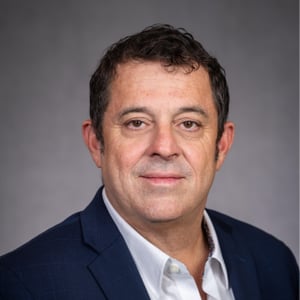
Senior Fellow for Law, Economics, and Technology, The Heritage Foundation; Professor, Florida International University
Mario Loyola is a Senior Fellow for Law, Economics, and Technology at The Heritage Foundation.
Loyola served in the Trump Administration as Associate Director for Regulatory Reform at the White House Council on Environmental Quality. In that role, he was one of the principal drafters of the One Federal Decision policy, which helped to streamline the permitting and environmental review of large infrastructure projects. While at CEQ, he was a member of the U.S. delegation to the USMCA free trade negotiations with Mexico and Canada, as well as the United Nations conference on biodiversity on the high seas. Loyola initially joined the White House in February 2017 as a Presidential Speechwriter, employing his expertise in many areas of foreign and domestic policy.
After beginning his career in M&A and corporate finance law, Loyola served in the Bush 43 Administration as a special assistant to the Undersecretary of Defense for Policy. He left that position to start writing on national defense issues in magazines such as National Review and The Weekly Standard, reporting from the front lines of the war on terrorism in Lebanon, Israel, and Iraq. He finished the Bush Administration as Foreign and Defense Counsel to the U.S. Senate Republican Policy Committee, then under the chairmanship of Senator Kay Bailey Hutchison of Texas. He subsequently moved to Texas and joined the Texas Public Policy Foundation, where he specialized in energy, environment, and federalism.
Loyola is a frequent contributor to The Wall Street Journal, National Review, and The Atlantic, among others. He teaches environmental and administrative law at Florida International University, where he is Founding Director of the Environmental Finance and Risk Management program in FIU’s prestigious Institute of Environment. He received a bachelor’s degree in European history from the University of Wisconsin–Madison and a J.D. from Washington University School of Law.

Professor of Law, Antonin Scalia Law School, George Mason University
Adam Mossoff is Professor of Law at Antonin Scalia Law School, George Mason University. He has published extensively on why patents, copyrights, and other intellectual property rights have been—and should be—legally secured to innovators and creators as property rights. His scholarship has been relied on by the United States Supreme Court, by lower federal courts, and by U.S. federal agencies. He has been invited to testify numerous times before the U.S. Senate and the House of Representatives on intellectual property legislation. His writings on intellectual property policy have also appeared in the Wall Street Journal, New York Times, Forbes, Investors Business Daily, and in other media outlets. His journal articles can be downloaded here.
Professor Mossoff is a longstanding member of the Executive Committee of the Intellectual Property Practice Group of the Federalist Society, on which he served as Chairperson from 2016-2018, and he is Chair of the Intellectual Property Working Group of the Regulatory Transparency Project of the Federalist Society. He is a Senior Fellow and Chair of the Forum for Intellectual Property at the Hudson Institute, a Visiting Intellectual Property Fellow at the Heritage Foundation, and a member of the Board of Directors of the Center for Intellectual Property Understanding. He is a member of the Intellectual Property Rights Policy Committee of ANSI and he has served as Chair and Vice-Chair of the Intellectual Property Committee of the IEEE-USA, on which he remains a member in good standing.
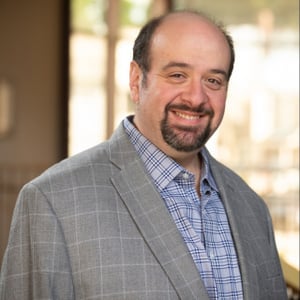
Associate Professor, UNH Franklin Pierce School of Law
Zvi S. Rosen is an Associate Professor at UNH Franklin Pierce School of Law and the Faculty Director of the Franklin Pierce Society for Intellectual Property. He has served as a Assistant Professor at the Southern Illinois University School of Law, as a Visiting Assistant Professor at the Maurice A. Deane School of Law at Hofstra University, and as a Visiting Scholar and Professorial Lecturer in Law at George Washington University School of Law.
In 2015-2016, he was the Abraham L. Kaminstein Scholar in Residence at the U.S. Copyright Office. Mr. Rosen received his J.D. from Northwestern University School of Law in 2005 and LLM in Intellectual Property in 2006 from the George Washington University Law School. He has practiced at Fried, Frank, Harris, Shriver & Jacobson LLP as well as smaller firms and his own practice, and clerked for the Hon. Thomas B. Bennett of the U.S. Bankruptcy Court for the Northern District of Alabama. He has written extensively on the development of modern copyright and trademark law, as well as on bankruptcy law.

George Mason University Foundation Professor of Law, Antonin Scalia Law School, George Mason University
TODD J. ZYWICKI is George Mason University Foundation Professor of Law at Antonin Scalia Law School at George Mason University and Research Fellow of the George Mason Law and Economics Center. During the Fall 2023 semester he served as the Visiting Scholar in Conservative Thought and Policy for the Bruce Benson Center for the Study of Western Civilization at the University of Colorado-Boulder. From 2020-2021 he was Chair of the Consumer Financial Protection Bureau Taskforce on Federal Consumer Financial Law. In 2021 he was inducted to the American College of Consumer Financial Services Lawyers. He is also a Senior Fellow of the F.A. Hayek Program for the Advanced Study of Politics, Philosophy, and Economics at George Mason University and a former Senior Fellow of the Cato Institute. From 2015-2017 he was Executive Director of the George Mason Law and Economics Center. He served as Co-Editor of the Supreme Court Economic Review from 2006-2017. From 2003-2004, Professor Zywicki served as the Director of the Office of Policy Planning at the Federal Trade Commission. He has also taught at Vanderbilt University Law School, Georgetown University Law Center, Boston College Law School, Mississippi College School of Law, and China University of Political Science and Law.
Professor Zywicki clerked for Judge Jerry E. Smith of the U.S. Court of Appeals for the Fifth Circuit and worked as an associate at Alston & Bird in Atlanta, Georgia, where he practiced bankruptcy and commercial law. He received his J.D. from the University of Virginia, where he was executive editor of the Virginia Tax Review and John M. Olin Scholar in Law and Economics. Professor Zywicki also received an M.A. in Economics from Clemson University and an A.B. cum Laude with high honors in his major from Dartmouth College.
Professor Zywicki is also a Lone Mountain Fellow of the Property and Environment Research Center, a Fellow of the International Centre for Economic Research in Turin, Italy, and a former Senior Fellow of the Goldwater Institute. During the Fall 2008 Semester Professor Zywicki was the Searle Fellow of the George Mason University School of Law and was a 2008-09 W. Glenn Campbell and Rita Ricardo-Campbell National Fellow and the Arch W. Shaw National Fellow at the Hoover Institution on War, Revolution and Peace. He has lectured and consulted with government officials around the world, including Iceland, Italy, Japan, and Guatemala. In 2006 Professor Zywicki served as a Member of the United States Department of Justice Study Group on “Identifying Fraud, Abuse and Errors in the United States Bankruptcy System.”
Professor Zywicki is the author of more than 130 articles in leading law reviews and peer-reviewed economics journals. He is one of the Top 10 most-cited law professors in the field of Commercial Law and one of the Top 25 law professors on Twitter as measured by engagement levels. He is one of the Top 50 Most Downloaded Law Authors at the Social Science Research Network. He has testified multiple times before Congress on issues of consumer bankruptcy law and consumer credit and is a frequent commentator on legal issues in the print and broadcast media, including the Wall Street Journal, New York Times, The Washington Post, The Washington Times, Nightline, The Newshour with Jim Lehrer, Neil Cavuto Show, Fox & Friends, Smerconish, Fox News @ Night with Shannon Bream, Fox Business, CNN, CNBC, Bloomberg News, BBC, The Diane Rehm Show, Lou Dobbs Show, Jerry Doyle Show, and The Laura Ingraham Show.
Professor Zywicki is former Chairman and a current member of the Board of Directors of the Competitive Enterprise Institute, and is a member of the Board of Directors of the Institute for Humane Studies, Bill of Rights Institute, the Executive Committee for the Federalist Society's Financial Institutions and E-Commerce Practice Group, the Board of Trustees of the Foundation for Research on Economics and the Environment. He formerly served on the Governing Board and the Advisory Council for the Financial Services Research Program at George Washington University School of Business. He is currently the Chair of the Academic Advisory Council for the following organizations: The Bill of Rights Institute, the film “We the People in IMAX,” and the McCormick-Tribune Foundation “Freedom Museum” in Chicago, Illinois. He is a member of the Board of Visitors of Ralston College and was a member of the Board of Trustees of Yorktown University. From 2005-2009 he served as an elected Alumni Trustee of the Dartmouth College Board of Trustees.
Editorial and Programme Director, Institute of Economic Affairs, Cass Business School
Philip Booth is Editorial and Programme Director at the Institute of Economic Affairs and Professor of Insurance and Risk Management at Cass Business School. Previously, Philip Booth worked for the Bank of England as an advisor on financial stability issues and he was also Associate Dean of Cass business School. He has written widely, including a number of books, on investment, finance, social insurance and pensions as well as on the relationship between Catholic social teaching and economics. He is Deputy Editor of Economic Affairs and on the editorial boards of various other academic journals. Prof. Booth is a Fellow of the Royal Statistical Society, a Fellow of the Institute of Actuaries and an honorary member of the Society of Actuaries of Poland. He has previously worked in the investment department of Axa Equity and Law and was been involved in a number of projects to help develop actuarial professions and actuarial, finance and investment professional teaching programmes in Central and Eastern Europe. Prof. Booth has a BA in Economics from the University of Durham and a PhD from City University.
Professor of Law, Antonin Scalia Law School, George Mason University
ILYA SOMIN is Professor of Law at George Mason University and the B. Kenneth Simon Chair in Constitutional Studies at the Cato Institute. His research focuses on constitutional law, property law, democratic theory, federalism, and migration rights. He is the author of Free to Move: Foot Voting, Migration, and Political Freedom (Oxford University Press, revised and expanded edition, 2022), Democracy and Political Ignorance: Why Smaller Government is Smarter (Stanford University Press, revised and expanded second edition, 2016), and The Grasping Hand: Kelo v. City of New London and the Limits of Eminent Domain (University of Chicago Press, 2015, rev. paperback ed., 2016), coauthor of A Conspiracy Against Obamacare: The Volokh Conspiracy and the Health Care Case (Palgrave Macmillan, 2013), and co-editor of Eminent Domain: A Comparative Perspective (Cambridge University Press, 2017). Democracy and Political Ignorance has been translated into Italian and Japanese.
Somin’s work has appeared in numerous scholarly journals, including the Yale Law Journal, Stanford Law Review, Northwestern University Law Review, Georgetown Law Journal, Critical Review, and others. Somin has also published articles in a variety of popular press outlets, including the New York Times, Washington Post, Wall Street Journal, Los Angeles Times, CNN, NBC, The Atlantic, USA Today, Boston Globe, US News and World Report, South China Morning Post, National Law Journal and Reason. He has been quoted or interviewed by the New York Times, Washington Post, Wall Street Journal, Time, Newsweek, The Economist, the Christian Science Monitor, the Financial Times, The Guardian, the Associated Press, CBS, MSNBC, NPR, BBC, Reuters, the Canadian Broadcasting Corporation, the Australian Broadcasting Corporation, Radio Free Europe/Radio Liberty, Al Jazeera, and the Voice of America, among other media.
Somin’s writings have been cited in decisions by the United States Supreme Court, multiple state supreme courts and lower federal courts, and the Supreme Court of Israel. He is co-counsel for the plaintiffs in VOS Selections, Inc. v. Trump, a case challenging the constitutionality of President Trump’s “Liberation Day” tariffs. Somin has testified on the use of drones for targeted killing in the War on Terror before the US Senate Judiciary Subcommittee on the Constitution, Civil Rights, and Human Rights. In 2009, he testified on property rights issues at the United States Senate Judiciary Committee confirmation hearings for Supreme Court Justice Sonia Sotomayor. Somin writes regularly for the popular Volokh Conspiracy law and politics blog, now affiliated with Reason magazine (previously affiliated with the Washington Post from 2014 to 2017). From 2006 to 2013, he served as Co-Editor of the Supreme Court Economic Review, one of the country’s top-rated law and economics journals.
Somin has served as a visiting professor at the University of Pennsylvania Law School. He has also been a visiting professor or scholar at the Georgetown University Law Center, the University of Hamburg, Germany, the University of Torcuato Di Tella in Buenos Aires, Argentina, Uriel Reichman University in Israel, and Zhengzhou University in China. He is a University Affiliate of the Schar School of Policy and Government at George Mason University, and an affiliated faculty member of the George Mason University Institute for Immigration Research. Before joining the faculty at George Mason, Somin was the John M. Olin Fellow in Law at Northwestern University Law School in 2002-2003. In 2001-2002, he clerked for the Hon. Judge Jerry E. Smith of the U.S. Court of Appeals for the Fifth Circuit. Professor Somin earned his B.A., Summa Cum Laude, at Amherst College, M.A. in Political Science from Harvard University, and J.D. from Yale Law School.

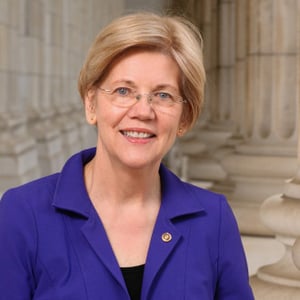
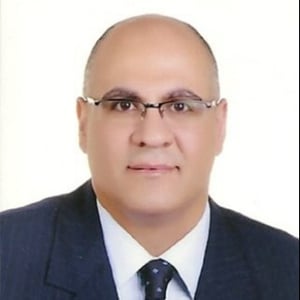
Luncheon Panel: Developments in Delaware: DExit, SB21, Musk, and More
Eric C. Chaffee, Itai Fiegenbaum, Mohsen Manesh, Robert T. Miller, Amanda Rose
Prof. Eric Chaffee, John C. Hutchins Professor of Law; Director, Compliance Risk Management and Financial Integrity...
7 Minute Presentations of Works in Progress Panel 2-B
Washington, DC25th Annual Federalist Society Faculty Conference
Washington, DCThe Myths and Facts Regarding the EPA’s Benefit-Cost Analysis and Science Transparency Rules
Daren Bakst, Rachel Jones, Clint Woods
Over the past month, the Environmental Protection Agency has finalized two new transparency-related rules. The...
2020 Civil Justice Update
Mark A. Behrens
Note from the Editor: The Federalist Society takes no positions on particular legal and public...
Working From Home: Cyber Hygiene in the COVID Crisis
Nicholas Degani, Joseph V. DeMarco, Paul Eisler
As corporations and even entire municipalities are increasingly advising or requiring their employees to work...
Socialization of Risk: Bankruptcy Law & Financial Institutions [Archive Collection]
Frank H. Easterbrook, C. Boyden Gray, Edith H. Jones, Elizabeth Warren, Harris Weinstein
On September 13-14, 1991, the Federalist Society held its Fifth Annual National Lawyers Convention on...
CISA and Cyber Threats: How Government and Private Sector Secure Our Networks and Infrastructure
Raj Shah, Daniel Sutherland, Daniel G. West
Following passage of the Cybersecurity and Infrastructure Security Agency Act in November 2018, the Cybersecurity...
Devolution and Secession in the Modern World - Podcast
Philip Booth, Ilya Somin
On the eve of the British referendum to remain in the European Union, Phillip Booth...
Devolution and Secession in the Modern World
Teleforum