

Vice President, Edwin Meese III Institute for the Rule of Law, Advancing American Freedom
John G. Malcolm oversees Advancing American Freedom’s work to increase understanding of the Constitution and the rule of law as Vice President of the organization’s Edwin Meese III Institute for the Rule of Law. Malcolm brings to the challenge a wealth of legal expertise and experience in both the public and private sectors.
Prior to joining Advancing American Freedom in 2025, Malcolm was the Vice President of the Institute for Constitutional Government and the Director of the Meese Center for Legal and Judicial Studies at the Heritage Foundation. Prior to joining Heritage in 2012, Malcolm was general counsel at the U.S. Commission on International Religious Freedom, as well as a distinguished practitioner in residence at Pepperdine Law School. From 2004 to 2009, Malcolm was executive vice president and director of worldwide anti-piracy operations for the Motion Picture Association.
Malcolm served as a deputy assistant attorney general in the Department of Justice’s Criminal Division from 2001 to 2004, where he oversaw sections on computer crime and intellectual property, domestic security, child exploitation and obscenity, and special investigations. Immediately prior to that, he was a founding partner in the Atlanta law firm of Malcolm & Schroeder, LLP.
From 1990 to 1997, Malcolm was an assistant U.S. attorney in Atlanta, assigned to the fraud and public corruption section, and also an associate independent counsel, investigating fraud and abuse in the Department of Housing and Urban Development. He was honored with the Director’s Award for Superior Performance for his work in connection with the successful prosecution of Walter Leroy Moody Jr., who assassinated an 11th Circuit judge and the head of the Savannah chapter of the NAACP.
A graduate of Harvard Law School and Columbia College, Malcolm began his career as a law clerk to a federal district court judge and a federal appellate court judge, and as an associate at the Atlanta-based law firm of Sutherland, Asbill & Brennan (new Eversheds Sutherland).
Malcolm, who resides in Washington, D.C., serves on the Board of Trustees of the Washington National Opera and is a Senate-confirmed member of the Board of Directors of the Legal Services Corporation, the largest funder of civil legal aid in the United States.
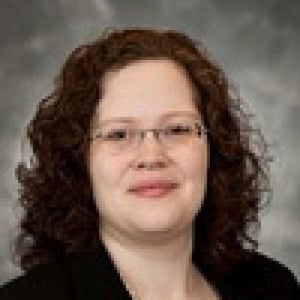
Professor of Law, Belmont University College of Law
Prior to joining Belmont University College of Law, Amy Moore taught at Faulkner University’s Thomas Goode Jones School of Law as an Assistant Professor. She taught classes in Administrative Law, Criminal Law, Education Law, Immigration Law, and International Law. She was also active in the moot court program, including coaching the National Moot Court Competition Team and the National Appellate Advocacy Competition teams.
Before teaching law school, Professor Moore worked as a litigation associate at Kirkland & Ellis LLP in Chicago, Illinois. While at Kirkland, she practiced in securities fraud and credit card privacy cases. She is a member of both the Missouri and Illinois bar associations. She is also a member of the American Bar Association.
Professor Moore received her Bachelor of Arts degree from Harding University and received her Juris Doctor degree from the University of Chicago Law School. While at the University of Chicago, Professor Moore worked as a research assistant for Professor Lisa Bernstein and Judge Richard Posner. During her last year of law school, she was active in the appellate advocacy clinic and represented a client before the Seventh Circuit Court of Appeals.
For Belmont’s charter year, Professor Moore will teach Torts and Civil Procedure. Her research interests include the study of how process affects rights in varied areas.
Deputy District Attorney, Philadelphia District Attorney's Office
Ronald Eisenberg heads the Law Division of the Philadelphia District Attorney's Office. The 60 lawyers in the division handle appeals, habeas corpus and civil litigation, and legislative matters. Mr. Eisenberg has appeared at all levels of the state and federal court system, and has argued several cases in the United States Supreme Court.
Mr. Eisenberg is a member of the Pennsylvania Supreme Court Investigating Grand Jury Task Force and the Advisory Committee for the Pennsylvania Suggested Standard Criminal Jury Instructions. He has represented his office on the Pennsylvania Advisory Committee on Wrongful Convictions, was an adjunct professor at Temple University School of Law, teaching legal writing and research, and has served on the Pennsylvania Criminal Rules and Appellate Rules Committees. He is a past president and current board member of the Association of Government Attorneys in Capital Litigation, a national organization of capital prosecutors.
Mr. Eisenberg received his bachelor's degree from Haverford College in 1978 and his law degree from the University of Pennsylvania Law School in 1981.
J.D., University of Pennsylvania
B.A., Haverford College

Counsel to the Firm, Cascadia Cross-Border Law
Margaret Stock focuses her practice on immigration and citizenship law. She is a nationally known expert on immigration and national security laws, and has testified regularly before Congressional committees on immigration, homeland security, and military matters. As a retired Lieutenant Colonel in the Military Police, U.S. Army Reserve, Margaret has extensive experience with U.S. military issues. She has also worked as a professor at the United States Military Academy at West Point, and she has served as an adjunct instructor at the University of Alaska. Margaret served as a member of the American Bar Association Commission on Immigration from 2008-2012. She regularly authors articles on military-related immigration issues, and is well-versed on “parole in place” for military family members and the Military Accessions Vital to the National Interest (“MAVNI”) Program. Margaret authored the book Immigration Law & the Military, which was published by the American Immigration Lawyers Association in 2012.

Luis v. U.S. - Post-Decision SCOTUScast
John G. Malcolm
On March 30, 2016, the Supreme Court decided Luis v. U.S. In 2012, a grand...
Luis v. U.S. - Post Argument SCOTUScast
John G. Malcolm
On November 10, 2015, the Supreme Court heard oral argument in Luis v. U.S. Luis was indicated...
Topics
SCOTUS Orders: 10/5/2015
Following on the cert grants from late last week, the Supreme Court issued another order...
Boyer v. Louisiana - Post-Decision SCOTUScast
Amy Moore
On April 29, 2013, the Supreme Court issued an opinion in Boyer v. Louisiana. The question...
Boyer v. Louisiana - Post-Argument SCOTUScast
Amy Moore
On January 14, 2013, the Supreme Court heard oral argument in Boyer v. Louisiana. The question in...
Tibbals v. Carter and Ryan v. Gonzales - Post-Decision SCOTUScast
Ronald Eisenberg
On January 8, 2013, the Supreme Court announced its decision in Tibbals v. Carter andRyan v. Gonzales....
Tibbals v. Carter and Ryan v. Gonzales - Post-Argument SCOTUScast
Ronald Eisenberg
On October 9, 2012, the Supreme Court heard oral argument in Tibbals v. Carter and Ryan v. Gonzales....
Martel v. Clair - Post-Decision SCOTUScast
Ronald Eisenberg
On March 5, 2012, the Supreme Court announced its decision in Martel v. Clair. The question...
Martel v. Clair - Post-Argument SCOTUScast
Ronald Eisenberg
On December 6, 2011, the Supreme Court heard oral argument in Martel v. Clair. The...
Padilla v. Commonwealth of Kentucky - Post-Decision SCOTUScast
Margaret D. Stock
On March 31, 2010, the Supreme Court announced its decision in Padilla v. Commonwealth of...