
Legal Advisor, Office of the CEO, Palantir
Partner, Consovoy McCarthy
Mr. Green helps clients litigate constitutional, statutory, and regulatory issues in courts and agencies throughout the country. Before joining the firm, he served as the Solicitor General of the State of Utah for five years. In that role, he oversaw all civil and criminal appellate matters in which the State of Utah or its officers or agencies were a party. While serving as solicitor general, he successfully argued cases before the Supreme Court of the United States, the U.S. Court of Appeals for the Tenth Circuit, and the Utah Supreme Court. He also led the Utah Attorney General office’s multistate litigation efforts, both challenging and defending regulatory actions by the federal government and other states. And he oversaw the division of the Utah Attorney General’s office responsible for defending cases challenging the constitutionality of state law. Before his service to the State of Utah, Mr. Green was Deputy Chief Counsel for Litigation at the U.S. Chamber Litigation Center. He began his career at Gibson, Dunn & Crutcher LLP’s Washington, D.C. office, where he litigated a variety of appellate and trial-court cases. Mr. Green served as a law clerk to Justice Clarence Thomas at the U.S. Supreme Court, to Judge Michael McConnell at the U.S. Court of Appeals for the Tenth Circuit, and to Judge Paul Cassell at the U.S. District Court for the District of Utah. He earned both his undergraduate and law degrees from the University of Utah. At the College of Law, he served as Editor in Chief of the Utah Law Review and graduated Order of the Coif and first in his class. He currently serves on the Utah Supreme Court’s advisory committee for the Utah Rules of Appellate Procedure and has been named one of Utah’s Legal Elite by Utah Business magazine.

Shareholder, Maynard Cooper & Gale
John Neiman is a go-to lawyer for clients with high-stakes appeals in Alabama and elsewhere. In the last two years, John has helped clients obtain reversals by the Alabama Supreme Court of an $11.4 million verdict in one case and an $18 million verdict in another. In a recent Eleventh Circuit case, he helped a client obtain vacatur of a trial court’s decision not to compel arbitration of a $66.5 million bad-faith insurance claim. He also has served as embedded appellate counsel at a trial, preserving the client’s objections for appeal when the plaintiffs asked the jury for more than $100 million in compensatory and punitive damages. A former U.S. Supreme Court clerk and Solicitor General of Alabama, John chairs an Appellate Practice group that strives to offer the firm’s clients the highest level of appellate advocacy at Alabama-level rates.
At any given time, John has a number of cases pending in the Alabama Supreme Court and Eleventh Circuit, but he also represents clients in a wide array of cases throughout the country. John has appeared for alcohol-industry clients in the Supreme Court and the Fourth, Sixth, Seventh, and Eighth Circuits, and has represented insurance clients in state courts in California, New York, and Kentucky. As state Solicitor General from 2011 to 2014, John argued two merits cases at the United States Supreme Court.
John is a fellow of the American Academy of Appellate Lawyers. Chambers USA: America's Leading Lawyers for Business distinguishes him as a Band 1 leading attorney in the area of Appellate Litigation. Best Lawyers® named him the region's 2017 and 2021 "Lawyer of the Year" for Appellate Practice.
AI Innovation and Law Fellow, University of Texas School of Law
Kevin Frazier is an AI Innovation and Law Fellow with University of Texas School of Law.

Head of AI Policy, Abundance Institute
Neil Chilson is the Head of AI Policy at the Abundance Institute. Prior to this position, he served as a Senior Research Fellow at the Center for Growth and Opportunity. Chilson is a lawyer, computer scientist, and author of the book “Getting Out of Control: Emergent Leadership in a Complex World.”
Chilson was previously the senior research fellow for Technology and Innovation at Stand Together, where he guided efforts to understand and promote the legal and cultural paradigms that best enable people to discover, innovate, and improve all our lives.
Before Stand Together, Chilson was the Chief Technologist at the Federal Trade Commission, where he focused on the economics of privacy and blockchain-related issues. Previously, he was an attorney advisor to Acting FTC Chairman Maureen K. Ohlhausen. In both roles he advised Chairman Ohlhausen and worked with staff on nearly every major technology-related case, report, workshop, or other FTC proceeding since January 2014. Neil joined the FTC from telecom firm Wilkinson Barker Knauer. Neil is frequently quoted by the press and his work has appeared in numerous news outlets, including The Wall Street Journal, The Washington Post, USAToday, and Newsweek. Neil has a J.D. from The George Washington Law School, a M.S. in computer science from University of Illinois, Urbana-Champaign, and a B.S. in computer science from Harding University.
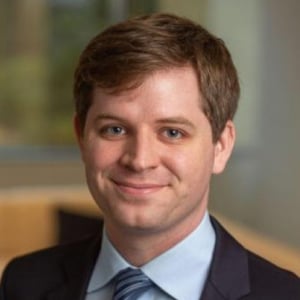
Senior Research Fellow, Institute for Law & AI
Charlie is a Senior Research Fellow on LawAI's U.S. Law and Policy team. He advises state and federal policy makers on AI governance topics and publishes research on legal questions with significant practical relevance to U.S. AI policy. His recent research examines issues including federal preemption of state AI laws, federal and state AI whistleblower protection legislation, and the likely consequences of the end of Chevron deference for the future of AI regulation. Charlie received his J.D. from Yale Law School, where he was an Editor for the Yale Journal on Regulation.
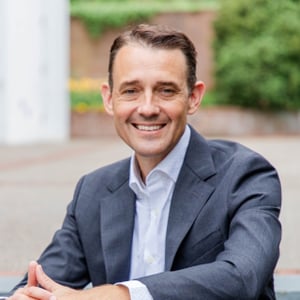
Senior Vice President, Strategic Initiatives & Special Counsel to the President, Alliance Defending Freedom
Ryan Bangert serves as senior vice president for strategic initiatives and special counsel to the president at Alliance Defending Freedom. He oversees ADF’s Blackstone Legal Fellowship and Research & Innovation Team. He also advises executive leadership on strategic initiatives.
Before joining ADF, Bangert served as deputy first assistant attorney general and deputy for legal counsel in the office of the Texas attorney general, and as deputy for civil litigation for Missouri Attorney General Josh Hawley. Prior to his government service, Bangert was a litigation partner at Baker Botts L.L.P., where he was a member of the firm’s commercial litigation and appellate practice sections.
Bangert has been published at First Things, Civitas Outlook, Law & Liberty, National Review, Daily Wire, The Hill, Washington Examiner, The Federalist, Fox News, and the American Reformer. He speaks nationally on constitutional, cultural, and religious liberty issues. He also serves as Visiting Faculty in Law at the University of Austin.
He earned his J.D. from Southern Methodist University, where he was a Hatton Sumners scholar and graduated first in his class. Following law school, he clerked for the Honorable Patrick E. Higginbotham on the Fifth Circuit Court of Appeals.
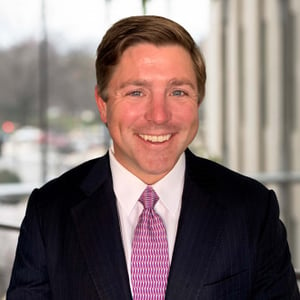
General Counsel, xAI and X

Chief Judge, United States Court of Appeals, Fifth Circuit
Jennifer Walker Elrod is the Chief Judge of the United States Court of Appeals for the Fifth Circuit. She was nominated to the Fifth Circuit in 2007, and she served as a Circuit Judge on the court until assuming the role of Chief Judge in October 2024. Prior to serving as a Circuit Judge, Chief Judge Elrod was appointed and then twice elected Judge of the 190th District Court of Harris County, Texas, where she spent over five years presiding over more than 200 jury and non-jury trials.
Chief Judge Elrod graduated cum laude from Harvard Law School, where she was an active member of the Harvard Federalist Society, an Ames Moot Court finalist, and a Senior Editor of the Harvard Journal of Law & Public Policy. She clerked for the Honorable Sim Lake in the Southern District of Texas. Before serving as a judge, Chief Judge Elrod worked in private practice, focusing on civil litigation, antitrust, and employment matters.
She has been repeatedly recognized for her work as a jurist, as well as for her pro bono work and contributions to the community. She has been named the 2022 Texas Review of Law & Politics’ Jurist of the Year, the 2018 Harvard Federalist Society’s Alumni of the Year, the 2016–17 Texas Association of Civil Trial and Appellate Specialists’ Appellate Judge of the Year, and the 2008 Mexican-American Bar Association of Texas’s Judge of the Year.
Chief Judge Elrod is actively engaged in the academic and legal communities. Chief Judge Elrod currently serves on the Board of Directors and as the Jurist-in-Residence at the South Texas College of Law, where she teaches civil procedure and First Amendment law. She is also a member of the American Law Institute and of the Board of Advisors for the Harvard Journal of Law & Public Policy, and she is a former member of the Board of Regents of her alma mater, Baylor University, and the Board of Visitors at Brigham Young University Law School. She previously served as the Chair of the Codes of Conduct Committee for the Judicial Conference of the United States. She has also served as the M.D. Anderson Visiting Public Service Professor at the Texas Tech University School of Law and as Jurist-in-Residence at Brigham Young University Law School, and she has taught legal writing at the University of Houston Law Center. She presented the Lewis F. Powell, Jr. Distinguished Lecture at the Washington and Lee University School of Law and is a frequent speaker on the topics of trial and appellate procedure, ethics, employment law, and constitutional law. Chief Judge Elrod also serves on the board of the Garland R. Walker Inn of Court, and co-produces an annual musical CLE, for which her pupilage group has won multiple national awards.
Chief Judge Elrod’s publications include: Trial by Siri: AI Comes to the Courtroom; Don’t Mess with Texas Judges: In Praise of the State Judiciary; For Good: Enriching Your Practice and Your Life Through Pro Bono and Community Service; Is the Jury Still Out?: A Case for the Continued Viability of the American Jury; and W(h)ither the Jury? The Diminishing Role of the Jury Trial in our Legal System.
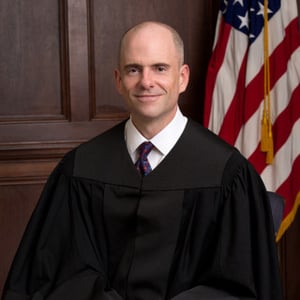
Judge, United States Court of Appeals, Eleventh Circuit
Judge Kevin C. Newsom is a member of the United States Court of Appeals for the Eleventh Circuit. He sits in Birmingham, Alabama.
Before his appointment to the bench, Judge Newsom was the head of the appellate practice group at Bradley Arant Boult Cummings LLP and, before that, the Solicitor General of Alabama. As a practicing lawyer, Judge Newsom argued four cases in the Supreme Court of the United States, and nearly 40 more in the United States Courts of Appeals and state supreme and appellate courts.
Judge Newsom graduated summa cum laude from Samford University and magna cum laude from Harvard Law School, where he was an articles editor on the Harvard Law Review. Following law school, Judge Newsom clerked for Judge Diarmuid F. O’Scannlain of the United States Court of Appeals for the Ninth Circuit and Justice David H. Souter of the Supreme Court of the United States.
Judge Newsom teaches at Harvard Law School, Yale Law School, Stanford Law School, and the University of Chicago Law School. His published work has appeared in the Yale Law Journal and the Harvard Law Review.
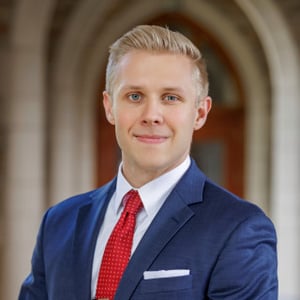
President, Notre Dame Student Chapter
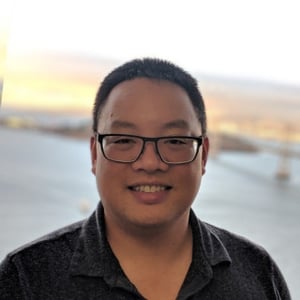
Associate General Counsel, OpenAI
Michael Trinh is currently Associate General Counsel at OpenAI working on litigation and regulatory matters. He was formerly Head of Litigation Advance at Google where he led a team handling a broad portfolio of litigation strategy, research, amici briefs, and proactive/enforcement litigation across the company’s product areas.
In prior roles over 14 years at Google, Mike managed a group defending patent litigation worldwide, and also served as product counsel at Google X for emerging ‘moonshots’ (innovation projects primarily in developing economies). He guided experimental aviation projects as they evolved from research concept towards market introduction, handling the legal/regulatory issues arising from high altitude balloon-mounted telecommunication networks, drone delivery of burritos, kite-generated electricity, and cargo airships. Before this science fiction, he was Litigation Counsel at Google, managing a team handling a fast-growing docket of 100+ patent litigation cases in courts worldwide.
Previously, he was a technology/IP litigation associate at Orrick, Herrington and Sutcliffe in San Francisco. He also handled national security issues while representing, pro bono, Guantanamo Bay detainees challenging their indefinite incarceration without ever being charged. Mike graduated from the Georgetown University Law Center (2005) and the University of North Carolina at Chapel Hill (2002, B.S. Comp Sci). While he grew up in Raleigh, NC, he now lives in the San Francisco Bay Area with his wife and a string cheese-seeking dog (who was once featured in the Financial Times).
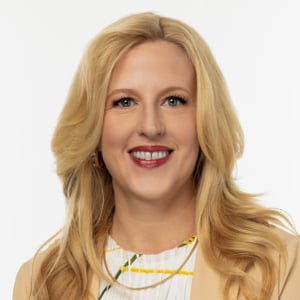
General Counsel, Saronic Technologies
Tobi Young is the General Counsel of Saronic Technologies. Her responsibilities include managing global legal affairs, regulatory compliance, litigation, risk management, and government security, and corporate governance.
Tobi brings over 20 years of experience with sophisticated legal, regulatory, and compliance issues through leadership roles in all three branches of the federal government and in Fortune 500 companies. Among other governmental positions, she has been an attorney in the U.S. Department of Justice and in the Office of the White House Counsel; a law clerk to U.S. Supreme Court Justice Neil M. Gorsuch; and a press secretary for Congressman J.C. Watts. Tobi also currently serves as the Chair of the Nominating and Governance Committee on the Halliburton Board of Directors (NYSE: HAL).
Tobi grew up in Oklahoma and is a proud member of the Chickasaw Nation. She recently became the youngest inductee into the Chickasaw Hall of Fame. Tobi now lives in Austin with her husband Evan, a Justice on the Texas Supreme Court, and their daughter Romilly.
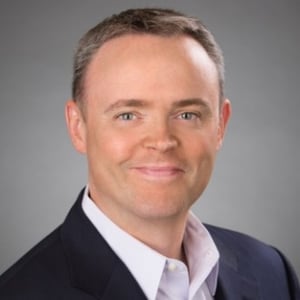
Senior Fellow, R Street Institute
Prior to R Street, Adam spent 12 years as a senior fellow at the Mercatus Center at George Mason University. Before the Mercatus Center, he served as the president of the Progress and Freedom Foundation. Adam has also worked for the Adam Smith Institute, the Heritage Foundation and the Cato Institute.
Adam has published 10 books on a wide range of topics, including online child safety, internet governance, intellectual property, telecommunications policy, media regulation and federalism.
In 2008, Adam received the Family Online Safety Institute’s “Award for Outstanding Achievement.”
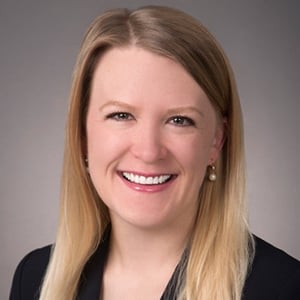
Counsel, U.S. Chamber Litigation Center
Mariel Brookins attended Wheaton College where she studied economics and theology. After graduation, she worked at PwC as a tax CPA. She attended the University of Michigan Law School. After law school, Mariel clerked for Judge Barrett on the Seventh Circuit and Judge Newsom on the Eleventh Circuit. She currently practices appellate litigation in Washington, D.C.
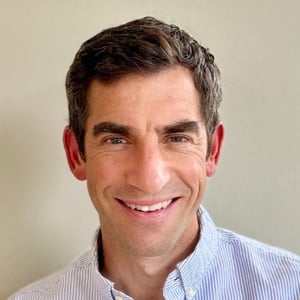
Litigation Senior Corporate Counsel, Microsoft
Benjamin Diggs is a Litigation Senior Corporate Counsel at Microsoft based in Redmond, Washington.
Previously, he was an Attorney at Hogan Lovells and also held positions at Heller Ehrman, U.S. Department of Justice, California Attorney Group, Athens College, Hellenic American Educational Foundation.
Benjamin received a Doctor of Law degree from Stanford University Law School.
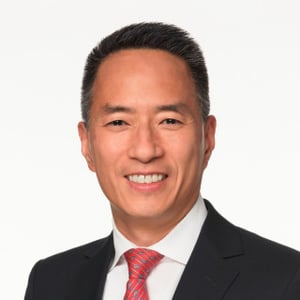
Chief Legal Officer, Cognizant
John Kim has held the title of Chief Legal Officer, Chief Administrative Officer and Corporate Secretary since February 2024. This title change was made to better reflect his responsibilities after previously serving as our Executive Vice President, General Counsel, Chief Corporate Affairs Officer and Secretary beginning March 2021. In this role, he leads Cognizant’s legal, company secretary, compliance, corporate security, regulatory, ESG, global real estate, procurement, contract lifecycle risk management and strategic negotiation functions.
John joined Cognizant in November 2019 as Senior Vice President and Deputy General Counsel, Global Commercial Contracts. Previously, he served as Global Head of Big Deals at Capgemini, U.S. Counsel for WNS Global Services and General Counsel for Travelport, a leading travel technology company, as well as a number of technology service companies.
John holds a bachelor’s degree in English literature from Columbia University. He obtained his law degree from Cornell Law School, where he was a member of the Cornell Law Review.
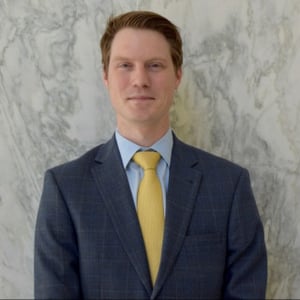
Executive Director of Policy, U.S. Chamber of Commerce Technology Engagement Center
Michael Richards is the Executive Director of Policy at the U.S. Chamber of Commerce Technology Engagement Center (C_TEC), where he leads the Chamber’s work on artificial intelligence and IT modernization. His portfolio focuses on federal and state policies related to AI, facial recognition, and emerging technologies that impact American businesses. He also manages the AI Policy Working Group, a coalition of more than 100 companies and trade associations, and played a key role in developing the Chamber’s AI policy principles.
Prior to joining the Chamber, Michael served as Deputy Chief of Staff and Legislative Director for Representatives Scott Franklin (FL-15) and Pete Olson (TX-22). In these roles, he led legislative strategy, staffed the House AI Caucus and Victims’ Rights Caucus, and handled the Communications & Technology portfolio on the House Energy and Commerce Committee.
Michael holds a Master of Public Policy from the Pepperdine School of Public Policy and a Bachelor’s degree from Texas State University.
Associate General Counsel, OpenAI
Michael Trinh is currently Associate General Counsel at OpenAI working on litigation and regulatory matters. He was formerly Head of Litigation Advance at Google where he led a team handling a broad portfolio of litigation strategy, research, amici briefs, and proactive/enforcement litigation across the company’s product areas.
In prior roles over 14 years at Google, Mike managed a group defending patent litigation worldwide, and also served as product counsel at Google X for emerging ‘moonshots’ (innovation projects primarily in developing economies). He guided experimental aviation projects as they evolved from research concept towards market introduction, handling the legal/regulatory issues arising from high altitude balloon-mounted telecommunication networks, drone delivery of burritos, kite-generated electricity, and cargo airships. Before this science fiction, he was Litigation Counsel at Google, managing a team handling a fast-growing docket of 100+ patent litigation cases in courts worldwide.
Previously, he was a technology/IP litigation associate at Orrick, Herrington and Sutcliffe in San Francisco. He also handled national security issues while representing, pro bono, Guantanamo Bay detainees challenging their indefinite incarceration without ever being charged. Mike graduated from the Georgetown University Law Center (2005) and the University of North Carolina at Chapel Hill (2002, B.S. Comp Sci). While he grew up in Raleigh, NC, he now lives in the San Francisco Bay Area with his wife and a string cheese-seeking dog (who was once featured in the Financial Times).
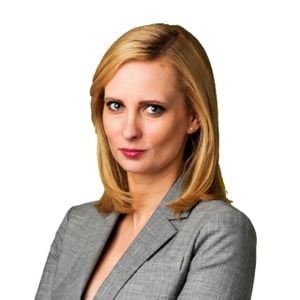
Executive Director, Committee for Justice
Ashley Baker is Executive Director of the Committee for Justice and founder of the Alliance on Antitrust coalition. Her work focuses on antitrust law, technology regulation, administrative-agency authority, the Supreme Court, and judicial nominations. She closely follows the Federal Trade Commission and the Department of Justice’s Antitrust Division, with particular attention to merger review, agency procedure, and the effects of regulation on American innovation and competitiveness. She is also founder of the Alliance on Antitrust Coalition.
Ashley has testified before the United States Senate on antitrust law. Her writing has appeared in Fox News, USA Today, The Boston Globe, The Hill, RealClearPolitics, The American Spectator, and other national publications. She also provides policy analysis through congressional testimony and correspondence, regulatory comments, and public commentary.
Ashley serves on the Federalist Society’s Regulatory Transparency Project and Antitrust and Consumer Protection Practice Group Executive Committee. She is also active in the Republican National Lawyers Association and has spoken on the Supreme Court and the federal judiciary. An authority on the judicial-confirmation process, she worked closely on the successful confirmation efforts for Justices Neil Gorsuch and Brett Kavanaugh, as well as multiple federal appellate judges.
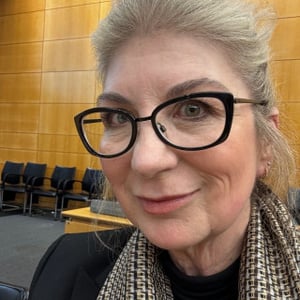
Founder & Executive Director, World Privacy Forum
Pam Dixon is the founder and executive director of the World Privacy Forum, a respected public interest research group. An author and researcher, she has written influential studies in the area of identity, AI, health, and complex data ecosystems and their governance for more than 20 years. Dixon has worked extensively on privacy and governance across multiple jurisdictions, including the US, India, Africa, Asia, the EU, and additional jurisdictions. Dixon currently serves as the co-chair of the UN Statistics Data Governance and Legal Frameworks working group, and is an advisor to WHO’s Health Data Collaborative. At OECD, Dixon chairs the formal civil society multistakeholder work in OECD’s Artificial Intelligence Working Party. Dixon has presented her work on complex data ecosystems governance to the National Academies of Science, the Mongolian National Academies of Science, and to the Royal Academies of Science.
AI Innovation and Law Fellow, University of Texas School of Law
Kevin Frazier is an AI Innovation and Law Fellow with University of Texas School of Law.
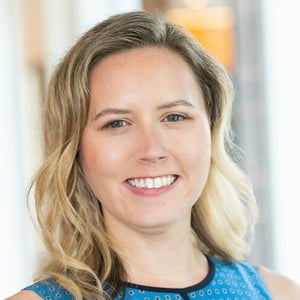
Senior Fellow, Technology Policy, Cato Institute
Jennifer’s research focuses on the intersection of emerging technology and law with a particular interest in the interactions between technology and the administrative state. Her work covers topics including judicial deference, liability protection for Internet platforms, autonomous vehicles and other disruptive transportation technologies, the regulation of data privacy, and the benefits of technology and innovation. Her work has appeared in USA Today, the Chicago Tribune, the New York Daily News, the Sacramento Bee, the Washington Times, Real Clear Policy, and U.S. News and World Report. Jennifer has a JD from the University of Alabama School of Law and a BA in political science at Wellesley College.
AI Innovation and Law Fellow, University of Texas School of Law
Kevin Frazier is an AI Innovation and Law Fellow with University of Texas School of Law.
Senior Fellow, R Street Institute
Prior to R Street, Adam spent 12 years as a senior fellow at the Mercatus Center at George Mason University. Before the Mercatus Center, he served as the president of the Progress and Freedom Foundation. Adam has also worked for the Adam Smith Institute, the Heritage Foundation and the Cato Institute.
Adam has published 10 books on a wide range of topics, including online child safety, internet governance, intellectual property, telecommunications policy, media regulation and federalism.
In 2008, Adam received the Family Online Safety Institute’s “Award for Outstanding Achievement.”
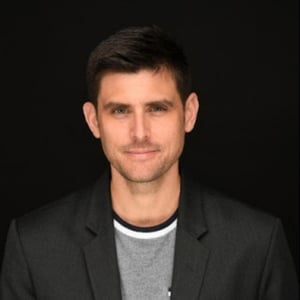
Director, Center on Technology Policy, New York University
He was previously the head of online expression policy at UNC’s Center on Technology policy, and was a senior policy associate at the Center on Science & Technology Policy at Duke University. Prior to Duke, Scott was a research fellow at the University of Oxford, where he led research for the Oxford Martin Programme on Misinformation, Science, and Media, which examined the interplay between media change and misinformation about science, technology, and health.
AI Innovation and Law Fellow, University of Texas School of Law
Kevin Frazier is an AI Innovation and Law Fellow with University of Texas School of Law.
Senior Fellow, Foundation for American Innovation
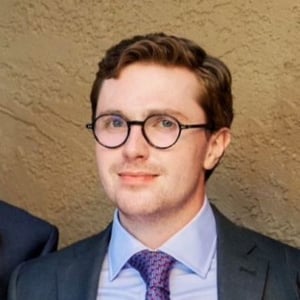
Dean Woodley Ball is a senior fellow at FAI. He most recently served as Senior Policy Advisor for Artificial Intelligence and Emerging Technology at the White House Office of Science and Technology Policy and Strategic Advisor for AI at the National Science Foundation. Previously he was a Research Fellow in the Artificial Intelligence & Progress Project at George Mason University's Mercatus Center and a Policy Fellow at Fathom.
Dean is author of Hyperdimensional. His work focuses on emerging technologies and the future of governance, spanning artificial intelligence, manufacturing innovation, neural technology, bioengineering, technology policy, political theory, public finance, urban infrastructure, and criminal justice reform. Outside of FAI, his scholarship has been published by the Mercatus Center, the Hoover Institution, the Carnegie Endowment for International Peace, the Federation of American Scientists, the Manhattan Institute, and American Compass.
His writing has appeared in National Affairs, The New Atlantis, Pirate Wires, Lawfare, The Dispatch, The Hill, Tech Policy Press, the Washington Post, the Orange County Register, the Coolidge Quarterly, and National Review. His academic work includes "Neither Harbour nor Floor: Contemplating the Singularity with Michael Oakeshott" in the forthcoming Liberalism Revisited (Palgrave) and "Ideas of Another Order: Michael Oakeshott and Confucius in Conversation" in Collingwood and British Idealism Studies.
Prior to his government service, Dean held senior positions at Stanford's Hoover Institution, the Calvin Coolidge Presidential Foundation, and the Manhattan Institute, where he oversaw the Hayek Book Prize. He also consults on passion projects, including on-the-ground policing reform in Argentina and Chile and the restoration of the Florentine guild system for sacred liturgical art.
Dean serves on the Board of Directors of the Alexander Hamilton Institute and was selected as an Aspen Ideas Fellow. He graduated magna cum laude from Hamilton College with a B.A. in History and lives in Washington, D.C. with his wife, Abigail, and their two cats, Io and Ganymede.
Vice President of Political Affairs, Encode
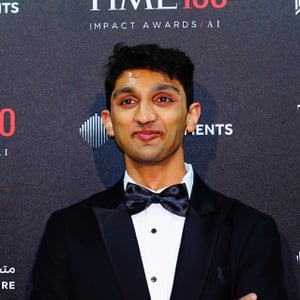
As Vice President of Political Affairs, Sunny led Encode’s co-sponsorship of California’s SB 1047, a landmark AI safety bill that would have required testing of advanced AI systems and created whistleblower protections. The bill passed both chambers of the state legislature with strong bipartisan margins, drawing support from an unlikely coalition including Nobel Laurate Geoffrey Hinton, Elon Musk, and Mark Ruffalo.
He also spearheaded efforts leading to the first U.S. law establishing guardrails for AI use in nuclear weapons systems, ensuring human control while enabling security benefits. At Encode, he has coordinated campaigns to authorize and fund a U.S. AI Safety Institute and advance legislation targeting AI-generated exploitation.
His technical work includes pioneering a benchmark for testing AI legal reasoning capabilities (presented at NeurIPS) and developing systems for rapid cloud deployment of AI services. He has also published research on cross-platform information analysis at AAAI. Before Encode, he served in technical roles at NASA, Deloitte, and a nuclear energy company.
Head of AI Policy, Abundance Institute
Neil Chilson is the Head of AI Policy at the Abundance Institute. Prior to this position, he served as a Senior Research Fellow at the Center for Growth and Opportunity. Chilson is a lawyer, computer scientist, and author of the book “Getting Out of Control: Emergent Leadership in a Complex World.”
Chilson was previously the senior research fellow for Technology and Innovation at Stand Together, where he guided efforts to understand and promote the legal and cultural paradigms that best enable people to discover, innovate, and improve all our lives.
Before Stand Together, Chilson was the Chief Technologist at the Federal Trade Commission, where he focused on the economics of privacy and blockchain-related issues. Previously, he was an attorney advisor to Acting FTC Chairman Maureen K. Ohlhausen. In both roles he advised Chairman Ohlhausen and worked with staff on nearly every major technology-related case, report, workshop, or other FTC proceeding since January 2014. Neil joined the FTC from telecom firm Wilkinson Barker Knauer. Neil is frequently quoted by the press and his work has appeared in numerous news outlets, including The Wall Street Journal, The Washington Post, USAToday, and Newsweek. Neil has a J.D. from The George Washington Law School, a M.S. in computer science from University of Illinois, Urbana-Champaign, and a B.S. in computer science from Harding University.
Senior Legal Fellow, The Future of Free Speech, Vanderbilt University
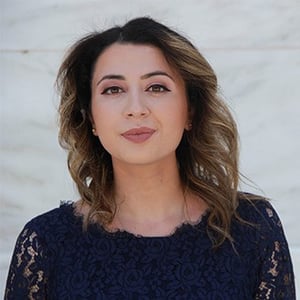
Ashkhen Kazaryan is a renowned expert in First Amendment law and technology policy, specializing in digital free speech, artificial intelligence, and the intersection of constitutional rights with emerging technologies. As a Senior Legal Fellow at the Future of Free Speech at Vanderbilt University, she leads initiatives to protect free expression and shape policies that uphold the First Amendment in the digital age.
Previously, Ashkhen was the lead for North and Latin America on the content regulation team at Meta, where she also served as the company’s policy lead on Section 230. She has also been a Senior Fellow at Stand Together and the Director of Civil Liberties at TechFreedom, where she worked extensively on platform liability, free speech, and internet governance. She is currently Fellow for the First Amendment at the Freedom Forum.
Ashkhen earned her specialist in law degree summa cum laude from Lomonosov Moscow State University in 2012 and later received a master of law degree from Yale Law School in 2016. During her time at Yale, she contributed as an articles editor for the Yale Journal of Law and Feminism, a senior editor for the Yale Law and Policy Review, and an editor for the Yale Journal of Law and Technology, while also serving as co-chair of the Public Interest Fellowship.
Nonresident Senior Fellow, Brookings Institute, Professor of Electrical Engineering and Law, UCLA
John Villasenor is a professor of electrical engineering, law, public policy, and management at UCLA, and is the faculty co-director of the UCLA Institute for Technology, Law, and Policy. He is also a nonresident senior fellow at the Brookings Institution and a member of the Council on Foreign Relations.
Professor Villasenor’s work addresses the intersection of technology, law, and policy, with a focus on topics including digital communications, artificial intelligence, cybersecurity, and privacy. He has published in many academic journals as well as in the Atlantic, Billboard, the Chronicle of Higher Education, Fast Company, Forbes, the Los Angeles Times, the New York Times, Scientific American, Slate, the Washington Post.
He has also provided congressional testimony on multiple occasions. Prior to joining the faculty at UCLA, Professor Villasenor was with the NASA Jet Propulsion Laboratory, where he developed methods of imaging the earth from space. He holds a B.S. degree from the University of Virginia, and an M.S. and Ph.D. from Stanford University.
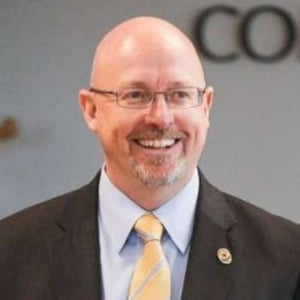
First Assistant District Attorney, Montgomery County District Attorney’s Office, Conroe Texas
Mike Holley is the First Assistant District Attorney at the Montgomery County District Attorney’s Office in Conroe, Texas. Mike a graduate of Abilene Christian University where he graduated summa cum laude. Mike received his J.D. from Texas Tech University School of Law where he also graduated summa cum laude, and he received his L.L.M. from the Judge Advocate General’s Legal Center and School in Charlottesville, Virginia.
As First Assistant, Mike is responsible for the day-to-day management of the office, supervision, and training of employees, trying cases, and the preparation of the annual office budget.
Before joining the Montgomery County District Attorney’s Office, Mike served in the United States Army. Mike’s Army career began as a Military Police Officer before The Army sent him to law school. Mike would go on to serve as both a prosecutor and a defense attorney in the Army and, in 2004, would serve as the Chief Prosecutor in the Abu Ghraib Detainee Abuse cases in Baghdad, Iraq.
Mike left the Army as a Major after 13 years of service and spent the next six years in private practice with the Lanier Law Firm. After joining the Montgomery County District Attorney’s Office in 2012, Mike served as a felony prosecutor and Chief of the Misdemeanor Division. Mike assisted in creating the Montgomery County Veterans Court and has prosecuted a wide variety of cases. Mike spends a substantial amount of his time training attorneys in his offices as well as speaking to prospective attorneys about the profession of prosecution. He has also made professional presentations at various conferences across the state and the country.
Mike was promoted to his current position as First Assistant in 2016. Mike is Board Certified in Criminal Law by the Texas Board of Legal Specialization. He has been married for 33 years and has four children.

Chief Policy Counsel, Council on Criminal Justice and Senior Advisor, Right on Crime
Marc A. Levin is the Chief Policy Counsel for the Council on Criminal Justice (counciloncj.org) and Senior Advisor for Right on Crime.
An attorney and accomplished author on legal and public policy issues, Marc began the Foundation’s criminal justice program in 2005. This work contributed to nationally praised policy changes that have been followed by dramatic declines in crime and incarceration in Texas. Building on this success, in 2010, Levin developed the concept for the Right on Crime initiative, a TPPF project in partnership with Prison Fellowship and the American Conservative Union Foundation. Right on Crime has become the national clearinghouse for conservative criminal justice reforms and has contributed to the adoption of policies in dozens of states that fight crime, support victims, and protect taxpayers.
In 2014, Levin was named one of the “Politico 50” in the magazine’s annual “list of thinkers, doers, and dreamers who really matter in this age of gridlock and dysfunction.”
Marc has testified on criminal justice policy on four occasions before Congress and has testified before legislatures in states including Texas, Nevada, Kansas, Wisconsin, and California. He also has met personally with leaders such as U.S. Presidents, Speakers of the House, and the Justice Commtitee of the United Kingdom Parliament to share his ideas on criminal justice reform. In 2007, he was honored in a resolution unanimously passed by the Texas House of Representatives that stated, “Mr. Levin’s intellect is unparalleled and his research is impeccable.”
Since 2005, Marc has published dozens of policy papers on topics such as sentencing, probation, parole, reentry, and overcriminalization which are available on the TPPF website. Levin’s articles on law and public policy have been featured in publications such as the Wall Street Journal, USA Today, Texas Review of Law & Politics, National Law Journal, New York Daily News, Jerusalem Post, Toronto Star, Atlanta Journal-Constitution, Philadelphia Inquirer, San Francisco Chronicle, Washington Times, Los Angeles Daily Journal, Charlotte Observer, Dallas Morning News, Houston Chronicle, Austin American-Statesman, San Antonio Express-News and Reason Magazine.
In 1999, Marc graduated with honors from the University of Texas with a B.A. in Plan II Honors and Government. In 2002, Marc received his J.D. with honors from the University of Texas School of Law. Marc was a Charles G. Koch Summer Fellow in 1996. He served as a law clerk to Judge Will Garwood on the U.S. Court of Appeals for the Fifth Circuit and Staff Attorney at the Texas Supreme Court.

Owner, VSV Leadership
Patrick Robinson is the owner of VSV Leadership and president of the board of Kid C.A.T.. Before starting VSV Leadership, Mr. Robinson worked at the Chan Zuckerberg Initiative as both a member of the strategic initiatives team and as a Transforming Prosecution Lead.
He is a graduate of Stanford University, where he got his Masters of Business Administration, and he received his J.D. from the University of Virginia School of Law.
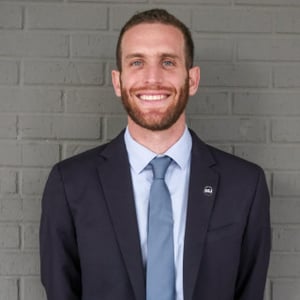
Senior Fellow, Council on Criminal Justice
Rothman has worked as a researcher, educator, communications specialist, policy analyst, and funder across the criminal justice system and emerging technology landscape. Throughout his career, he has focused on supporting and implementing programs that aim to enable public policy that is effective, safe, and dependable for all. Rothman holds an M.T.S from Harvard University in religion, ethics, and politics and a B.A. in political science from Carleton College.
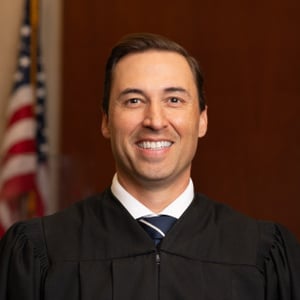
Judge, Fifth Circuit Court of Appeal, State of Louisiana
Judge Schlegel, a recent inductee into the Louisiana Justice Hall of Fame, was elected to the Fifth Circuit Court of Appeal in 2023. During Judge Schlegel’s decade on the trial court, he “designed and managed what may be one of the most advanced courts in the country for delivering justice online,” according to one legal tech journalist.
Judge Schlegel currently serves on the ABA & LSBA Task Forces on the Law and Artificial Intelligence, among others. He is the immediate past Chair of the Louisiana Supreme Court Technology Commission and has served as President of the Louisiana District Judges Association. Judge Schlegel has received numerous awards including the National Center for State Courts’ 26th Annual William H. Rehnquist Award for Judicial Excellence, one of the highest judicial honors in the country. Judge Schlegel was also featured on the cover of the American Bar Association Journal and is a nationally recognized speaker on legal tech and the modernization of the justice system.
Judge Schlegel has been equally innovative in the criminal justice system. While on the trial court, Judge Schlegel established the Reentry Court and Swift & Certain Probation programs in Jefferson Parish, aimed at reducing recidivism and enhancing community safety.
Prior to his election to the bench, Judge Schlegel was one of the top felony prosecutors in the Jefferson Parish District Attorney’s Office. He practiced civil law with an emphasis in products liability before becoming a prosecutor. Judge Schlegel graduated with honors from Loyola University New Orleans College of Law, where he served as the President of the Student Bar Association. He has been married to his high school sweetheart, Representative Laurie Schlegel, for 25 years and has one son in college.

Panel I: Constitutional Foundations of AI Governance: Federal Preemption, State Innovation, and Structural Limits
Huntsville, ALTech Roundup Episode 29 - An AI Roundup of 2025 and What Lies Ahead for 2026
Kevin Frazier, Neil Chilson, Charlie Bullock
Join tech and legal experts Prof. Kevin Frazier (University of Texas School of Law), Neil...
Showcase Panel 3: AI for the Law, and Law for AI
Ryan L. Bangert, James M. Burnham, Jennifer Walker Elrod, Kevin C. Newsom, Gabriel S. Powell, Mike Trinh, Tobi Young
CLE credit for this event is available at On-Demand CLE. The advent and rise of AI...
AI at a Crossroads [Shaped Docuseries Ep. 3]
Adam Thierer
AI at a Crossroads [Shaped Docuseries Ep. 3] As AI becomes increasingly integrated into everyday...
Everyone v. AI: Navigating the New Regulatory and Legal Battleground
Mariel Brookins, Benjamin Diggs, John Kim, Michael Richards, Mike Trinh
Presented by the In-House Counsel Network and the U.S. Chamber Litigation Center CLE credit for...
Does Privacy Exist in an AI World? (Part I: Rethinking Data Protection)
Ashley Baker, Pam Dixon, Kevin Frazier, Jennifer Huddleston
Join us Monday, June 9th, at 12:00pm EST for a timely discussion examining how artificial...
Tech Roundup Episode 27 - AI on the Senate Floor: Is it Time for a Moratorium?
Kevin Frazier, Adam Thierer, Scott Babwah Brennen
President Trump's budget bill, having recently passed the House of Representatives, is headed for the...
Tech Roundup Episode 25 - How are the States Approaching AI?
Kevin Frazier, Dean W. Ball, Sunny Gandhi
As the second Trump administration kicks off an ambitious AI agenda, individual states have been...
Stargate and DeepSeek: The International and Technological Implications of the AI “Arms Race”
Neil Chilson, Ashkhen Kazaryan, John Villasenor
On January 22, 2025, newly-elected President Trump announced a widespread project to invest $500 billion...
The Perils and Promise of A.I. in Criminal Justice
Michael R. Holley, Marc Levin, Patrick Robinson, Jesse Rothman, Scott U. Schlegel
Our liberty, safety, and prosperity are based on the rule of law, not the rule...