
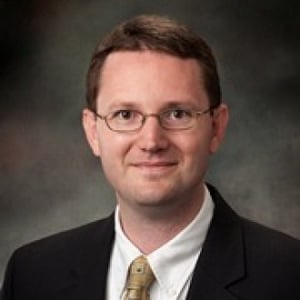
Assistant City Attorney, City of Arlington City Attorney's Office
Joshua Skinner is an assistant city attorney with the City of Arlington, Texas, with almost two decades of experience in civil rights, employment litigation, local government defense, and appellate advocacy.
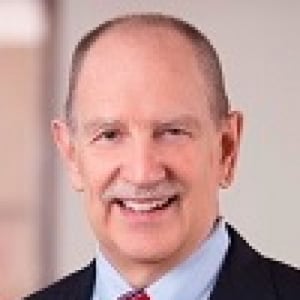
Retired
Tom Gede retired in 2023 as a principal in Morgan Lewis Consulting LLC and of counsel to the firm. He currently consults on a variety of legal and policy matters for both public and private clients. Tom has a national reputation and distinguished background in federal Indian law. Prior to retirement, he represented clients in complex governmental matters in litigation, administrative and regulatory proceedings, including high-profile matters involving state governments. A former senior deputy in the California Attorney General’s office, Tom was amicus coordinator and Supreme Court counsel, and argued cases in the US Supreme Court, the California Supreme Court, and numerous state and federal appellate courts.
Tom also served as executive director of the Conference of Western Attorneys General (CWAG), coordinating activities on key legal and policy issues, such as federal Indian law, energy, environmental, public lands, financial services, and telecommunications, for the attorneys general of 18 western states and territories. In 2016, Tom was elected as a Member of the American Law Institute (ALI), and served as an Adviser on the Restatement of the Law Third - The Law of American Indians. Tom also taught federal Indian law as an adjunct law professor at the University of the Pacific - McGeorge School of Law. He served as an assistant editor for and the author of the Indian gaming chapter in CWAG’s American Indian Law Deskbook (2d & 3d eds.). He has been engaged in Indian gaming and Indian law matters for more than three decades, having focused on the gaming compacts with Indian tribes, as well as complex civil and criminal jurisdiction, land, natural resources, water and law enforcement issues in Indian country. He has testified before Congress on American Indian and Native Alaskan issues. In 2012 he was appointed by Speaker John Boehner to serve on the United States Indian Law and Order Commission, where he examined criminal justice issues in Indian country and Alaska, resulting in the issuance of an important report to the President and Congress.
Associate Professor, Indiana University Maurer School of Law
Professor Scott joined the Indiana University Maurer School of Law faculty in 2009. He teaches and writes on criminal law and procedure, statutory interpretation, and federal courts. Professor Scott's research examines structural and procedural interactions between the judicial branch and other branches of government, particularly in the criminal context. He has written on efforts to control the composition of the judiciary, including the judicial appointments process, legislative strategies for encouraging judicial retirements, and the semi-retirement program of senior judges. Professor Scott also studies efforts to influence judicial decision making directly by placing constraints on judicial discretion. His current project examines changes in inter-judge sentencing disparity under the United States Sentencing Guidelines, one of Congress's most ambitious efforts to restrict judges in the performance of a historically discretionary function.After graduating from law school, Professor Scott clerked for Judge Michael W. McConnell of the United States Court of Appeals for the Tenth Circuit. He then served as a Bristow Fellow in the Office of the Solicitor General of the United States. Before joining the faculty, he worked for two years as an associate in the Supreme Court and appellate practice at O'Melveny & Myers LLP in Washington, D.C.

Professor of Law and Centennial Chair, South Texas College of Law Houston
Josh Blackman is a national thought leader on constitutional law and the United States Supreme Court. Josh’s work was quoted during two presidential impeachment trials. He has testified before Congress and advises federal and state lawmakers. Josh regularly appears on TV, including NBC, CBS, ABC, Fox, and the BBC. Josh is also a frequent guest on NPR and other syndicated radio programs. He has published commentaries in the New York Times, Wall Street Journal, Washington Post, and leading national publications.
Since 2012, Josh has served as a professor at the South Texas College of Law Houston. He holds the Centennial Chair of Constitutional Law. Josh is an Adjunct Fellow at the Manhattan Institute. Josh has written more than seven dozen law review articles that have been cited more than a thousand times. Josh was selected as the Jurist of the Year by the Texas Journal of Law & Public Policy, received the inaugural Meese III Originalism Award, and was awarded the Inaugural Joseph Story Award. Josh was selected by Forbes Magazine for the “30 Under 30” in Law and Policy. Josh is the President of the Harlan Institute, and founded FantasySCOTUS, the Internet’s Premier Supreme Court Fantasy League. He blogs at the Volokh Conspiracyand posts@JoshMBlackman.
Professor, The University of South Dakota School of Law
Patrick Garry is a professor of law at The University of South Dakota and the Director of the Hagemann Center for Legal & Public Policy Research.
Professor Garry has published more than forty scholarly articles and authored ten books, many of which have been the subject of numerous conferences and symposia. Professor Garry has been invited on several occasions to testify before Congress on legal and constitutional matters, and he is a frequent speaker at Federalist Society sponsored events. Aside from his public speaking appearances, Professor Garry often writes for popular audience websites, magazines, and newspapers, including the Chicago Tribune and Washington Times. These writings offer commentary and analysis of current political and legal issues.
Professor Garry received his Ph.D. and J.D. from the University of Minnesota. And he has been invited to teach as a visiting professor at the George Washington University Law School, the University of Utah School of Law, the University of Missouri School of Law, and the University of St. Thomas School of Law.
Assistant City Attorney, City of Arlington City Attorney's Office
Joshua Skinner is an assistant city attorney with the City of Arlington, Texas, with almost two decades of experience in civil rights, employment litigation, local government defense, and appellate advocacy.
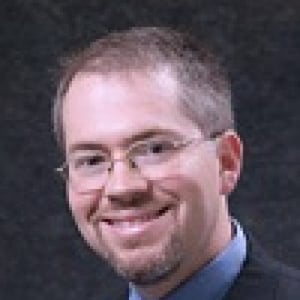
Member, Fanning Harper Martinson Brandt & Kutchin, P.C.
Frank Valenzuela joined Fanning Harper Martinson Brandt & Kutchin, P.C. in 2007 and is a member whose practice focuses on school litigation, employment litigation, local government defense and serving as an assistant city attorney.
Admitted to The Florida Bar in 2003 and State Bar of Texas in 2006, Frank is licensed to practice in all Texas and Florida state courts and the U.S. District Courts for the Northern District of Texas and Northern and Southern Districts of Florida. Prior to joining FHMBK, Frank worked as Associate Corporate Counsel for the Morgan Management Corporation, which operates Morgan Buildings and Spas, Inc. and related Morgan companies.
Originally from Miami, Frank received his undergraduate degree in Politics from the University of Dallas and his law degree from Notre Dame Law School, where he was on the Moot Court Team. He and his wife moved back to Dallas from Miami in late 2005 to raise their family. Frank enjoys spending time with his family and friends, including coaching soccer and playing sports.
Frank has earned inclusion on the Texas Rising Stars listing for three consecutive years, 2010-2012.

Professor of Law, University of Michigan Law School
Christopher J. Walker is a Professor of Law at the University of Michigan. Prior to joining Michigan law faculty in 2022, he spent a decade teaching at The Ohio State University Moritz College of Law. He previously clerked for Justice Anthony Kennedy of the U.S. Supreme Court, worked on the Civil Appellate Staff at the U.S. Department of Justice, and served on the Senate Judiciary Committee staff for the Gorsuch Supreme Court confirmation. Professor Walker’s research focuses on administrative law, regulation, and law and policy at the agency level. Outside the law school, he chaired the American Bar Association’s Section of Administrative Law and Regulatory Practice in 2020-21 and served as one of forty Public Members of the Administrative Conference of the United States from 2016-2022, and he continues to serve in both organizations in various capacities. He also works of counsel at the U.S. Chamber Litigation Center. In 2022, he received the Federalist Society’s Joseph Story Award.

Topics
Utah v. Strieff: Fourth Amendment Rights Without Remedies and the Problem of Arbitrary Police Power
“[I]f the laws furnish no remedy for the violation of a vested legal right,” the...
Mullenix v. Luna - Post-Decision SCOTUScast
Joshua Skinner
On November 9, 2015, the Supreme Court decided Mullenix v. Luna without oral argument. The question in...
City and County of San Francisco v. Sheehan - Post-Decision SCOTUScast
Thomas F. Gede
On May 18, 2015, the Supreme Court issued its decision in City and County of...
Heien v. North Carolina - Post-Decision SCOTUScast
Ryan Scott
On December 15, 2014, the Supreme Court issued its decision in Heien v. North Carolina,...
Ferguson, Qualified Immunity, and the Future of Constitutional Litigation
Heien v. North Carolina - Post-Argument SCOTUScast
Ryan Scott
On October 6, 2014, the Supreme Court heard oral argument in Heien v. North Carolina. The...
Lane v. Franks - Post-Decision SCOTUScast
Josh Blackman
On June 19, 2014, the Supreme Court issued its opinion in Lane v. Franks. The...
Wood v. Moss - Post-Decision SCOTUScast
Patrick Garry
On May 27, 2014, the Supreme Court issued its decision in Wood v. Moss. This...
Plumhoff v. Rickard - Post-Decision SCOTUScast
Joshua Skinner
On May 27, 2014, the Supreme Court issued its opinion in Plumhoff v. Rickard. This...
Filarsky v. Delia - Post-Decision SCOTUScast
Frank Valenzuela
On April 17, 2012, the Supreme Court announced its decision in Filarsky v. Delia. The question...