
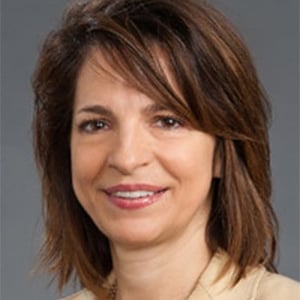
Chief Manufacturing Development Center Officer, Wake Forest Institute for Regenerative Medicine
Julie has more than 25 years of experience in clinical translation of cellular therapies and regenerative medicine products, including business management and board directorship experience. She has eight years of experience as an executive officer with a publicly traded company building services for cellular banking, including licensure of technology with more than 30 affiliates. She is an experienced scientist who excels at delivering innovation, driving milestones, maintaining sensitivity to financial considerations, building multidisciplinary teams, as well as strategic planning, project management, and regulatory expertise. Dr. Allickson has a history of creating value in clinical development and translation.

Chairman, Committee to Reduce Infection Deaths
Betsy McCaughey is a patient advocate and former Lt. Governor of New York State. In 2004, she founded and is now Chairman of the Committee to Reduce Infection Deaths (also known as RID), a nationwide educational campaign to stop hospital-acquired infections. RID has made hospital infections a major public issue. It has provided compelling evidence that preventing infection improves hospital profitability as well as saving lives, and RID has won legislation in 34 states and Washington, D.C. for public reporting of infection rates. RID has become synonymous with patient safety and clean hospital care.
Betsy McCaughey’s research on how to prevent infection deaths has been featured on Good Morning America, the CBS Morning Show, ABC’s 20/20, and many other national programs.
Betsy McCaughey is the author of more than one hundred scholarly and popular articles on health policy, infection, medical innovation, the economics of aging, and Medicare. Her writings have appeared in The New York Times, The Wall Street Journal, New Republic, Policy Review, Forbes Magazine, New York Law Journal, Los Angeles Times, U.S. News & World Report, and many other national publications. Her 1994 analysis of the dangers of the Clinton health plan in The New Republic won a National Magazine Award for the best article in the nation on public policy. She has been profiled in The New Yorker, The New York Times Magazine, New York Magazine, The Washington Post, and other publications.
Prior to entering the health policy field, Betsy McCaughey earned a Ph.D. in constitutional history from Columbia University. She is the author of two books on that subject. She has taught at Vassar College and Columbia University, and she produced prize-winning studies while at two think tanks, the Manhattan Institute and later the Hudson Institute.
From 1995 to 1998, she served as Lt. Governor of New York State. She focused on health issues, and her bills became models for legislation in many states and in Congress.
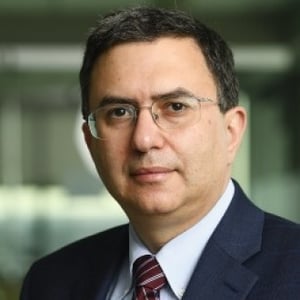
Vice Dean for Public Health Practice and Community Engagement, Bloomberg School of Public Health, Johns Hopkins University
Dr. Joshua M. Sharfstein is Vice Dean for Public Health Practice and Community Engagement and Professor of the Practice in Health Policy and Management at the Johns Hopkins Bloomberg School of Public Health. He is also the Director of the Bloomberg American Health Initiative. He is the author of the Public Health Crisis Survival Guide: Leadership and Management in Trying Times, and the co-author of The Opioid Epidemic: What Everyone Needs to Know.
Previously, Dr. Sharfstein served as Secretary of the Maryland Department of Health and Mental Hygiene from January 2011 to December 2014. In this position, he led efforts to align Maryland’s health care system with improved health outcomes, culminating in the adoption of a revised payment model for all hospital care for Maryland residents. He also oversaw the development of a statewide health improvement process with 18 local public-private coalitions and the reshaping of state’s approach to health information exchange, long-term care, and behavioral health.
From March 2009 to January 2011, Dr. Sharfstein served as Principal Deputy Commissioner of the U.S. Food and Drug Administration, where he oversaw the agency’s successful performance management and transparency initiatives. From December 2005 to March 2009, as Commissioner of Health for Baltimore City, Dr. Sharfstein led innovative efforts that contributed to major declines in both overdose deaths and infant mortality rates. From July 2001 to December 2005, as minority professional staff and health policy advisor for Congressman Henry A. Waxman, Dr. Sharfstein was engaged in a wide range of oversight and legislative activities on health care topics, including emergency preparedness, HIV, and the politicization of science.
Dr. Sharfstein graduated summa cum laude with an A.B. in Social Studies from Harvard College in 1991. From August 1991 to August 1992, he worked on public health projects in Guatemala and Costa Rica with a Frederick Sheldon Prize Fellowship. He graduated from Harvard Medical School in 1996, from the Boston Combined Residency Program in Pediatrics at Boston Medical Center and Children’s Hospital in 1999, and from the fellowship in general academic pediatrics at the Boston University School of Medicine in 2001.
Dr. Sharfstein is an elected member of the Institute of Medicine (2014) and fellow of the National Academy of Public Administration (2013). He serves on the editorial board of the Journal of the American Medical Association. His awards have included the Jay S. Drotman Memorial Award from the American Public Health Association (1994), Public Official of the Year from Governing Magazine (2008) and the Circle of Commendation Award from the Consumer Product Safety Commission (2013).
Dr. Sharfstein lives with his family in Baltimore, Maryland.
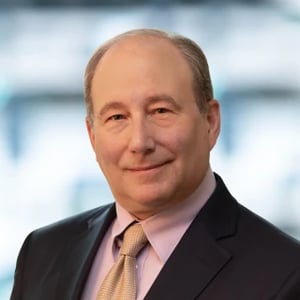
Managing Director, Berkeley Research Group
Dan Troy is the Managing Director at Berkeley Research Group.
Prior to that, he was the Chief Business Officer, Chief Administrative Officer, and General Counsel of Valo in Boston, Massachusetts.
Prior to joining Valo, he served as the Senior Vice President & General Counsel of GlaxoSmithKline and was a member of its Corporate Executive Team. Dan joined GSK in September 2008 and was responsible for leading the company’s legal department in protecting GSK’s intellectual property; managing litigation; supporting business development transactions; and business compliance and risk management. In 2012, Dan led the integration team following the acquisition of Human Genome Sciences, which later resulted in the launch of Benlysta, the first lupus treatment in 50 years. Dan led GSK’s Contributions Committee in the US and also led the Government Affairs, Public Policy and Patient Advocacy team from 2012 until 2014.
Prior to joining GSK, he was a Partner at the Washington law firm Sidley Austin LLP, where he principally represented pharmaceutical companies and trade associations on matters related to the US Food and Drug Administration (FDA) and government regulations. Dan was formerly Chief Counsel for the FDA, where he served as a primary liaison to the White House and the US Department of Health and Human Services.
Dan has chaired the American Bar Association's Section of Administrative Law and is a member of the American Law Institute. He currently chairs the US Chamber of Commerce Litigation Center. He has also chaired the Civil Justice Reform Group, as well as the PhRMA Law Section Executive Committee. He was the 2012 CPR Corporate Leadership Award recipient and, in 2013, was named a 'Legend in the Law' at the Burton Awards.
Dan holds a B.S. in Industrial and Labor Relations from Cornell University and a J.D. from Columbia University School of Law, where he was a member of the Law Review and a Kent Scholar. After graduation from law school, he was a law clerk for the US Circuit Court of Appeals for the District of Columbia Circuit.

Executive Vice President, Goldwater Institute
Christina Sandefur is the Executive Vice President at the Goldwater Institute. She develops policies and litigates cases advancing healthcare freedom, free enterprise, private property rights, free speech, and taxpayer rights.
Christina is a co-drafter of the Right to Try initiative, now federal law, which protects terminally ill patients' right to try safe investigational treatments that have been prescribed by their physician but are not yet FDA-approved. She has won important victories for property rights in Arizona and works nationally to promote the Institute's Private Property Rights Protection Act, a state-level reform that requires government to pay owners when regulations destroy property rights and reduce property values.
Christina is the co-author of the book Cornerstone of Liberty: Private Property Rights in 21st Century America (2016). She is a frequent guest on national television and radio programs, has provided expert legal testimony to various legislative committees, and is a frequent speaker at conferences. She is the recipient of the 2018 Buckley Award in recognition of her leadership in the freedom movement, and she is an Advisory Board Member of the Network of enlightened Women. Christina serves on the board of the Phoenix Lawyers Chapter of the Federalist Society and is a member of the executive committee for the Federalist Society's Regulatory Transparency Project: FDA & Health.
Christina is a graduate of Michigan State University College of Law and Hillsdale College.
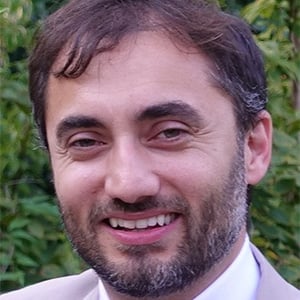
Vice President and Counsel for Privacy and Cyber Policy, CrowdStrike
Drew Bagley, CIPP/E, CrowdStrike Vice President and Counsel for Privacy and Cyber Policy, is responsible for leading CrowdStrike’s data protection initiatives, privacy strategy and global policy engagement. He serves on the Europol Advisory Group on Internet Security and the U.S. Department of State’s International Telecommunications Advisory Committee. Recently, Drew helped lead the ICANN Competition, Consumer Choice, and Consumer Trust Review Team, which assessed the expansion of the Internet’s Domain Name System. Prior to joining CrowdStrike, Drew served in the Office of the General Counsel at the Federal Bureau of Investigation. He is a member of the New York State Bar and a former German Chancellor Fellow. Drew has taught at the University of Maryland, University of Leipzig, and University of Florida and holds degrees from the University of Miami (JD) and the University of Florida (MA, BS, and BA).

Head of AI Policy, Abundance Institute
Neil Chilson is the Head of AI Policy at the Abundance Institute. Prior to this position, he served as a Senior Research Fellow at the Center for Growth and Opportunity. Chilson is a lawyer, computer scientist, and author of the book “Getting Out of Control: Emergent Leadership in a Complex World.”
Chilson was previously the senior research fellow for Technology and Innovation at Stand Together, where he guided efforts to understand and promote the legal and cultural paradigms that best enable people to discover, innovate, and improve all our lives.
Before Stand Together, Chilson was the Chief Technologist at the Federal Trade Commission, where he focused on the economics of privacy and blockchain-related issues. Previously, he was an attorney advisor to Acting FTC Chairman Maureen K. Ohlhausen. In both roles he advised Chairman Ohlhausen and worked with staff on nearly every major technology-related case, report, workshop, or other FTC proceeding since January 2014. Neil joined the FTC from telecom firm Wilkinson Barker Knauer. Neil is frequently quoted by the press and his work has appeared in numerous news outlets, including The Wall Street Journal, The Washington Post, USAToday, and Newsweek. Neil has a J.D. from The George Washington Law School, a M.S. in computer science from University of Illinois, Urbana-Champaign, and a B.S. in computer science from Harding University.
Faculty Fellow, Center for Law, Science & Innovation, Sandra Day O'Connor College of Law, Arizona State University
Dr. Klein is a Faculty Fellow at the Center for Law, Science & Innovation at the Sandra Day O'Connor College of Law at Arizona State University. He is also Principal at Roger D. Klein, MD JD Consulting and Klein & Klein Co., L.P.A. He was formerly Chief Medical Officer at OmniSeq, an oncology focused genomic profiling company that was recently acquired by LabCorp. Previously, Roger was the Medical Director at the Molecular Oncology division at the Cleveland Clinic. He was also the Chair of the Professional Relations Committee at the Association for Molecular Pathology. Prior to joining the Cleveland Clinic, he served as Medical Director of Molecular Oncology at the BloodCenter of Wisconsin where he led the center’s Diagnostic Laboratories’ initiative focused on DNA- and RNA-based testing for evaluation of cancer patients.
Dr. Klein has been an advisor to the Department of Health and Human Services (HHS), the Food and Drug Administration (FDA), the Centers for Medicare and Medicaid Services (CMS), and the Centers for Disease Control and Prevention (CDC). He has participated in and assumed leadership roles in many professional society committees and corporate advisory boards and is a policy advisor to the Heartland Institute.
Dr. Klein is licensed to practice medicine in Ohio, Florida, and Wisconsin. Additionally, he is licensed to practice law in the District of Columbia and Ohio. Roger obtained his Molecular Genetic Pathology certification at Mayo Medical School following completion of his M.D. Yale University School of Medicine. He obtained his J.D. from Yale Law School.
University Professor, Founding Linda D. & Timothy J. O’Neill Professor of Global Health Law, Faculty Director of O’Neill Institute for National & Global Health Law, Georgetown University, Director, World Health Organization Collaborating Center on Public Health Law & Human Rights
Lawrence O. Gostin is University Professor, Georgetown University’s highest academic rank conferred by the University President. Prof. Gostin directs the O’Neill Institute for National and Global Health Law and is the Founding O’Neill Chair in Global Health Law. He served as Associate Dean for Research at Georgetown Law from 2004 to 2008. He is Professor of Medicine at Georgetown University and Professor of Public Health at the Johns Hopkins University.
Prof. Gostin is the Director of the World Health Organization Collaborating Center on National and Global Health Law. The WHO Director-General has appointed Prof. Gostin to high-level positions, including the International Health Regulations (IHR) Roster of Experts and the Expert Advisory Panel on Mental Health. He served on the Director-General’s Advisory Committee on Reforming the World Health Organization, as well as numerous WHO expert advisory committees, including on the Pandemic Influenza Preparedness Framework, smallpox, genomic sequencing data, migrant health, and NCD prevention. He served on the WHO/Global Fund Blue Ribbon Expert Panel: The Equitable Access Initiative to develop a global health equity framework. He co-chairs the Lancet Commission on Global Health Law.
Professor Gostin served on two global commissions to report on the lessons learned from the 2015 West Africa Ebola epidemic. He was also senior advisor to the United Nations Secretary General’s post-Ebola Commission. He also served on the drafting team for the G-7 Summit in Tokyo 2016, focusing on global health security and Universal Health Coverage.
Prof. Gostin holds multiple international academic professorial appointments, including at Oxford University, the University of Witwatersrand (South Africa), and Melbourne University. Prof. Gostin served on the Governing Board of Directors of the Consortium of Universities for Global Health.
Prof. Gostin holds editorial appointments in leading academic journals throughout the world. He is the Legal and Global Health Correspondent for the Journal of the American Medical Association. He is also Founding Editor-in-Chief of Laws (an international open access law journal). He was formally the Editor-in-Chief of the Journal of Law, Medicine & Ethics.
Prof. Gostin holds four honorary degrees. In 1994, the Chancellor of the State University of New York conferred an Honorary Doctor of Laws Degree. In 2006, Her Majesty Queen Elizabeth II and the Vice Chancellor awarded Cardiff University’s (Wales) highest honor, an Honorary Fellow. In 2007, the Royal Institute of Public Health (United Kingdom) appointed Prof. Gostin as a Fellow of the Royal Society of Public Health (FRSPH). In 2012, the Chancellor of the University of Sydney – on the nomination of the Deans of the Law and Medical Schools – conferred a Doctor of Laws (honoris causa), presided by two Justices of Australia’s highest court—Justices Kirby and Haydon.
Prof. Gostin is an elected lifetime Member of the National Academy of Medicine/ National Academy of Sciences. He has served on the National Academy’s Board on Health Sciences Policy, the Board on Population Health, the Human Subjects Review Board, and the Committee on Science, Technology, and Law. He currently serves on the National Academies of Sciences Engineering, and Medicine, Board on Global Health. Gostin chaired the National Academy’s Committee on Global Solutions to Falsified, Substandard, and Counterfeit Medicines. He has chaired National Academy Committees on national preparedness for mass disasters, health informational privacy, public health genomics, and human subject research on prisoners.
Prof. Gostin is also a Member of the Council on Foreign Relations and Fellow of the Hastings Center. In 2016, President Obama appointed Prof. Gostin to a six-year term on the President’s National Cancer Advisory Board to advise the nation on cancer prevention, research, and policy. He also serves on the National Institutes of Health Director’s Advisory Committee on the ethics of public/private partnerships to end the opioid crisis.
Prof. Gostin has led major law reform initiatives in the U.S., including drafting the Model Emergency Health Powers Act (MEHPA) to combat bioterrorism (following the post-9/11 anthrax attacks) and the “Turning Point” Model State Public Health Act. He also spearheaded the World Health Organization and International Development Law Organization’s major report, Advancing the Right to Health: The Vital Role of Law.
Prof. Gostin’s proposal for a Framework Convention on Global Health – an international treaty ensuring the right to health – is now part of a global campaign, endorsed by the UN Secretary-General and Director of UNAIDS.
In the United Kingdom, Lawrence Gostin was the Legal Director of the National Association for Mental Health, Director of the National Council of Civil Liberties (the UK equivalent of the ACLU), and a Fellow at Oxford University. He helped draft the Mental Health Act (England and Wales) and brought landmark cases before the European Court of Human Rights.
Prof. Gostin’s books include: Public Health Law: Power, Duty, Restraint (University of California Press, 3rd ed., 2016); Public Health Law and Ethics: A Reader (University of California Press, 3rd ed., 2018); Human Rights in Global Health: Rights-Based Governance for a Globalizing World (Oxford University Press, 2018); Law and the Health System (Foundation Press, 2014); Principles of Mental Health Law & Practice (Oxford University Press, 2010).
Gostin’s classic text, Global Health Law (Harvard University Press, 2014) is read throughout the world—translated and published in both simplified and traditional Chinese, and in Spanish. Paul Farmer, Partners in Health, says of his book: Global Health Law is “more than the definitive book on a dynamic field. Gostin harnesses the power of international law and human rights as tools to close unconscionable health inequities — the injustices that burden marginalized populations throughout the world. Gostin presents a forceful vision, one that deserves a wide embrace.”
In a 2012 systematic empirical analysis of legal scholarship, independent researchers ranked Prof. Gostin 1st in the nation in productivity among all law professors, and 11th in in impact and influence. A 2017 and 2018 systematic empirical analysis ranked Prof. Gostin 1st in the nation for citations in health law.
Senior Scholar, Johns Hopkins Center for Health Security
Dr. Nuzzo is a Senior Scholar at the Johns Hopkins Center for Health Security and an Associate Professor in the Department of Environmental Health and Engineering and the Department of Epidemiology at the Johns Hopkins Bloomberg School of Public Health. An epidemiologist by training, her work focuses on global health security, with a particular focus on outbreak detection and response, health systems as they relate to global health security, international and domestic biosurveillance, and infectious disease diagnostics. She directs the Outbreak Observatory, which conducts, in partnership with front-line public health practitioners, operational research to improve outbreak preparedness and response. Together with colleagues from the Nuclear Threat Initiative and the Economist Intelligence Unit, she co-leads the development of the first-ever Global Health Security Index, which benchmarks 195 countries’ public health and healthcare capacities and capabilities, their commitment to international norms and global health security financing, and socioeconomic, political, and environmental risk environments. Previously, she has conducted research related to the Affordable Care Act, tuberculosis control, foodborne outbreaks, and water security. Dr. Nuzzo is an Associate Editor of the peer-reviewed journal Health Security.
In addition to her work at the Center, Dr. Nuzzo has advised national governments and nonprofit organizations. She has served as a consultant to the National Biosurveillance Advisory Subcommittee, as a member of the US Environmental Protection Agency’s National Drinking Water Advisory Council (NDWAC), and as a member of the NDWAC’s Water Security Working Group. She has also served as a project advisor for the American Water Works Association Research Foundation (now called the Water Research Foundation), a primary funding organization for drinking water research in the United States. She has also been consulted on pandemic planning efforts in the Republic of Indonesia and Taiwan.
Dr. Nuzzo joined the Center at its founding in 2003, and she has served as an Analyst, Senior Analyst, and Associate. Prior to joining the Center, she served as a Research Analyst with the Center for Civilian Biodefense Strategies at the Johns Hopkins Bloomberg School of Public Health.
In 2002 and 2003, Dr. Nuzzo worked as a public health epidemiologist for the City of New York, where she was involved with disease and syndromic surveillance efforts related to the city’s Waterborne Disease Risk Assessment Program. Central to her duties in New York was the management of the city’s drug sale monitoring program for surveillance of diarrheal illness. She also worked on a local climate change initiative for the City of Cambridge, MA.
Dr. Nuzzo received a DrPH in epidemiology from the Johns Hopkins Bloomberg School of Public Health, an SM in environmental health from Harvard University, and a BS in environmental sciences from Rutgers University.

Deep Dive Episode 136 – It Can Be Done Live: The Future of Our Health
Julie Allickson, Betsy McCaughey, Joshua Sharfstein, Dan Troy, Christina Sandefur
The creators of the award-winning documentary, They Say It Can’t Be Done, in partnership with...
Deep Dive Episode 117 – How to Approach Data Collection and Breaches in the Age of COVID-19
Drew Bagley, Neil Chilson, Roger D. Klein
In an effort to combat the spread of COVID-19 and contain its impact, nations across...
Coronavirus & The Law
Lawrence Gostin, Jennifer Nuzzo
A coronavirus outbreak is raising attention and concern worldwide. Dr. Jennifer Nuzzo and Prof. Lawrence Gostin will...
IGWG: Beyond its Mandate?
John S. Gardner
Letter from the Editor . . . The Federalist Society takes seriously its responsibility as...
Report on Day 5 of the Forty-third Assemblies of the Member States of WIPO
John S. Gardner
John S. Gardner, a Senior Director of the White House Writers Group in Washington, D.C.,...
Tobacco-Free FDA
For 58 of the past 60 years, since Congress passed the 1938 Food, Drug and...