

Legal Fellow, Center for the Separation of Powers, Pacific Legal Foundation
Alison Somin joined Pacific Legal Foundation in May 2020 as a legal fellow in the Center for the Separation of Powers and part of the equality before the law practice group.
Before joining the Pacific Legal Foundation team, Alison was a special assistant and counsel for over a decade to Gail Heriot, a member of the bipartisan United States Commission on Civil Rights. She also has deep roots in the liberty movement. Alison was a Koch Associate at the National Federation for Independent Business Legal Foundation and, during law school, completed summer clerkships at the Institute for Justice and the Charles G. Koch Charitable Foundation. She holds a J.D. from Emory University School of Law and an A.B. in history from Dartmouth College.
Her work has been published in the San Francisco Chronicle, the Daily Journal, Texas Journal of Law and Politics, and The Federalist Society’s Engage magazine and blog.
She lives in northern Virginia with her husband Ilya; two children; and golden retriever Willow. In her spare time, she enjoys reading, baking and cooking, children’s art projects, and training and exercising Willow.

Thomas M. Siebel Senior Fellow, The Hoover Institution, Stanford University; Gary T. Schwartz Distinguished Professor of Law Emeritus, UCLA School of Law
Eugene Volokh is the Thomas M. Siebel Senior Fellow at the Hoover Institution (Stanford), as well as the Gary T. Schwartz Distinguished Professor of Law Emeritus and Distinguished Research Professor at UCLA School of Law. He recently retired from teaching at UCLA, after 30 years there, and is now focusing on research.
Volokh is the author of the textbooks The First Amendment and Related Statutes (8th ed. 2023), and Academic Legal Writing (5th ed. 2016), as well as over 100 academic law journal articles, mostly on First Amendment law. He is a member of The American Law Institute; the editor-in-chief of the Journal of Free Speech Law; and the creator and coauthor of The Volokh Conspiracy, a leading legal blog founded in 2002 (hosted at the Washington Post from 2014 to 2017 and now at Reason Magazine).
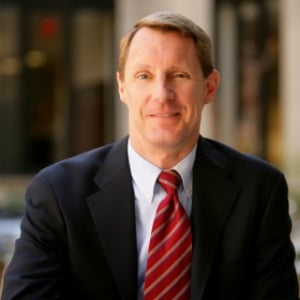
Director, International Legal Studies Program, Vanderbilt Law School
Michael Newton is an expert on terrorism, accountability, transnational justice, and conduct of hostilities issues. Over the course of his career, he has published more than 90 books, articles, op-eds and book chapters. He has been an expert witness in terrorism related trials and is admitted to the counsel list of the International Criminal Court, where, in 2018, he helped prepare the appeal of Jean-Pierre Bemba and participated in oral arguments in the Appeals Chamber. At Vanderbilt, he developed and teaches the innovative International Law Practice Lab, which provides expert assistance to judges, lawyers, legislatures, governments, and policy makers around the world. Professor Newton is most recently the editor of The United States Department of Defense Law of War Manual: Commentary and Critique, forthcoming from Cambridge University Press.
An authority on the law of armed conflict, Professor Newton served as the senior adviser to the Ambassador-at-Large for War Crimes Issues in the U.S. State Department from January 1999 to August 2002, during which he implemented a wide range of policy positions, including U.S. support to accountability mechanisms worldwide. He negotiated the “Elements of Crimes” for the International Criminal Court, and was the senior member of the team teaching international law to the first group of Iraqis who began to think about accountability mechanisms and a constitutional structure in November 2000. He shuttled to Baghdad repeatedly to aid international and Iraqi lawyers and jurists in drafting the Statute of the Iraqi High Tribunal while serving as the International Law Adviser to the Judicial Chambers from 2006 to 2008. He began assisting Iraqi officials, victims and civil society groups on legal issues associated with documentation and investigation of crimes committed by Da’esh on Iraqi soil days after Yazidi victims fled towards Mount Sinjar. He was the U.S. representative on the U.N. Planning Mission for the Sierra Leone Special Court and a founding member of its academic consortium. He is an elected member of the International Institute of Humanitarian Law and on the expert roster of Justice Rapid Response. In addition to teaching the Practice Lab, he develops and coordinates externships and educational opportunities for students interested in international legal issues, having supervised more than 150 such opportunities.
Professor Newton has served on the executive council of the American Society of International Law and as an invited expert for the Genocide Prevention Task Force established by the U.S. Holocaust Memorial Museum and the U.S. Institute of Peace. He is currently on the Advisory Board of the ABA International Criminal Court Project.
Professor Newton served in the U.S. Army more than 21 years, beginning with his commission from the U.S. Military Academy in May 1984 as an armor officer in the 4th Battalion, 68th Armor at Fort Carson, Colorado. After his selection for the Funded Legal Education Program, Newton served as chief of operational law with the Army Special Forces Command (Airborne) during Operation Desert Storm, and as the group judge advocate for the 7th Special Forces Group (Airborne). His deployments include Northern Iraq on Operation Provide Comfort to assist Kurdish civilians, and Haiti with 194th Armored Brigade (Separate), where he organized and led human rights and rules of engagement education for multinational forces, including police. He has taught international and operational law at the Judge Advocate General's School and Center in Charlottesville, Virginia, and taught international law at the United States Military Academy at West Point.

Professor Emeritus of Law, Antonin Scalia Law School, George Mason University
Jeremy A. Rabkin is a Professor Emeritus of Law at the Antonin Scalia Law School, George Mason University. Before joining the faculty in June 2007, he was for over two decades a professor in the Department of Government at Cornell University. Professor Rabkin serves on the board of directors of the Center for Individual Rights, a public interest law firm based in Washington, D.C. Previously he was a board member of the U.S. Institute of Peace and the board of academic advisors of the American Enterprise Institute.
Professor Rabkin’s books include Law Without Nations? (Princeton University Press, 2005). He authored “If You Need a Friend, Don’t Call a Cosmopolitan,” a chapter in Varieties of Sovereignty and Citizenship (Sigal R. Ben-Porath & Rogers M. Smith eds., University of Pennsylvania Press, 2012). His articles have appeared in major law reviews and political science journals and his journalistic contributions in a range of magazines and newspapers, including the Washington Post and the Wall Street Journal.
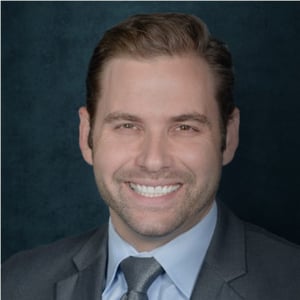
Vice President for the Program on Technology, Criminal Justice and Civil Liberties, Lincoln Network
Arthur Rizer is the Vice President for the Program on Technology, Criminal Justice and Civil Liberties at Lincoln Network. In addition to his work at Lincoln, Arthur is a visiting lecturer at University College London, and an adjunct professor at George Mason University’s Antonin Scalia Law School. Arthur is also a member of Columbia University Justice Lab’s Executive Session for the Future of Justice Policy, the Federalist Society’s Executive Committee of the Criminal Law Practice Group, the Virginia Advisory Committee to the U.S. Commission on Civil Rights, and other advisory bodies.
Before joining Lincoln, Arthur was founding director of the R Street Institute’s program on criminal justice and civil liberties. Prior to that, Arthur taught at West Virginia University’s College of Law, and was a visiting professor at Georgetown University Law Center. He also served as a trial attorney with the U.S. Justice Department, primarily as a federal prosecutor in the Criminal Division, where he targeted command-and-control drug cartel leaders and narco-terrorists. He also served as a prosecutor in the U.S. Attorney’s Office for the Southern District of California and in the civil division. Earlier in his career, Arthur served in the U.S. Army, originally enlisting as a private before later receiving a commission. He served as an armor officer, later becoming the commander of a military police company and a Reserve Officers’ Training Corps assistant professor. He deployed to Fallujah, Iraq, with the mission to train the Iraqi Infantry and served as an MP acting battalion commander and executive officer. He retired as a lieutenant colonel from the U.S. Army (WVNG). During his Army career, Arthur received the Bronze Star, Purple Heart, Meritorious Service and Iraq Campaign medals.
Arthur is the author of three books: Lincoln’s Counsel (2010); The National Security Implications of Immigration Law (2013); and Jefferson’s Pen: The Art of Persuasion (2016).
Arthur earned his bachelor’s degree in political science from Pacific Lutheran University; a master of laws, with distinction, from Georgetown University’s Law Center; and his JD, magna cum laude, from Gonzaga University School of Law. He is also a graduate of the U.S. Marine Corps’ Command Staff College. He is in the final stages of a doctorate at the University of Oxford, Faculty of Law, Centre of Criminology that focuses on policing.
Brett Tolman, the former U.S. Attorney for Utah and former chief counsel for crime and terrorism in the U.S. Senate Judiciary Committee, founded the Tolman Group and focuses on public policy and reforming government.
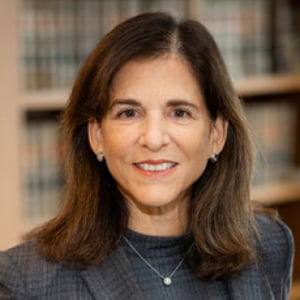
Professor of Clinical Law, Brooklyn Law School
Jodi S. Balsam is Professor of Clinical Law at Brooklyn Law School and a nationally recognized expert on Sports Law. She directs the BLS Sports Law Clinic and Sports Law Externship Program. She teaches Sports Law at both BLS and NYU School of Law, and has also taught the subject at New York Law School, University of New Hampshire School of Law, Bucerius Law School in Hamburg, Germany, Mathias Corvinus Collegium in Budapest, Hungary, and the MESGO Executive Masters Program in Global Sport Governance. Professor Balsam has served as an arbitrator for the National Collegiate Athletic Association on complex infractions cases, and now serves as a neutral for FAIR Sports, which hears cases involving college athletics.
Professor Balsam frequently writes and speaks on sports law topics, including as co-author of Weiler’s Sports and the Law, a leading casebook in the field. Her publications and presentations have addressed antitrust challenges to sports leagues and organizing bodies, sports trademarks, athletes’ rights of free expression and name/image/likeness exploitation, sports gambling and integrity, sports league governance, and the role of the sports agent. She frequently appears in the media on legal issues in sports, including NBC Sports/The Golf Channel, ESPN, Law360 Sports and Betting, The Athletic, Front Office Sports, USA Today, and the Wall Street Journal. She is on the editorial boards of Law360-Sports & Betting, the Journal of Legal Aspects of Sport, and the international sports law newsletter LawInSport.
Before joining academia, Professor Balsam was the National Football League's Counsel for Operations and Litigation, where she managed litigation in all areas of law, oversaw a variety of policy and operational matters, negotiated and drafted contracts for League special events including the Super Bowl, and administered the League's internal dispute resolution processes and compliance program. Prior to the NFL she was a litigator with the New York office of Simpson Thacher & Bartlett, where she represented sports and entertainment clients in antitrust matters and complex commercial litigation. She served as a law clerk for Judge Dennis Jacobs of the U.S. Court of Appeals for the Second Circuit and for Judge Charles Brieant of the U.S. District Court for the Southern District of New York. A graduate of Yale College, Professor Balsam received her law degree from NYU School of Law.

Senior Vice President for Legal Studies, Cato Institute
Clark Neily is senior vice president for legal studies at the Cato Institute. His areas of interest include constitutional law, overcriminalization, civil forfeiture, police accountability, and gun rights. Neily is the author of Terms of Engagement: How Our Courts Should Enforce the Constitution’s Promise of Limited Government. His writing has appeared in the Wall Street Journal, Forbes, and National Review Online, as well as various law reviews, including the Harvard Journal of Law and Public Policy, George Mason Law Review, Georgetown Journal of Law and Public Policy, NYU Journal of Law and Liberty, and Texas Review of Law and Politics. Neily is a frequent guest speaker and lecturer for the Federalist Society, Institute for Humane Studies, and American Constitution Society.
Before joining Cato in 2017, Neily was a senior attorney and constitutional litigator at the Institute for Justice and director of the Institute’s Center for Judicial Engagement. He is also an adjunct professor at the University of Texas School of Law, where he teaches constitutional litigation and public-interest law.
Neily served as co-counsel in District of Columbia v. Heller, the historic case in which the Supreme Court held for the first time that the Second Amendment protects an individual right to own a gun for self-defense.
Neily began his legal career as a law clerk to Judge Royce Lamberth on the U.S. District Court for the District of Columbia. After that he spent four years in the trial department of the Dallas-based firm Thompson & Knight. Neily received his undergraduate and law degrees from the University of Texas, where he was Chief Articles Editor of the Texas Law Review.
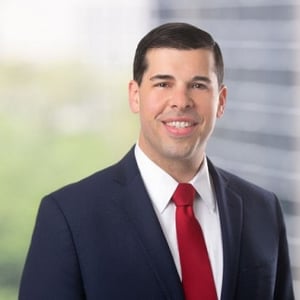
Partner, Boies Schiller Flexner LLP
Jesse, the former third-ranking official at the U.S. Department of Justice, helps clients with their most difficult litigation and regulatory issues─whether that means defending against an enforcement action, pursuing high-stakes litigation and appeals, navigating regulatory thickets at federal and state agencies, or crafting a comprehensive strategy to manage a crisis. He approaches these problems with the knowledge gained both from his broad private-practice experience and from having served at the highest levels of federal and state government.
Jesse has experience across a range of substantive and regulatory areas. He has sued the federal government and has also been one of its top law-enforcement officials; he has represented states and has also navigated their regulatory agencies on behalf of clients; and he has represented companies in business disputes, both as defendants and plaintiffs.
Before joining the firm, Jesse was the Acting Associate Attorney General at the United States Department of Justice. In that role, he oversaw the civil and criminal work of the Antitrust, Civil, Civil Rights, Environment and Natural Resources, and Tax Divisions. During Jesse’s tenure, the Associate’s office closely managed the Department’s most significant litigation, including matters involving large financial institutions, healthcare companies, automakers, energy companies, and state and local governments. In addition, Jesse served as Chair of DOJ’s Regulatory Reform Task Force and Vice Chair of DOJ’s Task Force on Market Integrity and Consumer Fraud. Jesse regularly provided legal and strategic advice to the highest-level decision makers in the federal government, including the Attorney General and Deputy Attorney General, general counsels across the spectrum of federal agencies, and White House officials.
Jesse served for three years as the secretary of Florida’s labor, economic-development, and land-use agency, the Florida Department of Economic Opportunity. Before that, he served as Governor (now Senator) Rick Scott’s general counsel.
Jesse maintains offices in both Washington D.C. and Florida. From Washington, he focuses on federal litigation and crisis management. In Florida, in addition to federal litigation, Jesse employs his knowledge of state government and regulation to help clients in courts across the state, from trial through the Florida Supreme Court.
Jesse currently serves on the Florida Supreme Court Judicial Nominating Commission, the body that provides the governor with nominees for appointment to the Florida Supreme Court. Jesse is also a fellow at the Center for the Study of the Administrative State at the Scalia Law School at George Mason University, where he writes and speaks about administrative law.
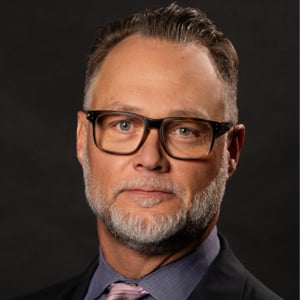
Prosecutorial Innovation Director, Right On Crime
Kurt Altman is the owner of Altman Law & Policy. Altman became a signatory for Right on Crime in early 2016. In 2017, he joined the reform movement, promoting Right on Crime’s policies in the State Houses of Arizona and New Mexico. And in 2021, he took on the added role of Director of Prosecutorial Reform, where his decades of experience as a state and federal prosecutor could be put to use.
He has nearly 27 years of criminal law and constitutional litigation experience. As a former Deputy Maricopa County Attorney and Assistant United States Attorney, Kurt has conducted hundreds of felony jury trials and led investigations of criminal conduct ranging from homicide and capital cases to complex white-collar matters. As a former member of the Department of Justice, Kurt earned the Director’s Award, the highest honor bestowed upon Department of Justice lawyers, and has twice received the Federal Bureau of Investigation Director’s Award for his tireless efforts on behalf of FBI-conducted investigations. Since 2008, Kurt has operated his own legal and lobbying practice, defending the accused in various criminal matters and helping private and non-profit groups advance policy objectives in Arizona and throughout the United States.
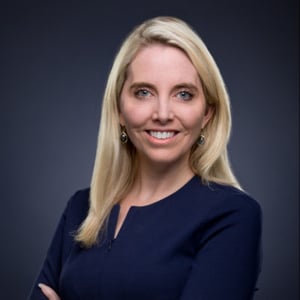
Co-Chair, Republican National Lawyers Association
Jennifer Bukowsky is a syndicated talk radio host, Co-Chair of the Republican National Lawyers Association, and Vice-Chair of the Missouri Republican Party.
An accomplished criminal defense attorney, Jennifer has handled more than 1,400 cases ranging from trespass to first-degree murder. She clerked for Missouri Supreme Court Judge Mary R. Russell, served as an Assistant Public Defender, and later built her own firm before launching Show-Me Defenders in 2021.
Her contributions have been widely recognized with awards including the David J. Dixon Appellate Advocacy Award, the President’s Service Award from the Missouri Association of Criminal Defense Attorneys, the Distinguished Recent Alumni Award from the University of Missouri School of Law, and “20 Under 40” honors from the Columbia Business Times. She has helped shape Missouri law as a member of committees that revised the Criminal Code and drafted the state’s expungement bill—both now enacted.
A leader in conservative legal circles, Jennifer serves on the Missouri Supreme Court’s Task Force on Criminal Justice and the Show-Me Institute Board, previously taught the Innocence Clinic at Mizzou, and has deployed multiple times as an election attorney for the Republican National Lawyers Association.
A University of Missouri School of Law graduate with highest honors and Order of the Coif membership, she also holds bachelor’s and master’s degrees in accountancy and is a licensed CPA. She lives in Columbia, Missouri, with her husband and two sons.
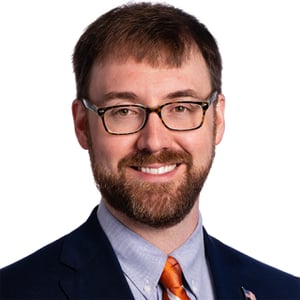
Senior Legal Fellow, Courts and the Constitution, Legal Policy Center, The Heritage Foundation
Zack is a Senior Legal Fellow of Courts and the Constitution at The Heritage Foundation.
He previously served for several years as an Assistant United States Attorney in the Northern District of Florida. Prior to that, he spent two years as an associate in the Washington, D.C. office of Cleary Gottlieb Steen & Hamilton, which he joined after clerking for the Hon. Emmett R. Cox on the United States Court of Appeals for the Eleventh Circuit.
Smith received his undergraduate, master’s, and law degrees from the University of Florida. During law school, Smith served as the Editor in Chief of the Florida Law Review and served on the executive boards of several student organizations, including the UF Chapter of the Federalist Society.
Thomas M. Siebel Senior Fellow, The Hoover Institution, Stanford University; Gary T. Schwartz Distinguished Professor of Law Emeritus, UCLA School of Law
Eugene Volokh is the Thomas M. Siebel Senior Fellow at the Hoover Institution (Stanford), as well as the Gary T. Schwartz Distinguished Professor of Law Emeritus and Distinguished Research Professor at UCLA School of Law. He recently retired from teaching at UCLA, after 30 years there, and is now focusing on research.
Volokh is the author of the textbooks The First Amendment and Related Statutes (8th ed. 2023), and Academic Legal Writing (5th ed. 2016), as well as over 100 academic law journal articles, mostly on First Amendment law. He is a member of The American Law Institute; the editor-in-chief of the Journal of Free Speech Law; and the creator and coauthor of The Volokh Conspiracy, a leading legal blog founded in 2002 (hosted at the Washington Post from 2014 to 2017 and now at Reason Magazine).
Director, International Legal Studies Program, Vanderbilt Law School
Michael Newton is an expert on terrorism, accountability, transnational justice, and conduct of hostilities issues. Over the course of his career, he has published more than 90 books, articles, op-eds and book chapters. He has been an expert witness in terrorism related trials and is admitted to the counsel list of the International Criminal Court, where, in 2018, he helped prepare the appeal of Jean-Pierre Bemba and participated in oral arguments in the Appeals Chamber. At Vanderbilt, he developed and teaches the innovative International Law Practice Lab, which provides expert assistance to judges, lawyers, legislatures, governments, and policy makers around the world. Professor Newton is most recently the editor of The United States Department of Defense Law of War Manual: Commentary and Critique, forthcoming from Cambridge University Press.
An authority on the law of armed conflict, Professor Newton served as the senior adviser to the Ambassador-at-Large for War Crimes Issues in the U.S. State Department from January 1999 to August 2002, during which he implemented a wide range of policy positions, including U.S. support to accountability mechanisms worldwide. He negotiated the “Elements of Crimes” for the International Criminal Court, and was the senior member of the team teaching international law to the first group of Iraqis who began to think about accountability mechanisms and a constitutional structure in November 2000. He shuttled to Baghdad repeatedly to aid international and Iraqi lawyers and jurists in drafting the Statute of the Iraqi High Tribunal while serving as the International Law Adviser to the Judicial Chambers from 2006 to 2008. He began assisting Iraqi officials, victims and civil society groups on legal issues associated with documentation and investigation of crimes committed by Da’esh on Iraqi soil days after Yazidi victims fled towards Mount Sinjar. He was the U.S. representative on the U.N. Planning Mission for the Sierra Leone Special Court and a founding member of its academic consortium. He is an elected member of the International Institute of Humanitarian Law and on the expert roster of Justice Rapid Response. In addition to teaching the Practice Lab, he develops and coordinates externships and educational opportunities for students interested in international legal issues, having supervised more than 150 such opportunities.
Professor Newton has served on the executive council of the American Society of International Law and as an invited expert for the Genocide Prevention Task Force established by the U.S. Holocaust Memorial Museum and the U.S. Institute of Peace. He is currently on the Advisory Board of the ABA International Criminal Court Project.
Professor Newton served in the U.S. Army more than 21 years, beginning with his commission from the U.S. Military Academy in May 1984 as an armor officer in the 4th Battalion, 68th Armor at Fort Carson, Colorado. After his selection for the Funded Legal Education Program, Newton served as chief of operational law with the Army Special Forces Command (Airborne) during Operation Desert Storm, and as the group judge advocate for the 7th Special Forces Group (Airborne). His deployments include Northern Iraq on Operation Provide Comfort to assist Kurdish civilians, and Haiti with 194th Armored Brigade (Separate), where he organized and led human rights and rules of engagement education for multinational forces, including police. He has taught international and operational law at the Judge Advocate General's School and Center in Charlottesville, Virginia, and taught international law at the United States Military Academy at West Point.
Professor Emeritus of Law, Antonin Scalia Law School, George Mason University
Jeremy A. Rabkin is a Professor Emeritus of Law at the Antonin Scalia Law School, George Mason University. Before joining the faculty in June 2007, he was for over two decades a professor in the Department of Government at Cornell University. Professor Rabkin serves on the board of directors of the Center for Individual Rights, a public interest law firm based in Washington, D.C. Previously he was a board member of the U.S. Institute of Peace and the board of academic advisors of the American Enterprise Institute.
Professor Rabkin’s books include Law Without Nations? (Princeton University Press, 2005). He authored “If You Need a Friend, Don’t Call a Cosmopolitan,” a chapter in Varieties of Sovereignty and Citizenship (Sigal R. Ben-Porath & Rogers M. Smith eds., University of Pennsylvania Press, 2012). His articles have appeared in major law reviews and political science journals and his journalistic contributions in a range of magazines and newspapers, including the Washington Post and the Wall Street Journal.
Professor of Clinical Law, Brooklyn Law School
Jodi S. Balsam is Professor of Clinical Law at Brooklyn Law School and a nationally recognized expert on Sports Law. She directs the BLS Sports Law Clinic and Sports Law Externship Program. She teaches Sports Law at both BLS and NYU School of Law, and has also taught the subject at New York Law School, University of New Hampshire School of Law, Bucerius Law School in Hamburg, Germany, Mathias Corvinus Collegium in Budapest, Hungary, and the MESGO Executive Masters Program in Global Sport Governance. Professor Balsam has served as an arbitrator for the National Collegiate Athletic Association on complex infractions cases, and now serves as a neutral for FAIR Sports, which hears cases involving college athletics.
Professor Balsam frequently writes and speaks on sports law topics, including as co-author of Weiler’s Sports and the Law, a leading casebook in the field. Her publications and presentations have addressed antitrust challenges to sports leagues and organizing bodies, sports trademarks, athletes’ rights of free expression and name/image/likeness exploitation, sports gambling and integrity, sports league governance, and the role of the sports agent. She frequently appears in the media on legal issues in sports, including NBC Sports/The Golf Channel, ESPN, Law360 Sports and Betting, The Athletic, Front Office Sports, USA Today, and the Wall Street Journal. She is on the editorial boards of Law360-Sports & Betting, the Journal of Legal Aspects of Sport, and the international sports law newsletter LawInSport.
Before joining academia, Professor Balsam was the National Football League's Counsel for Operations and Litigation, where she managed litigation in all areas of law, oversaw a variety of policy and operational matters, negotiated and drafted contracts for League special events including the Super Bowl, and administered the League's internal dispute resolution processes and compliance program. Prior to the NFL she was a litigator with the New York office of Simpson Thacher & Bartlett, where she represented sports and entertainment clients in antitrust matters and complex commercial litigation. She served as a law clerk for Judge Dennis Jacobs of the U.S. Court of Appeals for the Second Circuit and for Judge Charles Brieant of the U.S. District Court for the Southern District of New York. A graduate of Yale College, Professor Balsam received her law degree from NYU School of Law.
Senior Vice President for Legal Studies, Cato Institute
Clark Neily is senior vice president for legal studies at the Cato Institute. His areas of interest include constitutional law, overcriminalization, civil forfeiture, police accountability, and gun rights. Neily is the author of Terms of Engagement: How Our Courts Should Enforce the Constitution’s Promise of Limited Government. His writing has appeared in the Wall Street Journal, Forbes, and National Review Online, as well as various law reviews, including the Harvard Journal of Law and Public Policy, George Mason Law Review, Georgetown Journal of Law and Public Policy, NYU Journal of Law and Liberty, and Texas Review of Law and Politics. Neily is a frequent guest speaker and lecturer for the Federalist Society, Institute for Humane Studies, and American Constitution Society.
Before joining Cato in 2017, Neily was a senior attorney and constitutional litigator at the Institute for Justice and director of the Institute’s Center for Judicial Engagement. He is also an adjunct professor at the University of Texas School of Law, where he teaches constitutional litigation and public-interest law.
Neily served as co-counsel in District of Columbia v. Heller, the historic case in which the Supreme Court held for the first time that the Second Amendment protects an individual right to own a gun for self-defense.
Neily began his legal career as a law clerk to Judge Royce Lamberth on the U.S. District Court for the District of Columbia. After that he spent four years in the trial department of the Dallas-based firm Thompson & Knight. Neily received his undergraduate and law degrees from the University of Texas, where he was Chief Articles Editor of the Texas Law Review.
Partner, Boies Schiller Flexner LLP
Jesse, the former third-ranking official at the U.S. Department of Justice, helps clients with their most difficult litigation and regulatory issues─whether that means defending against an enforcement action, pursuing high-stakes litigation and appeals, navigating regulatory thickets at federal and state agencies, or crafting a comprehensive strategy to manage a crisis. He approaches these problems with the knowledge gained both from his broad private-practice experience and from having served at the highest levels of federal and state government.
Jesse has experience across a range of substantive and regulatory areas. He has sued the federal government and has also been one of its top law-enforcement officials; he has represented states and has also navigated their regulatory agencies on behalf of clients; and he has represented companies in business disputes, both as defendants and plaintiffs.
Before joining the firm, Jesse was the Acting Associate Attorney General at the United States Department of Justice. In that role, he oversaw the civil and criminal work of the Antitrust, Civil, Civil Rights, Environment and Natural Resources, and Tax Divisions. During Jesse’s tenure, the Associate’s office closely managed the Department’s most significant litigation, including matters involving large financial institutions, healthcare companies, automakers, energy companies, and state and local governments. In addition, Jesse served as Chair of DOJ’s Regulatory Reform Task Force and Vice Chair of DOJ’s Task Force on Market Integrity and Consumer Fraud. Jesse regularly provided legal and strategic advice to the highest-level decision makers in the federal government, including the Attorney General and Deputy Attorney General, general counsels across the spectrum of federal agencies, and White House officials.
Jesse served for three years as the secretary of Florida’s labor, economic-development, and land-use agency, the Florida Department of Economic Opportunity. Before that, he served as Governor (now Senator) Rick Scott’s general counsel.
Jesse maintains offices in both Washington D.C. and Florida. From Washington, he focuses on federal litigation and crisis management. In Florida, in addition to federal litigation, Jesse employs his knowledge of state government and regulation to help clients in courts across the state, from trial through the Florida Supreme Court.
Jesse currently serves on the Florida Supreme Court Judicial Nominating Commission, the body that provides the governor with nominees for appointment to the Florida Supreme Court. Jesse is also a fellow at the Center for the Study of the Administrative State at the Scalia Law School at George Mason University, where he writes and speaks about administrative law.

Washington Supreme Court Expands Batson Test, Establishes Rule Regarding Peremptory Strikes
Alison E. Somin
In Matter of Rhone, the Washington Supreme Court addressed a narrow issue about racial bias...
Topics
Patent Office Fee and Procedure Changes: Nudging or Sludging?
The U.S. Patent and Trademark Office has recently proposed seemingly routine procedural updates that may...
Panel Three: Rule of Law and the Role of the Prosecutor
2024 Missouri Chapters Conference
Jefferson City, MORicky Vaughn's Prosecution and the First Amendment
Eugene Volokh
The DOJ has charged Douglas Mackey, aka Ricky Vaughn, with conspiracy “to injure, oppress, threaten, or...
Ricky Vaughn's Prosecution and the First Amendment
TeleforumThe Annual Mike Lewis Memorial Teleforum: The Identity Crisis at the International Criminal Court
Michael A. Newton, Jeremy A. Rabkin
We are pleased to present the annual Mike Lewis Memorial teleforum. Professor Lewis was a...
The Annual Mike Lewis Memorial Teleforum: The Identity Crisis at the International Criminal Court
TeleforumSeeking Success: Reforming America’s Community Supervision System
Arthur Rizer, Brett Tolman
Note from the Editor: The Federalist Society takes no positions on particular legal and public...
Ex-Prosecutors And The Federal Judiciary
Jodi S. Balsam, Clark Neily, Jesse Panuccio
Amongst the many studies of the makeup of the Federal Judiciary, one particularly noticeable characteristic is the...
Ex-Prosecutors And The Federal Judiciary
Professional Responsibilities & Legal Education Practice Group Teleforum
Teleforum