
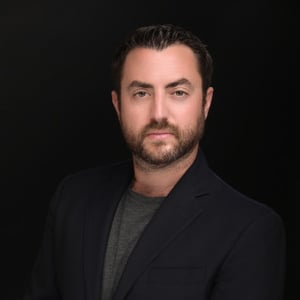
Newsweek Senior Editor-at-Large, Syndicated Columnist, Host of "The Josh Hammer Show," Article III Project Senior Counsel, Newsweek, Salem Media, Article III Project, David Horowitz Freedom Center
Josh Hammer is the senior editor-at-large of Newsweek and host of "The Josh Hammer Show," a podcast, a syndicated radio show, and TV program on Salem News Channel. A syndicated columnist through Creators Syndicate, Josh is a frequent pundit and essayist on political, legal, and cultural issues. He is also senior counsel for the Article III Project and Internet Accountability Project, as well as a Shillman Fellow with the David Horowitz Freedom Center and a fellow with the Palm Beach Freedom Institute.
An outspoken conservative, Josh opines on conservative intellectual trends, contemporary domestic and foreign policy debates, constitutional and legal issues, and the intersection of law, politics and culture. He has been published by many leading outlets, including the Los Angeles Times, the New York Post, Daily Mail, Newsweek, the Claremont Review of Books, National Affairs, American Affairs, The New Criterion, The National Interest, National Review, RealClearPolitics, First Things, City Journal, Public Discourse, Law & Liberty, Tablet Magazine, Deseret Magazine, Compact Magazine, Chronicles Magazine, The Spectator, The American Mind, The American Conservative, The European Conservative, American Greatness, American Compass, The Federalist, Blaze Media, TomKlingenstein.com, Townhall, The Daily Wire, The Daily Signal, The Daily Caller, The Epoch Times, Anchoring Truths, Fortune, Fox Business, The Jerusalem Post, The Times of Israel, The Forward, Jewish Telegraphic Agency and the Jewish Journal. He has also had legal scholarship published by the Harvard Journal of Law & Public Policy and the University of St. Thomas Law Journal.
Josh is a college campus speaker through Young America's Foundation and the Intercollegiate Studies Institute, and a law school campus speaker through the Federalist Society. Prior to Newsweek and The Daily Wire, where he was an editor, Josh worked at Kirkland & Ellis LLP and clerked for the Hon. James C. Ho on the U.S. Court of Appeals for the Fifth Circuit. Josh has also served as a John Marshall Fellow with the Claremont Institute and as a Fellow with the James Wilson Institute. He is the former host of "America on Trial with Josh Hammer," a one-season daily podcast with The First that covered the unique legal issues surrounding the 2024 presidential election.
Josh graduated from Duke University, where he majored in economics, and from the University of Chicago Law School. He lives in Florida, but remains an active member of the State Bar of Texas.
Alston & Bird Professor of Law, Duke University School of Law
Professor Young teaches constitutional law, federal courts, and foreign relations law. He is one of the nation's leading authorities on the constitutional law of federalism, having written extensively on the Rehnquist Court's "Federalist Revival" and the difficulties confronting courts as they seek to draw lines between national and state authority. He also is an active commentator on foreign relations law, where he focuses on the interaction between domestic and supranational courts and the application of international law by domestic courts. Professor Young also writes on constitutional interpretation and constitutional theory. He has been known to dabble in maritime law and comparative constitutional law.
A native of Abilene, Texas, Professor Young joined the Duke Law faculty in 2008, after serving as the Charles Alan Wright Chair in Federal Courts at the University of Texas at Austin School of Law, where he had taught since 1999. He graduated from Dartmouth College in 1990 and Harvard Law School in 1993. After law school, he served as a law clerk to Judge Michael Boudin of the 1st U.S. Circuit Court of Appeals (1993-94) and to Justice David Souter of the U.S. Supreme Court (1995-96). Professor Young practiced law at Cohan, Simpson, Cowlishaw, & Wulff in Dallas, Texas (1994-95) and at Covington & Burling in Washington, D.C. (1996-98), where he specialized in appellate litigation. He has also been a visiting professor at Harvard Law School (2004-05) and Villanova University School of Law (1998-99), as well as an adjunct professor at Georgetown University Law Center (1997).
Elected to the American Law Institute in 2006, Professor Young is an active participant in both public and private litigation in his areas of interest. He has been the principal author of amicus briefs on behalf of leading constitutional scholars in several recent Supreme Court cases, including Medellin v. Texas(concerning presidential power and the authority of the International Court of Justice over domestic courts) and Gonzales v. Raich (concerning federal power to regulate medical marijuana).
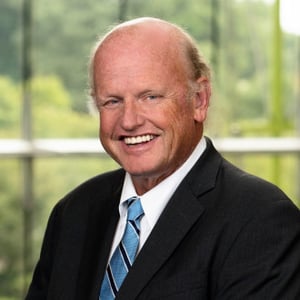
In his 35 years at the Justice Department and in private practice, Mike Carvin was one of the leading appellate and trial lawyers challenging state and federal regulations on constitutional and statutory grounds, with 10 Supreme Court arguments and numerous high-profile victories. In addition to his numerous cases in the United States Supreme Court, he argued in virtually every federal appeals court. His major cases include the recent constitutional challenge to the Affordable Care Act and the decisions invalidating Sarbanes-Oxley's accounting board, preventing the Justice Department from obtaining monetary relief against the tobacco industry under RICO, overturning the federal government's plan to statistically adjust the census, limiting the Justice Department's ability to create "majority-minority" districts, and upholding Proposition 209's ban on racial preferences in California.
Mike was one of the lead lawyers, and argued before the Florida Supreme Court, on behalf of George W. Bush in the 2000 presidential election Florida recount controversy. He also has represented state governments, financial institutions, telecommunications, and energy companies in "takings," First Amendment, civil rights, and statutory challenges to federal government actions.
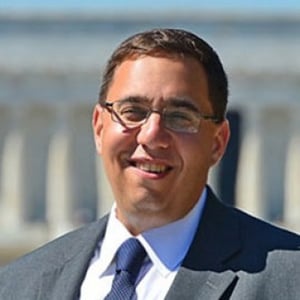
Partner, Consovoy McCarthy Park PLLC
Mr. Consovoy assists clients on a broad range of litigation and appellate issues primarily before the Supreme Court of the United States and federal appellate and district courts, as well as before federal agencies. Mr. Consovoy represents clients in cases involving constitutional issues, interpretation and enforcement of federal statutes, administrative law, civil rights disputes, and a variety of other civil litigation issues. Mr. Consovoy recently argued two cases—Spokeo v. Robbins and Evenwel v. Abbott—before the Supreme Court of the United States.
Mr. Consovoy is a former law clerk to Supreme Court Justice Clarence Thomas, Judge Edith H. Jones of the United States Court of Appeals for the Fifth Circuit, and the 17th Judicial Circuit of Virginia. Mr. Consovoy is a member of the Edward Coke Appellate Inn of Court and was named by Law360 as a “rising star” in appellate law for 2013. Since 2011, Mr. Consovoy has been the co-director of the Supreme Court Clinic at the Antonin Scalia Law School at George Mason University, where he also is the co-director of the Administrative Law Clinic.
Mr. Consovoy earned his B.A. from Monmouth University, and his J.D. magna cum laude from George Mason University School of Law. Mr. Consovoy is a member of the Virginia and District of Columbia bars.
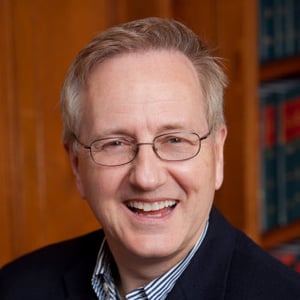
Alexander M. Bickel Professor of Public Law, Yale Law School
Degrees from Davidson College, B.A. summa cum laude, 1973; Harvard University, M.A., 1974; Yale Law School, J.D, 1978. Clerked for Edward Weinfeld, 1978-79; Attorney at Shea & Gardner, 1979-82; Law Professor since 1982, tenured at Georgetown and Yale, visiting professor at Stanford, NYU, Toronto, Harvard, Columbia, Penn, Fordham, Vanderbilt. Author of casebooks on legislation and sexuality, gender and law, as well as monographs on statutory interpretation and the rights of sexual and gender minorities. Author of dozens of articles, by one empirical count a top ten most cited law professors.
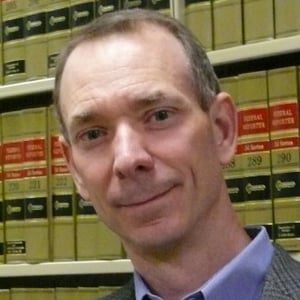
Professor of Law, Georgia State University College of Law
Neil Kinkopf is Professor of Law at the Georgia State University College of Law. He has also taught at the law schools at Case Western Reserve and Duke Universities. Neil teaches courses on constitutional law, civil procedure, and legislation. His research and writing focuses on separation of powers, with an emphasis on presidential power. The fourth edition of his book, Separation of Powers Law, (co-authored with Peter Shane and Harold Bruff) was published last winter. Professor Kinkopf has also held appointments in the Office of Legal Counsel and the Office of Legal Policy, both in the Department of Justice.

Distinguished University Professor, Antonin Scalia Law School, George Mason University
University Professor Nelson Lund is the author of Rousseau’s Rejuvenation of Political Philosophy: A New Introduction. He has also written widely in the field of constitutional law, including articles on constitutional interpretation, federalism, separation of powers, the Second Amendment, the Commerce Clause, the Speech or Debate Clause, the Equal Protection Clause, and the Uniformity Clause. In addition, he has published articles in the fields of employment discrimination and civil rights, the legal regulation of medical ethics, and the application of economic analysis to legal institutions and legal ethics.
Professor Lund graduated from St. John's College in Annapolis, Maryland, after which he received an MA in philosophy from the Catholic University of America and a PhD in political science from Harvard University. He left the faculty of the University of Chicago to attend its law school, where he served as executive editor of the University of Chicago Law Review and chapter chairman of the Federalist Society for Law and Public Policy Studies. After law school, he held positions at the United States Department of Justice in the Office of the Solicitor General and the Office of Legal Counsel. He also served as a law clerk to the Honorable Patrick E. Higginbotham of the United States Court of Appeals for the Fifth Circuit and to the Honorable Sandra Day O'Connor of the United States Supreme Court. Following his clerkship with Justice O'Connor, Professor Lund served in the White House as associate counsel to the president from 1989 to 1992.
Since joining the faculty at George Mason University's Antonin Scalia Law School, Professor Lund has taught Constitutional Law, Legislation, Federal Election Law, Employment Discrimination, State and Local Government, and seminars on the Second Amendment and on a variety of topics in Jurisprudence.

Judge, United States Court of Appeals, Seventh Circuit
Judge Sykes was nominated to the Seventh Circuit by President George W. Bush and confirmed by the Senate in 2004. Prior to her appointment to the federal bench, Judge Sykes served as a justice on the Wisconsin Supreme Court. Governor Tommy G. Thompson appointed her in September 1999 to fill a mid-term vacancy on the state supreme court, and she was elected to a full ten-year term in April 2000. From 1992-1999, Judge Sykes served on the state trial bench in Milwaukee County (elected in 1992 and re-elected in 1998). From 1985-1992, Judge Sykes practiced law with the Milwaukee firm of Whyte & Hirschboeck, S.C., and from 1984-1985, was a law clerk to Federal Judge Terence T. Evans.
Born and raised in the Milwaukee area, Judge Sykes earned a bachelor’s degree in journalism from Northwestern University in 1980 and a law degree from Marquette University Law School in 1984. Between college and law school, Judge Sykes worked as a reporter for The Milwaukee Journal.
Judge Sykes has two sons.
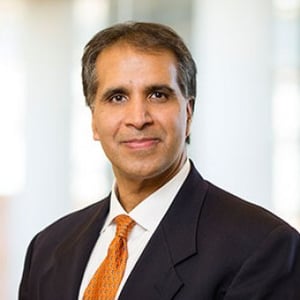
Dean and Iwan Foundation Professor of Law, University of Illinois College of Law
Dean Amar joined the College of Law as its dean in 2015, after having been a professor of law for many years at law schools in the University of California System, most recently the UC Davis School of Law, where he served as Senior Associate Dean for Academic Affairs. Amar is one of the most eminent and frequently cited authorities in constitutional law, federal courts, and civil procedure. He has produced several books and over 60 articles in leading law reviews. He is a co-author (along with Akhil Reed Amar and Steven Calabresi) of the upcoming edition of the six-volume Treatise on Constitutional Law (West Publishing Co., 6th ed. 2021) pioneered by Ron Rotunda and John Nowak, as well as the hardbound and soft-cover one-volume hornbooks that derive from it. He is also a co-author (along with Jonathan Varat) of Constitutional Law: Cases and Materials (Foundation Press, 15th ed. 2017), a co-author on multiple volumes of the Wright & Miller Federal Practice and Procedure Treatise (West Publishing Co. 2006), and a co-author (along with John Oakley) of a one-volume treatise on American Civil Procedure (Kluwer, 2008). He writes a biweekly column on constitutional matters for Justia.com and a monthly column on legal education for abovethelaw.com, is a frequent commentator on local and national radio and TV, and has penned dozens of op-ed pieces for major newspapers and magazines.
A strong proponent of public and professional engagement, Amar is an elected member of the American Law Institute and has served as a consultant for, among others, the National Association of Attorneys General, the United States Department of Justice, the California Attorney General’s Office, the ACLU of Southern California, and the Center for Civic Education. For one year he chaired the Civil Procedure Section of the Association of American Law Schools.
Amar earned his bachelor’s degree from UC Berkeley and his juris doctor from Yale Law School, where he was an articles editor for the Yale Law Journal. He then clerked for Judge William A. Norris of the United States Court of Appeals for the Ninth Circuit and for Justice Harry A. Blackmun of the United States Supreme Court before joining Gibson, Dunn & Crutcher, where he handled a variety of complex civil and white-collar criminal matters. It appears that dean Amar was the first person of South Asian heritage to clerk at the U.S. Supreme Court, and was the first American-born person of Indian descent to serve as a dean of a major American law school. Follow Dean Amar’s bi-weekly column on Justia.com and his monthly column on Above the Law, and read archived posts from his FindLaw.com column.
Newsweek Senior Editor-at-Large, Syndicated Columnist, Host of "The Josh Hammer Show," Article III Project Senior Counsel, Newsweek, Salem Media, Article III Project, David Horowitz Freedom Center
Josh Hammer is the senior editor-at-large of Newsweek and host of "The Josh Hammer Show," a podcast, a syndicated radio show, and TV program on Salem News Channel. A syndicated columnist through Creators Syndicate, Josh is a frequent pundit and essayist on political, legal, and cultural issues. He is also senior counsel for the Article III Project and Internet Accountability Project, as well as a Shillman Fellow with the David Horowitz Freedom Center and a fellow with the Palm Beach Freedom Institute.
An outspoken conservative, Josh opines on conservative intellectual trends, contemporary domestic and foreign policy debates, constitutional and legal issues, and the intersection of law, politics and culture. He has been published by many leading outlets, including the Los Angeles Times, the New York Post, Daily Mail, Newsweek, the Claremont Review of Books, National Affairs, American Affairs, The New Criterion, The National Interest, National Review, RealClearPolitics, First Things, City Journal, Public Discourse, Law & Liberty, Tablet Magazine, Deseret Magazine, Compact Magazine, Chronicles Magazine, The Spectator, The American Mind, The American Conservative, The European Conservative, American Greatness, American Compass, The Federalist, Blaze Media, TomKlingenstein.com, Townhall, The Daily Wire, The Daily Signal, The Daily Caller, The Epoch Times, Anchoring Truths, Fortune, Fox Business, The Jerusalem Post, The Times of Israel, The Forward, Jewish Telegraphic Agency and the Jewish Journal. He has also had legal scholarship published by the Harvard Journal of Law & Public Policy and the University of St. Thomas Law Journal.
Josh is a college campus speaker through Young America's Foundation and the Intercollegiate Studies Institute, and a law school campus speaker through the Federalist Society. Prior to Newsweek and The Daily Wire, where he was an editor, Josh worked at Kirkland & Ellis LLP and clerked for the Hon. James C. Ho on the U.S. Court of Appeals for the Fifth Circuit. Josh has also served as a John Marshall Fellow with the Claremont Institute and as a Fellow with the James Wilson Institute. He is the former host of "America on Trial with Josh Hammer," a one-season daily podcast with The First that covered the unique legal issues surrounding the 2024 presidential election.
Josh graduated from Duke University, where he majored in economics, and from the University of Chicago Law School. He lives in Florida, but remains an active member of the State Bar of Texas.
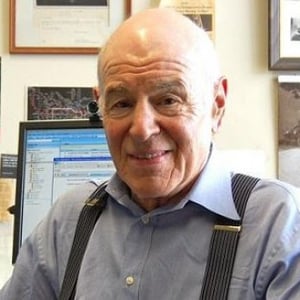
Professor of Law, Elisabeth Haub School of Law at Pace University
Professor Ben Gershman is one of the original faculty members at Pace Law and has taught as a visiting professor at Cornell Law School and Syracuse Law School. While in private practice he specialized in criminal defense litigation. A former prosecutor with the Manhattan District Attorney’s office for six years, he is the author of numerous articles as well as two books on prosecutorial and judicial ethics. He served for four years with the Special State Prosecutor investigating corruption in the judicial system. He is one of the nation’s leading experts on prosecutorial misconduct. He is active on several Bar Association committees, and is a frequent pro bono litigator. Professor Gershman has taught in the London Law Program, and was named James D. Hopkins Professor for the 2007–2009 academic years.
Newsweek Senior Editor-at-Large, Syndicated Columnist, Host of "The Josh Hammer Show," Article III Project Senior Counsel, Newsweek, Salem Media, Article III Project, David Horowitz Freedom Center
Josh Hammer is the senior editor-at-large of Newsweek and host of "The Josh Hammer Show," a podcast, a syndicated radio show, and TV program on Salem News Channel. A syndicated columnist through Creators Syndicate, Josh is a frequent pundit and essayist on political, legal, and cultural issues. He is also senior counsel for the Article III Project and Internet Accountability Project, as well as a Shillman Fellow with the David Horowitz Freedom Center and a fellow with the Palm Beach Freedom Institute.
An outspoken conservative, Josh opines on conservative intellectual trends, contemporary domestic and foreign policy debates, constitutional and legal issues, and the intersection of law, politics and culture. He has been published by many leading outlets, including the Los Angeles Times, the New York Post, Daily Mail, Newsweek, the Claremont Review of Books, National Affairs, American Affairs, The New Criterion, The National Interest, National Review, RealClearPolitics, First Things, City Journal, Public Discourse, Law & Liberty, Tablet Magazine, Deseret Magazine, Compact Magazine, Chronicles Magazine, The Spectator, The American Mind, The American Conservative, The European Conservative, American Greatness, American Compass, The Federalist, Blaze Media, TomKlingenstein.com, Townhall, The Daily Wire, The Daily Signal, The Daily Caller, The Epoch Times, Anchoring Truths, Fortune, Fox Business, The Jerusalem Post, The Times of Israel, The Forward, Jewish Telegraphic Agency and the Jewish Journal. He has also had legal scholarship published by the Harvard Journal of Law & Public Policy and the University of St. Thomas Law Journal.
Josh is a college campus speaker through Young America's Foundation and the Intercollegiate Studies Institute, and a law school campus speaker through the Federalist Society. Prior to Newsweek and The Daily Wire, where he was an editor, Josh worked at Kirkland & Ellis LLP and clerked for the Hon. James C. Ho on the U.S. Court of Appeals for the Fifth Circuit. Josh has also served as a John Marshall Fellow with the Claremont Institute and as a Fellow with the James Wilson Institute. He is the former host of "America on Trial with Josh Hammer," a one-season daily podcast with The First that covered the unique legal issues surrounding the 2024 presidential election.
Josh graduated from Duke University, where he majored in economics, and from the University of Chicago Law School. He lives in Florida, but remains an active member of the State Bar of Texas.
Newsweek Senior Editor-at-Large, Syndicated Columnist, Host of "The Josh Hammer Show," Article III Project Senior Counsel, Newsweek, Salem Media, Article III Project, David Horowitz Freedom Center
Josh Hammer is the senior editor-at-large of Newsweek and host of "The Josh Hammer Show," a podcast, a syndicated radio show, and TV program on Salem News Channel. A syndicated columnist through Creators Syndicate, Josh is a frequent pundit and essayist on political, legal, and cultural issues. He is also senior counsel for the Article III Project and Internet Accountability Project, as well as a Shillman Fellow with the David Horowitz Freedom Center and a fellow with the Palm Beach Freedom Institute.
An outspoken conservative, Josh opines on conservative intellectual trends, contemporary domestic and foreign policy debates, constitutional and legal issues, and the intersection of law, politics and culture. He has been published by many leading outlets, including the Los Angeles Times, the New York Post, Daily Mail, Newsweek, the Claremont Review of Books, National Affairs, American Affairs, The New Criterion, The National Interest, National Review, RealClearPolitics, First Things, City Journal, Public Discourse, Law & Liberty, Tablet Magazine, Deseret Magazine, Compact Magazine, Chronicles Magazine, The Spectator, The American Mind, The American Conservative, The European Conservative, American Greatness, American Compass, The Federalist, Blaze Media, TomKlingenstein.com, Townhall, The Daily Wire, The Daily Signal, The Daily Caller, The Epoch Times, Anchoring Truths, Fortune, Fox Business, The Jerusalem Post, The Times of Israel, The Forward, Jewish Telegraphic Agency and the Jewish Journal. He has also had legal scholarship published by the Harvard Journal of Law & Public Policy and the University of St. Thomas Law Journal.
Josh is a college campus speaker through Young America's Foundation and the Intercollegiate Studies Institute, and a law school campus speaker through the Federalist Society. Prior to Newsweek and The Daily Wire, where he was an editor, Josh worked at Kirkland & Ellis LLP and clerked for the Hon. James C. Ho on the U.S. Court of Appeals for the Fifth Circuit. Josh has also served as a John Marshall Fellow with the Claremont Institute and as a Fellow with the James Wilson Institute. He is the former host of "America on Trial with Josh Hammer," a one-season daily podcast with The First that covered the unique legal issues surrounding the 2024 presidential election.
Josh graduated from Duke University, where he majored in economics, and from the University of Chicago Law School. He lives in Florida, but remains an active member of the State Bar of Texas.

George C. Dix Professor in Constitutional Law, Northwestern University Pritzker School of Law
John O. McGinnis is a graduate of Harvard College and Harvard Law School where he was an editor of the Harvard Law Review. He also has an MA degree from Balliol College, Oxford, in philosophy and theology. Professor McGinnis clerked on the U.S. Court of Appeals for the District of Columbia. From 1987 to 1991, he was deputy assistant attorney general in the Office of Legal Counsel at the Department of Justice. He is the author of Accelerating Democracy: Transforming Government Through Technology (Princeton 2013) and Originalism and the Good Constitution (Harvard 2013) (with M. Rappaport). He is a past winner of the Paul Bator award given by the Federalist Society to an outstanding academic under 40. He has been listed by the United States on the roster of panelists who may be called upon to decide World Trade Organization Disputes.
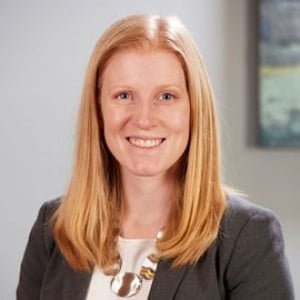
Kaplan Johnson Abate & Bird
Cassie Chambers Armstrong focuses her practice on litigation. She has significant courtroom experience; prior to joining the firm, she was the lead attorney on multiple trials. She has worked on class actions, appeals, and other complex litigation.
Previously, she was a Skadden Fellow at a Kentucky nonprofit, where she formulated and implemented impact litigation strategies.
Her graduate degrees in Public Health and Public Management give her a unique perspective on the intersection between health care, government, and law.
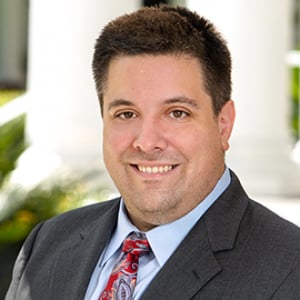
Sheila M. McDevitt Professor of Law and Faculty Director of the Election Law Center, Florida State University College of Law
Professor Morley joined FSU Law in 2018, and teaches and writes in the areas of election law, constitutional law, remedies, and the federal courts. He is best known for his work on election emergencies and post-election litigation, nationwide and other defendant-oriented injunctions, the jurisdiction of the federal courts and their equitable powers more generally. He has testified before congressional committees, made presentations to election officials for the U.S. Election Assistance Commission and participated in bipartisan blue-ribbon groups to develop election reforms. The governor of Florida also appointed Professor Morley to the Criminal Punishment Code Task Force, to propose potential revisions to the legislature.
The U.S. Supreme Court has cited several of his articles, and he was counsel of record for the successful Petitioner in a landmark campaign finance case. Professor Morley has appeared on C-SPAN, Court TV, Fox News and numerous local news programs, and has been quoted in the Washington Post, Los Angeles Times, Roll Call, Politico, U.S. News and World Report, and a wide range of other national publications. His work has been published in many of the nation’s top law reviews, including the Georgetown Law Journal, Northwestern University Law Review, Boston University Law Review and Emory Law Journal.
Before joining FSU Law, Professor Morley was a Climenko Fellow and Lecturer in Law at Harvard Law School. Prior to his experience in academia, he served in government as special assistant to the General Counsel of the Army at the Pentagon, as well as a law clerk for Judge Gerald B. Tjoflat of the U.S. Court of Appeals for the Eleventh Circuit. During his tenure with the Army General Counsel’s office, he was awarded the Meritorious Civilian Service Award and the Army Staff Lapel Pin. He also worked as an associate at Williams & Connolly LLP and the Supreme Court & Appellate group of Winston & Strawn, LLP, both in Washington, D.C.
Professor Morley earned his J.D. from Yale Law School in 2003, where he was a senior editor on the Yale Law Journal; served on the moot court board; and received the Thurman Arnold Prize for Best Oralist in the Morris Tyler Moot Court of Appeals.
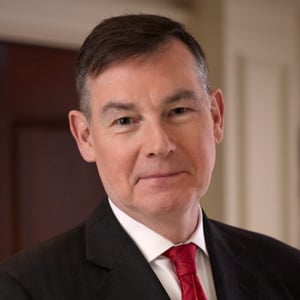
Member, Stoll Keenon Ogden PLLC
John is a Member in Stoll Keenon Ogden’s Louisville office and has been with the firm since 2007. He has a track record of success in Labor and Employment Law spanning 35 years, and is honored to serve as Chair of the Kentucky State Labor Relations Board, which resolves disputes between public employers and their labor organizations.
He is responsible for creating binding legal precedent entitling employers to secure indemnity from other parties in harassment or retaliation cases. He has also established legal precedent holding that the claim for intentional infliction of emotional distress is preempted by statute. In a class discrimination case, he prevailed in challenging a claim brought by the federal government that women were categorically excluded from coal mining jobs.
For his many accomplishments, John has been distinguished with multiple local, state and national recognitions, including more than eight consecutive years of being listed in the Best Lawyers in America® peer-review publication.
Labor, Employment & Employee Benefits: John’s extensive experience encompasses the full breadth of employment law, including traditional labor law, claims of harassment and retaliation, breach of contract disputes and enforcement of trade secrets.
Appellate: Once a trial court decision has been made, John is fully prepared to take cases to court at the state or federal level as necessary to obtain a satisfactory resolution. He has obtained favorable verdicts for both appellants and appellees.
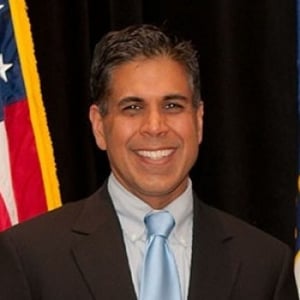
Judge, United States Court of Appeals, Sixth Circuit
Amul R. Thapar serves as a judge on the United States Court of Appeals for the Sixth Circuit. His judicial career began in 2007 when President George W. Bush nominated him to serve on the Eastern District of Kentucky, making him the first South Asian Article III judge in American history. In 2017, he became President Donald J. Trump’s first appellate court nominee.
Before joining the bench, Judge Thapar served as the United States Attorney for the Eastern District of Kentucky. While United States Attorney, Judge Thapar worked on the Attorney General’s Advisory Committee (“AGAC”) and chaired the AGAC’s Controlled Substances and Asset Forfeiture subcommittee. He also served on the Terrorism and National Security subcommittee, the Violent Crime subcommittee, and the Child Exploitation working group.
Judge Thapar has worked in private practice, at Williams & Connolly in Washington, D.C., and Squire, Sanders & Dempsey in Cincinnati, Ohio. He also served as an Assistant United States Attorney in both the Southern District of Ohio and the District of Columbia.
Judge Thapar received his undergraduate degree from Boston College and his law degree from the University of California, Berkeley. After graduating, Judge Thapar worked as a law clerk to the Honorable S. Arthur Spiegel of the United States District Court for the Southern District of Ohio, and the Honorable Nathaniel R. Jones of the United States Court of Appeals for the Sixth Circuit.
Judge Thapar has also published in the Yale Law Journal, Michigan Law Review, and Catholic University Law Review. He teaches courses on originalism, the Federalists and Anti-Federalists, and legal writing at Notre Dame Law School, the University of Virginia School of Law, and Vanderbilt Law School.
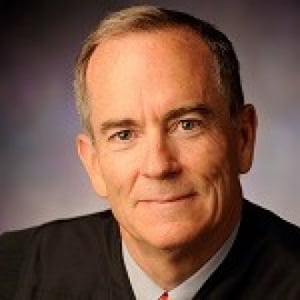
Former Justice, Supreme Court of Kentucky
Laurance B. VanMeter, of Lexington, Kentucky, served on the Kentucky Supreme Court from 2017 to 2025 where he was just the third Justice to have served at all four levels of the Kentucky unified court system. His fellow justices elected him as Chief Justice of Kentucky beginning in January 2023. His term ended in January 2025 following his decision not to seek a second term on the Court.
Before his election to the Supreme Court, Chief Justice VanMeter served thirteen years as a Judge of the Kentucky Court of Appeals, having been first elected in November 2003. He also served as a Fayette Circuit Court judge and as a Fayette District Court judge.
Prior to his judicial service, he was a partner in the Kentucky firm of Stoll, Keenon & Park where his practice included business organization and planning, estate planning, real estate, and taxation, largely with the equine industry. Chief Justice VanMeter served on or chaired various committees within the Kentucky judicial branch: Evidence Rules Review Commission, Civil Rules Committee, Kentucky Bar Association’s Continuing Legal Education Commission, Kentucky Office of Bar Admissions, Board of Trustees of the Kentucky Judicial Form Retirement Systems, Ethics Committee of the Kentucky Judiciary, and Judicial Conduct Commission. In addition, he served as the Court of Appeals’ acting Chief Judge, and as its Chief Judge Pro Tempore.
He earned an undergraduate degree from Vanderbilt University with a major in history in 1980, and his J.D. from the University of Kentucky College of Law in 1983. More recently, he earned an LL.M. degree, May 2020, from Duke University School of Law and, in July 2020, was elected to The American Law Institute. In 2024, Chief Justice VanMeter received the Kentucky Bar Association’s Distinguished Judge Award and his college fraternity’s Award for Distinguished Public Service. He was appointed to the Uniform Law Commission in May 2025.
Kaplan Johnson Abate & Bird
Cassie Chambers Armstrong focuses her practice on litigation. She has significant courtroom experience; prior to joining the firm, she was the lead attorney on multiple trials. She has worked on class actions, appeals, and other complex litigation.
Previously, she was a Skadden Fellow at a Kentucky nonprofit, where she formulated and implemented impact litigation strategies.
Her graduate degrees in Public Health and Public Management give her a unique perspective on the intersection between health care, government, and law.
Sheila M. McDevitt Professor of Law and Faculty Director of the Election Law Center, Florida State University College of Law
Professor Morley joined FSU Law in 2018, and teaches and writes in the areas of election law, constitutional law, remedies, and the federal courts. He is best known for his work on election emergencies and post-election litigation, nationwide and other defendant-oriented injunctions, the jurisdiction of the federal courts and their equitable powers more generally. He has testified before congressional committees, made presentations to election officials for the U.S. Election Assistance Commission and participated in bipartisan blue-ribbon groups to develop election reforms. The governor of Florida also appointed Professor Morley to the Criminal Punishment Code Task Force, to propose potential revisions to the legislature.
The U.S. Supreme Court has cited several of his articles, and he was counsel of record for the successful Petitioner in a landmark campaign finance case. Professor Morley has appeared on C-SPAN, Court TV, Fox News and numerous local news programs, and has been quoted in the Washington Post, Los Angeles Times, Roll Call, Politico, U.S. News and World Report, and a wide range of other national publications. His work has been published in many of the nation’s top law reviews, including the Georgetown Law Journal, Northwestern University Law Review, Boston University Law Review and Emory Law Journal.
Before joining FSU Law, Professor Morley was a Climenko Fellow and Lecturer in Law at Harvard Law School. Prior to his experience in academia, he served in government as special assistant to the General Counsel of the Army at the Pentagon, as well as a law clerk for Judge Gerald B. Tjoflat of the U.S. Court of Appeals for the Eleventh Circuit. During his tenure with the Army General Counsel’s office, he was awarded the Meritorious Civilian Service Award and the Army Staff Lapel Pin. He also worked as an associate at Williams & Connolly LLP and the Supreme Court & Appellate group of Winston & Strawn, LLP, both in Washington, D.C.
Professor Morley earned his J.D. from Yale Law School in 2003, where he was a senior editor on the Yale Law Journal; served on the moot court board; and received the Thurman Arnold Prize for Best Oralist in the Morris Tyler Moot Court of Appeals.
Member, Stoll Keenon Ogden PLLC
John is a Member in Stoll Keenon Ogden’s Louisville office and has been with the firm since 2007. He has a track record of success in Labor and Employment Law spanning 35 years, and is honored to serve as Chair of the Kentucky State Labor Relations Board, which resolves disputes between public employers and their labor organizations.
He is responsible for creating binding legal precedent entitling employers to secure indemnity from other parties in harassment or retaliation cases. He has also established legal precedent holding that the claim for intentional infliction of emotional distress is preempted by statute. In a class discrimination case, he prevailed in challenging a claim brought by the federal government that women were categorically excluded from coal mining jobs.
For his many accomplishments, John has been distinguished with multiple local, state and national recognitions, including more than eight consecutive years of being listed in the Best Lawyers in America® peer-review publication.
Labor, Employment & Employee Benefits: John’s extensive experience encompasses the full breadth of employment law, including traditional labor law, claims of harassment and retaliation, breach of contract disputes and enforcement of trade secrets.
Appellate: Once a trial court decision has been made, John is fully prepared to take cases to court at the state or federal level as necessary to obtain a satisfactory resolution. He has obtained favorable verdicts for both appellants and appellees.
Judge, United States Court of Appeals, Sixth Circuit
Amul R. Thapar serves as a judge on the United States Court of Appeals for the Sixth Circuit. His judicial career began in 2007 when President George W. Bush nominated him to serve on the Eastern District of Kentucky, making him the first South Asian Article III judge in American history. In 2017, he became President Donald J. Trump’s first appellate court nominee.
Before joining the bench, Judge Thapar served as the United States Attorney for the Eastern District of Kentucky. While United States Attorney, Judge Thapar worked on the Attorney General’s Advisory Committee (“AGAC”) and chaired the AGAC’s Controlled Substances and Asset Forfeiture subcommittee. He also served on the Terrorism and National Security subcommittee, the Violent Crime subcommittee, and the Child Exploitation working group.
Judge Thapar has worked in private practice, at Williams & Connolly in Washington, D.C., and Squire, Sanders & Dempsey in Cincinnati, Ohio. He also served as an Assistant United States Attorney in both the Southern District of Ohio and the District of Columbia.
Judge Thapar received his undergraduate degree from Boston College and his law degree from the University of California, Berkeley. After graduating, Judge Thapar worked as a law clerk to the Honorable S. Arthur Spiegel of the United States District Court for the Southern District of Ohio, and the Honorable Nathaniel R. Jones of the United States Court of Appeals for the Sixth Circuit.
Judge Thapar has also published in the Yale Law Journal, Michigan Law Review, and Catholic University Law Review. He teaches courses on originalism, the Federalists and Anti-Federalists, and legal writing at Notre Dame Law School, the University of Virginia School of Law, and Vanderbilt Law School.
Former Justice, Supreme Court of Kentucky
Laurance B. VanMeter, of Lexington, Kentucky, served on the Kentucky Supreme Court from 2017 to 2025 where he was just the third Justice to have served at all four levels of the Kentucky unified court system. His fellow justices elected him as Chief Justice of Kentucky beginning in January 2023. His term ended in January 2025 following his decision not to seek a second term on the Court.
Before his election to the Supreme Court, Chief Justice VanMeter served thirteen years as a Judge of the Kentucky Court of Appeals, having been first elected in November 2003. He also served as a Fayette Circuit Court judge and as a Fayette District Court judge.
Prior to his judicial service, he was a partner in the Kentucky firm of Stoll, Keenon & Park where his practice included business organization and planning, estate planning, real estate, and taxation, largely with the equine industry. Chief Justice VanMeter served on or chaired various committees within the Kentucky judicial branch: Evidence Rules Review Commission, Civil Rules Committee, Kentucky Bar Association’s Continuing Legal Education Commission, Kentucky Office of Bar Admissions, Board of Trustees of the Kentucky Judicial Form Retirement Systems, Ethics Committee of the Kentucky Judiciary, and Judicial Conduct Commission. In addition, he served as the Court of Appeals’ acting Chief Judge, and as its Chief Judge Pro Tempore.
He earned an undergraduate degree from Vanderbilt University with a major in history in 1980, and his J.D. from the University of Kentucky College of Law in 1983. More recently, he earned an LL.M. degree, May 2020, from Duke University School of Law and, in July 2020, was elected to The American Law Institute. In 2024, Chief Justice VanMeter received the Kentucky Bar Association’s Distinguished Judge Award and his college fraternity’s Award for Distinguished Public Service. He was appointed to the Uniform Law Commission in May 2025.

Is Stare Decisis Unconstitutional?
Chicago Student Chapter
Chicago, ILStare Decisis in Civil Rights Cases
2019 National Lawyers Convention
Washington, DCTopics
2019 National Lawyers Convention - Friday Live Streams
Click here to visit the Convention Page for detailed panel information. Morning Programs Showcase Panel...
Topics
2019 National Lawyers Convention Digital Survival Guide
This "Survival Guide" is your one-stop-shop for all things digital at the National Lawyers Convention....
Is Stare Decisis Unconstitutional?
Illinois Student Chapter
Champaign, ILTopics
Stare Decisis in Civil Rights
Title VII of the Civil Rights Act of 1964 forbids employers “to discriminate against any...
Stare Decisis Panel
Cassie Chambers Armstrong, Michael T. Morley, John O. Sheller, Amul R. Thapar, Laurance B. VanMeter
On October 7, 2019, The Federalist Society held a panel on Stare Decisis at its...
Stare Decisis Panel
Cassie Chambers Armstrong, Michael T. Morley, John O. Sheller, Amul R. Thapar, Laurance B. VanMeter
On October 7, 2019, The Federalist Society held a panel on Stare Decisis at its...
Is Stare Decisis unconstitutional?
Pace Student Chapter
White Plains, NYIs Stare Decisis Unconstitutional?
Northwestern Student Chapter
Chicago, IL