
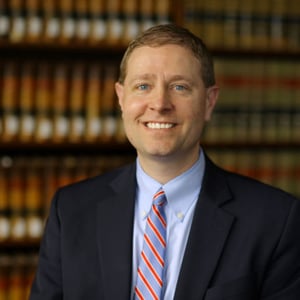
Executive Director, Salmon P. Chase Center for Civics, Culture, and Society, The Ohio State University
Professor Lee J. Strang serves as the inaugural executive director of the Salmon P. Chase Center for Civics, Culture, and Society at The Ohio State University.
Initiated in 2023 by the state of Ohio, the Chase Center will be an academic home at Ohio State for teaching, research, and programing on the foundations of the American constitutional order and its impact on society. As executive director, Professor Strang is responsible for organizing the center, overseeing the hiring and appointment of the center’s faculty, developing curriculum, and delivering student and academic programming. He also holds a faculty appointment in the Moritz College of Law at Ohio State.
Professor Strang is a nationally recognized legal scholar who has published dozens of articles in leading journals in the fields of constitutional law and interpretation, property law, and religion and the First Amendment. He co-edits the textbook Federal Constitutional Law, and his most recent book, Originalism’s Promise: A Natural Law Account of the American Constitution is the first book-length, natural law justification for originalism. He currently is writing on civic thought and leadership, and he is finalizing a book on the history of American Catholic legal education (with John M. Breen).
Before joining Ohio State, Professor Strang served as the inaugural director of the University of Toledo’s Institute of American Constitutional Thought & Leadership. He joined the Toledo College of Law faculty in 2008, was granted tenure in 2010, and was named John W. Stoepler Professor of Law & Values in 2015. The University of Toledo awarded Professor Strang its Outstanding Faculty Research and Scholarship Award in 2017. Before that, he was a visiting professor at Michigan State University College of Law. A graduate of the University of Iowa, where he was articles editor of the Iowa Law Review and Order of the Coif, Professor Strang holds an LL.M. degree from Harvard Law School.
Professor Strang has been a visiting scholar at the Georgetown Center for the Constitution and a visiting fellow at the James Madison Program at Princeton University. In 2016, he was appointed to the Ohio Advisory Committee of the U.S. Commission on Civil Rights and reappointed as chair in 2023.
Prior to teaching, Professor Strang served as a judicial clerk for Judge Alice M. Batchelder of the U.S. Court of Appeals for the Sixth Circuit. He was also an associate for Jenner & Block LLP in Chicago, where he practiced in general and appellate litigation.
Professor Strang is a frequent presenter at scholarly conferences. He is the president of the Board of Trustees of Northwest Ohio Classical Academy, Ohio’s first classical charter school. He is also a regular participant in debates at law schools across the country, a contributor to the media, and a speaker to political, civic, and religious groups.

Professor of Law, Widener University Commonwealth Law School
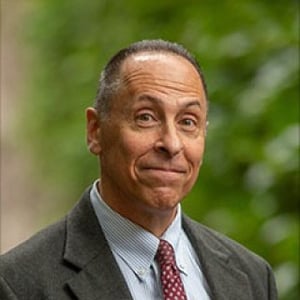
John Paul Stevens Professor of Law, Northwestern University School of Law
Andrew Koppelman is John Paul Stevens Professor of Law, Professor (by courtesy) of Political Science, and Philosophy Department Affiliated Faculty at Northwestern University. He received the Walder Award for Research Excellence from Northwestern, the Hart-Dworkin award in legal philosophy from the Association of American Law Schools, and the Edward S. Corwin Prize from the American Political Science Association. His scholarship focuses on issues at the intersection of law and political philosophy. He has written more than 100 scholarly articles and eight books, most recently Burning Down the House: How Libertarian Philosophy Was Corrupted by Delusion and Greed, (St. Martin’s Press). His column appears regularly at The Hill. You can find his recent work at andrewkoppelman.com.

Vice President for Legal Strategy, Stand Together
Casey Mattox is Vice President for Legal Strategy at Stand Together and Senior Advisor at
Americans for Prosperity. In these roles he advocates for and creates strategies and
partnerships to ensure a constitutionally limited government that protects the civil liberties of all
Americans. Prior to joining Stand Together and AFP Casey’s legal career focused on defending
the First Amendment rights of students, faculty, healthcare workers and religious organizations.
Casey has a J.D. from Boston College School of Law and an undergraduate degree from the
University of Virginia. You can find him on Twitter at @CaseyMattox_ and on LinkedIn at
@Casey-Mattox-ST.
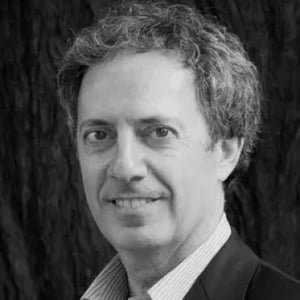
Tad and Dianne Taube Senior Fellow, Hoover Institution, Stanford University; Former Director of Policy Planning Staff, U.S. Department of State
Peter Berkowitz is the Tad and Dianne Taube Senior Fellow at the Hoover Institution, Stanford University. From 2019-2021, he served as the Director of the State Department’s Policy Planning Staff, executive secretary of the department’s Commission on Unalienable Rights, and senior adviser to the Secretary of State. Peter studies and writes about, among other things, constitutional government, conservatism and progressivism, liberal education, national security and law, and Middle East politics. He is the author of Constitutional Conservatism: Liberty, Self-Government, and Political Moderation; Israel and the Struggle over the International Laws of War; Virtue and the Making of Modern Liberalism; and Nietzsche: The Ethics of an Immoralist. He has edited seven volumes on American politics and political institutions. He is a contributor at RealClearPolitics, and has written hundreds of essays, articles, and reviews on many subjects for a variety of publications, including the American Political Science Review, the Atlantic, the Chronicle of Higher Education, the Claremont Review of Books, Commentary, First Things, Haaretz, the Jerusalem Post, National Review, the New Republic, the New York Post, the New York Sun, PJ Media, Policy Review, the Public Interest, the Times Literary Supplement, the Wall Street Journal, the Washington Post, the Weekly Standard, the Wilson Quarterly, and the Yale Law Journal. Peter holds a JD and a PhD in political science from Yale University; an MA in philosophy from the Hebrew University of Jerusalem; and a BA in English literature from Swarthmore College.
Senior Counselor, The Cohen Group
Over the course of a 34-year career in the Foreign Service, Ambassador Jeffrey Davidow became one of America's most senior and well-respected diplomats. He has extensive experience in both Latin America and Africa, having served as US Ambassador to Mexico, Venezuela, and Zambia. He also headed the State Department's efforts in Latin America, serving as Assistant Secretary of State for Western Hemisphere Affairs. He retired in 2003 from the US State Department with the rank of Career Ambassador, the highest position in the Foreign Service which, by law, can be held by no more than five individuals at one time.
In 1993, President Clinton nominated Ambassador Davidow to be US Ambassador to Venezuela, a position he held until 1996. From 1996 to 1998, he was the State Department's chief policymaker for the Western Hemisphere, serving as Assistant Secretary of State for that region. President Clinton nominated Ambassador Davidow again in 1998, this time as US Ambassador to Mexico. Ambassador Davidow held this post from 1998 until 2002. After leaving Mexico in September 2002, he became a Visiting Fellow at the John F. Kennedy School of Government and the David Rockefeller Center for Latin American Studies.
Ambassador Davidow joined the US Foreign Service in 1969 and began his career at the American Embassy in Guatemala. He later became the head of the liaison office at the US Embassy in Zimbabwe and later returned to the US to act as the Director of the Office of Southern African Affairs in 1985. He also pursued a fellowship at Harvard University. In 1988, President Ronald Reagan nominated him to be US Ambassador to Zambia, a position he held until 1990. After his ambassadorship to Zambia, he served as Deputy Assistant Secretary of State for Africa. Ambassador Davidow spent many years involved in multiple negotiations in southern Africa - Angola, Namibia, Mozambique, Zimbabwe, and South Africa itself - that helped bring relative peace to that region.
Since leaving the Foreign Service, Ambassador Davidow has served as President of the Institute of the Americas in San Diego. Established in 1983, the Institute of the Americas is a leading institution in United States-Canada-Latin America cooperation. The Institute, best known for its energy and technology programs, brings together business and government leaders and representatives of civil society in forums designed to seek ways in which public and private entities can collaborate, clarify rules and regulations so private enterprise can flourish, promote the development of infrastructure through public-private funding, and implement effective policies for managing economic growth in Latin America.
Ambassador Davidow is also an accomplished public speaker and author. He has published articles in Foreign Policy and Foreign Affairs and authored two books, one on international negotiations and the other, The US and Mexico: The Bear and the Porcupine, a bestseller in Mexico and a prominent textbook at American universities. He speaks frequently on hemispheric policy and on Mexican developments for organizations such as the North American Forum, the Trilateral Commission, the Woodrow Wilson Center, the Pacific Council, the Chinese Academy of Social Sciences, the InterAmerican Development Bank, and many university and other groups. He also served as an adviser to President Obama for the 2009 Summit of the Americas.
A native of Massachusetts, Ambassador Davidow received a BA from the University of Massachusetts in 1965 and an MA from the University of Minnesota in 1967. He also did postgraduate work in India in 1968 on a Fulbright travel grant.
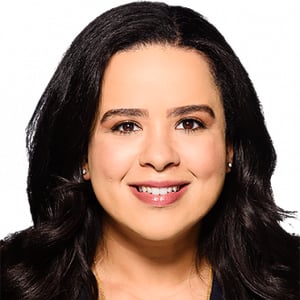
Senior Policy Analyst, Latin America and the Western Hemisphere, The Heritage Foundation
Ana Rosa Quintana leads The Heritage Foundation’s efforts on U.S. policy toward Latin America.
She has authored numerous policy studies included but not limited to Mexico, Central America, Cuba, Colombia and Venezuela. She has written articles for a wide range of outlets including The Atlantic, Real Clear World, the National Interest, The Hill, and various publications. She has presented at the State Department and other U.S. government agencies. Her work has been cited in media venues such as The Washington Post, The Wall Street Journal, Bloomberg Business, The Guardian, and she has been a commentator on media outlets like Fox News, MSNBC, and Al Jazeera. She has also testified multiple times before the U.S. Congress.
Quintana holds a Master of Arts degree in global affairs and a bachelor’s degree in political science, both from Florida International University. She also received certificates in National Security, Latin American and Caribbean studies. She was a scholar in the university’s Jack D. Gordon Institute for Public Policy and Citizenship Studies. She’s fluent in Spanish and studied in Minas Gerais, Brazil, on a scholarship sponsored by the Department of Defense.
She was formerly a National Security Fellow with the Foundation for Defense of Democracies and a former Penn Kemble Democracy Forum Fellow with the National Endowment for Democracy.
Prior to joining Heritage, she was a student trainee at the Defense Intelligence Agency. She also held internships at Virginia-based International Relief and Development, where she worked on rule of law issues in Latin America, and at the U.S. Agency for International Development, where she worked on civilian-military cooperation.
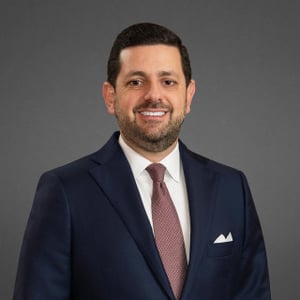
Of Counsel, DLA Piper LLP (US)
Harout J. Samra – a Board Certified Specialist in International Law – focuses his practice on international dispute resolution and arbitration matters, including international civil litigation in US courts.
Harout has represented clients from both the public and private sectors, including foreign governments, public officials and clients from a variety of industries. He has experience in international arbitrations administered under the International Chamber of Commerce (ICC), International Centre for Dispute Resolution (ICDR), United Nations Commission on International Trade Law (UNCITRAL), China International Economic and Trade Arbitration Commission (CIETAC), Bogota Chamber of Commerce, Madrid Court of Arbitration and International Centre for Settlement of Investment Disputes (ICSID) arbitration rules.
Harout currently serves as a member of the Florida Supreme Court Judicial Nominating Commission, by appointment of Governor Ron DeSantis. He previously served, by appointment of Governor Rick Scott, as a member of the Florida Third District Court of Appeal Judicial Nominating Commission, and was elected as Chair of the Commission from 2018-2019.
Sally D. Danforth Distinguished Professor of Law & Religion and, Washington University School of Law
Professor John Inazu's scholarship focuses on the First Amendment freedoms of speech, assembly, and religion, and related questions of legal and political theory. His first book, Liberty's Refuge: The Forgotten Freedom of Assembly (Yale University Press, 2012), seeks to recover the role of assembly in American political and constitutional thought. His second book isConfident Pluralism: Surviving and Thriving Through Deep Difference (University of Chicago Press, 2016). Professor Inazu is a Senior Fellow at the Institute for Advanced Studies in Culture at the University of Virginia. He is the special editor of a volume on law and theology published in Law and Contemporary Problems, and his articles have appeared in a number of law reviews and specialty journals. He has written broadly for mainstream audiences in publications including USA Today, CNN, the Hedgehog Review, and the Washington Post.
Professor Inazu was the law school's 2014 David M. Becker Professor of the Year. Prior to joining the law faculty, he was a visiting assistant professor at Duke University School of Law and a Royster Fellow at the University of North Carolina at Chapel Hill. He clerked for Judge Roger L. Wollman of the U.S. Court of Appeals for the Eighth Circuit and served for four years as an associate general counsel with the Department of the Air Force at the Pentagon.
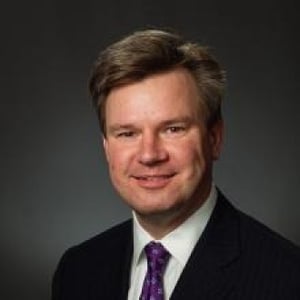
Senior Counsel & Director of the Center for Religious Schools, Alliance Defending Freedom
Gregory S. Baylor serves as senior counsel with Alliance Defending Freedom, where he is the director of the Center for Religious Schools and senior counsel with the Center for Public Policy.
Since joining ADF in 2009, Baylor has focused on defending and advancing the religious freedom of faith-based educational institutions through advice, education, legislative and public advocacy, and representation in disputes. He has testified about religious liberty issues three times before congressional committees and numerous times before state legislative committees.
Greg serves on the board of directors of the International Alliance for Christian Education, the board of directors of the Association for Biblical Higher Education, the board of directors of the Association for Christian Schools International, the board of advisors of the Museum of the Bible, and advisory board of the Center for Academic Faithfulness and Flourishing.
Greg earned his Juris Doctor in 1990 from Duke University School of Law, where he graduated Order of the Coif, with high honors, and served on the editorial board of the Duke Law Journal. He received his bachelor’s degree in Honors English in 1987 from Dartmouth College. Following graduation from law school, he served as law clerk to the Hon. Jerry E. Smith on the U.S. Court of Appeals for the Fifth Circuit. He practiced labor and employment law at two large international law firms for three years before joining the staff of Christian Legal Society’s Center for Law and Religious Freedom, where he served for 15 years prior to joining ADF. He lives in Northern Virginia with his wife (a medical doctor) and two daughters.

Richard and Frances Mallery Professor of Law and Faculty Director, Constitutional Law Center, Stanford Law School
Michael W. McConnell is the Richard and Frances Mallery Professor and Faculty Director of the Constitutional Law Center at Stanford Law School, and a Senior Fellow at the Hoover Institution. From 2002 to 2009, he served as a Circuit Judge on the United States Court of Appeals for the Tenth Circuit. He was nominated by President George W. Bush, a Republican, and confirmed by a Democratic Senate by unanimous consent. McConnell has previously held chaired professorships at the University of Chicago and the University of Utah, and visiting professorships at Harvard and NYU. He teaches courses on constitutional law, constitutional history, First Amendment, and interpretive theory. He has published widely in the fields of constitutional law and theory, especially church and state, equal protection, and separation of powers. His book, “The President Who Would Not Be King: Executive Power Under the Constitution,” was published by Princeton University Press in 2020, based on the Tanner Lectures in Human Values, which he delivered at Princeton in 2019. His latest book, co-authored with Nathan Chapman, “Agreeing to Disagree: How the Establishment Clause Protects Religious Diversity and Freedom of Conscience,” was published by Oxford University Press in mid-2023. McConnell has argued sixteen cases in the United States Supreme Court, most recently Carney v. Adams (2020). defending a provision of the Delaware Constitution requiring political balance on that state’s courts. More recently, he was co-counsel in Gonzalez v. Google. He earned his B.A. from Michigan State University and his J.D. from the University of Chicago, and has received honorary degrees from Notre Dame University and Michigan State. He served as law clerk to Supreme Court Justice William J. Brennan, Jr. and D.C. Circuit Chief Judge J. Skelly Wright. He has been Assistant General Counsel of the Office of Management & Budget, Assistant to the Solicitor General of the Department of Justice, and a member of the President’s Intelligence Oversight Board. He is Senior of Counsel to the law firm Wilson, Sonsini, Goodrich & Rosati, and is co-chair of Meta’s Oversight Review Board.
Sally D. Danforth Distinguished Professor of Law & Religion and, Washington University School of Law
Professor John Inazu's scholarship focuses on the First Amendment freedoms of speech, assembly, and religion, and related questions of legal and political theory. His first book, Liberty's Refuge: The Forgotten Freedom of Assembly (Yale University Press, 2012), seeks to recover the role of assembly in American political and constitutional thought. His second book isConfident Pluralism: Surviving and Thriving Through Deep Difference (University of Chicago Press, 2016). Professor Inazu is a Senior Fellow at the Institute for Advanced Studies in Culture at the University of Virginia. He is the special editor of a volume on law and theology published in Law and Contemporary Problems, and his articles have appeared in a number of law reviews and specialty journals. He has written broadly for mainstream audiences in publications including USA Today, CNN, the Hedgehog Review, and the Washington Post.
Professor Inazu was the law school's 2014 David M. Becker Professor of the Year. Prior to joining the law faculty, he was a visiting assistant professor at Duke University School of Law and a Royster Fellow at the University of North Carolina at Chapel Hill. He clerked for Judge Roger L. Wollman of the U.S. Court of Appeals for the Eighth Circuit and served for four years as an associate general counsel with the Department of the Air Force at the Pentagon.

Challenges to Originalism VI: Originalism is Unjust
Lee J. Strang
The Federalist Society's Student Division & Georgetown Law Student Chapterpresent Challenges to Originalism VI:...
Courthouse Steps Decision: 303 Creative v. Elenis
Michael R. Dimino, Andrew Koppelman, Casey Mattox
On June 30, 2023 U.S. Supreme Court decided 303 Creative LLC v. Elenis. Petitioner Lorie...
Legacy of the Unalienable Rights Commission: Discussion with Dr. Peter Berkowitz, Director of the Policy Planning Office, U.S. Department of State
Peter Berkowitz
In May 2019, Secretary of State Mike Pompeo announced formation of the Commission on Unalienable...
USMCA in Practice: What it Means for the Future of US-Mexico Relations
Jeffrey Davidow, Ana Rosa Quintana, Harout J. Samra
The new United States-Mexico-Canada Agreement (USMCA) entered into force in the United States on July...
Confident Pluralism: Living in a Deeply Diverse Society
John Inazu
How can we thrive in a modern society with serious ideological differences between us? Washington...
Religious Freedom of Religious Colleges - Podcast
Gregory Baylor
Mr. Gregory S. Baylor of Alliance Defending Freedom discussed current and future challenges to the religious...
Liberty’s Refuge - Faculty Book Podcast
Michael W. McConnell, John Inazu
During the past decade, courts have struggled to reconcile anti-discrimination statutes with claims by private...