
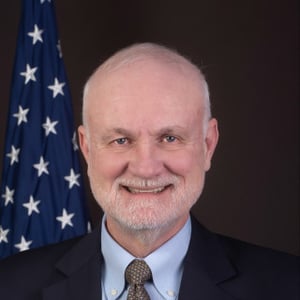
Founding Director of the Center for Energy Law and Policy, William & Mary Law School; Former Chairman, Federal Energy Regulatory Commission; Former Chairman, Virginia State Corporation Commission
Mark Christie is the Founding Director of the Center for Energy Law and Policy at William & Mary Law School. He also teaches courses on energy law at the law school as a visiting professor from practice.
Christie is a former Chairman of the Federal Energy Regulatory Commission (FERC). He served as a FERC commissioner from January 2021 to August 2025, the final seven months as Chairman.
Prior to serving on FERC, Christie was the Chairman of the Virginia State Corporation Commission (Virginia SCC), on which he served as a commissioner for nearly 17 years. He was elected to the Virginia SCC, which regulates utilities, insurance and banking, three times by the Virginia legislature on bipartisan votes.
During Christie’s service as a state regulator, he was elected president of the Organization of PJM States, Inc. (OPSI), an organization of utility regulators representing the 13 states and the District of Columbia which participate in the PJM transmission and markets organization. He served for more than a decade on the OPSI governing board. Christie also served as president of the Mid-Atlantic Conference of Regulatory Utilities Commissioners (MACRUC), a regional chapter of the National Association of Regulatory Utility Commissioners (NARUC).
Former Chairman Christie taught regulatory law for a decade as an adjunct faculty member at the University of Virginia School of Law and constitutional law and government for 20 years in a doctoral program at Virginia Commonwealth University.
Christie received his law degree from Georgetown University and his undergraduate degree from Wake Forest University, where he graduated Magna cum Laude and earned Phi Beta Kappa honors. To help pay for college, he worked as an underground coal miner during summers.
He served as an officer in the U. S. Marine Corps. Semper fi.
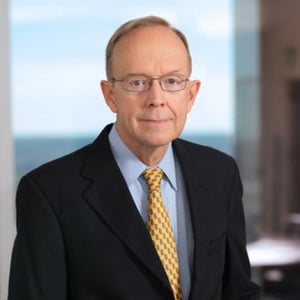
Former Deputy Attorney General for Virginia
Kennerly Davis has over forty years of experience in corporate management, public service, and the private practice of law. He has held senior executive positions in a Fortune 500 electric and gas company. He has served as Deputy Attorney General for the Commonwealth of Virginia, and as a legislative aide to a U.S. Senator and a U.S. Congressman. He practiced law for 25 years with Hunton Andrews Kurth LLP.
Davis is active in the Federalist Society as a member of the Regulatory Process Working Group of the Regulatory Transparency Project, and as a member of the Execuitve Committee of the Administrative Law and Regulation Practice Group. He is active in the national Alumni Free Speech Alliance, and involved in AFSA-chapter initiatives, including litigation, to publicize and correct the serious legal problems created by university Diversity, Equity, and Inclusion programs and the anonymous bias reporting systems used to enforce those DEI programs.
Davis writes and speaks on a wide variety of topics, including those related to the Founding of America, the natural rights foundation of our Republic, the constitutional rule of law, equal protection and free speech, DEI programs and bias reporting systems, capitalism, regulation and regulatory reform, and economic development. His articles have appeared in The Wall Street Journal, the Washington Examiner, the Richmond Times-Dispatch, The Federalist Society Review, the FedSoc Blog, Real Clear Energy, Townhall, the Daily Caller, reports of the Center for Strategic & International Studies, and other publications. He appears frequently on radio, podcasts, and television.
Davis graduated with honors from Cornell University with an A.B. degree in Government. He earned an M.A. degree from Pembroke College, Oxford, in Philosophy, Politics, and Economics. He was awarded a J.D. degree from Harvard Law School, and an M.B.A. degree from Virginia Commonwealth University.
Davis lives in Richmond, Virginia. He can be contacted by email: j.kendavis@verizon.net, and by phone: (804) 624-8525.
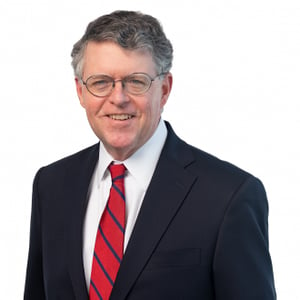
Former Commissioner, Federal Energy Regulatory Commission
Bernard L. McNamee is a former FERC commissioner and currently a partner at McGuireWoods LLP and a senior advisor at McGuireWoods Consulting. His practice focuses on providing clients with strategic legal and policy advice on a wide range of energy and environmental issues. During his time on the Commission, he participated in more than 1,700 published orders on a wide range of issues, including numerous important orders relating to wholesale electricity markets and natural gas pipelines.
Before his appointment by the president and confirmation by the Senate as a commissioner on FERC, McNamee served in the U.S. Department of Energy as executive director of the Office of Policy and deputy general counsel for energy policy. His career in public service includes key leadership positions under Attorneys General in Virginia and Texas, and policy advisor roles for a U.S. Senator from Texas and a Governor of Virginia. In private practice, McNamee has a long career representing energy clients before state public utility commissions in rate cases, certificate proceedings, and integrated resource planning.

Partner, K&L Gates
Varu Chilakamarri is a partner in the K&L Gates Environment, Land, and Natural Resources practice group. Her practice focuses on litigation services, particularly in appellate matters and in administrative, environmental, and energy law. Varu also counsels clients on government-facing matters, which often involve strategic analysis of legal risks and opportunities presented by statutory and regulatory frameworks.
Varu joined K&L Gates after a 17-year career at the US Department of Justice, where she was a successful federal district and appellate court litigator and held various senior leadership roles. Most recently, she served as Deputy Assistant Attorney General in the DOJ's Civil Division. In this role, Varu was the head of the Torts Branch, an office of over 230 litigators and staff who defend the United States in a wide range of suits for monetary damages—including toxic tort cases arising out of environmental regulatory actions, constitutional tort cases, and cases brought under unique statutory compensation programs.
Before that, Varu was an appellate attorney in the Environment and Natural Resources Division, serving as lead counsel in complex civil and criminal appeals. These included facial challenges to the constitutionality of federal laws and regulations, and challenges to the validity of federal permitting and land use decisions (e.g., cases involving the National Environmental Policy Act, the Endangered Species Act, and the Clean Water Act). She also litigated enforcement cases, including those involving violations of substantive environmental laws, recordkeeping requirements, and various Title 18 provisions. She argued cases before the US Court of Appeals for the Third, Fifth, Ninth, Tenth, D.C., and the Federal Circuit, and she has practiced in several other federal appellate and district courts. Varu was previously appointed as the Division's first counselor for animal welfare matters and served as Chief of Staff to the Assistant Attorney General in DOJ's Environment and Natural Resources Division. Varu's work at the DOJ often centered on novel legal challenges arising from a broad suite of federal statutes, including two preemption lawsuits that went to the US Supreme Court.
Varu joined the DOJ in 2006 through the Attorney General's honors program as a trial attorney in the Civil Division's Federal Programs Branch, and during her tenure, also worked in the office of the Associate Attorney General as Acting Deputy and served on detail to the White House Counsel's Office. Before joining the DOJ, Varu clerked for Judge R. Guy Cole in the US Court of Appeals for the Sixth Circuit and Judge Timothy B. Dyk in the US Court of Appeals for the Federal Circuit.
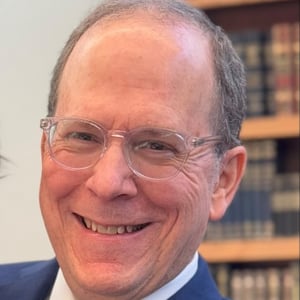
Executive Counsel - Issues and Advocacy, Exxon Mobil Corporation Law Department
Robert Levy serves as Executive Counsel at ExxonMobil, where he leads the company’s legal strategy on advocacy and civil justice reform. His work includes representing ExxonMobil in state and national organizations dedicated to improving the legal system and the rule of law, coordinating amicus support on key policy and litigation matters, and advising on data privacy and information governance. He previously oversaw the company’s eDiscovery compliance and cybersecurity law initiatives.
Robert currently chairs the Board of the American Tort Reform Association and previously served as President of the Civil Justice Reform Group. He is Treasurer of Lawyers for Civil Justice (LCJ), chairs its Discovery Committee, and serves on its Amicus Committee. He is also actively involved with the U.S. Chamber of Commerce’s Institute for Legal Reform and Litigation Center and sits on the Executive Committee of the Texas Civil Justice League. Additionally, he is an active member of the Federalist Society and its In-House Counsel Network.
A long-standing member of the Texas Supreme Court Advisory Committee, Robert has served for over 14 years and currently chairs one of its subcommittees. He also sits on the Advisory Councils of the Atlantic Legal Foundation, the Center for Law & Public Policy, and the Mountain States Legal Foundation. In recognition of his leadership, LCJ awarded him with the Al Cortese Award for his contributions to civil justice reform. Texans for Lawsuit Reform and the Texas Civil Justice League have honored Robert for his years of service to TCJL and Texas civil justice reform.
He has also been deeply engaged in community and bar activities, serving for over a decade on the board of Houston Volunteer Lawyers and on the board of the Houston Jewish Federation. He is a former Chair of the Board of Robert M. Beren Academy, where he was honored with the Dena and Baruch Brody Award for his leadership and service. Additionally, he served as President of United Orthodox Synagogues, reflecting his longstanding commitment to faith-based and civic leadership.
Robert is a frequent speaker at legal conferences and continuing legal education (CLE) programs. Early in his career, he served as a briefing attorney for the Honorable Judge Robert Parker of the U.S. District Court for the Eastern District of Texas. He has practiced law for over 39 years and earned his J.D. with honors from the University of Texas School of Law in 1986.
Before joining ExxonMobil, Robert was a partner at Haynes and Boone, LLP for over 14 years, where he practiced in the Business Litigation Section. He also held positions at Johnson & Gibbs and Weil, Gotshal & Manges.
Robert and his wife Barbara reside in Houston, Texas, where they raised four children and now enjoy their role as proud grandparents to three grandchildren.
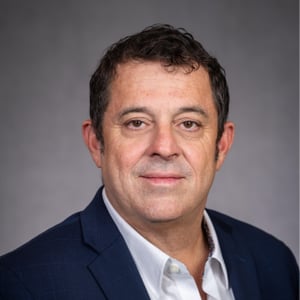
Senior Fellow for Law, Economics, and Technology, The Heritage Foundation; Professor, Florida International University
Mario Loyola is a Senior Fellow for Law, Economics, and Technology at The Heritage Foundation.
Loyola served in the Trump Administration as Associate Director for Regulatory Reform at the White House Council on Environmental Quality. In that role, he was one of the principal drafters of the One Federal Decision policy, which helped to streamline the permitting and environmental review of large infrastructure projects. While at CEQ, he was a member of the U.S. delegation to the USMCA free trade negotiations with Mexico and Canada, as well as the United Nations conference on biodiversity on the high seas. Loyola initially joined the White House in February 2017 as a Presidential Speechwriter, employing his expertise in many areas of foreign and domestic policy.
After beginning his career in M&A and corporate finance law, Loyola served in the Bush 43 Administration as a special assistant to the Undersecretary of Defense for Policy. He left that position to start writing on national defense issues in magazines such as National Review and The Weekly Standard, reporting from the front lines of the war on terrorism in Lebanon, Israel, and Iraq. He finished the Bush Administration as Foreign and Defense Counsel to the U.S. Senate Republican Policy Committee, then under the chairmanship of Senator Kay Bailey Hutchison of Texas. He subsequently moved to Texas and joined the Texas Public Policy Foundation, where he specialized in energy, environment, and federalism.
Loyola is a frequent contributor to The Wall Street Journal, National Review, and The Atlantic, among others. He teaches environmental and administrative law at Florida International University, where he is Founding Director of the Environmental Finance and Risk Management program in FIU’s prestigious Institute of Environment. He received a bachelor’s degree in European history from the University of Wisconsin–Madison and a J.D. from Washington University School of Law.

Partner, Vinson & Elkins
Corinne principally practices in environmental law, with an emphasis on litigation, regulatory compliance, internal investigations, and defense against government investigations and enforcement actions.
Corinne draws on wide experience at the U.S. Department of Justice, including serving as Senior Counsel in the Office of the Associate Attorney General, which oversees all civil litigation on behalf of the United States, and as Counselor in the Office of the Attorney General.
Corinne most recently served as Counsel and Chief of Staff in the Environment and Natural Resources Division of the U.S. Department of Justice, where she assisted in managing a 600-person division that included 400 lawyers. In this role she helped manage the Division’s civil and criminal litigation arising under more than 150 environmental and natural resources laws.
She also worked closely with the General Counsel’s Offices for multiple federal agencies, including the EPA, Departments of Interior, Defense, Energy, Commerce, and Agriculture, as well as the White House and Counsel on Environmental Quality to advise high-ranking officials on policy and litigation risks associated with the environmental and natural resource laws.
She has personally argued cases in three U.S. Courts of Appeals, and multiple district courts, and served as the lead or co-lead counsel in district court litigation defending agency regulations, approvals, and permits related to oil and gas operations and other energy extraction projects.
Her roles in government have given her a unique perspective into the decision-making processes in the federal government.
In the private sector, Corinne counsels clients on environmental compliance across a variety of industries, including energy, chemical, manufacturing, and mining sectors. In the transactional context, she assists in the drafting and negotiating of the environmental terms in purchase and sale agreements, lease agreements, credit agreements, and disclosures for debt and equity offerings and public filings. She has also drafted comments on behalf of clients to agencies on proposed rules with significant implications for the oil and gas industry.
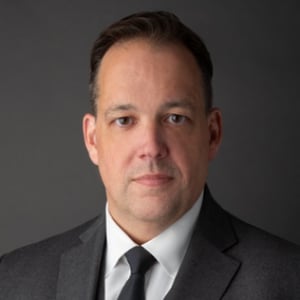
Counsel, Boyden Gray PLLC
Jim Wedeking is counsel at Boyden Gray PLLC. He has extensive experience with environmental regulations, providing compliance counseling for large industrial and agricultural companies and their related trade associations, drafting comments on proposed environmental rulemakings from a variety of federal agencies, and challenging those rules in court. For over 20 years he has helped companies obtain various permits and other authorizations for constructing major infrastructure projects, including fossil fuel-fired power plants, natural gas pipelines, and offshore wind turbines, as well as defend those permits and authorizations through litigation. Mr. Wedeking frequently writes on federal environmental law topics, including for the Washington Legal Foundation.
He has also counseled clients on several Freedom of Information Act matters, including the protection of confidential business information from disclosure to third parties and how the Supreme Court’s Food Marketing Institute v. Argus Leader Media decision increased protections for company information provided to regulatory agencies.
Before joining the firm, Mr. Wedeking was counsel in Sidley Austin’s Washington, D.C. environmental, health, and safety practice group. There, he represented industrial companies in defending against civil and criminal enforcement actions and toxic tort suits.
Mr. Wedeking received a J.D., cum laude, from the Catholic University of America Columbus School of Law and a B.A. in Criminology and Criminal Justice from the University of Maryland.

Professor of Law, University of Minnesota Law School
Professor James W. Coleman is a scholar of energy law. He specializes in North American energy infrastructure, transport, and trade. He is also a nonresident senior fellow at the American Enterprise Institute focused on energy policy.
Professor Coleman has testified before Congress on steps to speed up energy infrastructure permits. He also worked with a team of experts as part of Alberta's Royalty Review to revise the Canadian province's management of its vast oil and gas resources.
Before joining Minnesota, Professor Coleman taught at Southern Methodist University's Dedman School of Law, the University of Calgary’s law and business schools, and Harvard Law School. Earlier, he practiced environmental and appellate law at Sidley Austin in Washington, D.C., and clerked for the Honorable Steven M. Colloton of the U.S. Court of Appeals for the Eighth Circuit.
Professor Coleman received two degrees from Harvard University—a J.D. (cum laude) and B.A. in biology (magna cum laude with highest honors in the field). As a result of his undergraduate thesis on butterfly genetics, which required fieldwork in Central Asia, a species of lycaenid butterfly was named after him—Agrodiaetus ripartii colemani.
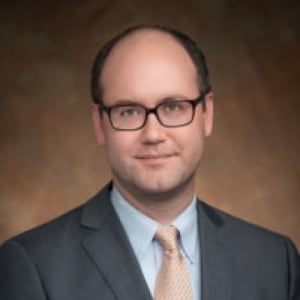
Vice President, Regulatory Affairs, NRG Energy
Travis Kavulla joined NRG after a decade of work as a policy wonk and government regulator. Previously, Travis headed up energy and environmental policy for the R Street Institute, a think tank, and before that was twice elected to public office as a utility commissioner in Montana. Travis has also held leadership roles in national policy circles, including as president of the National Association of Regulatory Utility Commissioners. During his work in public life, Travis has written dozens of articles and speeches on electricity policy and regulation.
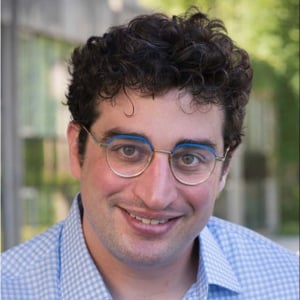
Associate Professor of Law, Yale Law School
Josh Macey teaches and writes about bankruptcy, environmental law, energy law, and the regulation of financial institutions. He is the three-time winner of the Morrison Prize for most influential environmental law article of the previous year (“Zombie Energy Laws,” 73 Vanderbilt Law Review; “Long Live the Federal Power Act’s Bright Line,” 134 Harvard Law Review; "Clean Energy Through Grid Reliability," 74 Stanford Law Review). He is also a co-author on one of the leading Energy Law casebooks and has been recognized by the American Bankruptcy Institute as one of the “40 Under 40” emerging leaders in insolvency practice.
Professor Macey graduated from Yale College, the London School of Economics, and Yale Law School. He has worked at Morgan Stanley and clerked for Judge J. Harvie Wilkinson III on the Court of Appeals for the Fourth Circuit

Director, Electricity Law Initiative, Harvard Law School
Ari Peskoe is the Director of the Electricity Law Initiative at the Harvard Law School Environmental and Energy Law Program. He has written extensively about electricity regulation, on issues ranging from Constitutional challenges to states’ energy laws to federal regulation of distributed energy resources. Prior to the Environmental and Energy Law Program, Ari was an associate at a law firm in Washington, D.C. where he litigated before the Federal Energy Regulatory Commission about the Western Energy Crisis. Before that, Ari was a Peace Corps Volunteer in Ghana and spent two years trying to bring the 2012 Olympics to New York. He received his J.D. from Harvard Law School and graduated from the University of Pennsylvania with degrees in electrical engineering and business.
Managing Partner, Boyden Gray PLLC
Michael Buschbacher is the managing partner of Boyden Gray PLLC. He represents public and private companies, trade associations, non-profits, and individuals in high-stakes litigation and administrative proceedings, with a particular focus on environmental and energy matters.
In addition to trial-level work, Mr. Buschbacher maintains an active appellate practice, both as merits counsel and as counsel for amici curiae. He has written amicus briefs quoted by the Seventh and Ninth Circuits. And his Supreme Court advocacy has been cited by The New Yorker, The New York Times, and E&E News. Mr. Buschbacher’s commentary on legal issues has been published in The Wall Street Journal, Newsweek, and The American Conservative.
Before joining the firm, Mr. Buschbacher served at the U.S. Department of Justice as counsel to the Assistant Attorney General for the Environment and Natural Resources Division. There, he advised senior Department leadership, served as the lead attorney on several lawsuits, and helped draft policy memoranda for the Department on the proper scope and procedure for environmental enforcement. Prior to serving in the government, Mr. Buschbacher was an associate in the D.C. office of Sidley Austin.
Mr. Buschbacher is a former clerk to Judge Alice M. Batchelder of the U.S. Court of Appeals for the Sixth Circuit and to Magistrate Judge Paul R. Cherry of the U.S. District Court for the Northern District of Indiana.
Mr. Buschbacher holds a B.A. in Music and Germanic Studies from Indiana University and a J.D., magna cum laude, from Notre Dame Law School.

Senior Manager, Clean Energy, World Resources Institute
Jennifer Chen, Senior Manager at World Resources Institute, helps shape electricity, transmission and governance policies with an eye toward modernizing grid infrastructure, scaling up clean energy and driving cost-effective electrification. She has written and presented on these topics, including testifying before the U.S. Congress and the U.S. Federal Energy Regulatory Commission (FERC).
Previously, Jennifer led federal electricity policy work at the Nicholas Institute, a think tank for environmental policy solutions at Duke University. She was an attorney with the Natural Resources Defense Council, where she spearheaded environmental NGO coalition efforts to advocate for an efficient and flexible power system. She also has experience working with electricity customer and renewable energy groups as an independent consultant and began her energy career at FERC.
Jennifer earned a J.D. from New York University and a Physics Ph.D. from the University of Chicago. She is a member of the California Bar and the District of Columbia Bar and is admitted to the U.S. Court of Appeals for the District of Columbia Circuit. She is a Senior Fellow in electricity policy at R Street, a board member at New Energy Economics, and a member of the U.S. Department of Energy Electricity Advisory Committee.
Counsel, Boyden Gray PLLC
Jim Wedeking is counsel at Boyden Gray PLLC. He has extensive experience with environmental regulations, providing compliance counseling for large industrial and agricultural companies and their related trade associations, drafting comments on proposed environmental rulemakings from a variety of federal agencies, and challenging those rules in court. For over 20 years he has helped companies obtain various permits and other authorizations for constructing major infrastructure projects, including fossil fuel-fired power plants, natural gas pipelines, and offshore wind turbines, as well as defend those permits and authorizations through litigation. Mr. Wedeking frequently writes on federal environmental law topics, including for the Washington Legal Foundation.
He has also counseled clients on several Freedom of Information Act matters, including the protection of confidential business information from disclosure to third parties and how the Supreme Court’s Food Marketing Institute v. Argus Leader Media decision increased protections for company information provided to regulatory agencies.
Before joining the firm, Mr. Wedeking was counsel in Sidley Austin’s Washington, D.C. environmental, health, and safety practice group. There, he represented industrial companies in defending against civil and criminal enforcement actions and toxic tort suits.
Mr. Wedeking received a J.D., cum laude, from the Catholic University of America Columbus School of Law and a B.A. in Criminology and Criminal Justice from the University of Maryland.
Partner, Steptoe & Johnson
Marc Spitzer served as a former commissioner on the Federal Energy Regulatory Commission (FERC) from July 2006 until December 2011. His practice involves counselling and representing utilities and energy companies before the FERC, at state utility commissions, Congress, federal agencies, and state legislatures. Marc's clients rely on his deep understanding of the energy sector and its policy and regulatory regimes, backed by years in appointed and elected government service. His experience enables him to advise clients through all stages of the energy supply chain from production, transmission, and distribution. Marc’s practice extends to power, gas, and oil proceedings before FERC and he has proven experience in all energy resources.
Managing Partner, Boyden Gray PLLC
Michael Buschbacher is the managing partner of Boyden Gray PLLC. He represents public and private companies, trade associations, non-profits, and individuals in high-stakes litigation and administrative proceedings, with a particular focus on environmental and energy matters.
In addition to trial-level work, Mr. Buschbacher maintains an active appellate practice, both as merits counsel and as counsel for amici curiae. He has written amicus briefs quoted by the Seventh and Ninth Circuits. And his Supreme Court advocacy has been cited by The New Yorker, The New York Times, and E&E News. Mr. Buschbacher’s commentary on legal issues has been published in The Wall Street Journal, Newsweek, and The American Conservative.
Before joining the firm, Mr. Buschbacher served at the U.S. Department of Justice as counsel to the Assistant Attorney General for the Environment and Natural Resources Division. There, he advised senior Department leadership, served as the lead attorney on several lawsuits, and helped draft policy memoranda for the Department on the proper scope and procedure for environmental enforcement. Prior to serving in the government, Mr. Buschbacher was an associate in the D.C. office of Sidley Austin.
Mr. Buschbacher is a former clerk to Judge Alice M. Batchelder of the U.S. Court of Appeals for the Sixth Circuit and to Magistrate Judge Paul R. Cherry of the U.S. District Court for the Northern District of Indiana.
Mr. Buschbacher holds a B.A. in Music and Germanic Studies from Indiana University and a J.D., magna cum laude, from Notre Dame Law School.
Senior Manager, Clean Energy, World Resources Institute
Jennifer Chen, Senior Manager at World Resources Institute, helps shape electricity, transmission and governance policies with an eye toward modernizing grid infrastructure, scaling up clean energy and driving cost-effective electrification. She has written and presented on these topics, including testifying before the U.S. Congress and the U.S. Federal Energy Regulatory Commission (FERC).
Previously, Jennifer led federal electricity policy work at the Nicholas Institute, a think tank for environmental policy solutions at Duke University. She was an attorney with the Natural Resources Defense Council, where she spearheaded environmental NGO coalition efforts to advocate for an efficient and flexible power system. She also has experience working with electricity customer and renewable energy groups as an independent consultant and began her energy career at FERC.
Jennifer earned a J.D. from New York University and a Physics Ph.D. from the University of Chicago. She is a member of the California Bar and the District of Columbia Bar and is admitted to the U.S. Court of Appeals for the District of Columbia Circuit. She is a Senior Fellow in electricity policy at R Street, a board member at New Energy Economics, and a member of the U.S. Department of Energy Electricity Advisory Committee.
Deputy Secretary of Energy
James P. Danly was sworn in as Deputy Secretary on June 9, 2025.
Before arriving at the Department, Deputy Secretary Danly was a partner and the Energy Regulatory Group leader at Skadden in Washington, D.C. This followed his service at the Federal Energy Regulatory Commission, first as the Commission’s general counsel then as the commissioner and chairman.
Deputy Secretary Danly was an officer in the United States Army. He served two tours in Iraq, receiving a Bronze Star and a Purple Heart.
A graduate of Yale University, Deputy Secretary Danly earned his J.D. from Vanderbilt University Law School. He clerked for Judge Danny J. Boggs of the Sixth Circuit.
Partner, Steptoe & Johnson
Marc Spitzer served as a former commissioner on the Federal Energy Regulatory Commission (FERC) from July 2006 until December 2011. His practice involves counselling and representing utilities and energy companies before the FERC, at state utility commissions, Congress, federal agencies, and state legislatures. Marc's clients rely on his deep understanding of the energy sector and its policy and regulatory regimes, backed by years in appointed and elected government service. His experience enables him to advise clients through all stages of the energy supply chain from production, transmission, and distribution. Marc’s practice extends to power, gas, and oil proceedings before FERC and he has proven experience in all energy resources.
Counsel, Boyden Gray PLLC
Jim Wedeking is counsel at Boyden Gray PLLC. He has extensive experience with environmental regulations, providing compliance counseling for large industrial and agricultural companies and their related trade associations, drafting comments on proposed environmental rulemakings from a variety of federal agencies, and challenging those rules in court. For over 20 years he has helped companies obtain various permits and other authorizations for constructing major infrastructure projects, including fossil fuel-fired power plants, natural gas pipelines, and offshore wind turbines, as well as defend those permits and authorizations through litigation. Mr. Wedeking frequently writes on federal environmental law topics, including for the Washington Legal Foundation.
He has also counseled clients on several Freedom of Information Act matters, including the protection of confidential business information from disclosure to third parties and how the Supreme Court’s Food Marketing Institute v. Argus Leader Media decision increased protections for company information provided to regulatory agencies.
Before joining the firm, Mr. Wedeking was counsel in Sidley Austin’s Washington, D.C. environmental, health, and safety practice group. There, he represented industrial companies in defending against civil and criminal enforcement actions and toxic tort suits.
Mr. Wedeking received a J.D., cum laude, from the Catholic University of America Columbus School of Law and a B.A. in Criminology and Criminal Justice from the University of Maryland.
Denver Managing Partner, Wilkinson Barker Knauer LLP
Raymond L. Gifford counsels communications, electric and gas utilities, and information technology companies on state and federal aspects of regulation, administrative law, and competition policy. He is an expert in public utilities law, and the law and economics of regulation of network industries. Mr. Gifford’s law and policy work focuses on the convergence of broadband communications and energy, as well as environmental policy as it applies to the electric industry. He represents clients in state and federal courts and agencies, and serves as an expert witness on utility regulation and its history. He is also a Senior Adjunct Fellow at the Silicon Flatirons Center for Law, Technology and Entrepreneurship, and Co-Directs the Institute for Regulatory Law & Economics at University of Colorado Law School.
Mr. Gifford served as Chairman of the Colorado Public Utilities Commission from 1999-2003. Following that, he served as President of The Progress & Freedom Foundation, a Washington DC-based think-tank that studied the digital revolution as it relates to regulation of network industries. He entered the regulatory law world as First Assistant Attorney General in the Colorado Attorney General’s Office. He clerked for the Honorable Richard P. Matsch of the United States District Court for the District of Colorado. Mr. Gifford has authored a number of articles on communications law, public utility regulation and competition policy in network industries. He is a graduate of University of Chicago Law School and St. John’s College in Annapolis, Maryland. He is an elected member of the American Law Institute
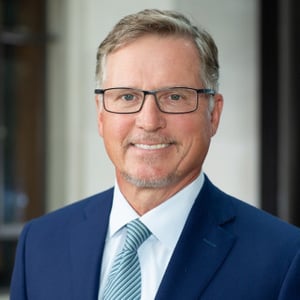
Barry Smitherman is principle of BARRY SMITHERMAN, P.C. and a former partner at Vinson & Elkins LLP. He served on the Texas Railroad Commission from 2011 through 2014, and was Chairman of the Commission from March 2012 through August 2014. Prior to joining the TX RRC, Barry was Chairman of the Public Utility Commission of Texas, a position he held from November 2007 through July 2011. His service as a PUCT Commissioner began in April 2004. Over this time period, Barry served two terms on the U.S. Department of Energy Electricity Advisory Committee, on the Board of Directors of the National Association of Regulatory Utility Commissioners (NARUC), Chairman of the NARUC Gas Committee, on the Electric Reliability Council of Texas (ERCOT) Board of Directors, and on the Regional State Committee of the Southwest Power Pool (SPP).
Barry presently serves on the Board of Directors of Centerpoint Energy, and of Centric Infrastructure Group. He previously served on the Board of NRG Energy, Inc. Barry is also the Chairman of BIG (Brookwood in Georgetown), a non profit which provides work, artistic, and housing opportunities for special needs adults.
Prior to beginning public service, Barry spent 16 years as a public finance investment banker with several prominent 'Wall Street' firms, including J.P. Morgan Securities, The First Boston Corporation (now part of Credit Suisse), Lazard, and Banc One Capital Markets (now part of JP MorganChase). At Banc One, he was a Managing Director and National Head of the Tax-Exempt Origination Group.
Barry received his J.D. from The University of Texas School of Law, his M.P.A. from Harvard University, and his B.B.A. summa cum laude from Texas A&M University.
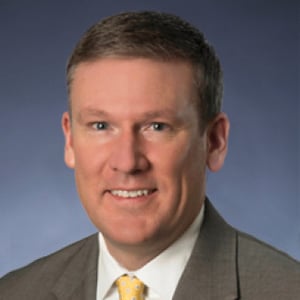
Senior Advisor, Wilkinson Barker Knauer LLP
Mr. Clark is a Senior Advisor at Wilkinson Barker Knauer, LLP. He has extensive experience in energy and utility policy at the federal and state level. He provides clients with analysis and strategic advice on a variety regulatory and public policy matters affecting their businesses. He specializes in working with clients in the energy and telecommunications industries and at the nexus of state and federal jurisdictional issues.
Having been appointed by President Obama, and unanimously confirmed by the U.S. Senate, Mr. Clark served from 2012 to 2016 as a Commissioner of the Federal Energy Regulatory Commission. While at the FERC, Mr. Clark worked on matters that are at the forefront of energy policy, such as: electricity reliability, electricity-natural gas industry coordination, oversight of the nation’s Regional Transmission Organizations, electricity grid cyber and physical security regulations, major enforcement actions, energy infrastructure permitting, the integration of renewables and energy storage, FERC Order 1000 implementation, and wholesale electricity market reforms. From 2001 to 2012 he was a Commissioner of the North Dakota Public Service Commission, including over 5 years as its Chairman. During his tenure at the North Dakota Commission, Mr. Clark oversaw numerous proceedings related to the state’s historic emergence as a leader in American energy production. In 2010, he was selected by his regulatory peers across the nation to serve a term as President of the National Association of Regulatory Utility Commissioners. He also served a three-year term as Chairman of the NARUC Telecommunications Committee. Through his various regulatory positions, he has testified multiple times before Committees of both the US House and US Senate on matters related to energy and telecommunications.
From 1999 to 2000, Mr. Clark was Labor Commissioner of the State of North Dakota and a member of the Cabinet of Gov. Ed Schafer. In 1994 he was one of the youngest people ever elected to the North Dakota legislature, representing a portion of the City of Fargo for two terms in the State House of Representatives. He is a graduate, with honor, from North Dakota State University and holds a master’s degree from the University of North Dakota. In addition to his work at Wilkinson Barker Knauer, LLP, Mr. Clark serves as a non-employee independent director on the Board of Directors of NorthWestern Energy Corporation. Having attained the rank of Eagle Scout in his youth, Mr. Clark has been a long-time volunteer with and supporter of the Boy Scouts of America.
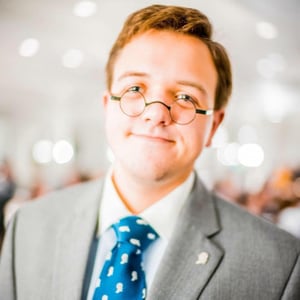
Adam Griffin is a graduate of the University of North Carolina School of Law. During law school, he served as a research assistant to Professor Stephen E. Sachs and UNC Law Dean Martin Brinkley. After law school, Adam spent two years litigating for liberty at the Institute for Justice as an inaugural Law and Liberty Fellow. He then served as a law clerk to Chief Judge Richard E. Myers in the United States District Court for the Eastern District of North Carolina, and previously worked at Pacific Legal Foundation and the Civil Rights Division of the Department of Justice.
Vice President, Regulatory Affairs, NRG Energy
Travis Kavulla joined NRG after a decade of work as a policy wonk and government regulator. Previously, Travis headed up energy and environmental policy for the R Street Institute, a think tank, and before that was twice elected to public office as a utility commissioner in Montana. Travis has also held leadership roles in national policy circles, including as president of the National Association of Regulatory Utility Commissioners. During his work in public life, Travis has written dozens of articles and speeches on electricity policy and regulation.
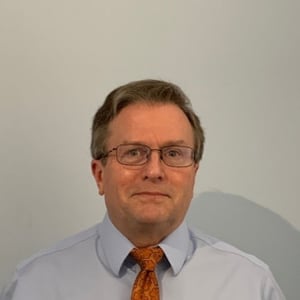
Partner, Winston & Strawn LLP
Gordon Coffee is a litigation partner in the firm’s Washington, D.C. office. Coffee’s success in litigating multimillion-dollar claims by and against energy companies has led to his being repeatedly recommended for energy litigation by Legal 500. Among the energy companies for whom he has served as lead trial counsel are Midland Cogeneration Venture, Allegheny Energy Supply, and USGen New England. Coffee also has effectively represented several other businesses in complex commercial litigation at the trial and appellate levels.
Besides commercial litigation, Coffee has defended energy and health-care companies in battles with federal agencies in federal court and administrative proceedings. He recently won summary judgment for a company seeking a multimillion-dollar refund from a federal agency and assisted hydroelectric generators in challenging onerous license conditions imposed by another federal agency. In the health-care arena, he convinced the D.C. Circuit to overturn regulations issued by the Centers for Medicare and Medicaid Services that prohibited physicians from charging technical fees for surgical procedures on a per-use basis, and he secured an injunction barring the Department of Health and Human Services from enforcing Stark Act regulations against lithotripsy providers.
Moreover, Coffee has successfully represented several energy companies in federal agency investigations. Notably, he has secured nearly a dozen favorable resolutions of Federal Energy Regulatory Commission (FERC) and North American Electric Reliability Corporation (NERC) investigations and audits. In several cases, he persuaded FERC or NERC to take no adverse action against the company or to dismiss proposed notices of violations. In other instances, his efforts resulted in substantial reductions in penalties proposed by the agency and helped his clients avoid expensive mitigation and compliance plans.
Director, Electricity Law Initiative, Harvard Law School
Ari Peskoe is the Director of the Electricity Law Initiative at the Harvard Law School Environmental and Energy Law Program. He has written extensively about electricity regulation, on issues ranging from Constitutional challenges to states’ energy laws to federal regulation of distributed energy resources. Prior to the Environmental and Energy Law Program, Ari was an associate at a law firm in Washington, D.C. where he litigated before the Federal Energy Regulatory Commission about the Western Energy Crisis. Before that, Ari was a Peace Corps Volunteer in Ghana and spent two years trying to bring the 2012 Olympics to New York. He received his J.D. from Harvard Law School and graduated from the University of Pennsylvania with degrees in electrical engineering and business.

What Can State and Federal Regulators Do to Control the Cost and Maintain the Reliability of Our Electric Service?
Mark Curtis Christie, John Kennerly Davis, Bernard L. McNamee
After two decades of flat demand, US electricity demand is experiencing rapid growth. Demand is...
Panel 1: The Grid Under Pressure: Can Federalism Save Electricity Generation?
CLE credit for this event is available at On-Demand CLE. Aging infrastructure and emerging AI...
Panel 1: The Grid Under Pressure: Can Federalism Save Electricity Generation?
Energy in the AI Age
Kissimmee, FLEnergy Emergency: Executive Power and the Future of U.S. Energy
Varu Chilakamarri, Robert L. Levy, Mario Loyola, Corinne Virginia Snow, Jim Wedeking
Energy Emergency: Executive Power and the Future of U.S. Energy Wednesday, May 21 2025 at...
Luncheon Panel: Climate Change and the Free Market
James W. Coleman, Travis Kavulla, Joshua C. Macey, Ari Peskoe
The energy sector is undergoing a period of profound change. In the 1990s and 2000s...
A Global Energy Crisis and the FERC: A Discussion of Challenges and Opportunities [Panel Discussion]
Michael Buschbacher, Jennifer Chen, Jim Wedeking, Marc L. Spitzer
In the last few years, the Federal Energy Regulatory Commission (FERC) has emerged from relative...
A Global Energy Crisis and the Federal Energy Regulatory Commission: A Discussion of Challenges and Opportunities
Michael Buschbacher, Jennifer Chen, James P. Danly, Marc L. Spitzer, Jim Wedeking
In the last few years, the Federal Energy Regulatory Commission (FERC) has emerged from relative...
What Happened with the Texas Energy Grid
Raymond L. Gifford, Barry T. Smitherman
When the Texas electric grid failed over Valentine’s Day weekend in February 2021, the recriminations...
Retooling Energy Regulations: Who Decides?
Anthony T. Clark, Adam F. Griffin, Travis Kavulla
On July 16, 2020, the Federal Energy Regulatory Commission (FERC) revised its regulations governing qualifying...
Recent Strains on Cooperative Federalism in the Energy Sector
Gordon Alan Coffee, Ari Peskoe
In statutes such as the Federal Power Act and Clean Water Act, Congress divided responsibility...