

President, Harned Strategies LLC
Karen Harned is President at Harned Strategies LLC. Previously, she served as Executive Director of the National Federation of Independent Business Small Business Legal Center, a post she held from 2002-2022. Prior to joining the Legal Center, Ms. Harned was an attorney at a Washington, D.C. law firm specializing in food and drug law, where she represented several small and large businesses and their respective trade associations before Congress and federal agencies. She also served as Assistant Press Secretary to U.S. Senator Don Nickles of Oklahoma from August of 1989 to March of 1993. Ms. Harned received her B.A. from the University of Oklahoma in 1989 and her J.D. from The George Washington University National Law Center in 1995. She is admitted to practice in the District of Columbia.
As Executive Director of the NFIB Small Business Legal Center, Ms. Harned commented regularly on small business cases before federal and state courts, as well as the U.S. Supreme Court. She has appeared on Fox News, Fox Business, NBC Nightly News, CNN, CNBC and MSNBC, as well as National Public Radio, CBS Radio, and radio outlets across the country. Her opinion editorials and articles regarding healthcare, lawsuit abuse, regulation, and other issues important to small business have been published in newspapers and other publications nationwide.
Ms. Harned has testified before Congress on the small business impact of regulation and the civil justice system. Additionally, she has conducted numerous webinars and legal compliance seminars for small business owners across the country on issues relating to employment law, including unionization and immigration.
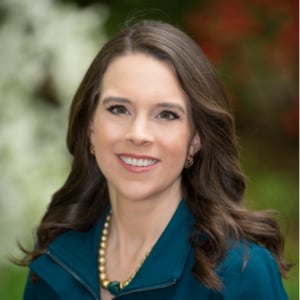
President, JCN
Carrie Campbell Severino is the president of the JCN, and co-author with Mollie Hemingway of the bestselling book Justice on Trial: The Kavanaugh Confirmation and the Future of the Court. As a go-to expert on the confirmation process, Mrs. Severino has been extensively quoted in the media. She regularly appears on television, including FOX, CNN, MSNBC, C-SPAN, and ABC’s This Week.
Severino writes and speaks on a wide range of judicial issues, including the constitutional limits on government, the federal nomination process, and state judicial selection. She has testified before Congress on constitutional questions and briefed Senators on judicial nominations, and regularly files briefs in high-profile Supreme Court cases. She was a law clerk to Supreme Court Justice Clarence Thomas and to Judge David B. Sentelle of the U.S. Court of Appeals for the D.C. Circuit, and is a graduate of Harvard Law School (J.D.), Duke University (B.A., Biology), and Michigan State University (M.A., Linguistics).

Professor of Criminology and Statistics, University of Pennsylvania
Richard A. Berk is a professor in the Departments of Statistics and Criminology at the University of Pennsylvania. He has a B.A. degree in psychology from Yale University and a Ph.D. in sociology from the Johns Hopkins University. He was previously a Distinguished Professor of Statistics at UCLA. He has also been on the faculty of the University of California Santa Barbara and Northwestern University. Professor Berk is an elected fellow of the American Statistical Association, the American Association for the Advancement of Science, and the Academy of Experimental Criminology. He has served on the National Research Council Committee on Applied and Theoretical Statistics and has been on the Board of Directors of the Social Science Research Council. He is frequently employed as an expert witness in civil litigation and two cases on which he worked were ultimately decided by the U.S. Supreme Court. Professor Berk’s interests include a wide range of policy-related matters: detecting violations of environmental regulations, properly allocating prison inmates to different security levels, forecasting which individuals on parole are likely to commit violent crimes, monitoring systems for consumer protection, and the role of race in capital cases. His work in applied statistics includes machine learning, causal inference, methods for evaluating the effectiveness of social programs, and the use of statistics in litigation.

Judge, United States Court of Appeals, Fifth Circuit
Judge Edith Clement sits on the United States Court of Appeals for the Fifth Circuit. Judge Clement worked in a private practice as a maritime attorney in New Orleans, Louisiana, before being appointed in 1991 to the United States District Court for the Eastern District of Louisiana by President George H. W. Bush. In 2001, she was appointed by President George W. Bush to the United States Court of Appeals for the Fifth Circuit. Judge Clement is a member of the Maritime Law Association of the United States, the Federal Bar Association, the American Law Institute, the Federalist Society, the Tulane Law Schools Inn of Court, and the Committee on the Administrative Office of the Judicial Conference of the United States. She is a graduate of the University of Alabama and received her JD from Tulane Law School.

Partner, Krieg DeVault LLP
Deborah Daniels, former U.S. Attorney and U.S. Assistant Attorney General, has lengthy experience in criminal and civil investigations and public safety. Her work has included responsibilities at the U.S. Department of Justice directly related to the nation’s response to the September 11th attack on the U.S., data and communications interoperability, and the nation's ability to detect, prevent and respond to future terrorist acts. Ms. Daniels provides counsel to the firm’s public and private sector clients in matters affecting public safety, homeland security, disaster preparedness, leveraging of federal and state resources, federal and state regulatory compliance and internal investigations. She assists the firm’s clients in interacting with agencies of the federal government, including both the Executive Branch and the U.S. Congress, and advises clients ranging from government agencies to health care providers to other private sector entities on compliance and public policy matters.
Assistant District Attorney, Philadelphia District Attorney
Sarah Hart has worked for over three decades in the criminal justice field at the federal, state and local levels.
From 1979-95, she served as a prosecutor in Philadelphia where (for 9 years) she represented the District Attorney in federal prison litigation involving mass releases of pretrial detainees. During this time, she provided substantial assistance to the U.S. Congress in drafting the Federal Prison Litigation Reform Act (PLRA).
From 1995-2001, Mrs. Hart served as the Chief Counsel for the Pennsylvania Department of Corrections where she successfully defended the constitutionality of the PLRA in the federal courts.
From 2001-2005, following unanimous Senate confirmation, she served as the Director of the National Institute of Justice (the research and evaluation arm of the U.S. Department of Justice) where, among other things, she developed the national $1 billion DNA initiative.
After an appointment as a Visiting Professor teaching graduate school courses at Rutgers University, she returned to Philadelphia to represent Philadelphia District Attorney in class action litigation concerning the Philadelphia Prison System. During this time she represented the Pennsylvania District Attorney’s Association in crafting comprehensive, bipartisan prison reform legislation in Pennsylvania that enacted sweeping changes in sentencing and parole practices. (Acts 81-84 of 2008).
Mrs. Hart previously served as Vice Chair of the Legal Affairs Committee of the American Corrections Association, a member of the Executive Committee of the Criminal Law Practice Group of the Federalist Society, a member of the Board of Directors of the Crime Victims Law Institute, and as a member of the Pennsylvania Supreme Court’s Appellate Procedural Rules Committee. She has also provided extensive training on the PLRA and corrections issues to the National Institute of Corrections, the National Association of Attorneys General, and the Association of State Correctional Administrators.
Mrs. Hart has published articles relating to corrections, forensics, and domestic violence. A recent publication focuses on the benefits and costs of prisoner class actions.
S. Hart, Evaluating Institutional Prisoners’ Rights Litigation: Costs and Benefits and Federalism Considerations, 11 U. Penn. J. Const. L. 73 (2008).
She is a graduate of Rutgers Law School and the University of Delaware.
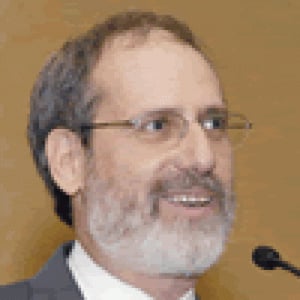
Executive Director, Prison Law Office
Donald Specter is the Executive Director of the Prison Law Office at San Quentin, California. The Prison Law Office is a nonprofit law firm based in Berkeley, California that provides free legal services to California incarcerated offenders concerning their conditions of confinement. Mr. Specter has been lead counsel in numerous successful institutional reform cases challenging various conditions of confinement in California=s adult and juvenile prison systems. He has been chair of the California State Bar=s Commission on Corrections, was named Appellate Lawyer of the Week by the National Law Journal for his work in Brown v. Plata, 531 U.S. ___ (2011), has received the California Lawyers of the Year Award in 2006 and 2009 and was selected three times as one of the top 100 lawyers in California. Mr. Specter earned his B.A. in Economics from New College in Sarasota, Florida in 1974 and his J.D. from the University of San Francisco School of Law in 1978.
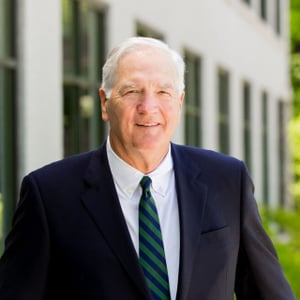
Former Senator, State of Alabama
Luther J. Strange, III is a former Republican member of the U.S. Senate from the state of Alabama. Strange was first appointed to the Senate position by Gov. Robert Bentley on February 9, 2017. He replaced Jeff Sessions, who was confirmed as United States Attorney General.
Strange is the former Republican Attorney General of Alabama. He was first elected to the statewide position in 2010 and assumed office on January 17, 2011. Strange's first four-year term ended on January 19, 2015, and he won re-election to a second term on November 4, 2014.
Prior to his election as Attorney General, Luther Strange practiced law in Birmingham, Alabama. In 2010, U.S. News-Best Lawyers "Best Law Firms" gave his firm a first-tier ranking, and the firm was named as one of the Top Ten Law Firms that Understand Economic Development by Southern Business & Development magazine.
Before establishing his own law firm, Strange was a partner with Bradley Arant Boult Cummings LLP. During his time in private practice, he was recognized in Best Lawyers in America® , named Best of the Bar by the Birmingham Business Journal, and called one of the "Best Lawyers" in Alabama by Birmingham magazine.
His tenure in office was marked by a strong emphasis on fighting public corruption, including the conviction and removal from office of the Alabama House Speaker in June 2016. He was also a leader in opposing costly overregulation and the expansion of the federal government at the expense of the states.
Luther Strange served as the court-appointed Coordinating Counsel for the Gulf Coast States in the historic Deepwater Horizon Oil spill litigation. Strange was actively involved in trying the case, which led to a landmark settlement agreement to compensate Alabama for both economic and environmental damages as a result of that disaster.
Among many civic commitments, he has served on the Advisory Board of the United States Merchant Marine Academy and as a Trustee of Talladega College, Alabama’s oldest historically black college.
An Eagle Scout since he was 13 and a recipient of the Distinguished Eagle Scout Award from the Boy Scouts of America in 2011, Strange is passionate about encouraging young people in Alabama to become involved in public service.
Strange received both his undergraduate and law degrees from Tulane University. He was a scholarship basketball player while earning his undergraduate degree at Tulane. In June of 2016, he was inducted into the Tulane Law School Hall of Fame.

Partner, Clement & Murphy, PLLC
Paul served as the 43rd Solicitor General of the United States from June 2005 until June 2008. Before his confirmation as Solicitor General, he served as Acting Solicitor General for nearly a year and as Principal Deputy Solicitor General for over three years.
Paul has argued over 100 cases before the United States Supreme Court, including McConnell v. FEC, Tennessee v. Lane, United States v. Booker, MGM v. Grokster, Hobby Lobby v. Burwell, Epic Systems Corp. v. Lewis, Rucho v. Common Cause, Facebook v. Duguid, and TransUnion v. Ramirez. Paul has argued more Supreme Court cases since 2000 than any lawyer in or out of government. He has also argued many important cases in the lower courts, including Walker v. Cheney, United States v. Moussaoui and NFL v. Brady.
Paul’s practice focuses on appellate matters, constitutional litigation and strategic counseling. He represents a broad array of clients in the Supreme Court and in federal and state appellate courts. Last year, for example, he successfully argued Supreme Court cases involving significant issues of energy regulation, statutory interpretation, state sovereign immunity and Article III standing, and successfully argued a trademark appeal in the Fourth Circuit, and a constitutional appeal before the en banc Eleventh Circuit.
Paul focuses on high-stakes appeals. In recent years, he successfully defended a $1.2 billion jury verdict for clients in a Tenth Circuit case, while securing the reversal of an over $2 billion jury verdict for another client in the Seventh Circuit and the approval of a nearly $1 billion dollar class action settlement in the Third Circuit. He has initiated major administrative law challenges and constitutional litigation against the federal government, such as the successful challenge to the HHS drug-pricing rule and threatened challenges that led to the withdrawal of the Treasury Department’s proposed cryptocurrency regulations. He also counsels clients on a variety of strategic legal questions, whether arising from pending legislation, government inquiries or ongoing litigation.
Paul has undertaken substantial pro bono engagements in the Supreme Court, such as twice successfully representing the defendant in Bond v. United States and successfully representing the Omaha Tribe in Nebraska v. Parker, the guardian ad litem in Adoptive Couple v. Baby Girl, the defendant in Sekhar v. United States, a high school football coach in Kennedy v. Bremerton, and the Little Sisters of the Poor. Paul’s pro bono representation also precipitated the federal government’s confession of error in United States v. Rojas.
Following law school, Paul clerked for Judge Laurence H. Silberman of the U.S. Court of Appeals for the D.C. Circuit and for Associate Justice Antonin Scalia of the U.S. Supreme Court. After his clerkships, he went on to serve as Chief Counsel of the U.S. Senate Subcommittee on the Constitution, Federalism and Property Rights.
Paul is a Distinguished Lecturer in Law at the Georgetown University Law Center, where he has taught in various capacities since 1998. He also serves as a Senior Fellow of the Law Center’s Supreme Court Institute. He is the Justice Joseph Story Distinguished Practitioner in Residence at the Gray Center at Scalia Law School.
Professor of Criminology and Statistics, University of Pennsylvania
Richard A. Berk is a professor in the Departments of Statistics and Criminology at the University of Pennsylvania. He has a B.A. degree in psychology from Yale University and a Ph.D. in sociology from the Johns Hopkins University. He was previously a Distinguished Professor of Statistics at UCLA. He has also been on the faculty of the University of California Santa Barbara and Northwestern University. Professor Berk is an elected fellow of the American Statistical Association, the American Association for the Advancement of Science, and the Academy of Experimental Criminology. He has served on the National Research Council Committee on Applied and Theoretical Statistics and has been on the Board of Directors of the Social Science Research Council. He is frequently employed as an expert witness in civil litigation and two cases on which he worked were ultimately decided by the U.S. Supreme Court. Professor Berk’s interests include a wide range of policy-related matters: detecting violations of environmental regulations, properly allocating prison inmates to different security levels, forecasting which individuals on parole are likely to commit violent crimes, monitoring systems for consumer protection, and the role of race in capital cases. His work in applied statistics includes machine learning, causal inference, methods for evaluating the effectiveness of social programs, and the use of statistics in litigation.
Judge, United States Court of Appeals, Fifth Circuit
Judge Edith Clement sits on the United States Court of Appeals for the Fifth Circuit. Judge Clement worked in a private practice as a maritime attorney in New Orleans, Louisiana, before being appointed in 1991 to the United States District Court for the Eastern District of Louisiana by President George H. W. Bush. In 2001, she was appointed by President George W. Bush to the United States Court of Appeals for the Fifth Circuit. Judge Clement is a member of the Maritime Law Association of the United States, the Federal Bar Association, the American Law Institute, the Federalist Society, the Tulane Law Schools Inn of Court, and the Committee on the Administrative Office of the Judicial Conference of the United States. She is a graduate of the University of Alabama and received her JD from Tulane Law School.
Partner, Krieg DeVault LLP
Deborah Daniels, former U.S. Attorney and U.S. Assistant Attorney General, has lengthy experience in criminal and civil investigations and public safety. Her work has included responsibilities at the U.S. Department of Justice directly related to the nation’s response to the September 11th attack on the U.S., data and communications interoperability, and the nation's ability to detect, prevent and respond to future terrorist acts. Ms. Daniels provides counsel to the firm’s public and private sector clients in matters affecting public safety, homeland security, disaster preparedness, leveraging of federal and state resources, federal and state regulatory compliance and internal investigations. She assists the firm’s clients in interacting with agencies of the federal government, including both the Executive Branch and the U.S. Congress, and advises clients ranging from government agencies to health care providers to other private sector entities on compliance and public policy matters.
Assistant District Attorney, Philadelphia District Attorney
Sarah Hart has worked for over three decades in the criminal justice field at the federal, state and local levels.
From 1979-95, she served as a prosecutor in Philadelphia where (for 9 years) she represented the District Attorney in federal prison litigation involving mass releases of pretrial detainees. During this time, she provided substantial assistance to the U.S. Congress in drafting the Federal Prison Litigation Reform Act (PLRA).
From 1995-2001, Mrs. Hart served as the Chief Counsel for the Pennsylvania Department of Corrections where she successfully defended the constitutionality of the PLRA in the federal courts.
From 2001-2005, following unanimous Senate confirmation, she served as the Director of the National Institute of Justice (the research and evaluation arm of the U.S. Department of Justice) where, among other things, she developed the national $1 billion DNA initiative.
After an appointment as a Visiting Professor teaching graduate school courses at Rutgers University, she returned to Philadelphia to represent Philadelphia District Attorney in class action litigation concerning the Philadelphia Prison System. During this time she represented the Pennsylvania District Attorney’s Association in crafting comprehensive, bipartisan prison reform legislation in Pennsylvania that enacted sweeping changes in sentencing and parole practices. (Acts 81-84 of 2008).
Mrs. Hart previously served as Vice Chair of the Legal Affairs Committee of the American Corrections Association, a member of the Executive Committee of the Criminal Law Practice Group of the Federalist Society, a member of the Board of Directors of the Crime Victims Law Institute, and as a member of the Pennsylvania Supreme Court’s Appellate Procedural Rules Committee. She has also provided extensive training on the PLRA and corrections issues to the National Institute of Corrections, the National Association of Attorneys General, and the Association of State Correctional Administrators.
Mrs. Hart has published articles relating to corrections, forensics, and domestic violence. A recent publication focuses on the benefits and costs of prisoner class actions.
S. Hart, Evaluating Institutional Prisoners’ Rights Litigation: Costs and Benefits and Federalism Considerations, 11 U. Penn. J. Const. L. 73 (2008).
She is a graduate of Rutgers Law School and the University of Delaware.
Executive Director, Prison Law Office
Donald Specter is the Executive Director of the Prison Law Office at San Quentin, California. The Prison Law Office is a nonprofit law firm based in Berkeley, California that provides free legal services to California incarcerated offenders concerning their conditions of confinement. Mr. Specter has been lead counsel in numerous successful institutional reform cases challenging various conditions of confinement in California=s adult and juvenile prison systems. He has been chair of the California State Bar=s Commission on Corrections, was named Appellate Lawyer of the Week by the National Law Journal for his work in Brown v. Plata, 531 U.S. ___ (2011), has received the California Lawyers of the Year Award in 2006 and 2009 and was selected three times as one of the top 100 lawyers in California. Mr. Specter earned his B.A. in Economics from New College in Sarasota, Florida in 1974 and his J.D. from the University of San Francisco School of Law in 1978.
Former Senator, State of Alabama
Luther J. Strange, III is a former Republican member of the U.S. Senate from the state of Alabama. Strange was first appointed to the Senate position by Gov. Robert Bentley on February 9, 2017. He replaced Jeff Sessions, who was confirmed as United States Attorney General.
Strange is the former Republican Attorney General of Alabama. He was first elected to the statewide position in 2010 and assumed office on January 17, 2011. Strange's first four-year term ended on January 19, 2015, and he won re-election to a second term on November 4, 2014.
Prior to his election as Attorney General, Luther Strange practiced law in Birmingham, Alabama. In 2010, U.S. News-Best Lawyers "Best Law Firms" gave his firm a first-tier ranking, and the firm was named as one of the Top Ten Law Firms that Understand Economic Development by Southern Business & Development magazine.
Before establishing his own law firm, Strange was a partner with Bradley Arant Boult Cummings LLP. During his time in private practice, he was recognized in Best Lawyers in America® , named Best of the Bar by the Birmingham Business Journal, and called one of the "Best Lawyers" in Alabama by Birmingham magazine.
His tenure in office was marked by a strong emphasis on fighting public corruption, including the conviction and removal from office of the Alabama House Speaker in June 2016. He was also a leader in opposing costly overregulation and the expansion of the federal government at the expense of the states.
Luther Strange served as the court-appointed Coordinating Counsel for the Gulf Coast States in the historic Deepwater Horizon Oil spill litigation. Strange was actively involved in trying the case, which led to a landmark settlement agreement to compensate Alabama for both economic and environmental damages as a result of that disaster.
Among many civic commitments, he has served on the Advisory Board of the United States Merchant Marine Academy and as a Trustee of Talladega College, Alabama’s oldest historically black college.
An Eagle Scout since he was 13 and a recipient of the Distinguished Eagle Scout Award from the Boy Scouts of America in 2011, Strange is passionate about encouraging young people in Alabama to become involved in public service.
Strange received both his undergraduate and law degrees from Tulane University. He was a scholarship basketball player while earning his undergraduate degree at Tulane. In June of 2016, he was inducted into the Tulane Law School Hall of Fame.
Professor of Criminology and Statistics, University of Pennsylvania
Richard A. Berk is a professor in the Departments of Statistics and Criminology at the University of Pennsylvania. He has a B.A. degree in psychology from Yale University and a Ph.D. in sociology from the Johns Hopkins University. He was previously a Distinguished Professor of Statistics at UCLA. He has also been on the faculty of the University of California Santa Barbara and Northwestern University. Professor Berk is an elected fellow of the American Statistical Association, the American Association for the Advancement of Science, and the Academy of Experimental Criminology. He has served on the National Research Council Committee on Applied and Theoretical Statistics and has been on the Board of Directors of the Social Science Research Council. He is frequently employed as an expert witness in civil litigation and two cases on which he worked were ultimately decided by the U.S. Supreme Court. Professor Berk’s interests include a wide range of policy-related matters: detecting violations of environmental regulations, properly allocating prison inmates to different security levels, forecasting which individuals on parole are likely to commit violent crimes, monitoring systems for consumer protection, and the role of race in capital cases. His work in applied statistics includes machine learning, causal inference, methods for evaluating the effectiveness of social programs, and the use of statistics in litigation.
Judge, United States Court of Appeals, Fifth Circuit
Judge Edith Clement sits on the United States Court of Appeals for the Fifth Circuit. Judge Clement worked in a private practice as a maritime attorney in New Orleans, Louisiana, before being appointed in 1991 to the United States District Court for the Eastern District of Louisiana by President George H. W. Bush. In 2001, she was appointed by President George W. Bush to the United States Court of Appeals for the Fifth Circuit. Judge Clement is a member of the Maritime Law Association of the United States, the Federal Bar Association, the American Law Institute, the Federalist Society, the Tulane Law Schools Inn of Court, and the Committee on the Administrative Office of the Judicial Conference of the United States. She is a graduate of the University of Alabama and received her JD from Tulane Law School.
Partner, Krieg DeVault LLP
Deborah Daniels, former U.S. Attorney and U.S. Assistant Attorney General, has lengthy experience in criminal and civil investigations and public safety. Her work has included responsibilities at the U.S. Department of Justice directly related to the nation’s response to the September 11th attack on the U.S., data and communications interoperability, and the nation's ability to detect, prevent and respond to future terrorist acts. Ms. Daniels provides counsel to the firm’s public and private sector clients in matters affecting public safety, homeland security, disaster preparedness, leveraging of federal and state resources, federal and state regulatory compliance and internal investigations. She assists the firm’s clients in interacting with agencies of the federal government, including both the Executive Branch and the U.S. Congress, and advises clients ranging from government agencies to health care providers to other private sector entities on compliance and public policy matters.
Assistant District Attorney, Philadelphia District Attorney
Sarah Hart has worked for over three decades in the criminal justice field at the federal, state and local levels.
From 1979-95, she served as a prosecutor in Philadelphia where (for 9 years) she represented the District Attorney in federal prison litigation involving mass releases of pretrial detainees. During this time, she provided substantial assistance to the U.S. Congress in drafting the Federal Prison Litigation Reform Act (PLRA).
From 1995-2001, Mrs. Hart served as the Chief Counsel for the Pennsylvania Department of Corrections where she successfully defended the constitutionality of the PLRA in the federal courts.
From 2001-2005, following unanimous Senate confirmation, she served as the Director of the National Institute of Justice (the research and evaluation arm of the U.S. Department of Justice) where, among other things, she developed the national $1 billion DNA initiative.
After an appointment as a Visiting Professor teaching graduate school courses at Rutgers University, she returned to Philadelphia to represent Philadelphia District Attorney in class action litigation concerning the Philadelphia Prison System. During this time she represented the Pennsylvania District Attorney’s Association in crafting comprehensive, bipartisan prison reform legislation in Pennsylvania that enacted sweeping changes in sentencing and parole practices. (Acts 81-84 of 2008).
Mrs. Hart previously served as Vice Chair of the Legal Affairs Committee of the American Corrections Association, a member of the Executive Committee of the Criminal Law Practice Group of the Federalist Society, a member of the Board of Directors of the Crime Victims Law Institute, and as a member of the Pennsylvania Supreme Court’s Appellate Procedural Rules Committee. She has also provided extensive training on the PLRA and corrections issues to the National Institute of Corrections, the National Association of Attorneys General, and the Association of State Correctional Administrators.
Mrs. Hart has published articles relating to corrections, forensics, and domestic violence. A recent publication focuses on the benefits and costs of prisoner class actions.
S. Hart, Evaluating Institutional Prisoners’ Rights Litigation: Costs and Benefits and Federalism Considerations, 11 U. Penn. J. Const. L. 73 (2008).
She is a graduate of Rutgers Law School and the University of Delaware.
Executive Director, Prison Law Office
Donald Specter is the Executive Director of the Prison Law Office at San Quentin, California. The Prison Law Office is a nonprofit law firm based in Berkeley, California that provides free legal services to California incarcerated offenders concerning their conditions of confinement. Mr. Specter has been lead counsel in numerous successful institutional reform cases challenging various conditions of confinement in California=s adult and juvenile prison systems. He has been chair of the California State Bar=s Commission on Corrections, was named Appellate Lawyer of the Week by the National Law Journal for his work in Brown v. Plata, 531 U.S. ___ (2011), has received the California Lawyers of the Year Award in 2006 and 2009 and was selected three times as one of the top 100 lawyers in California. Mr. Specter earned his B.A. in Economics from New College in Sarasota, Florida in 1974 and his J.D. from the University of San Francisco School of Law in 1978.
Former Senator, State of Alabama
Luther J. Strange, III is a former Republican member of the U.S. Senate from the state of Alabama. Strange was first appointed to the Senate position by Gov. Robert Bentley on February 9, 2017. He replaced Jeff Sessions, who was confirmed as United States Attorney General.
Strange is the former Republican Attorney General of Alabama. He was first elected to the statewide position in 2010 and assumed office on January 17, 2011. Strange's first four-year term ended on January 19, 2015, and he won re-election to a second term on November 4, 2014.
Prior to his election as Attorney General, Luther Strange practiced law in Birmingham, Alabama. In 2010, U.S. News-Best Lawyers "Best Law Firms" gave his firm a first-tier ranking, and the firm was named as one of the Top Ten Law Firms that Understand Economic Development by Southern Business & Development magazine.
Before establishing his own law firm, Strange was a partner with Bradley Arant Boult Cummings LLP. During his time in private practice, he was recognized in Best Lawyers in America® , named Best of the Bar by the Birmingham Business Journal, and called one of the "Best Lawyers" in Alabama by Birmingham magazine.
His tenure in office was marked by a strong emphasis on fighting public corruption, including the conviction and removal from office of the Alabama House Speaker in June 2016. He was also a leader in opposing costly overregulation and the expansion of the federal government at the expense of the states.
Luther Strange served as the court-appointed Coordinating Counsel for the Gulf Coast States in the historic Deepwater Horizon Oil spill litigation. Strange was actively involved in trying the case, which led to a landmark settlement agreement to compensate Alabama for both economic and environmental damages as a result of that disaster.
Among many civic commitments, he has served on the Advisory Board of the United States Merchant Marine Academy and as a Trustee of Talladega College, Alabama’s oldest historically black college.
An Eagle Scout since he was 13 and a recipient of the Distinguished Eagle Scout Award from the Boy Scouts of America in 2011, Strange is passionate about encouraging young people in Alabama to become involved in public service.
Strange received both his undergraduate and law degrees from Tulane University. He was a scholarship basketball player while earning his undergraduate degree at Tulane. In June of 2016, he was inducted into the Tulane Law School Hall of Fame.
Assistant District Attorney, Philadelphia District Attorney
Sarah Hart has worked for over three decades in the criminal justice field at the federal, state and local levels.
From 1979-95, she served as a prosecutor in Philadelphia where (for 9 years) she represented the District Attorney in federal prison litigation involving mass releases of pretrial detainees. During this time, she provided substantial assistance to the U.S. Congress in drafting the Federal Prison Litigation Reform Act (PLRA).
From 1995-2001, Mrs. Hart served as the Chief Counsel for the Pennsylvania Department of Corrections where she successfully defended the constitutionality of the PLRA in the federal courts.
From 2001-2005, following unanimous Senate confirmation, she served as the Director of the National Institute of Justice (the research and evaluation arm of the U.S. Department of Justice) where, among other things, she developed the national $1 billion DNA initiative.
After an appointment as a Visiting Professor teaching graduate school courses at Rutgers University, she returned to Philadelphia to represent Philadelphia District Attorney in class action litigation concerning the Philadelphia Prison System. During this time she represented the Pennsylvania District Attorney’s Association in crafting comprehensive, bipartisan prison reform legislation in Pennsylvania that enacted sweeping changes in sentencing and parole practices. (Acts 81-84 of 2008).
Mrs. Hart previously served as Vice Chair of the Legal Affairs Committee of the American Corrections Association, a member of the Executive Committee of the Criminal Law Practice Group of the Federalist Society, a member of the Board of Directors of the Crime Victims Law Institute, and as a member of the Pennsylvania Supreme Court’s Appellate Procedural Rules Committee. She has also provided extensive training on the PLRA and corrections issues to the National Institute of Corrections, the National Association of Attorneys General, and the Association of State Correctional Administrators.
Mrs. Hart has published articles relating to corrections, forensics, and domestic violence. A recent publication focuses on the benefits and costs of prisoner class actions.
S. Hart, Evaluating Institutional Prisoners’ Rights Litigation: Costs and Benefits and Federalism Considerations, 11 U. Penn. J. Const. L. 73 (2008).
She is a graduate of Rutgers Law School and the University of Delaware.
Assistant District Attorney, Philadelphia District Attorney
Sarah Hart has worked for over three decades in the criminal justice field at the federal, state and local levels.
From 1979-95, she served as a prosecutor in Philadelphia where (for 9 years) she represented the District Attorney in federal prison litigation involving mass releases of pretrial detainees. During this time, she provided substantial assistance to the U.S. Congress in drafting the Federal Prison Litigation Reform Act (PLRA).
From 1995-2001, Mrs. Hart served as the Chief Counsel for the Pennsylvania Department of Corrections where she successfully defended the constitutionality of the PLRA in the federal courts.
From 2001-2005, following unanimous Senate confirmation, she served as the Director of the National Institute of Justice (the research and evaluation arm of the U.S. Department of Justice) where, among other things, she developed the national $1 billion DNA initiative.
After an appointment as a Visiting Professor teaching graduate school courses at Rutgers University, she returned to Philadelphia to represent Philadelphia District Attorney in class action litigation concerning the Philadelphia Prison System. During this time she represented the Pennsylvania District Attorney’s Association in crafting comprehensive, bipartisan prison reform legislation in Pennsylvania that enacted sweeping changes in sentencing and parole practices. (Acts 81-84 of 2008).
Mrs. Hart previously served as Vice Chair of the Legal Affairs Committee of the American Corrections Association, a member of the Executive Committee of the Criminal Law Practice Group of the Federalist Society, a member of the Board of Directors of the Crime Victims Law Institute, and as a member of the Pennsylvania Supreme Court’s Appellate Procedural Rules Committee. She has also provided extensive training on the PLRA and corrections issues to the National Institute of Corrections, the National Association of Attorneys General, and the Association of State Correctional Administrators.
Mrs. Hart has published articles relating to corrections, forensics, and domestic violence. A recent publication focuses on the benefits and costs of prisoner class actions.
S. Hart, Evaluating Institutional Prisoners’ Rights Litigation: Costs and Benefits and Federalism Considerations, 11 U. Penn. J. Const. L. 73 (2008).
She is a graduate of Rutgers Law School and the University of Delaware.
Assistant District Attorney, Philadelphia District Attorney
Sarah Hart has worked for over three decades in the criminal justice field at the federal, state and local levels.
From 1979-95, she served as a prosecutor in Philadelphia where (for 9 years) she represented the District Attorney in federal prison litigation involving mass releases of pretrial detainees. During this time, she provided substantial assistance to the U.S. Congress in drafting the Federal Prison Litigation Reform Act (PLRA).
From 1995-2001, Mrs. Hart served as the Chief Counsel for the Pennsylvania Department of Corrections where she successfully defended the constitutionality of the PLRA in the federal courts.
From 2001-2005, following unanimous Senate confirmation, she served as the Director of the National Institute of Justice (the research and evaluation arm of the U.S. Department of Justice) where, among other things, she developed the national $1 billion DNA initiative.
After an appointment as a Visiting Professor teaching graduate school courses at Rutgers University, she returned to Philadelphia to represent Philadelphia District Attorney in class action litigation concerning the Philadelphia Prison System. During this time she represented the Pennsylvania District Attorney’s Association in crafting comprehensive, bipartisan prison reform legislation in Pennsylvania that enacted sweeping changes in sentencing and parole practices. (Acts 81-84 of 2008).
Mrs. Hart previously served as Vice Chair of the Legal Affairs Committee of the American Corrections Association, a member of the Executive Committee of the Criminal Law Practice Group of the Federalist Society, a member of the Board of Directors of the Crime Victims Law Institute, and as a member of the Pennsylvania Supreme Court’s Appellate Procedural Rules Committee. She has also provided extensive training on the PLRA and corrections issues to the National Institute of Corrections, the National Association of Attorneys General, and the Association of State Correctional Administrators.
Mrs. Hart has published articles relating to corrections, forensics, and domestic violence. A recent publication focuses on the benefits and costs of prisoner class actions.
S. Hart, Evaluating Institutional Prisoners’ Rights Litigation: Costs and Benefits and Federalism Considerations, 11 U. Penn. J. Const. L. 73 (2008).
She is a graduate of Rutgers Law School and the University of Delaware.

“Obama-Care” What Will the Supreme Court Hear?
Philadelphia, PennsylvaniaHealth Reform: Should Any Supreme Court Justices Recuse Themselves?
Philadelphia, PennsylvaniaCriminal Law: Prisoner Releases and the Role of the Courts
Richard A. Berk, Edith Brown Clement, Deborah J. Daniels, Sarah V. Hart, Donald Specter, Luther Johnson Strange
The Criminal Law & Procedure Practice Group hosted this panel on "Prisoner Releases and the...
Criminal Law: Prisoner Releases and the Role of the Courts
Richard A. Berk, Edith Brown Clement, Deborah J. Daniels, Sarah V. Hart, Donald Specter, Luther Johnson Strange
The Criminal Law & Procedure Practice Group hosted this panel on "Prisoner Releases and the...
Criminal Law: Prisoner Releases and the Role of the Courts
2011 National Lawyers Convention
Washington, DCFlorence v. Board of Chosen Freeholders - Post-Argument SCOTUScast
Sarah V. Hart
On October 12, 2011, the Supreme Court heard oral argument in Florence v. Board of...
8th Annual Supreme Court Roundup with Hon. Paul Clement
Philadelphia, PennsylvaniaBrown v. Plata - Post-Decision SCOTUScast
Sarah V. Hart
On May 23, 2011, the Supreme Court announced its decision in Brown v. Plata (formerly...
Planning Meeting
Philadelphia, PennsylvaniaSchwarzenegger v. Plata - Post-Argument SCOTUScast
Sarah V. Hart
On November 30, 2010, the Supreme Court heard oral argument in Schwarzenegger v. Plata. The...