

Milton R. Underwood Chair in Free Enterprise, Vanderbilt University Law School
Brian Fitzpatrick is the Milton R. Underwood Chair in Free Enterprise and Professor of Law at Vanderbilt Law School, where his research focuses on class action litigation, federal courts, judicial selection, and constitutional law. He is best known for his empirical studies of class action settlements as well as his book The Conservative Case for Class Actions (University of Chicago Press, 2019). Professor Fitzpatrick joined Vanderbilt's law faculty in 2007 after serving as the John M. Olin Fellow at New York University School of Law. He graduated first in his class from Harvard Law School and went on to clerk for Judge Diarmuid O'Scannlain on the U.S. Court of Appeals for the Ninth Circuit and Justice Antonin Scalia on the U.S. Supreme Court. After his clerkships, Professor Fitzpatrick practiced commercial and appellate litigation for several years at Sidley Austin in Washington, D.C., and served as Special Counsel for Supreme Court Nominations to U.S. Senator John Cornyn. Before earning his law degree, Fitzpatrick graduated summa cum laude with a bachelor's of science in chemical engineering from the University of Notre Dame. He has received the Hall-Hartman Outstanding Professor Award, which recognizes excellence in classroom teaching, for his Civil Procedure and Federal Courts courses.
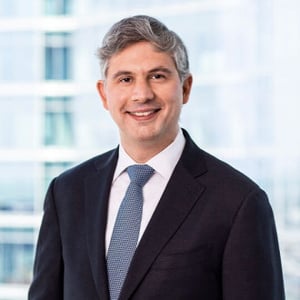
Partner, Keller Postman
Ashley Keller is one of the founding Partners of Keller Postman LLC. An experienced trial and appellate lawyer, Ashley helps set strategic direction across virtually all of the firm’s cases. He represents clients in a wide variety of practice areas and types of claims, including product-liability, antitrust, class action, and arbitration matters.
Ashley is one of the leaders of Keller Postman’s national product-liability practice. He leverages his ability to detangle complex concepts and develop novel legal theories to support individual client matters and as counsel on numerous product-liability multidistrict litigation matters. He chairs the plaintiffs’ Law & Briefing Committee in the Zantac (Ranitidine) Product Liability MDL in the U.S. District Court for the Southern District of Florida.
Ashley also litigates complex antitrust and class action matters. Among his notable cases, Ashley represents numerous States in antitrust litigation against Google for monopolizing products and services used by advertisers and publishers in online-display advertising.
Ashley also has played a central role in developing the firm’s pioneering arbitration practice, which includes pursuing individual arbitrations for clients whose claims are subject to arbitration clauses with class-action waivers. In part through managing the complexity of pursuing these individual claims simultaneously, the firm has secured millions in settlements for more than 500,000 employees and consumers.
Before launching Keller Postman, Ashley co-founded the litigation finance firm Gerchen Keller Capital, which grew to more than $1.3 billion in assets under management and was the world’s largest private investment manager focused on legal and regulatory risk prior to being acquired by Burford Capital in 2016.
Previously, Ashley was a partner at Bartlit Beck Herman Palenchar & Scott LLP, The American Lawyer’s litigation boutique of the year. While there, he handled various trial and appellate matters involving multi-billion-dollar securities and patent cases, contract disputes, mass torts, and class actions.
Ashley also worked as an analyst at Alyeska Investment Group, a Chicago-based market-neutral hedge fund, where he focused on investments in companies facing litigation and other complicated regulatory matters.
Ashley was named a 2021 Plaintiffs’ Lawyers Trailblazer by the National Law Journal. He is also listed on Lawdragon’s 500 Leading Lawyers in America, Lawdragon’s 500 Leading Plaintiff Consumer Lawyers, Lawdragon’s Leading Plaintiff Financial Lawyers, National Trial Lawyers’ Top 100, and Illinois Super Lawyers.
Ashley was a law clerk for Justice Anthony M. Kennedy at the Supreme Court of the United States and Judge Richard Posner at the U.S. Court of Appeals for the Seventh Circuit. He graduated magna cum laude from Harvard College, received his M.B.A. from the University of Chicago Booth School of Business and received his J.D. from the University of Chicago Law School, where he graduated first in his class.
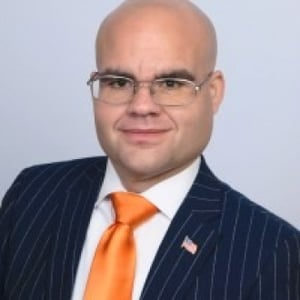
Counsel, Keller Postman LLC
John Masslon is a Counsel at Keller Postman LLC, where he works on a broad range of disputes, including products liability and consumer protections suits. He helps develop legal strategies, writes briefs, and presents argument on legal questions. Before joining Keller Postman, John was senior litigation counsel at Washington Legal Foundation. There, he wrote about 100 amicus briefs supporting free enterprise in courts across the country. He filed the first amicus brief in the Supreme Court supporting the challenge to OSHA’s vaccine mandate. He also filed a brief supporting ending the in-house proceedings at the Securities and Exchange Commission. Previously, John served as assistant solicitor general in a state attorney general’s office. There, he was first chair in a federal trial challenging a state election law that was ultimately upheld. He also wrote the briefs that convinced the state supreme court to uphold the State’s right-to-work statute.
John obtained his B.S. in economics with a minor in mathematical sciences from Clemson University. He then received his J.D. and LL.M. in Taxation from Georgetown University Law Center. After law school, John worked for Judge Arthur J. Schwab of the United States District Court for the Western District of Pennsylvania and clerked for Judge Judith Ference Olson of the Superior Court of Pennsylvania.
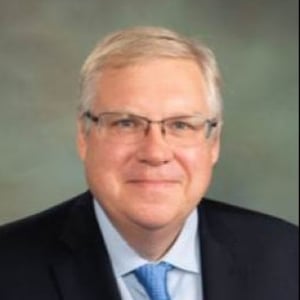
President and General Counsel, Public Interest Legal Foundation
J. Christian Adams is the President and General Counsel of the Public Interest Legal Foundation. He served from 2005 to 2010 in the Voting Section at the United States Department of Justice Voting Section. President Trump appointed Adams to the Presidential Advisory Commission on Election Integrity. President Trump also appointed Adams as a Commissioner to the United States Commission on Civil Rights where he also now serves with a term through 2025. He has been involved in election law lawsuits in 33 states and the territory of Guam. He has represented multiple presidential campaigns in election litigation. He has a law degree from the University of South Carolina School of Law. He is a member of the South Carolina and Virginia Bars.
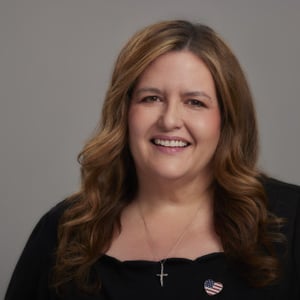
Attorney, Law Offices of Linda A. Kerns, LLC
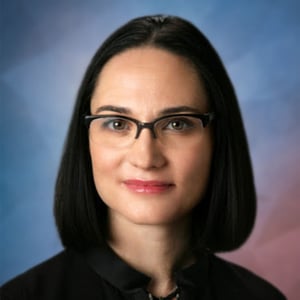
Alida graduated from Duke University with a degree in history and earned her J.D. from the Georgetown University Law Center.

Donald Phillip Rothschild Research Professor, George Washington University Law School
Renée Lettow Lerner is Donald Phillip Rothschild Research Professor of Law at George Washington University Law School.
Professor Lerner works in the fields of U.S. and English legal history, civil and criminal procedure, and comparative law. She advises judges, lawyers, and government officials from the United States and countries in Europe, Latin America, and Asia about the differences between adversarial and nonadversarial legal systems.
She writes extensively about the history of American juries. Her work includes not only scholarly articles, but also online publications intended for a broader audience of legal professionals and the public. In many different settings, she has debated the role of juries with other academics and with lawyers. She has a book forthcoming with Oxford University Press in the Very Short Introduction Series entitled “The Jury.” She is also working on a book about the American civil jury, from the colonial period to the present.
She is the author, with John Langbein and Bruce Smith, of the book History of the Common Law: The Development of Anglo-American Legal Institutions (2009).
Her recent writings include a book review of Amalia D. Kessler’s Inventing American Exceptionalism: The Origins of American Adversarial Legal Culture, 1800-1877, 67 J. Legal Ed. 888 (2018); “How the Creation of Appellate Courts in England and the United States Limited Judicial Comment on Evidence to the Jury,” 40 Journal of the Legal Profession 215 (2016); “The Troublesome Inheritance of Americans in Magna Carta and Trial by Jury,” in Magna Carta and its Modern Legacy 77-98 (Robert Hazell and James Melton eds., Cambridge University Press 2015); and “The Failure of Originalism in Preserving Constitutional Rights to Civil Jury Trial,” 22 William & Mary Bill of Rights Journal 811 (2014).
Professor Lerner received an A.B. summa cum laude in history from Princeton University. She was a Rhodes Scholar at Oxford University, where she studied English legal history. At Yale Law School, she was Articles Editor of the Yale Law Journal. She served as a law clerk to Justice Anthony M. Kennedy of the U.S. Supreme Court and to Judge Stephen F. Williams of the U.S. Court of Appeals for the District of Columbia Circuit. From 2003 to 2005, she served as Deputy Assistant Attorney General in the Office of Legal Counsel at the U.S. Department of Justice.
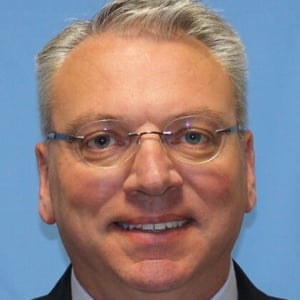
Judge, United States Court of Appeals, Third Circuit
David J. Porter is a judge on the United States Court of Appeals for the Third Circuit. He was nominated by President Donald Trump and confirmed on October 11, 2018. Before his appointment, he was a shareholder at Buchanan Ingersoll & Rooney PC, where he practiced commercial and civil litigation. Porter received his bachelor’s degree from Grove City College and his J.D. from the George Mason University School of Law. He clerked for Judge D. Brooks Smith on the United States District Court for the Western District of Pennsylvania.
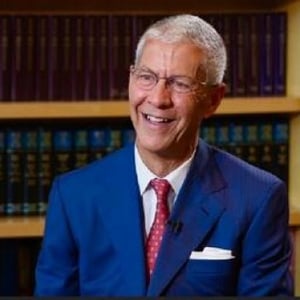
Irving Segal Distinguished Adjunct Professor of Law, University of Pennsylvania Law School
Shanin Specter is a preeminent American trial lawyer. He is a founding partner of Kline & Specter, one of the leading catastrophic injury firms in the United States.
Specter has obtained more than 200 jury verdicts and settlements in excess of $1 million and more than 50 case resolutions greater than $10 million, including jury verdicts of $153 million against a major automaker and $109 million against a Pennsylvania power company. In all, he has achieved 16 eight- or nine-figure verdicts, among them news-making cases involving medical malpractice, defective products, medical devices, premises liability, auto accidents and general negligence.
Beyond winning substantial monetary compensation for his clients, many of Specter's cases have prompted changes that provide a societal benefit, including improvements to vehicle safety, nursing and hospital procedures, the safe operation of police cars, training for the use of CPR at public institutions, and inspections, installation and maintenance of utility power lines. One case spurred the Pennsylvania Public Utility Commission to create a new Electric Safety Division to investigate reported electrical injuries. Most recently, Specter’s lawsuit on behalf of the victims of a fire escape collapse helped move the City of Philadelphia in 2016 to enact an ordinance requiring all fire escapes to be regularly inspected.
Specter earned his undergraduate degree with honors from Haverford College, his law degree from the University of Pennsylvania and an LL.M. with First Honors from Cambridge University.
Since 2000, Specter has served as an Adjunct Professor of Law at the University of Pennsylvania Law School. Since 2015, Specter has also taught at UC Hastings College of Law, UC Berkeley School of Law and Stanford Law School.
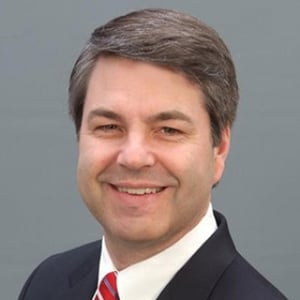
Partner and Co-Chair, Public Policy Group, Shook Hardy & Bacon LLP
Mark Behrens co-chairs Shook's Washington, DC-based Public Policy Practice Group and is a leading national expert on civil justice issues with over thirty years of experience. A substantial part of his practice is working to improve the civil litigation environment through state and federal legislation; in the courts through amicus curiae briefs; through legal scholarship and judicial education; and in the court of public opinion.
Mark is actively involved in civil justice reform efforts at the federal and state levels. He has testified before the U.S. Congress and most state legislatures on behalf of business and civil justice organizations. Mark also has an active amicus brief practice specializing in tort liability and civil justice issues. He has authored or co-authored over 150 amicus briefs in cases before the United States Supreme Court and federal and state appellate courts on behalf of business, civil justice, and defense lawyer organizations. In addition, Mark routinely files comments on behalf of business, civil justice, and defense lawyer organizations regarding potential changes to federal and state court rules. He chairs the International Association of Defense Counsel’s (IADC) Civil Justice Response Committee and serves on the Board of Directors of Lawyers for Civil Justice (LCJ).
Mark is a member of the American Law Institute (ALI). He received his J.D. in 1990 from Vanderbilt University Law School, where he was a member of the Vanderbilt Law Review. He received his B.A. in economics from the University of Wisconsin in 1987.
Assistant District Attorney, Philadelphia District Attorney
Sarah Hart has worked for over three decades in the criminal justice field at the federal, state and local levels.
From 1979-95, she served as a prosecutor in Philadelphia where (for 9 years) she represented the District Attorney in federal prison litigation involving mass releases of pretrial detainees. During this time, she provided substantial assistance to the U.S. Congress in drafting the Federal Prison Litigation Reform Act (PLRA).
From 1995-2001, Mrs. Hart served as the Chief Counsel for the Pennsylvania Department of Corrections where she successfully defended the constitutionality of the PLRA in the federal courts.
From 2001-2005, following unanimous Senate confirmation, she served as the Director of the National Institute of Justice (the research and evaluation arm of the U.S. Department of Justice) where, among other things, she developed the national $1 billion DNA initiative.
After an appointment as a Visiting Professor teaching graduate school courses at Rutgers University, she returned to Philadelphia to represent Philadelphia District Attorney in class action litigation concerning the Philadelphia Prison System. During this time she represented the Pennsylvania District Attorney’s Association in crafting comprehensive, bipartisan prison reform legislation in Pennsylvania that enacted sweeping changes in sentencing and parole practices. (Acts 81-84 of 2008).
Mrs. Hart previously served as Vice Chair of the Legal Affairs Committee of the American Corrections Association, a member of the Executive Committee of the Criminal Law Practice Group of the Federalist Society, a member of the Board of Directors of the Crime Victims Law Institute, and as a member of the Pennsylvania Supreme Court’s Appellate Procedural Rules Committee. She has also provided extensive training on the PLRA and corrections issues to the National Institute of Corrections, the National Association of Attorneys General, and the Association of State Correctional Administrators.
Mrs. Hart has published articles relating to corrections, forensics, and domestic violence. A recent publication focuses on the benefits and costs of prisoner class actions.
S. Hart, Evaluating Institutional Prisoners’ Rights Litigation: Costs and Benefits and Federalism Considerations, 11 U. Penn. J. Const. L. 73 (2008).
She is a graduate of Rutgers Law School and the University of Delaware.

Courthouse Steps Decision: Mallory v. Norfolk Southern Railway Co.
Brian T. Fitzpatrick, Ashley Keller, John Masslon
On Tuesday, June 27, 2023, the Supreme Court issued its decision in Mallory v. Norfolk...
Courthouse Steps Oral Argument: Mallory v. Norfolk Southern
John Masslon
On November 8, 2022, the U.S. Supreme Court will hear oral argument in Mallory v....
Litigation Update: Non-citizen Voting
J. Christian Adams, Linda A. Kerns
The Public Interest Legal Foundation (“PILF”) filed a lawsuit against the Commonwealth of Pennsylvania’s Department...
Panel Three: The Civil Jury: Constitutional Liberty or Unhealthy Romance?
Alida Kass, Renée Lettow Lerner, David James Porter, Shanin Specter
On October 24, 2019, The Federalist Society held its annual Third Circuit Chapters Conference. This...
Philadelphia Tort Litigation: Forum Shopping and Venue Reform
Mark A. Behrens
The Federalist Society takes no position on particular legal or public policy initiatives. Any expressions...
Philadelphia Tort Litigation: Forum Shopping and Venue Reform
Mark A. Behrens
The Federalist Society takes no position on particular legal or public policy initiatives. Any expressions...
DNA & the Criminal Justice System
2000 National Lawyers Convention
Washington, DC