

President, Cass & Associates, PC
Ronald A. Cass is Dean Emeritus of Boston University School of Law (where he was Dean from 1990-2004), President of Cass & Associates, PC, former Vice-Chairman and Commissioner of the U.S. International Trade Commission, former faculty member at Boston University School of Law and the University of Virginia Law School, and Distinguished Senior Fellow at the C. Boyden Gray Center for the Study of the Administrative State. Dean Cass also sits as an arbitrator for commercial, international, and intellectual property rights disputes, and is a former United States member of the Panel of Conciliators of the International Centre for Settlement of Investment Disputes. He is a member of the Council of the Administrative Conference of the United States and has received seven presidential appointments, spanning Presidents Ronald Reagan to Donald J. Trump.
As a law professor, lecturer, and scholar, Dean Cass has been teaching and writing about a wide array of legal issues on topics such as administrative law and regulation, antitrust, constitutional law, communications, intellectual property, international trade, separation of powers, and legal process. He has published more than 160 scholarly books, chapters, articles, and papers, including a leading casebook on administrative law. Dean Cass has taught judges as well as students in schools of law, economics, business, and public policy and has held academic appointments in the United States, Europe, and Latin America.
In addition to his academic work, Dean Cass has participated in numerous important legal cases as an amicus, consultant, or expert, and has advised businesses, law firms, investment funds, and government agencies on a range of trade, antitrust, intellectual property, and regulatory issues. He has a broad range of affiliations with professional groups, and has received numerous honors, fellowships and awards.
Dean Cass is a graduate of the University of Virginia and the University of Chicago Law School.

Professor Emeritus of Law, Antonin Scalia Law School, George Mason University
Jeremy A. Rabkin is a Professor Emeritus of Law at the Antonin Scalia Law School, George Mason University. Before joining the faculty in June 2007, he was for over two decades a professor in the Department of Government at Cornell University. Professor Rabkin serves on the board of directors of the Center for Individual Rights, a public interest law firm based in Washington, D.C. Previously he was a board member of the U.S. Institute of Peace and the board of academic advisors of the American Enterprise Institute.
Professor Rabkin’s books include Law Without Nations? (Princeton University Press, 2005). He authored “If You Need a Friend, Don’t Call a Cosmopolitan,” a chapter in Varieties of Sovereignty and Citizenship (Sigal R. Ben-Porath & Rogers M. Smith eds., University of Pennsylvania Press, 2012). His articles have appeared in major law reviews and political science journals and his journalistic contributions in a range of magazines and newspapers, including the Washington Post and the Wall Street Journal.
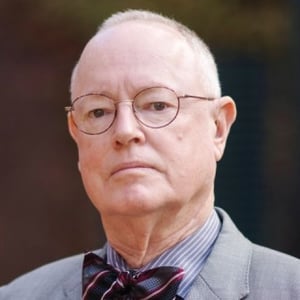
John C. Jeffries, Jr., Distinguished Professor of Law, University of Virginia School of Law
Paul B. Stephan is an expert on international business, international dispute resolution and comparative law, with an emphasis on Soviet and post-Soviet legal systems. In addition to writing prolifically in these fields, Stephan has advised governments and international organizations, taken part in cases in the Supreme Court of the United States, the federal courts, and various foreign judicial and arbitral proceedings, and lectured to professionals and scholarly groups around the world on issues raised by the globalization of the world economy. During 2006-07, he served as counselor on international law in the U.S. Department of State, and in 2020-21 as special counsel to the general counsel in the Department of Defense. He was a coordinating reporter for the American Law Institute’s Restatement (Fourth) of the Foreign Relations Law of the United States.
Stephan received his B.A. and M.A. from Yale University in 1973 and 1974, respectively, and his J.D. from the University of Virginia in 1977. Before returning to Virginia, he clerked for Judge Levin Campbell of the U.S. Court of Appeals for the First Circuit and for U.S. Supreme Court Justice Lewis F. Powell Jr. He has taught as a visiting professor at the Moscow State Institute for International Relations, the University of Vienna, Münster University, Lausanne University, Melbourne University, University of Pantheon-Assas (Paris II), Sciences Po, Paris I, the Interdisciplinary Centre Herzliya, Sydney University, the Peking University School of Transnational Law in Shenzhen, China, the University of Tartu’s Pärna College, and Liverpool University. He also has visited at Columbia Law School and Duke Law School, and served as a scholar in residence in the London office of Wilmer Hale.
After the collapse of the Soviet Union, Stephan took part in a variety of projects involving law reform in former socialist states. He worked in Russia, Georgia, Ukraine, Albania and Slovakia on behalf of the U.S. Treasury and in Kazakhstan and Azerbaijan on behalf of the International Monetary Fund. He also organized training programs for tax administrators and judges from all of the formerly socialist countries under the auspices of the Organization for Economic Cooperation and Development. His casebooks on international business, international trade and investment, and Doing Business in Emerging Markets are used at law schools both in the United States and abroad. He is the co-author, with Robert Scott, of The Limits of Leviathan: Contract Theory and the Enforcement of International Law (Cambridge University Press, 2006), and the author of The World Crisis and International Law: The Knowledge Economy and the Battle for the Future (2023). His current research focuses on the legal issues related to the Russian invasion of Ukraine and legal responses to the rise of big data.

Director and Senior Fellow, Berkeley Center for Law and Technology, University of California at Berkeley
Mark Cohen heads the Asia IP Project at the Berkeley Center for Law and Technology at Berkeley Law School. He is also responsible for teaching international trade law and research and writing on IP issues. Previously, Cohen was Senior Counsel, China in the Office of Policy and International Affairs at the U.S. Patent and Trademark Office, after serving as a visiting professor at Fordham Law School (2011-2012). Prior to that time, he served in such functions as: Director, International Intellectual Property at Microsoft Corporation; Of Counsel to Jones Day’s Beijing office; and Senior Intellectual Property Attaché at the U.S. Embassy in Beijing (2004- 2008). In total, he has over 30 years private, public sector, in-house and academic experience in China and transition economies, with a focus on technology trade and intellectual property.
Cohen was the first IPR Attaché posted by USPTO to handle IPR issues in a foreign country. In addition, he launched the annual “Ambassador’s IPR Roundtable” which he co-chaired for five years, devised IPR “toolkits”, “road shows”, pro-bono programs, internal training programs for the US government and external training programs, and worked with USPTO and other US agencies to engage China and Chinese IP agencies. Cohen led a China team at USPTO consisting of 21 individuals in DC, Beijing, Shanghai and Guangzhou, China on all aspects of USPTO’s activities in China. Among his book-length publications are Antimonopoly Law and Practice in China (Oxford University Press 2011, with Steve Harris et al.). He was also the editor of Chinese Intellectual Property Law and Practice (Kluwer Law International 1999) and has edited or published a number of on-line publications, including the blog www.chinaipr.com.
Mr. Cohen has taught and lectured at numerous universities in the United States, Asia and Europe. Amongst other honors, he was the recipient of the US Chamber of Commerce’s “IP Champion” award in 2014. Mr. Cohen holds a J.D. degree from Columbia University (1984), an M.A. from the University of Wisconsin in Chinese Language and Literature (1979) and a B.A. from the State University of New York at Albany in Chinese Studies (1977).
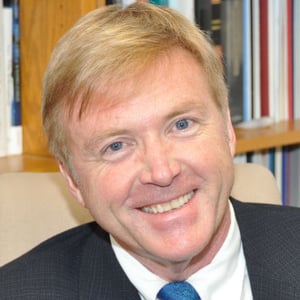
Hon. William Matthew Byrne, Jr. Chair Professor of Law, Loyola Law School, Loyola Marymount University
Prior to joining Loyola in 2013, Professor Justin Hughes taught at Cardozo Law School where he served as director of Cardozo’s Intellectual Property Program, 2004 through 2008, and founded the law school’s Indie Film Clinic, the first of its kind.
From 2009 through 2013, Professor Hughes also worked in the Obama Administration as Senior Advisor to the Undersecretary of Commerce for Intellectual Property. In that capacity he was the United States chief negotiator for the Beijing Treaty on Audiovisual Performances (2012) and the Marrakesh Treaty for the Blind (2013).
In the 1990s, Professor Hughes did volunteer work in democracy development in Latin America, West Africa and the Balkans. He has practiced law in Paris and Los Angeles. As a Henry Luce Scholar, he clerked for the Lord President of the Malaysian Supreme Court in Kuala Lumpur.
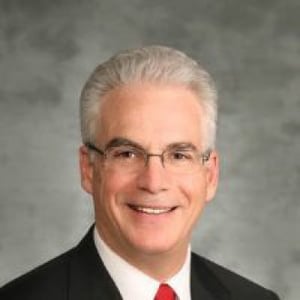
Dinsmore & Shohl LLP, Partner
Brian is chair of Dinsmore’s IP Transactions and Licensing Group. He is a past president of the Licensing Executives Society (USA and Canada), Inc. (LES), the leading professional society devoted to commercial transactions and licensing of intangible property. He continues to serve LES as senior vice president for public policy. He has extensive experience in a wide variety of commercial transactions involving intangible property, and is known for creative licensing strategies to promote collaboration and resolve IP-related disputes.
He is a registered patent attorney with more than 30 years of experience before the U.S. Patent and Trademark Office and in structuring global IP portfolios and strategies. He has extensive experience in contested proceedings before the USPTO Patent Trial and Appeal Board (interferences, Inter Partes Reviews and Post Grant Reviews), as well as contested matters in federal courts and the International Trade Commission. His wide-ranging experience affords a broad, informed perspective and facilitates creative approaches to intellectual property management, licensing, and enforcement.
In addition to his leadership of LES, Brian served on the LES Board of Directors 2007 – 2018. In his ongoing role as senior vice president for public policy he is responsible for coordinating the society’s public policy positions, amicus briefs, and congressional outreach. He works with legislators, the executive branch, and the courts toward consistent, reliable, and prudent IP laws and policies that advance innovation and economic development. He has also served LES as trustee for education, and has long served as an author, editor, and faculty member of LES educational programs focusing on best practices in IP licensing.
He is also active in the global society, LES International (LESI). Among his various roles in LESI, he has served as co-chair of the External Relations Committee, coordinating public policy and advocacy for effective IP laws and policies among the 33 regional LES societies, and with various non-governmental organizations such as WIPO and EPO. In 2019, he received the LES International President’s Service Recognition Award.
Brian also serves as Chair of the Board of Directors of the Bayh Dole Coalition, a 501(c)(4) corporation dedicated to promoting and preserving the Bayh Dole Act. He is a member of the Founding Board of Directors of the United States Intellectual Property Alliance (USIPA), an organization dedicated to raising public awareness of, and appreciation for, the role of IP in fostering innovation for the public good; and he has served on the DC Bar Intellectual Property Section Steering Committee (2013 – 2016).
In 2016, Brian testified before the U.S. Senate Committee on Small Business and Entrepreneurship on the effects of the America Invents Act on small business and entrepreneurs in a hearing entitled “An Examination of Changes to the U.S. Patent System & Impacts on America's Small Businesses.”
With his longstanding and diverse patent practice, in both private practice and in-house, Brian advises corporate leaders and entrepreneurs in effective IP procurement practices, and in maximizing value from IP assets. He has been retained as a testifying witness in IP and licensing disputes by the U.S. Department of Justice, the U.S. Department of the Treasury, and by various private enterprises.
Brian has been acknowledged by IAM magazine as among its “IAM Strategy 300”, the world’s leading IP strategists, and among “The World's Leading Patent and Technology Licensing Lawyers.”
He earned B.S. and M.S. degrees from the Department of Chemistry, Rochester Institute of Technology, Rochester, NY; and Juris Doctor from Syracuse University, College of Law, Syracuse, NY (1986).
Brian has served his alma mater as president of the RIT Alumni Association 2005 – 2009; and now serves on the RIT Board of Trustees as a member of its Executive Committee, chair of its Student Life Committee, and vice-chair of its Committee on Trustees. In 2013, Brian was awarded RIT’s Outstanding Alumnus Award, and in 2005 he was awarded the Distinguished Alumnus Award by RIT’s College of Science.

With a practice at the intersection of law, economics, domestic politics and international relations, John Herrmann represents clients before all U.S. trade agencies. He counsels U.S. producers of steel, metal, chemical and agricultural products in antidumping and countervailing duty proceedings, and represents clients in major litigation arising from such proceedings. Mr. Herrmann advises on customs-related matters such as classification, duty drawback and civil penalty issues. Mr. Herrmann also counsels clients regarding export control and sanctions-related issues, as well as the preparation and implementation of internal compliance policies and procedures.
Mr. Herrmann returned to Kelley Drye in 2009 following service in the administration of President George W. Bush, including work at the White House on the National Security Council staff. Mr. Herrmann worked as the Special Assistant to the President and Senior Director for International Trade, Energy and Environment. In that position, he was responsible for advising the President on international trade and investment issues and for the international aspects of energy and environmental policy.
At the White House, Mr. Herrmann’s work on key issues included the WTO Doha Round negotiations, efforts to conclude and secure Congressional approval of free trade agreements, overseeing activities of the President’s Interagency Working Group on Import Safety and representing the National Security Council at meetings of the Committee on Foreign Investment in the United States (CFIUS). Mr. Herrmann was also involved in export control and sanctions issues and preparing for meetings of the cabinet-level U.S.-E.U. Transatlantic Economic Council, the U.S.-India Economic Dialogue and CEO Forum, and the U.S.-China Strategic Economic Dialogue, including preparation for the November 2008 G-20 financial summit. Mr. Herrmann was one of only a handful of senior National Security Council staff asked to carryover with the administration of President Barack H. Obama to assist on transition activities.
In addition, Mr. Herrmann served as a senior advisor to the Assistant Secretary of Commerce for Import Administration at the U.S. Department of Commerce, where he advised the Assistant Secretary on issues raised in antidumping, countervailing duty and textile-related proceedings and policy matters before the agency. Mr. Herrmann also worked as a law clerk to former Chief Judge Gregory W. Carman at the United States Court of International Trade, as well as a legal intern to the Chairman of the U.S. International Trade Commission. He began his career at the White House as the Executive Assistant to the Assistant to the President for Economic and Domestic Policy.

Chair, International Trade & National Security Practice Group, Buchanan Ingersoll & Rooney
Mr. Pickard counsels U.S. and international clients on the laws and regulations governing international trade, with particular emphasis on import remedy, anti-bribery, national security, and export control issues. He represents and advises clients in matters related to trade remedy investigations (including antidumping, countervailing duty, and safeguard cases), U.S. economic sanctions, export controls, anti-boycott measures, and the Foreign Corrupt Practices Act (FCPA). Mr. Pickard provides comprehensive international trade law compliance guidance, including assessing and resolving sensitive national security matters; developing corporate compliance programs; establishing compliance with the National Industrial Security Program (NISP) and mitigating Foreign Ownership, Control, or Influence (FOCI) issues; conducting internal investigations relating to potential violations; and appearing before the relevant agencies in connection with investigations, licensing, and enforcement actions. He also teams with the firm’s Election Law & Government Ethics Group to provide guidance pertaining to the Foreign Agents Registration Act (FARA).
Mr. Pickard represents clients before the U.S. International Trade Commission (ITC), the U.S. Department of the Treasury’s Office of Foreign Assets Control (OFAC), the U.S. Department of Justice (DOJ), the U.S. Department of State’s Directorate of Defense Trade Controls (DDTC), the U.S. Department of Commerce’s Bureau of Industry and Security (BIS) and International Trade Administration (ITA), the U.S. Department of Defense’s Defense Security Service (DSS), the Committee on Foreign Investment in the United States (CFIUS), the U.S. Court of International Trade, and the U.S. Court of Appeals for the Federal Circuit.
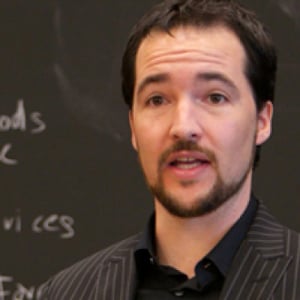
Professor of Law, Georgetown University Law Center
Alvaro Santos is Professor of Law and Director of the Center for the Advancement of the Rule of Law in the Americas (CAROLA) at Georgetown University. He teaches and writes in the areas of international trade, economic development, drug policy, transnational labor law and the future of NAFTA.
Professor Santos is co-editor of Law and the New Developmental State: The Brazilian Experience in Latin America (2013) and The New Law and Economic Development: A Critical Appraisal (2006). He is also the author of a number of articles and book chapters, including “Carving Out Policy Autonomy for Developing Countries in the World Trade Organization: The Experience of Brazil and Mexico” in the Virginia Journal of International Law (2012), and "Three Transnational Discourses of Labor Law in Domestic Reforms" in the University of Pennsylvania Journal of International Law (2010). In 2016, he contributed to a research manifesto authored by working group at the Harvard Institute for Global Law and Policy, examining the role of law in global value chains. Professor Santos serves on the editorial boards of the American Journal of Comparative Law, the Journal of International Economic Law, the Law and Development Review, and the Latin American Journal of International Trade Law. He regularly teaches at Georgetown's WTO Academy and Harvard's Institute for Global Law and Policy (IGLP) and has also taught at the University of Texas, Tufts University, Melbourne Law School, and the University of Turin. Santos received a JD with high honors from Universidad Nacional Autonóma de México and an LLM and SJD from Harvard Law School.

Do Russian Oligarchs Retain Property Rights in the West?
Ronald A. Cass, Jeremy A. Rabkin, Paul B. Stephan
In response to Russia’s invasion of Ukraine, assets of Russian oligarchs have been frozen in...
Deep Dive Episode 164 – How Will the Biden Administration Handle China's Intellectual Property Practices?
Mark Cohen, Justin Hughes, Brian O'Shaughnessy
The Biden administration faces a variety of issues when it comes to China, from trade...
Re-Negotiating NAFTA: Non-National Tribunals and the Constitution
John M. Herrmann II, Daniel B. Pickard, Alvaro Santos
Chapters 11 and 19 of the North American Free Trade Agreement (NAFTA) provide for international...
Conservative & Libertarian Legal Scholarship: International Law & Transactions
[Return to Table of Contents] XVI. International Law & Transactions Introductory Materials Emer de Vattel,...