
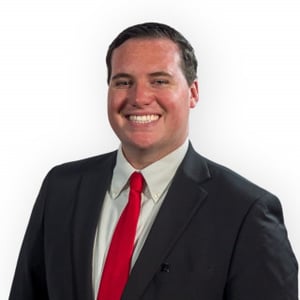
Attorney, Texas Public Policy Foundation
Eric Heigis is an attorney with the Texas Public Policy Foundation’s litigation arm, the Center for the American Future. He litigates cases involving administrative law, individual rights, and structural limits on government power. Prior to joining the Foundation, he served in various roles on Capitol Hill, including as an intern for Senator Ted Cruz, Legislative Assistant for Representative Dave Brat, Legislative Director for Representative Mark Meadows, and General Counsel for Senator Ted Budd. In his eight years working for Congress he covered nearly every policy area and drafted dozens of legislative proposals—several of which became law.
Eric received his B.A. from American University and J.D., magna cum laude, from the Georgetown University Law Center. He was selected as a Bradley Scholar at the Georgetown Center for the Constitution and served as Executive Editor of the Georgetown Journal of Law and Public Policy. He is licensed to practice law in California and Virginia. He is admitted to practice before all federal district courts in Texas and the Courts of Appeals for the Fifth, Ninth, Eleventh, and D.C. Circuits.
Eric is a pilot and certificated flight instructor, and in his free time he enjoys finding new fly-in destinations to visit with his wife. He also volunteers with the Experimental Aircraft Association’s Young Eagles program and is a Captain in the Civil Air Patrol.

Partner, Lewis Brisbois
Sarah E. Lang is a partner in the New York office of Lewis Brisbois and a member of the Appellate Practice. Ms. Lang has represented clients at all levels of state and federal courts, including the New York State Appellate Division, the Second Circuit Court of Appeals, and the U.S. Supreme Court. The primary focus of her practice is drafting and arguing substantive motions and appeals before the federal courts and New York’s trial and appellate courts in substantive areas including general liability, New York Labor Law, medical malpractice, premises liability, and rideshare and transportation matters, among others. She also has extensive experience representing clients, including religious institutions, in matters arising under Title VII, the First Amendment, RLUIPA, New York’s City and State Human Rights Laws, New York’s Religious Corporations Law, and New York’s Real Property Tax Law. This includes federal jury trial experience and providing preventive advice and counseling. Prior to joining the firm, Ms. Lang clerked on the United States Court of Appeals for the Eighth Circuit, as well as the United States District Court for the Eastern District of North Carolina. She also previously served as an Attorney Advisor for the United States Department of Education.
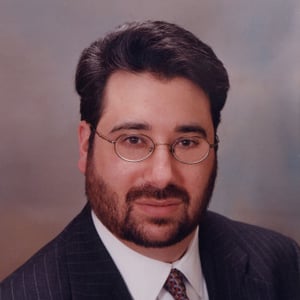
President, Phoenix Center for Advanced Legal and Economic Public Policy Studies
Lawrence J. Spiwak is President of the Phoenix Center for Advanced Legal & Economic Public Policy Studies, a non-profit 501(c)(3) organization that studies broad public-policy issues related to governance, social and economic conditions, with a particular emphasis on the law and economics of the digital age. Mr. Spiwak is a prolific scholar whose work is frequently cited by policymakers, major news media and academic journals around the world, and is in the top 1.3%of authors downloaded on the Social Science Research Network. Mr. Spiwak currently serves as the co-chair of the Federal Communications Bar Association’s (FCBA) committee responsible for overseeing the FEDERAL COMMUNICATIONS LAW JOURNAL and is a member of the program committee of the Telecommunications Policy Research Conference (“TPRC”). Mr. Spiwak is also the recipient of the FCBA’s Distinguished Service Award. Prior to joining the Phoenix Center, Mr. Spiwak was a Senior Attorney with the Competition Division in the FCC’s Office of General Counsel from 1994-1998. While in college, Mr. Spiwak was accepted into the Presidential Stay-In School program where he was responsible for delivering classified and confidential material among senior White House and Reagan Administration officials and received a full FBI security clearance. Mr. Spiwak received his B.A. with Special Honors from the George Washington University and his J.D. from the Benjamin N. Cardozo School of Law. Mr. Spiwak is a member in good standing of the bars of New York, Massachusetts, the District of Columbia, and the U.S. Court of Appeals for the D.C. Circuit.
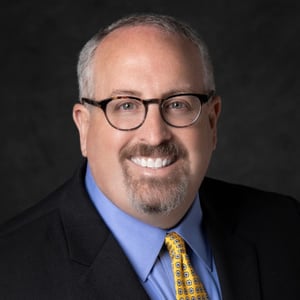
Partner/Member, Hinkle Law Firm
Brad Schlozman is a partner at Hinkle Law Firm in Wichita, KS, where his practice is primarily concentrated on Employee Benefits/ERISA law, as well as government investigations. In his employee benefits work, Brad represents plans, employers, third-party administrators, record-keepers, investment advisors, financial institutions, insurance brokers, and various fiduciaries, helping them to achieve and maintain compliance with the array of laws, regulations, and guidance governing qualified and welfare benefit issues. In his government investigations practice, Brad represents states, municipalities, and law enforcement organizations around the country that are being investigated by the U.S. Department of Justice and state regulatory agencies on various civil rights issues. Representations typically cover voting rights issues, disability matters, as well as a range of policing and law enforcement issues.
Prior to joining the firm, Brad held a series of high-level posts in the Department of Justice, including United States Attorney for the Western District of Missouri, Acting Assistant Attorney General of the Civil Rights Division, and Counsel to the Deputy Attorney General.
Brad graduated from the University of Pennsylvania and received his juris doctor from the George Washington University Law School. After law school, Brad completed a two-year federal judicial clerkship with Chief U.S. District Judge G. Thomas VanBebber of the District of Kansas. He then clerked for an additional year for U.S. Circuit Judge Mary Beck Briscoe of the U.S. Court of Appeals for the Tenth Circuit.
President, Phoenix Center for Advanced Legal and Economic Public Policy Studies
Lawrence J. Spiwak is President of the Phoenix Center for Advanced Legal & Economic Public Policy Studies, a non-profit 501(c)(3) organization that studies broad public-policy issues related to governance, social and economic conditions, with a particular emphasis on the law and economics of the digital age. Mr. Spiwak is a prolific scholar whose work is frequently cited by policymakers, major news media and academic journals around the world, and is in the top 1.3%of authors downloaded on the Social Science Research Network. Mr. Spiwak currently serves as the co-chair of the Federal Communications Bar Association’s (FCBA) committee responsible for overseeing the FEDERAL COMMUNICATIONS LAW JOURNAL and is a member of the program committee of the Telecommunications Policy Research Conference (“TPRC”). Mr. Spiwak is also the recipient of the FCBA’s Distinguished Service Award. Prior to joining the Phoenix Center, Mr. Spiwak was a Senior Attorney with the Competition Division in the FCC’s Office of General Counsel from 1994-1998. While in college, Mr. Spiwak was accepted into the Presidential Stay-In School program where he was responsible for delivering classified and confidential material among senior White House and Reagan Administration officials and received a full FBI security clearance. Mr. Spiwak received his B.A. with Special Honors from the George Washington University and his J.D. from the Benjamin N. Cardozo School of Law. Mr. Spiwak is a member in good standing of the bars of New York, Massachusetts, the District of Columbia, and the U.S. Court of Appeals for the D.C. Circuit.
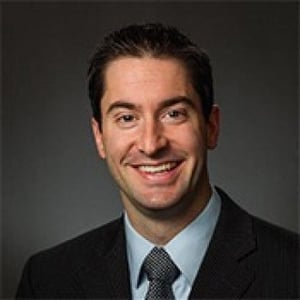
Chief Legal Counsel, Alliance Defending Freedom
Jim Campbell serves as chief legal counsel with Alliance Defending Freedom, where he leads the U.S. Legal Advocacy team. In that role, Campbell oversees all U.S. litigation teams and Allied Legal Affairs.
Prior to joining ADF in March 2023, Campbell was the solicitor general in the office of Nebraska Attorney General Douglas J. Peterson and Michael T. Hilgers. In that role, he represented the state of Nebraska in cases before state and federal courts and oversaw all civil appeals for the state. In February 2023, Campbell argued Biden v. Nebraska before the U.S. Supreme Court, a case in which Nebraska and five other states challenged the Biden administration’s attempt to forgive over $400 billion in federal student loans for over 40 million individuals.
Before joining the Nebraska attorney general’s office in January 2020, Campbell worked as senior counsel with ADF. In that role, he defended his clients’ religious freedom and freedom of speech, with a particular focus on appellate work. Campbell has also authored many articles and legal commentary pieces, including some published by USA Today and The Washington Post.
A native of northeastern Ohio, Campbell earned his Juris Doctor from the University of Akron School of Law, where he graduated summa cum laude in 2006. Following law school, he clerked for the Honorable Alice M. Batchelder of the U.S. Court of Appeals for the 6th Circuit. Campbell is admitted to the state bars of Ohio, Arizona, and Nebraska. He is also admitted to multiple federal district and appellate courts, including the U.S. Supreme Court.
Thomas Forr is an associate at Jones Day in Washington, D.C.

Professor of Law, Georgetown University Law Center
Nicholas Quinn Rosenkranz teaches constitutional law and federal jurisdiction, and he writes articles for the Harvard Law Review and the Stanford Law Review.
He is currently developing a new theory of constitutional interpretation and judicial review. The first installment, entitledThe Subjects of the Constitution, was published in the Stanford Law Review in May of 2010, and it is among the most downloaded articles about constitutional interpretation, judicial review, and/or federal courts in the history of SSRN. The second installment, The Objects of the Constitution, was published in May of 2011, also in the Stanford Law Review. And the comprehensive version is forthcoming as a book by Oxford University Press.
Rosenkranz has served and advised the federal government in a variety of capacities. He clerked for Judge Frank H. Easterbrook on the U.S. Court of Appeals for the Seventh Circuit (1999-2000) and for Justice Anthony M. Kennedy at the U.S. Supreme Court (October Term 2001). He served as an Attorney-Advisor at the Office of Legal Counsel in the U.S. Department of Justice (November 2002 - July 2004). He often testifies before Congress as a constitutional expert—most recently before the House Financial Services Oversight Subcommittee, regarding the Obama Administration's use of bank settlement agreements to circumvent the Appropriations Clause. He has also filed briefs and presented oral argument before the U.S. Supreme Court. His most recent Supreme Court brief, in Los Angeles v. Patel, was cited by Justice Alito in dissent.
Rosenkranz is a member of the New York Bar and the U.S. Supreme Court Bar. He is a Senior Fellow at the Cato Institute. He serves on the Board of Directors of the Foundation for Individual Rights in Education (FIRE). He is a founding member of Heterodox Academy and a member of its Executive Committee. He also serves on the Board of Directors of the Federalist Society and as the faculty advisor to the Georgetown chapter.
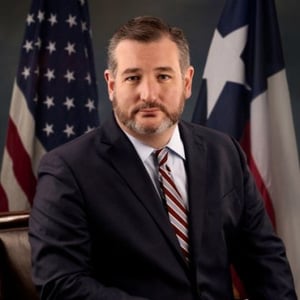
United States Senator, Texas
Ted Cruz represents 28 million Texans in the U.S. Senate as a passionate fighter for limited government and economic growth. He has authored 39 legislative measures signed into law. Recent victories include expanding 529 college savings accounts to allow parents to save for K–12 public, private, and religious education, leading the effort to repeal Obamacare’s individual mandate, imposing sanctions on terrorists who use civilians as human shields, designating North Korea as a state sponsor of terrorism, reauthorizing and reforming NASA, ensuring the availability of additional records to help solve civil rights cold cases, supporting thousands of Texas jobs, and leading the fight to confirm principled constitutionalists to our courts.
Senator Cruz is a graduate of Princeton University and Harvard Law School, a former law clerk to Chief Justice William Rehnquist, and former solicitor general of Texas. He has argued nine cases before the Supreme Court. In November of 2018, he was re-elected to the Senate by the people of Texas.
Professor of Law and Director of the Center for Global Law and P, Santa Clara Law
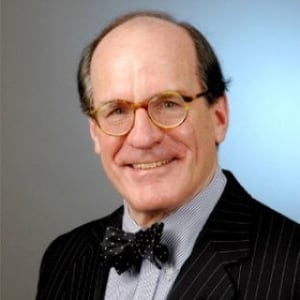
Retired Partner, Sullivan & Cromwell LLP
Upon his resignation as the Legal Adviser of the U.S. Department of State in January 1993, Mr. Williamson rejoined Sullivan & Cromwell's Washington, D.C. office. He originally joined the Firm in 1964 after graduating from New York University School of Law, where he was an editor of the Law Review. He became a partner of the Firm in 1971, moved to its London office in 1976, returned to its New York office in 1979, moved to its Washington, D.C. office in 1988 and became Of Counsel in 2007. In 2018, he retired from the firm.
At Sullivan & Cromwell, Mr. Williamson engaged in a broad and wide-ranging domestic and international financing and transactions practice, as well as advice with respect to corporate governance issues, the United States’ economic sanctions laws, the ethics rules applicable to government officials and the immunities of foreign sovereigns and international organizations.
Mr. Williamson has been an active participant on panels and other forums involving public international law and national security issues, such as the domestic and international bases for the use of force, the role of the United States with respect to the International Criminal Court, the law of the sea and the application of international legal principles in the war against terrorism.
Mr. Williamson is a member of the Council on Foreign Relations and a former member of the Executive Council of the American Society of International Law, the Executive Committees of the Business and Advisory Committee (BIAC) to the OECD and the U.S. Council for International Business, the United States Advisory Board of NTT DoCoMo, Inc. and the Board of Directors of Triton Oil & Gas Limited.
Mr. Williamson has served on the Boards of Regents and Trustees of the University of the South and as chair of the Board of Regents. He is currently a member of the Board of Directors of the American Council of Trustees and Alumni, a higher education watchdog.

Separation of Powers and Prisoner Execution in Texas
Eric Heigis
On November 15, 2024, the Texas Supreme Court issued a unanimous decision in In re...
Groff v. DeJoy: The Death of the “De Minimis” Test Breathes Life Back into Religious Accommodation
Sarah E. Lang
In a unanimous decision last June, the Supreme Court in Groff v. DeJoy heightened the...
A Change in Direction for the Federal Trade Commission?
Lawrence J. Spiwak
While antitrust and regulation are supposed to be two sides of the same coin,[1] there...
Is Rational Basis the Appropriate Test to Apply in Reviewing Emergency COVID-19 Orders?
In a year in which “quarantine” and “lock-down” have become colloquial terms, the country has...
State Court Docket Watch: Kelly v. Legislative Coordinating Council
Brad Schlozman
Since the November 2018 election of Democrat Laura Kelly as governor of Kansas, the state’s...
The Preemption Predicament Over Broadband Internet Access Services
Lawrence J. Spiwak
Note from the Editor: The Federalist Society takes no positions on particular legal and public...
Compelled Speech in Masterpiece Cakeshop: What the Supreme Court’s June 2018 Decisions Tell Us About the Unresolved Questions
Jim Campbell
Note from the Editor: This article discusses the unresolved compelled-speech questions in Masterpiece Cakeshop v....
The Supreme Court Need Not “Ignore Pleading Rules” to Decide the Constitutionality of Forced Union Dues Imposed on Public Employees
The petition for certiorari filed in Janus v. American Federation of State, County, & Municipal Employees,...
Better Alive Than Dead
Thomas Forr
When David Hockenberry, a man with profound mental retardation, came down with pneumonia in 2007,...
Medellin v. Texas - Part I: Self-Execution
Nicholas Quinn Rosenkranz, Ted Cruz, David L. Sloss, Edwin D. Williamson
On March 25, 2008 the Supreme Court decided the Medellin v. Texas case. The Court ruled...