

Partner, Clement & Murphy, PLLC
Paul served as the 43rd Solicitor General of the United States from June 2005 until June 2008. Before his confirmation as Solicitor General, he served as Acting Solicitor General for nearly a year and as Principal Deputy Solicitor General for over three years.
Paul has argued over 100 cases before the United States Supreme Court, including McConnell v. FEC, Tennessee v. Lane, United States v. Booker, MGM v. Grokster, Hobby Lobby v. Burwell, Epic Systems Corp. v. Lewis, Rucho v. Common Cause, Facebook v. Duguid, and TransUnion v. Ramirez. Paul has argued more Supreme Court cases since 2000 than any lawyer in or out of government. He has also argued many important cases in the lower courts, including Walker v. Cheney, United States v. Moussaoui and NFL v. Brady.
Paul’s practice focuses on appellate matters, constitutional litigation and strategic counseling. He represents a broad array of clients in the Supreme Court and in federal and state appellate courts. Last year, for example, he successfully argued Supreme Court cases involving significant issues of energy regulation, statutory interpretation, state sovereign immunity and Article III standing, and successfully argued a trademark appeal in the Fourth Circuit, and a constitutional appeal before the en banc Eleventh Circuit.
Paul focuses on high-stakes appeals. In recent years, he successfully defended a $1.2 billion jury verdict for clients in a Tenth Circuit case, while securing the reversal of an over $2 billion jury verdict for another client in the Seventh Circuit and the approval of a nearly $1 billion dollar class action settlement in the Third Circuit. He has initiated major administrative law challenges and constitutional litigation against the federal government, such as the successful challenge to the HHS drug-pricing rule and threatened challenges that led to the withdrawal of the Treasury Department’s proposed cryptocurrency regulations. He also counsels clients on a variety of strategic legal questions, whether arising from pending legislation, government inquiries or ongoing litigation.
Paul has undertaken substantial pro bono engagements in the Supreme Court, such as twice successfully representing the defendant in Bond v. United States and successfully representing the Omaha Tribe in Nebraska v. Parker, the guardian ad litem in Adoptive Couple v. Baby Girl, the defendant in Sekhar v. United States, a high school football coach in Kennedy v. Bremerton, and the Little Sisters of the Poor. Paul’s pro bono representation also precipitated the federal government’s confession of error in United States v. Rojas.
Following law school, Paul clerked for Judge Laurence H. Silberman of the U.S. Court of Appeals for the D.C. Circuit and for Associate Justice Antonin Scalia of the U.S. Supreme Court. After his clerkships, he went on to serve as Chief Counsel of the U.S. Senate Subcommittee on the Constitution, Federalism and Property Rights.
Paul is a Distinguished Lecturer in Law at the Georgetown University Law Center, where he has taught in various capacities since 1998. He also serves as a Senior Fellow of the Law Center’s Supreme Court Institute. He is the Justice Joseph Story Distinguished Practitioner in Residence at the Gray Center at Scalia Law School.
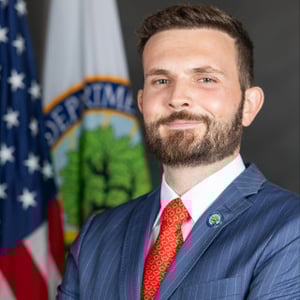
Fellow, Manhattan Institute
Tim Rosenberger serves as Senior Counsel at the United States Department of Education. He was previously a fellow at the Manhattan Institute and Stanford University’s Center for Entrepreneurial Studies. He was also the founding COO of Verbum Labs and serves as a Chaplain with the Cleveland Division of Police. Before matriculating to law school, he was a legal policy fellow at the Cicero Institute, a parish pastor, and a management consultant with McKinsey & Company.
Tim has contributed to a variety of academic, popular, and professional publications, including the Wall Street Journal, The Hill, The New York Post, and City Journal. He also regularly provides commentary for various media outlets, testifies before state legislatures, and files dozens of amicus curiae “friend of the court” briefs in the Supreme Court and various circuit courts.
He holds an AB from Georgetown University, a M.Div. from United Lutheran Seminary, a D.Min from the Rawlings School of Divinity, an LL.M. from Universität Wien, and a JD/MBA from Stanford University, where he was Federalist Society Chapter President and served on Law Review. Tim’s research interests lie at the intersection of law, faith, education and entrepreneurship—with a particular focus on leveraging policy to help America’s overlooked populations build lives of dignity.
Associate, Quinn Emanuel Urquhart & Sullivan, LLP

Topics
Are Elon Musk’s Petition Payments Legal?
Elon Musk’s America PAC has offered $47 to all registered voters in Arizona, Michigan, Nevada,...
Where are Pennsylvania's State Courts Heading? Analyzing Key 2024 Decisions
Harrisburg Lawyers Chapter
Harrisburg, PATopics
Let the Algorithm Speak?: Third Circuit Indicates in Anderson v. TikTok That the First Amendment and Section 230 are Inversely Related
Social media platforms sift user-generated content through a variety of algorithms, some of which collect...
Topics
Religious Advertising Bans: Has the Time Finally Arrived for Supreme Court Review?
In theory, the First Amendment prevents the government from banning speech based on viewpoint. But...
21st Annual Supreme Court Roundup
Philadelphia Lawyers Chapter
Philadelphia, PAPennsylvania Supreme Court Upholds Ordinance Prohibiting the Discharging of Firearms
Tim Rosenberger
In the evolving legal landscape of Second Amendment rights, the case of Barris v. Stroud...
2024 Third Circuit Chapters Conference
Philadelphia, PAPA Supreme Court Embraces “Per-Defendant” Basis for Calculating Punitive-to-Compensatory Damages Ratio
Michael J. Schneekloth
The U.S. Supreme Court has repeatedly declined to articulate a bright line rule capping the...
Topics
Congress Elevates Interest in AI
In February, Congress launched a bipartisan Task Force on Artificial Intelligence (Task Force) that is...
Topics
Illegal Immigration and Election Law: Downstream Consequences on Display in Pennsylvania Voter Rolls Transparency Case
Welcome to March Madness time, when underdogs seem to come out of nowhere to defeat...