
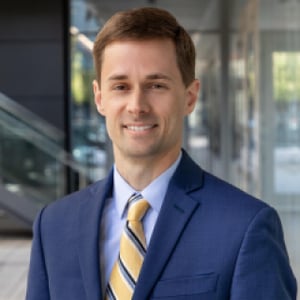
Associate Professor of Law, Sandra Day O'Connor College of Law, Arizona State University ; Affiliated Professor of Philosophy, Arizona State University
Charlie Capps is an Associate Professor at Arizona State University’s Sandra Day O’Connor College of Law and an affiliated member of the philosophy faculty at ASU’s School of Historical, Philosophical, and Religious Studies. He teaches courses on criminal law, constitutional law, and jurisprudence, and his research focuses on the intersection of law and philosophy, especially the role of moral responsibility in criminal law, the debate between positivism and natural-law theory in general jurisprudence, and theories of constitutional and statutory interpretation. Prior to joining ASU, Professor Capps was an Associate Scholar at the University of Chicago Law School and Deputy Solicitor General for the State of Missouri. After graduating from law school, he clerked for Judge Raymond W. Gruender on the U.S. Court of Appeals for the Eighth Circuit. He holds a JD with honors from the University of Chicago Law School and a PhD in Philosophy from the University of Chicago.
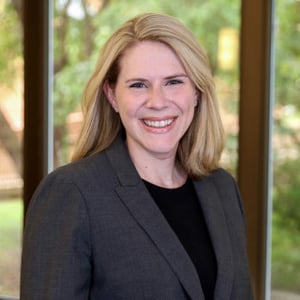
Professor of Law, Co-Director of the Center on the Structural Constitution, Texas A&M University School of Law
Katherine Mims Crocker is a Professor of Law and Faculty Co-Director of the Center on the Structural Constitution at Texas A&M University School of Law. She is also an affiliate of the Stanford Constitutional Law Center. Her scholarship focuses on federal courts, civil-rights litigation, constitutional law, and state and local-government law. She has also taught courses in civil procedure, property, and judicial decision making. Professor Crocker has published papers (or has work forthcoming) in leading journals including the Duke Law Journal, Harvard Law Review, Michigan Law Review, Minnesota Law Review, Notre Dame Law Review, Virginia Law Review, and Washington University Law Review.
Before joining Texas A&M, Professor Crocker was on the faculty at William & Mary Law School and completed a fellowship at Duke Law School. She also practiced at McGuireWoods LLP in Richmond, Virginia, where she concentrated on appellate litigation. Professor Crocker clerked for Justice Antonin Scalia of the Supreme Court of the United States and Judge J. Harvie Wilkinson III of the U.S. Court of Appeals for the Fourth Circuit. She received her law degree from the University of Virginia, where she graduated first in her class and was an Articles Development Editor on the Virginia Law Review. She earned her undergraduate degree from Harvard University cum laude.
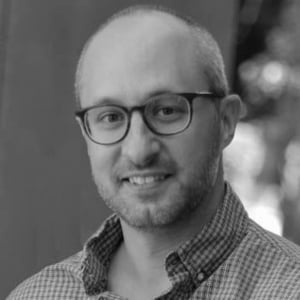
Assistant Professor of Law and, by courtesy, Computer Science, University of Nebraska College of Law; Nonresident Fellow, Stanford Law School Program in Law, Science & Technology
Professor Dickinson is an Assistant Professor of Law University of Nebraska College of Law, where he teaches Contracts, Business Torts and Unfair Competition, The Common Law, and Remedies. He is also a nonresident fellow with the Stanford Law School Program in Law, Science and Technology and holds a JD from Harvard Law School. Before teaching, Professor Dickinson practiced at Ropes & Gray LLP in Boston and at law firms in Rochester, New York, with a year in between as a law clerk for Judge Richard C. Wesley of the U.S. Court of Appeals for the Second Circuit.
Professor Dickinson's research focuses on the interaction between private law and technology. One major area of interest is how the common law responds to technological innovation and can be harnessed to complement the more particular statutory and regulatory schemes layered atop it. A second branch of his work explores how the tools of machine learning and artificial intelligence can be brought to bear on traditional legal questions. Through computational analysis of large bodies of case law his research seeks to provide a more systematic view of our legal system and doctrines and to guide legal reforms and policy decisions. His work appears in leading journals including the Boston College Law Review, the Stanford Technology Law Review, the Harvard Journal on Legislation, and the Administrative Law Review.
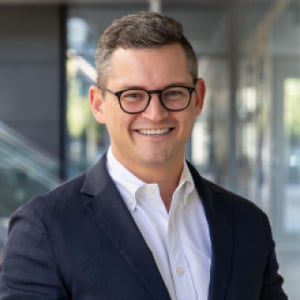
Associate Professor of Law, Sandra Day O'Connor College of Law, Arizona State University
Jonathan Green is an Associate Professor of Law at Arizona State University teaching Civil Procedure and Statutory Interpretation. His scholarship focuses on the history of political and legal thought. He is especially interested in the history of constitutionalism, theories of interpretation, and the concept of judicial power. His research has been published in the Arizona State Law Journal, the Journal of the History of Ideas, Modern Intellectual History, and the Historical Journal.
Prior to joining the ASU faculty in 2024, Professor Green was a Harry A. Bigelow Fellow at the University of Chicago. He previously clerked for Judge Neomi Rao of the U.S. Court of Appeals for the District of Columbia Circuit, and worked as a litigation associate at DLA Piper in Philadelphia.
Professor Green holds a J.D. from Yale Law School, where he was an editor of the Yale Law Journal. He received his PhD from the University of Cambridge, where he was a joint recipient of Prince Consort & Thirwall Prize, awarded annually for the best dissertation in the Cambridge History Faculty. He also received his MPhil from Cambridge, and earned his B.A., summa cum laude, from Northwestern University.
Interim Dean and Levin, Mabie, & Levin Professor, University of Florida Levin College of Law
Merritt E. McAlister is the Interim Dean and Levin, Mabie & Levin Professor at Levin College of Law. She joined the UF Law faculty in 2018, and she was appointed interim dean in June 2023. Prior to her career in academia, Dean McAlister was a partner in the national appellate practice group of King & Spalding.
Dean McAlister clerked for Justice John Paul Stevens of the Supreme Court of the United States and Judge R. Lanier Anderson III of the U.S. Court of Appeals for the Eleventh Circuit. She received her bachelor’s degree in English and Women and Gender Studies, magna cum laude, from Rice University and her law degree summa cum laude from the University of Georgia School of Law, where she served as Executive Articles Editor of the Georgia Law Review.
Dean McAlister teaches and writes in the areas of federal courts, judicial decision-making, constitutional law, and court administration. Her scholarship focuses on issues of institutional design in the federal appellate courts. Dean McAlister’s work has been published in the University of Pennsylvania Law Review, the Michigan Law Review, and the Northwestern University Law Review, among others. In 2020, she received the annual prize from the AALS Federal Courts Section for the best paper on federal courts by an untenured professor.
Associate Professor of Law, University of Missouri School of Law
Partner, Gibson, Dunn & Crutcher LLP
Russell Balikian is a partner in the Washington, D.C. office of Gibson, Dunn & Crutcher. He practices in the firm’s Appellate & Constitutional Law Group and Administrative Law & Regulatory Practice Group. He represents clients in high-stakes litigation before the Supreme Court of the United States and other federal and state courts across the country, as well as in major proceedings before administrative agencies. Russell was named “One to Watch” in Appellate Practice by Best Lawyers in 2023 and a “Rising Star” in Telecommunications by Law360 in 2024.
Russell has extensive experience in administrative law, especially in the telecom and technology sectors. He regularly represents clients challenging or supporting agency rules and orders, and he defends companies against enforcement actions by federal regulators, such as the Federal Communications Commission (FCC) and the Consumer Financial Protection Bureau (CFPB). Russell brings the capabilities of an appellate attorney to all stages of the case, from building the record before the agency to litigating the case in court.
Russell also has nationwide experience litigating appeals and dispositive motions in high-profile matters, including putative class actions, major commercial disputes, and mass-tort cases. He has represented clients at every level of the federal and state judiciary. Russell also advises clients on appellate strategy and critical legal issues.
Russell clerked for Justice Clarence Thomas on the Supreme Court of the United States, Judge Gregory G. Katsas of the U.S. Court of Appeals for the D.C. Circuit, and Judge Diane S. Sykes of the U.S. Court of Appeals for the Seventh Circuit. He received his law degree from Yale Law School, where he was Co-Editor-in-Chief of the Yale Law & Policy Review. He graduated summa cum laude from Taylor University with a bachelor’s degree in both Political Science and Biblical Literature.
Russell is admitted to practice law in the District of Columbia.
Judge, United States Court of Appeals, Ninth Circuit
General Counsel, Senior Litigation Counsel, New Civil Liberties Alliance
Zhonette brings a quarter-century of litigation experience to NCLA. After a federal clerkship, she spent many years litigating at large law firms in Washington, D.C., and Denver, Colorado, before beginning public interest litigation in 2018.
Zhonette has litigated in state, federal, and international venues and in matters ranging from pro bono custody issues to multi-district and class action cases for Fortune 100 companies. Zhonette spent the first part of her career focused on high-stakes complex commercial litigation and white-collar defense. Since changing her legal practice to taming the Administrative State, Zhonette has focused on the Administrative Procedure Act, natural resources, takings issues and other constitutional claims.
Zhonette is a graduate of Georgetown University Law Center and is admitted to practice in the District of Columbia, the State of Colorado, the Commonwealth of Virginia, and various federal courts.
Partner, Latham & Watkins LLP
Roman Martinez is a partner in the Washington, D.C. office of Latham & Watkins. As a member of the firm’s Supreme Court and Appellate Practice, he focuses primarily on appeals in the Supreme Court of the United States, the United States Courts of Appeals, and state appellate courts. Mr. Martinez has handled civil and criminal matters involving a wide range of constitutional, statutory, and administrative law issues, and he has argued cases in the Supreme Court and the D.C., Sixth, Ninth, and Federal Circuits, among other courts.
Mr. Martinez’s appellate practice encompasses civil and criminal matters spanning virtually all areas of law. He recently rejoined Latham after serving as an Assistant to the Solicitor General at the US Department of Justice. In that role, he represented the United States in litigation before the Supreme Court and advised the Solicitor General on the government’s appellate litigation throughout the country.
Mr. Martinez has personally argued seven cases in the Supreme Court, including important cases in the fields of patent law, criminal law, civil rights, and civil procedure. He has filed over 75 briefs in the Supreme Court involving a wide range of legal issues, including administrative, tax, securities, intellectual property, criminal, environmental, education, civil rights, immigration, and First Amendment law.
Over the past year, Mr. Martinez has led Latham appellate teams in cases involving the Administrative Procedure Act, securities, ERISA, products liability, and employment law. Earlier this year, he successfully persuaded the Supreme Court to reject the State of Connecticut’s high-profile effort to reinstate the murder conviction of Michael Skakel. He frequently consults with clients to develop creative approaches to difficult legal questions that arise in and out of litigation.
Mr. Martinez’s extensive pro bono practice focuses chiefly on administrative law challenges to unlawful agency action by the Department of Veterans Affairs, as well as on criminal defense appeals. In 2018, he persuaded the Supreme Court to grant certiorari on behalf of a veteran seeking judicial review of an unlawful regulation promulgated by the Department of Veterans Affairs.
Before joining Latham, Mr. Martinez served as a law clerk to Chief Justice John G. Roberts of the Supreme Court of the United States and to then Judge Brett M. Kavanaugh of the D.C. Circuit.
From 2002 to 2005, Mr. Martinez served as an advisor on the Iraqi political and constitutional process, in various roles at the White House, at the US Embassy and Coalition Provisional Authority in Iraq, and at the Department of Defense. He received the Secretary of Defense Medal for the Global War on Terrorism and the US Department of Defense Distinguished Public Service Award for his service in Iraq.
Mr. Martinez is a member of the Edward Coke Appellate Inn of Court, and he serves on the US Chamber of Commerce's Administrative Law & Government Litigation Advisory Committee. He previously served as a member of the D.C. Circuit’s Advisory Committee on Procedures, and he now serves on the US District Court for the District of Columbia’s Committee on Grievances. His writing has appeared in The Wall Street Journal, The Washington Post, and other publications. He has appeared as a guest on the PBS NewsHour and other television programs to discuss the Supreme Court.
Partner, Williams & Connolly
Luke McCloud’s practice focuses on complex civil matters, with an emphasis on patent litigation. Luke has tried cases to judgment in federal and state courts. His clients have included global pharmaceutical and medical device manufacturers, leading technology companies, financial institutions, law firms, and individuals. In 2023, Luke was recognized as a “Leading Lawyer” by The Legal 500, a “Rising Star” by Law360 and The National Law Journal, and among Bloomberg Law’s “40 Under 40” list. He has also been named a “Rising Star—General Commercial Disputes” by The Legal 500 (2020-2022), and a Managing IP “Rising Star” (2020).
Luke is also an experienced appellate advocate. He has argued twice in the U.S. Supreme Court and in multiple federal courts of appeals, and has filed dozens of briefs in high-stakes cases throughout the federal system. His appellate oral advocacy was praised by The Recorder as “poised and polished.” In the October Term 2014, Luke served as a law clerk to Justice Sonia M. Sotomayor on the Supreme Court of the United States. He previously clerked for then Judge Brett M. Kavanaugh of the United States Court of Appeals for the District of Columbia Circuit and Judge Paul V. Niemeyer of the United States Court of Appeals for the Fourth Circuit.
United States District Judge, United States District Court for the District of Columbia
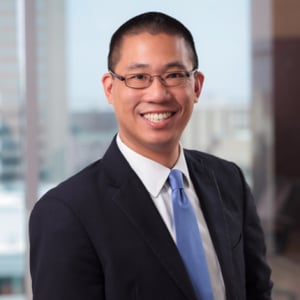
Chair, Issues & Appeals, Hunton Andrews Kurth LLP
The former Solicitor General of West Virginia, Mr. Lin has been on the front lines of many precedent-setting cases in appellate courts across the country, including in a US Supreme Court victory that George Will called “the court’s most severe rebuke of a president” since the Truman administration. Having argued more than 60 appeals, he brings to clients a well-honed ability to identify the most persuasive issues for appeal and a practiced understanding of how best to frame complex legal questions in appellate courts.
With experience in the private sector and multiple branches of government, Mr. Lin’s practice has spanned a wide range of issues, including major questions of constitutional and administrative law at the federal and state levels. On behalf of more than two dozen states, he won a stay from the US Supreme Court of the EPA’s Clean Power Plan. Described by the New York Times as an “unprecedented” order, the stay was the first time the Supreme Court had ever put a regulation on hold before review by a federal appeals court. In that same case, Elbert argued before the en banc DC Circuit in an historic proceeding that one commenter quoted in E&E News compared to “the NBA All-Star Game.” At the state level, Elbert led the effort that persuaded the West Virginia Supreme Court of Appeals to overturn an injunction of the state’s right-to-work law.
In 2013, Mr. Lin was appointed the Solicitor General of West Virginia. During his four-and-a-half year tenure, he served as a member of the Attorney General’s senior management team, oversaw all civil and criminal appeals, and argued nearly two dozen cases in federal and state appellate courts. He authored more than twenty-five briefs in the US Supreme Court and more than forty-five formal Opinions of the Attorney General.
Earlier in his career, Mr. Lin served as a trial attorney in the Federal Programs Branch of the US Department of Justice’s Civil Division, where he received a Special Service Award. He has also been a law clerk at all three levels of the federal judiciary: for Justice Clarence Thomas on the US Supreme Court; for Judge William H. Pryor Jr. on the US Court of Appeals for the Eleventh Circuit; and for Senior Judge Robert E. Keeton on the US District Court for the District of Massachusetts.
Mr. Lin speaks regularly on a wide variety of topics, including constitutional law, administrative law, environmental law, state and federal relations, the US Supreme Court, and appellate practice. He has testified before Congress, and has spoken at the national conventions of the American Bar Association, the Association of Corporate Counsel, the National Asian Pacific American Bar Association, the Federalist Society, Americans for Prosperity, and the American Legislative Exchange Council. He is an elected member of the American Law Institute, a public member of the Administrative Conference of the United States, and a fellow of the American Academy of Appellate Lawyers.
Mr. Lin is admitted to practice in the following federal courts: the Supreme Court of the United States; the First, Second, Third, Fourth, Fifth, Sixth, Seventh, Eighth, Ninth, Eleventh, D.C., and Federal Circuits; the District of Massachusetts; the Northern and Southern Districts of West Virginia; and the Eastern and Western Districts of Virginia.
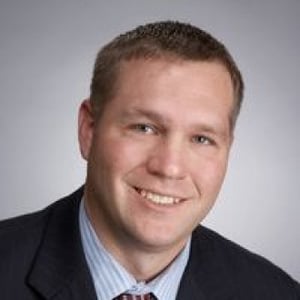
Founder, Jarchow Law, LLC
Adam Jarchow is a candidate for Wisconsin Attorney General. Adam has practiced law for nearly 20 years and helps his wife, Barbara, run their small businesses. In 2014, Adam was elected to the Wisconsin State Assembly, where he fought for smaller, limited government. Adam was the lead author of several reforms that were signed into law by Governor Walker. He is an avid sportsman and lover of the outdoors. Adam has spent nearly a decade as a volunteer firefighter with the Apple River Fire Department. He also helped start the Polk County K-9 Association, which raises money for the Polk County Sheriff’s Department K-9 Unit. Adam received his J.D. from the University of Florida College of Law.
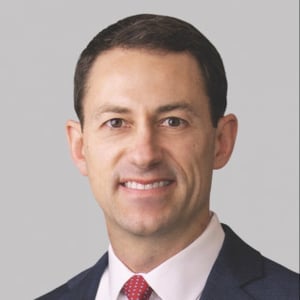
Partner, Foley & Lardner LLP
Matthew Krueger is a partner in the Government Enforcement Defense and Investigations practice group at Foley & Lardner LLP. Before joining Foley, Matt served as the United States Attorney for the Eastern District of Wisconsin after being recommended by a bipartisan nominating commission. As the district’s chief federal law enforcement officer, Matt supervised all criminal and civil litigation involving the United States in 28 counties. He also served for five years as an Assistant U.S. Attorney, prosecuting a broad array of federal crimes. Before serving in the U.S. Attorney’s Office, Matt practiced trial and appellate litigation at an international law firm in Washington, D.C. He clerked for the Hon. Paul V. Niemeyer on the U.S. Court of Appeals for the Fourth Circuit and served as a Bristow Fellow in the Solicitor General’s Office, helping represent the United States before the Supreme Court. Matt received his J.D., summa cum laude, from the University of Minnesota Law School.
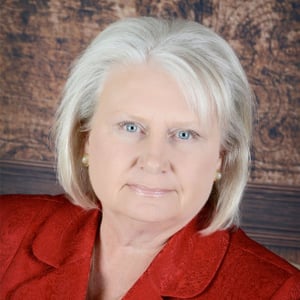
Founder & General Counsel, Amos Center for Justice and Liberty
Karen Mueller is a candidate for Wisconsin Attorney General. Karen is a civil rights attorney from Chippewa Falls, where she resides with her family. She is the Founder and General Counsel of the Amos Center for Justice and Liberty, which defends those who have experienced a violation of one or more of their liberties by governmental agents or by private actors carrying out the work, purposes, or goals of the government to the detriment of citizens. Throughout her legal career, Karen has been a civil rights and employment law attorney in her own private practice and has worked with discrimination and harassment claims. Karen received her J.D. from the University of North Dakota School of Law.
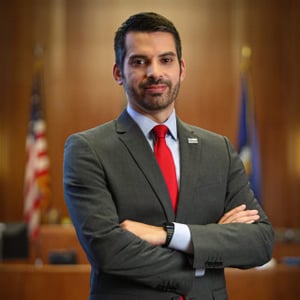
District Attorney, Fon du Lac County
Eric Toney is a candidate for Wisconsin Attorney General. Eric is Fond du Lac County District Attorney and President-Elect of the Wisconsin District Attorney’s Association (WDAA). Toney has successfully handled a wide array of cases ranging from cold case and intentional homicide, sexual assault, domestic violence, violent crime, gun crime, financial crimes, racketeering cases and more. First elected in 2012, District Attorney Toney is serving in his third term as Fond du Lac District Attorney. Toney is the current President-Elect of the WDAA. He’s served as Chairman of the Legislative Committee and Communications Committee, and he’s a former Secretary/Treasurer of the Association. Eric received his J.D. from the Hamline University School of Law.
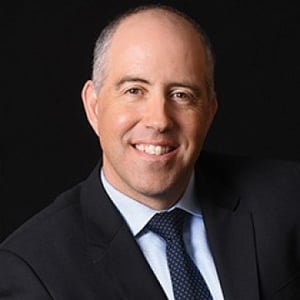
Albert A. Walsh Chair in Real Estate, Land Use, and Property Law; Faculty Director, Urban Law Center, Fordham Law School
Nestor Davidson joined Fordham in 2011 and was named the Albert A. Walsh Professor of Real Estate, Land Use and Property Law in 2017. Professor Davidson is an expert in property, urban law, and affordable housing law and policy, and is the co-author of the casebook Property Law: Rules, Policies and Practices (7th ed. 2017). Professor Davidson founded and serves as the faculty director of the law school’s Urban Law Center and previously served as Associate Dean for Academic Affairs.
Professor Davidson practiced with the firm of Latham and Watkins, focusing on commercial real estate and affordable housing, and served as Special Counsel and Principal Deputy General Counsel at the U.S. Department of Housing and Urban Development. He currently serves as a Member of the Board of the New York State Housing Finance Agency.
Professor Davidson earned his AB from Harvard College and his JD from Columbia Law School. After law school, he clerked for Judge David S. Tatel of the United States Court of Appeals for the District of Columbia Circuit and Justice David H. Souter of the Supreme Court of the United States.
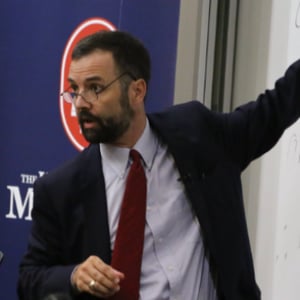
Professor of Law and Jamie L. Whitten Chair in Law and Government, University of Mississippi School of Law
Christopher Green (https://law.olemiss.edu/faculty-directory/christopher-green/) is Professor of Law and Jamie L. Whitten Chair in Law and Government at the University of Mississippi, where he has taught since 2006. He is a graduate of Princeton University and Yale Law School, and has a PhD in philosophy from the University of Notre Dame. He clerked for Judge Rhesa H. Barksdale on the Fifth Circuit and is the author of Equal Citizenship, Civil Rights, and the Constitution: The Original Sense of the Privileges or Immunities Clause (2015) and a large number of articles and essays on constitutional theory and the Fourteenth Amendment, including the two-part Original Sense of the (Equal) Protection Clause and Clarity and Reasonable Doubt in Early State-Constitutional Judicial Review. He is an affiliated scholar with the University of San Diego Center for the Study of Constitutional Originalism.
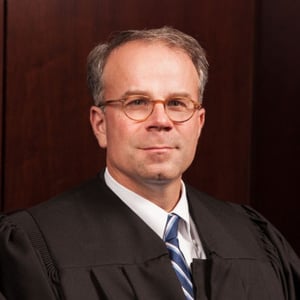
U.S. Court of Appeals, Seventh Circuit
Born 1971 in Fort Wayne, IN
Federal Judicial Service:
Judge, U.S. Court of Appeals for the Seventh Circuit
Nominated by Donald J. Trump on February 15, 2018, to a seat vacated by Richard Allen Posner. Confirmed by the Senate on May 14, 2018, and received commission on May 21, 2018.
Education:
St. Joseph’s College, Rensselaer, Indiana, B.B.A., 1993
Northwestern University School of Law, J.D., 1998
Professional Career:
Law clerk, Hon. Paul V. Niemeyer, U.S. Court of Appeals for the Fourth Circuit, 1998-1999
Law clerk, Hon. Anthony M. Kennedy, Supreme Court of the United States, 1999-2000
Private practice, Cleveland, Ohio, 2000-2002
Assistant U.S. attorney, Southern District of New York, 2002-2006
Counselor to the deputy attorney general, U.S. Department of Justice, 2006
Associate counsel, President George W. Bush, 2007
General counsel, National Security Council, and senior associate counsel, President George W. Bush, 2007-2009
Private practice, Chicago, Illinois, 2009-2018
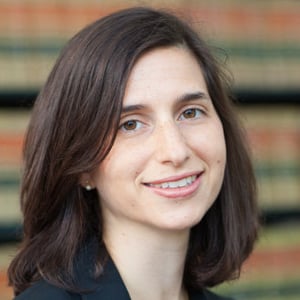
Professor of Law, University of Wisconsin School of Law
Miriam Seifter's research and teaching interests include administrative law, federalism, state and local government law, energy law, and property law. Her recent work focuses on executive power and the separation of powers at the state level, and on the role of states and interest groups in the federal regulatory process. Her publications appear or are forthcoming in the Harvard Law Review, the NYU Law Review, the UCLA Law Review, and the Virginia Law Review, among others. In 2017, UW Law students honored Professor Seifter with the Classroom Teacher of the Year Award, and in 2018, she received one of twelve Distinguished Teaching Awards from the University of Wisconsin-Madison. For her article Gubernatorial Administration, Seifter was named the 2017 winner of the American Constitution Society's Richard D. Cudahy Writing Competition on Regulatory and Administrative Law.
Professor Seifter received a B.A. magna cum laude from Yale University, an M.Sc. with distinction from Oxford University, and a J.D. magna cum laude from Harvard Law School, where she was the Environmental Fellow and an Articles Editor on the Harvard Law Review. After law school, she served as a law clerk for Chief Judge Merrick Garland on the D.C. Circuit and for Justice Ruth Bader Ginsburg at the Supreme Court of the United States. Prior to joining the UW Law faculty, she was a Visiting Researcher and Adjunct Professor of Law at Georgetown University Law Center and worked in private practice at Munger, Tolles & Olson LLP in San Francisco.

Chief Judge, United States Court of Appeals, Sixth Circuit
JEFFREY S. SUTTON is the Chief Judge of the United States Court of Appeals for the Sixth Circuit. He has served as Chair of the Federal Judicial Conference Committee on Rules of Practice and Procedure, Chair of the Advisory Committee on Appellate Rules, and Chair of the Supreme Court Fellows Commission. He currently serves as Chair of the Executive Committee of the Judicial Conference of the United States. Since 1993, Chief Judge Sutton has been an adjunct professor at The Ohio State University College of Law, where he teaches seminars on State Constitutional Law, the United States Supreme Court, and Appellate Advocacy. He also teaches a class on State Constitutional Law at Harvard Law School. Among other publications, he is the author of Who Decides? States as Laboratories of Constitutional Experimentation and 51 Imperfect Solutions: States and the Making of American Constitutional Law. He is the co-author of a casebook, State Constitutional Law: The Modern Experience, as well as The Law of Judicial Precedent. He is also the co-editor of The Essential Scalia: On the Constitution, the Courts, and the Rule of Law. In 2006, Chief Judge Sutton was elected to the American Law Institute, and in 2017 he was elected to its Council.
Attorney
Maya M. Noronha is a civil rights attorney.
As special counsel for external affairs at First Liberty Institute, Maya worked for the largest legal organization in the United States dedicated exclusively to defending religious liberty for all Americans.
Previously, Maya worked at the U.S. Department of Health and Human Services, as acting chief of staff of the Administration for Children and Families; principal advisor to the Commissioner of the Administration on Children, Youth, and Families; and senior advisor to the Director of the Office for Civil Rights and regulatory reform officer. She provided advice on federal civil rights laws that prohibit discrimination on the basis of conscience, religion, race, color, national origin, limited English proficiency, sex, disability, age, and health information in both health care and human services.
In the area of election law, Maya has advised officials elected to or candidates for President, U.S. Senate, U.S. House of Representatives, Governor, state legislature, city council, and magisterial district judge. She practiced law at Baker Hostetler LLP, where she was on the Political Law and Federal Advocacy Teams, advising clients on voting rights, redistricting, election integrity, campaign finance, financial reporting, ethics compliance, as well as conducting trial and appellate litigation. She also has delivered legislative testimony, planned continuing legal education conferences on election law, and published about voting rights and election administration.
In addition to addressing the Federalist Society, she has delivered remarks to the White House Initiative on Asian American Pacific Islanders, United States Senate, Women in Government Relations, Georgetown University, George Mason University School of Law, the Columbus School of Law at the Catholic University of America, and Arizona State University Cronkite School of Journalism.
Maya is in Phi Beta Kappa, a member of the Alpha Sigma Nu Jesuit Honor Society, and a John Carroll Scholar. Forbes Magazine recognized Maya as one of its 30 under 30 in Law and Public Policy.
She serves concurrently on the Federalist Society’s Free Speech & Election Law Executive Committee and the American Bar Association’s Standing Committee on Election Law.
Education
· J.D., Georgetown University Law Center, 2011
· A.B., Georgetown University, 2005
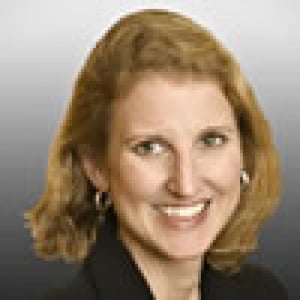
President, American Constitution Society for Law and Policy
Caroline Fredrickson joined ACS in 2009 and serves as president. She oversees the group and provides a steady hand of leadership to the nation’s leading progressive legal organization.
During her tenure, Caroline has helped grow ACS, which now has more than 40 lawyer chapters across the country, student chapters in nearly every law school in the United States, and thousands of members throughout the nation. She is an eloquent spokesperson for ACS and the progressive movement on issues such as civil and human rights, judicial nominations and the importance of the courts in America, marriage equality, voting rights, the role of money in politics, labor law, anti-discrimination efforts, and so much more.
She has been widely published on a wide range of legal and constitutional issues and is a frequent guest on television and radio shows, including a notable and well-covered appearance on Fox News’ The O’Reilly Factor in 2012 defending the constitutionality of the Affordable Care Act.
Before joining ACS, Caroline served as the director of the ACLU’s Washington legislative office and as general counsel and legal director of NARAL Pro-Choice America. In addition, Caroline was chief of staff to Sen. Maria Cantwell and deputy chief of staff to then-Senate Democratic Leader Tom Daschle. During the Clinton administration, she served as special assistant to the president for legislative affairs.
Caroline graduated summa cum laude from Yale University with a Bachelor of Arts in Russian and East European Studies in 1986 and from Columbia University School of Law with a J.D. in 1992. In law school, she was a Harlan Fiske Stone scholar, served on the Columbia Law Review and co-founded the Columbia Journal of Gender and Law. Following law school she clerked for James L. Oakes of the United States Court of Appeals for the Second Circuit. She currently is a member of Law Students for Reproductive Justice's Advisory Board.
Guy Anderson Chair and Professor of Law, Brigham Young University Law School
Professor Gedicks holds the Guy Anderson Chair, one of three endowed chairs at the Law School. He is widely published on law and religion, constitutional law, and constitutional interpretation, including two books,The Rhetoric of Church and State: A Critical Analysis of Religion Clause Jurisprudence (Duke University Press, 1995), and Choosing the Dream: The Future of Religion in American Public Life (Greenwood Press, 1991) (with Roger Hendrix).
Professor Gedicks is an active defender of the contraception mandate of the Affordable Care Act and opposes efforts by owners of for-profit businesses to obtain religious exemptions from the mandate. See "One Cheer for Hobby Lobby: Improbably Alternatives, Trutly Strict Scrutiny, and Third-Party Employee Burdens," 38 Harvard Journal of Law & Gender 153 (2015); "RFRA Exemptions from the Contraception Mandate: An Unconstitutional Accommodation of Religion," 49 Harvard Civil Rights-Civil Liberties Law Review (Spring 2014); (with Rebecca Van Tassell); "Invisible Women" Why an Exemption for Hobby Lobby Would Violate the Establishment Clause," 67 Vanderbilt Law Review En Banc 51 (2014) (with Andrew Koppelman); and "With Religious LIberty for All: A Defense of the Affordable Care Act's Contraception Coverage Mandate," 6 Advance 135 (Fall 2012). He was principal author and counsel of record on a U.S. Supreme Court amicus brief filed for himself and twenty other church-state scholars in the Hobby Lobbyand Conestoga Wood cases, arguing that for-profit employer exemptions would violate the Establishment Clause, and also published a widely read op-ed in the Washington Post making the same argument, "Paying for the Boss's Religion" (January 20, 2014).
Other recent publications include "Cross, Crucifix, Culture: An Approach to the Constitutional Meaning of Confessional Symbols," 13 First Amendment Law Review (forthcoming 2015) (with Pasquale Annicchino); "Incorporation of the Establishment Clause Against the States: A Logical, Textual, and HIstorical Account," 88Indiana Law Journal 699 (2013); and "Narrative Pluralism and Doctrinal Incoherence in Hosanna-Tabor," 64 Mercer Law Review 405 (2013). Professor Gedicks is currently working with Professors Robert Tuttle, Micah Schwartzman, and Nelson Tebbe on a freedom of religion casebook for West Publishing.
Professor Gedicks has lectured in Italian at universities throughout Italy, including the Catholic University of the Sacred Heart (at both its Milan and Piacenza campuses), the Graduate Institute of Sant'Anna in Pisa, and the Universities of Alessandria, Como, Florence, Genoa, Milan, Salerno, Siena, and Turin. He was a Visiting Research Fellow for the ReligioWest project at the European University Institute in Florence, Italy during November and December 2012.
Professor Gedicks grew up in New Jersey and southern California. Following graduation from law school and a clerkship on the Ninth Circuit, he practiced corporation and securities law in Phoenix, Arizona, until he entered law teaching. Professor Gedicks joined the BYU law faculty in 1990 after four years at Mercer University in Macon, Georgia, and a year at the University of Denver. He has been a visiting professor at the law schools of the University of North Carolina (Chapel Hill), the University of Notre Dame, and the University of Utah.

Professor of Law, The George Washington University Law School; CEO Emeritus, National Constitution Center
Jeffrey Rosen is the CEO Emeritus of the National Constitution Center, a professor of law at the George Washington University Law School, a senior fellow at the Foundation for Individual Rights and Expression (FIRE), and a contributing editor of The Atlantic. Host of "The Blessings of Liberty" podcast, he was previously the legal affairs editor of The New Republic and a staff writer for the New Yorker.
Rosen is the author of the New York Times bestsellers The Pursuit of Happiness and Conversations with RBG. His new book is The Pursuit of Liberty: How Hamilton vs. Jefferson Ignited the Lasting Battle Over Power in America.
Rosen is a graduate of Harvard College; Oxford University, where he was a Marshall Scholar; and Yale Law School. He is an elected member of the American Philosophical Society and the American Law Institute. In 2024, the French government recognized him as a Chevalier in the Ordre des Arts et des Lettres.
Knights of Columbus Professor of Law and the Catholic Tradition, The Catholic University of America Columbus School of Law
Kevin C. Walsh teaches and writes in the areas of federal jurisdiction, constitutional law, and the U.S. Supreme Court. His scholarship explores the doctrines that define—and delimit—the scope of federal judicial power.
Professor Walsh graduated from Harvard Law School, where he was Articles Chair for Volume 115 of the Harvard Law Review. After graduation, he clerked for Judge Paul V. Niemeyer of the United States Court of Appeals for the Fourth Circuit and Associate Justice Antonin Scalia of the Supreme Court of the United States. He then practiced law at Hunton & Williams LLP and taught as a visiting assistant professor at Villanova University School of Law. Walsh received his A.B. from Dartmouth College, and an M.A. in Theological Studies from the University of Notre Dame. He taught at the University of Richmond School of Law for thirteen years prior to joining The Catholic University of America, where he currently resides.
In early 2011, Professor Walsh filed two amicus curiae briefs addressing jurisdictional issues in the State challenges to the individual mandate in the federal healthcare reform legislation: a brief in Virginia v. Sebelius (United States Court of Appeals for the Fourth Circuit), and a brief in Florida v. HHS (United States Court of Appeals for the Eleventh Circuit).
Founder, Jarchow Law, LLC
Adam Jarchow is a candidate for Wisconsin Attorney General. Adam has practiced law for nearly 20 years and helps his wife, Barbara, run their small businesses. In 2014, Adam was elected to the Wisconsin State Assembly, where he fought for smaller, limited government. Adam was the lead author of several reforms that were signed into law by Governor Walker. He is an avid sportsman and lover of the outdoors. Adam has spent nearly a decade as a volunteer firefighter with the Apple River Fire Department. He also helped start the Polk County K-9 Association, which raises money for the Polk County Sheriff’s Department K-9 Unit. Adam received his J.D. from the University of Florida College of Law.
Partner, Foley & Lardner LLP
Matthew Krueger is a partner in the Government Enforcement Defense and Investigations practice group at Foley & Lardner LLP. Before joining Foley, Matt served as the United States Attorney for the Eastern District of Wisconsin after being recommended by a bipartisan nominating commission. As the district’s chief federal law enforcement officer, Matt supervised all criminal and civil litigation involving the United States in 28 counties. He also served for five years as an Assistant U.S. Attorney, prosecuting a broad array of federal crimes. Before serving in the U.S. Attorney’s Office, Matt practiced trial and appellate litigation at an international law firm in Washington, D.C. He clerked for the Hon. Paul V. Niemeyer on the U.S. Court of Appeals for the Fourth Circuit and served as a Bristow Fellow in the Solicitor General’s Office, helping represent the United States before the Supreme Court. Matt received his J.D., summa cum laude, from the University of Minnesota Law School.
Founder & General Counsel, Amos Center for Justice and Liberty
Karen Mueller is a candidate for Wisconsin Attorney General. Karen is a civil rights attorney from Chippewa Falls, where she resides with her family. She is the Founder and General Counsel of the Amos Center for Justice and Liberty, which defends those who have experienced a violation of one or more of their liberties by governmental agents or by private actors carrying out the work, purposes, or goals of the government to the detriment of citizens. Throughout her legal career, Karen has been a civil rights and employment law attorney in her own private practice and has worked with discrimination and harassment claims. Karen received her J.D. from the University of North Dakota School of Law.
District Attorney, Fon du Lac County
Eric Toney is a candidate for Wisconsin Attorney General. Eric is Fond du Lac County District Attorney and President-Elect of the Wisconsin District Attorney’s Association (WDAA). Toney has successfully handled a wide array of cases ranging from cold case and intentional homicide, sexual assault, domestic violence, violent crime, gun crime, financial crimes, racketeering cases and more. First elected in 2012, District Attorney Toney is serving in his third term as Fond du Lac District Attorney. Toney is the current President-Elect of the WDAA. He’s served as Chairman of the Legislative Committee and Communications Committee, and he’s a former Secretary/Treasurer of the Association. Eric received his J.D. from the Hamline University School of Law.

Young Legal Scholars Paper Presentations [Part 1]
Charles F. Capps, Katherine Mims Crocker, Gregory Dickinson, Jonathan Green, Merritt E. McAlister, Ryan Snyder
Prof. Charles Capps, “What Interpretation Just Is and Why It Matters,” Associate Professor of Law,...
Federalism & Separation of Powers: A Revival of the Separation of Powers at the Supreme Court?
Russell Balikian, Daniel Bress, Zhonette M. Brown, Roman Martinez, Luke McCloud
The Supreme Court’s most recent term was one of significance with respect to the separation...
Daniel Webster Debate Series: Should the Court Overturn Citizens United?
Doug Jones, Ana Reyes, Charles R. Spies
The Federalist Society's Georgetown Law Chapter'sDaniel Webster Debate Series presents Daniel Webster Debate Series:Should...
Topics
School Policies Hiding Students’ Gender Identities Face Different Legal Fates
In the United States, approximately 1,044 school districts (impacting more than 10 million students) have...
PG-15 FedSoc Study Break: My Experience as a State Solicitor General & West Virginia v. EPA
Elbert Lin
The Federalist Society's Federalism & Separation of Powers Practice Group, Student Division & University of Miami School...
Wisconsin Attorney General Candidates' Forum
Adam M. Jarchow, Matthew D. Krueger, Karen Mueller, Eric Toney
Moderated by Matthew Krueger, former United States Attorney for the Eastern District of Wisconsin Please...
Wisconsin Attorney General Candidates' Forum
Milwaukee Lawyers Chapter
Milwaukee, WIShowcase Panel III: The States & Administrative Law
Nestor Davidson, Christopher R. Green, Michael Scudder, Miriam Seifter, Jeffrey S. Sutton
We live in a system where regulators make the rules, investigate alleged violations of the...
New Applications of Section 2 of the Voting Rights Act to Vote Denial Cases
Maya Noronha
Note from the Editor: This article discusses recent federal appellate court decisions with respect to...
Debate: Hobby Lobby Decision
Caroline Fredrickson, Frederick Gedicks, Jeffrey Rosen, Kevin C. Walsh
The Freedom Restoration Act prohibits the federal government from requiring closely held corporations to provide contraceptive...