
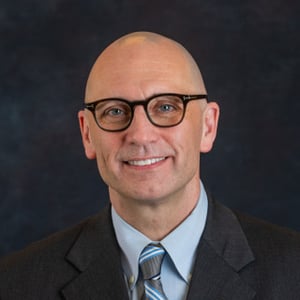
Senior Counsel for Law and Policy, Committee for Justice
Jeff is a registered patent attorney and an intellectual property and innovation policy professional with a unique combination of training and real-world experience. Jeff is also currently a PhD candidate at the University of Pittsburgh Graduate School of Public and International Affairs (GSPIA). His dissertation is entitled “An Inquiry into the Nature and Causes of American Innovation: An Austrian Economics Perspective.”
Jeff maintains an active intellectual property law practice in the life sciences space. While counseling clients and working on his dissertation and other scholarship, Jeff remains active in the policy analysis and advocacy space. He currently serves as the President of the Association for American Innovation and a member and former Chair of the Public Policy Legal Task Force (PPLTF) for the Association of University of Technology Managers (AUTM).
Jeff has a bachelor’s degree chemical and biomedical engineering with concentrations in molecular biology and fermentation technology and from Carnegie Mellon. He also has a master’s degree in industrial administration (business) from Carnegie Mellon where he concentrated on international management, marketing and finance. He earned his law degree from the Duquesne University School of Law with a focus on intellectual property law.
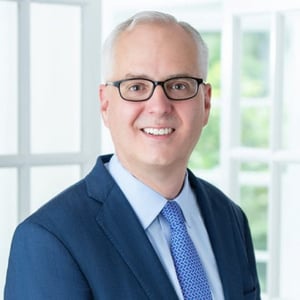
Principal, Clear IP, LLC
Joseph Matal is the Principal at Clear IP, LLC.
Joe has served as both the U.S. Patent and Trademark’s Acting Director and Acting Solicitor. As Acting Solicitor, he defended the agency in intellectual property cases before the U.S. Court of Appeals for the Federal Circuit and U.S. Supreme Court. In his role in the Solicitor’s Office, he participated in briefing almost every major case involving PTAB trials that has come before the Federal Circuit, including cases that have defined the Board’s powers and the evidence that it may consider, the content of final decisions, and the burdens and scope of motions to amend. Recent cases include Uniloc v. Hulu, Thryv v. Click-to-Call, and Aqua Products v. Matal. Previously, Joe served in senior legal roles for more than a decade for the U.S. Senate Judiciary Committee. In that capacity, he negotiated and drafted many of the key provisions of the America Invents Act.
In his roles at the USPTO, Joe briefed and argued numerous appeals of patent and trademark decisions before the Federal Circuit; oversaw the management of the USPTO and its 13,000 employees; and advised the U.S. Solicitor General’s Office in key IP cases before the Supreme Court.
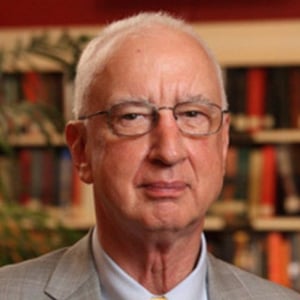
Former Chief Judge, United States Court of Appeals for the Federal Circuit
Judge Michel served for more than 22 years on the Federal Circuit, retiring on May 31, 2010. From December 25, 2004 until his retirement, he also discharged the duties of Chief Judge of this national court, serving simultaneously on the U.S. Judicial Conference -- the Judiciary's governing body -- and by appointment of the Chief Justice on its seven-judge Executive Committee.
He judged several thousand appeals and authored more than 800 opinions, one third concerning intellectual property law. Intellectual Asset Management magazine inducted him into its Hall of Fame and he was designated one of the 50 most influential leaders in intellectual property law in the world. His contributions were also recognized by lifetime achievement and similar awards by the American Intellectual Property Law Association (AIPLA); Intellectual Property Owners Education Foundation (IPO); the American Bar Association's Intellectual Property Section; Managing Intellectual Property magazine; the Sedona Conference; the Patent and Trademark Office Society (PTOS); the New York, Chicago, Philadelphia, and Los Angeles Intellectual Property Law Associations; and the William C. Connor, the Giles S. Rich, and the Richard Linn Intellectual Property American Inns of Court. In 2010 the Los Angeles IP Inn was renamed in his honor as the Paul R. Michel IP Inn.
Judge Michel received the Jefferson Medal, the Eli Whitney Award, and the Katz-Kiley Prize as well as Honorary Doctor of Law degrees from the Catholic University of America and the John Marshall Law School. He is a lifetime Member of Honore of FICPI, the international association of private practitioners of intellectual property law. Williams College granted him the Kellogg Award for "outstanding leadership in law and public service."
Judge Michel has written numerous articles on patent law and advocacy, taught related courses and master classes at George Washington University, the University of Akron, and John Marshall law schools, serving as well on their IP advisory boards and on counterpart boards at the universities of California (Berkley), Washington, and Maryland. He co-authored a casebook, Patent Litigation and Strategy (West, 1999) and an August 2010 editorial in the New York Times on strengthening the patent system to promote prosperity and create new jobs.
A frequent speaker at conferences and law schools during his judicial tenure and since, he retired from a lifetime appointment to be free to speak out on the national need for better patent policy and protection of intellectual property and the vital, unmet resource needs of the courts, the PTO, the International Trade Commission, and other IP-related agencies. He was appointed Distinguished Scholar in Residence by IPO, following his retirement. Judge Michel also consults for law firms and their clients in intellectual property litigations, conducting moot courts, mock trials, case evaluations, editing briefs, advising on strategy and providing mediation and arbitration services.
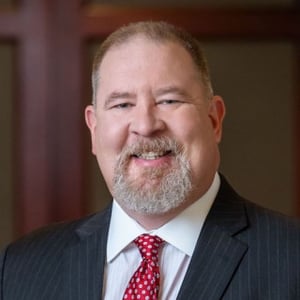
President & CEO, IPWatchdog, Inc.
Gene Quinn is a patent attorney and a leading commentator on patent law and innovation policy. Mr. Quinn has twice been named one of the top 50 most influential people in IP by Managing IP Magazine, in both 2014 and 2019. From 2017-2023, Mr. Quinn has also been recognized by IAM Magazine as one of the top 300 IP strategists in the world, and in 2021 he was recognized by IAM in their inaugural Strategy 300 Global Leaders list.
Mr. Quinn founded IPWatchdog.com in 1999, and he is currently President & CEO of IPWatchdog, Inc. According to IAM Magazine, Mr. Quinn “has reshaped the IP debate in the United States in a way that has forced policy makers to carefully consider the macroeconomic effects of IP law and its potential to drive innovation and economic activity.”
Regarded as an expert on software patentability and U.S. patent procedure, Mr. Quinn has advised inventors, entrepreneurs and start-up businesses throughout the U.S. and around the world. He consults with attorneys facing peculiar procedural issues at the Patent Office, advises investors and executives on patent law changes and pending litigation matters, and has represented patent practitioners before the Office of Enrollment & Discipline.
Mr. Quinn began his career as a litigator handling a variety of civil litigation matters, and he has been a patent attorney for nearly two decades. He has previously taught a variety of intellectual property courses at the law school level, teaching courses such as patent law, patent claim drafting, patent prosecution, copyright law, trademark law and introduction to intellectual property at Syracuse University College of Law, Temple University School of Law, The University of Toledo College of Law, the University of New Hampshire School of Law, the John Marshall Law School (Chicago) and Whittier Law School. Since 2000 Mr. Quinn has also taught the leading patent bar review course in the nation.
Mr. Quinn is admitted to practice law in New Hampshire, is a Registered Patent Attorney licensed to practice before the United States Patent Office and is also admitted to practice before the United States Court of Appeals for the Federal Circuit.

Professor of Law, Emory University School of Law
Professor Timothy Holbrook graduatedsumma cum laudefrom North Carolina State University, earning a BS in chemical engineering with a life sciences concentration. He received his JD from Yale Law School, where he served as a lead editor and publications director of theYale Journal on Regulation. After law school, he clerked for the Honorable Glenn L. Archer Jr. of the U.S. Court of Appeals for the Federal Circuit. Following his clerkship, Professor Holbrook worked in Budapest, Hungary, with the Hungarian patent law firm Danubia. Upon his return to the United States, he associated with the Washington, D.C., law firm of Wiley, Rein & Fielding (now Wiley Rein), where his practice focused on patent and appellate litigation.
Professor Holbrook has published widely on issues of patent law, international patent law and the patenting of human genes. His work appears in a variety of journals, including theHarvard Journal of Law and Technology,William and Mary Law Review,Washington University Law Review,SMU Law Reviewand twice inSciencemagazine. He is the co-author ofPatent Litigation and Strategy(3d ed.) with Judge Kimberly A. Moore and Chief Judge Paul R. Michel, both of the U.S. Court of Appeals for the Federal Circuit.
Before joining the Emory faculty, Professor Holbrook was a tenured professor at the Chicago-Kent College of Law. He served as the Edwin A. Heafey Jr. Visiting Professor of Law at Stanford Law School and also has taught as a visiting professor at the University of Denver Sturm College of Law and Washington University School of Law in St. Louis. He was a scholar-in-residence at the Center for Media and Communication Studies at the Central European University (Budapest, Hungary). While in Chicago, Professor Holbrook was a founder and the program chair for the Richard Linn Inn of Court. Since arriving in Atlanta, he helped establish the Atlanta Intellectual Property Inn of Court. He also has served as an expert or consultant in a variety of patent litigation cases, both in the United States and abroad.
Professor Holbrook teaches classes in Patent Law, International Patent Law, Patent Litigation, Trademark Law and Policy and Property Law.

Stevenson Bernard Professor, George Washington University Law School
The Honorable F. Scott Kieff is the Stevenson Bernard Professor at George Washington University Law School and a Visiting Fellow at Stanford University’s Hoover Institution.
He served as Commissioner of the U.S. International Trade Commission from 2013-2017. He also served during the Bush, Obama, and Trump Administrations in the part-time leadership of the national security defense-intelligence community.
He was previously a professor of law and medicine at Washington University in Saint Louis and a Senior Fellow at Hoover. A former law clerk to U.S. Circuit Judge Giles S. Rich, he is a graduate of Penn Law School and MIT, where he studied molecular biology and microeconomics. He was elected to the European Academy of Sciences and Arts in 2012 and the Academia Europaea in 2024.
His private sector work through Kieff Strategies LLC (www.kieffstrategies.com) provides neutral services including mediation and compliance, and expert services including crisis management, advising, and testimony.

Professor of Law, Antonin Scalia Law School, George Mason University
Adam Mossoff is Professor of Law at Antonin Scalia Law School, George Mason University. He has published extensively on why patents, copyrights, and other intellectual property rights have been—and should be—legally secured to innovators and creators as property rights. His scholarship has been relied on by the United States Supreme Court, by lower federal courts, and by U.S. federal agencies. He has been invited to testify numerous times before the U.S. Senate and the House of Representatives on intellectual property legislation. His writings on intellectual property policy have also appeared in the Wall Street Journal, New York Times, Forbes, Investors Business Daily, and in other media outlets. His journal articles can be downloaded here.
Professor Mossoff is a longstanding member of the Executive Committee of the Intellectual Property Practice Group of the Federalist Society, on which he served as Chairperson from 2016-2018, and he is Chair of the Intellectual Property Working Group of the Regulatory Transparency Project of the Federalist Society. He is a Senior Fellow and Chair of the Forum for Intellectual Property at the Hudson Institute, a Visiting Intellectual Property Fellow at the Heritage Foundation, and a member of the Board of Directors of the Center for Intellectual Property Understanding. He is a member of the Intellectual Property Rights Policy Committee of ANSI and he has served as Chair and Vice-Chair of the Intellectual Property Committee of the IEEE-USA, on which he remains a member in good standing.
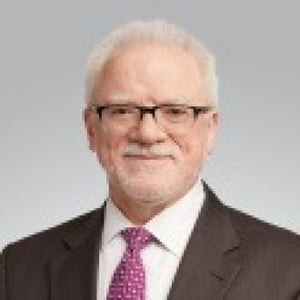
Partner, Williams & John LTD
David L. Applegate is a partner of Williams & John Ltd., where he chairs the firm's intellectual property practice group and is a member of the commercial litigation practice group. He focuses his practice on patent, trademark, copyright, trade secret, unfair competition, and business litigation and arbitration, and on U. S. Supreme Court and related amicus brief practice.
Mr. Applegate is a Fellow of Litigation Counsel of America, the Intellectual Property Institute, and the Diversity Law Institute; a Senior Master Member of the Richard Linn American Inn of Court; a Past President of the Chicago Lincoln American Inn of Court; and a Legal Policy Advisor to The Heartland Institute. He is "AV Preeminent" peer review rated by Martindale-Hubbell, reflecting the highest peer recognition for both ethical standards and legal ability, and has been named by his peers for inclusion in Illinois Leading Lawyers and IllinoisSuper Lawyers in both commercial and intellectual property litigation for decades.
Throughout his career, Mr. Applegate has represented corporations and individuals as both plaintiffs and defendants in state and federal litigation at the trial and appellate levels. He has tried multiple cases to verdict in both jury and bench trials nationwide and has argued appeals in the Illinois appellate courts and the U.S. Court of Appeals for the Seventh and Federal Circuits; his amicus brief was cited twice in the U. S. Supreme Court’s 5-4 majority opinion in the Janus case. Mr. Applegate also has extensive commercial arbitration and private mediation experience in both national and international dispute resolution forums, and is a former member of the Chicago International Dispute Resolution Association. In 2001, the U. S. District Court for the Northern District of Illinois and the Chicago Chapter of the Federal Bar Association recognized him for his outstanding individual commitment to pro bono service to indigent clients throughout the Northern District of Illinois.
In addition to his legal practice, Mr. Applegate has written and spoken frequently on matters of law and public policy, including on both local and national television and radio. He is an avid collector and amateur historian of original comic strip and editorial cartoon art, and has written extensively in that field as well for over three decades.
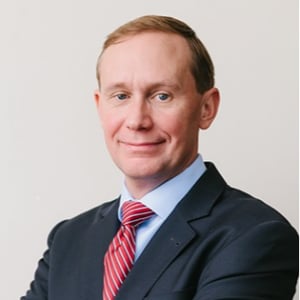
Associate Professor, Boston College Law School
David Olson is an associate professor and the Faculty Director of the Program on Innovation and Entrepreneurship. He teaches patent law, intellectual property law, antitrust law, and various seminars. His research and writing primarily focus on patents, copyrights, antitrust, and incentives for innovation and competition. Since joining BC Law in 2007, he has been recognized for his teaching excellence and contributions. In 2011, he received the Business & Law Society Faculty Award for Achievement in Business & Law. In 2012, he received the Professor Emil Slizewski Award for Faculty Excellence. For one semester in 2015, Olson served as a visiting professor at Pontifical Catholic University, Rio de Janeiro, Brazil, where he conducted research and taught a course on intellectual property.
Olson has published scholarly articles on patent law, copyright law, antitrust, music licensing, and first amendment copyright issues. His writing has been cited in Supreme Court and other legal opinions. He has testified before the U.S. Congress on matters of drug patents, FDA regulation, and antitrust.
The media frequently seeks Olson’s insights and opinions. He has been quoted in the Wall Street Journal, Associated Press, and Reuters, among others. He has appeared as a guest panelist on WBUR’s Radio Boston, WAMU's Kojo Namdi Show, and Public Radio Canada. His op-eds have appeared in the Chicago Tribune, Washington Times, and The Hill.
Olson came to Boston College from Stanford Law School's Center for Internet and Society, where he conducted research on patent law and litigated copyright fair use impact cases. Before entering academia, Olson practiced law as a patent litigator. He clerked for Judge Jerry Smith of the U.S. Court of Appeals for the Fifth Circuit.

Prosecution Laches: No Good Deed Goes Unpunished!
Jeffrey E. Depp, Joseph Matal, Paul Redmond Michel, Gene Quinn
Prosecution laches is an infrequently used equitable doctrine that bars enforcement of a patent when...
Topics
Do Androids Dream of Patent Protections? American Patent Law and AI-Generated Inventions
The incredible ability of artificial intelligence (AI) has captured the minds of inventors, writers, scientists,...
The America Invents Act: First to File versus First to Invent?
Timothy Holbrook, F. Scott Kieff, Adam Mossoff, David L. Applegate, David S. Olson
Since the first U. S. patent statute in 1790, United States patent law has authorized...