

Executive Vice President, Chief Legal Officer, Gates Corporation
Matthew R. A. Heiman joined the Company in May 2026 and has served as the Company’s Chief Legal Officer and Corporate Secretary since June 2026. As Chief Legal Officer, Mr. Heiman is responsible for all legal functions for Gates, including securities and corporate governance, M&A, litigation, commercial, regulatory, compliance, patents and trademarks, real estate, employment and labor, sustainability and environmental matters. Prior to joining Gates, Mr. Heiman held senior legal leadership roles at Waystar, where he served as Chief Legal & Administrative Officer from 2023 to 2025 and as General Counsel and Corporate Secretary from 2020 to 2023. Prior to that, he was with Johnson Controls, where he served as Vice President, Corporate Secretary, and Associate General Counsel. Mr. Heiman has been a Senior Fellow for the National Security Institute at George Mason University’s Antonin Scalia School of Law since 2018.

Founder and Executive Director, National Security Institute; Assistant Professor of Law, Antonin Scalia Law School, George Mason University
Jamil N. Jaffer is the Founder and Executive Director of the National Security Institute at the Antonin Scalia Law School at George Mason University where he also serves as an Assistant Professor of Law, Director of the National Security Law and Policy Program, and Director of the Cyber, Intelligence, and National Security LLM Program. Jamil also teaches classes on counterterrorism, intelligence, surveillance, cybersecurity, and other national security matters, as well as a summer course held abroad with U.S. Supreme Court Justice Neil M. Gorsuch. Jamil is also affiliated with Stanford University’s Center for International Security and Cooperation and previously served as a Visiting Fellow at the Hoover Institution from 2016 to 2019.
Jamil is also a Venture Partner with Paladin Capital Group, where he assists the firm with investments across the full range of its themes and theses, including a focus on dual-use national security technologies. Jamil also serves on the board of directors of RangeForce, a cybersecurity training and readiness platform startup and Tozny, a digital identity startup, and on the advisory boards of U.S. Strategic Metals, North America’s largest primary producer of cobalt, a critical mineral used in EV batteries, aerospace, and other national security applications; and Constella Intelligence, a deep and dark web intelligence startup. Jamil also serves as an advisor to Beacon Global Strategies, a strategic advisory firm and Duco, a technology platform startup that connects corporations with geopolitical and international business experts. Jamil is also the managing director of Trigraph Caveat Capital, a private investment vehicle.
Among other things, Jamil currently serves on the Board of Directors for the Greater Washington Board of Trade, the Board of Advisors for the Global Cyber Alliance, and the Advisory Board of the Foundation for the Defense of Democracies’ Center on Cyber and Tech Innovation, the Executive Committee of the Reagan Institute Strategy Group. Jamil is also a Fellow at the Academy for Judaic, Christian, and Islamic Studies, an advisor to the Concordia Summit, and is a member of the Board of Directors for the Center for Intelligence Policy, the Board of Directors of Speech First, and the Executive Committee of the International Law and National Security Practice Group of the Federalist Society.
Immediately prior to his current positions, from 2015-2021, Jamil served as a senior business leader at IronNet Cybersecurity, helping take the company from a bootstrapped first-year technology products startup through two rounds of venture capital fundraising, growing from 40 employees to over 300, and through its listing on New York Stock Exchange. In his role as IronNet's Senior Vice President for Strategy, Partnerships & Corporate Development, Jamil worked directly for the co-CEOs of the company, Gen (ret.) Keith B. Alexander, the former Director of the National Security Agency and Founding Commander of U.S. Cyber Command, and Bill Welch, the former COO of Zscaler and Duo; in that role, Jamil led all of the company’s strategic and technology partnership efforts, including developing go-to-market and technology integration plans with some of the largest cloud platforms and cybersecurity companies in the market, evaluating potential acquisition targets, and developing overall corporate strategy and thought leadership around collective security and collaborative defense in the cyber arena.
Prior to his time at IronNet, Jamil served on the leadership team of the Senate Foreign Relations Committee as Chief Counsel and Senior Advisor under Chairman Bob Corker (R-TN), where he worked on key national security and foreign policy issues, including leading the drafting of the proposed Authorization for the Use of Military Force against ISIS in 2014 and 2015, the AUMF against Syria in 2013, and revisions to the 9/11 AUMF against al Qaeda. Jamil was also the lead architect of the Iran Nuclear Agreement Review Act and two sanctions laws against Russia for its first intervention in Ukraine.
Prior to joining SFRC, Jamil served as Senior Counsel to the House Permanent Select Committee on Intelligence under Chairman Mike Rogers (R-MI) where he led the committee’s oversight of NSA surveillance, NRO intelligence issues, and NGA analytic and collection matters, as well as intelligence community-wide counterterrorism issues. Jamil was also the lead architect of the Cyber Intelligence Sharing and Protection Act, the nation’s first cyber threat intelligence sharing legislation that was signed into law in 2015.
In the Bush Administration, Jamil served in the White House as an Associate Counsel to the President, handling Defense Department, State Department, and intelligence community matters, and serving as one of the White House Counsel’s primary representatives to the National Security Council Deputies Committee.
Prior to the White House, Jamil served on the leadership team of the Justice Department’s National Security Division as Counsel to the Assistant Attorney General for National Security, where he focused on counterterrorism and intelligence matters. At NSD, Jamil helped lead the division’s work on In re: Directives, the first ever two-party litigated matter in the FISA Court and the second case before the FISA Court of Review in its 30-year history. Jamil also led NSD’s efforts on the President’s Comprehensive National Cybersecurity Initiative (CNCI), including the drafting of NSPD-54/HSPD-23, and related classified matters, and advised the National Security Agency (NSA) and U.S. Cyber Command’s predecessor organization, the Joint Function Component Command for Network Warfare (JFCC-NW), on matters related to cyber intelligence collection and offensive cyber activities. For his work on these matters, Jamil was awarded the Assistant Attorney General’s Award for Special Initiative and was among the group of lawyers awarded the Director of National Intelligence’s 2008 Legal Award (Team of the Year – Cyber Legal).
Jamil also served in other positions in the Justice Department, including in the Office of Legal Policy, where he worked on the confirmations of Chief Justice John G. Roberts, Jr. and Justice Samuel A. Alito, Jr. to the United States Supreme Court.
Jamil also served as a lawyer in private practice at Kellogg Huber, a Washington, DC-based litigation boutique, as a policy advisor to Congressman Bob Goodlatte (R-VA), and as a staff member or senior advisor on a number of political campaigns, including two presidential campaigns and a presidential transition team. While in law school, Jamil was a member of the University of Chicago Law Review, managing editor of the Chicago Journal of International Law, and National Symposium Editor of the Harvard Journal of Law & Public Policy. Following law school, Jamil served as a law clerk to Judge Edith H. Jones of the United States Court of Appeals for the Fifth Circuit and, later in his career, as a law clerk to then-Judge Neil M. Gorsuch when he first joined the United States Court of Appeals for the Tenth Circuit as well as a law clerk to Justice Neil Gorsuch when he joined the U.S. Supreme Court.
Jamil has published multiple op-eds and academic articles on national security, foreign policy, cybersecurity, counterterrorism, encryption, and intelligence matters, and is the co-author of a book chapter with former NSA Director Gen. (Ret.) Keith B. Alexander on national security and the press in National Security, Leaks, and the Freedom of the Press: The Pentagon Papers Fifty Years On (2021) and a book chapter with former CIA Director Gen. (ret.) Mike Hayden on ISIS, al Qaeda, and other international terrorist groups in Choosing to Lead: American Foreign Policy for a Disordered World (2015). Jamil has also written book chapters on cybersecurity and surveillance, as well as op-eds and policy papers with former Attorney General Michael B. Mukasey, former National Counterterrorism Center Director Matt Olsen, and Congressman Mike Waltz (R-FL), among others.
Jamil has previously taught graduate-level courses in intelligence law and policy at George Washington University’s Elliott School of International Affairs and the National Intelligence University, served an outside advisor to the Cyberspace Solarium Commission, and has recently testified before committees of the U.S. Senate and House of Representatives on China, cybersecurity, counterterrorism, and other national security matters. Jamil has also recently appeared on a range of national television and radio outlets including CNN, Fox News, Fox Business, MSNBC, Bloomberg, PBS, Voice of America, and National Public Radio, and in various print and online publications, including the Wall Street Journal, New York Times, and the Washington Post on a range of national security matters including cybersecurity, counterterrorism, surveillance, encryption, privacy, and foreign policy issues.
Jamil holds degrees from UCLA (BA, cum laude), the University of Chicago Law School (JD, with honors), and the United States Naval War College (MA, with distinction).

Director, International Legal Studies Program, Vanderbilt Law School
Michael Newton is an expert on terrorism, accountability, transnational justice, and conduct of hostilities issues. Over the course of his career, he has published more than 90 books, articles, op-eds and book chapters. He has been an expert witness in terrorism related trials and is admitted to the counsel list of the International Criminal Court, where, in 2018, he helped prepare the appeal of Jean-Pierre Bemba and participated in oral arguments in the Appeals Chamber. At Vanderbilt, he developed and teaches the innovative International Law Practice Lab, which provides expert assistance to judges, lawyers, legislatures, governments, and policy makers around the world. Professor Newton is most recently the editor of The United States Department of Defense Law of War Manual: Commentary and Critique, forthcoming from Cambridge University Press.
An authority on the law of armed conflict, Professor Newton served as the senior adviser to the Ambassador-at-Large for War Crimes Issues in the U.S. State Department from January 1999 to August 2002, during which he implemented a wide range of policy positions, including U.S. support to accountability mechanisms worldwide. He negotiated the “Elements of Crimes” for the International Criminal Court, and was the senior member of the team teaching international law to the first group of Iraqis who began to think about accountability mechanisms and a constitutional structure in November 2000. He shuttled to Baghdad repeatedly to aid international and Iraqi lawyers and jurists in drafting the Statute of the Iraqi High Tribunal while serving as the International Law Adviser to the Judicial Chambers from 2006 to 2008. He began assisting Iraqi officials, victims and civil society groups on legal issues associated with documentation and investigation of crimes committed by Da’esh on Iraqi soil days after Yazidi victims fled towards Mount Sinjar. He was the U.S. representative on the U.N. Planning Mission for the Sierra Leone Special Court and a founding member of its academic consortium. He is an elected member of the International Institute of Humanitarian Law and on the expert roster of Justice Rapid Response. In addition to teaching the Practice Lab, he develops and coordinates externships and educational opportunities for students interested in international legal issues, having supervised more than 150 such opportunities.
Professor Newton has served on the executive council of the American Society of International Law and as an invited expert for the Genocide Prevention Task Force established by the U.S. Holocaust Memorial Museum and the U.S. Institute of Peace. He is currently on the Advisory Board of the ABA International Criminal Court Project.
Professor Newton served in the U.S. Army more than 21 years, beginning with his commission from the U.S. Military Academy in May 1984 as an armor officer in the 4th Battalion, 68th Armor at Fort Carson, Colorado. After his selection for the Funded Legal Education Program, Newton served as chief of operational law with the Army Special Forces Command (Airborne) during Operation Desert Storm, and as the group judge advocate for the 7th Special Forces Group (Airborne). His deployments include Northern Iraq on Operation Provide Comfort to assist Kurdish civilians, and Haiti with 194th Armored Brigade (Separate), where he organized and led human rights and rules of engagement education for multinational forces, including police. He has taught international and operational law at the Judge Advocate General's School and Center in Charlottesville, Virginia, and taught international law at the United States Military Academy at West Point.

Professor Emeritus of Law, Antonin Scalia Law School, George Mason University
Jeremy A. Rabkin is a Professor Emeritus of Law at the Antonin Scalia Law School, George Mason University. Before joining the faculty in June 2007, he was for over two decades a professor in the Department of Government at Cornell University. Professor Rabkin serves on the board of directors of the Center for Individual Rights, a public interest law firm based in Washington, D.C. Previously he was a board member of the U.S. Institute of Peace and the board of academic advisors of the American Enterprise Institute.
Professor Rabkin’s books include Law Without Nations? (Princeton University Press, 2005). He authored “If You Need a Friend, Don’t Call a Cosmopolitan,” a chapter in Varieties of Sovereignty and Citizenship (Sigal R. Ben-Porath & Rogers M. Smith eds., University of Pennsylvania Press, 2012). His articles have appeared in major law reviews and political science journals and his journalistic contributions in a range of magazines and newspapers, including the Washington Post and the Wall Street Journal.
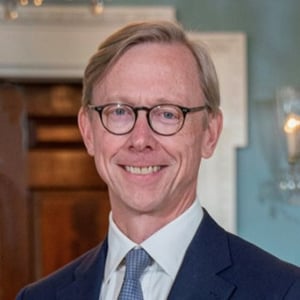
Founder, Latitude, LLC
Brian Hook is the founder of Latitude, LLC, an international strategic consulting firm based in Washington, DC.
Mr. Hook worked on the Romney campaign as senior advisor on foreign policy. He chaired the foreign policy and national security task forces of the Romney Readiness Project. From 2010-2011, he was the foreign policy director of Governor Tim Pawlenty’s presidential campaign.
Mr. Hook served in a number of positions during the Bush Administration, including Assistant Secretary of State for International Organizations; Senior Advisor to the U.S. Ambassador to the United Nations; Special Assistant to the President for Policy, Office of the Chief of Staff; and Counsel, Office of Legal Policy, at the Justice Department.
From 1999-2003, he practiced corporate law at Hogan & Hartson in Washington, D.C.
Before practicing law, he served as a policy advisor to Iowa Governor Terry Branstad and to U.S. Congressman James Leach.
Professor Emeritus of Law, Antonin Scalia Law School, George Mason University
Jeremy A. Rabkin is a Professor Emeritus of Law at the Antonin Scalia Law School, George Mason University. Before joining the faculty in June 2007, he was for over two decades a professor in the Department of Government at Cornell University. Professor Rabkin serves on the board of directors of the Center for Individual Rights, a public interest law firm based in Washington, D.C. Previously he was a board member of the U.S. Institute of Peace and the board of academic advisors of the American Enterprise Institute.
Professor Rabkin’s books include Law Without Nations? (Princeton University Press, 2005). He authored “If You Need a Friend, Don’t Call a Cosmopolitan,” a chapter in Varieties of Sovereignty and Citizenship (Sigal R. Ben-Porath & Rogers M. Smith eds., University of Pennsylvania Press, 2012). His articles have appeared in major law reviews and political science journals and his journalistic contributions in a range of magazines and newspapers, including the Washington Post and the Wall Street Journal.
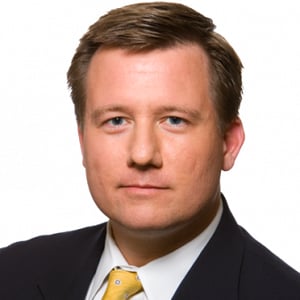
Jay Kingham Senior Research Fellow in International Regulatory Affairs, The Heritage Foundation
Brett D. Schaefer is the Jay Kingham Fellow in International Regulatory Affairs at Heritage's Margaret Thatcher Center for Freedom.
Schaefer analyzes a range of foreign policy issues, focusing primarily on the United Nations and affiliated funds and programs. He frequently speaks and publishes on issues related to the world body and its activities.
Schaefer is editor of the 2009 book, ConUNdrum: The Limits of the United Nations and the Search for Alternatives (Rowman & Littlefield). It features chapters written by fellow experts on an array of international activities and responsibilities conducted by the U.N. and related international organizations, among them diplomacy, international law, peacekeeping, the environment, disarmament, health, human rights, trade and development.
A frequent visitor to sub-Saharan Africa, Schaefer has written extensively on economic development and peace and security issues there and how those issues affect America's national interests.
Schaefer's writing and analysis include contributions to rankings of individual nations in the annual Index of Economic Freedom, published by Heritage and The Wall Street Journal.
He speaks frequently to audiences of business leaders, congressional staff and academics, and has testified before Congress on the United Nations and foreign assistance and development.
Schaefer's appearances on a variety of radio and television programs include CNN, Fox, MSNBC, BBC and C-SPAN.
He joined Heritage in 1995 and was named Kingham Fellow in September 1996. He worked at the Pentagon as an assistant for international criminal court policy from March 2003 to March 2004.Schaefer received his master's degree in international development from the School of International Service at American University in Washington, D.C. He also holds a bachelor's degree in anthropology from Florida State University.

Senior Legal Fellow and Manager, National Security Law Program, The Heritage Foundation
Charles “Cully” Stimson is a widely recognized expert in national security, homeland security, crime control, drug policy and immigration. A senior legal fellow at The Heritage Foundation since 2007, Stimson became Manager of the National Security Law Program in Heritage’s Institute for Constitutional Government in April 2013 after serving as Heritage’s chief of staff for a year.
Stimson writes and lectures on policy issues such as the law of armed conflict, terrorist detainee policy and interrogations, the Geneva Conventions, military commissions, the Patriot Act and FISA, criminal law and the death penalty, immigration and the war on drugs. As chief of staff to then-Heritage President Edwin J. Feulner, he was a key adviser on public policy matters as well as manager of Feulner’s office staff and Heritage’s day-to-day operations.
Stimson’s many research papers, op-eds and articles include special reports such as “Adult Time for Adult Crime,” a comprehensive study on the constitutionality of life sentences for teen-age murderers, and Sexual Assault in the Military: Understanding the Problem and How to Fix It, a ground-breaking paper detailing the inner workings of the military justice system compared to its civilian counterpart. His work on criminal and immigration law has been cited in briefs before the U.S. Supreme Court.
He testifies before the U.S. Senate and House on national security issues, and recently testified before the Senate Armed Services Committee on the Law of Armed Conflict, Law of War, and the 2001 Authorization for Use of Military Force.
Before joining the think tank in 2007, Stimson served as Deputy Assistant Secretary of Defense for Detainee Affairs. He advised then-Secretaries of Defense Donald Rumsfeld and Robert Gates and coordinated the Pentagon’s global detention policy and operations, including at Guantanamo Bay and in Iraq and Afghanistan. He was chairman of detainee-related panels such as the Defense Senior Leadership Oversight Committee, and the Special Detainee Follow Up Group. He represented the United States before the U.N. in Geneva, Switzerland in May 2006 where he led the DOD delegation in defense of the United States’ Second Period Report on the Convention Against Torture.
An accomplished trial lawyer, Stimson worked as a prosecutor at the local, state and federal levels, where he concentrated on violent crimes such as homicide, sexual assault and domestic violence. A third generation naval officer, Cully also served as a military prosecutor, defense counsel, and recently served as Deputy Chief Judge of the Navy-Marine Corps Trial Judiciary. He continues to serve, with the rank of Captain, as the Commanding Officer of the Preliminary Hearing Unit.
Stimson’s thousands of media interviews and appearances include Fox News Channel, MSNBC, CNN, BBC, NPR and C-SPAN. He has been quoted by most major newspapers, including The Washington Post, Wall Street Journal, New York Times, Los Angeles Times, and London Times.
A businessman and educator by training, Stimson is Vice Chairman of his family’s commercial real estate company in Seattle. Before 9/11, he was a Vice President at a New York-based global financial services and insurance brokerage firm where ran the private equity mergers and acquisitions D.C. operation.
Stimson holds a law degree from the George Mason University School of Law, where he later taught as an Adjunct Professor of Law. He is a graduate of Kenyon College, where he was Captain of the men’s varsity soccer team and an All-Conference player. He also studied at Harvard and Exeter universities. An avid soccer player and triathlete, he serves as Chairman of the Board of the United States Soccer Foundation, the charitable giving arm of U.S. Soccer.
Partner, Bell Giftos St. John LLC
Kevin St. John is a partner with Bell Giftos St. John LLC in Madison, Wisconsin. From 2011 to 2015, he served as Wisconsin’s Deputy Attorney General. Prior to his government service St. John practiced law with the Madison office of Michael Best & Friedrich LLP and the Washington D.C. office of Gibson, Dunn & Crutcher LLP. St. John is a graduate of the University of Wisconsin-Madison and earned his law degree from the University of Chicago.
St. John has contributed to Federalist Society as a speaker and in commentaries on topics including redistricting, free speech, and separation of powers.

Partner, Baker Hostetler LLP
David Rivkin is a member of the firm's litigation, international and environmental teams and is co-leader of the firm's national appellate practice. He has extensive experience in constitutional, administrative and international law litigation and has been involved in numerous high-profile cases. With his prior experience in the government sector, David draws on a wealth of knowledge when providing compliance advice to companies and handling enforcement proceedings before government agencies on issues arising out of multilateral and unilateral sanctions, the Foreign Corrupt Practices Act (FCPA), anti-boycott issues, bankruptcy and financial fraud matters, and environmental and energy issues.
David has developed and implemented legislative, regulatory and litigation initiatives for two presidential administrations. Over the years, he has published hundreds of articles, op-eds, book reviews and book chapters on a variety of international, legal, constitutional, defense, arms control, foreign policy, environmental and energy issues for various newspapers and magazines, including The Wall Street Journal, The Washington Post, The New York Times, USA Today and The Los Angeles Times, and has been a frequent commentator and guest on TV and radio shows including ABC, CBS, NBC, CNN, Fox News, NPR and PBS.
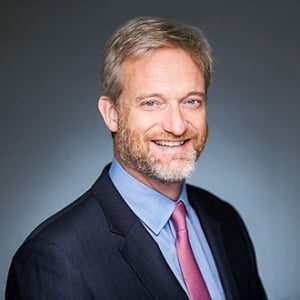
Principal, BGR Government Affairs
Lester Munson joined BGR’s International practice after a 26-year career on Capitol Hill and in the Executive Branch. He most recently served as the Staff Director for Chairman Bob Corker of the Senate Foreign Relations Committee, where he led policy, oversight, legislative and communications efforts for a staff of 25 and negotiated committee priorities with the White House, the State Department and Congressional leadership.
In the past two and a half years, the committee has passed into law several bills regarding U.S. policy toward Ukraine and Russia, including major sanctions legislation, has engaged in efforts to fundamentally reform, reauthorize, or modify key foreign assistance programs, including food aid, PEPFAR, arms transfers, and has taken up legislation on the most important foreign policy and national security issues of the day, including the negotiations over the Iranian nuclear program, authorizations for the use of military force, and various international treaties and agreements.
Previously, Mr. Munson was Chief of Staff in Senator Mark Kirk’s (R-Ill.), Washington, DC office. During Lester’s tenure, Senator Kirk became the leading Republican voice in the Senate on Iran and other national security issues.
During the Bush Administration, Mr. Munson was a Deputy Assistant Administrator at the U.S. Agency for International Development, where he focused on legislative affairs as well as global health issues. He led legislative efforts to develop and implement the President’s Emergency Plan for AIDS Relief (PEPFAR) and won an award for his contribution to the creation of the President’s Malaria Initiative.
Prior to serving in the Bush Administration, at the Senate Foreign Relations Committee, Mr. Munson was the Republican Communications Director and oversaw foreign assistance oversight and legislation. At the House International Relations Committee, he was the Communications Director and Professional Staff Member for Asia-Pacific issues as well as African affairs.
Mr. Munson is a 1989 graduate of the University of Chicago and holds a Master’s degree from St. John’s College in Annapolis. He is married with two children.
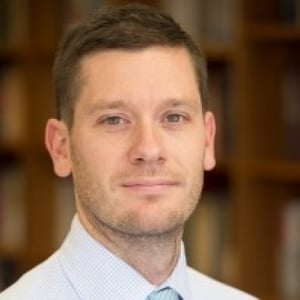
Henry A. Kissinger Distinguished Professor, Henry A. Kissinger Center for Global Affairs, John Hopkins School of Advanced International Studies
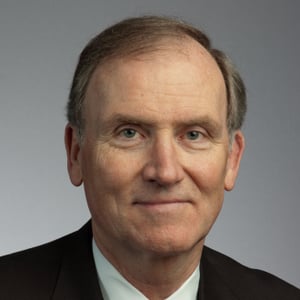
Robert M. Kimmitt is Senior International Counsel at the law firm of WilmerHale.
Both in government and the private sector, Ambassador Kimmitt has held a wide variety of senior positions at the intersection of international business, finance, law, and policy. From 2005-2009, he served as Deputy Secretary of the U.S. Treasury, where he had significant responsibility for the Department’s international agenda, including his leadership role on the Committee on Foreign Investment in the United States (CFIUS) and as lead U.S. negotiator for the International Compact with Iraq.
Earlier, he was American Ambassador to Germany from 1991-1993; Under Secretary of State for Political Affairs from 1989-1991; and General Counsel to the U.S. Treasury from 1985-1987. He also served in the Reagan White House as National Security Council Executive Secretary and General Counsel from 1983-1985, with the rank of Deputy Assistant to the President for National Security Affairs.
In addition to his government service, Ambassador Kimmitt served as Executive Vice President, Global Public Policy, at Time Warner from 2001-2005. Prior to that, he was Vice Chairman and President of Commerce One, a Silicon Valley software company. He was a partner at Wilmer, Cutler & Pickering from 1997-2000, a managing director of Lehman Brothers from 1993-1997, and a partner in the law firm of Sidley & Austin from 1987-1989.
Ambassador Kimmitt graduated with distinction from the United States Military Academy at West Point in 1969. He served in combat with the 173rd Airborne Brigade in Vietnam from 1970-1971, earning three Bronze Star Medals, the Purple Heart, the Air Medal, and the Vietnamese Cross of Gallantry. He retired as a Major General in the Army Reserve. During 1997 Mr. Kimmitt was a member of the National Defense Panel, and from 1998-2005 he was a member of the Director of Central Intelligence’s National Security Advisory Panel. He also served as a member of the Panel of Arbitrators of the World Bank’s International Centre for the Settlement of Investment Disputes.
Ambassador Kimmitt received his law degree from Georgetown University in 1977, where he was Editor in Chief of Law & Policy in International Business. From 1977-1978, he served as law clerk to Judge Edward A. Tamm of the U.S. Court of Appeals for the D.C. Circuit. He was awarded an honorary Doctor of Humane Letters degree by Marymount University in 2009; the Distinguished Graduate Award from West Point in 2010; and the Outstanding Alumnus Award of the U.S. Army War College in 2015.
Ambassador Kimmitt is Chairman of the American Council on Germany; a member of the Supervisory Board of Lufthansa AG; a member of the International Advisory Boards of Allianz SE and The Maureen and Mike Mansfield Foundation; a member of the Global Advisory Board of Tokai Tokyo Financial Holdings; a board member of USA Rugby, the Atlantic Council, and the Arthur F. Burns Fellowship; and a member of the Council on Foreign Relations, the Trilateral Commission, and the American Academy of Diplomacy. His foreign language is German.
Deputy Editorial Page Editor, Foreign Affairs Columnist, The Wall Street Journal
Bret Stephens writes “Global View,” the weekly foreign-affairs column of The Wall Street Journal, for which he won the 2013 Pulitzer Prize for distinguished commentary. He is the paper’s deputy editorial-page editor, responsible for the opinion content of its overseas editions, as well as a member of the editorial board. Previously, he was editor-in-chief of the Jerusalem Post, a position he assumed in 2002 at the age of 28. He was raised in Mexico City, educated at the University of Chicago and the London School of Economics, and lives with his family in New York.
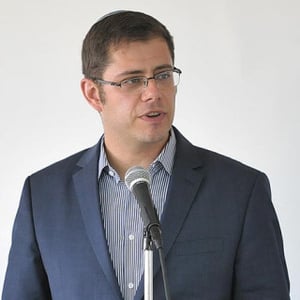
Professor of Law and Director, Center for the Middle East and International Law, George Mason University Antonin Scalia Law School
Professor of Law Eugene Kontorovich is one of the world’s preeminent experts on universal jurisdiction and maritime piracy, as well as international law and the Israel-Arab conflict. He is also the Director of Scalia Law School's Center for the Middle East and International Law. Professor Kontorovich joined the Scalia Law School from Northwestern University Pritzker School of Law where he was a Professor of Law from 2011 to 2018 and an Associate Professor from 2007 to 2011. Previously, he was a Visiting Professor at the University of Chicago from 2005 to 2007 and an Assistant Professor at George Mason School of Law from 2003 to 2007.
Professor Kontorovich has published over thirty major scholarly articles and book chapters in leading law reviews and peer-reviewed journals in the United States and Europe, including the American Journal of International Law, International Review of Law & Economics, Stanford Law Review, California Law Review, University of Pennsylvania Law Review, and Virginia Law Review. His scholarship has been cited in leading foreign relations and international law
His expertise is often sought out and quoted by major news organizations such the New York Times, Wall Street Journal, NPR News, The New Yorker, Los Angeles Times, and numerous television and radio programs. Prof. Kontorovich’s popular writings have appeared in the New York Times, Wall Street Journal, Los Angeles Times, POLITICO, Commentary, Haaretz, and numerous other leading publications. He is also a regular contributor to the Washington Post’s Volokh Conspiracy legal blog.
He attended the University of Chicago for college and law school. After law school, he clerked for Judge Richard Posner on the United States Court of Appeals for the Seventh Circuit. He has been honored with a fellowship at the Institute for Advanced Study in Princeton, in 2011-12, and with the Federalist Society’s prestigious Bator Award, given annually to a young scholar (under 40), for outstanding scholarship and teaching.

U.S. and the Middle East: Trump to Biden
Matthew R. A. Heiman, Jamil N. Jaffer
While China is the paramount strategic priority for the United States, the Middle East remains...
The Annual Mike Lewis Memorial Teleforum: The Identity Crisis at the International Criminal Court
Michael A. Newton, Jeremy A. Rabkin
We are pleased to present the annual Mike Lewis Memorial teleforum. Professor Lewis was a...
Iran Snapback
Brian H. Hook, Jeremy A. Rabkin
Iran is in significant non-performance of its commitments under the Joint Comprehensive Plan of Action...
Legal Implications of the International Criminal Court's Decision to Investigate Americans
Brett Schaefer, Charles "Cully" Stimson
In 2017, the prosecutor for the International Criminal Court (ICC) announced her formal request to...
Why Proportional Representation Will Not Stem Redistricting Litigation But Will Undermine Normative Representative Values
Kevin St. John
Note from the Editor: The Federalist Society takes no positions on particular legal and public...
Sokolow, et al v. Palestinian Liberation Organization Litigation Update
David B. Rivkin
Recently, in a case called Sokolow, et al v. Palestinian Liberation Organization (PLO), the Solicitor...
American Grand Strategy in the Age of Trump
Lester Munson, Hal Brands
American foreign policy is in a state of upheaval. The rise of Donald Trump and...
The Role of Treasury in National Security Policy
Robert M. Kimmitt
The concept of national security has broadened considerably since the early decades of the National...
America In Retreat: The New Isolationism and the Coming Global Disorder - Podcast
Bret Stephens
In December 2011 the last American soldier left Iraq. “We’re leaving behind a sovereign, stable,...
Palestinian Statehood & The International Court: Implications for the U.S.
Des Moines, Iowa