
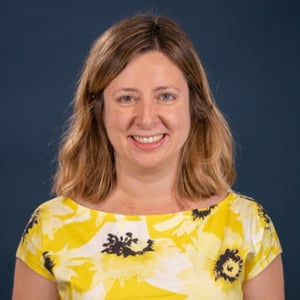
Legal Fellow, Center for the Separation of Powers, Pacific Legal Foundation
Alison Somin joined Pacific Legal Foundation in May 2020 as a legal fellow in the Center for the Separation of Powers and part of the equality before the law practice group.
Before joining the Pacific Legal Foundation team, Alison was a special assistant and counsel for over a decade to Gail Heriot, a member of the bipartisan United States Commission on Civil Rights. She also has deep roots in the liberty movement. Alison was a Koch Associate at the National Federation for Independent Business Legal Foundation and, during law school, completed summer clerkships at the Institute for Justice and the Charles G. Koch Charitable Foundation. She holds a J.D. from Emory University School of Law and an A.B. in history from Dartmouth College.
Her work has been published in the San Francisco Chronicle, the Daily Journal, Texas Journal of Law and Politics, and The Federalist Society’s Engage magazine and blog.
She lives in northern Virginia with her husband Ilya; two children; and golden retriever Willow. In her spare time, she enjoys reading, baking and cooking, children’s art projects, and training and exercising Willow.
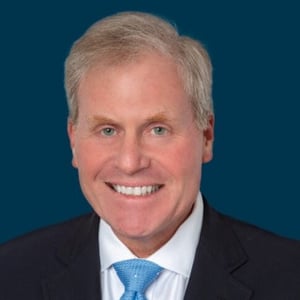
Director, ENRD, Pacific Legal Foundation
Mark Miller is the Director of the Environment and Natural Resources practice group at Pacific Legal Foundation, where he leads the firm’s efforts to protect individuals and small businesses from government overreach in matters involving land and water, and its efforts to encourage America to better harness its abundant natural resources, including energy resources, minerals, timber, and grazing lands. Mark first joined PLF in 2014.
A seasoned appellate specialist, Mark has litigated several high-profile cases for PLF, including Weyerhaeuser v. United States Fish & Wildlife Service, U.S. Army Corps of Engineers v. Hawkes Co., and United States v. Robertson, all of them unanimous Supreme Court of the United States wins for property owners fighting federal overreach via the Clean Water Act and Endangered Species Act.
In 2020, Mark left PLF to serve as General Counsel and later Chief of Staff for then-South-Dakota Governor Kristi Noem. As Noem’s longest-serving chief of staff, he worked behind the scenes to advance limited government, cut red tape, defend individual rights, and promote free-market principles. In 2023, he returned home to PLF.
A frequent commentator and public speaker, Mark regularly appears in print, on radio and TV, and before legislative committees across the country. His commentary and work has been featured in The Wall Street Journal, CBS News, The View, CBN, and Fox News. He is a regular guest each Thursday morning on SiriusXM’s POTUS channel, offering insight on Supreme Court cases and trends.
Mark earned both his undergraduate and law degrees with honors from the University of Florida. He clerked for U.S. District Judge Henry Lee Adams, Jr., and Florida state appellate Judge Emerson R. Thompson, Jr.—two mentors who deepened his commitment to the Bill of Rights, especially the Fourth, Fifth, and Fourteenth Amendments.
Mark serves on the Board of Trustees for the University of Florida College of Law, and he is a member of the boards of directors for both Americans United for Life, the nation’s oldest pro-life non-profit law firm, and Farm of the Child USA, a nonprofit that supports an orphanage and school for children in need in Honduras called La Finca del Niño.
Director, ENRD, Pacific Legal Foundation
Mark Miller is the Director of the Environment and Natural Resources practice group at Pacific Legal Foundation, where he leads the firm’s efforts to protect individuals and small businesses from government overreach in matters involving land and water, and its efforts to encourage America to better harness its abundant natural resources, including energy resources, minerals, timber, and grazing lands. Mark first joined PLF in 2014.
A seasoned appellate specialist, Mark has litigated several high-profile cases for PLF, including Weyerhaeuser v. United States Fish & Wildlife Service, U.S. Army Corps of Engineers v. Hawkes Co., and United States v. Robertson, all of them unanimous Supreme Court of the United States wins for property owners fighting federal overreach via the Clean Water Act and Endangered Species Act.
In 2020, Mark left PLF to serve as General Counsel and later Chief of Staff for then-South-Dakota Governor Kristi Noem. As Noem’s longest-serving chief of staff, he worked behind the scenes to advance limited government, cut red tape, defend individual rights, and promote free-market principles. In 2023, he returned home to PLF.
A frequent commentator and public speaker, Mark regularly appears in print, on radio and TV, and before legislative committees across the country. His commentary and work has been featured in The Wall Street Journal, CBS News, The View, CBN, and Fox News. He is a regular guest each Thursday morning on SiriusXM’s POTUS channel, offering insight on Supreme Court cases and trends.
Mark earned both his undergraduate and law degrees with honors from the University of Florida. He clerked for U.S. District Judge Henry Lee Adams, Jr., and Florida state appellate Judge Emerson R. Thompson, Jr.—two mentors who deepened his commitment to the Bill of Rights, especially the Fourth, Fifth, and Fourteenth Amendments.
Mark serves on the Board of Trustees for the University of Florida College of Law, and he is a member of the boards of directors for both Americans United for Life, the nation’s oldest pro-life non-profit law firm, and Farm of the Child USA, a nonprofit that supports an orphanage and school for children in need in Honduras called La Finca del Niño.
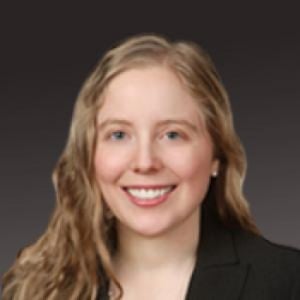
Senior Counsel, Alliance Defending Freedom
Julie Marie Blake serves as senior counsel for regulatory litigation at Alliance Defending Freedom. Over the last decade, she has been on the front lines of high-profile, precedent-setting cases challenging federal overreach in courts across the country.
Blake served as deputy solicitor general for the state of Missouri from 2017 to 2020 and as assistant solicitor general for the state of West Virginia from 2013 to 2017. In these roles, she argued 26 federal and state appeals, including before the en banc U.S. Court of Appeals for the Eighth Circuit. She received the Best Brief Award from National Association of Attorneys General for her U.S. Supreme Court advocacy.
Before entering government service in 2013, Blake was a litigation associate at Baker Botts L.L.P., where she served as volunteer amicus counsel in several ADF cases, including Town of Greece v. Galloway.
Following law school, she served as a law clerk for Judge Paul J. Kelly, Jr. on the U.S. Court of Appeals for the Tenth Circuit. She received her J.D. magna cum laude from Notre Dame Law School in 2009. She received her B.A. in Politics and Theology & Religious Studies phi beta kappa from the Catholic University of America in 2006. She is a 2007 Blackstone Fellow.
Blake is admitted to practice in multiple states, the Supreme Court, and in many federal district and appellate courts.
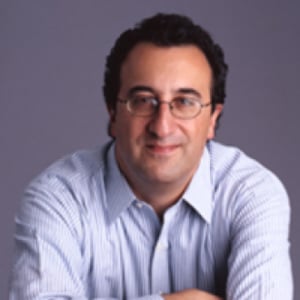
Professor from Practice, Georgetown University Law Center
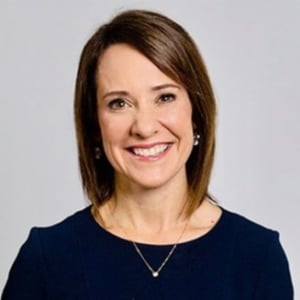
Director, The Conscience Project
Andrea Picciotti-Bayer is Director of the Conscience Project.
Andrea got her start as a trial and appellate attorney in the Civil Rights Division of the U.S. Department of Justice. Prior to leading the Conscience Project, she served as the legal advisor for the Catholic Association, filing amicus briefs with federal courts of appeal and the U.S. Supreme Court in key religious freedom and free speech cases.
Andrea appears frequently in the media to discuss religious freedom controversies and legal victories, and in 2021 she received First Place for Best Coverage — Religious Liberty Issues from the Catholic Media Association. Andrea is a legal analyst for EWTN News and a regular columnist for the National Catholic Register. Her writing has been featured in the Wall Street Journal, National Review, Fox News, Newsweek, CNN en Español and other well-regarded publications. She has also joined Fox News, Newsmax and a variety of other shows to share expert commentary.
Andrea lived in Colombia for more than a decade. She has ten children and lives in the Washington, DC area.
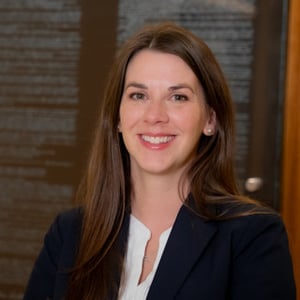
Vice President, Practice Groups, The Federalist Society
Director, ENRD, Pacific Legal Foundation
Mark Miller is the Director of the Environment and Natural Resources practice group at Pacific Legal Foundation, where he leads the firm’s efforts to protect individuals and small businesses from government overreach in matters involving land and water, and its efforts to encourage America to better harness its abundant natural resources, including energy resources, minerals, timber, and grazing lands. Mark first joined PLF in 2014.
A seasoned appellate specialist, Mark has litigated several high-profile cases for PLF, including Weyerhaeuser v. United States Fish & Wildlife Service, U.S. Army Corps of Engineers v. Hawkes Co., and United States v. Robertson, all of them unanimous Supreme Court of the United States wins for property owners fighting federal overreach via the Clean Water Act and Endangered Species Act.
In 2020, Mark left PLF to serve as General Counsel and later Chief of Staff for then-South-Dakota Governor Kristi Noem. As Noem’s longest-serving chief of staff, he worked behind the scenes to advance limited government, cut red tape, defend individual rights, and promote free-market principles. In 2023, he returned home to PLF.
A frequent commentator and public speaker, Mark regularly appears in print, on radio and TV, and before legislative committees across the country. His commentary and work has been featured in The Wall Street Journal, CBS News, The View, CBN, and Fox News. He is a regular guest each Thursday morning on SiriusXM’s POTUS channel, offering insight on Supreme Court cases and trends.
Mark earned both his undergraduate and law degrees with honors from the University of Florida. He clerked for U.S. District Judge Henry Lee Adams, Jr., and Florida state appellate Judge Emerson R. Thompson, Jr.—two mentors who deepened his commitment to the Bill of Rights, especially the Fourth, Fifth, and Fourteenth Amendments.
Mark serves on the Board of Trustees for the University of Florida College of Law, and he is a member of the boards of directors for both Americans United for Life, the nation’s oldest pro-life non-profit law firm, and Farm of the Child USA, a nonprofit that supports an orphanage and school for children in need in Honduras called La Finca del Niño.
Senior Counsel, Alliance Defending Freedom
Julie Marie Blake serves as senior counsel for regulatory litigation at Alliance Defending Freedom. Over the last decade, she has been on the front lines of high-profile, precedent-setting cases challenging federal overreach in courts across the country.
Blake served as deputy solicitor general for the state of Missouri from 2017 to 2020 and as assistant solicitor general for the state of West Virginia from 2013 to 2017. In these roles, she argued 26 federal and state appeals, including before the en banc U.S. Court of Appeals for the Eighth Circuit. She received the Best Brief Award from National Association of Attorneys General for her U.S. Supreme Court advocacy.
Before entering government service in 2013, Blake was a litigation associate at Baker Botts L.L.P., where she served as volunteer amicus counsel in several ADF cases, including Town of Greece v. Galloway.
Following law school, she served as a law clerk for Judge Paul J. Kelly, Jr. on the U.S. Court of Appeals for the Tenth Circuit. She received her J.D. magna cum laude from Notre Dame Law School in 2009. She received her B.A. in Politics and Theology & Religious Studies phi beta kappa from the Catholic University of America in 2006. She is a 2007 Blackstone Fellow.
Blake is admitted to practice in multiple states, the Supreme Court, and in many federal district and appellate courts.
Professor from Practice, Georgetown University Law Center
Director, The Conscience Project
Andrea Picciotti-Bayer is Director of the Conscience Project.
Andrea got her start as a trial and appellate attorney in the Civil Rights Division of the U.S. Department of Justice. Prior to leading the Conscience Project, she served as the legal advisor for the Catholic Association, filing amicus briefs with federal courts of appeal and the U.S. Supreme Court in key religious freedom and free speech cases.
Andrea appears frequently in the media to discuss religious freedom controversies and legal victories, and in 2021 she received First Place for Best Coverage — Religious Liberty Issues from the Catholic Media Association. Andrea is a legal analyst for EWTN News and a regular columnist for the National Catholic Register. Her writing has been featured in the Wall Street Journal, National Review, Fox News, Newsweek, CNN en Español and other well-regarded publications. She has also joined Fox News, Newsmax and a variety of other shows to share expert commentary.
Andrea lived in Colombia for more than a decade. She has ten children and lives in the Washington, DC area.
Vice President, Practice Groups, The Federalist Society
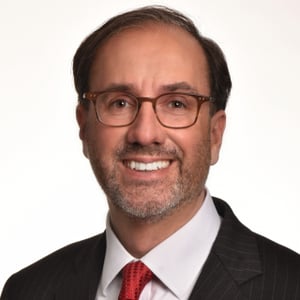
President and CEO, The Buckeye Institute
Robert Alt is the President and Chief Executive Officer of The Buckeye Institute where he has catalyzed exponential growth since he took the organization’s helm in 2012. He has since founded Buckeye’s renowned Economic Research Center and established its impactful Legal Center.
Alt is a distinguished scholar and attorney with particular expertise in legal policy, criminal justice, national security, and constitutional law. He previously worked for former U.S. Attorney General Edwin Meese III, regularly provides commentary on television and radio programs, and his writings have appeared in countless outlets.
In 2004, Alt spent five months in Iraq as an embedded war correspondent.
Alt has testified before Congress multiple times—including at the confirmation hearings for U.S. Supreme Court Justice Elena Kagan—the Federal Election Commission regarding matters of constitutional and administrative law, and numerous state legislatures.
Alt serves as an officer on the boards of The Philadelphia Society and the Federalist Society’s Columbus Lawyers Chapter. He taught national security law, criminal law, and legislation at Case Western Reserve University School of Law, as well as constitutional law and political parties and interest groups at Ashland University.
Alt earned his Doctor of Law degree from The University of Chicago Law School, where he was Symposium Editor and the winner of the Mulroy Prize for Excellence in Appellate Advocacy as well as research assistant to Professor Richard Epstein. Following law school, he clerked for Judge Alice Batchelder on the U.S. Court of Appeals for the Sixth Circuit. Alt graduated with his Bachelor of Arts in philosophy and political science magna cum laude from Azusa Pacific University where he also won the Outstanding Senior Award in Political Science.
Alt is an accomplished high-altitude alpinist and endurance athlete who has successfully climbed 6.75 of the famed Seven Summits of the World including Mount Everest. He is the creator of PROFOUND CLIMBING™ and a frequent speaker across the country and around the world on legal and public policy topics as well as effective leadership, management, decision-making, and teamwork in contexts ranging from extraordinary life/death situations to ordinary professional/business settings.
U.S. Court of Appeals, Sixth Circuit
Danny Julián Boggs is a Judge on the United States Court of Appeals for the Sixth Circuit. He was appointed to a newly created seat on that court on January 29, 1986 by President Ronald Reagan, confirmed by the U.S. Senate on March 3, and received his commission on March 25. He served as the Chief Judge of the Sixth Circuit from 2003 to 2009.
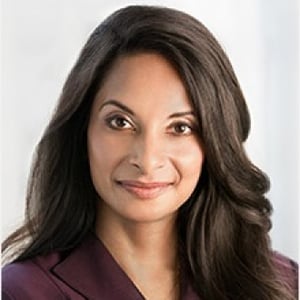
General Counsel, Strive Asset Management
When she was unanimously confirmed by the United States
Senate to serve as United States Attorney for the District of
Minnesota in 2006, Rachel Kunjummen Paulose became
the first Indian American woman in American history to be
nominated by the President and confirmed by the Senate
for any federal appointment.
Under Paulose’s leadership, the U.S. Attorney’s Office for
the District of Minnesota recorded the highest number of prosecutions in its history, reflecting the collaborative hard work of law enforcement partners, attorneys, staff, and civic leaders. Paulose also oversaw landmark prosecutions of white collar
crime (including securities, health care, and public corruption cases), narcotics and firearms trafficking cartels, and civil commitment of sexual predators. Paulose tripled child pornography prosecutions, doubled gun prosecutions, and initiated the
first ever prosecutions of human trafficking and aggravated identity theft. Paulose has first chaired jury and bench trials in federal court, briefed and argued cases before the federal appellate courts, and investigated multinational companies in complex parallel criminal and civil international proceedings.
Among other positions in public service, Paulose served as a law clerk to Eighth Circuit Court of Appeals Judge James B. Loken; Trial Attorney for the Voting Section, Civil Rights Division of the U.S. Department of Justice through the Attorney General’s Honors Program; Assistant U.S. Attorney; Senior Counsel to the Deputy
Attorney General; Special Counsel for Health Care Fraud to the Deputy Attorney General; and Special Assistant to the Attorney General of the United States. Paulose also served as Senior Trial Counsel at the U.S. Securities & Exchange Commission. Paulose previously worked as a partner at DLA Piper LLP, then the
largest law firm in the world, and an associate at Williams & Connolly LLP in Washington, D.C.
Paulose has been active in community leadership by serving as a Director of the Yale Law School Fund, Scholarship Judge for the Harry S. Truman Scholarship Foundation, Eighth Circuit Vice President of the Federal Bar Association, Co-Founder of the Federal Bar Association’s Diversity Committee, Director of the National Asian Pacific American Bar Association, American Bar Association
Standing Committee on Public Education, American Bar Association Standing Committee Member on Silver Gavel Awards, Girls State Governor Advisor (after election as the 1990 Ohio Girls State Governor of the largest such program in the nation), Director of the League of Women Voters, Chair of the Committee regarding
the reappointment of the Federal Public Defender of the District of Minnesota (by appointment of the judges of the U.S. Court of Appeals for the Eighth Circuit),
Director of the YMCA Board, guest columnist for the Asian American Press, and frequent contributing author to the American Bar Association Preview of Supreme
Court Cases.
Paulose is a frequently sought commentator. She has provided legal analysis for the BBC, The Wall Street Journal, The Washington Post, USA Today, MSNBC, The Spectator, LBC, Sky News, FOX MN, ABC MN, CBS MN, NBC MN, MPR, and the St. Paul Pioneer Press, among other media representatives. Her live commentary on the Jacob Wetterling plea deal helped KSTP-TV win an Emmy for the day’s
breaking coverage. She has given the keynote addresses at the North American South Asian Bar Association Annual Convention, the North American South Asian Law Students Association Annual Conference, and the National Asian Pacific American Bar Association Annual Meeting (Minnesota). She also presented at the
Nobel Peace Prize Forum, American Bar Association Annual Convention, International Business Law Institute, Jewish Community Relations Council, Yale Law School, and Harvard Law School, among other institutions.
In February 2015, Paulose was honored as one of the thirty leading Minnesota women history makers by the Chief Judge of the District and the Federal Bar Association in what is now a traveling court exhibit. In April 2016, Paulose’s biography was added to the Smithsonian Institution’s collection and featured in the
Smithsonian’s collection, “Beyond Bollywood: Indian Americans Shape the Nation” to honor the stories of groundbreaking Indian Americans.
Paulose taught criminal law, criminal procedure, investigations, and human exploitation (human trafficking and child pornography) at the University of St. Thomas School of Law. She served as the faculty advisor to the Black Law Students Association (BLSA) and the Federalist Society. She also served as a faculty mentor
to graduates and current students, particularly women and students of color.
Paulose received her J.D. from the Yale Law School, where she was a Coker Fellow, Editor of the Yale Journal of Law and Feminism, and Commencement Standard Bearer. She graduated summa cum laude with a B.A. from the University of Minnesota, which she attended on full merit scholarships and where she was the Commencement Speaker, Chair of the Student Representatives to the Board of
Regents, and Phi Beta Kappa. Paulose is a 1991 Harry S. Truman Scholar.
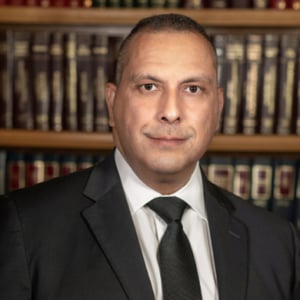
Dean, Capital Law School
Reynaldo Anaya Valencia is the dean of the Capital Law School, previously having served as associate dean for Finance and Administration and as professor of Law at University of North Texas at Dallas College of Law.
Valencia has practiced, taught, written, and lectured nationally and internationally on corporate law, corporate bankruptcy, and race and gender issues, and also has served as an expert witness in complex corporate and bankruptcy multimillion dollar litigation.
Valencia earned an undergraduate degree in psychology (with honors) and a graduate degree in sociology from Stanford University, then went on to receive a juris doctor degree from Harvard Law School. He practiced corporate bankruptcy and general corporate law at the Dallas office of the international law firm of Jones Day for five years, while serving as an adjunct professor of Law at Texas Tech School of Law, where at age 25 he became the youngest faculty member in the law school’s history.
In 1995, Valencia joined the faculty at St. Mary’s University School of Law in San Antonio as an associate professor, earning tenure in 1999 and promotion to the rank of full professor. In 2008, he was appointed associate dean of Administration and Finance at St. Mary’s and held the Ernest W. Clemmons Professor of Corporate and Securities Law endowed professorship.
President Bill Clinton appointed Valencia as a White House Fellow for 1999-2000, where he served in the Office of the Chief of Staff. He also has served on the Board of Directors of the American Board of Certification (which produces the national bankruptcy certification examination); the Board of Governors of the Council on Legal Education Opportunity (CLEO); the Board of Trustees of the Law School Admission Council; and as an elected director on the Harvard Alumni Association Board of Directors.
Valencia received the St. Mary’s University Distinguished Faculty Award (Law School) in 2008. In 2003 and again in 2006, he received the Outstanding Legal Achievement award by the Mexican American Bar Association of San Antonio, and in 2012, was awarded the Becky Cross Anchor Award from Equality Texas in recognition of his work with, and support of, LBGTQ students.
He has published several articles in traditional law reviews, and was the lead co-author of “Mexican Americans and The Law: ¡El Pueblo Unido Jamas Sera Vencido!,” the first undergraduate textbook to focus on Latinos/as and the law.
Valencia and his sons, Elias, Leo and Robert, look forward to becoming part of the Capital University community.
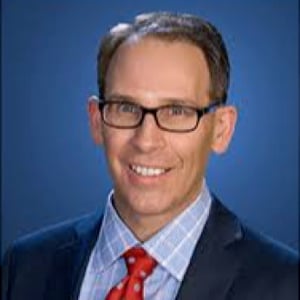
Judge, United States District Court, Eastern District of Missouri
Stephen R. Clark the chief United States district judge for the Eastern District of Missouri. He was appointed to the bench by President Trump in 2018 and became the chief judge in 2022. Prior to serving on the court, Judge Clark was the founder and managing partner of the Runnymede Law Group in St. Louis, Missouri, from 2008 to 2019. He also served as the president of the Federalist Society’s St. Louis Lawyers Chapter.

Muldrow v. City of St. Louis, Missouri - Post-Decision SCOTUScast
Alison E. Somin
On April 17, 2024, the Supreme Court issued its ruling in Muldrow v. City of...
The Future of DEI After Students for Fair Admissions v Harvard
Phoenix Lawyers Chapter
Phoenix, AZTopics
Torchbearer of the Republic: James Madison’s Fights for Freedom and the Constitution.
This post originally appeared at the Pacific Legal Foundation. James Madison is remembered as the...
Courthouse Steps Preview: City of Grants Pass, Oregon v. Johnson
Mark Miller
City of Grants Pass, Oregon v. Johnson concerns whether the sections of the Grants Pass...
Courthouse Steps Preview: City of Grants Pass, Oregon v. Johnson
Mark Miller
City of Grants Pass, Oregon v. Johnson concerns whether the sections of the Grants Pass...
Courthouse Steps Preview: City of Grants Pass, Oregon v. Johnson
Breakout Panel 1 - Testing the Tension: How Do Nondiscrimination Regulations Interact with Religious Freedom?
Julie Marie Blake, Martin S. Lederman, Andrea Picciotti-Bayer, Elizabeth Slattery
This session will discuss the Biden administration’s efforts to expand sex nondiscrimination protections to cover...
Breakout Panel 1 - Testing the Tension: How Do Nondiscrimination Regulations Interact with Religious Freedom?
EBRXII
Washington, DCPanel 2: Beyond Universities: The Impact of Students for Fair Admissions in the Workplace
2024 Ohio Conference
Columbus, OHSupreme Court Review [archived]
Silicon Valley Lawyers Chapter
Mountain View, CA