
Vice President for the Program on Technology, Criminal Justice and Civil Liberties, Lincoln Network
Arthur Rizer is the Vice President for the Program on Technology, Criminal Justice and Civil Liberties at Lincoln Network. In addition to his work at Lincoln, Arthur is a visiting lecturer at University College London, and an adjunct professor at George Mason University’s Antonin Scalia Law School. Arthur is also a member of Columbia University Justice Lab’s Executive Session for the Future of Justice Policy, the Federalist Society’s Executive Committee of the Criminal Law Practice Group, the Virginia Advisory Committee to the U.S. Commission on Civil Rights, and other advisory bodies.
Before joining Lincoln, Arthur was founding director of the R Street Institute’s program on criminal justice and civil liberties. Prior to that, Arthur taught at West Virginia University’s College of Law, and was a visiting professor at Georgetown University Law Center. He also served as a trial attorney with the U.S. Justice Department, primarily as a federal prosecutor in the Criminal Division, where he targeted command-and-control drug cartel leaders and narco-terrorists. He also served as a prosecutor in the U.S. Attorney’s Office for the Southern District of California and in the civil division. Earlier in his career, Arthur served in the U.S. Army, originally enlisting as a private before later receiving a commission. He served as an armor officer, later becoming the commander of a military police company and a Reserve Officers’ Training Corps assistant professor. He deployed to Fallujah, Iraq, with the mission to train the Iraqi Infantry and served as an MP acting battalion commander and executive officer. He retired as a lieutenant colonel from the U.S. Army (WVNG). During his Army career, Arthur received the Bronze Star, Purple Heart, Meritorious Service and Iraq Campaign medals.
Arthur is the author of three books: Lincoln’s Counsel (2010); The National Security Implications of Immigration Law (2013); and Jefferson’s Pen: The Art of Persuasion (2016).
Arthur earned his bachelor’s degree in political science from Pacific Lutheran University; a master of laws, with distinction, from Georgetown University’s Law Center; and his JD, magna cum laude, from Gonzaga University School of Law. He is also a graduate of the U.S. Marine Corps’ Command Staff College. He is in the final stages of a doctorate at the University of Oxford, Faculty of Law, Centre of Criminology that focuses on policing.
Assistant Professor of Law and Assistant Director of the Academic Success Program, Vermont Law School
Professor Richard Sala is the Assistant Director of the Academic Success Program and an Assistant Professor of Law. He joined the VLS faculty in 2019.
Professor Sala enlisted in the United States Marine Corps in 1997, and served as an infantryman for more than a decade, achieving the rank of Staff Sergeant. Professor Sala’s enlisted time included service with Marine Corps Ground Defense/Security Force, Guantanamo Bay, Cuba, 2nd Battalion, 6th Marines, Camp Lejeune, North Carolina, and 6th Marines Regimental Headquarters, Camp Lejeune, North Carolina —during which time he deployed with the 22nd Marine Expeditionary Unit, Special Operations Capable, participating in operations in and around the former Yugoslavia, including Operation Dynamic Response in Kosovo.
In 2001, Professor Sala was selected for commissioned service through the Broadened Opportunity for Officer Selection and Training program. Professor Sala graduated from the University of Colorado in 2003 with bachelor’s degrees in Political Science and International Affairs, a minor in Italian, and a certificate in Central and Eastern European History. He was commissioned as a Second Lieutenant in 2007 through the Naval Reserve Officer Training Corps program. After completing The Basic School and Infantry Officer Course, he reported to 1st Light Armored Reconnaissance Battalion, in Camp Pendleton, California, where he served as a platoon commander, and company executive officer with Company C—completing a deployment in support of Operation Iraqi Freedom.
In 2010, Professor Sala was selected for service a Judge Advocate through the Excess Leave Program. He attended Vermont Law School graduating with a Juris Doctorate (Cum Laude) and a Masters in Environmental Law and Policy (Magna Cum Laude). He was also the recipient of the Maximilian W. Kempner Award.
After completing law school, Professor Sala reported to Legal Services Support Team, Camp Pendleton where he served as a criminal prosecutor with Legal Team Echo and later, as a criminal prosecutor and Officer-in-Charge of Legal Team Delta.
In 2015, Professor Sala joined 1st Battalion, 4th Marines aboard Camp Pendleton, California, where he served as Judge Advocate to the Commanding Officer of Marine Rotational Force-Darwin—completing a deployment to Darwin, Australia in support of bilateral and multilateral training with the Australian Defense Force and regional allies and partners throughout the Indo-Pacific.
Upon returning from Australia, Professor Sala served as Assistant Deputy Staff Judge Advocate to the Commanding General of the 1st Marine Division.
In 2016, Professor Sala was selected to serve as Assistant Professor and Marine Officer Instructor at the University of Rochester where he also earned a Masters in Business Administration from the University of Rochester’s Simon Business School.
Professor Sala retired from the United States Marine Corps in 2018.
Upon retiring, Professor Sala joined the New Hampshire Department of Justice serving as the Attorney to the Commissioner of the New Hampshire Department of Education.
His personal decorations include the Navy and Marine Corps Commendation Medal (x2) and the Navy and Marine Corps Achievement Medal (x2). He is also the recipient of the Lieutenant Colonel Vic Taylor/Major General Edwin B. Wheeler Award for being the Distinguished Graduate of Infantry Officer’s Course, Class 2-08.
Howard M. Holtzmann Professor of International Law, Yale Law School
Lea Brilmayer is the Howard M. Holtzmann Professor of International Law at Yale Law School. In addition to teaching Contracts to first-year students, she also teaches Conflict of Laws and International Courts and Tribunals, as well as seminars on the laws of war and on African current affairs. Her degrees include a B.A. in mathematics and a J.D. from the University of California at Berkeley, as well as an LL.M. from Columbia Law School. Brilmayer has taught at a number of different law schools as either a professor or visiting professor, including the University of Texas, the University of Chicago, the University of Michigan, Columbia Law School, Harvard Law School, and the New York University School of Law (where she led a weekly seminar on International Jurisprudence.) She is a member of the Texas and Supreme Court bars. She has given numerous endowed lectures at other American law schools and has also taught twice at the summer session of the Hague Academy of International Law.
During her first decade of teaching, her writing interests mainly concerned conflict of laws (in particular, personal jurisdiction and choice of law); federal jurisdiction; and jurisprudence. Her conflict of laws writings have included one theoretical book on the subject and a leading casebook (in the more recent editions, co-authored with Jack Goldsmith). Together with a group of Yale student contributors, she published An Introduction to Jurisdiction in the American Federal System. Her writings on the conflict of laws have resulted in her being asked on a number of occasions to testify before Congressional committees, most recently on the Full Faith and Credit implications of same sex marriage. More recently, her interests have gradually turned to international law and international relations, and she is frequently cited for her academic writings about nationalism and the international legal status of secessionist movements. Her research in international jurisprudence has also led to two books, Justifying International Acts and American Hegemony: Political Morality in a One-Superpower World.
In addition to her academic interests, Brilmayer carries on an active life in interstate and international adjudication. In addition to contributing to amicus briefs, she has served as counsel of record before the United States Supreme Court and has been an expert consultant on many lower and intermediate appellate court cases. For the last decade she has served as lead counsel in several international public (state-to-state) arbitrations dealing with island sovereignty, maritime delimitation, land boundaries, and mass claims for violations of the laws of war.

Founding Partner, Cooper & Kirk PLLC
Charles J. Cooper is a founding member and the chairman of Cooper & Kirk, PLLC, “one of the Nation’s leading litigation boutiques” (Above The Law 2017). The National Law Journal recently wrote that Mr. Cooper’s “brilliant legal career has so far spanned five decades and thrust Cooper into the spotlight in some of the most historic moments of the country’s modern history.” He has argued nine cases before the United States Supreme Court and scores of appeals before each of the 13 federal courts of appeals and several state supreme courts. He has been lead trial counsel in numerous complex, weeks-long trials in federal courts throughout the country. Named by the National Law Journal as one of the 10 best litigators in Washington D.C., Mr. Cooper’s work has been reported in numerous press accounts, and he has been called a “powerhouse attorney” (Fortune 2015), “a hard-nosed litigator” (Washington Post 2017), and “one of the country’s most in-demand civil litigators and a Washington legal institution unto himself” (The American Spectator 2014).
After graduating from the University of Alabama School of Law in 1977, where he ranked first in his class and served as Editor-in-Chief of the Alabama Law Review, Mr. Cooper began his career as a law clerk to Judge Paul Roney on the Fifth Circuit Court of Appeals and to Justice William H. Rehnquist in 1978–79. He then practiced law in Atlanta for two years before joining the Civil Rights Division of the U.S. Department of Justice, where he served as the Deputy Assistant Attorney General in charge of, among other things, appellate matters. In 1985 President Reagan appointed him to the position of Assistant Attorney General for the Office of Legal Counsel, which is the office responsible for providing legal opinions and advice to the White House, the Attorney General, and Executive Branch departments and agencies on issues covering the full spectrum of federal constitutional, statutory, and regulatory law.
In 1988 he returned to private practice as a litigation partner in the Washington, D.C. office of McGuireWoods. From 1990 until the founding of Cooper & Kirk in 1996, he was a partner at Shaw Pittman (now Pillsbury Winthrop Shaw Pittman), where he headed the firm’s Constitutional and Government Litigation Group.
Mr. Cooper has represented a wide range of public and private clients in highly complex constitutional, civil rights, antitrust, healthcare, banking, intellectual property, elections, campaign finance, administrative, commercial, and government contract cases. He has led trial teams in cases that have won judgments and settlements valued in the billions of dollars and that have established ground-breaking constitutional precedents.
Much of Mr. Cooper’s practice has involved representing high-profile clients in nationally prominent matters, including: the State of Florida in a First Amendment suit brought by the Disney Company concerning its autonomous regulatory authority over its Disney World property; the Commonwealth of Virginia in a suit seeking to enjoin the removal of noncitizens from its voter rolls; 38 members of the Duke Lacrosse team falsely accused of rape by officials of Duke University and the City of Durham; Harper Lee in a copyright dispute with the heirs of Gregory Peck; high-ranking former government officials such as former Attorneys General John Ashcroft, Jeff Sessions, and William Barr, and Ambassador John Bolton; several Governors and United States Senators; over 100 Members of Congress; and many state, territorial, and local government bodies and officials. He has also represented and advised government officials and public figures in connection with sensitive private issues that needed to be, and were, resolved discreetly without becoming matters of public record.
In 1998 Chief Justice Rehnquist appointed Mr. Cooper to the Standing Committee on Rules of Practice and Procedure of the Judicial Conference of the United States, where he served for three terms. He also served as a Public Member, appointed by President George H.W. Bush, of the National Commission on Judicial Discipline and Removal. He is a member of numerous professional associations, including the American Law Institute (since 1993) and the American Academy of Appellate Lawyers (since 1996). He is also an active member of the Federalist Society and the Republican National Lawyers Association, which in 2010 named him Republican Lawyer of the Year and in 2016 honored him with its Edwin Meese III Award.
Mr. Cooper has published scores of articles and spoken extensively on constitutional and legal policy topics. He has appeared before congressional committees on 26 occasions, testifying as an expert on a wide variety of legal issues, including the Chevron doctrine of judicial deference to administrative agencies, the diversity of citizenship jurisdiction of federal courts, statehood bills for Puerto Rico and the District of Columbia, and the impeachment of President Clinton.

U.S. Court of Appeals, Seventh Circuit
Frank H. Easterbrook is a judge of the United States Court of Appeals for the Seventh Circuit and a Senior Lecturer at the Law School of the University of Chicago. He was Chief Judge from 2006–2013. Before joining the court in 1985, he was the Lee andBrena Freeman Professor of Law at the University of Chicago, where he taught and wrote in antitrust, securities, corporate law, jurisprudence, and criminal procedure. He has published The Economic Structure of Corporate Law (with Daniel R. Fischel) and about 100 scholarly articles. He served as Co-Editor of the Journal of Law and Economics from 1982 to 1991 and as a member of the Judicial Conference’s Standing Committee on Rules of Practice and Procedure from 1991 to 1997. Before joining the faculty of the Law School in 1979, Judge Easterbrook was Deputy Solicitor General of the United States. He holds degrees from Swarthmore College (B.A. with high honors, 1970) and the University of Chicago (J.D. cum laude, 1973), and is a member of the American Academy of Arts and Sciences, the American Law Institute, the Mont Pelerin Society, Phi Beta Kappa, and the Order of the Coif.
Senior Judge, United States Court of Appeals, Fifth Circuit
Patrick Errol Higginbotham is a federal judge on senior status with the United States Court of Appeals for the 5th Circuit. He joined the court in 1982 after being nominated by President Ronald Reagan.
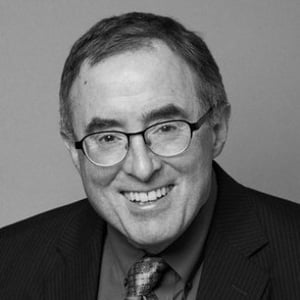
Contributing Writer, Vanity Fair
Michael Kinsley is a Contributing Writer for Vanity Fair, where his column appears monthly. Over a long career in the media, he has been Managing Editor of the Washington Monthly, Editor of the New Republic, and Editorial and Opinion Editor of the Los Angeles Times. He was the Founding Editor of Slate, one of the first on-line magazines. For over six years Kinsley was the liberal host of Crossfire, a CNN show where he sparred with Pat Buchanan five days a week. He played a similar role for many years with William F. Buckley on PBS’s Firing Line. He has written for The New Yorker, Conde Nast Traveler, and other publications.
U.S. Court of Appeals, Ninth Circuit
Stephen Roy Reinhardt is a federal appeals judge with the United States Court of Appeals for the Ninth Circuit in San Francisco. He joined the Court in 1980 after being nominated by President Jimmy Carter.
Born in New York City, New York, Reinhardt graduated from Pomona College with his Bachelor's degree in 1951 and later received a Bachelors of Laws degree, LL.B, from Yale Law School in 1954. Reinhardt served in the U.S. Air Force from 1954 to 1956 before becoming a law clerk for the Honorable Luther Youngdahl in the United States District Court for the District of Columbia until 1957. Reinhardt was a private practice attorney in the State of California from 1957 to 1980. Reinhardt was nominated to the United States Court of Appeals for the Ninth Circuit by President Jimmy Carter on November 30, 1979, to a new seat created by 92 Stat. 1629, which was approved by Congress. Reinhardt was confirmed by the U.S. Senate on September 11, 1980 and received commission on September 11, 1980.
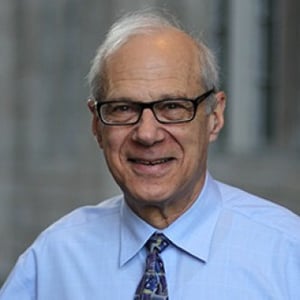
Nathaniel L. Nathanson Professor of Law Emeritus, Northwestern University Pritzker School of Law
A scholar in the field of constitutional law, Robert Bennett has been a member of the faculty of the Northwestern University School of Law since 1969, serving as the school’s dean from 1985 to 1995. Since 2002 he has been the Nathaniel L. Nathanson Professor of Law at Northwestern. With some regularity Professor Bennett teaches a seminar in the Law of American Democracy and courses in contracts, legislation, constitutional law, and constitutional theory. Professor Bennett has also taught as a visiting professor at the University of Illinois College of Law, the University of Virginia School of Law, the University of Southern California Law Center, Brooklyn Law School, and the Benjamin N. Cardozo School of Law of Yeshiva University.
Professor Bennett is a fellow of the American Bar Foundation, and served as the Foundation’s president from 1992 to 1994. He has been a member of the American Law Institute since 1979. He was also a co-founder of the Chicago Council of Lawyers and served as its president. Professor Bennett is the author of numerous books and articles. His two most recent books are Talking It Through: Puzzles of American Democracy, published by Cornell University Press in 2002 and Taming The Electoral College, published by Stanford University Press in 2006. At the present time he is at work on a (co-authored) book about constitutional interpretation for Cornell University Press, tentatively titled Originalism and Living Constitutionalism. Professor Bennett received his BA, summa cum laude, in 1962 from Harvard University and his LLB, cum laude, from Harvard Law School in 1965. At Harvard College he was elected to phi beta kappa and at Harvard Law School he was a member of the editorial board of the Harvard Law Review. Professor Bennett received a Knox Memorial Fellowship from Harvard University for study at the London School of Economics in 1965-66, and the following year he served as legal assistant to Commissioner Nicholas Johnson of the Federal Communications Commission. He was Reginald Heber Smith Fellow at the Office of Economic Opportunity, assigned to the Chicago Legal Aid Bureau in 1967-68, and he practiced law as an associate at the Chicago law firm of Mayer, Brown & Platt in 1968-69. Professor Bennett and his wife, Harriet Trop, live in Chicago and they have one daughter, Ariana Trop Bennett, who does as well.
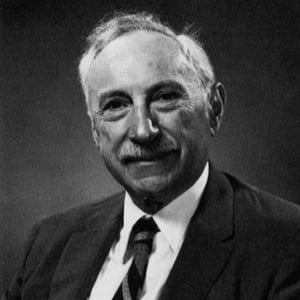
Charles Warren Senior Fellow in American Legal History, Harvard Law School
Raoul Berger (January 4, 1901 – September 23, 2000) was an American attorney and professor at The University of California at Berkeley and Harvard University School of Law. While at Harvard, he was the Charles Warren Senior Fellow in American Legal History.

Senior Judge, United States Court of Appeals, District of Columbia Circuit
Circuit Judge Douglas H. Ginsburg was appointed to the United States Court of Appeals for the District of Columbia in 1986. After receiving his B.S. from Cornell University in 1970, and his J.D. from the University of Chicago Law School in 1973, he clerked on the D.C. Circuit and for Justice Thurgood Marshall on the United States Supreme Court. Thereafter, Judge Ginsburg was a professor at the Harvard Law School, the Deputy Assistant and then Assistant Attorney General for the Antitrust Division of the Department of Justice, as well as the Administrator of the Office of Information and Regulatory Affairs in the Office of Management and Budget. Concurrent with his service as a federal judge, Judge Ginsburg has taught at the University of Chicago Law School and the New York University School of Law. Judge Ginsburg is currently a Professor of Law at the George Mason University and a visiting professor at University College London, Faculty of Laws.
Judge Ginsburg is the Chairman of the International Advisory Board of the Global Antitrust Institute at the Law and Economics Center of the George Mason University School of Law. He also serves on the Advisory Boards of: Competition Policy International; the Harvard Journal of Law and Public Policy; the Journal of Competition Law and Economics; the Journal of Law, Economics & Policy; the Supreme Court Economic Review; the University of Chicago Law Review; the New York University Journal of Law and Liberty; and, at University College London, both the Centre for Law, Economics and Society and the Jevons Institute for Competition Law and Economics.
In 2020, Judge Ginsburg was the 11th recipient of the John Sherman Award, presented by the Antitrust Division of the Department of Justice in recognition of the awardee’s Lifetime Contributions to Antitrust Law and Policy.
In 2014, Judge Ginsburg received the Lifetime Achievement Award given annually by the Global Competition Review.
He is the author or co-author of several books and more than 100 articles on competition and regulation, including, most recently, Growing Convergence: The Limited Role of Antitrust in Standard Essential Patent Disputes, in CPI Antitrust Chronicle, Summer 2021, Vol. 1, No. 2.

Richard and Frances Mallery Professor of Law and Faculty Director, Constitutional Law Center, Stanford Law School
Michael W. McConnell is the Richard and Frances Mallery Professor and Faculty Director of the Constitutional Law Center at Stanford Law School, and a Senior Fellow at the Hoover Institution. From 2002 to 2009, he served as a Circuit Judge on the United States Court of Appeals for the Tenth Circuit. He was nominated by President George W. Bush, a Republican, and confirmed by a Democratic Senate by unanimous consent. McConnell has previously held chaired professorships at the University of Chicago and the University of Utah, and visiting professorships at Harvard and NYU. He teaches courses on constitutional law, constitutional history, First Amendment, and interpretive theory. He has published widely in the fields of constitutional law and theory, especially church and state, equal protection, and separation of powers. His book, “The President Who Would Not Be King: Executive Power Under the Constitution,” was published by Princeton University Press in 2020, based on the Tanner Lectures in Human Values, which he delivered at Princeton in 2019. His latest book, co-authored with Nathan Chapman, “Agreeing to Disagree: How the Establishment Clause Protects Religious Diversity and Freedom of Conscience,” was published by Oxford University Press in mid-2023. McConnell has argued sixteen cases in the United States Supreme Court, most recently Carney v. Adams (2020). defending a provision of the Delaware Constitution requiring political balance on that state’s courts. More recently, he was co-counsel in Gonzalez v. Google. He earned his B.A. from Michigan State University and his J.D. from the University of Chicago, and has received honorary degrees from Notre Dame University and Michigan State. He served as law clerk to Supreme Court Justice William J. Brennan, Jr. and D.C. Circuit Chief Judge J. Skelly Wright. He has been Assistant General Counsel of the Office of Management & Budget, Assistant to the Solicitor General of the Department of Justice, and a member of the President’s Intelligence Oversight Board. He is Senior of Counsel to the law firm Wilson, Sonsini, Goodrich & Rosati, and is co-chair of Meta’s Oversight Review Board.
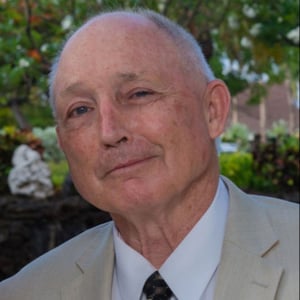
Charles R. Walgreen, Jr. Chair in Law and Co-Director, Program in Law and Philosophy, University of Illinois College of Law
One of the country’s most prominent authorities on the intersection of law and philosophy, and widely regarded as the country’s leading theoretician of the criminal law, Professor Moore joined the faculty in 2002 as the Charles R. Walgreen, Jr. Chair, the first and only university-wide chair for the University of Illinois’ three campuses. He is jointly appointed as professor of law in the College of Law and as a professor with the Center for Advanced Studies, an honor bestowed on faculty on the basis of their outstanding scholarship and among the highest forms of campus recognition. Professor Moore was just the second UI College of Law faculty member to have held such an appointment.
Before coming to Illinois, Professor Moore served as the Warren Distinguished Professor of Law and as co-founder and co-director of the Institute for Law and Philosophy at the University of San Diego. From 1989-2000, he was the Leon Meltzer Professor of Law and Professor of Philosophy at the University of Pennsylvania, where he co-founded and directed the University of Pennsylvania Institute for Law and Philosophy.
Over the course of his career, he also has been a professor of law at the University of California at Berkeley, the University of Southern California (where he held the Robert Kingsley Chair), and the University of Kansas. In addition, he has been the William Minor Lile Distinguished Visiting Professor of Law at the University of Virginia, the Florence Rogatz Visiting Professor at the Yale Law School, The Mason Ladd Distinguished Visiting Professor at the University of Iowa Schools of Law and of Medicine, as well as a visiting professor at Stanford University, Northwestern University, Tel Aviv University in Israel, di Tella University in Buenos Aires, and the Universität Erlangen in Germany.
He has held a number of fellowships and visiting scholar positions, including two in the Law and Humanities Program of Harvard University, five at the Australian National University’s Research School of Social Sciences in Canberra, Australia, and one each at the Humanities Research Institute of the University of California at Irvine, the Rockefeller Center in Bellagio, Italy, the Georgetown University Law Center, the University of Pennsylvania’s Center for Neuroscience and Society, and the Yale Law School.
Over an academic career spanning more than 50 years Moore has published more than 140 books, articles, editorials, and other pieces of scholarship, documented recently in a festschrift published in his honor, K. Ferzan and S. Morse, eds., Legal, Moral, and Metaphysical Truth: The Philosophy of Michael S. Moore (Oxford University Press, 2016). He is the author of Placing Blame: A General Theory of the Criminal Law (Oxford University Press, 1997), widely regarded as the leading modern statement of the retributivist theory of the criminal law. In an earlier book, Act and Crime: The Philosophy of Action and its Implications for Criminal Law (Oxford University Press, 1993), Moore provided a unified theory of action that underlies English and American criminal jurisprudence. In a later book, Causation and Responsibility: An Essay in Law, Morals, and Metaphysics (Oxford University Press, 2009), Moore explored the nature of causation and its relation to both moral and legal responsibility. Earlier in his career, he authored Law and Psychiatry: Rethinking the Relationship (Cambridge University Press, 1984), which explored the tension that often exists between legal and psychiatric theories. His latest book, Mechanical Brains and Responsible Choices, still forthcoming, will return to these same issues, this time as they are raised by contemporary neuroscience rather than by dynamic psychiatry.
Professor Moore has presented hundreds of lectures and papers around the world in law, jurisprudence, political theory, legal philosophy, political science, economics, philosophy, psychology, psychiatry, and neuroscience, including most recently endowed, named lectures at Duke, Dartmouth, Columbia, Tel Aviv, Pennsylvania universities, as well as the annual Public Philosophy Lecture and the annual Center for Advanced Studies Lecture at the University of Illinois. He is on the board of editors of numerous journals in law and in philosophy and for a decade served as editor-in-chief of the journal, Law and Philosophy.
He regularly rotates his law teaching between first-year courses of criminal law, torts, contracts, property, and constitutional law, and upper-year courses in jurisprudence and legal philosophy. During his 13 years on the Philosophy Department faculty at Illinois he taught undergraduate courses in the philosophy of law and political philosophy and graduate seminars in neuroscience, ethics, the theory of action, and the metaphysics of causation.
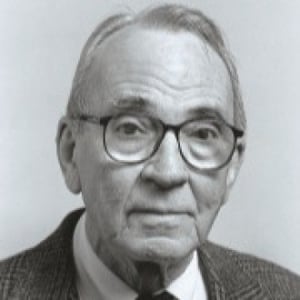
John M. Olin University Professor Emeritus, Georgetown University
Walter Berns is the John M. Olin University Professor Emeritus at Georgetown University and a resident scholar at the American Enterprise Institute. He has taught at the University of Toronto, the University of Chicago (where he earned a Ph.D. in political science), and at Cornell and Yale Universities. His government service includes membership on the National Council on the Humanities, the Council of Scholars in the Library of Congress, the Judicial Fellows Commission, and in 1983 he was the alternate United States representative to the United Nations Commission on Human Rights. He has been a Guggenheim, Rockefeller, and Fulbright Fellow and a Phi Beta Kappa lecturer. He is the author of numerous articles on American government and politics in both professional and popular journals; his many books include In Defense of Liberal Democracy, The First Amendment and the Future of American Democracy, Taking the Constitution Seriously, and Making Patriots. President George W. Bush awarded him the 2005 National Humanities Medal for his scholarship on the history of the constitution.

Partner, O'Melveny & Myers LLP
Walter Dellinger is an influential authority on appellate and Supreme Court decisions, lending his experience as a former Solicitor General and decades of legal knowledge to amicus briefs, a multitude of pro bono clients, and public and private companies involved in bet-the-company litigation. A frequent commentator for the Wall Street Journal, Slate, and major television networks, Walter holds the designation of the Douglas B. Maggs Emeritus Professor of Law at Duke University. He was named one of the 100 Most Influential Lawyers in America by the National Law Journal and recognized with a Lifetime Achievement Award from the American Lawyer.
Walter, who formerly served as O’Melveny’s Diversity and Inclusion Partner, helped convince the US Supreme Court that proponents of Proposition 8, California's ban on same-sex marriage, did not have standing to appeal a court order invalidating it. That ruling, Hollingsworth v. Perry, cleared the way for marriage equality in California and eventually nationwide.
Walter served as Assistant Attorney General and head of the Office of Legal Counsel (OLC) from 1993 to 1996. He was acting Solicitor General for the 1996-97 Term of the US Supreme Court. During that time, Walter argued nine cases before the Court, the most by any Solicitor General in more than 20 years. His arguments included cases dealing with physician-assisted suicide, the line item veto, the cable television act, the Brady Act, the Religious Freedom Restoration Act, and the constitutionality of remedial services for parochial school children.
Walter has served as Special Counsel to the Board of Directors of the New York Stock Exchange in connection with the NYSE’s transformation into a publicly held company and its acquisition of an electronic trading company.
After serving in early 1993 in the White House as an advisor to the President on constitutional issues, Walter was nominated by the President to be Assistant Attorney General. He was confirmed by the Senate in October 1993 and served for three years. As head of the OLC, Walter issued opinions on a wide variety of issues, including: the President's authority to deploy United States forces in Haiti and Bosnia; whether the trade agreements required treaty ratification; and a major review of separation of powers questions. He provided extensive legal advice on questions arising out of the shutdown of the federal government, on national debt ceiling issues, and on loan guarantees for Mexico.
Walter has published articles on constitutional issues for scholarly journals including the Harvard Law Review, the Yale Law Journal, and the Duke Law Journal, and has written for the New York Times, the Washington Post, Newsweek, the New Republic, and the London Times. He has been a visiting professor at the Catholic University of Belgium and has given lectures to university faculties in Florence, Siena, Nuremberg, Copenhagen, Leiden, Utrecht, Tilburg, Mexico, and Rio de Janeiro, and has delivered major lectures at Stanford, Yale, Harvard, Michigan, Berkeley, Penn, Duke, Chicago, and other US law schools. He has testified more than 25 times before committees of Congress.
In private practice, Walter’s arguments before the United States Supreme Court have included Exxon Shipping Co. v. Baker, Morgan Stanley Capital Group Inc. v. Public Utility District No. 1 of Snohomish County, Alabama v. North Carolina, Hosanna-Tabor v. EEOC, Heller v. District of Columbia, Jackson v. Birmingham School District, Brown v. Legal Foundation of Washington, US Airways v. Barnett, Utah v. Evans, Hunt v. Cromartie, and Hunt v. Easley. His most notable Court of Appeals and state supreme court arguments include Martha Stewart v. United States, Whiteside v. United States, and Exxon v. Alabama, LCI v. Phillips.
Senior Judge, United States Court of Appeals, Fifth Circuit
Patrick Errol Higginbotham is a federal judge on senior status with the United States Court of Appeals for the 5th Circuit. He joined the court in 1982 after being nominated by President Ronald Reagan.
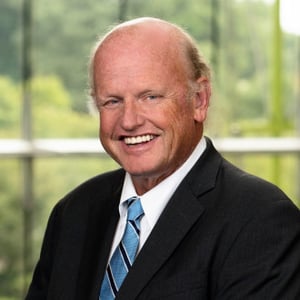
In his 35 years at the Justice Department and in private practice, Mike Carvin was one of the leading appellate and trial lawyers challenging state and federal regulations on constitutional and statutory grounds, with 10 Supreme Court arguments and numerous high-profile victories. In addition to his numerous cases in the United States Supreme Court, he argued in virtually every federal appeals court. His major cases include the recent constitutional challenge to the Affordable Care Act and the decisions invalidating Sarbanes-Oxley's accounting board, preventing the Justice Department from obtaining monetary relief against the tobacco industry under RICO, overturning the federal government's plan to statistically adjust the census, limiting the Justice Department's ability to create "majority-minority" districts, and upholding Proposition 209's ban on racial preferences in California.
Mike was one of the lead lawyers, and argued before the Florida Supreme Court, on behalf of George W. Bush in the 2000 presidential election Florida recount controversy. He also has represented state governments, financial institutions, telecommunications, and energy companies in "takings," First Amendment, civil rights, and statutory challenges to federal government actions.

Ronald Reagan Distinguished Fellow Emeritus, The Heritage Foundation
Edwin Meese III, the prominent conservative leader, thinker and elder statesman, continues a quarter-century formal association with The Heritage Foundation as the leading think tank’s Ronald Reagan Distinguished Fellow Emeritus.
In that capacity, Meese oversees special projects and acts as an ambassador for Heritage within the conservative movement.
Meese was chairman of Heritage’s Center for Legal and Judicial Studies from its founding in 2001 until what he calls his “semi-retirement” on Feb. 1, 2013.
He joined Heritage in 1988 as the think tank's first Ronald Reagan Distinguished Fellow -- the only policy chair in the country to be officially named for the 40th president. His work focused on keeping President Reagan’s legacy of conservative principles alive in public debate and discourse.
The legal center now bears his name, in recognition of Meese’s contributions to the rule of law and the nation’s understanding of constitutional law. Its mission is to educate government officials, the media and the public about the Constitution and legal principles -- and how they affect public policy.
Perhaps best known as U.S. attorney general during Reagan’s second term, Meese’s service to the conservative icon stretched from the California governor’s mansion in 1966 to the White House in 1981 before he went to the Department of Justice four years later.
His Heritage “hats” kept Meese among the major conservative voices in national policy debates at an age when most men and women enjoyed quiet retirements.
In 2006, for example, Meese was named to the Iraq Study Group, a special presidential commission dedicated to examining the best resolutions for America's involvement in Iraq. In the past few years he wrote and spoke about constitutional topics ranging from religious liberty to the responsibility of Supreme Court justices.
Immediately after Reagan's death in 2004, and in the years since, Meese often agreed to major media appearances to discuss the lasting impact of his old friend, mentor and boss. He has summarized the Reagan legacy in three accomplishments: Reagan cut taxes and kept them low. He worked to defeat and end the Soviet Union and its worldwide push for communism. And he restored America's faith in itself after years of failure and "malaise."
"I admired him as a leader and cherish his friendship," Meese wrote in a 2004 essay for Heritage members and supporters. "Ronald Reagan had strong convictions. He was committed to the principles that had led to the founding of our nation. And he had the courage to follow his convictions against all odds." <[>Edwin Meese III was born Dec. 2, 1931, to Edwin Jr. and Leone Meese in Oakland, Calif. He graduated from Yale University in 1953 and holds a law degree from the University of California-Berkeley.
Meese spent much of his adult life working for Reagan, first after the former actor, sports announcer and athlete was elected as California’s governor in 1966 and then when he sought and won the presidency in 1980.
Reagan never forgot Meese's loyalty and hard work. During a press conference at which reporters questioned Meese's actions at the Justice Department, Reagan replied: "If Ed Meese is not a good man, there are no good men."
During the Reagan governorship, Meese served as executive assistant and chief of staff from 1969 through 1974 and as legal affairs secretary from 1967 through 1968. He previously was deputy district attorney in Alameda County, Calif.
From January 1981 to February 1985, Meese held the position of counsellor to the president -- the senior job on the White House staff -- and functioned as Reagan's chief policy adviser. In 1985, he received Government Executive magazine's annual award for excellence in management.
Meese served as the 75th attorney general of the United States from February 1985 to August 1988. As the nation's chief law enforcement officer, he directed the Justice Department and led international efforts to combat terrorism, drug trafficking and organized crime.
Meese’s relationship with Heritage began when he met with senior management to discuss the think tank's landmark policy guide, Mandate for Leadership, prepared for the incoming administration. Meese later recalled that Reagan personally handed out copies of the 1,093-page book to members of his Cabinet and asked them to read it. Nearly two-thirds of Mandate's 2,000 recommendations would be adopted or attempted by the Reagan administration.
More than a decade after joining Heritage, Meese assumed the chairmanship of its Center for Legal and Judicial Studies. Under his guidance, the center counseled White House staffers, Justice Department officials and Senate Judiciary Committee members on the importance of filling judicial vacancies with qualified men and women who are committed to interpreting the Constitution according to the founding document's original meaning.
The center became known for hosting "moot court" practice sessions to sharpen the arguments of attorneys slated to bring important cases before the Supreme Court. Those cases addressed constitutional issues ranging from property rights to racial preferences in primary and secondary schools to restrictions on free speech in campaign finance law.
Meese headed the legal center's Advisory Board for the writing and editing of the best-selling book, The Heritage Guide to the Constitution (Regnery, 2005). In it, 109 experts walked readers through a clause-by-clause analysis of the Constitution. Sen. Tom Coburn (R-Okla.) was among those keeping the reference work handy during Judiciary Committee hearings on Supreme Court nominees.
Meese's other books include “Leadership, Ethics and Policing” (Prentice Hall, 2004); “Making America Safer” (Heritage, 1997); and “With Reagan: The Inside Story” (Regnery Gateway, 1992).He wrote the Introduction to a well-received 2010 book on the “overcriminalization” trend, “One Nation Under Arrest,” by Heritage veterans Paul Rosenzweig and Brian W. Walsh.
He also is a distinguished visiting fellow at the Hoover Institution at Stanford University in California and lectures, writes and consults throughout the United States on a variety of subjects.
As both attorney general and counsellor to Reagan, Meese was a member of the Cabinet and the National Security Council. He served as chairman of the Domestic Policy Council and the National Drug Policy Board. After Reagan won the White House in the 1980 election, Meese headed the transition team. During the campaign, he was the Reagan-Bush Committee's senior official.
Meese had a career outside government and politics. From 1977 to 1981, he was a law professor at the University of San Diego, where he also directed the Center for Criminal Justice Policy and Management.
He was an executive in the aerospace and transportation industry as vice president for administration of Rohr Industries Inc. in Chula Vista, Calif. He left Rohr to return to the practice of law, doing corporate and general work in San Diego County.
A retired colonel in the Army Reserve, Meese remains active in numerous civic and educational organizations.
He and his wife, Ursula, have two grown children and reside in McLean, Va.

Senior Fellow in Constitutional Jurisprudence, Independence Institute
Professor Robert G. Natelson is a constitutional scholar and author.
Rob’s constitutional scholarship has been cited repeatedly by justices and parties at the U.S. Supreme Court—as well as by federal appeals courts, and at least 18 state supreme courts.
Rob’s research into the Constitution’s original meaning has carried him to libraries throughout the United States and in Britain, including four months at Oxford University. His books and articles span many different parts of the Constitution, including groundbreaking studies of the Necessary and Proper Clause, the Indian Commerce Clause, federalism, Founding-Era interpretation, regulation of elections, and the amendment process of Article V. He created the first-ever online bibliography for 18th century materials used in constitutional research. He is a contributing author to the Encyclopedia of the Supreme Court of the United States (on Magna Carta). He contributed eight essays to the third edition of the Heritage Guide to the Constitution: five on the amendment procedure and one each on the Guarantee Clause, the Postal Clause, and the Recess Appointments Clause.
U.S. Supreme Court justices have relied explicitly on Rob’s research in 41 citations in 13 separate cases.
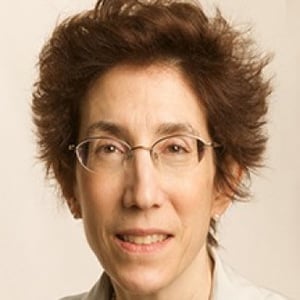
U.S. Court of Appeals, Ninth Circuit
Sandra Segal Ikuta was confirmed as a judge of the U.S. Court of Appeals for the Ninth Circuit on June 19, 2006. She filled a judgeship vacant since September 1, 2000, when Chief Judge Emeritus James R. Browning took senior status.
Before becoming a U.S. Circuit Judge, California Gov. Arnold Schwarzenegger appointed her to be deputy secretary and general counsel of the California Resources Agency in January 2004.
Prior to her political appointment, Judge Ikuta was a partner at the Los Angeles office of O'Melveny & Myers LLP. She joined the law firm in 1990 as an associate and became a partner in 1997. She specialized in environmental and natural resources law and co-chaired the firm's environmental practice group. She previously served as a law clerk for U.S. Supreme Court Justice Sandra Day O'Connor, 1989-90, and Judge Alex Kozinski of the U.S. Court of Appeals for the Ninth Circuit, 1988-89.
Prior to her legal career, Judge Ikuta took an unorthodox career path, which included serving as the first female editor-in-chief of a national martial arts magazine.
She received her J.D. from the University of California at Los Angeles School of Law and a Master of Science from Columbia University School of Journalism. She earned her undergraduate degree from the University of California at Berkeley in 1976.
In addition to her duties as an active U.S. Circuit Judge, Judge Ikuta was an appointed member of the Judicial Conference of the U.S. Advisory Committee on Bankruptcy Rules.

Charles Evans Hughes Professor of Law, Columbia Law School
THOMAS W. MERRILL is the Charles Evans Hughes Professor of Law at Columbia Law School. He previously taught at Northwestern University School of Law and Yale Law School. He has undergraduate degrees from Grinnell College and Oxford University, where he studied as a Rhodes Scholar, and a law degree from the University of Chicago. He clerked on the D.C. Circuit (for Chief Judge David Bazelon) and the U.S. Supreme Court (for Justice Harry Blackmun). From 1987-1990 he served as Deputy Solicitor General, U.S. Department of Justice. Professor Merrill’s writings related to property include Property: Principles and Policies (Foundation Press Second Edition, 2012) (with Henry E. Smith); Property: The Oxford Introductions to U.S. Law (Oxford U. Press, 2010); Property: Takings (Foundation Press, 2002)(with David Dana); and numerous articles, including “The Economics of Public Use” (Cornell Law Review 1986); “The Landscape of Constitutional Property” (Virginia Law Review 2000); and “The Character of the Governmental Action” (Vermont Law Review 2012). He is a member of the American Academy of Arts and Sciences.
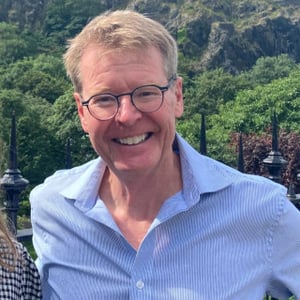
Distinguished University Chair and Professor of Law, University of St. Thomas School of Law
Michael Stokes Paulsen is Distinguished University Chair & Professor of Law at the University of St. Thomas, where he has taught since 2007. Professor Paulsen was previously the McKnight Presidential Professor of Law & Public Policy and Associate Dean at the University of Minnesota Law School, where he taught from 1991-2007. He is a graduate of Northwestern University, Yale Law School, and Yale Divinity School. He has served as a federal prosecutor, as Attorney-Advisor in the Office of Legal Counsel of the U.S. Department of Justice, and as counsel for the Center for Law & Religious Freedom.
Paulsen has taught as a visiting professor at Princeton University, Pepperdine University, Georgetown University, Bethel University, Uppsala University (Sweden), Daystar University (Kenya), and University of the Andes (Chile). He has been a guest lecturer at universities around the nation, including Harvard, Yale, Columbia, Princeton, Penn, NYU, Georgetown, Virginia, Stanford, Berkeley, Michigan, University of Chicago, and Northwestern.
Professor Paulsen is the author of more than ninety scholarly articles and book chapters on a wide variety of constitutional law topics, published in law journals including the Harvard Law Review, the Yale Law Journal, the Stanford Law Review, the University of Chicago Law Review, the Michigan Law Review, the Georgetown Law Journal, and the Northwestern University Law Review. He is the author or co-author of three books, including The Constitution: An Introduction (Basic Books, 2015) (co-authored with Luke Paulsen) and the casebook The Constitution of the United States, now in its fifth edition with Foundation Press, co-authored with Michael McConnell, Samuel Bray, and Will Baude.

James Monroe Distinguished Professor of Law and Albert Clark Tate, Jr., Professor of Law, University of Virginia School of Law
Professor Saikrishna Prakash’s scholarship focuses on separation of powers, particularly executive powers. He teaches Constitutional Law, Foreign Relations Law and Presidential Powers at the Law School.
Prakash’s most recent book, “The Living Presidency: An Originalist Argument Against Its Ever-Expanding Powers,” was published by Harvard Belknap Press in 2020. He also authored “Imperial from the Beginning: The Constitution of the Original Executive” (Yale University Press, 2015). The former book focuses on the modern presidency while the latter considers the presidency of the Founders.
Prakash has authored over 75 law review articles. Among them are “Of Synchronicity and Supreme Law” in the Harvard Law Review, “The Indefensible Duty to Defend” in the Columbia Law Review, and “50 States, 50 Attorneys General and 50 Approaches to the Duty to Defend” and “The Executive Power Over Foreign Affairs” in the Yale Law Journal.
Prakash has published op-eds in The New York Times, The Wall Street Journal and the Los Angeles Times. At the request of Democrats and Republicans, he has testified before Congress on matters of presidential removal, the Mueller Report and how Congress might better check the presidency. He is currently a Miller Center Senior Fellow. In 2015, he received the Roger Traynor award for faculty scholarship. In the same year, he received an honorable mention from the American Society of Legal Writers for his book “Imperial from the Beginning.” He has given named lectures at William & Mary Law School, Princeton University and Toledo Law School, and keynote addresses at several conferences.
Prakash majored in economics and political science at Stanford University. At Yale Law School, he served as senior editor of the Yale Law Journal and received the John M. Olin Fellowship in Law, Economics and Public Policy. He subsequently clerked for Judge Laurence H. Silberman of the U.S. Court of Appeals for the District of Columbia Circuit and for Justice Clarence Thomas of the U.S. Supreme Court. After practicing in New York for two years, he served as a visiting professor at the University of Illinois College of Law and as an associate professor at Boston University School of Law. He then spent several years at the University of San Diego School of Law as the Herzog Research Professor of Law. Prakash has been a visiting professor at Northwestern University and the University of Chicago. He also has served as a James Madison Fellow at Princeton University and Visiting Research Fellow at the Hoover Institution of War & Peace at Stanford University.
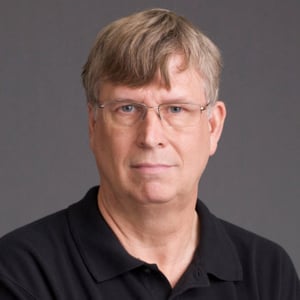
William L. Matheson and Robert M. Morgenthau Distinguished Professor of Law and Douglas D. Drysdale Research Professor of Law, University of Virginia School of Law
Lawrence B. Solum is an internationally recognized legal theorist who works in constitutional theory, procedure and the philosophy of law. Solum contributes to debates in constitutional theory and normative legal theory. He is especially interested in the intersection of law with the philosophy of language and with moral and political philosophy. His series of articles on constitutional originalism have shaped contemporary thinking about the great debate between originalism and constitutional theory. Solum’s original theory of the fundamental nature and purpose of law, “Virtue Jurisprudence,” has been debated and discussed in Asia, Europe and North America. He also works on problems of law and technology, including Internet governance, copyright policy and patent law. His pathbreaking article, “Legal Personhood for Artificial Intelligences,” published in the early 1990s, is widely acknowledged as far ahead of its time.
Solum received his J.D. magna cum laude from Harvard Law School and received his B.A. with highest departmental honors in philosophy from the University of California at Los Angeles. While at Harvard, he served as an editor of the Harvard Law Review. After graduation, he worked for the law firm of Cravath, Swaine, and Moore in New York, and then clerked for Judge William A. Norris of the U.S. Court of Appeals for the Ninth Circuit.
Prior to joining the UVA Law faculty in 2020, he was a member of the faculty at Georgetown University Law Center, the University of Illinois, the University of San Diego and Loyola Marymount University, and visited at Boston University and the University of Southern California. He regularly teaches Civil Procedure and Constitutional Law. His other teaching includes seminars in constitutional theory and the philosophy of law as well as courses in conflict of laws, federal courts, intellectual property and internet law and governance.
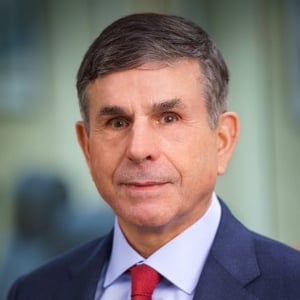
Partner, Marzulla Law
Roger J. Marzulla is one of the nation’s leading environmental, water, and property lawyers. As Assistant Attorney General in charge of the U.S. Justice Department’s Environment and Natural Resources Division, Roger learned first hand the operations and litigation styles of his client agencies: EPA, Interior Department, Bureau of Reclamation, Fish and Wildlife Service, National Marine Fisheries Service, Department of Transportation, Department of Commerce. In 1997, he co-founded Marzulla Law, where he brings to bear more than 35 years of expertise representing companies and individuals in industries as diverse as land and project development, aerospace, chemicals, oil and gas, mining, timber, manufacturing, computers, agriculture and water service.
Roger began his legal career as a trial lawyer in San Jose, California, after graduating magna cum laude from the University of Santa Clara School of Law. As a partner in Matthews & Marzulla he represented developers, title and construction companies, shopping centers, apartment owners and lenders in litigation throughout California. In 1981 he moved to Denver to become President of Mountain States Legal Foundation, litigating environmental and natural resource cases across the West.
In 1983 Roger joined the Justice Department as Special Litigation Counsel. He was subsequently promoted to Deputy Assistant Attorney General and, in 1987, was confirmed by the Senate as Assistant Attorney General in charge of the Environment and Natural Resources Division. At the Justice Department, Roger helped create litigation strategies for government programs as diverse as Superfund, the Clean Air Act, off-shore oil leasing, environmental crimes, federal facility clean-up, wetlands, endangered species and hazardous waste enforcement, as well as Presidential Order EO 12,630 (Government Interference with Private Property Rights).
In 1989 Roger returned to private law practice, successively heading the environmental law practices of the Powell, Goldstein and Akin, Gump law firms.
Since 1997, as a partner in Marzulla Law, Roger has continued to represent corporate and business clients in a wide array of environmental and property issues in courts across the country, frequently in litigation against the United States. He also assists clients in attaining compliance with environmental, health and safety regulation, and in avoiding risks in transactions.
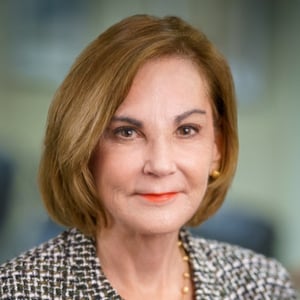
Partner, Marzulla Law
Ms. Marzulla served as an Attorney-Advisor and as a trial lawyer prosecuting employment violations in the Civil Rights Division at the U.S. Department of Justice. Later, Nancie joined the law firm of Verner, Liipfert (now DLA Piper), where she litigated complex airline and other civil matters. In 1991, She founded Defenders of Property Rights, where she was involved in high profile takings cases in the Supreme Court, federal courts of appeal, and trial courts. Ms. Marzulla also worked at the International Labor Organization in Geneva, Switzerland doing comparative legal research.
Nancie G. Marzulla is a founding partner of Marzulla Law, ranked as one of the nation’s “Best Law Firms,” and a “Tier One” environmental litigation firm by the U.S. News and World Report. Nancie’s litigation practice concentrates on water rights, takings, and contract claims in the U.S. Court of Federal Claims. She also has extensive experience in handling matters involving property, water, environmental law, Indian tribal claims, development, and natural resources in trial courts, courts of appeal, the Supreme Court, and in international tribunals. Nancie also represents corporate clients in enforcement or permitting disputes with federal regulatory agencies.

Courthouse Steps Decision Teleforum: United States v. Briggs
Arthur Rizer, Richard K. Sala
On December 10, 2020, the Supreme Court released its decision in United States v. Briggs. Consolidated...
Panel V: The Conflict Between Text and Precedent in Constitutional Adjudication [Archive Collection]
Lea Brilmayer, Charles J. Cooper, Frank H. Easterbrook, Patrick E. Higginbotham, Michael Kinsley, Stephen Reinhardt
On April 3-5, 1987, the Federalist Society's Chicago Student Chapter hosted the sixth annual National...
Panel III: Originalist Theories of Constitutional Interpretation [Archive Collection]
Robert William Bennett, Raoul Berger, Douglas H. Ginsburg, Michael W. McConnell, Michael S. Moore
On April 3-5, 1987, the Federalist Society's Chicago Student Chapter hosted the sixth annual National...
Can the Death Penalty be Administered Constitutionally? [Archive Collection]
Walter Berns, Walter E. Dellinger, Patrick E. Higginbotham
On September 9-10, 1988, The Federalist Society hosted its second annual National Lawyers Convention at...
Closing Address by Hon. Edwin Meese III
Michael A. Carvin, Edwin Meese
On November 6-7, 1987, The Federalist Society held a symposium at the Grand Hyatt Hotel...
Why Constitutional Lawyers Need to Know Latin
Robert G. Natelson
Note from the Editor: This article discusses the role of the Latin language and other...
Showcase Panel I: Justice Scalia: Text Over Intent and the Demise of Legislative History
Sandra Segal Ikuta, Thomas W. Merrill, Michael Stokes Paulsen, Saikrishna Prakash, Lawrence Solum
Until 1986, most conservative lawyers favored following the original intentions of the Framers of the...
Rails to Trails - Who Owns the Property Interest?: Marvin M. Brandt Revocable Trust v. United States - Podcast
Roger J. Marzulla, Nancie G. Marzulla
Marvin M. Brandt Revocable Trust v. United States involves the General Railroad Right-of-Way Act of...
The Great Debate: Interpreting Our Written Constitution
Foreword Today many of the most important issues facing the nation are determined by decisions...