
Consultant, American Edge Project and U.S. Chamber of Commerce
Senior Fellow, Technology Policy, Cato Institute
Jennifer’s research focuses on the intersection of emerging technology and law with a particular interest in the interactions between technology and the administrative state. Her work covers topics including judicial deference, liability protection for Internet platforms, autonomous vehicles and other disruptive transportation technologies, the regulation of data privacy, and the benefits of technology and innovation. Her work has appeared in USA Today, the Chicago Tribune, the New York Daily News, the Sacramento Bee, the Washington Times, Real Clear Policy, and U.S. News and World Report. Jennifer has a JD from the University of Alabama School of Law and a BA in political science at Wellesley College.
Counsel, Cadwalader, Wickersham & Taft LLP; Senior Competition Counsel, TechFreedom
Bilal Sayyed represents clients before the Federal Trade Commission (FTC) and Department of Justice (DOJ) in significant merger, civil and criminal antitrust matters. A significant portion of his practice involves representing investment funds on antitrust and Hart-Scott-Rodino (HSR) Act compliance matters; he has also provided expert witness services related to HSR compliance. Bilal also counsels clients before the FTC in consumer protection and privacy investigations. He maintains an active amicus and appellate brief writing practice in antitrust litigation and antitrust merger matters.
Prior to joining Cadwalader, Bilal was the Director of the FTC’s Office of Policy Planning (OPP) (2018-2021). In that role, he provided legal and policy advice to the Chairman and Commissioners on antitrust and consumer protection matters and worked closely with the senior and career leadership of the FTC’s Bureaus of Competition, Consumer Protection, and Economics. Bilal previously served as an Attorney Advisor to FTC Chairman Timothy J. Muris from 2001 to 2004. In that role, Bilal advised the Chairman on matters involving a wide spectrum of industries, including chemical and mining, petroleum and natural gas, health care and pharmaceutical, defense and transportation, gaming, various consumer products and retail operations, and professional associations and standard-setting organizations.
Bilal has taught antitrust and competition law at the George Mason University School of Law since 2011.
Bilal received his B.A. from Case Western Reserve University, and a J.D. from George Mason University School of Law. He is admitted to practice in the District of Columbia and the State of New York, as well as before the U.S. District Courts for the District of Colorado and the District of Columbia, the U.S. Court of Appeals for the District of Columbia Circuit, the Fifth Circuit, the Ninth Circuit, and the U.S. Supreme Court.
Bilal is the host of Rethinking Antitrust, a podcast published by TechFreedom that examines the economics, institutions, law, legislation, and policy goals of antitrust enforcement.
President, Center for American Rights
Daniel Suhr serves as president of the Center for American Rights, where he spends every day on the front lines of the fight to preserve our rights and liberties. The Center's mission is to advance free speech, free enterprise, and parental freedom in education through strategic, precedent-setting litigation.
Daniel formerly worked as policy director for Wisconsin Governor Scott Walker, as chief of staff for Wisconsin Lieutenant Governor Rebecca Kleefisch, and as a law clerk for Judge Diane Sykes of the U.S. Court of Appeals for the Seventh Circuit. He holds a B.A. and J.D. from Marquette University, and master’s degrees from Georgetown and the University of Missouri.
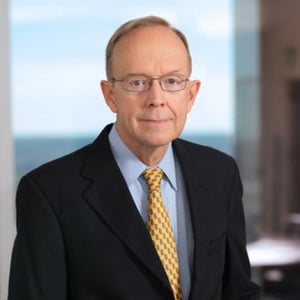
Former Deputy Attorney General for Virginia
Kennerly Davis has over forty years of experience in corporate management, public service, and the private practice of law. He has held senior executive positions in a Fortune 500 electric and gas company. He has served as Deputy Attorney General for the Commonwealth of Virginia, and as a legislative aide to a U.S. Senator and a U.S. Congressman. He practiced law for 25 years with Hunton Andrews Kurth LLP.
Davis is active in the Federalist Society as a member of the Regulatory Process Working Group of the Regulatory Transparency Project, and as a member of the Execuitve Committee of the Administrative Law and Regulation Practice Group. He is active in the national Alumni Free Speech Alliance, and involved in AFSA-chapter initiatives, including litigation, to publicize and correct the serious legal problems created by university Diversity, Equity, and Inclusion programs and the anonymous bias reporting systems used to enforce those DEI programs.
Davis writes and speaks on a wide variety of topics, including those related to the Founding of America, the natural rights foundation of our Republic, the constitutional rule of law, equal protection and free speech, DEI programs and bias reporting systems, capitalism, regulation and regulatory reform, and economic development. His articles have appeared in The Wall Street Journal, the Washington Examiner, the Richmond Times-Dispatch, The Federalist Society Review, the FedSoc Blog, Real Clear Energy, Townhall, the Daily Caller, reports of the Center for Strategic & International Studies, and other publications. He appears frequently on radio, podcasts, and television.
Davis graduated with honors from Cornell University with an A.B. degree in Government. He earned an M.A. degree from Pembroke College, Oxford, in Philosophy, Politics, and Economics. He was awarded a J.D. degree from Harvard Law School, and an M.B.A. degree from Virginia Commonwealth University.
Davis lives in Richmond, Virginia. He can be contacted by email: j.kendavis@verizon.net, and by phone: (804) 624-8525.
Denver Managing Partner, Wilkinson Barker Knauer LLP
Raymond L. Gifford counsels communications, electric and gas utilities, and information technology companies on state and federal aspects of regulation, administrative law, and competition policy. He is an expert in public utilities law, and the law and economics of regulation of network industries. Mr. Gifford’s law and policy work focuses on the convergence of broadband communications and energy, as well as environmental policy as it applies to the electric industry. He represents clients in state and federal courts and agencies, and serves as an expert witness on utility regulation and its history. He is also a Senior Adjunct Fellow at the Silicon Flatirons Center for Law, Technology and Entrepreneurship, and Co-Directs the Institute for Regulatory Law & Economics at University of Colorado Law School.
Mr. Gifford served as Chairman of the Colorado Public Utilities Commission from 1999-2003. Following that, he served as President of The Progress & Freedom Foundation, a Washington DC-based think-tank that studied the digital revolution as it relates to regulation of network industries. He entered the regulatory law world as First Assistant Attorney General in the Colorado Attorney General’s Office. He clerked for the Honorable Richard P. Matsch of the United States District Court for the District of Colorado. Mr. Gifford has authored a number of articles on communications law, public utility regulation and competition policy in network industries. He is a graduate of University of Chicago Law School and St. John’s College in Annapolis, Maryland. He is an elected member of the American Law Institute
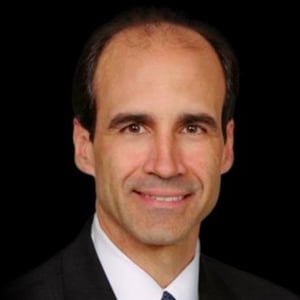
Under Secretary of Energy, United States Department of Energy
The Honorable Mark Wesley Menezes, Under Secretary of Energy serves as the Department’s principal advisor on energy policy and on a wide array of existing and emerging energy technologies. The Under Secretary is responsible for driving transformative energy policy, and technology solutions through coordinated planning, management and performance of the Department’s energy programs.
Prior to being confirmed as Under Secretary of Energy, Mr. Menezes was an executive with Berkshire Hathaway Energy in its Washington, D.C. office. Before joining BHE, Mr. Menezes was a partner at Hunton & Williams LLP, where he headed the Regulated Markets and Energy Infrastructure practice group. Prior to Hunton, he served as Chief Counsel, Energy and Environment, U.S. House of Representatives Committee on Energy and Commerce, serving as chief negotiator for the House Majority in the enactment of the Energy Policy Act of 2005. Before his service with House Energy & Commerce, he was Vice President with Central and South West, and upon its merger with American Electric Power, served as Vice President and Associate General Counsel for federal and state legislative and regulatory affairs.
Mr. Menezes has been named in National Journal’s “Hill 100”—top Congressional staff for his work on both energy and environmental matters. He has been frequent guest speaker and lecturer before numerous associations and civic groups, including legal education seminars where he has been called on to address the nation’s energy and environmental policies, utility restructuring, telecommunications, ethics, merger and acquisition practices, and regulatory and legislative processes. He has co-authored numerous articles, a practice manual, and been quoted in the New York Times, Law360, Oil and Gas Journal, Politico as well as interviewed by E&ETV. He’s been listed Best Lawyers in America 2013–2016, Corporate Counsel’s Top Lawyers 2006–2011, Washington Post’s Top Lawyers 2008–2016, and DC Super Lawyers 2012–2016.
Mr. Menezes is a graduate of Louisiana State University receiving both his undergraduate and juris doctor degree. Until joining the government he was a charter member of the Advisory Council, Louisiana State University Law John P. Laborde Energy Law Center, and served on the Board of Directors of the Congressional Chorus & American Youth Chorus.
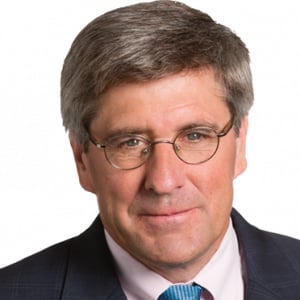
Distinguished Visiting Fellow, Project for Economic Growth, Institute for Economic Freedom and Opportunity
Stephen Moore, who formerly wrote on the economy and public policy for The Wall Street Journal, is the Distinguished Visiting Fellow, Project for Economic Growth, at The Heritage Foundation. Mr. Moore, who also was a member of The Journal’s editorial board, returned to Heritage in January 2014 -- about 25 years after his tenure as the leading conservative think tank’s Grover M. Hermann Fellow in Budgetary Affairs from 1984 to 1987.
As Distinguished Visiting Fellow at Heritage, Mr. Moore focuses on advancing public policies that increase the rate of economic growth to help the United States retain its position as the global economic superpower. He also works on budget, fiscal and monetary policy and showcases states that get fiscal houses in order.
"One of the projects I’m going to be working on is how President Obama has discredited liberal ideas more than anyone,” Mr. Moore said in an interview with The Foundry upon his return to Heritage. “Everything he’s done has been such a massive failure — from the [economic] stimulus to health-care reform to bailouts to green energy.
Mr. Moore’s early career was shaped by three people who had a profound influence on him: Julian Simon, the late Cato Institute scholar; Edwin J. Feulner, a co-founder of Heritage; and Art Laffer, the economist best known for the Laffer curve.
“What makes them so great is they were willing to take on the conventional wisdom. They were subject to a lot of criticism for doing that,” Mr. Moore told The Foundry. “Those are the real change-makers.”
Mr. Moore calls his creation of the Club for Growth the defining moment of his career. The organization, which he left in 2004, helps elect conservative members of Congress (including Heritage President Jim DeMint when he first ran for Senate).
Mr. Moore next founded the Free Enterprise Fund before joining The Wall Street Journal. As senior economics writer for the newspaper’s editorial board, he covered Washington policy debates and state issues.
“Because I’ve been a consumer of think tank material and policy research, I think I have a pretty good sense of what reporters want and how to get it to them in the way they want it,” Mr. Moore said. “Being timely — and not just offering opinion but giving them the facts and data is really critical.”
Mr. Moore, who grew up in New Trier Township, Ill., received a bachelor of arts degree from University of Illinois at Urbana-Champaign. He holds a master’s of arts in economics from George Mason University.
Senior Fellow, Pacific Research Institute
Tom Tanton is a Senior Fellow with the Pacific Research Institute as well as the Principal of T2 & Associates, a firm providing consulting services to the energy and technology industries. Mr. Tanton has over 35 years experience in the energy, economy, and environmental fields.
T2 & Associates are active in the area of energy and interconnected infrastructures, analyzing and providing advice on their impacts on energy prices, environmental quality, and regional economic development. Principals and associates of T2 & Associates have well over a half-century of experience in technology and legislative interface, having been central to many of the critical legislative changes that enabled technology choice and economic development at the state and federal level.
Mr. Tanton’s previous employment includes serving as Vice President and Senior Fellow with the Institute for Energy Research, from 2002 to 2006, and General Manager for EPRI, the Electric Power Research Institute, from 2000 to 2003.
Mr. Tanton has a wealth of experience in energy-related issues in the state of California and nationally. Prior to 2000, Mr. Tanton was the principal policy advisor with the California Energy Commission (CEC) where he was responsible for designing and implementing legislation including electric restructuring, gasoline and natural gas supply and pricing, energy facility siting, environmental issues, technology development, and transportation.
In 1998, Mr. Tanton also served as a team member of the California Governor's Office task force on critical infrastructure security. He was also the lead advisor on energy and infrastructure to California's task force on 21st Century development in 1999.
He has made presentations to a number of commissions and boards in California and nationally, including the California Energy and Public Utilities Commissions. He has also testified before several state legislatures and Congress and provided expert testimony in power plant sitting cases.
Counsel, Environmental Defense Fund
James T. B. Tripp has served as Counsel for Environmental Defense Fund since 1973 and as General Counsel since 1983. Mr. Tripp is responsible for the review of all Environmental Defense Fund legal action initiatives and has been admitted to the New York State Bar, the Southern and Eastern Districts of New York, several U.S. courts of appeal and the United States Supreme Court.
Through Environmental Defense Fund’s Living Cities program, he works on a wide range of land use, transportation, water resources, solid waste, ecosystem restoration and energy issues in the NY metropolitan region. His expertise led to his appointment to the New York State Department of Transportation's Advisory Panel on Transportation Policy for 2025 (2004), New York Governor George Pataki's Greenhouse Gas Task Force (2001-2002), and to Governor Pataki's Superfund Work Group (1999-2000).
Mr. Tripp helped to design a Transfer of Development Rights (TDR) program in the Long Island Pine Barrens, and has also been extensively involved in land conservation and smart growth efforts in the Highlands ecosystem, which stretches from eastern Pennsylvania through New Jersey and New York into western Connecticut.
Through EDF’s Land Water and Wildlife program, he has also been engaged in state and federal efforts to restore the Mississippi River Delta in south Louisiana and bottomland hardwood resources in the lower Mississippi Basin for more than 30 years. He served on former Louisiana Governor Michael Foster's Commission on the Future of Coastal Louisiana, and has served on the Louisiana Governor's Commission on Coastal Restoration and Conservation.
Chairs the board of New Partners for Community Revitalization and the Long Island Pine Barrens Clearinghouse Advisory Board. Formerly, he has chaired the Highlands Coalition Board and the New York City Water Board. He is a member of the Civitas Board, and also serves on the Boards of the Tri-State (New York, New Jersey, & Connecticut) Transportation Campaign, the Pinelands Preservation Alliance, and the Coalition to Restore Coastal Louisiana.
Author or co-author of numerous articles on wetland preservation, groundwater quality, solid waste, design of rights transfer systems, Cuba environmental law and NEPA reform. Recipient, Robert C. Stover Environmental Advocate Award, given by New York State Bar Association (1986).
Assistant US attorney, Southern District of New York (1968- 1973); summer volunteer, lawyers Committee for Civil Rights Under Law (1967, 1968); associate, Hale, Russell & Stentzel (1966-1968).
Professor of Law, George Mason University School of Law
With his work in regulatory takings and other aspects of property law, professor of law Steven Eagle plays an important role in the ongoing dialogue among American legal scholars, lawyers, and judges on the proper interpretation of property rights in the Constitution. He is the author of a leading property treatise and scholarly and popular articles and teaches in programs for judges and the practicing bar.
Professor Eagle came to George Mason in 1987 and also has taught at the law schools of Vanderbilt University, the University of Toledo, and Pace University. He earned his B.B.A. from the City College of New York (1965) and his J.D. from Yale Law School (1970). Professor Eagle teaches the first-year course, Property, Land Use Planning, and an advanced constitutional law seminar on property rights.

FTC v. Meta: Requiem for the “War on Tech”?
Asheesh Agarwal, Jennifer Huddleston, Bilal Sayyed, Daniel Suhr
What does the district court’s recent decision in FTC v. Meta portend for the future...
Topics
Has Our Nation’s Strategic Petroleum Reserve Lost Its Strategic Importance?
The international policy responses to the supply disruptions and price spikes created by the OPEC...
Explainer Episode 66 - Strategic Petroleum Reserve
John Kennerly Davis
Earlier this year, the U.S. Energy Information Administration reported that the nation’s Strategic Petroleum Reserve,...
The Department of Energy’s Actions to Save Nuclear and Coal
Raymond L. Gifford, Mark W. Menezes, Stephen Moore
Last month, Bloomberg News revealed a leaked memorandum from the Department of Energy purporting to...
Should Vehicle Fuel Emissions Standard Be More Strict? Why and How?
Thomas Tanton, James T.B Tripp, Steven J. Eagle
On September 15, 2009, following the administration’s announcement in May of a new regulation limiting...