
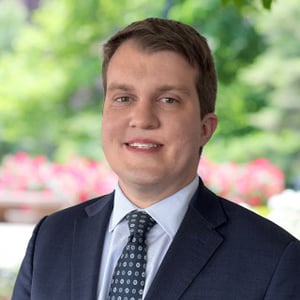
Attorney, EdChoice
Bryan Cleveland is an Attorney with EdChoice Legal Advocates, where he represents parents in defending school choice programs as part of EdChoice's partnership with the Institute for Justice.
Before joining EdChoice, Mr. Cleveland was the General Counsel for the Oklahoma State Department of Education, where he helped a newly elected state superintendent advance school choice and parental rights in Oklahoma. Prior to that role, he was the Deputy Solicitor General for the State of Oklahoma, where he handled the State’s most pressing cases in federal and state district courts and on appeal. He also previously was a law clerk for Judge Steve Grasz of the U.S. Court of Appeals for the Eighth Circuit, a law clerk for Judge Henry Morgan in the Eastern District of Virginia, and an associate at a top law firm in Washington, D.C.
He received a bachelor’s degree from Biola University and a law degree from Harvard Law School, where he was Editor-in-Chief of the Harvard Journal of Law & Technology. Before law school, he advised a member of Congress on legislation and communications.
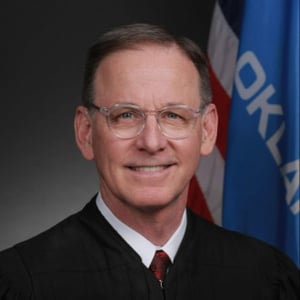
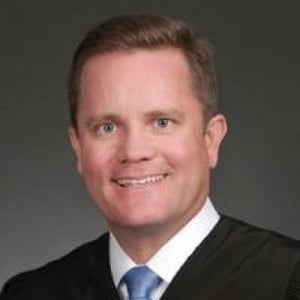
Vice-Chief Justice, Oklahoma Supreme Court
Justice Kane was appointed to the Oklahoma Supreme Court in September of 2019 by Governor Kevin Stitt. His tenure as Vice Chief Justice began in January of 2021. Prior to his service on the Supreme Court, he had been appointed by Governor Brad Henry as the Osage County District Judge in 2005. He was reelected in 2006, 2010, 2014, and 2018.
Kane is the former Presiding Judge for the eight-county Northeast Judicial Administrative District (2019), and he is a former President (2013-2014) of the Oklahoma Judicial Conference (the State’s official Judicial Association). As a trial judge, Kane had also served as the Presiding Judge on the Oklahoma Court on the Judiciary. As a trial judge, Kane was recognized by CASA in 2015 as the judge of the year.
Kane is a third-generation Osage County attorney, having been admitted to practice in 1987. He had the privilege of practicing law with his grandfather (Matthew J. Kane) and his father (Matt Kane, Jr.) during their lifetimes in Pawhuska and Skiatook. Kane has been the president of the Osage County Bar Association, and is a Fellow of the Oklahoma Bar Association. Prior to the creation of an Indigent Defense System, Kane accepted appointments to represent citizens accused of crime who were financially unable to hire their own attorney. He later served as a part-time assistant D.A. Prior to taking the District Court bench, Kane was also an Administrative Law Judge for the Dept. of Human Services- Child Support Division.
Vice Chief Justice Kane is the great-grandson of Oklahoma Supreme Court Chief Justice Matthew John Kane. The original Justice Kane was a member of the Oklahoma Constitutional Convention, and was an integral participant of the writing of Oklahoma’s Constitution. John’s great-grandmother is the late Mabelle Kennedy, former Assistant Secretary of the United States Treasury in the Truman administration.
Vice Chief Justice Kane’s wife, Cyndi, is an author, public speaker, entrepreneur, and home school mom. The Kanes have 4 children.

Senior Fellow and Director of Constitutional Studies, Manhattan Institute
Ilya Shapiro is a senior fellow and director of constitutional studies at the Manhattan Institute and a contributing editor of City Journal. Previously he was executive director and senior lecturer at the Georgetown Center for the Constitution, and before that a vice president of the Cato Institute.
Shapiro is the author of Lawless: The Miseducation of America’s Elites (2025) and Supreme Disorder: Judicial Nominations and the Politics of America’s Highest Court (2020), coauthor of Religious Liberties for Corporations? (2014), and editor of 11 volumes of the Cato Supreme Court Review (2008-18). He has contributed to a variety of academic, popular, and professional publications, including the Wall Street Journal, Harvard Journal of Law & Public Policy, Washington Post, Los Angeles Times, USA Today, National Review, and Newsweek. He also regularly provides commentary for various media outlets, writes the Shapiro’s Gavel newsletter on Substack, and once appeared on the Colbert Report.
Shapiro has testified many times before Congress and state legislatures and has filed more than 500 amicus curiae “friend of the court” briefs in the Supreme Court. He lectures regularly on behalf of the Federalist Society, is a member of the board of fellows of the Jewish Policy Center, was an inaugural Washington Fellow at the National Review Institute, and has been an adjunct law professor at the George Washington University and University of Mississippi. He is also the chairman of the board of advisers of the Mississippi Justice Institute, a barrister in the Edward Coke Appellate Inn of Court, and a former member of the Virginia Advisory Committee to the U.S. Commission on Civil Rights.
Earlier in his career, Shapiro was a special assistant/adviser to the Multi-National Force in Iraq on rule-of-law issues and practiced at Patton Boggs and Cleary Gottlieb. Before entering private practice, he clerked for Judge E. Grady Jolly of the U.S. Court of Appeals for the Fifth Circuit. He holds an AB from Princeton University, an MSc from the London School of Economics, and a JD from the University of Chicago Law School.
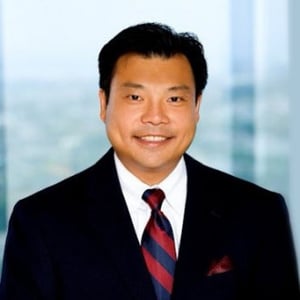
Attorney and Legal Commentator
John Shu is an attorney and legal commentator. His focus areas include constitutional law, securities & corporate law, antitrust law, administrative law, politics, and international affairs. Mr. Shu has lectured and published on a wide variety of issues.
Mr. Shu served President George H.W. Bush and President George W. Bush. He also served Judge Stanley Sporkin, U.S. District Court for the District of Columbia, who was Director of Enforcement at the U.S. Securities & Exchange Commission and General Counsel at the Central Intelligence Agency, and Judge Paul Roney, U.S. Court of Appeals for the Eleventh Circuit, who was Presiding Judge of the Foreign Intelligence Surveillance Court of Review.
Mr. Shu is a member of the National Committee on U.S. - China Relations, the Pacific Council on International Policy, and the Foreign Policy Association.
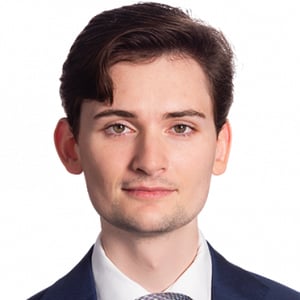
Deputy Assistant Attorney General, Office of Legal Policy, Department of Justice
GianCarlo Canaparo serves as Deputy Assistant Attorney General in the Office of Legal Policy at the Department of Justice. There, he oversees the Office's regulatory work and is the Department's liaison to the Office of Information and Regulatory Affairs. He also assists the White House in the process of selecting nominees for federal judgeships and advises Department leadership on policy and legal matters.
Before joining the Department, Canaparo was a senior legal fellow at The Heritage Foundation’s Edwin Meese III Center for Legal and Judicial Studies where he researched constitutional law, administrative law, and civil rights.
Canaparo’s scholarship has appeared in various law reviews including the Harvard Journal of Law and Public Policy, the Notre Dame Law Review, the Georgetown Journal of Law and Public Policy, the Texas Review of Law and Politics, and the Administrative Law Review. His research has been cited by Justice Neil Gorsuch and featured in the Wall Street Journal and Washington Post. His analysis has appeared in Law & Liberty, Civitas, Fox News, The National Review, Law 360, FedSoc Blog, and other outlets.
Canaparo co-hosted The Heritage Foundation’s SCOTUS 101 podcast, which follows the Supreme Court’s arguments and opinions and features interviews with judges, advocates, and scholars.
After graduating Georgetown law, Canaparo spent three years at the law firm of Skadden, Arps, Slate, Meagher & Flom and two years as a federal law clerk. He earned his bachelor’s degree in economics from the University of California at Davis.
Canaparo is a classical pianist and organist.
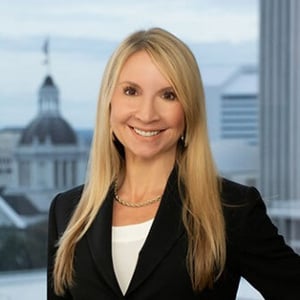
Clinical Professor and Director of the First Amendment Clinic, Florida State University College of Law
Denise Mayo Harle is a clinical professor and director of the First Amendment Clinic at FSU College of Law, where she leads student advocacy and litigation on free speech, religious liberty, and press freedom issues. Her teaching and scholarship focus on constitutional law, appellate practice, and First Amendment rights. Before entering academia, Professor Harle was a partner at Shutts & Bowen LLP in Tallahassee, where she was a member of the firm’s Appellate Practice Group and Constitutional Law Practice Area. Prior to that, she served as Deputy Solicitor General in the Office of the Florida Attorney General. Professor Harle has briefed and argued high-profile cases involving significant constitutional issues and questions of statutory interpretation in both state and federal courts, including the U.S. Supreme Court.
Professor Harle’s early career includes clerking for Justice Ricky L. Polston on the Florida Supreme Court and practicing appellate law in California. In 2022, she was selected as a finalist for a seat on the Florida Supreme Court. She was appointed by Governor Ron DeSantis to Florida’s Faith and Community Advisory Council and currently serves on the Judicial Nominating Commission for Florida’s Second Circuit. She was also selected for the prestigious U.S. Supreme Court Fellowship through the National Association of Attorneys General in 2017. She earned her J.D. cum laude from Duke University Law School and her B.A. and B.S. summa cum laude from Florida State University.
Professor Harle is active in the legal and academic communities. She is a member of the American Enterprise Institute’s Leadership Network and the Federalist Society’s Speakers Bureau. She has served on the board of Tallahassee Women Lawyers, the Florida Bar’s Client Security Fund Committee, and the First District Appellate American Inn of Court.
Before practicing law, Professor Harle completed doctoral coursework in Political Science at Stanford University as a Stanford Graduate Fellow, where she taught undergraduate courses on public policy, law, and American politics, and earned a Master’s degree. She continues to serve as a dissertation faculty advisor for Concordia University–St. Paul mentors doctoral students in research and writing.
A frequent speaker and media commentator on constitutional law, Professor Harle has been quoted in The Wall Street Journal, The Washington Post, and The New York Times, and has appeared on national outlets including C-SPAN and Fox News. She has also testified before the U.S. Senate on matters of constitutional significance.
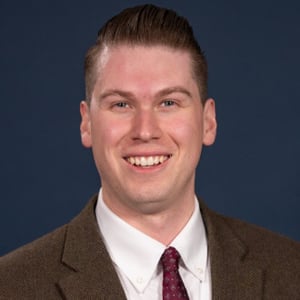
Charles Yates is an attorney in Pacific Legal Foundation’s environmental practice group, where he litigates to defend private property rights and uphold the structural protections guaranteed by the Constitution’s separation of powers.
His inspiration to focus on environmental law comes from the special case of government overreach it presents, where individual rights too often give way to collectivist notions and where misguided government policies create a cure worse than the disease. Charles has a particularly strong belief in the important role that the productive use of natural resources plays for human flourishing. To these ends, his practice at PLF focuses primarily on the Endangered Species Act, the Clean Water Act, and related regulatory issues.
Charles credits his strong belief in the principles of individual liberty and limited, constitutional government to his family. His personal philosophy developed further while studying the works of Adam Smith, John Locke, James Madison, and other classical liberals. Born and raised in Australia, Charles has always admired the U.S. Constitution as the purest and most enduring application of the ideals of individual liberty and limited government. It was these influences that impressed upon him the desire to pursue a career in public interest litigation.
After obtaining a B.A. in political science and international relations from the University of Western Australia, Charles moved to the U.S., where he earned his J.D. magna cum laude from the University of Baltimore School of Law. During law school, he served as president of his school’s chapter of The Federalist Society and was an editor of the University of Baltimore Law Review. Other highlights from his law school days include an internship at the Cato Institute and a clerkship at the Institute for Justice.
Charles lives in Sacramento with his wife Maxine. In his spare time, he enjoys reading and playing the bass guitar.
Attorney and Legal Commentator
John Shu is an attorney and legal commentator. His focus areas include constitutional law, securities & corporate law, antitrust law, administrative law, politics, and international affairs. Mr. Shu has lectured and published on a wide variety of issues.
Mr. Shu served President George H.W. Bush and President George W. Bush. He also served Judge Stanley Sporkin, U.S. District Court for the District of Columbia, who was Director of Enforcement at the U.S. Securities & Exchange Commission and General Counsel at the Central Intelligence Agency, and Judge Paul Roney, U.S. Court of Appeals for the Eleventh Circuit, who was Presiding Judge of the Foreign Intelligence Surveillance Court of Review.
Mr. Shu is a member of the National Committee on U.S. - China Relations, the Pacific Council on International Policy, and the Foreign Policy Association.
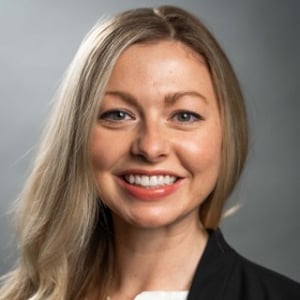
Assistant Solicitor General, Texas
Katie serves as an Assistant Solicitor General for the State of Texas. She previously practiced law at a firm in Washington, D.C. where she focused her legal practice on complex trial and appellate litigation, specializing in data privacy and biometric issues. Before that, Katie served as Chief Counsel to Senator Jeff Flake at the U.S. Senate Judiciary Committee and clerked for Judge Michael B. Brennan of the U.S. Court of Appeals for the Seventh Circuit. Katie graduated from Liberty University and the Antonin Scalia Law School at George Mason University. She is a member of The Federalist Society’s Litigation Practice Group Executive Committee.

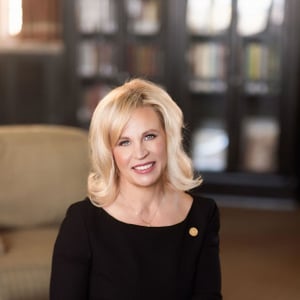
Luncheon with Oklahoma Supreme Court Justices Kuehn and Rowe
Tulsa Lawyers Chapter
Tulsa, OKNarrow Right to Abortion in State Constitution Divined and Reaffirmed by Oklahoma Supreme Court
GianCarlo Canaparo
In Dobbs v. Jackson Women’s Health Organization, the United States Supreme Court held that there...
Abortion Laws In Oklahoma Subject of Fractured Decision at State Supreme Court
Denise M. Harle
Immediately after the U.S. Supreme Court’s landmark decision in Dobbs v. Jackson Women’s Health Organization,[1]...
State Court Docket Watch: Ritter v. Oklahoma
Charles Yates
The drafters of the Oklahoma Constitution—“[f]earing excessive power in the hands of one individual”—strictly...
9th Annual Supreme Court Round Up
Tulsa Lawyers Chapter
Tulsa, OKOpioid Litigations and Public Nuisance: Updates From California, Oklahoma, and Ohio
John Shu
On February 25, 2022, Johnson & Johnson, Teva Pharmaceutical Industries, Ltd., McKesson Corp., Cardinal Health,...
Opioid Litigations and Public Nuisance: Updates From California, Oklahoma, and Ohio
TeleforumState Court Docket Watch: Oklahoma ex rel. Hunter v. Johnson & Johnson
Kateland R. Jackson
In Oklahoma ex rel. Hunter v. Johnson & Johnson, the Oklahoma Supreme Court overturned a...
Lunch Hour with Justice Dustin Rowe
Oklahoma City Lawyers Chapter Event
Oklahoma City, OKLunch Hour with Justice Dustin Rowe
Oklahoma City Lawyers Chapter Event
Oklahoma City, OK