
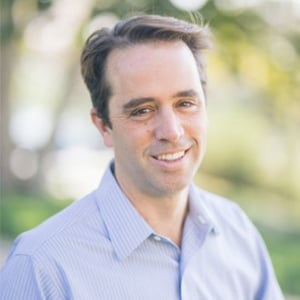
Professor of Law, Pepperdine University School of Law
Robert Anderson received his JD from New York University School of Law in 2000, and was associated with Sullivan & Cromwell LLP from 2000 to 2003 where his practice focused on mergers and acquisitions and financial institutions regulation. In 2008, he received his PhD in Political Science at Stanford University, where his fields included American Politics, Political Organizations, and Political Methodology (Statistics). Professor Anderson's primary research interests are corporate and securities law, positive political theory of the judiciary, and quantitative and empirical approaches to law. In particular, he has worked extensively on modeling judicial behavior and developing computational and empirical techniques for analyzing corporate transactions and corporate governance.
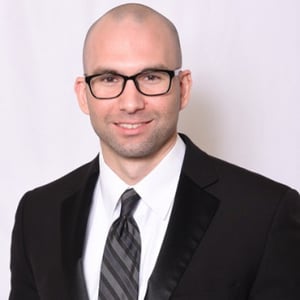
Associate Professor, Southern University Law Center
Adam Crepelle is an associate professor at Southern University Law Center and the managing fellow of SULC's Native American Law and Policy Institute. He is a commissioner on the American Bar Association's Commission on Domestic and Sexual Violence. He is a former vice president of the California Indian Law Association and is a co-founder of the American Indian Chamber of Commerce of Louisiana. Adam is an enrolled citizen of the United Houma Nation, and serves as a judge on the Court of Appeals for the Pascua Yaqui Tribe.
Adam has published several articles in both academic and popular journals on a wide variety of topics including crime in Indian country, tribal economic development, and tribal federal recognition. In addition to his juris doctor, Adam holds a master's degree in public policy and master's of law in indigenous peoples law and policy. Adam is also an award winning fil_mmaker. His film, Indian Santa, screened at numerous venues including the Smithsonian Institution's National Museum of the American Indian.
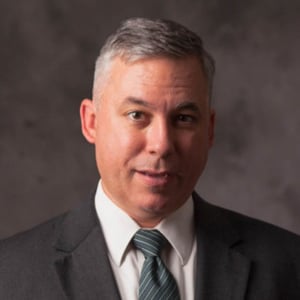
Professor of Law, South Texas College of Law Houston
Matt Festa teaches and researches in the areas of property law and land use, state & local government, energy & environmental law, trusts & estates, legal history, and national security law. His scholarship focuses on the relation between property rights and public control in land use planning and government regulation; on the role of property rights in constitutional law and history; and on property and the rule of law in contemporary international affairs.
Professor Festa joined the South Texas College of Law Houston faculty in 2007, after serving as a visiting assistant professor at the University of Georgia School of Law. Prior to teaching, he practiced in litigation, land use, environmental, and energy law at Locke Lord LLP. He served as a law clerk to federal judges on the U.S. District Court for the Eastern District of Kentucky and the U.S. Court of Appeals for the Sixth Circuit. Prof. Festa attended Vanderbilt University, where he was the Executive Editor of the Vanderbilt Law Review and earned a masters’ degree in history. Prior to law school he served in the U.S. Army’s 101st Airborne Division, and earned a masters’ degree in public administration. He earned his undergraduate degree in history and English at the University of Notre Dame.
Professor Festa currently serves as a judge advocate in the U.S. Army Reserve, where he is an Adjunct Professor in the Department of International & Operational Law at the ABA-accredited Judge Advocate General’s Legal Center and School, and is also an Instructor with the Defense Institute of International Legal Studies. He is the editor of the Land Use Prof Blog, and lives in the “Unzoned City” of Houston with his spouse, who teaches at Rice University, and their two children.
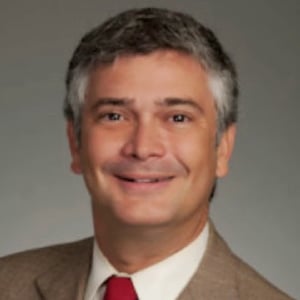
Instructor of Accounting, University of Central Florida College of Business
Professor F. E. Guerra-Pujol was born in Los Angeles, Calif., to Francisco Guerra and Oilda Pujol. He attended college at the University of California at Santa Barbara, graduating with highest honors, and received his Juris Doctorate from Yale Law School. After practicing business law for several years, Professor Guerra-Pujol began his academic career at the Pontifical Catholic University of Puerto Rico. He is currently teaching at the University of Central Florida. His areas of research include markets, property rights and the philosophy of law. He is also the author of many scholarly papers, journal articles and book chapters, including “Gödel’s Loophole,” “A Bayesian Model of Litigation” and “The Poker-Litigation Game.” You can access his work here:
https://papers.ssrn.com/sol3/cf_dev/AbsByAuth.cfm?per_id=649450
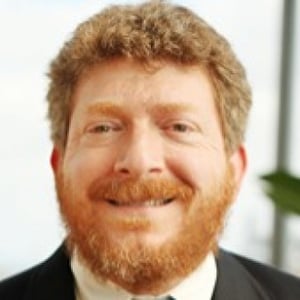
Professor of Law, Northern Kentucky University Chase College of Law
Mike Mannheimer received his J.D. in 1994 from Columbia Law School, where he was a Harlan Fiske Stone Scholar all three years and served as Writing & Research Editor of the Columbia Law Review. After a brief stint as a staff attorney with the Criminal Appeals Bureau of the Legal Aid Society in New York City, he clerked for the Hon. Sidney H. Stein of the U.S. District Court for the Southern District of New York, and then for the Hon. Robert E. Cowen of the U.S. Court of Appeals for the Third Circuit.
From 1997 to 1999, he worked as a litigation associate at Paul, Weiss, Rifkind, Wharton & Garrison in New York City, where he practiced general commercial litigation and arbitration encompassing such diverse areas as antitrust, breach of contract, business torts, employment discrimination, ERISA, false advertising, product liability, and civil RICO.
For five years before joining the Chase faculty in 2004, Professor Mannheimer served as Appellate Counsel and then Senior Appellate Counsel at the Center for Appellate Litigation in New York City, where he represented indigent criminal defendants on appeal from their convictions and in related collateral proceedings. He has briefed and/or argued over forty appeals in the Appellate Division of the New York Supreme Court, the New York Court of Appeals, and the U.S. Court of Appeals for the Second Circuit. He has represented clients at every level of the state and federal judiciaries, from handling sentencing proceedings, motions, and hearings in the New York trial courts to filing cert. petitions in the U.S. Supreme Court.
Professor Mannheimer was Co-Chair of the Kentucky Death Penalty Assessment Team for the American Bar Association. He is also a prolific and eclectic scholar. He has published articles on the death penalty, coerced confessions, and the Establishment, Free Speech, Self-Incrimination, Confrontation, and Cruel and Unusual Punishments Clauses. His work on the use of the premeditation-deliberation formula to distinguish first- and second-degree murder was the winner of the 2010 AALS Criminal Justice Section Junior Scholar Paper Award. His current research focuses on the under-appreciated federalism component of the Bill of Rights.
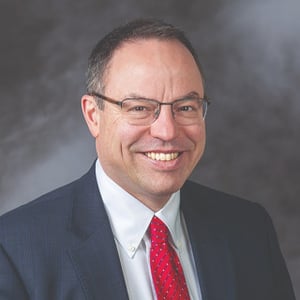
Professor of Law and J. Philip Johnson Faculty Fellow, University of North Dakota School of Law
Michael S. McGinniss is Professor of Law and J. Philip Johnson Faculty Fellow at the University of North Dakota School of Law, where he joined the faculty in 2010 and served as the Dean from 2019 to 2022. He chairs the executive committee for the Federalist Society's Practice Group on Professional Responsibility and Legal Education.
Before entering the legal academy, Professor McGinniss served for twelve years as a Disciplinary Counsel for the Supreme Court of Delaware. He currently teaches courses on Professional Responsibility, Advanced Legal Ethics, Civil Procedure, and Federal Courts. He also serves as Faculty Advisor for the North Dakota Law Review and the UND Law Federalist Society student chapter.
Professor McGinniss’ research and scholarship interests are wide-ranging and include lawyer and judicial ethics, lawyer discipline and regulation of the profession, constitutional law (especially First Amendment, separation of powers, and federalism), and cultural challenges faced by conservatives in the law schools and the legal profession. His most recent law review article, Declaring Independence to Secure Integrity: The Supreme Court Justices' Code of Conduct, was published in the Federalist Society Review. His article Expressing Conscience with Candor: Saint Thomas More and First Freedoms in the Legal Profession, was published in the Harvard Journal of Law & Public Policy.
Professor McGinniss has spoken to Federalist Society lawyer and student chapters across the country about judicial independence and ethics, especially relating to the federal courts and the United States Supreme Court Justices. In addition, he has spoken to several chapters about rising challenges to ideological diversity and targeting of conservative viewpoints in law schools and the legal profession. Although he is very pleased to speak on these and many other topics that may be of interest to lawyer and student chapters, in 2026-2027, he has particular interest in speaking on the topic “Lawyer Discipline as Political ‘Resistance’: Separation of Powers, Federalism, and the Rule of Law,” concerning his work-in-progress on the weaponization of professional disciplinary processes against conservative lawyers for political and ideological purposes.
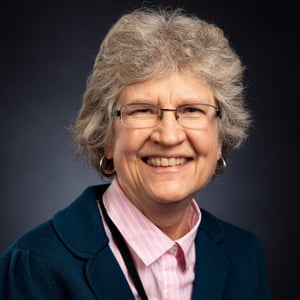
Associate Professor of Law, Liberty University School of Law
Barbara Mouly began teaching at the School of Law in 2007 as Visiting Assistant Professor of Law teaching Torts and Lawyering Skills. In 2004, she began working in juvenile and criminal practice courts in Virginia. Before that, Professor Mouly practiced with a law group in Virginia from 2001- 2004, practicing personal injury litigation, malpractice, and products liability.
Professor Mouly earned her bachelor’s degree in English and was the recipient of the T.G. Jones Literary Prize. She earned her master’s in music in 1976 and continued her education at the Virginia Trial Advocacy Institute at the University of Virginia in 2002. Mouly is the author of Intelligent Design and Tort Law: Partners in a Unified Theory of Causation, 3 Liberty University Law Review, at 543- 574, No. 2 (Spring 2009).
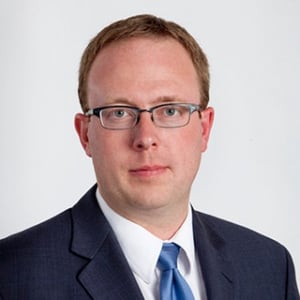
Professor, Canada Research Chair in Indigenous Rights in Constitutional and International Law, University of Saskatchewan College of Law
Dwight Newman, B.A. in Economics (Regina), J.D. (Saskatchewan), B.C.L., M.Phil., D.Phil. in Legal Philosophy (Oxford), is a Professor of Law and Canada Research Chair in Indigenous Rights in Constitutional and International Law at the University of Saskatchewan, where he started in a faculty position in 2005 and has also served a three-year term as Associate Dean. He has been a Canada Research Chair since 2013.
Dr. Newman has also taught during visiting terms at Alberta, McGill, Osgoode Hall (PD), and Oxford. During the 2015-16 year, he was a James Madison Visiting Fellow at Princeton University, and during the second half of the 2016-17 year he was a Professeur invité at the Université de Montréal Faculté de Droit and a Herbert Smith Freehills Visitor at Cambridge University. In 2017 he became a member of the College of the Royal Society of Canada.
Dr. Newman has published close to a hundred articles or book chapters and ten books. His books include: The Duty to Consult: New Relationships with Aboriginal Peoples (Purich/UBC, 2009), Community and Collective Rights: A Theoretical Framework for Rights Held by Groups (Hart/Bloomsbury, 2011), Natural Resource Jurisdiction in Canada (LexisNexis, 2013), Revisiting the Duty to Consult Aboriginal Peoples (Purich/UBC, 2014) and both the Charter of Rights volume of Halsbury’s Laws of Canada and The Law of the Canadian Constitution (with co-author Guy Régimbald) (LexisNexis, 2013, 2nd edn 2017). His forthcoming books include Mining Law of Canada (LexisNexis), an edited collection on Business Implications of Aboriginal Law (LexisNexis), and the Edward Elgar Research Handbook on the International Law of Indigenous Rights (Edward Elgar). His writing has been cited by all levels of Canadian courts, including a number of times by the Supreme Court of Canada, and in argument before the United States Supreme Court.
Dr. Newman is a Munk Senior Fellow of the Macdonald-Laurier Institute and has contributed to policy discussions by publishing a number of think tank reports. He also serves as an expert member of the International Law Association (ILA) Committee on Implementation of the Rights of Indigenous Peoples and contributes to ongoing discussion on international norms on related issues. He has delivered dozens of presentations to a variety of audiences on six continents and has published many op eds in leading Canadian and American newspapers.
Prior to entering a faculty role, Dr. Newman clerked for Chief Justice Lamer and Justice LeBel at the Supreme Court of Canada, worked for NGOs in South Africa and Hong Kong and for the Canadian Department of Justice, and completed his graduate studies at Oxford University, where he studied as a Rhodes Scholar. He has lived in half a dozen countries and has travelled to over seventy countries.
Dr. Newman is a member of the Ontario and Saskatchewan bars and he does selective legal work for industry, government, and Indigenous communities focused mainly on constitutional issues associated with resource development as well as consulting work on related issues for international investment entities.
Some of his publications are available on his Google Scholar page and his SSRN page.

Judge, United States Court of Appeals, Eighth Circuit
David Stras became a judge on the United States Court of Appeals for the Eighth Circuit on January 31, 2018. Before serving on the Eighth Circuit, Judge Stras was an Associate Justice of the Minnesota Supreme Court, a position he occupied from July 1, 2010 until his appointment to the Eighth Circuit.
Prior to becoming a judge, Stras was a member of the faculty of the University of Minnesota Law School from 2004 through 2010. He taught and wrote in the areas of federal courts and jurisdiction, constitutional law, criminal law, and law and politics.
Judge Stras received his Bachelor of Arts degree, with highest distinction, in 1995 and his Master of Business Administration in 1999, both from the University of Kansas. He also received his law degree from the University of Kansas School of Law in 1999, where he served as Editor-in-Chief of the Criminal Procedure Edition of the Kansas Law Review.
Following law school, Stras clerked for The Honorable Melvin Brunetti of the United States Court of Appeals for the Ninth Circuit and then for The Honorable J. Michael Luttig of the United States Court of Appeals for the Fourth Circuit.
From 2001 to 2002, he practiced white-collar criminal and appellate litigation with the Washington, D.C., office of Sidley Austin Brown & Wood. Following his year in practice, he clerked for The Honorable Clarence Thomas of the Supreme Court of the United States.

7 Minute Presentations of Works in Progress Panel 2-A
22nd Annual Federalist Society Faculty Conference
Washington, DCReflections on Judging: A Conversation with Judge Erickson and Judge Stras of the Eighth Circuit Court of Appeals
North Dakota Lawyers Chapter
Grand Forks, ND