
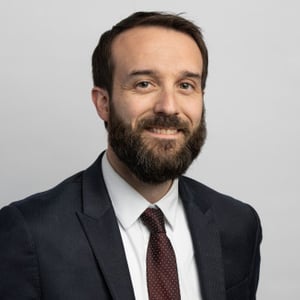
Senior Attorney, Institute for Justice
Sam Gedge is a senior attorney at the Institute for Justice. He joined IJ in June 2015 and litigates cases to promote economic liberty, protect political speech, and secure individuals’ rights to private property.
In 2017, Sam was named IJ’s second Elfie Gallun Fellow for Freedom and the Constitution. The fellowship comes with an emphasis on publishing written materials and speaking to students and others about the vital role the U.S. Constitution plays in protecting our most precious freedoms.
In his time at IJ, Sam has launched cases battling civil forfeiture and overzealous licensing boards, which generated widespread coverage and conversation in media outlets from Wired and The Atlantic to London’s Daily Mail.
Before joining IJ, Sam was an attorney at Wiley Rein LLP, in Washington, D.C., where he focused on litigation and election law. He is a former law clerk to Judge Raymond W. Gruender of the U.S. Court of Appeals for the Eighth Circuit.
Sam received his law degree cum laude from Harvard Law School in 2010.
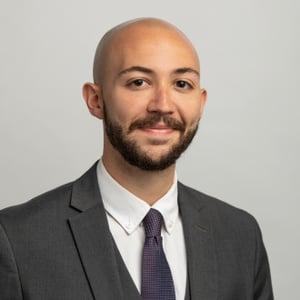
Attorney, Institute for Justice
John Wrench is a Constitutional Law Fellow at the Institute for Justice.
John grew up outside of Ithaca, New York, and received his law degree from the Case Western Reserve University School of Law in 2019. During law school, he served as editor in chief of the Case Western Reserve Journal of International Law and was a member of the Federalist Society. John interned in his law school’s First Amendment Litigation Clinic and was a judicial extern to the Honorable Paul E. Davison in the Southern District of New York. John graduated from Pace University in 2015 with a Bachelor of Arts in Philosophy and Religious Studies.
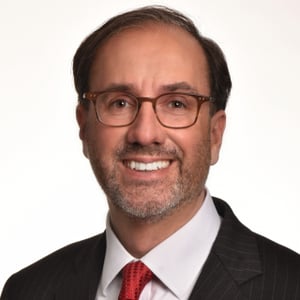
President and CEO, The Buckeye Institute
Robert Alt is the President and Chief Executive Officer of The Buckeye Institute where he has catalyzed exponential growth since he took the organization’s helm in 2012. He has since founded Buckeye’s renowned Economic Research Center and established its impactful Legal Center.
Alt is a distinguished scholar and attorney with particular expertise in legal policy, criminal justice, national security, and constitutional law. He previously worked for former U.S. Attorney General Edwin Meese III, regularly provides commentary on television and radio programs, and his writings have appeared in countless outlets.
In 2004, Alt spent five months in Iraq as an embedded war correspondent.
Alt has testified before Congress multiple times—including at the confirmation hearings for U.S. Supreme Court Justice Elena Kagan—the Federal Election Commission regarding matters of constitutional and administrative law, and numerous state legislatures.
Alt serves as an officer on the boards of The Philadelphia Society and the Federalist Society’s Columbus Lawyers Chapter. He taught national security law, criminal law, and legislation at Case Western Reserve University School of Law, as well as constitutional law and political parties and interest groups at Ashland University.
Alt earned his Doctor of Law degree from The University of Chicago Law School, where he was Symposium Editor and the winner of the Mulroy Prize for Excellence in Appellate Advocacy as well as research assistant to Professor Richard Epstein. Following law school, he clerked for Judge Alice Batchelder on the U.S. Court of Appeals for the Sixth Circuit. Alt graduated with his Bachelor of Arts in philosophy and political science magna cum laude from Azusa Pacific University where he also won the Outstanding Senior Award in Political Science.
Alt is an accomplished high-altitude alpinist and endurance athlete who has successfully climbed 6.75 of the famed Seven Summits of the World including Mount Everest. He is the creator of PROFOUND CLIMBING™ and a frequent speaker across the country and around the world on legal and public policy topics as well as effective leadership, management, decision-making, and teamwork in contexts ranging from extraordinary life/death situations to ordinary professional/business settings.
President and CEO, The Buckeye Institute
Robert Alt is the President and Chief Executive Officer of The Buckeye Institute where he has catalyzed exponential growth since he took the organization’s helm in 2012. He has since founded Buckeye’s renowned Economic Research Center and established its impactful Legal Center.
Alt is a distinguished scholar and attorney with particular expertise in legal policy, criminal justice, national security, and constitutional law. He previously worked for former U.S. Attorney General Edwin Meese III, regularly provides commentary on television and radio programs, and his writings have appeared in countless outlets.
In 2004, Alt spent five months in Iraq as an embedded war correspondent.
Alt has testified before Congress multiple times—including at the confirmation hearings for U.S. Supreme Court Justice Elena Kagan—the Federal Election Commission regarding matters of constitutional and administrative law, and numerous state legislatures.
Alt serves as an officer on the boards of The Philadelphia Society and the Federalist Society’s Columbus Lawyers Chapter. He taught national security law, criminal law, and legislation at Case Western Reserve University School of Law, as well as constitutional law and political parties and interest groups at Ashland University.
Alt earned his Doctor of Law degree from The University of Chicago Law School, where he was Symposium Editor and the winner of the Mulroy Prize for Excellence in Appellate Advocacy as well as research assistant to Professor Richard Epstein. Following law school, he clerked for Judge Alice Batchelder on the U.S. Court of Appeals for the Sixth Circuit. Alt graduated with his Bachelor of Arts in philosophy and political science magna cum laude from Azusa Pacific University where he also won the Outstanding Senior Award in Political Science.
Alt is an accomplished high-altitude alpinist and endurance athlete who has successfully climbed 6.75 of the famed Seven Summits of the World including Mount Everest. He is the creator of PROFOUND CLIMBING™ and a frequent speaker across the country and around the world on legal and public policy topics as well as effective leadership, management, decision-making, and teamwork in contexts ranging from extraordinary life/death situations to ordinary professional/business settings.
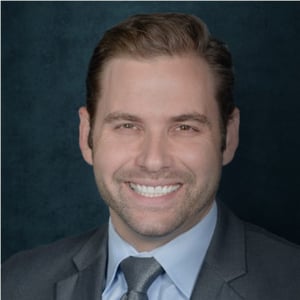
Vice President for the Program on Technology, Criminal Justice and Civil Liberties, Lincoln Network
Arthur Rizer is the Vice President for the Program on Technology, Criminal Justice and Civil Liberties at Lincoln Network. In addition to his work at Lincoln, Arthur is a visiting lecturer at University College London, and an adjunct professor at George Mason University’s Antonin Scalia Law School. Arthur is also a member of Columbia University Justice Lab’s Executive Session for the Future of Justice Policy, the Federalist Society’s Executive Committee of the Criminal Law Practice Group, the Virginia Advisory Committee to the U.S. Commission on Civil Rights, and other advisory bodies.
Before joining Lincoln, Arthur was founding director of the R Street Institute’s program on criminal justice and civil liberties. Prior to that, Arthur taught at West Virginia University’s College of Law, and was a visiting professor at Georgetown University Law Center. He also served as a trial attorney with the U.S. Justice Department, primarily as a federal prosecutor in the Criminal Division, where he targeted command-and-control drug cartel leaders and narco-terrorists. He also served as a prosecutor in the U.S. Attorney’s Office for the Southern District of California and in the civil division. Earlier in his career, Arthur served in the U.S. Army, originally enlisting as a private before later receiving a commission. He served as an armor officer, later becoming the commander of a military police company and a Reserve Officers’ Training Corps assistant professor. He deployed to Fallujah, Iraq, with the mission to train the Iraqi Infantry and served as an MP acting battalion commander and executive officer. He retired as a lieutenant colonel from the U.S. Army (WVNG). During his Army career, Arthur received the Bronze Star, Purple Heart, Meritorious Service and Iraq Campaign medals.
Arthur is the author of three books: Lincoln’s Counsel (2010); The National Security Implications of Immigration Law (2013); and Jefferson’s Pen: The Art of Persuasion (2016).
Arthur earned his bachelor’s degree in political science from Pacific Lutheran University; a master of laws, with distinction, from Georgetown University’s Law Center; and his JD, magna cum laude, from Gonzaga University School of Law. He is also a graduate of the U.S. Marine Corps’ Command Staff College. He is in the final stages of a doctorate at the University of Oxford, Faculty of Law, Centre of Criminology that focuses on policing.
Brett Tolman, the former U.S. Attorney for Utah and former chief counsel for crime and terrorism in the U.S. Senate Judiciary Committee, founded the Tolman Group and focuses on public policy and reforming government.
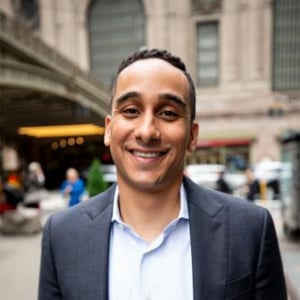
Nick Ohnell Fellow, The Manhattan Institute
Rafael Mangual is the Nick Ohnell Fellow at the Manhattan Institute, a contributing editor of City Journal, and a member of the Council on Criminal Justice. His first book, Criminal (In)Justice, was released in July 2022. He has authored and coauthored a number of MI reports and op-eds on issues ranging from urban crime and jail violence to broader matters of criminal and civil justice reform. His work has been featured and mentioned in a wide array of publications, including the Wall Street Journal, The Atlantic, New York Post, The New York Times, The Washington Post, Philadelphia Inquirer and City Journal. Mangual also regularly appears on Fox News and has made a number of national and local television and radio appearances on outlets such as C-SPAN and Bloomberg Radio. In 2020, he was appointed to serve a four-year term as a member of the New York State Advisory Committee of the U.S. Commission on Civil Rights.
Prior to joining MI in 2015, Rafael worked in corporate communications for the International Trademark Association. He holds a B.A. in corporate communications from the City University of New York’s Baruch College and a J.D. from DePaul University in Chicago, where he was president of the Federalist Society and vice president of the Appellate Moot Court team. After graduating from law school, Mangual was inducted into the Order of the Barristers, a national honor society for excellence in oral and written advocacy.
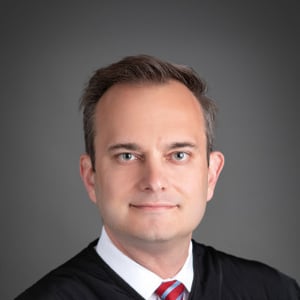
United States Magistrate Judge, Eastern District of North Carolina
Robert T. Numbers, II serves as a United States Magistrate Judge in the United States District Court for the Eastern District of North Carolina.
Judge Numbers received degrees in Political Science and Economics, with honors, from Wake Forest University. After completing his undergraduate work, Judge Numbers obtained his law degree from the University of Notre Dame where he served on the Notre Dame Law Review.
Upon his graduation from law school, Judge Numbers joined the Winston-Salem office of a large, regional law firm. From 2005 until 2010, Judge Numbers’ practice focused on civil rights claims against local municipalities and government contractors. In 2010, Judge Numbers joined the firm’s Raleigh office and concentrated his practice on complex business litigation in state and federal courts.
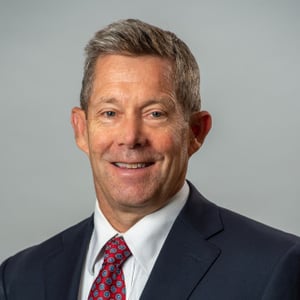
Chief Judge, United States Court of Appeals, Sixth Circuit
JEFFREY S. SUTTON is the Chief Judge of the United States Court of Appeals for the Sixth Circuit. He has served as Chair of the Federal Judicial Conference Committee on Rules of Practice and Procedure, Chair of the Advisory Committee on Appellate Rules, and Chair of the Supreme Court Fellows Commission. He currently serves as Chair of the Executive Committee of the Judicial Conference of the United States. Since 1993, Chief Judge Sutton has been an adjunct professor at The Ohio State University College of Law, where he teaches seminars on State Constitutional Law, the United States Supreme Court, and Appellate Advocacy. He also teaches a class on State Constitutional Law at Harvard Law School. Among other publications, he is the author of Who Decides? States as Laboratories of Constitutional Experimentation and 51 Imperfect Solutions: States and the Making of American Constitutional Law. He is the co-author of a casebook, State Constitutional Law: The Modern Experience, as well as The Law of Judicial Precedent. He is also the co-editor of The Essential Scalia: On the Constitution, the Courts, and the Rule of Law. In 2006, Chief Judge Sutton was elected to the American Law Institute, and in 2017 he was elected to its Council.

Distinguished Senior Fellow and Antonin Scalia Chair in Constitutional Studies, Ethics and Public Policy Center
Edward Whelan is a Distinguished Senior Fellow of the Ethics and Public Policy Center and holds EPPC’s Antonin Scalia Chair in Constitutional Studies. He is the longest-serving President in EPPC’s history, having held that position from March 2004 through January 2021.
Mr. Whelan directs EPPC’s program on The Constitution, the Courts, and the Culture. His areas of expertise include constitutional law and the judicial confirmation process. As a contributor to National Review Online’s Bench Memos blog, he has been a leading commentator on nominations to the Supreme Court and the lower courts and on issues of constitutional law. He has written essays and op-eds for leading newspapers—including the Wall Street Journal, the New York Times, and the Washington Post—opinion journals, and academic symposia and law reviews. The National Law Journal has named Mr. Whelan among its “Champions and Visionaries” in the practice of law in D.C.
Mr. Whelan is co-editor of three volumes of Supreme Court Justice Antonin Scalia’s work: Scalia Speaks: Reflections on Law, Faith, and Life Well Lived (Crown Forum, 2017), a New York Times bestselling collection of speeches by Justice Scalia; On Faith: Lessons from an American Believer (Crown Forum, 2019), a collection of Justice Scalia’s writings on faith and religion; and The Essential Scalia: On the Constitution, the Courts, and the Rule of Law (Crown Forum, 2020), a collection of Justice Scalia’s views on legal issues.
Mr. Whelan, a lawyer and a former law clerk to Justice Scalia, has served in positions of responsibility in all three branches of the federal government. From just before the terrorist attacks of September 11, 2001, until joining EPPC in 2004, Mr. Whelan was the Principal Deputy Assistant Attorney General for the Office of Legal Counsel in the U.S. Department of Justice. In that capacity, he advised the White House Counsel’s Office, the Attorney General and other senior DOJ officials, and departments and agencies throughout the executive branch on difficult and sensitive legal questions. Mr. Whelan previously served on Capitol Hill as General Counsel to the U.S. Senate Committee on the Judiciary. In addition to clerking for Justice Scalia, he was a law clerk to Judge J. Clifford Wallace of the U.S. Court of Appeals for the Ninth Circuit.
In 1981 Mr. Whelan graduated with honors from Harvard College and was inducted into Phi Beta Kappa. He received his J.D. magna cum laude in 1985 from Harvard Law School, where he was a member of the Board of Editors of the Harvard Law Review.
For more on Mr. Whelan’s background, see this interview.
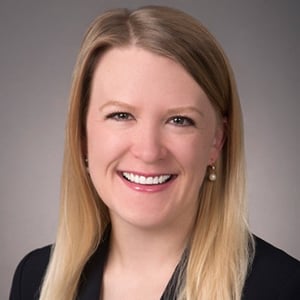
Counsel, U.S. Chamber Litigation Center
Mariel Brookins attended Wheaton College where she studied economics and theology. After graduation, she worked at PwC as a tax CPA. She attended the University of Michigan Law School. After law school, Mariel clerked for Judge Barrett on the Seventh Circuit and Judge Newsom on the Eleventh Circuit. She currently practices appellate litigation in Washington, D.C.
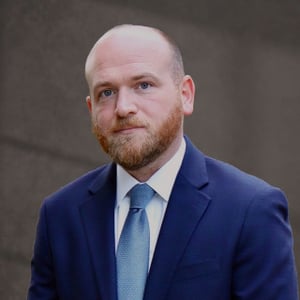
Attorney, Mincey Bell Rhoades LLP
Chad Rhoades is a trial attorney, former federal prosecutor, and former Chief Counsel to U.S. Senator Thom Tillis. His practice focuses on white-collar defense, government investigations, regulatory enforcement matters, and complex commercial litigation.
Chad previously served as an Assistant United States Attorney for the Eastern District of North Carolina, where he investigated and prosecuted cases involving fraud, money laundering, firearms offenses, and drug trafficking. He tried numerous federal jury cases and argued before the United States Court of Appeals for the Fourth Circuit. His experience as a federal prosecutor provides him with valuable insight into government enforcement strategies and the challenges faced by individuals and organizations under investigation.
Before joining the Department of Justice, Chad served as Chief Counsel to Senator Thom Tillis, advising on a broad range of legal and policy matters, including constitutional issues, congressional oversight, antitrust, data privacy, whistleblower protections, campaign finance, and judicial nominations. In that role, he worked closely with congressional leaders, executive branch officials, and stakeholders across the public and private sectors.
Earlier in his career, Chad advised members of the North Carolina General Assembly on election law, campaign finance, and legislative matters, providing him with a deep understanding of state and federal regulatory processes.
Drawing on experience across the legislative and executive branches of government, Chad helps clients navigate high-stakes legal challenges where litigation, regulatory scrutiny, and public policy considerations intersect.
Chad earned his bachelor's degree from North Carolina State University and his J.D. from Campbell University School of Law.
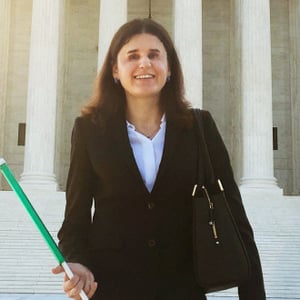
Laura Wolk earned her J.D. summa cum laude from Notre Dame Law School in 2016, where she received the Award for Outstanding Achievement in the Program of Study in Public Law. After graduation, she clerked for the Honorable Janice Rogers Brown, United States Court of Appeals for the District of Columbia Circuit, and the Honorable Thomas M. Hardiman, United States Court of Appeals for the Third Circuit. She spent a year as an associate in Kirkland & Ellis’s appellate and Supreme Court practice before serving as a law clerk to Associate Justice Clarence Thomas during the Supreme Court’s 2019 term. She will soon be returning to private practice in Washington, D.C.
Laura enjoys thinking and writing about constitutional law, public policy, and the sanctity of life. She has co-authored a book chapter on the Catholic Church’s teachings concerning abortion as well as articles on assisted suicide and the Supreme Court’s abortion jurisprudence.
Judge, United States District Court for the Eastern District of North Carolina
A native of Kingston, Jamaica, Myers was a Chancellors Scholar at the UNC School of Law, where he graduated with high honors in 1998. Upon graduation from law school, he clerked in Washington, D.C., for the Hon. David Sentelle on the United States Court of Appeals for the D.C. Circuit, and then entered private practice as a litigator for O'Melveny & Myers, LLP, in Los Angeles California. After two years with the White Collar Criminal Law and Environmental and regulatory Compliance Practice Group, he left private practice in January 2002 to become an Assistant United States Attorney in the Central District of California. In September, 2002, he transferred to the Eastern District of North Carolina in Raleigh, where he prosecuted white collar and violent crimes, and headed the district's Violent Crimes Task Force for Wilmington and New Hanover and Pender Counties.
Myers joined the UNC Law School faculty in July 2004, where he taught Criminal Law, Criminal Procedure, Ethics, and a seminar on White Collar Crime. He was confirmed to the United States District Court for the Eastern District of North Carolina in 2019.

Open Questions in Lieu v. Federal Election Commission: Due Process, Adverseness, & Article III Standing
Sam Gedge, John Wrench
Note from the Editor: The Federalist Society takes no positions on particular legal and public...
The Essential Scalia: On the Constitution, the Courts, and the Rule of Law
North Carolina Lawyers Chapters - Online Event
Judicial Philosophy of Judge Amy Coney Barrett
Triangle Lawyers Chapter - Online Event
Topics
Trump Administration Asks SCOTUS to Determine Whether the First Amendment Bars @realDonaldTrump From Blocking Twitter Critics
The Federalist Society is pleased to announce its Student Blog Initiative, a project of the...
Criminal Law Update: A Survey of State Law Changes in 2019
Robert Alt
Note from the Editor: The Federalist Society takes no positions on particular legal and public...
Criminal Law Update: A Survey of State Law Changes in 2019
Robert Alt
Note from the Editor: The Federalist Society takes no positions on particular legal and public...
A Conversation with Judge Richard Myers
Cape Fear Lawyers Chapter - Virtual Event
Topics
A Legacy Communications Act Requirement Hamstrings Rural Broadband Deployment
The Federal Communications Commission relies, in part, upon what's called the Universal Service Fund (USF)...
Seeking Success: Reforming America’s Community Supervision System
Arthur Rizer, Brett Tolman
Note from the Editor: The Federalist Society takes no positions on particular legal and public...
Police Use of Force and the Practical Limits of Popular Reform Proposals: A Response to Rizer and Mooney
Rafael A. Mangual
Note from the Editor: The Federalist Society takes no positions on particular legal and public...